
Pompeii Caecilius and Metella Pompeiis Beginnings Founded in
Pompeii, Caecilius, and Metella

Pompeii’s Beginnings �Founded in 7 th-6 th centuries B. C. �Changed hands – ◦ Greeks/Phoenicians, Oscans, Etruscans, Samnites �Roman ally after 2 nd Samnite War �Turns on Rome during Social War ◦ Becomes colony of Rome in 80 BC
1 st centuries BC & AD �Flourishes as multicultural port �Near the Via Appia �Rich Roman country estates nearby �Farms and businesses ◦ Vesuvinum – Vesuvius + vinum
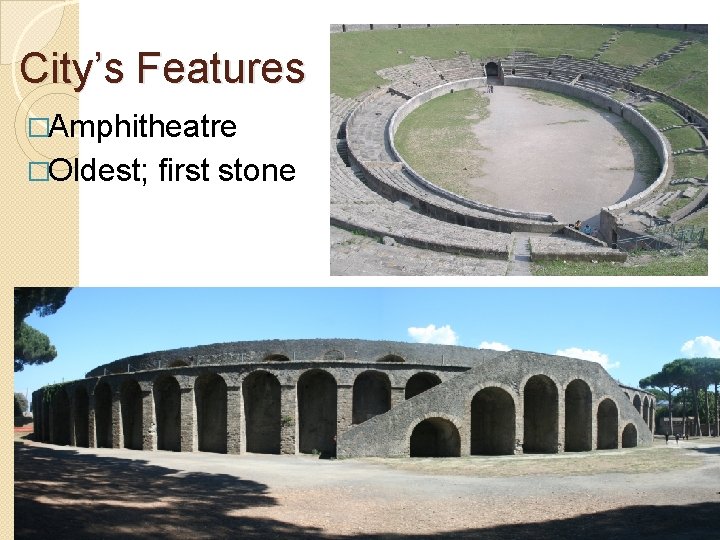
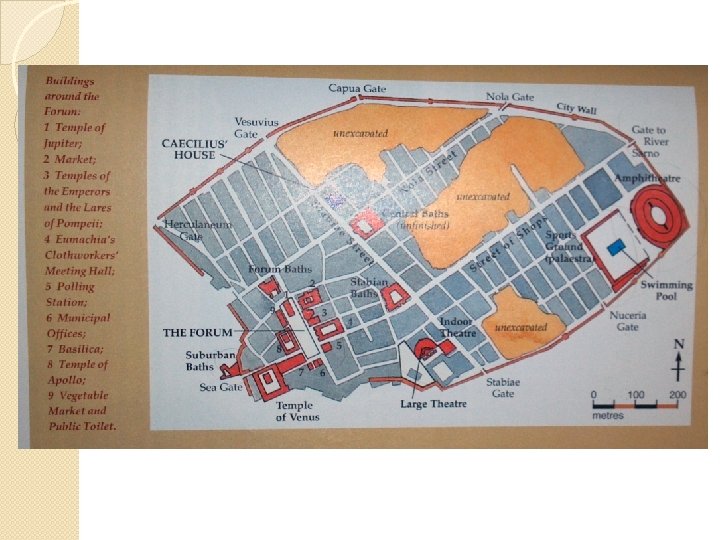
City’s Features �Amphitheatre �Oldest; first stone
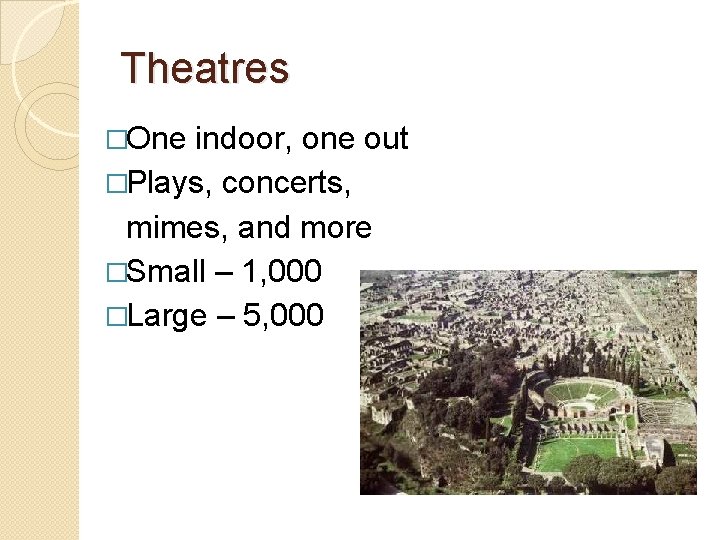
Theatres �One indoor, one out �Plays, concerts, mimes, and more �Small – 1, 000 �Large – 5, 000
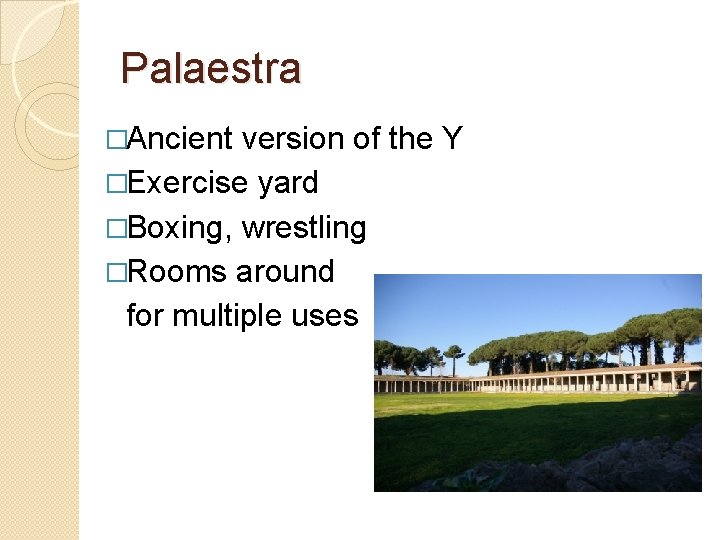
Palaestra �Ancient version of the Y �Exercise yard �Boxing, wrestling �Rooms around for multiple uses
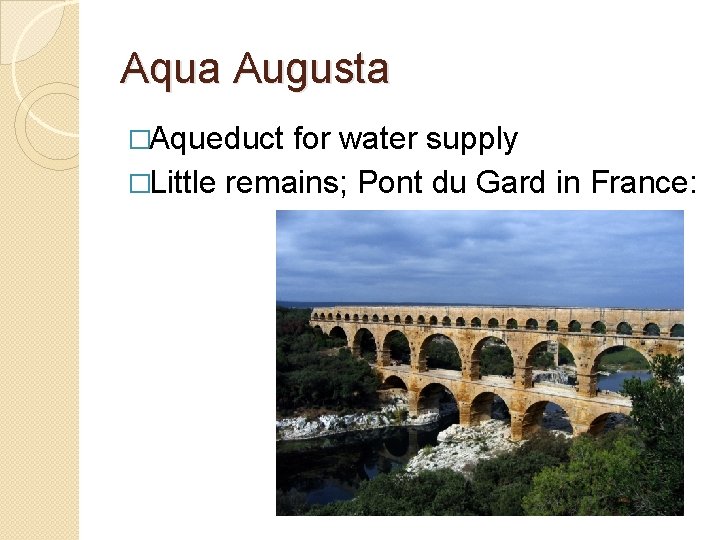
Aqua Augusta �Aqueduct for water supply �Little remains; Pont du Gard in France:
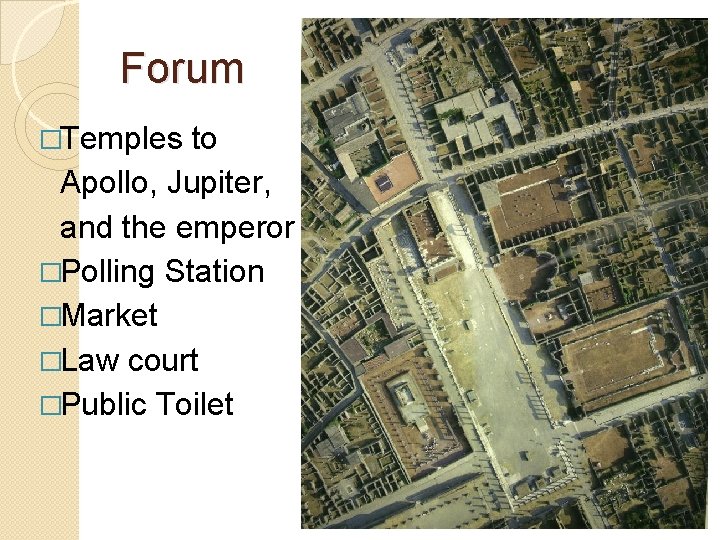
Forum �Temples to Apollo, Jupiter, and the emperor �Polling Station �Market �Law court �Public Toilet
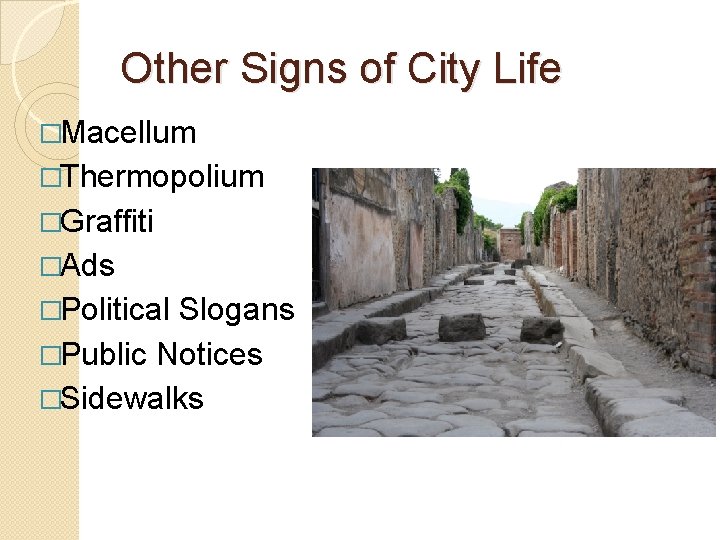
Other Signs of City Life �Macellum �Thermopolium �Graffiti �Ads �Political Slogans �Public Notices �Sidewalks
Feb 5, 62 AD �Massive earthquake damages the city �Lamps fall; fire breaks out �Anarchy, looting, starvation ◦ When have we seen anarchy after a recent natural disaster in America? �The real Caecilius apparently dies
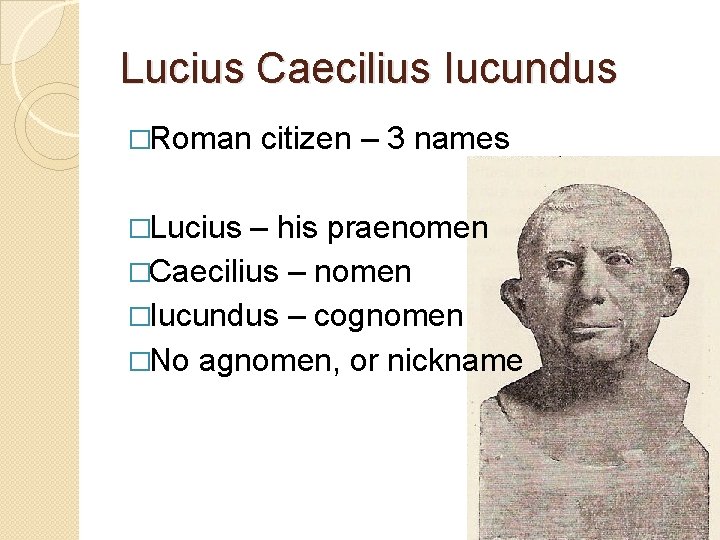
Lucius Caecilius Iucundus �Roman �Lucius citizen – 3 names – his praenomen �Caecilius – nomen �Iucundus – cognomen �No agnomen, or nickname
Spot in Society �Son of Felix, a freedman �Citizen’s Rights ◦ Vote, office, property, contracts, marriage, trial, appeal, suing ◦ Can’t be tortured, whipped, or killed unless convicted of treason �One of the richest dudes in town
Jobs and Business �Banker, money lender �Tax collector �Farmer �Owned shops ◦ Slaves, cloth, dyes, timber, property, livestock, cleaning services
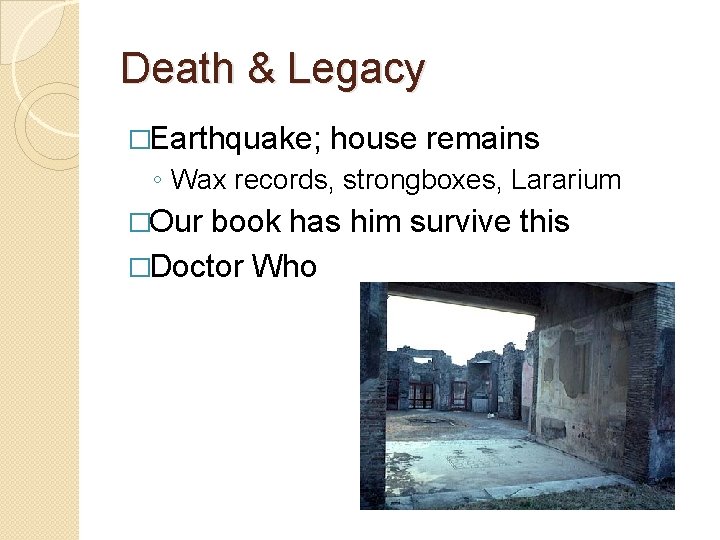
Death & Legacy �Earthquake; house remains ◦ Wax records, strongboxes, Lararium �Our book has him survive this �Doctor Who
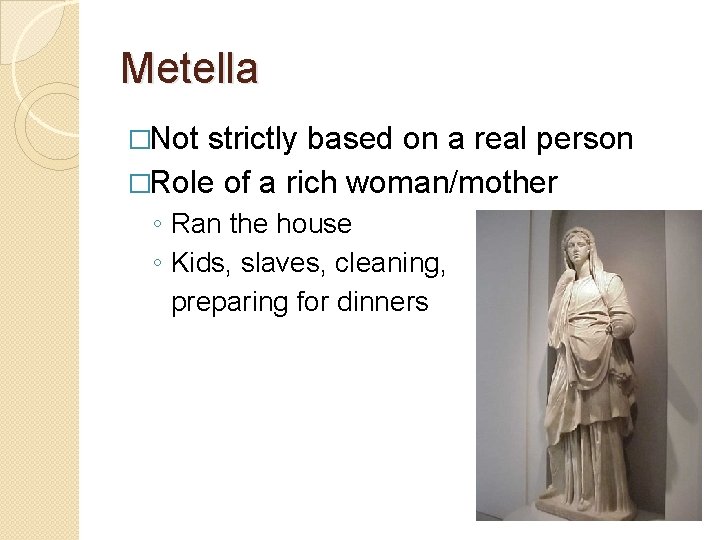
Metella �Not strictly based on a real person �Role of a rich woman/mother ◦ Ran the house ◦ Kids, slaves, cleaning, preparing for dinners
Women’s Legal Rights �No vote �Could have property of her own �Authority over kids, slaves �Could inherit from her husband �Political sway possible
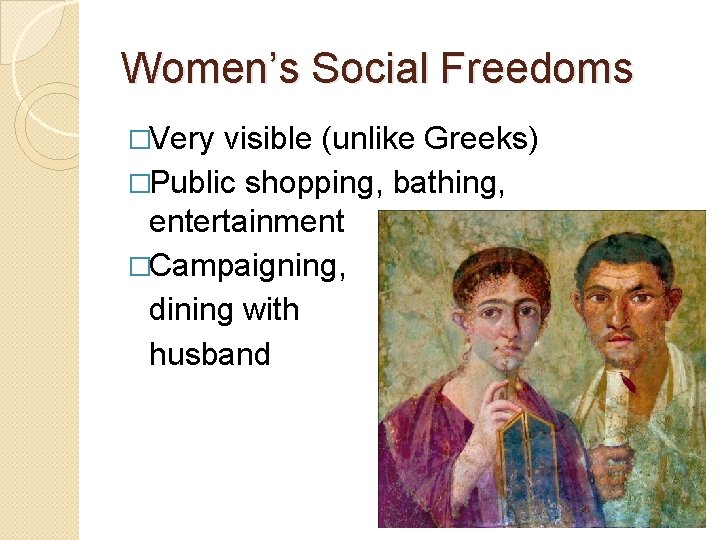
Women’s Social Freedoms �Very visible (unlike Greeks) �Public shopping, bathing, entertainment �Campaigning, dining with husband
Women’s Jobs �Cooking, weaving, hairdressing, making shoes, metalworking �Midwives and nurses �Patronesses/business ladies could donate to public buildings
- Slides: 20