
Polyurethane polymer manufacturing Case study www hsl gov

- Slides: 16
Polyurethane polymer manufacturing - Case study www. hsl. gov. uk An. An Agency of theof Health and Safety Executive Agency the Health and Safety Executive
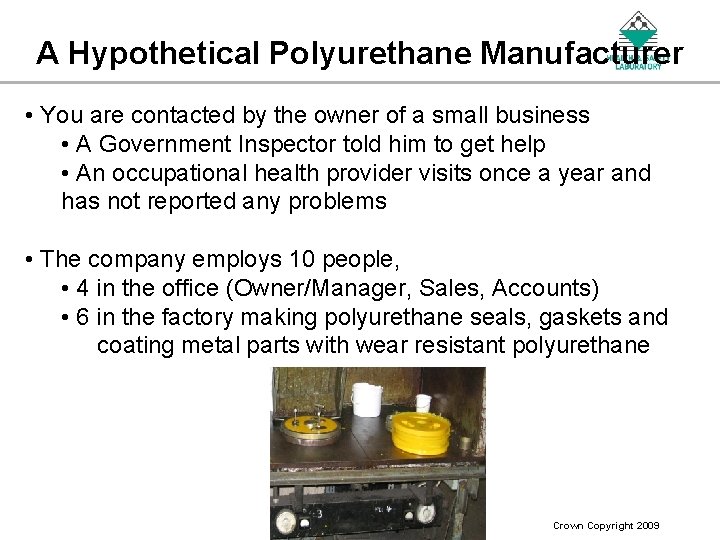
A Hypothetical Polyurethane Manufacturer • You are contacted by the owner of a small business • A Government Inspector told him to get help • An occupational health provider visits once a year and has not reported any problems • The company employs 10 people, • 4 in the office (Owner/Manager, Sales, Accounts) • 6 in the factory making polyurethane seals, gaskets and coating metal parts with wear resistant polyurethane An Agency of the Health and Safety Executive Crown Copyright 2009
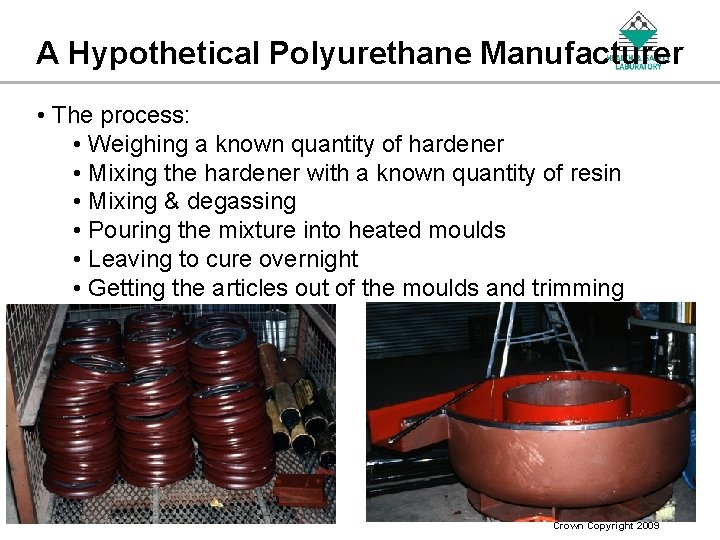
A Hypothetical Polyurethane Manufacturer • The process: • Weighing a known quantity of hardener • Mixing the hardener with a known quantity of resin • Mixing & degassing • Pouring the mixture into heated moulds • Leaving to cure overnight • Getting the articles out of the moulds and trimming An Agency of the Health and Safety Executive Crown Copyright 2009
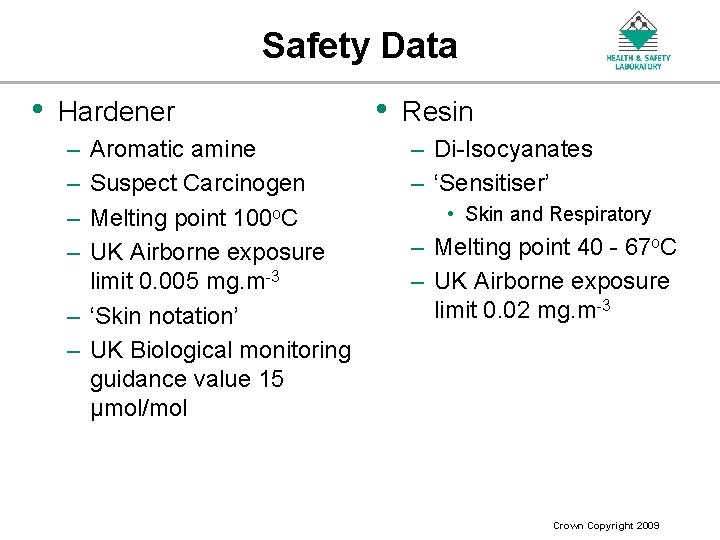
Safety Data • Hardener – – Aromatic amine Suspect Carcinogen Melting point 100 o. C UK Airborne exposure limit 0. 005 mg. m-3 – ‘Skin notation’ – UK Biological monitoring guidance value 15 µmol/mol An Agency of the Health and Safety Executive • Resin – Di-Isocyanates – ‘Sensitiser’ • Skin and Respiratory – Melting point 40 - 67 o. C – UK Airborne exposure limit 0. 02 mg. m-3 Crown Copyright 2009
Historical Data • Air monitoring data: • Exposure to isocyanates below the UK Workplace Exposure Limit • Occupational health data: • No evidence of asthma (but staff turnover is about 3 per year) • One case of dermatitis An Agency of the Health and Safety Executive Crown Copyright 2009
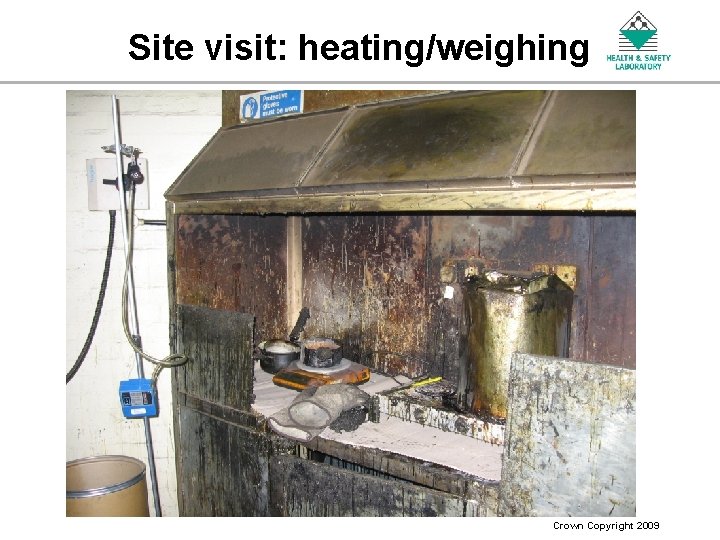
Site visit: heating/weighing An Agency of the Health and Safety Executive Crown Copyright 2009
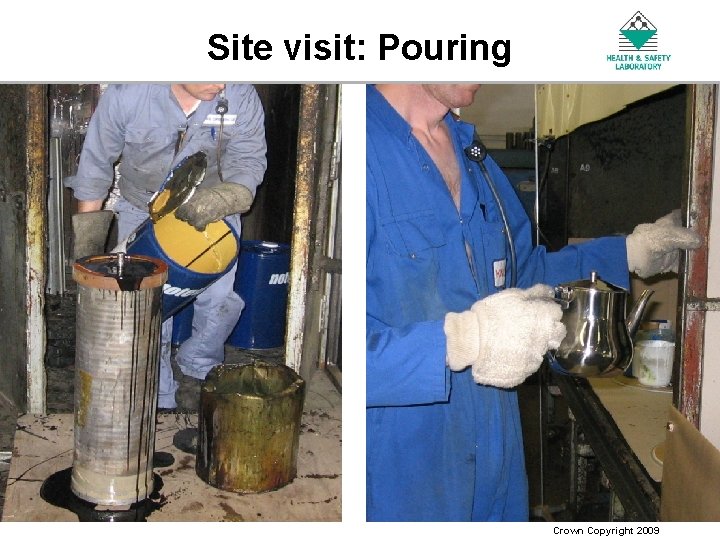
Site visit: Pouring An Agency of the Health and Safety Executive Crown Copyright 2009
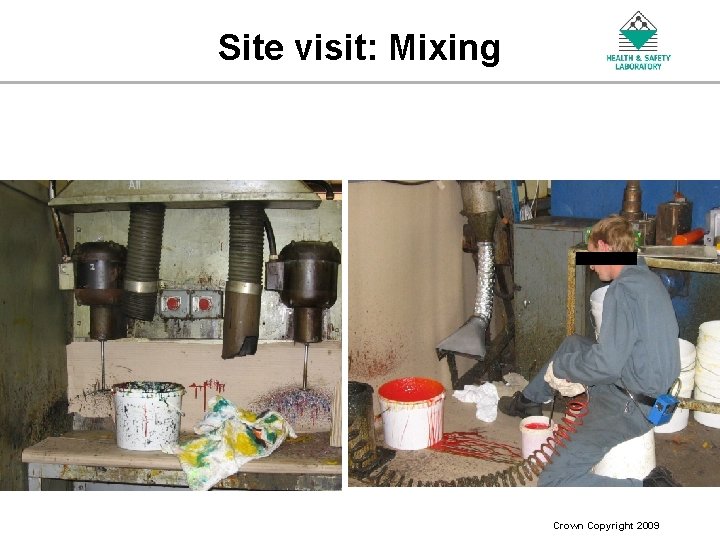
Site visit: Mixing An Agency of the Health and Safety Executive Crown Copyright 2009
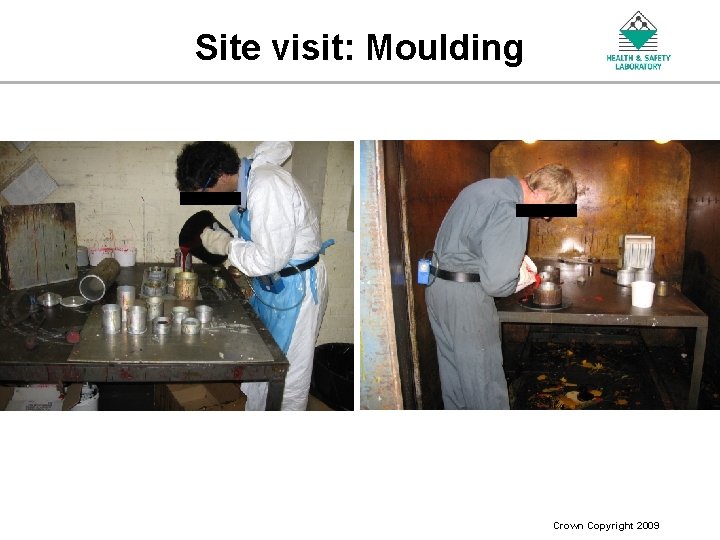
Site visit: Moulding An Agency of the Health and Safety Executive Crown Copyright 2009
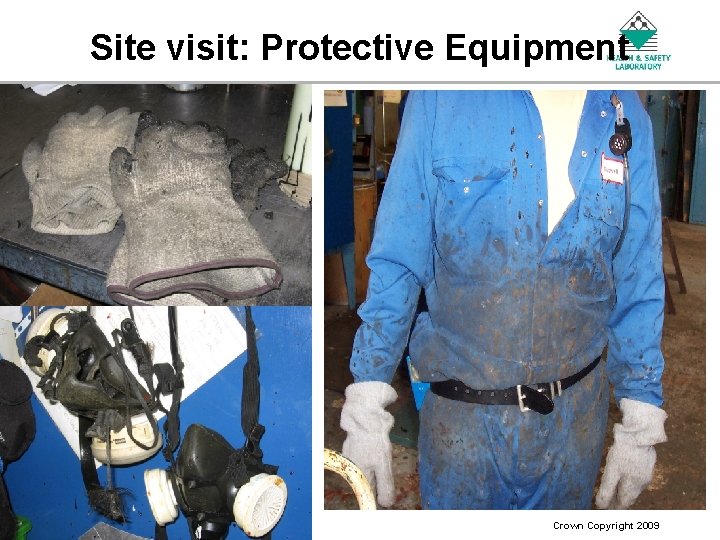
Site visit: Protective Equipment An Agency of the Health and Safety Executive Crown Copyright 2009
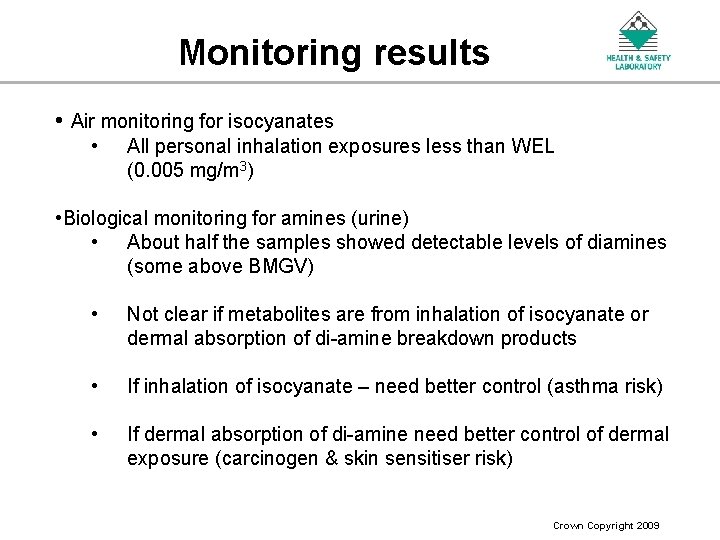
Monitoring results • Air monitoring for isocyanates • All personal inhalation exposures less than WEL (0. 005 mg/m 3) • Biological monitoring for amines (urine) • About half the samples showed detectable levels of diamines (some above BMGV) • Not clear if metabolites are from inhalation of isocyanate or dermal absorption of di-amine breakdown products • If inhalation of isocyanate – need better control (asthma risk) • If dermal absorption of di-amine need better control of dermal exposure (carcinogen & skin sensitiser risk) An Agency of the Health and Safety Executive Crown Copyright 2009
Feedback An Agency of the Health and Safety Executive Crown Copyright 2009
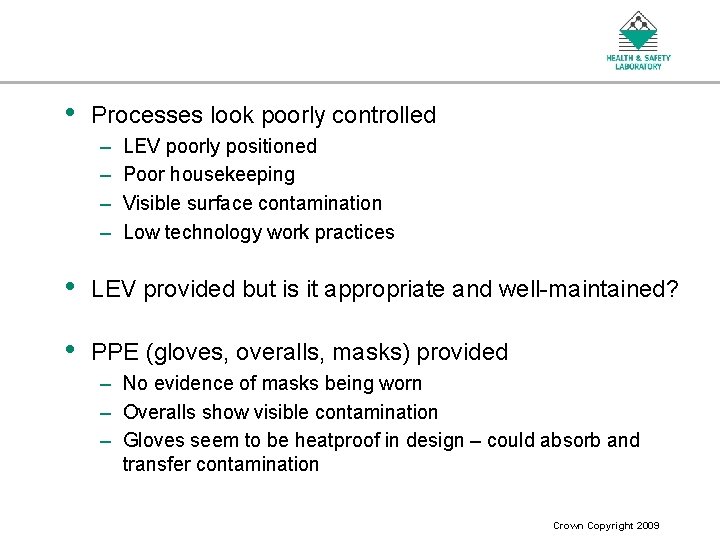
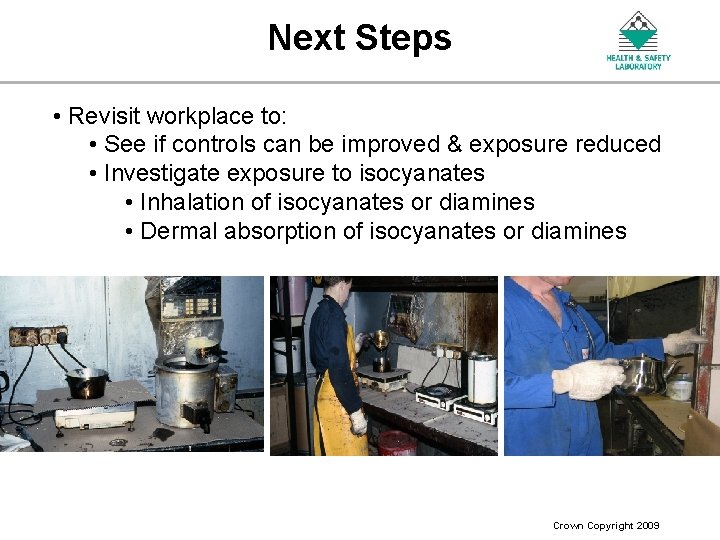
• Processes look poorly controlled – – LEV poorly positioned Poor housekeeping Visible surface contamination Low technology work practices • LEV provided but is it appropriate and well-maintained? • PPE (gloves, overalls, masks) provided – No evidence of masks being worn – Overalls show visible contamination – Gloves seem to be heatproof in design – could absorb and transfer contamination An Agency of the Health and Safety Executive Crown Copyright 2009
• Evidence of exposure to both hardener and resin • Appear to be obvious areas of improvement • Carcinogen and sensitiser monitoring required • Air monitoring, biological monitoring and LEV testing appropriate An Agency of the Health and Safety Executive so regular Crown Copyright 2009
• Medical surveillance required – Questionnaire, Lung Function, Skin Surveillance • High staff turnover means asthma cases may be overlooked due to ‘healthy worker effect’. Improving working conditions may reduce turnover, reducing recruitment/training costs. An Agency of the Health and Safety Executive Crown Copyright 2009
Next Steps • Revisit workplace to: • See if controls can be improved & exposure reduced • Investigate exposure to isocyanates • Inhalation of isocyanates or diamines • Dermal absorption of isocyanates or diamines An Agency of the Health and Safety Executive Crown Copyright 2009