
Polytrauma patient with a pelvic fracture Case 1

- Slides: 11
Polytrauma patient with a pelvic fracture Case 1 AOTrauma Masters course—SDL Polytrauma course
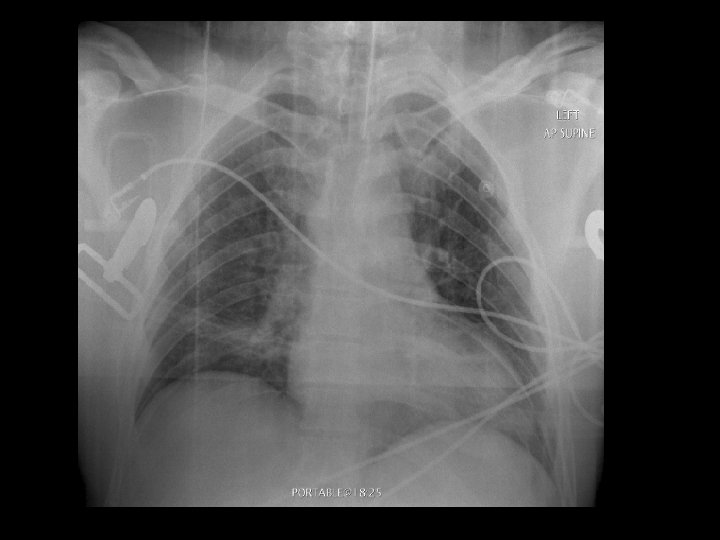
Case description • A 39 -year-old man after a motorcycle accident • Airway—OK • Breathing—respiratory rate (RR): 24 • Circulation—pulse: 160 atrial fibrillation (AF), blood pressure (BP): 80/60 • Disability—Glasgow Coma Scale: 10 • Exposure—temperature: 35°C • Intubated and ventilated • Intravenous (IV) fluids pulse: 160 AF, BP: 80/60
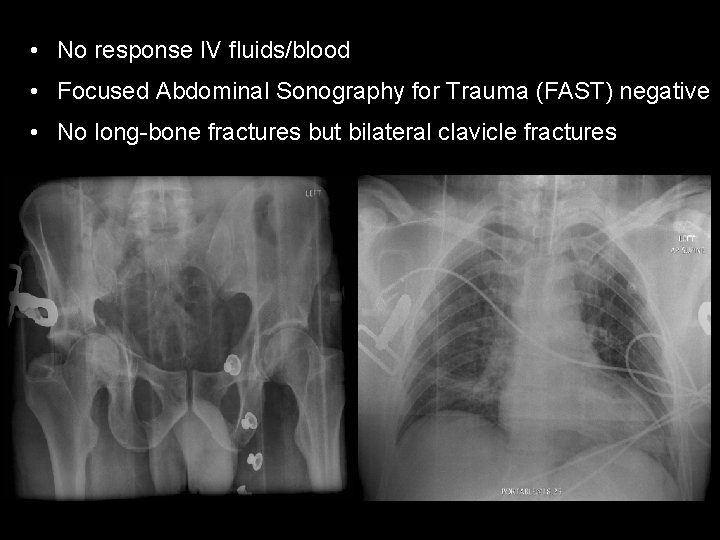
• No response IV fluids/blood • Focused Abdominal Sonography for Trauma (FAST) negative • No long-bone fractures but bilateral clavicle fractures
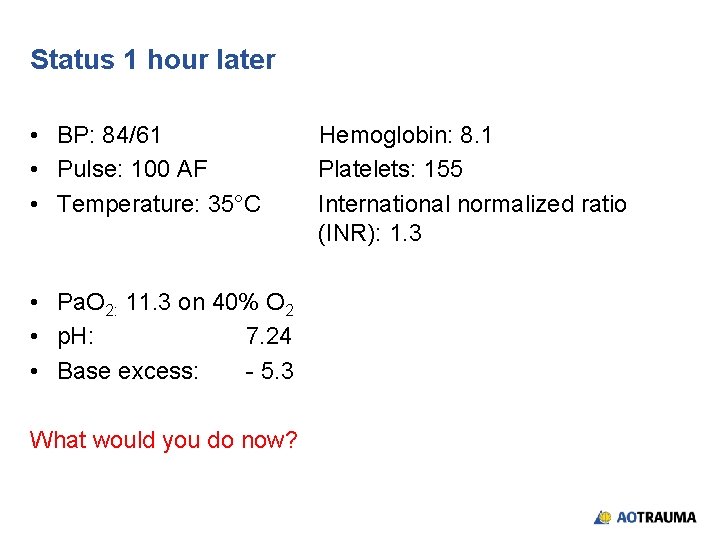
Status 1 hour later • BP: 84/61 • Pulse: 100 AF • Temperature: 35°C • Pa. O 2: 11. 3 on 40% O 2 • p. H: 7. 24 • Base excess: - 5. 3 What would you do now? Hemoglobin: 8. 1 Platelets: 155 International normalized ratio (INR): 1. 3
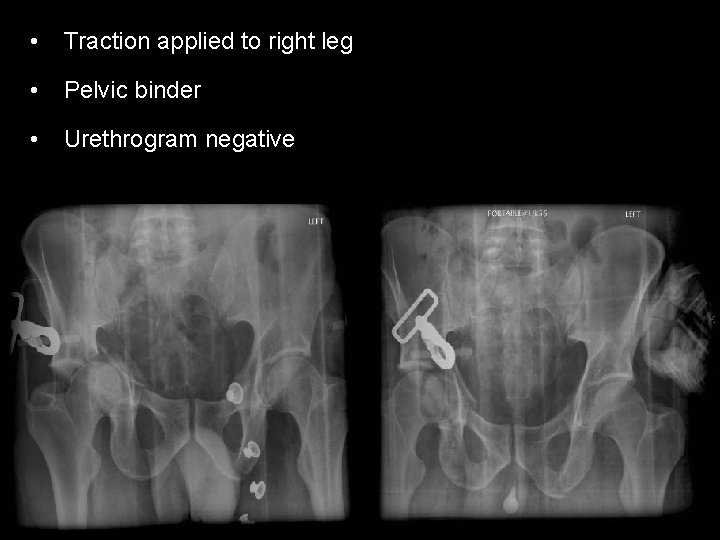
• Traction applied to right leg • Pelvic binder • Urethrogram negative
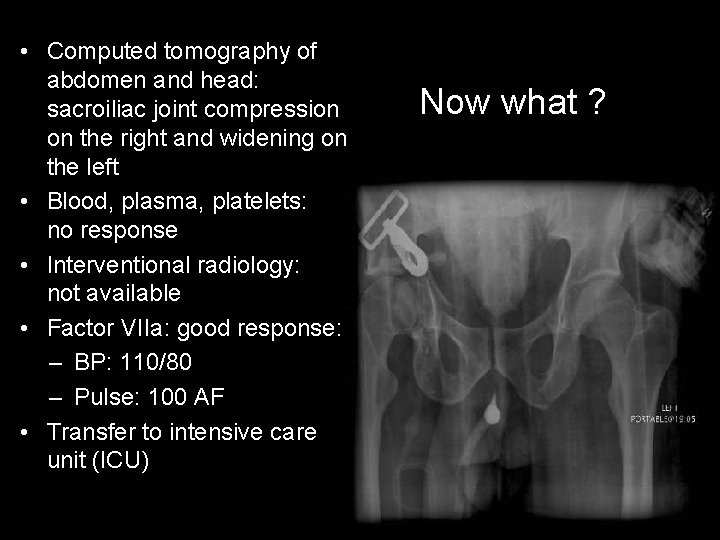
• Computed tomography of abdomen and head: sacroiliac joint compression on the right and widening on the left • Blood, plasma, platelets: no response • Interventional radiology: not available • Factor VIIa: good response: – BP: 110/80 – Pulse: 100 AF • Transfer to intensive care unit (ICU) Now what ?
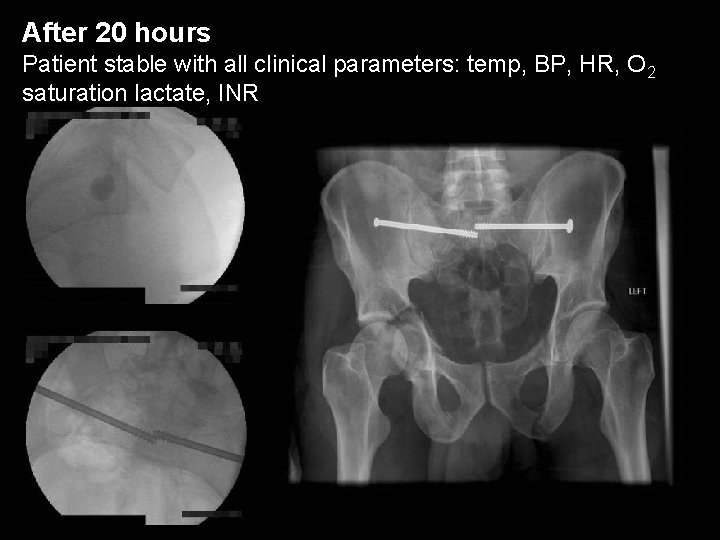
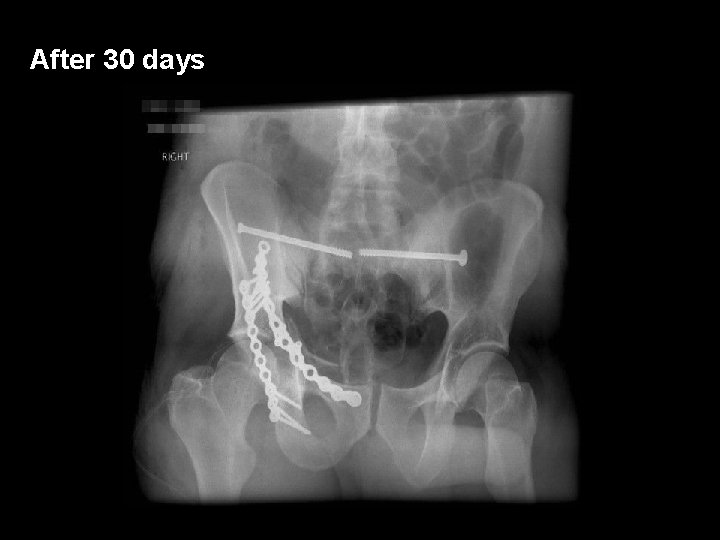
After 20 hours Patient stable with all clinical parameters: temp, BP, HR, O 2 saturation lactate, INR
After 30 days
Take-home messages • Resuscitation is the key to success • There are clear parameters to decide when to perform the definitive surgery • Damage control orthopedics is a life-saving procedure even in pelvic fractures • Exsanguinating pelvic fractures are difficult injuries and should be approached with exact protocols according to the local facilities • The use of interventional radiology can save a life