
Polynuclear Aromatic Hydrocarbons Ref books 1 Organic Chemistry
Polynuclear Aromatic Hydrocarbons Ref. books 1. Organic Chemistry, Vol. 1 - I. L. Finar 2. Organic Chemistry - Morrison and Boyd 3. Advanced Organic Chemistry – Bahl and Bahl 4. Organic Chemistry - Herbert Meislich
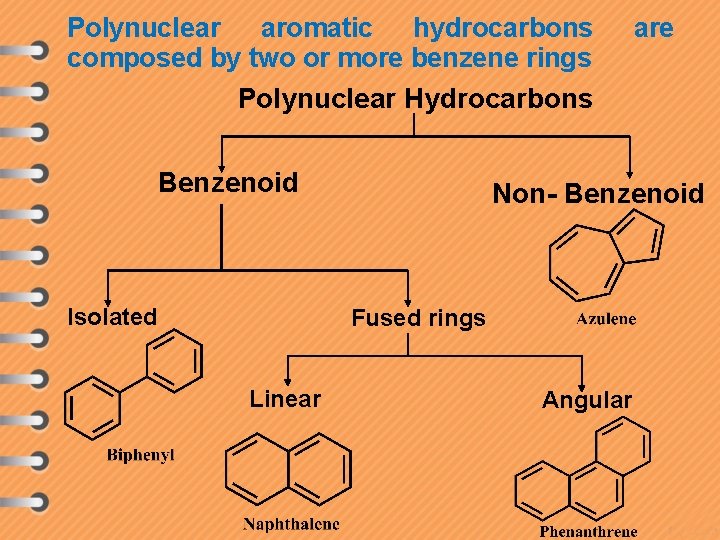
Polynuclear aromatic hydrocarbons composed by two or more benzene rings are Polynuclear Hydrocarbons Benzenoid Isolated Non- Benzenoid Fused rings Linear Angular
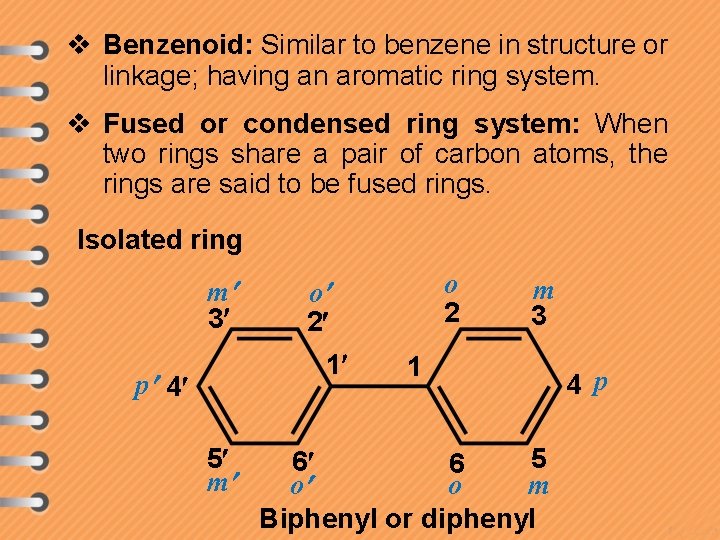
v Benzenoid: Similar to benzene in structure or linkage; having an aromatic ring system. v Fused or condensed ring system: When two rings share a pair of carbon atoms, the rings are said to be fused rings. Isolated ring m 3 1 p 4 5 m o 2 m 3 1 5 6 6 o m o Biphenyl or diphenyl 4 p
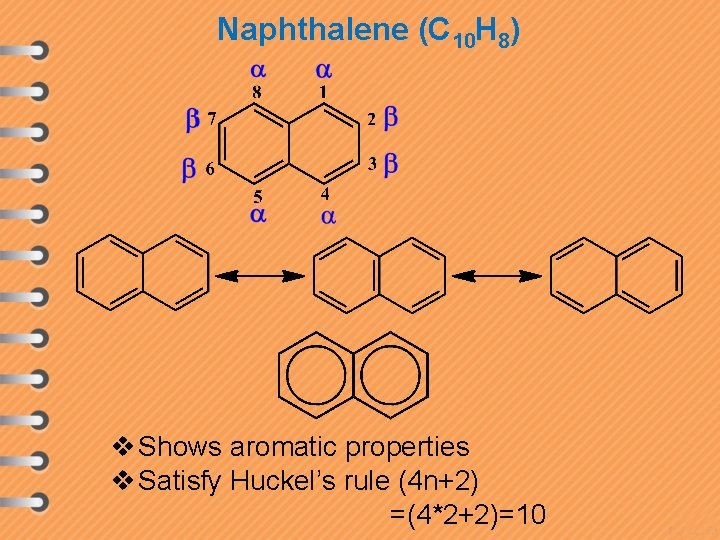
Naphthalene (C 10 H 8) v Shows aromatic properties v Satisfy Huckel’s rule (4 n+2) =(4*2+2)=10
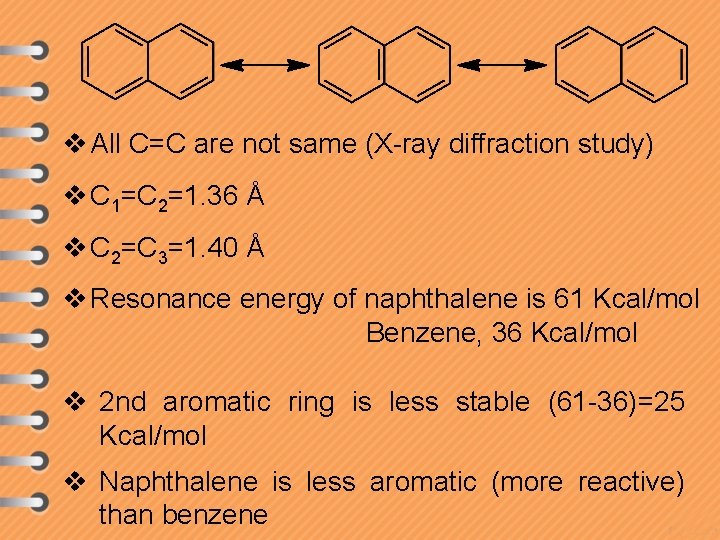
v All C=C are not same (X-ray diffraction study) v C 1=C 2=1. 36 Å v C 2=C 3=1. 40 Å v Resonance energy of naphthalene is 61 Kcal/mol Benzene, 36 Kcal/mol v 2 nd aromatic ring is less stable (61 -36)=25 Kcal/mol v Naphthalene is less aromatic (more reactive) than benzene

Structure elucidation of naphthalene 1. Molecular Formula: C 10 H 8 2. So naphthalene contains the skeleton
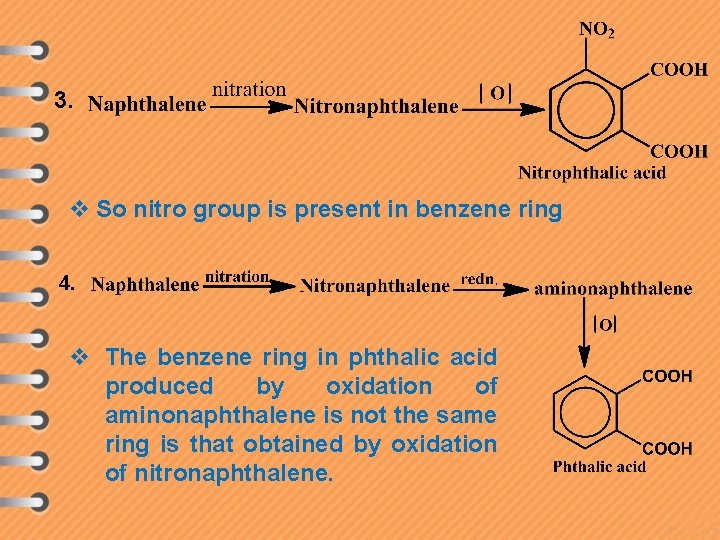
3. v So nitro group is present in benzene ring 4. v The benzene ring in phthalic acid produced by oxidation of aminonaphthalene is not the same ring is that obtained by oxidation of nitronaphthalene.
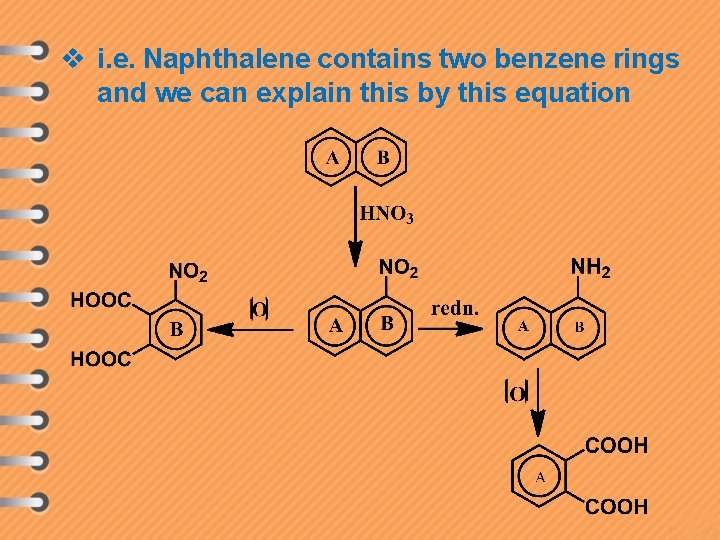
v i. e. Naphthalene contains two benzene rings and we can explain this by this equation
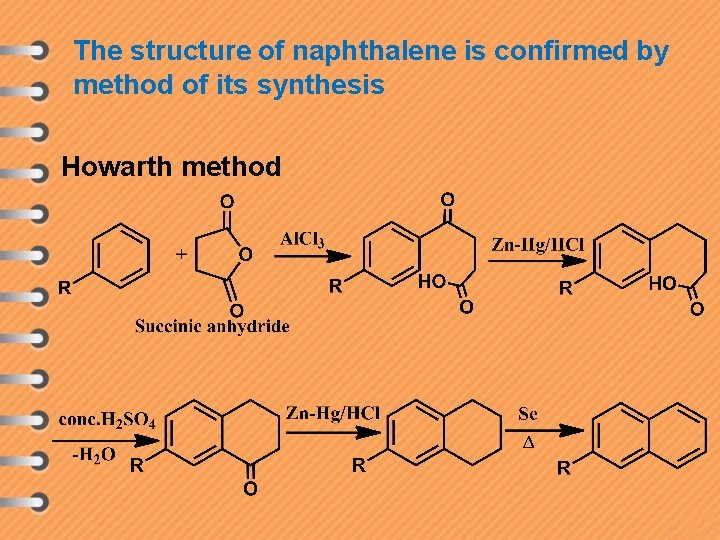
The structure of naphthalene is confirmed by method of its synthesis Howarth method
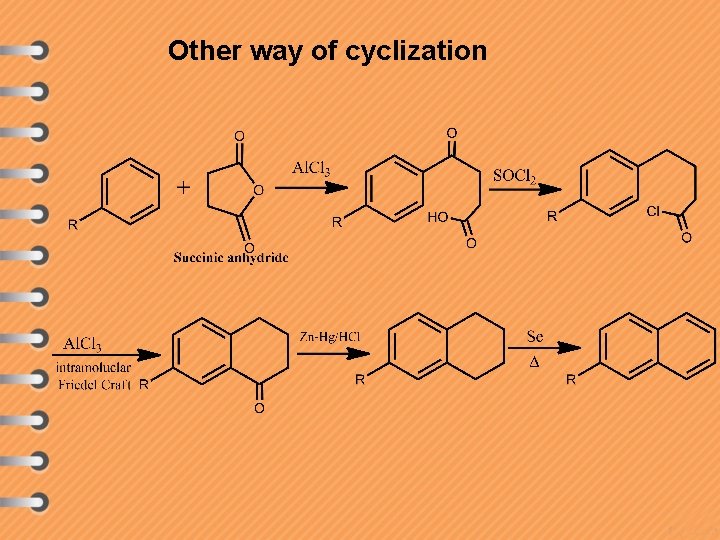
Other way of cyclization
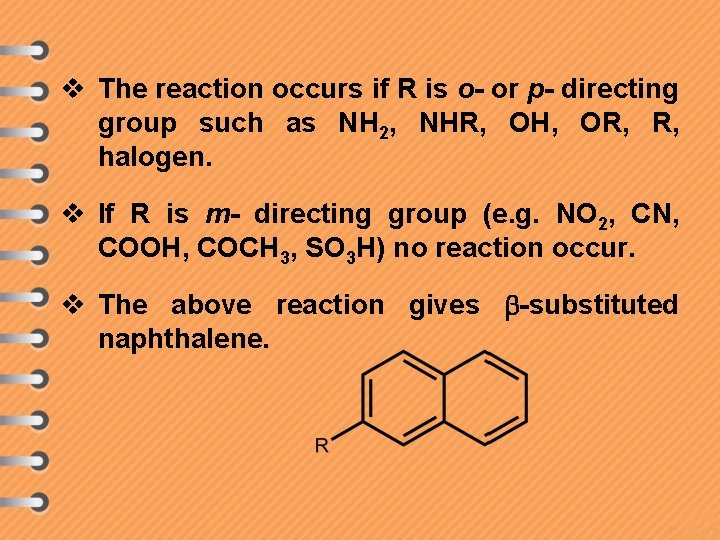
v The reaction occurs if R is o- or p- directing group such as NH 2, NHR, OH, OR, R, halogen. v If R is m- directing group (e. g. NO 2, CN, COOH, COCH 3, SO 3 H) no reaction occur. v The above reaction gives -substituted naphthalene.

Synthesis of 1 -alkyl naphthalene
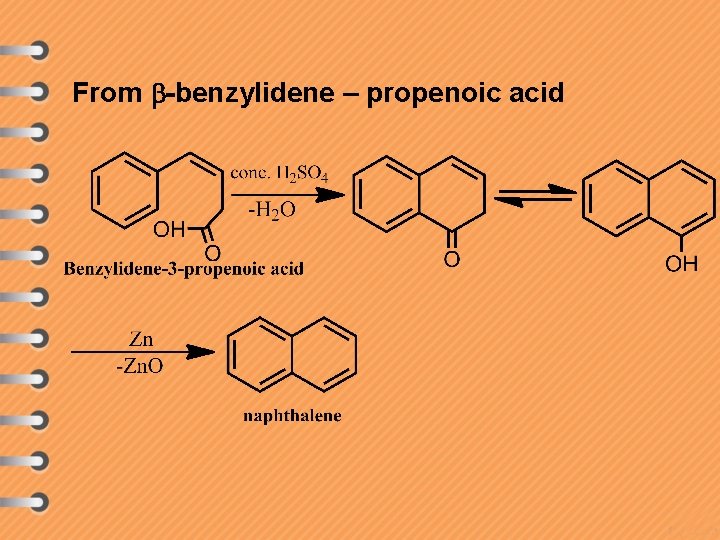
From -benzylidene – propenoic acid
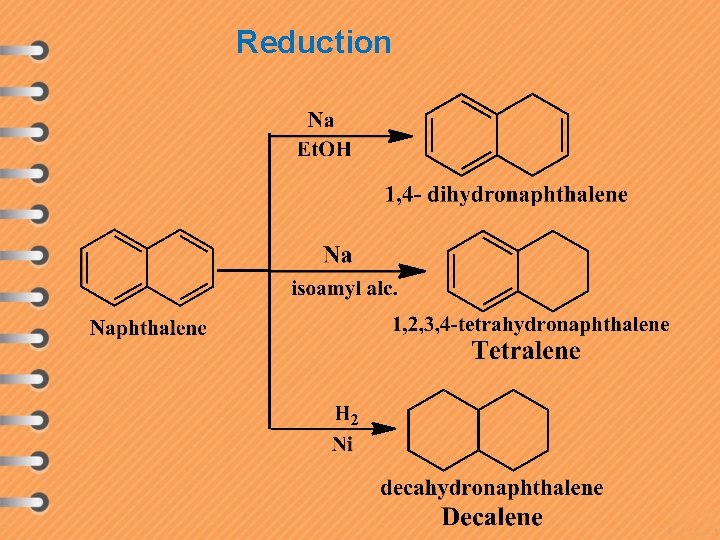
Reduction
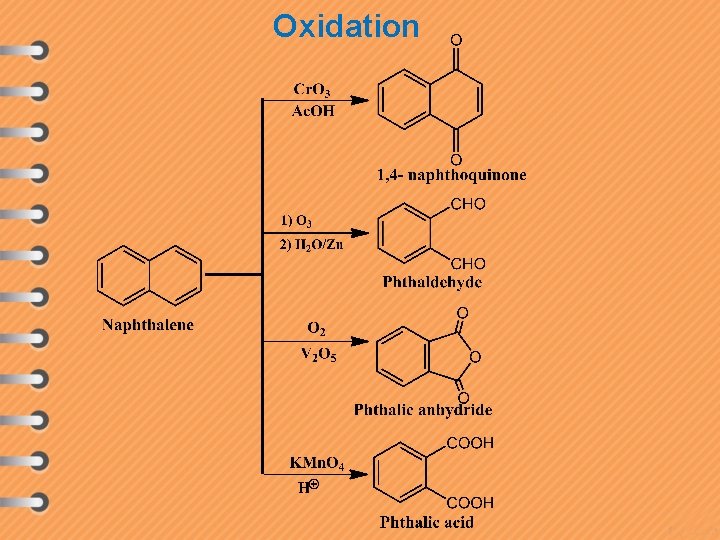
Oxidation
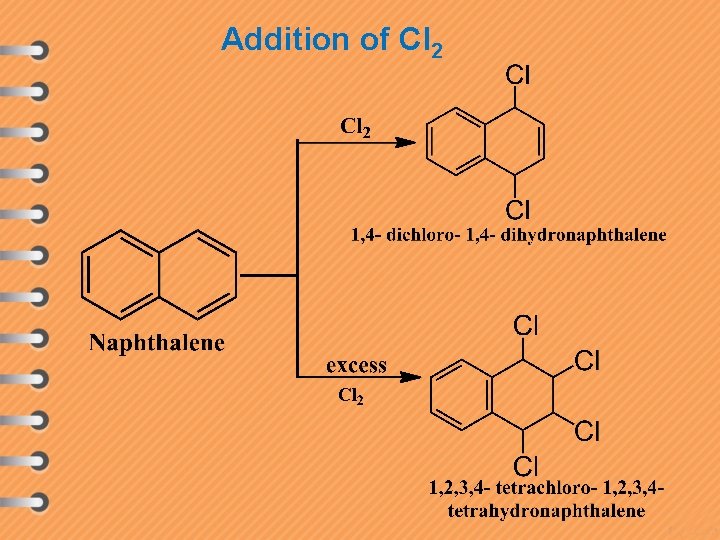
Addition of Cl 2
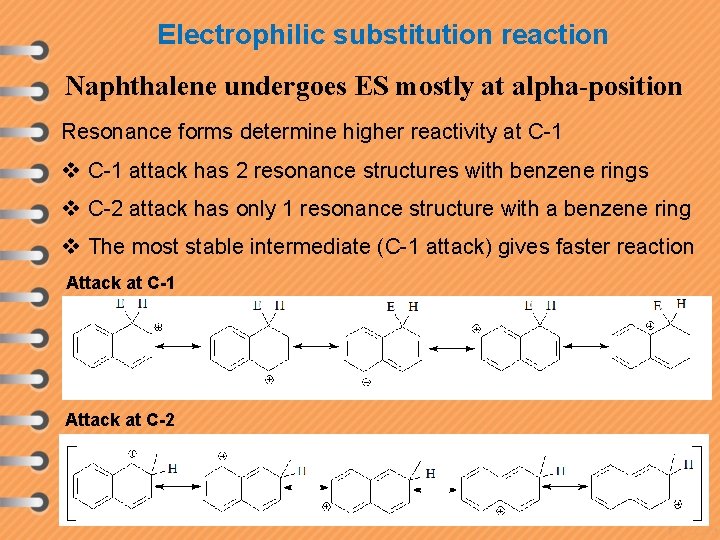
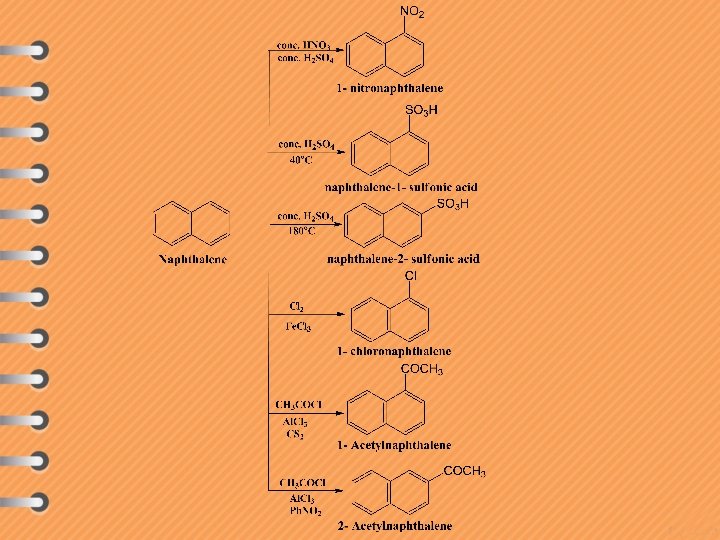
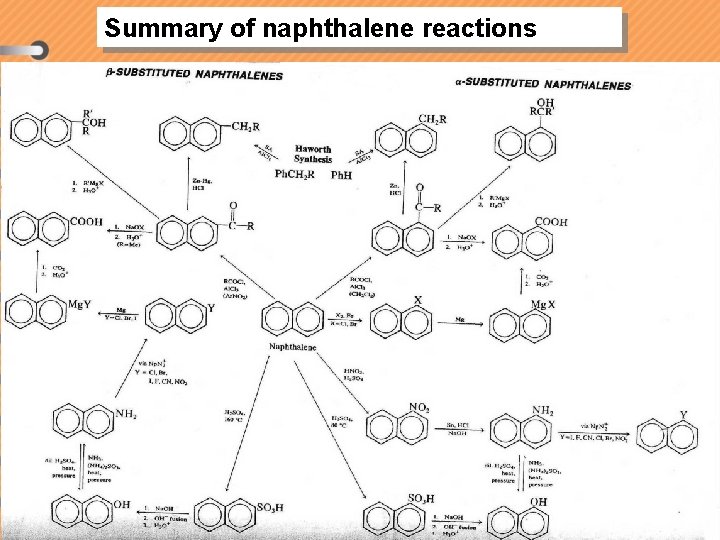
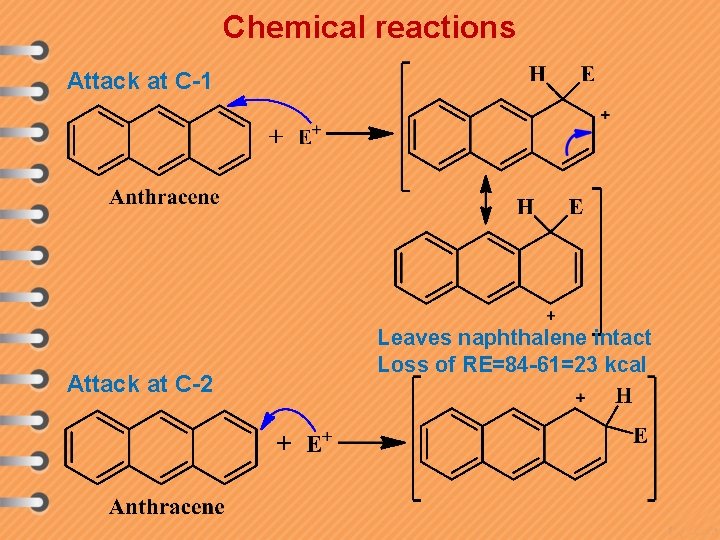
Electrophilic substitution reaction Naphthalene undergoes ES mostly at alpha-position Resonance forms determine higher reactivity at C-1 v C-1 attack has 2 resonance structures with benzene rings v C-2 attack has only 1 resonance structure with a benzene ring v The most stable intermediate (C-1 attack) gives faster reaction Attack at C-1 Attack at C-2
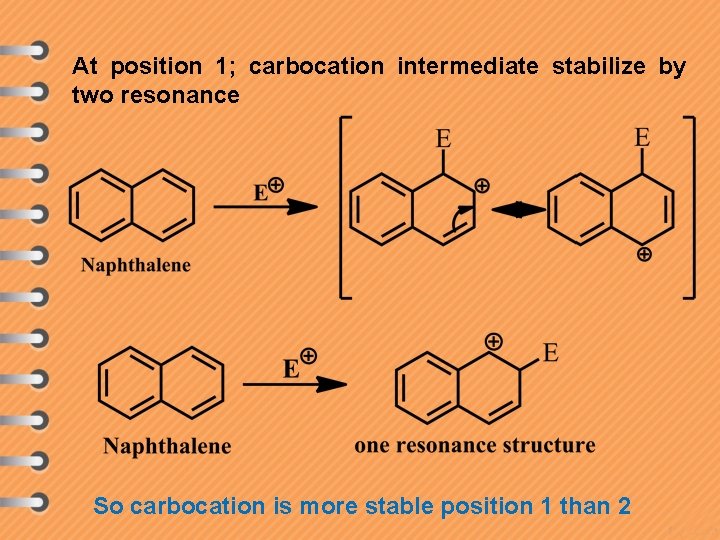
At position 1; carbocation intermediate stabilize by two resonance So carbocation is more stable position 1 than 2
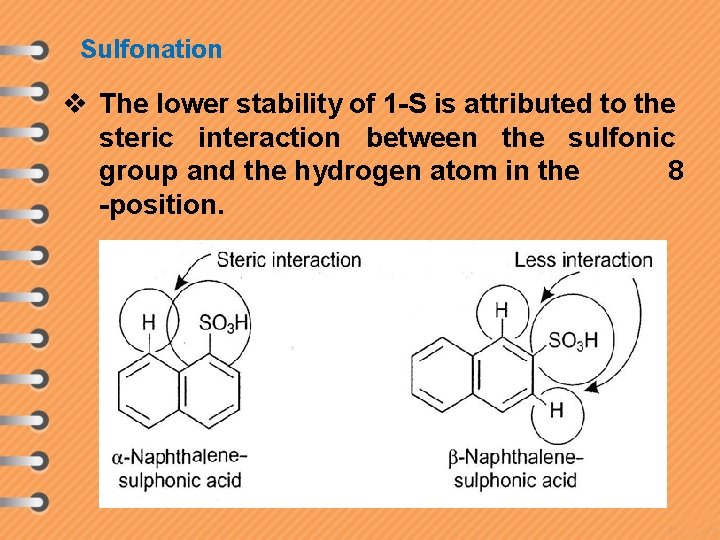
Sulfonation v The lower stability of 1 -S is attributed to the steric interaction between the sulfonic group and the hydrogen atom in the 8 -position.
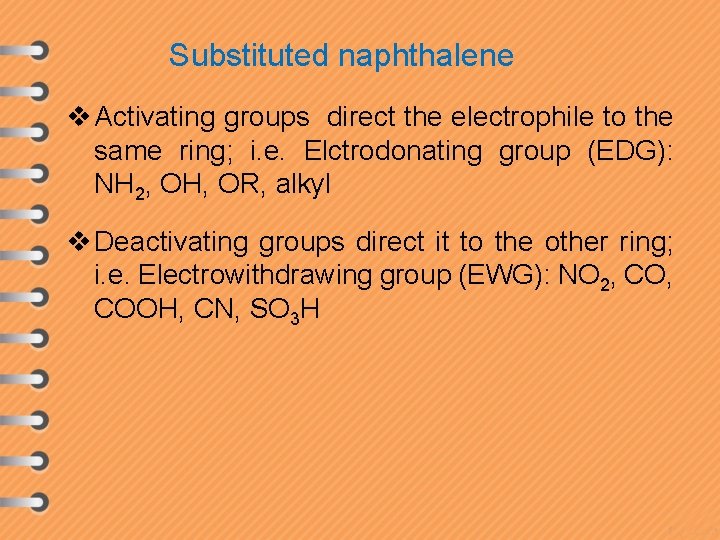
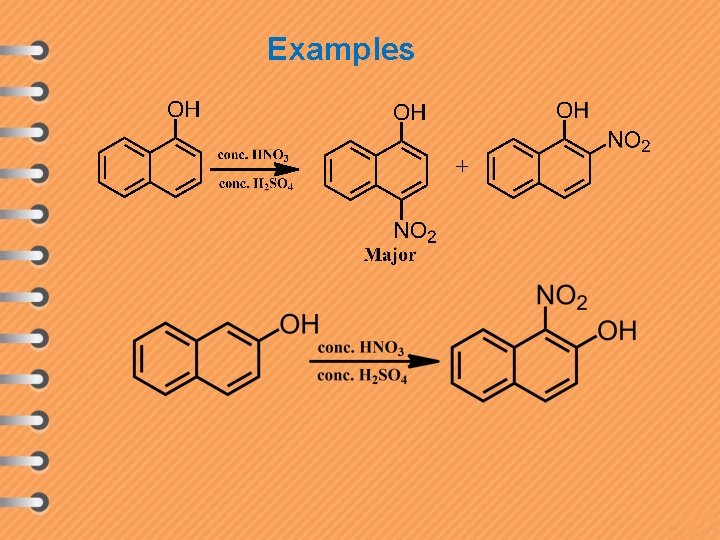
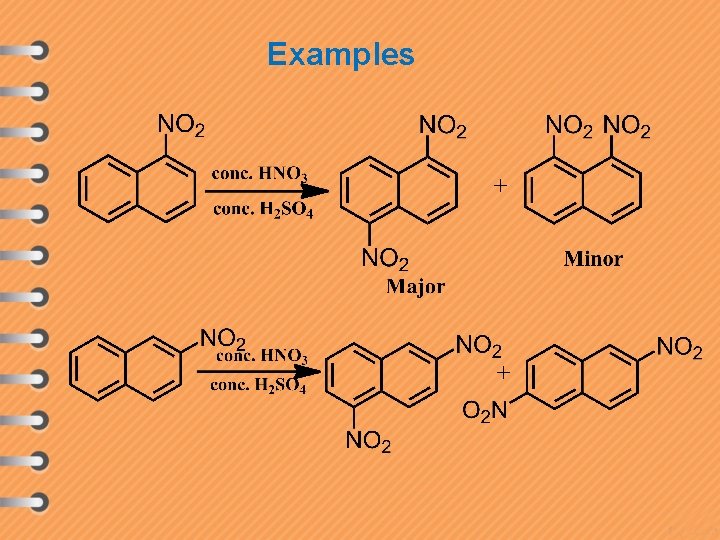
Substituted naphthalene v Activating groups direct the electrophile to the same ring; i. e. Elctrodonating group (EDG): NH 2, OH, OR, alkyl v Deactivating groups direct it to the other ring; i. e. Electrowithdrawing group (EWG): NO 2, COOH, CN, SO 3 H
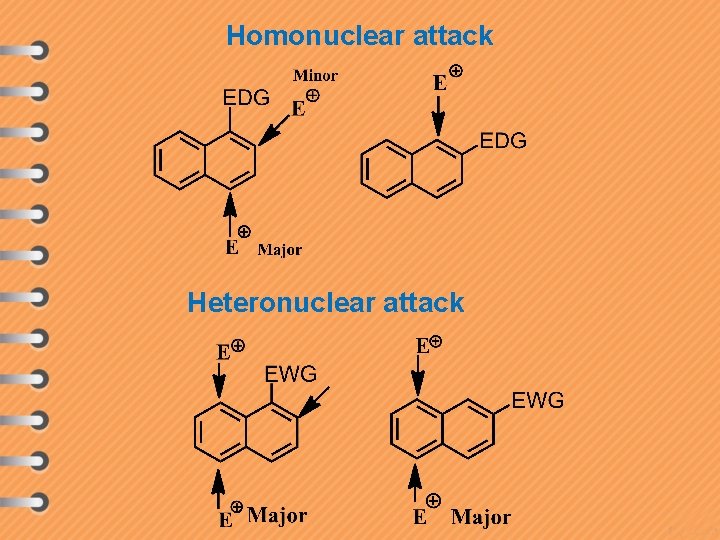
Homonuclear attack Heteronuclear attack
Examples
Examples
Summary of naphthalene reactions
Anthracene (C 14 H 10) 8 9 1 7 2 6 3 5 10 4
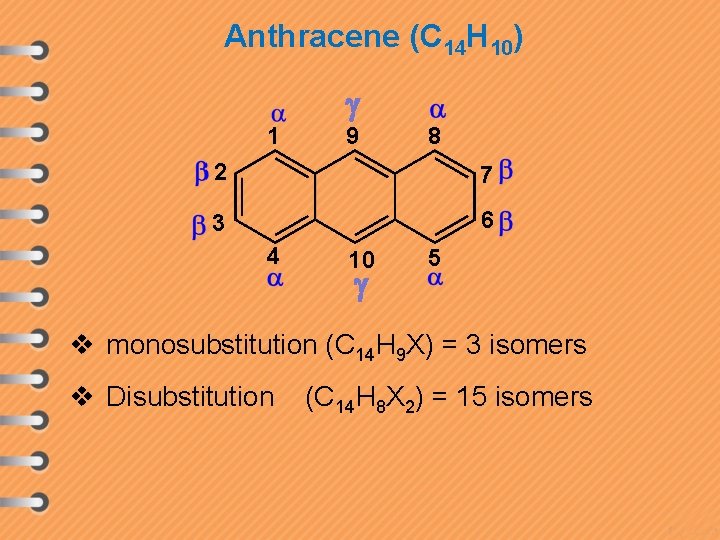
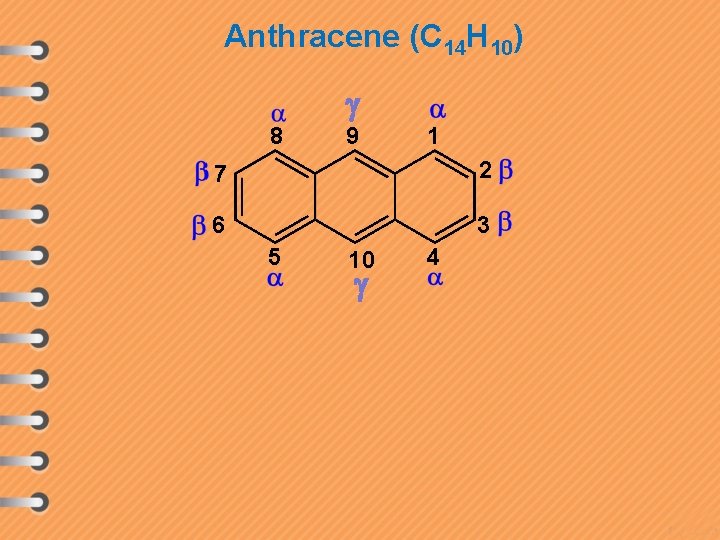
Anthracene (C 14 H 10) 1 9 8 2 7 3 6 4 10 5 v monosubstitution (C 14 H 9 X) = 3 isomers v Disubstitution (C 14 H 8 X 2) = 15 isomers
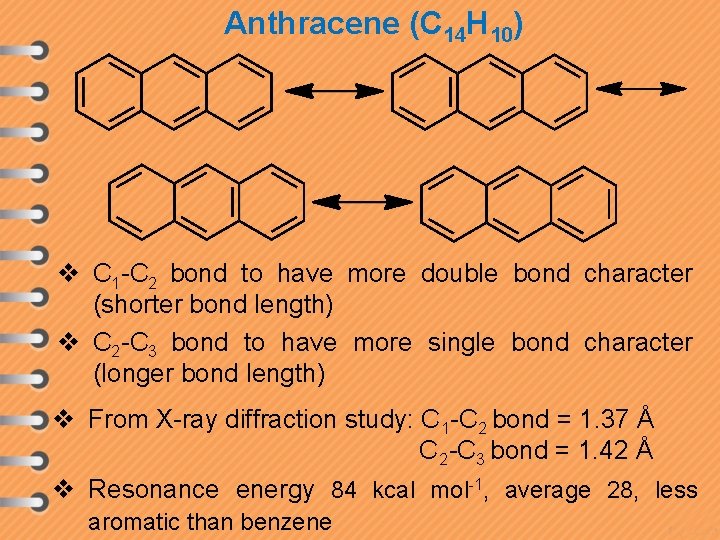
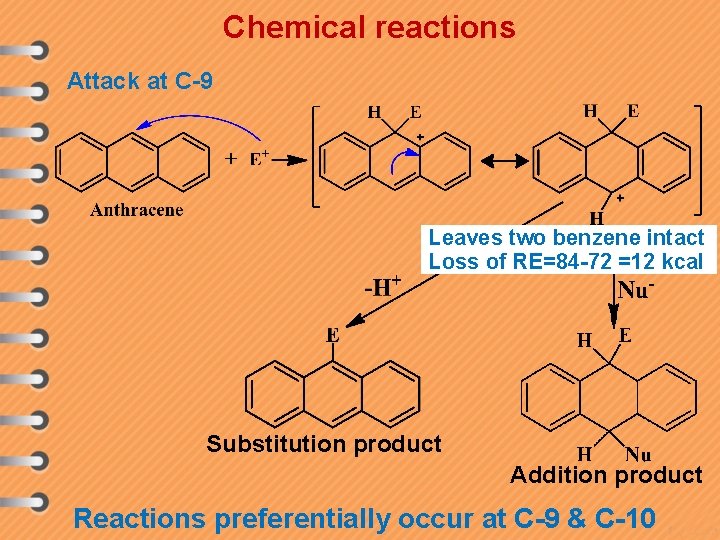
Anthracene (C 14 H 10) v C 1 -C 2 bond to have more double bond character (shorter bond length) v C 2 -C 3 bond to have more single bond character (longer bond length) v From X-ray diffraction study: C 1 -C 2 bond = 1. 37 Å C 2 -C 3 bond = 1. 42 Å v Resonance energy 84 kcal mol-1, average 28, less aromatic than benzene
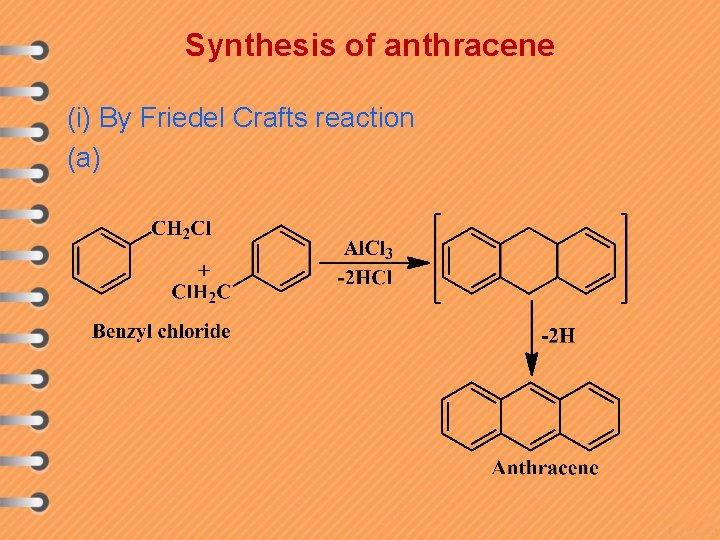
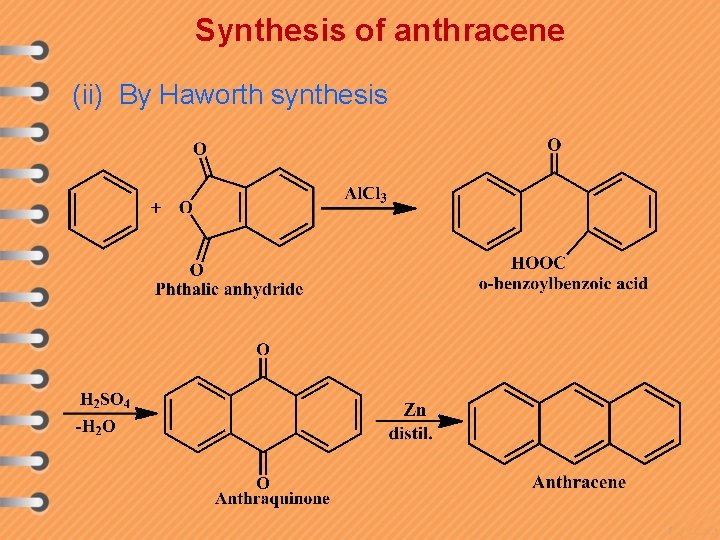
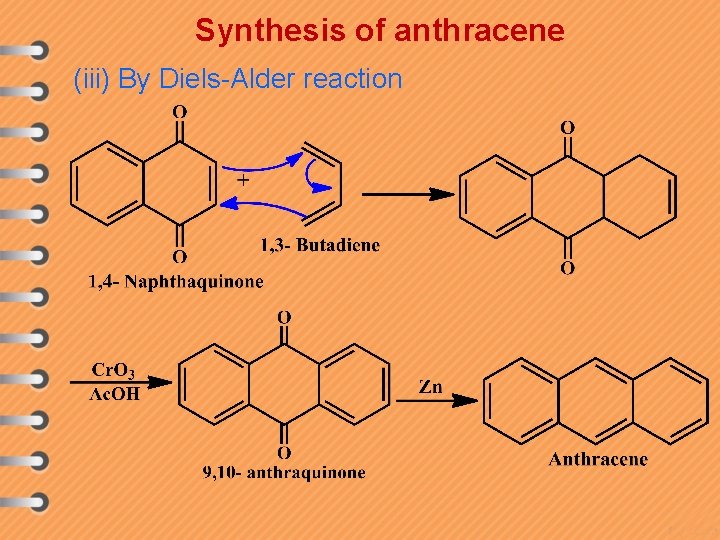
Synthesis of anthracene (i) By Friedel Crafts reaction (a)
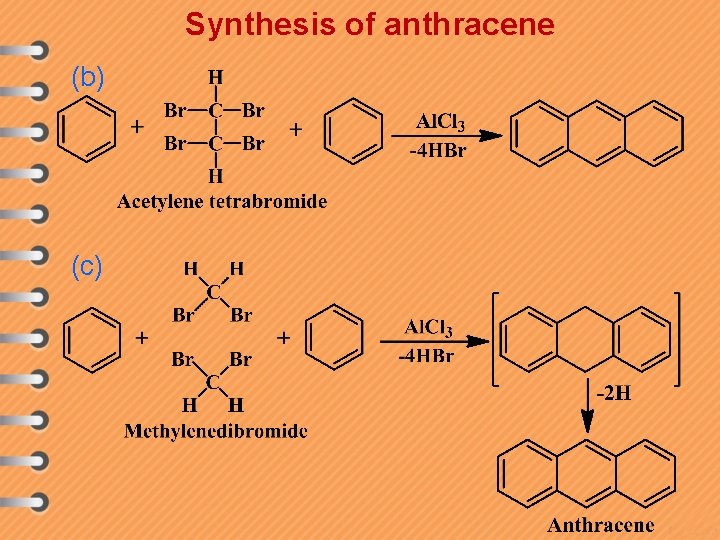
Synthesis of anthracene (b) (c)
Synthesis of anthracene (ii) By Haworth synthesis
Synthesis of anthracene (iii) By Diels-Alder reaction
Chemical reactions Attack at C-1 Attack at C-2 Leaves naphthalene intact Loss of RE=84 -61=23 kcal
Chemical reactions Attack at C-9 Leaves two benzene intact Loss of RE=84 -72 =12 kcal Substitution product Addition product Reactions preferentially occur at C-9 & C-10
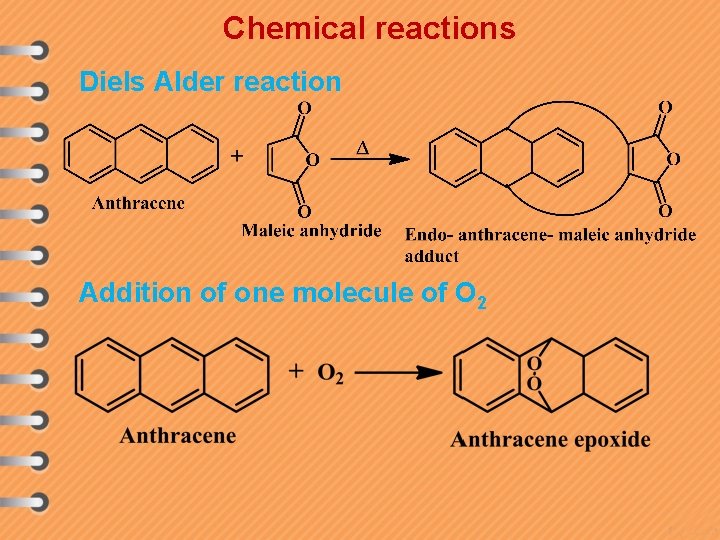
Chemical reactions Diels Alder reaction Addition of one molecule of O 2
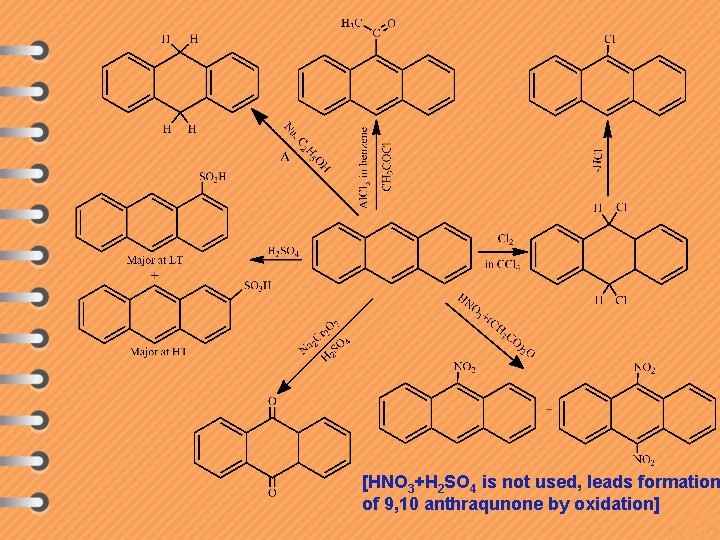
[HNO 3+H 2 SO 4 is not used, leads formation of 9, 10 anthraqunone by oxidation]
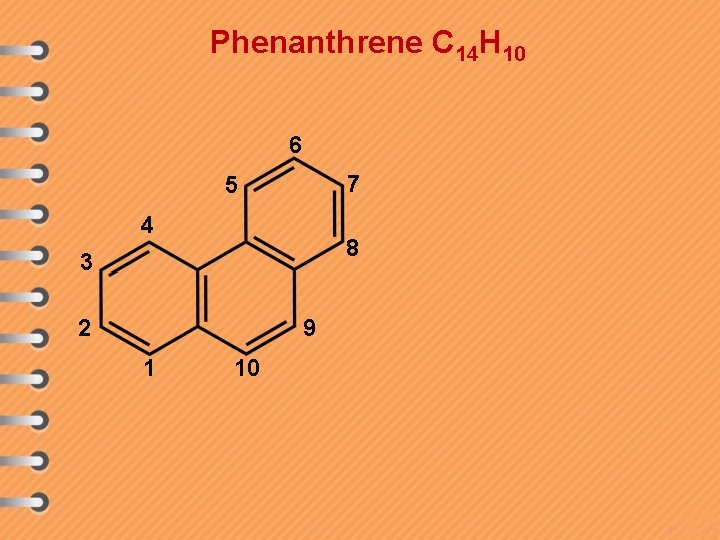
Phenanthrene C 14 H 10 6 7 5 4 8 3 2 9 1 10
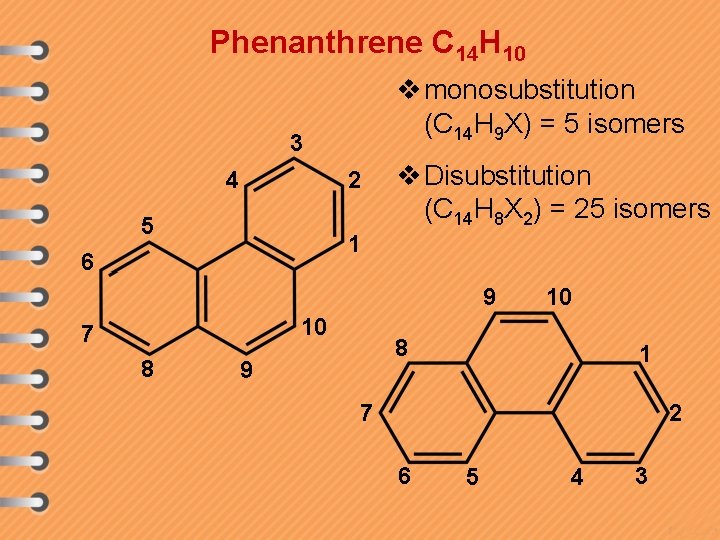
Phenanthrene C 14 H 10 v monosubstitution (C 14 H 9 X) = 5 isomers 3 2 4 5 v Disubstitution (C 14 H 8 X 2) = 25 isomers 1 6 9 10 7 8 10 8 9 1 7 2 6 5 4 3
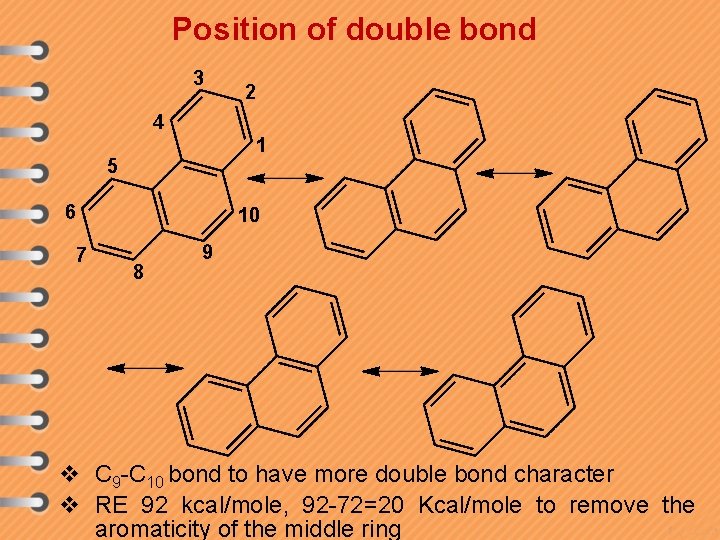
Position of double bond 3 2 4 1 5 6 7 10 8 9 v C 9 -C 10 bond to have more double bond character v RE 92 kcal/mole, 92 -72=20 Kcal/mole to remove the aromaticity of the middle ring
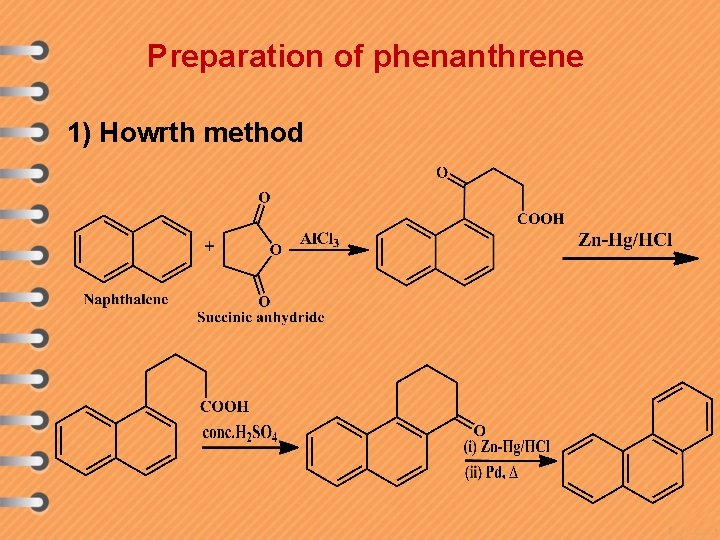
Preparation of phenanthrene 1) Howrth method
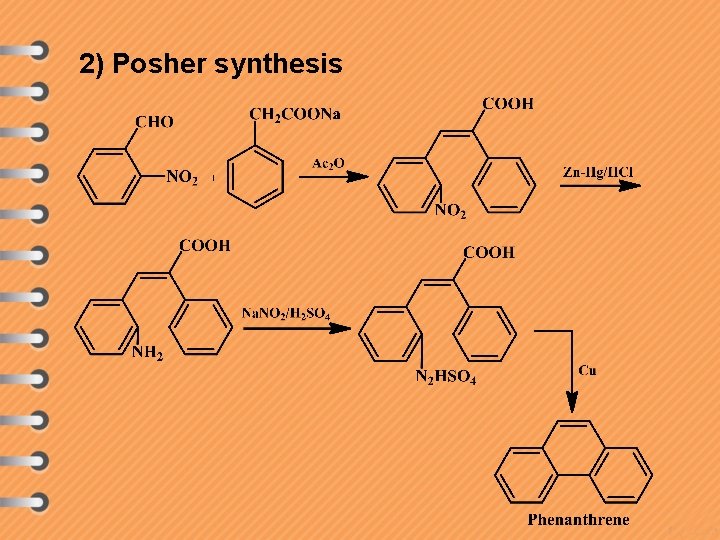
2) Posher synthesis
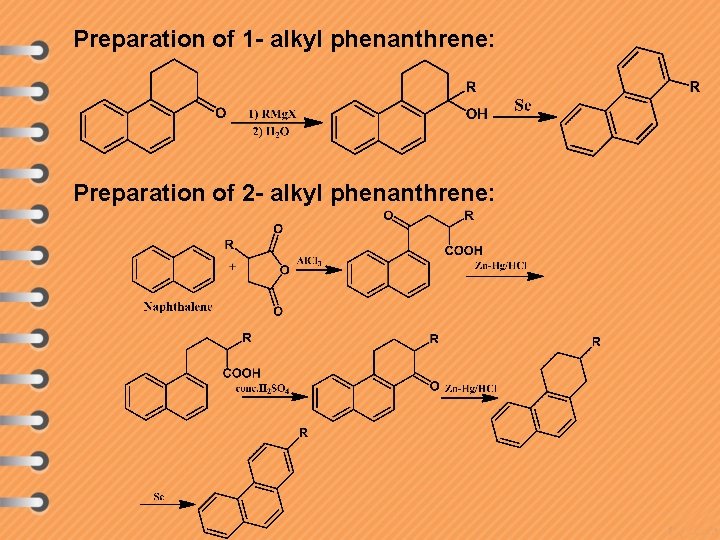
Preparation of 1 - alkyl phenanthrene: Preparation of 2 - alkyl phenanthrene:
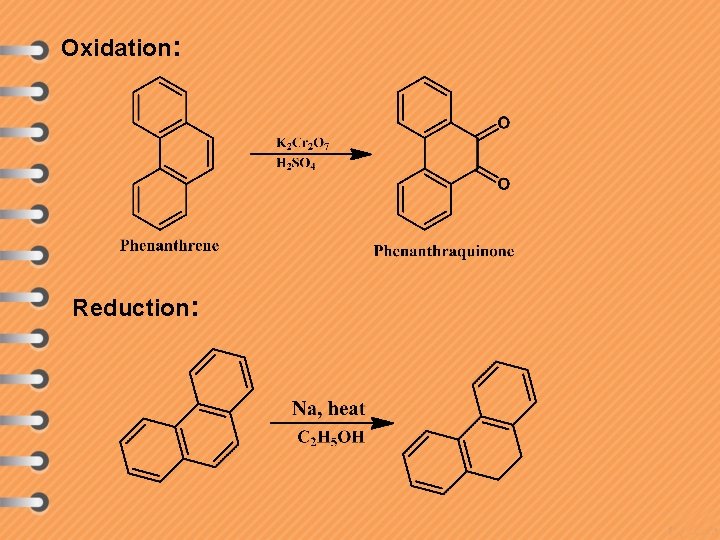
Oxidation: Reduction:
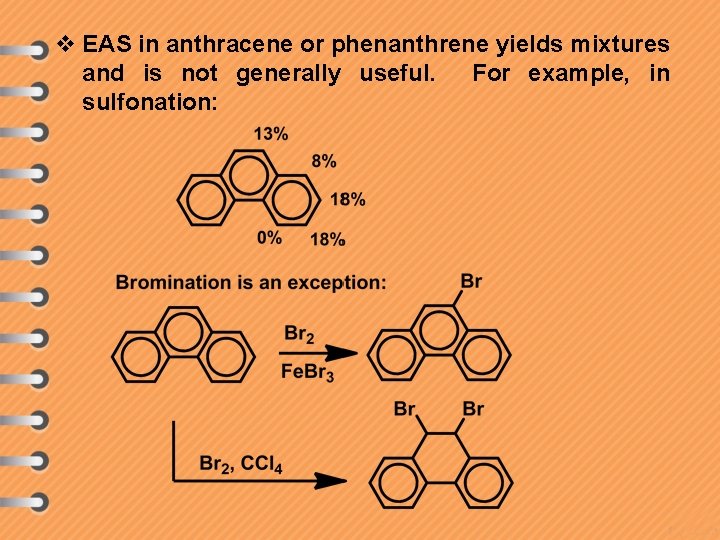
v EAS in anthracene or phenanthrene yields mixtures and is not generally useful. For example, in sulfonation:
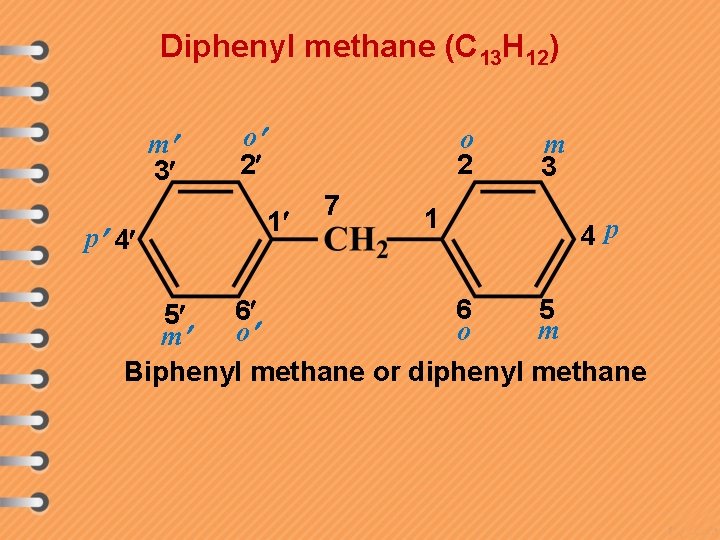
Diphenyl methane (C 13 H 12) m 3 p 4 o 2 1 7 1 m 3 4 p 5 6 6 5 m o o m Biphenyl methane or diphenyl methane
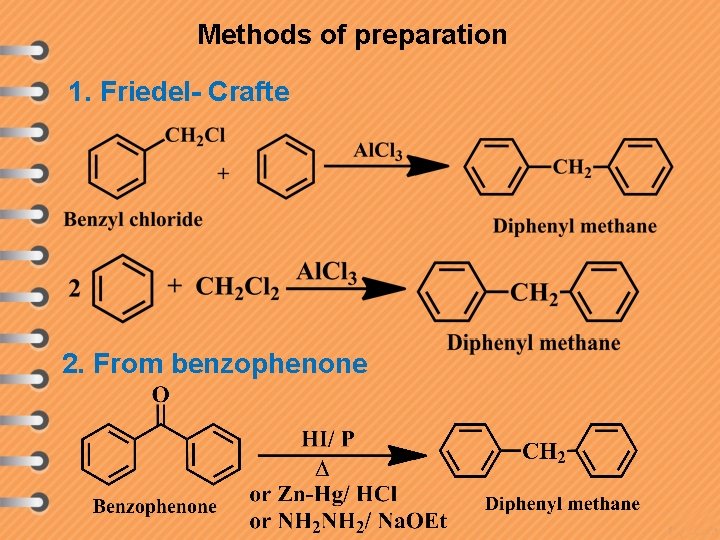
Methods of preparation 1. Friedel- Crafte 2. From benzophenone
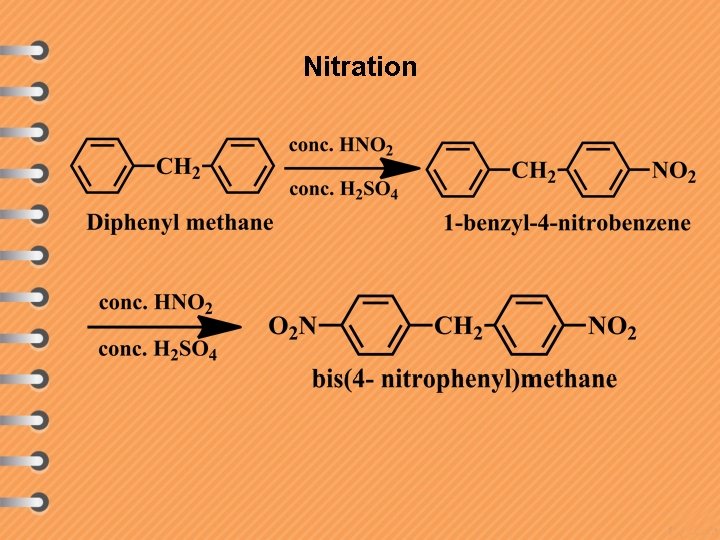
Nitration
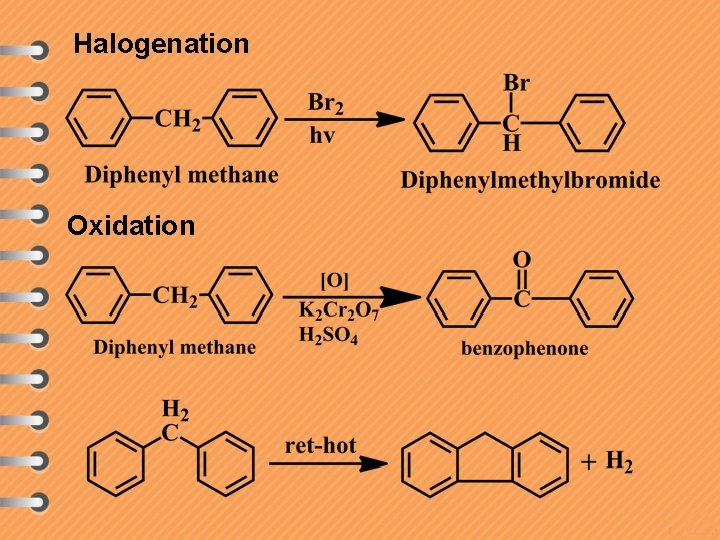
Halogenation Oxidation
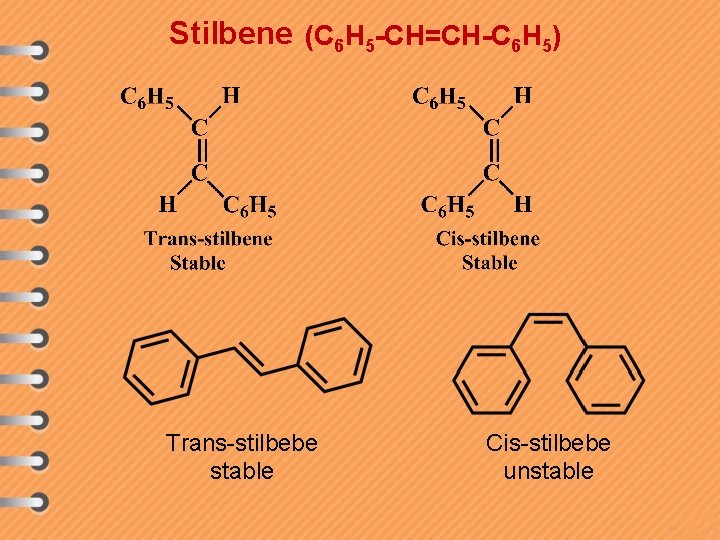
Stilbene (C 6 H 5 -CH=CH-C 6 H 5) Trans-stilbebe stable Cis-stilbebe unstable
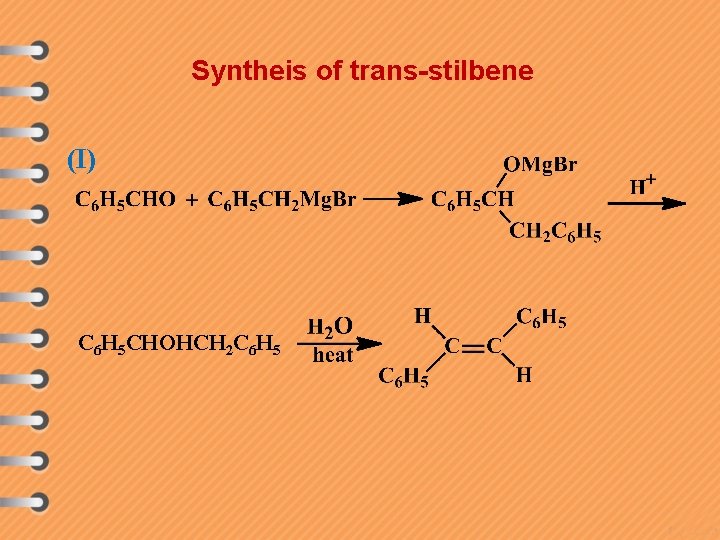
Syntheis of trans-stilbene (I) C 6 H 5 CHOHCH 2 C 6 H 5
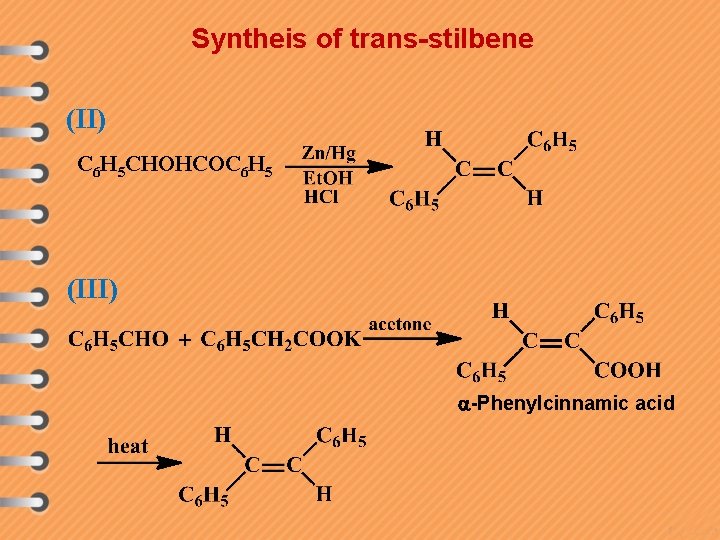
Syntheis of trans-stilbene (II) C 6 H 5 CHOHCOC 6 H 5 (III) -Phenylcinnamic acid
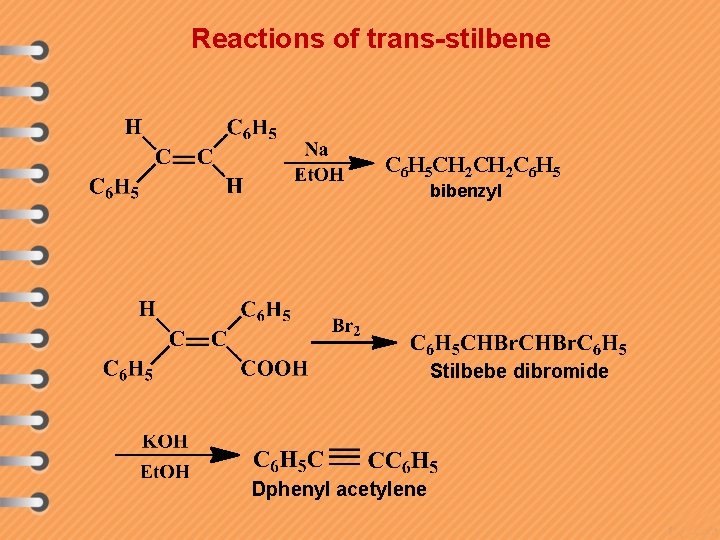
Reactions of trans-stilbene C 6 H 5 CH 2 C 6 H 5 bibenzyl Stilbebe dibromide Dphenyl acetylene
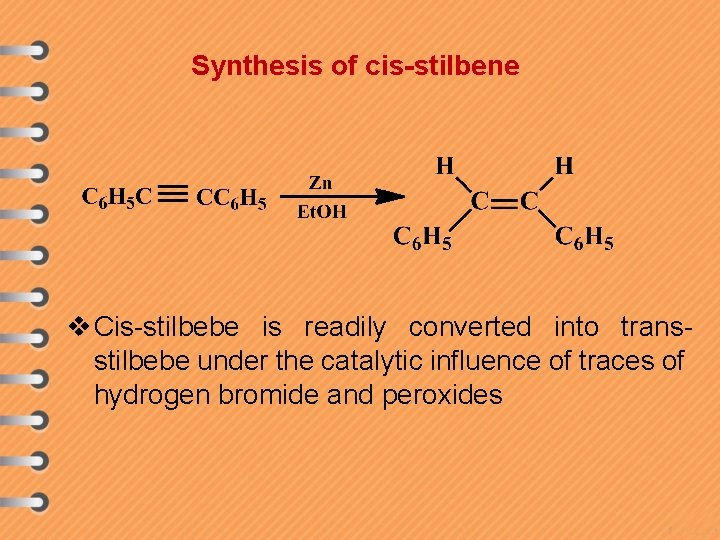
Synthesis of cis-stilbene v Cis-stilbebe is readily converted into transstilbebe under the catalytic influence of traces of hydrogen bromide and peroxides
- Slides: 54