
Polynomials Classifying by Degree and Terms Adding and
Polynomials Classifying by Degree and Terms Adding and Subtracting Multiplying
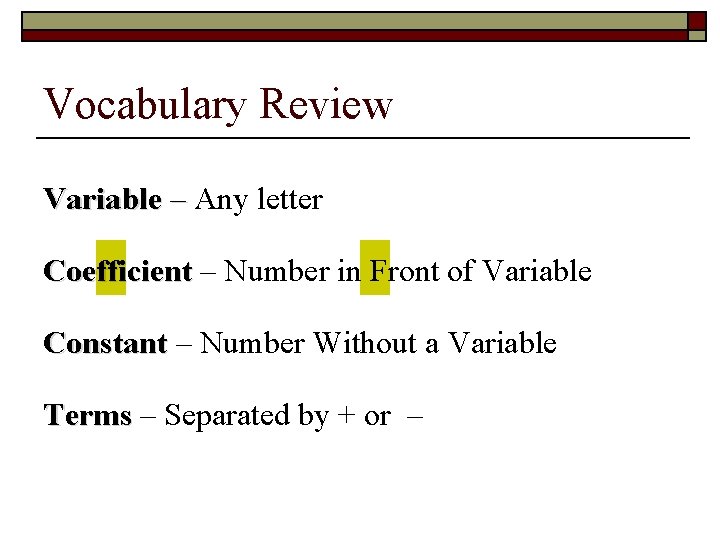
Vocabulary Review Variable – Any letter Coefficient – Number in Front of Variable Constant – Number Without a Variable Terms – Separated by + or –
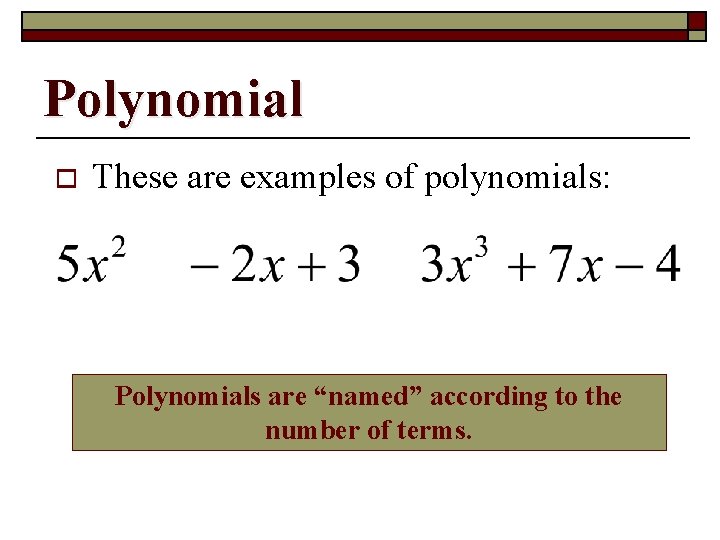
Polynomial o These are examples of polynomials: Polynomials are “named” according to the number of terms.
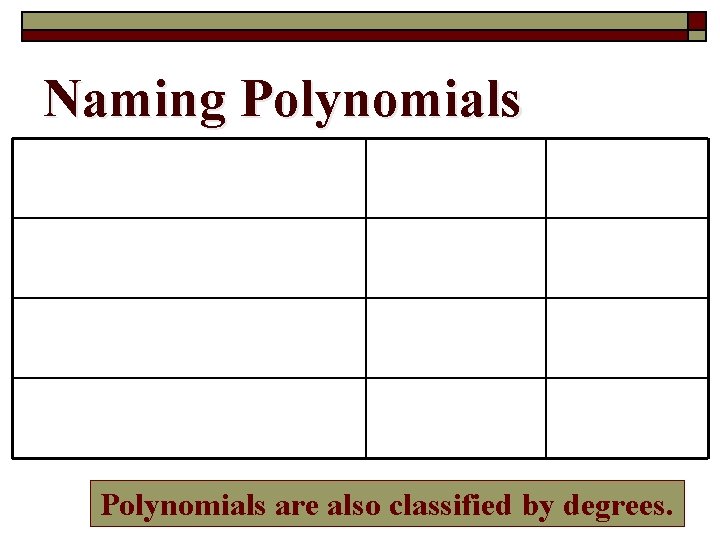
Naming Polynomials One term Monomial Two terms Binomial Three terms Trinomial Four or more terms Polynomials are also classified by degrees.
Degree – One Variable Degree of a term is the variable exponent for that term. Degree of a polynomial is the largest variable exponent in the polynomial.
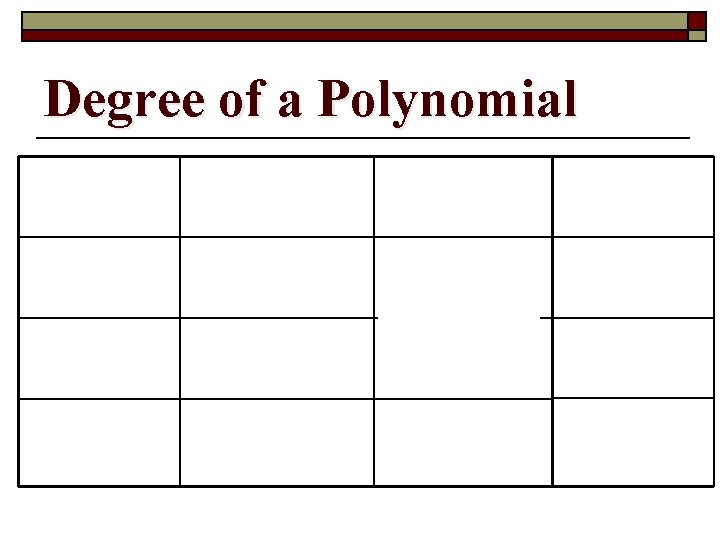
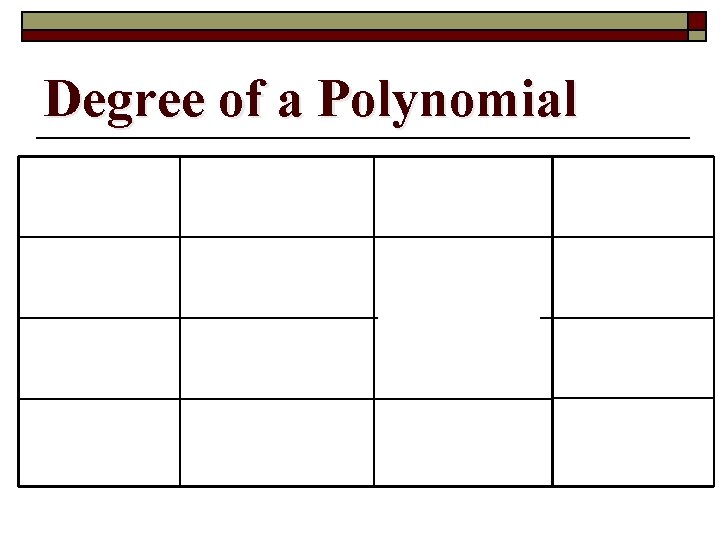
Degree of a Polynomial Largest exponent is 3 degree 1 1 st degree 2 2 nd degree 3 3 rd degree Largest exponent is n degree n nth degree Largest exponent is 1 Largest exponent is 2 linear quadratic cubic
Degree of a Polynomial Largest exponent is 3 degree 1 1 st degree 2 2 nd degree 3 3 rd degree Largest exponent is n degree n nth degree Largest exponent is 1 Largest exponent is 2 linear quadratic cubic
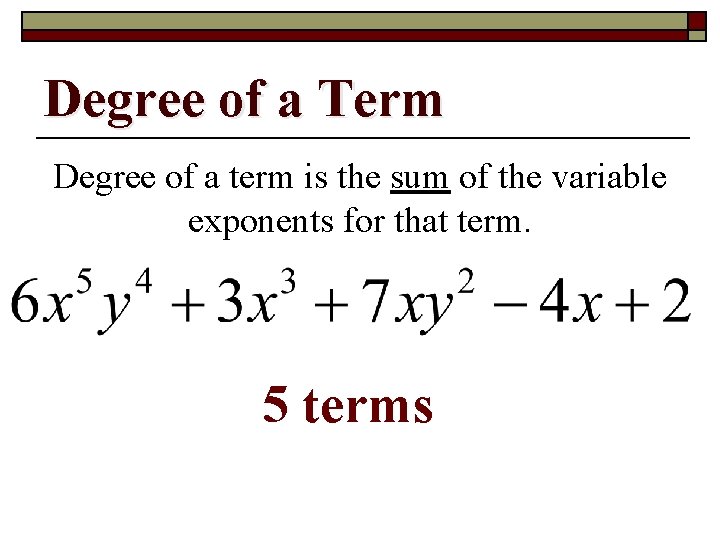
Degree of a Term Degree of a term is the sum of the variable exponents for that term. 5 terms
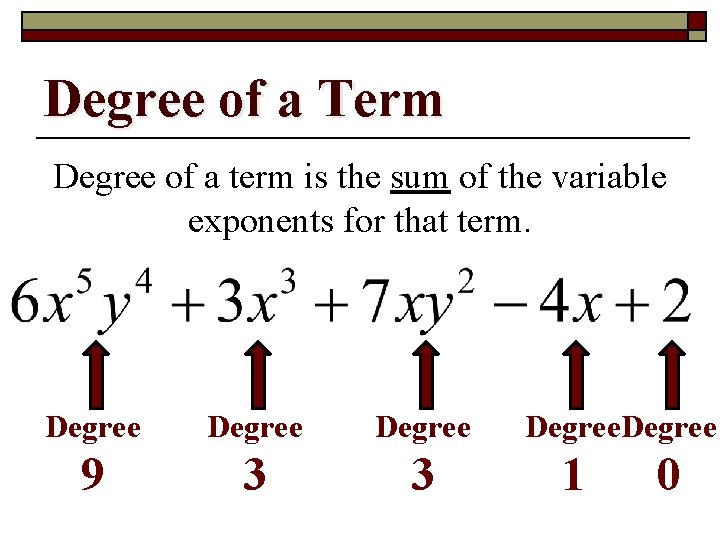
Degree of a Term Degree of a term is the sum of the variable exponents for that term. Degree 9 3 3 Degree 1 0
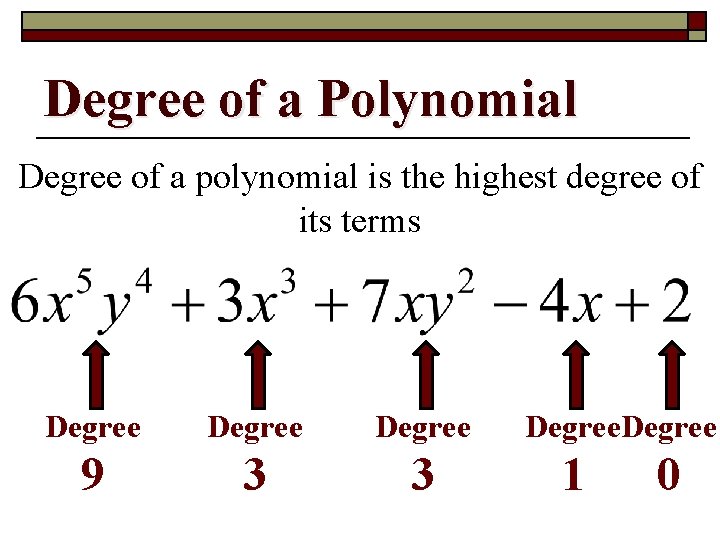
Degree of a Polynomial Degree of a polynomial is the highest degree of its terms Degree 9 3 3 Degree 1 0
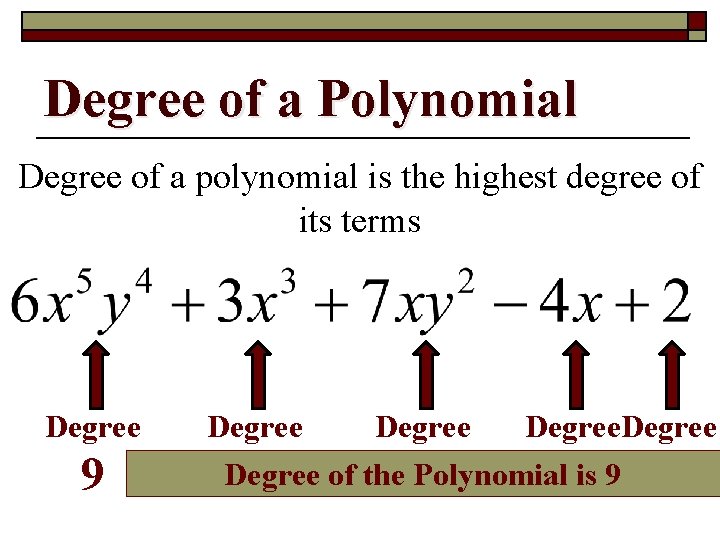
Degree of a Polynomial Degree of a polynomial is the highest degree of its terms Degree 9 Degree 3 of the 3 Polynomial 1 is 9 0
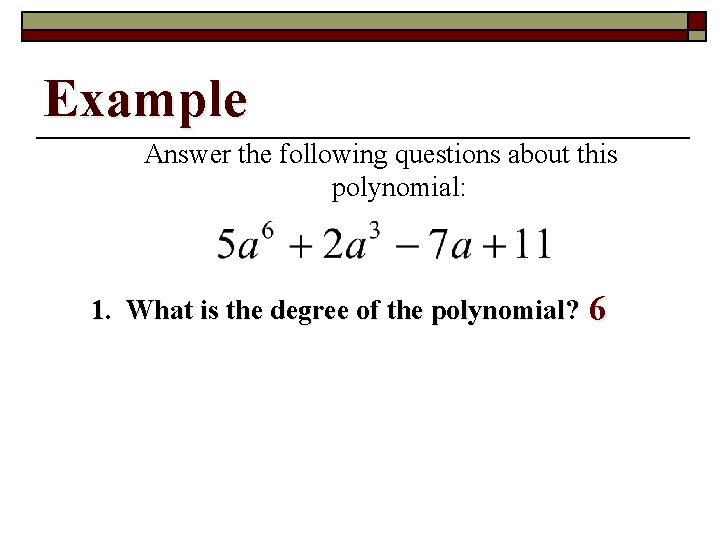
Example Answer the following questions about this polynomial: 1. What is the degree of the polynomial? 6
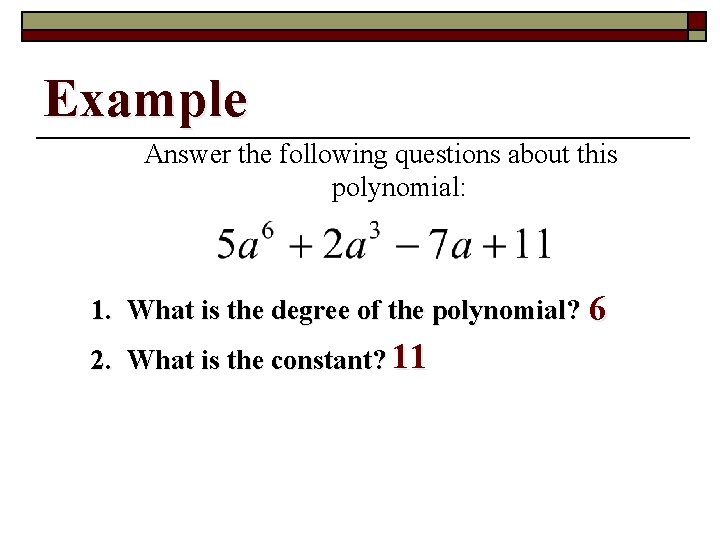
Example Answer the following questions about this polynomial: 1. What is the degree of the polynomial? 6 2. What is the constant? 11
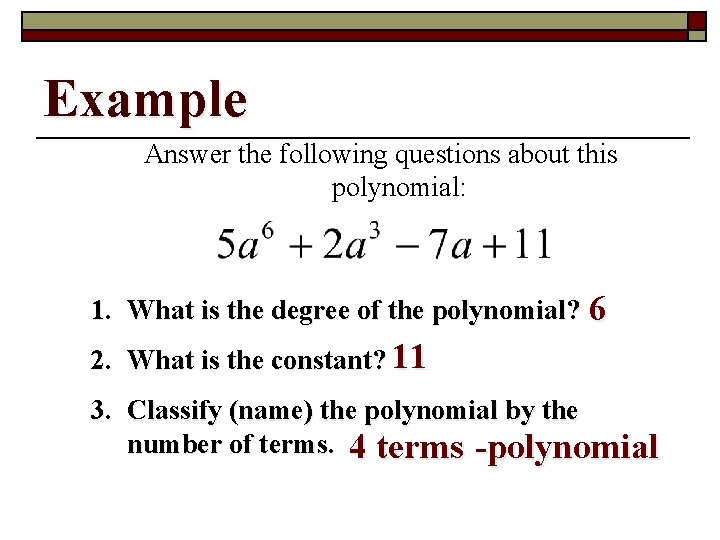
Example Answer the following questions about this polynomial: 1. What is the degree of the polynomial? 6 2. What is the constant? 11 3. Classify (name) the polynomial by the number of terms. 4 terms -polynomial
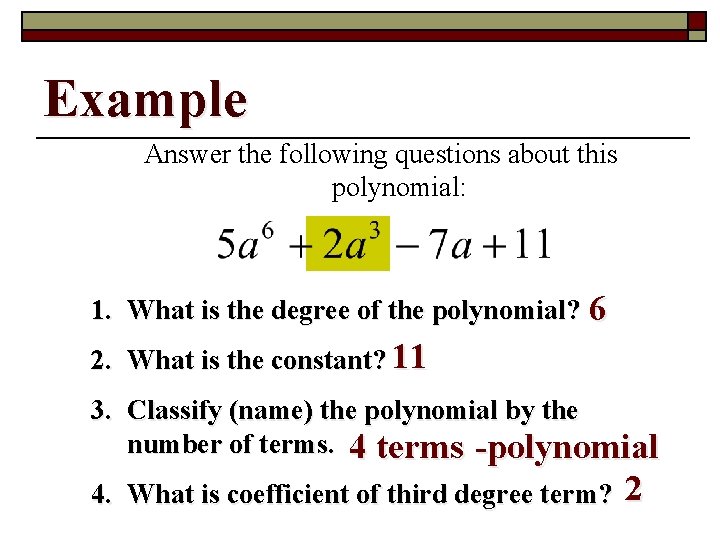
Example Answer the following questions about this polynomial: 1. What is the degree of the polynomial? 6 2. What is the constant? 11 3. Classify (name) the polynomial by the number of terms. 4 terms -polynomial 4. What is coefficient of third degree term? 2
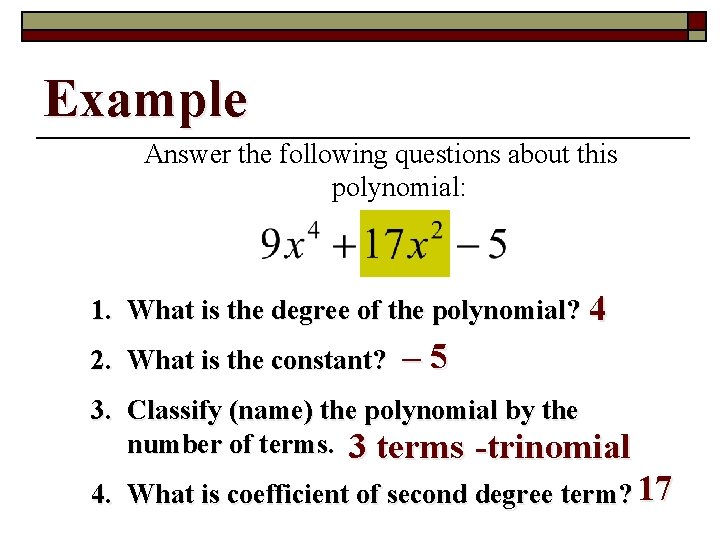
Example Answer the following questions about this polynomial: 1. What is the degree of the polynomial? 4 2. What is the constant? – 5 3. Classify (name) the polynomial by the number of terms. 3 terms -trinomial 4. What is coefficient of second degree term? 17
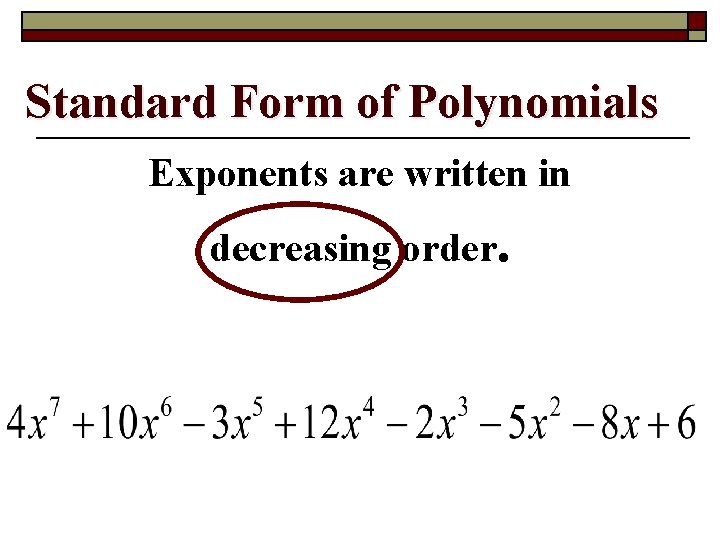
Standard Form of Polynomials Exponents are written in decreasing order.
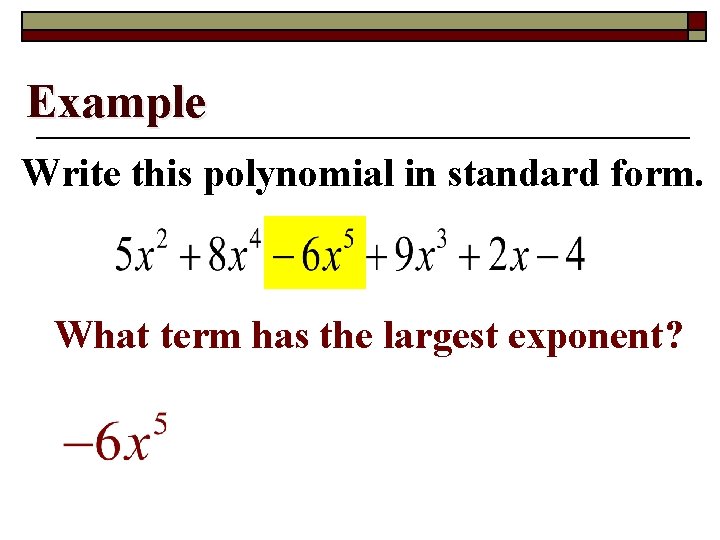
Example Write this polynomial in standard form. What term has the largest exponent?
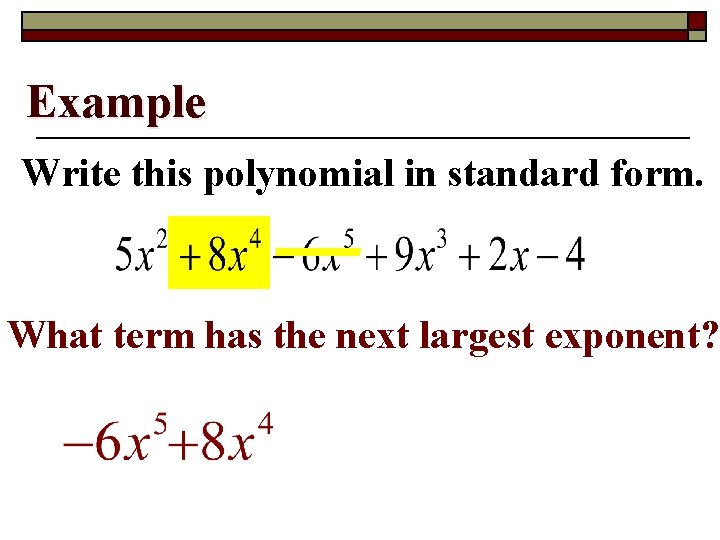
Example Write this polynomial in standard form. What term has the next largest exponent?
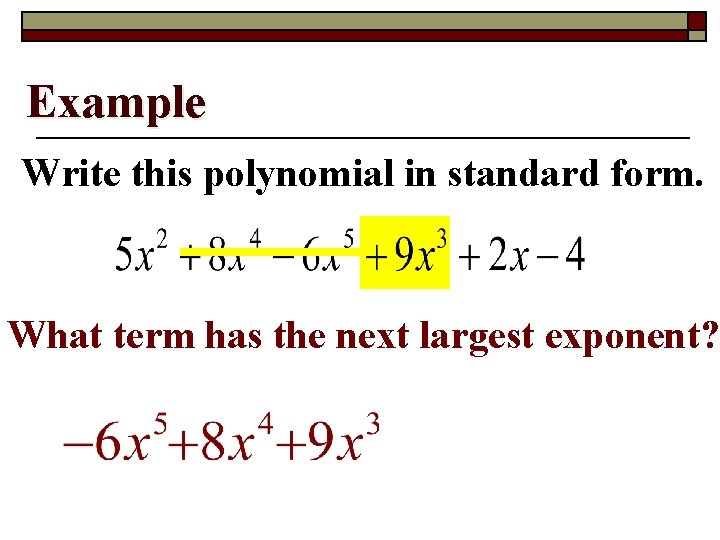
Example Write this polynomial in standard form. What term has the next largest exponent?
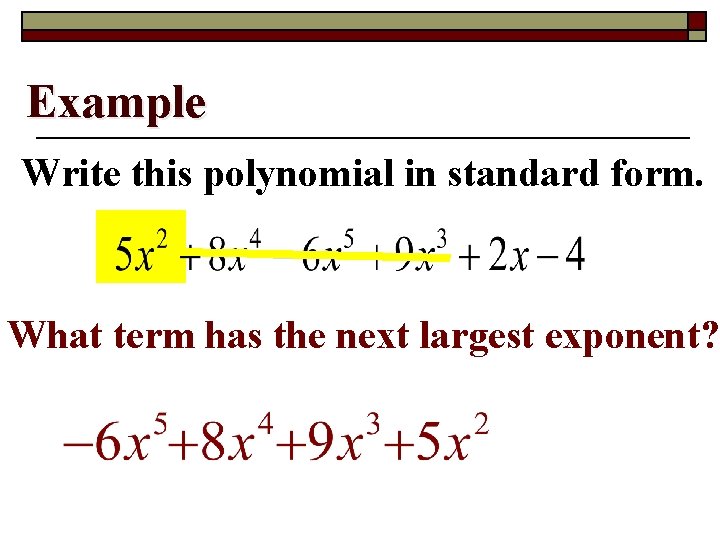
Example Write this polynomial in standard form. What term has the next largest exponent?
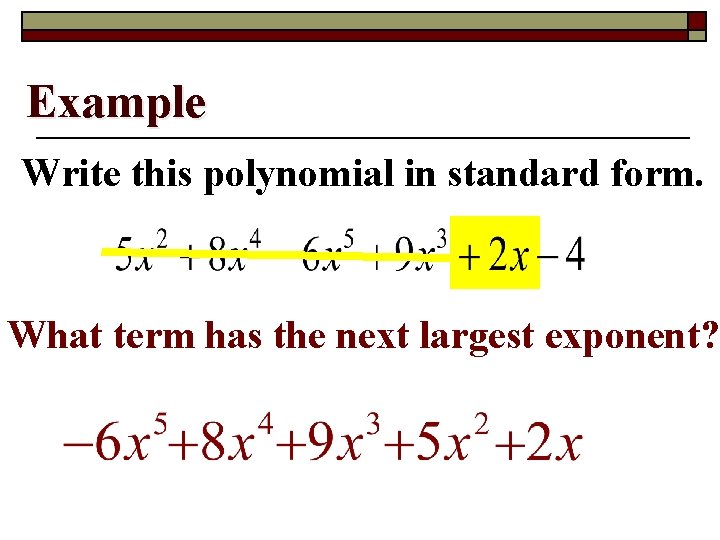
Example Write this polynomial in standard form. What term has the next largest exponent?
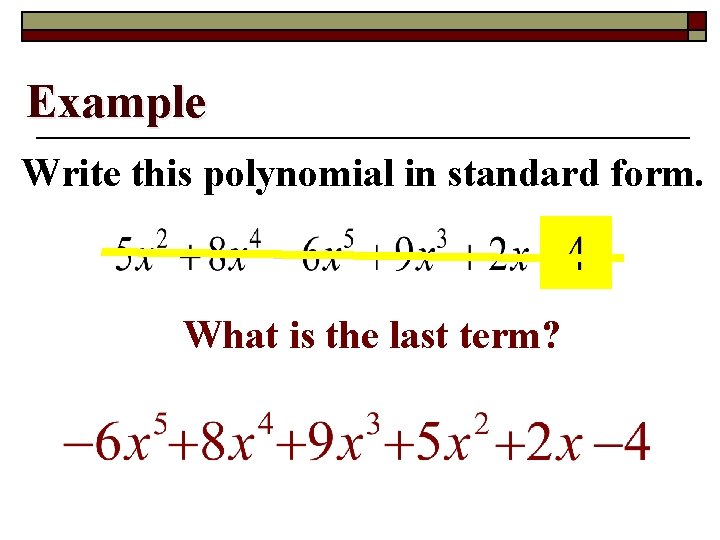
Example Write this polynomial in standard form. What is the last term?
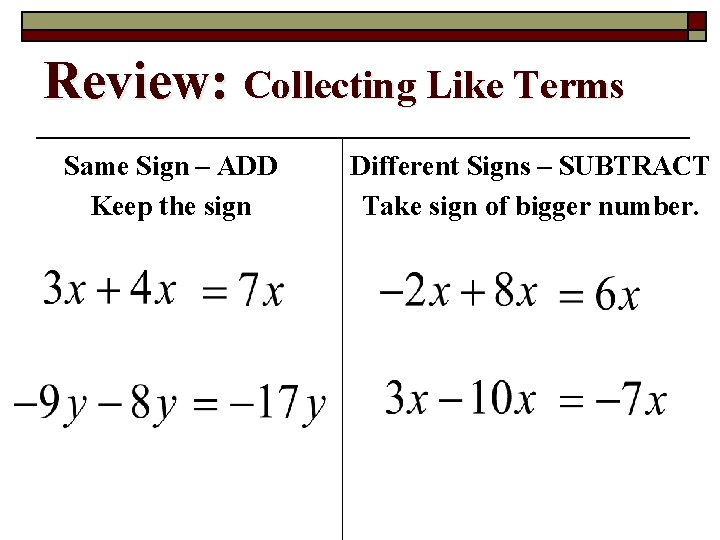
Review: Collecting Like Terms Same Sign – ADD Keep the sign Different Signs – SUBTRACT Take sign of bigger number.
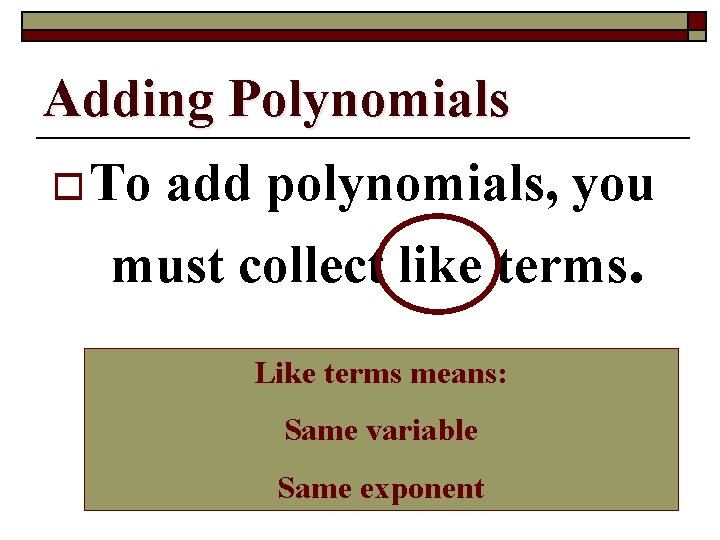
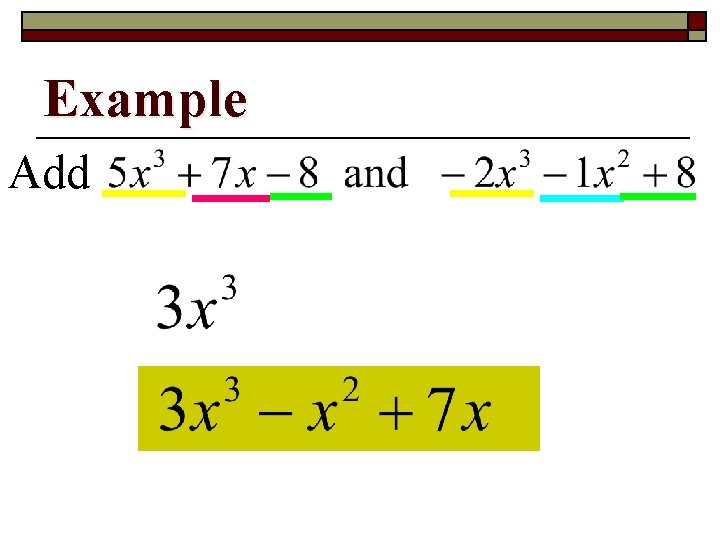
Adding Polynomials o To add polynomials, you must collect like terms. Like terms means: Same variable Same exponent
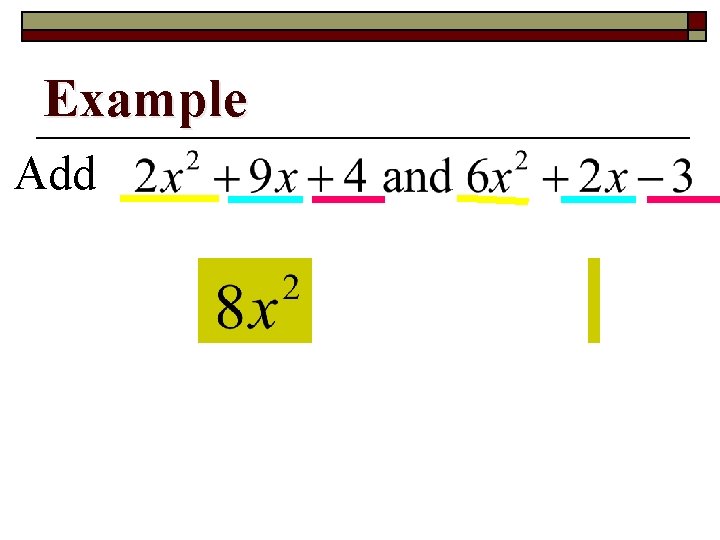
Example Add
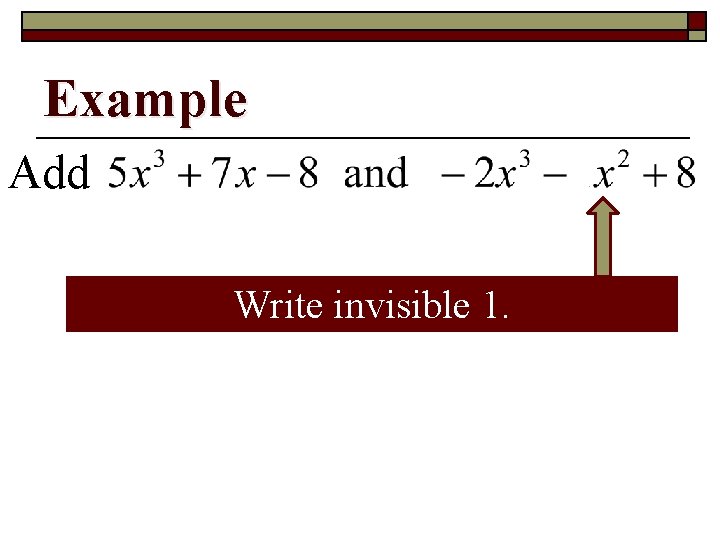
Example Add Write invisible 1.
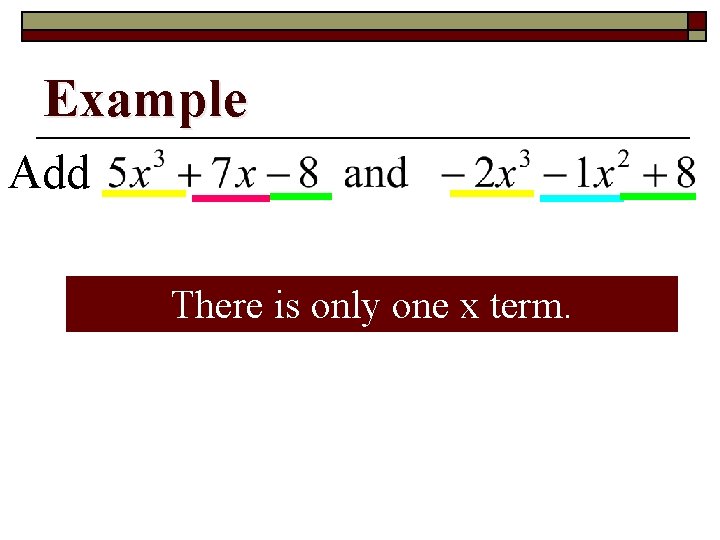
Example Add 2 term. There What is are is only the one like one xxterms? term.
Example Add
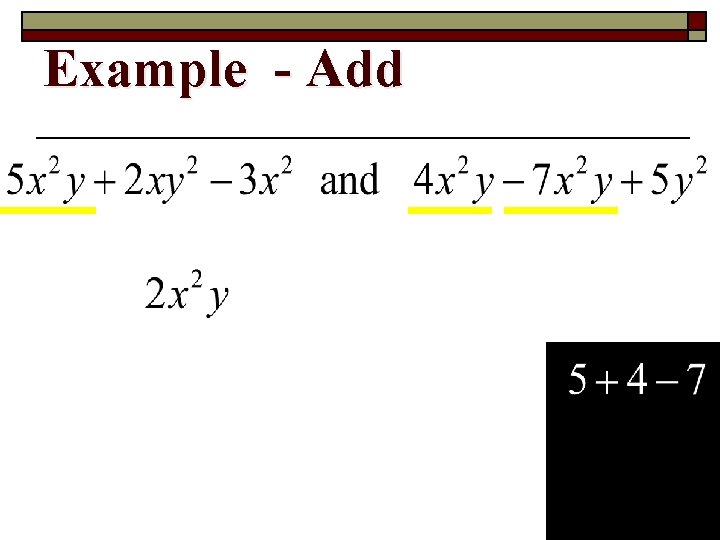
Example - Add
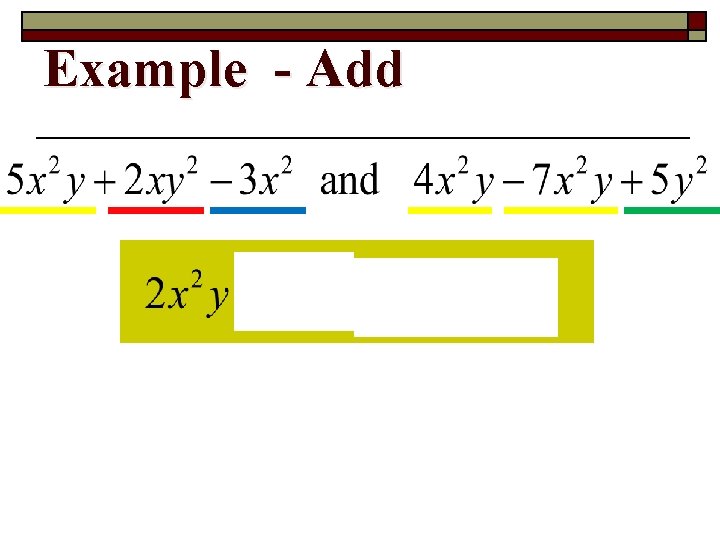
Example - Add
Subtracting Polynomials Write invisible 1. o Use the Distributive Property. o Combine Like Terms. o
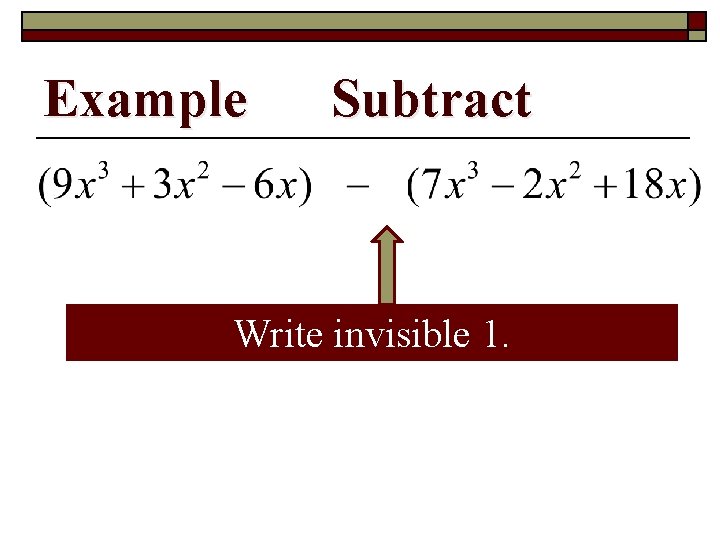
Example Subtract Write invisible 1.
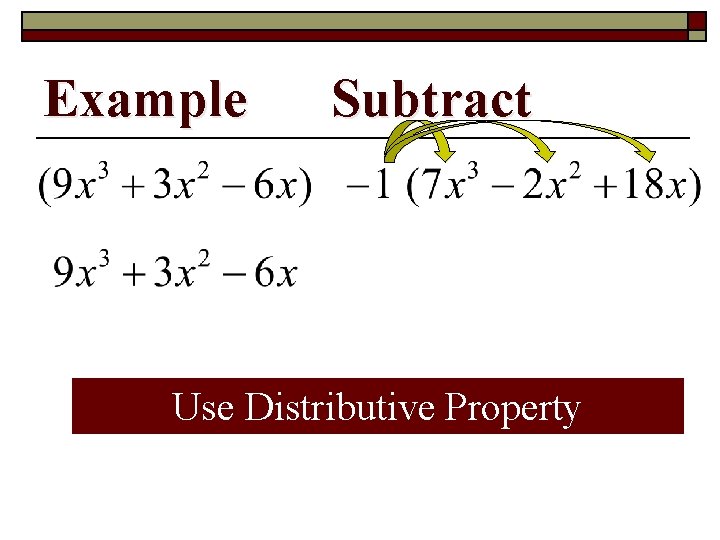
Example Subtract Use Distributive Property
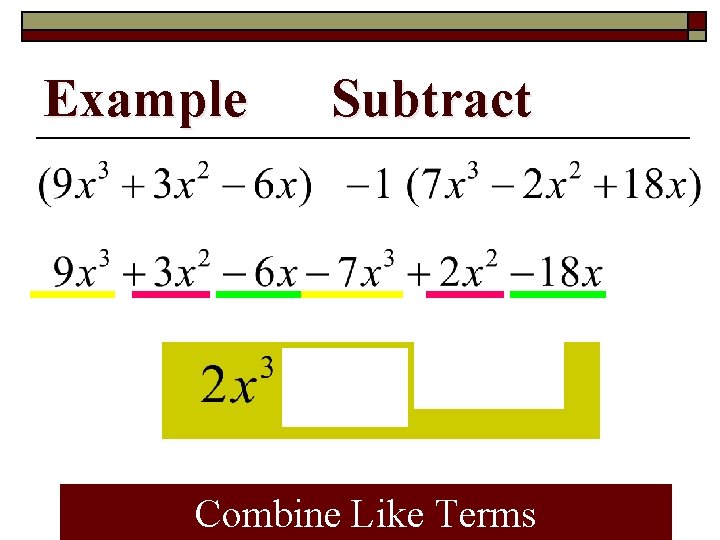
Example Subtract Combine Like Terms
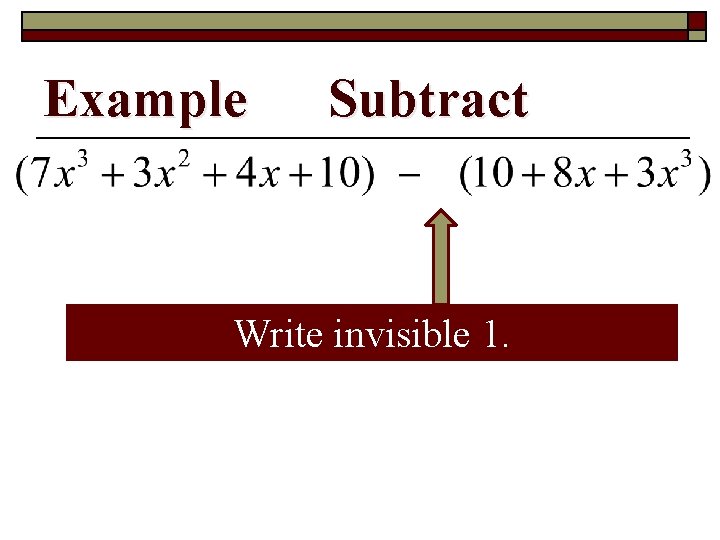
Example Subtract Write invisible 1.
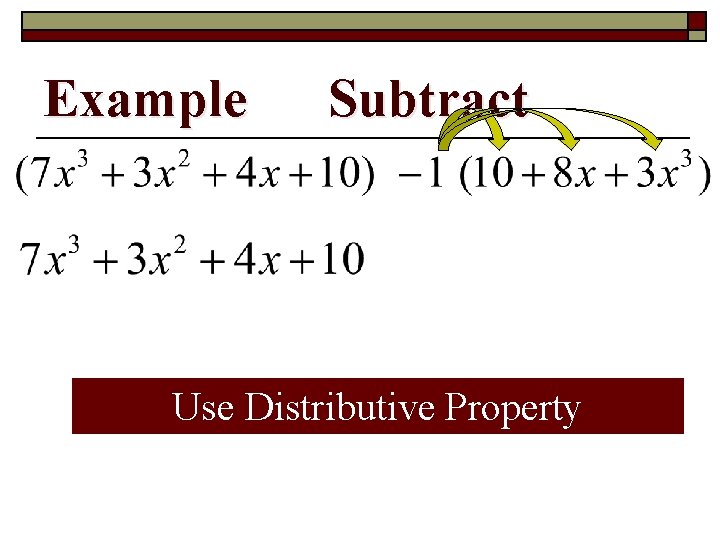
Example Subtract Use Distributive Property
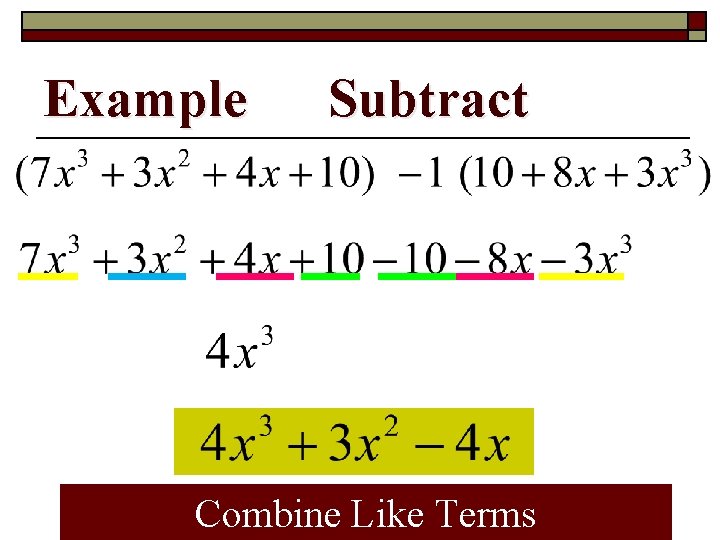
Example Subtract Combine Like Terms
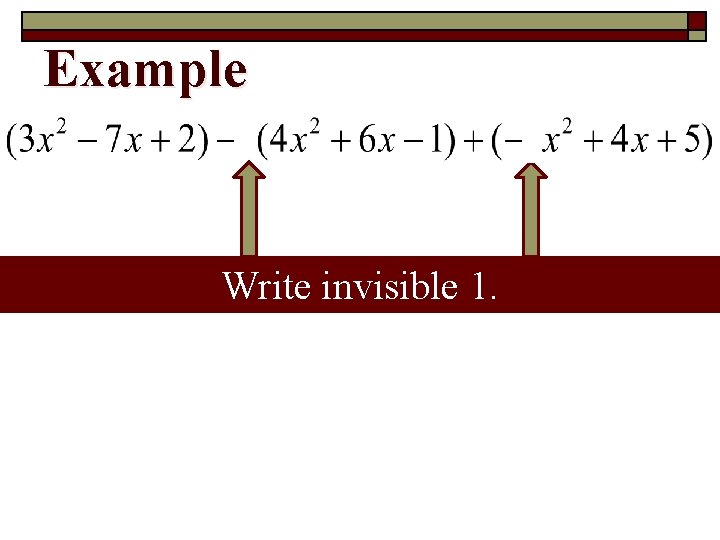
Example Write invisible 1.
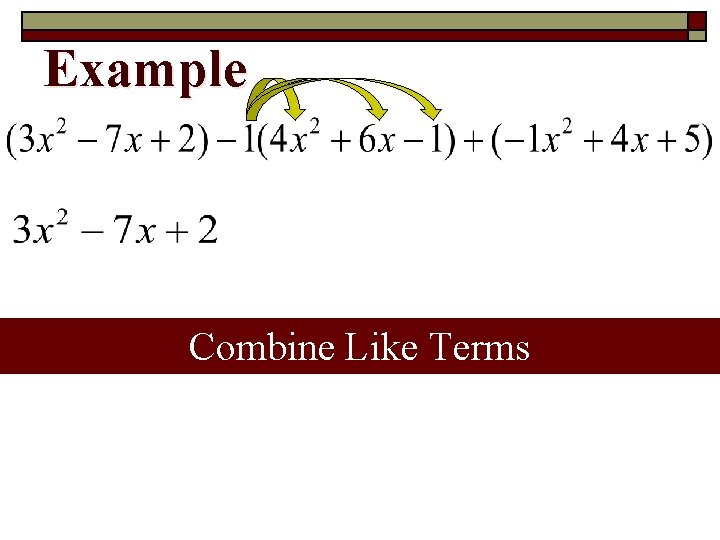
Example Combine Like Terms
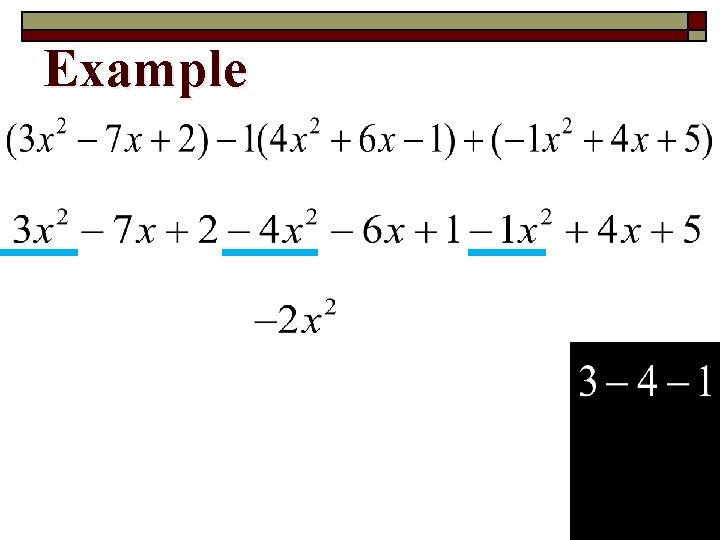
Example
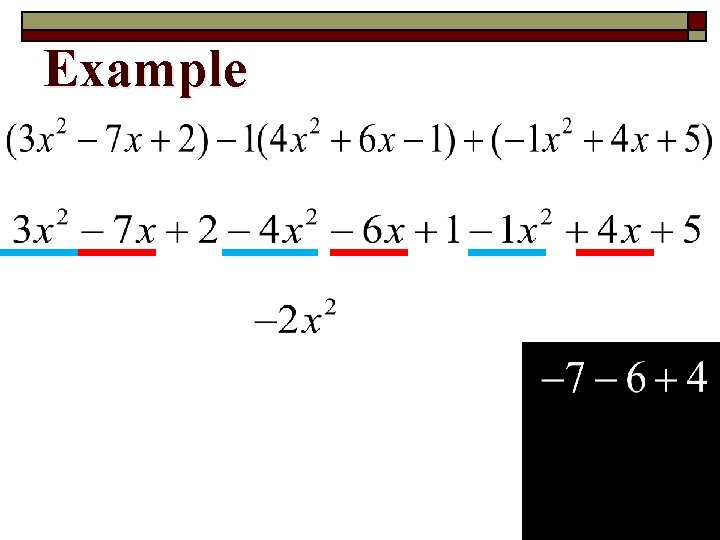
Example
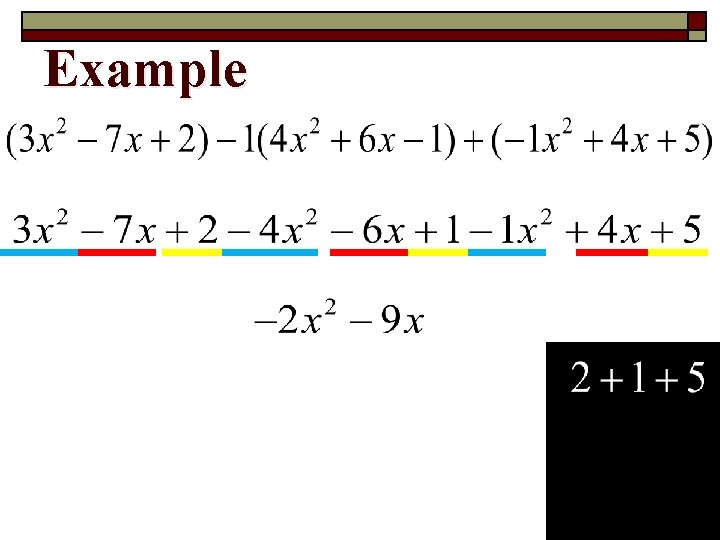
Example
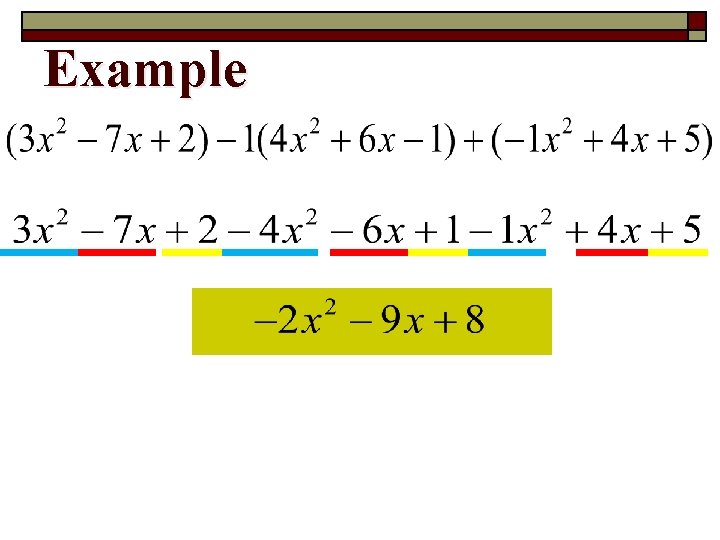
Example
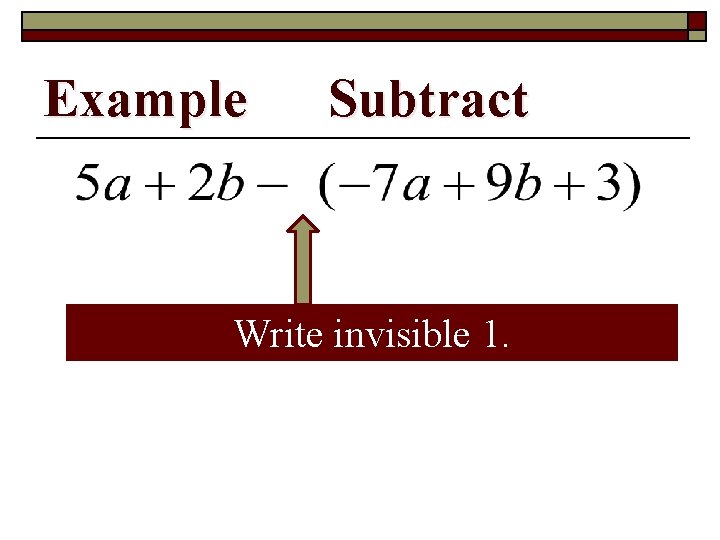
Example Subtract Write invisible 1.
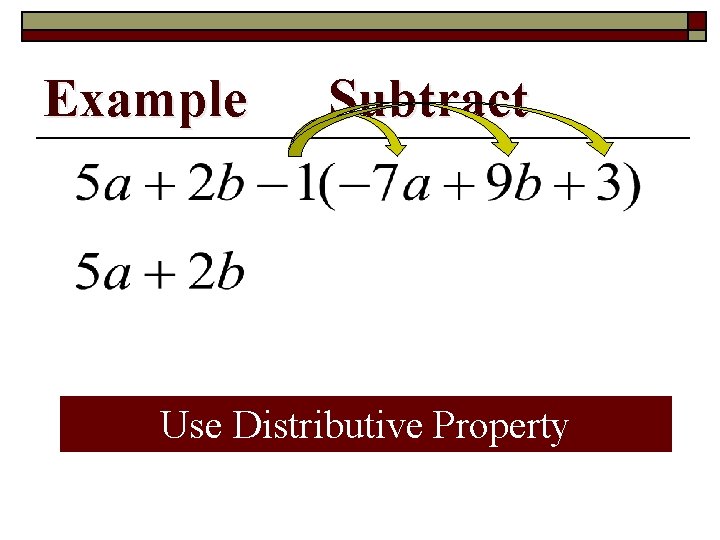
Example Subtract Use Distributive Property
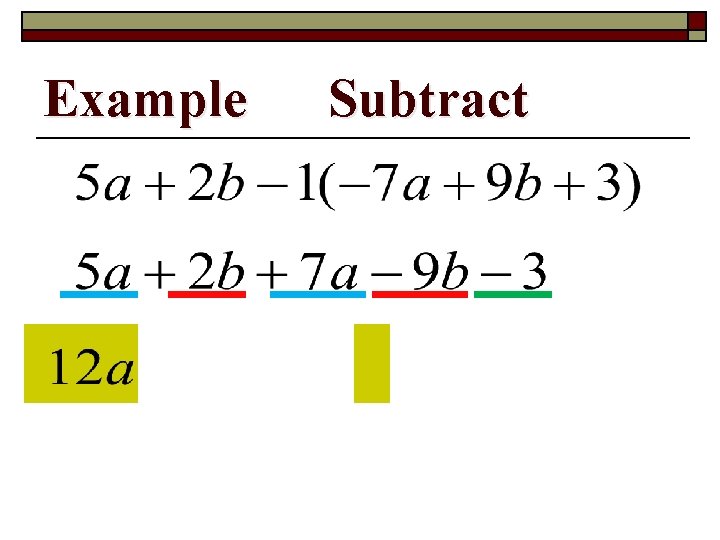
Example Subtract
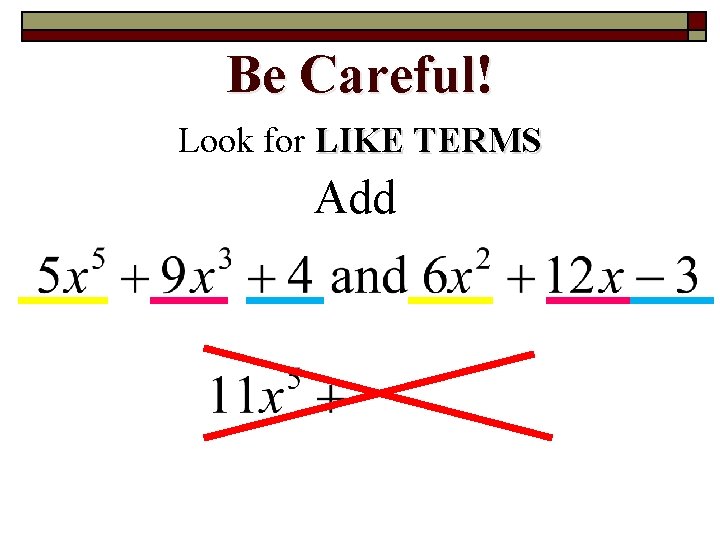
Be Careful! Look for LIKE TERMS Add
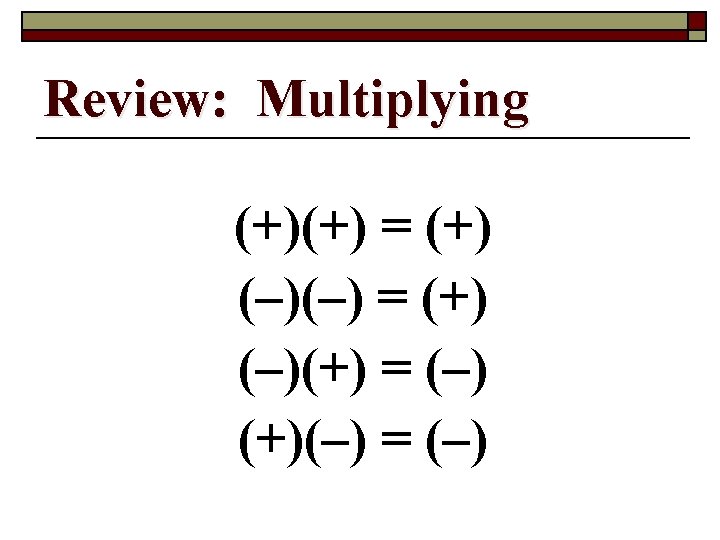
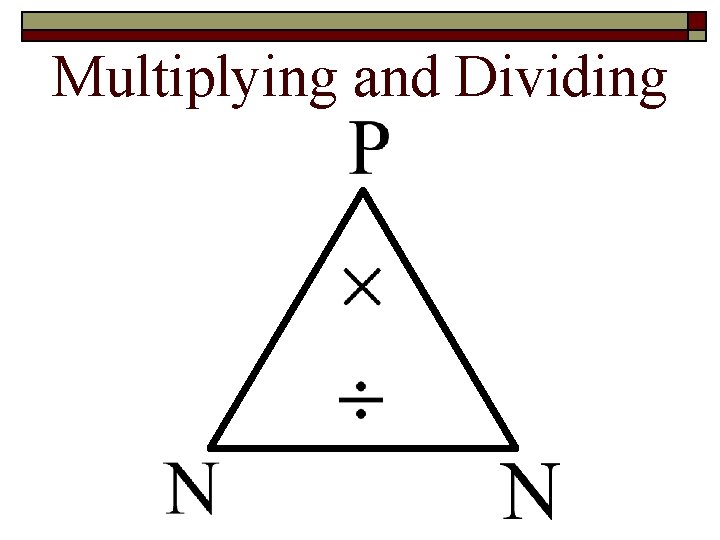
Multiplying and Dividing
Multiplying by a Monomial To multiply by a monomial, we use the Distributive Property.
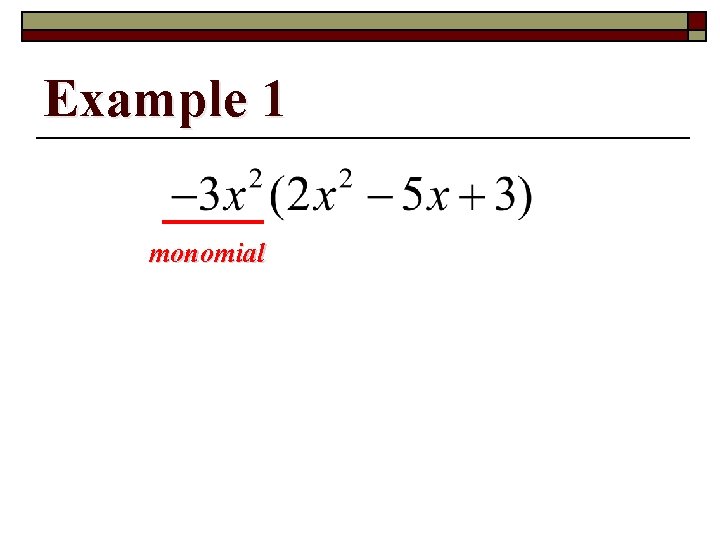
Example 1 monomial
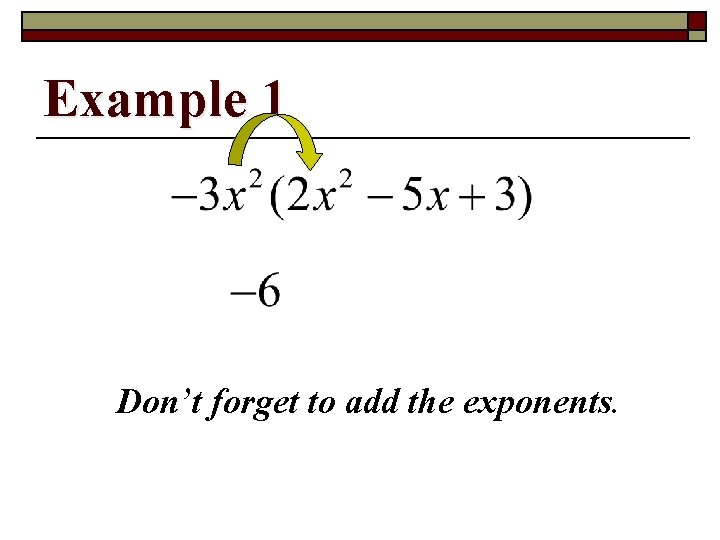
Example 1 Don’t forget to add the exponents.
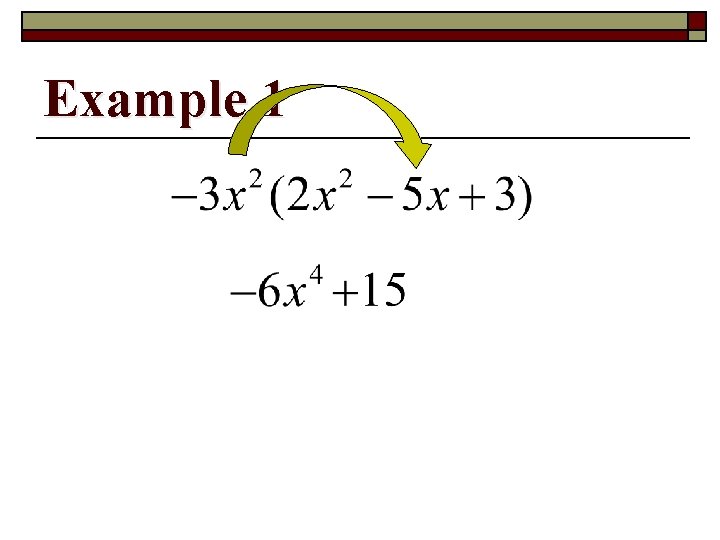
Example 1
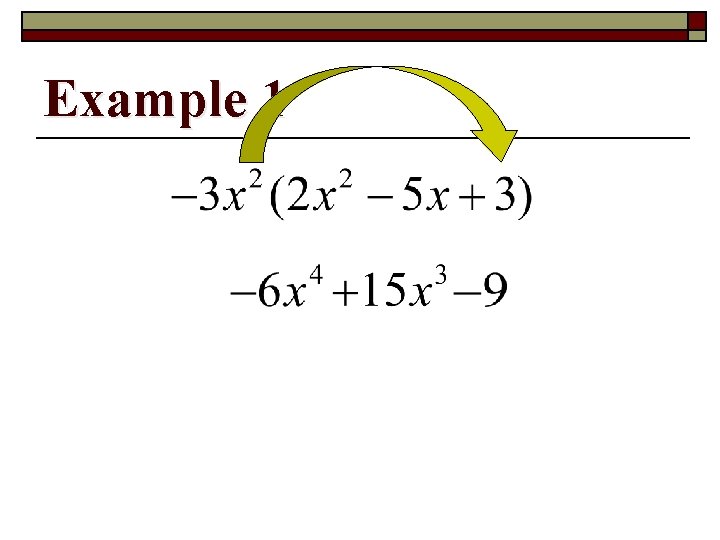
Example 1
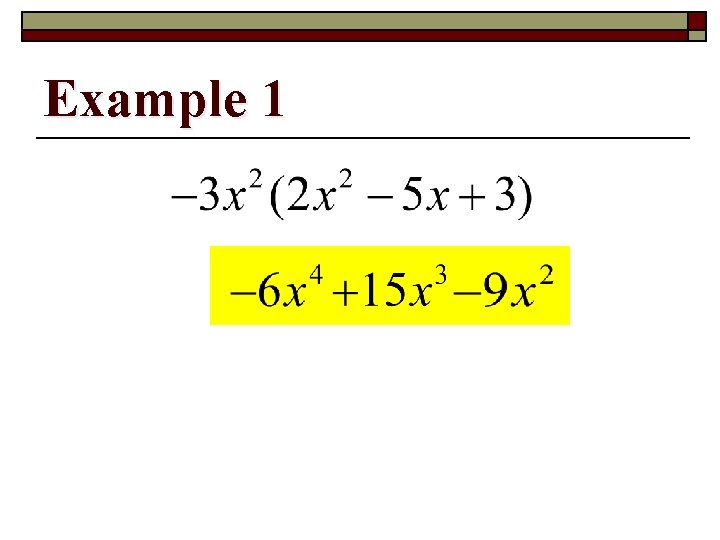
Example 1
Multiplying Polynomials Sometimes the monomial is on the right instead of the left. We follow the same procedure.
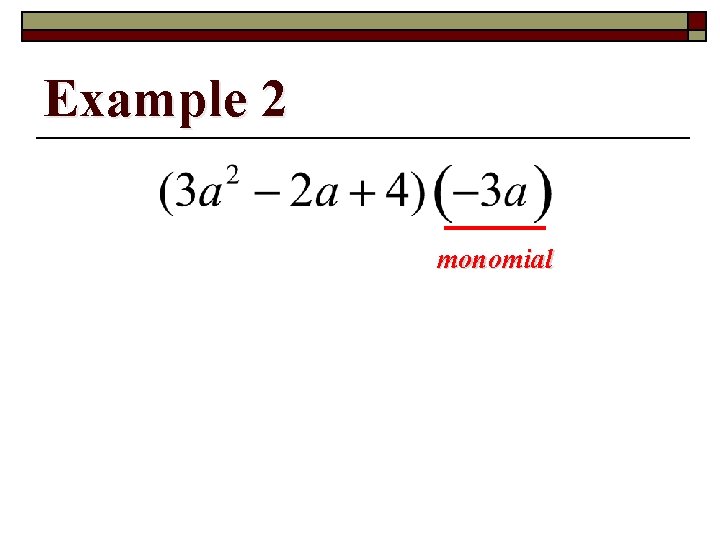
Example 2 monomial
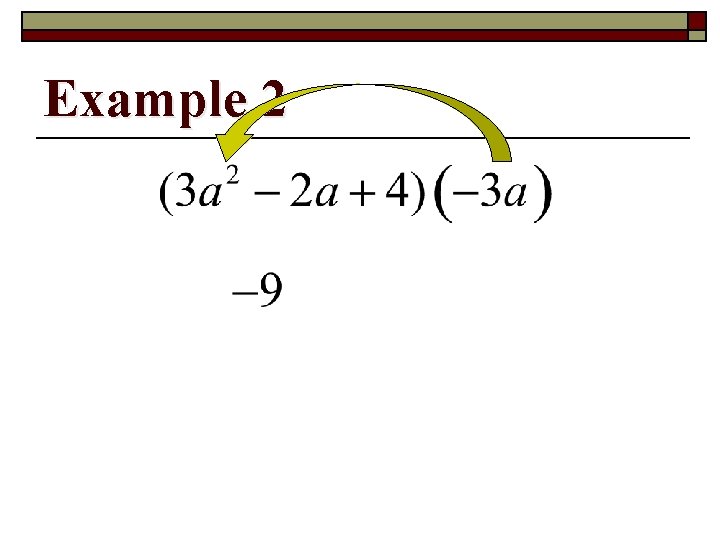
Example 2
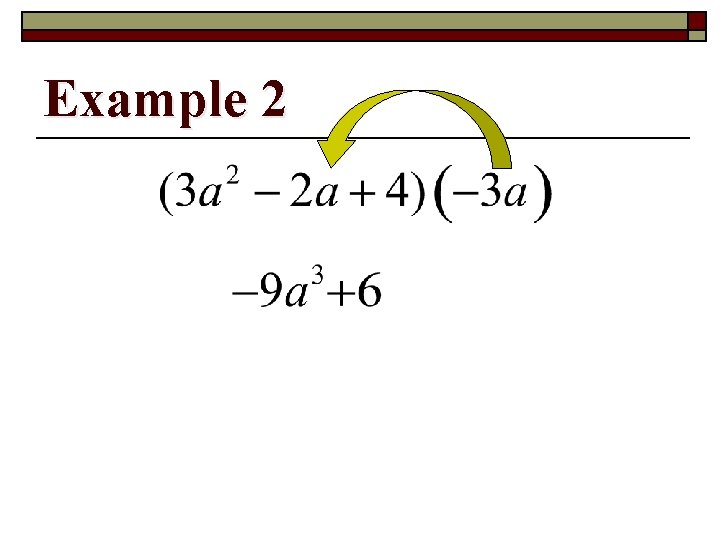
Example 2
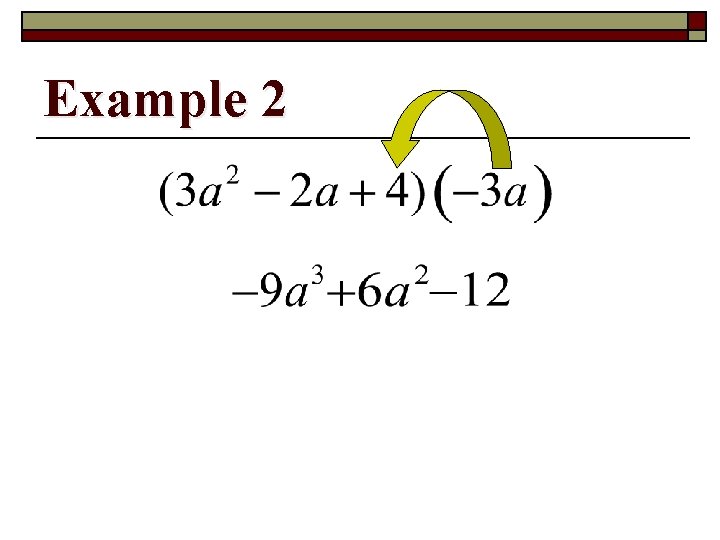
Example 2
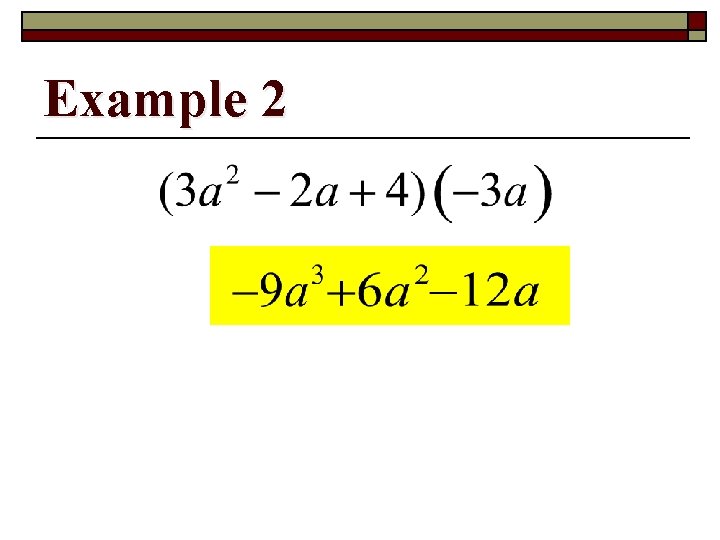
Example 2
Multiplying by a Binomial To multiply by a binomial, 1. Use the Distributive Property twice. 2. Collect Like Terms.
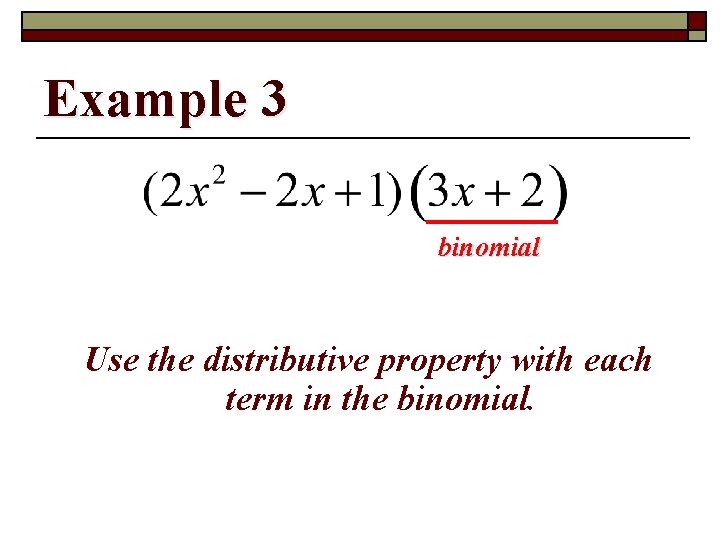
Example 3 binomial Use the distributive property with each term in the binomial.
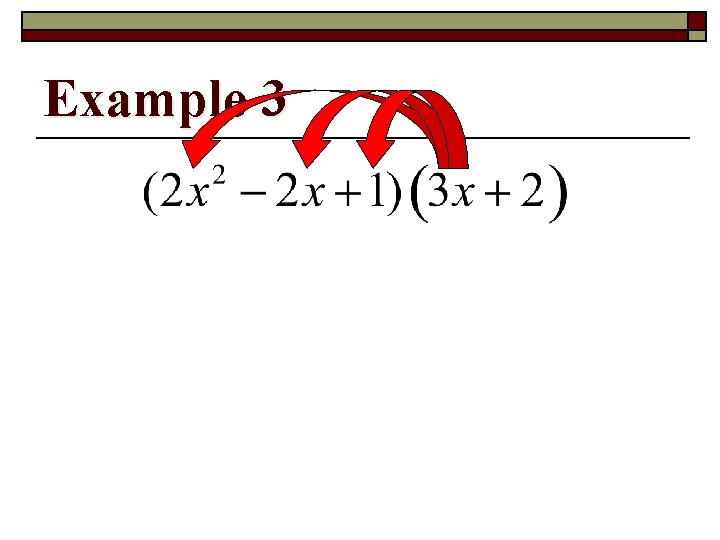
Example 3
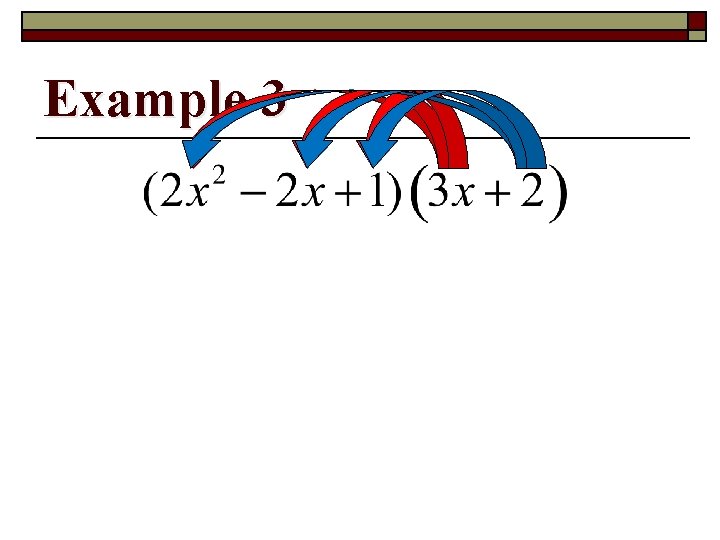
Example 3
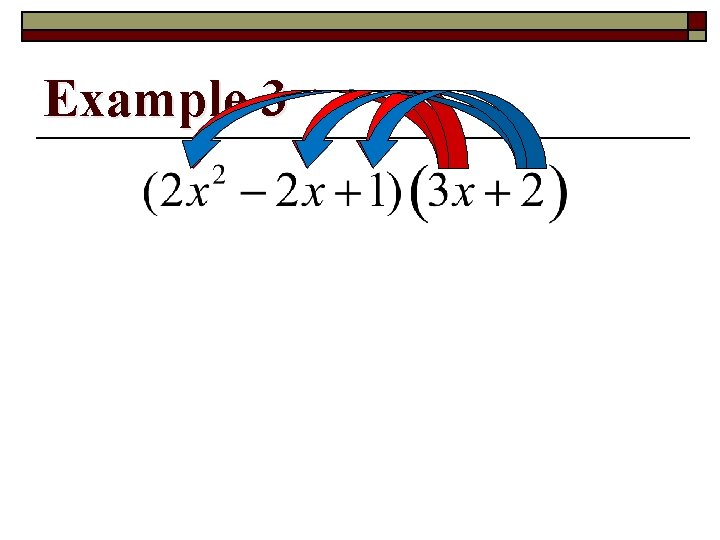
Example 3
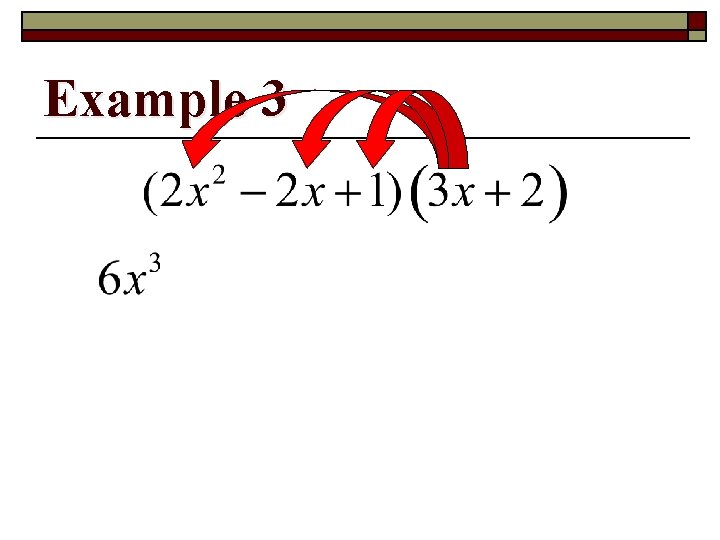
Example 3
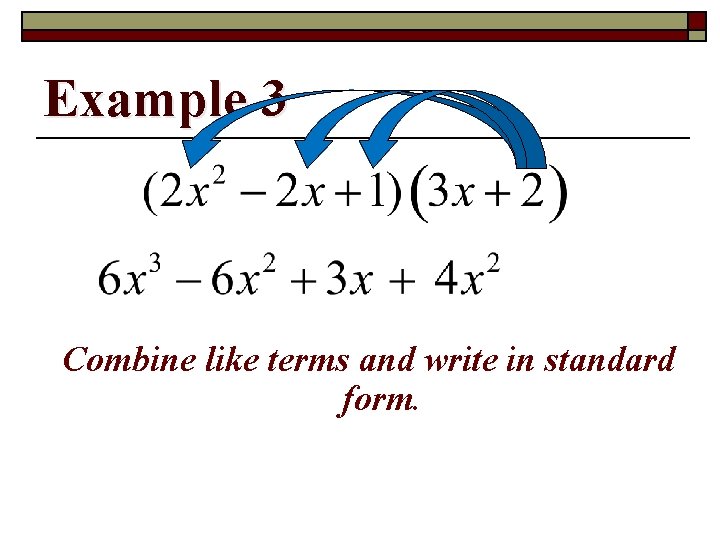
Example 3 Combine like terms and write in standard form.
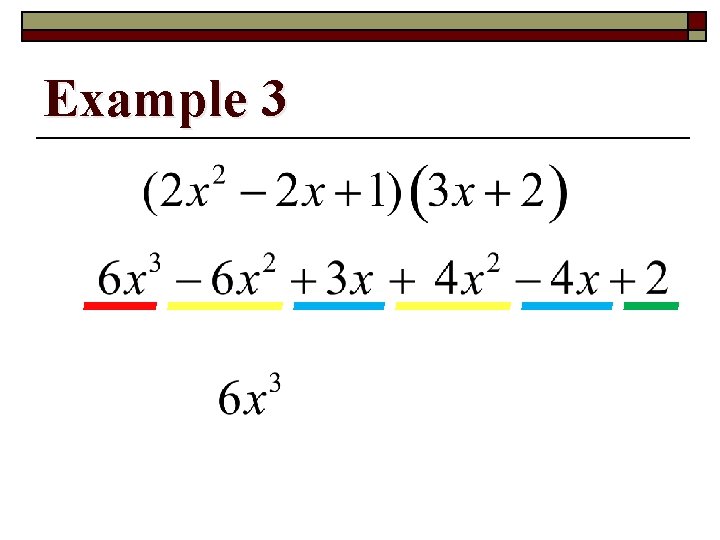
Example 3
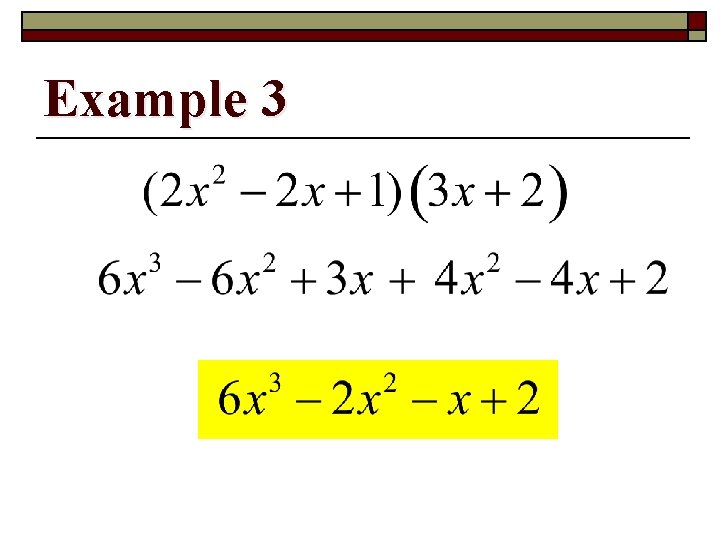
Example 3
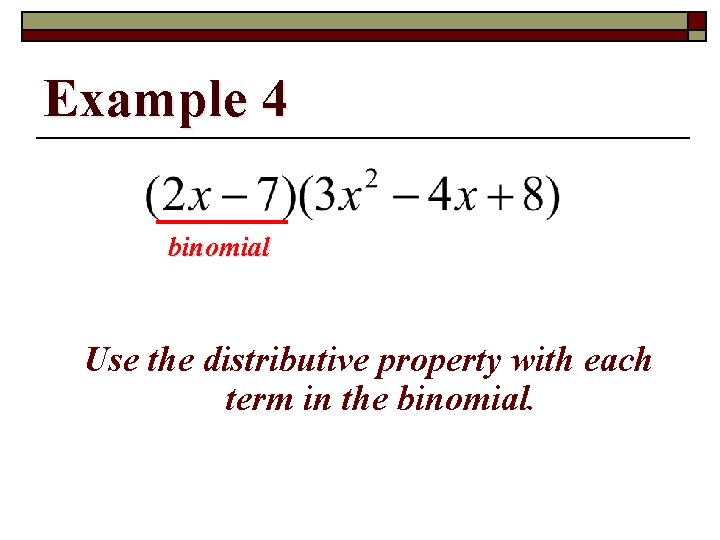
Example 4 binomial Use the distributive property with each term in the binomial.
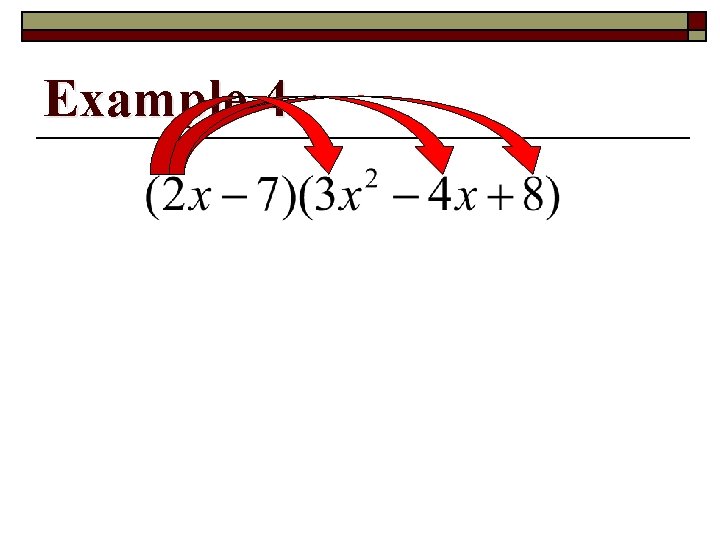
Example 4
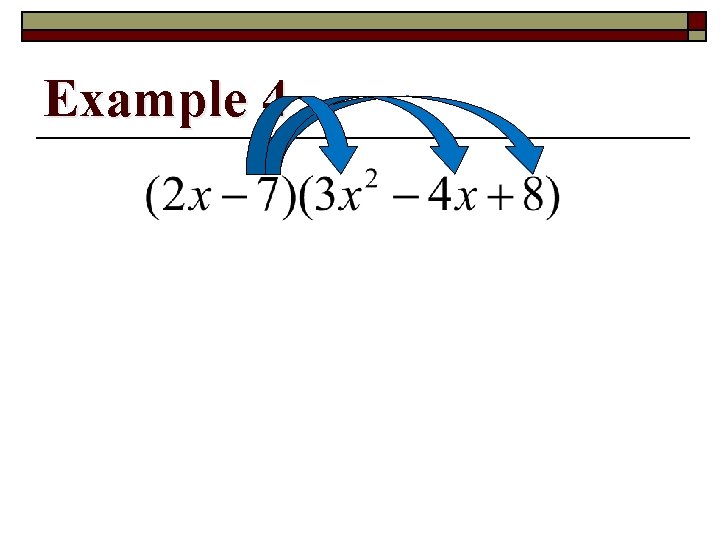
Example 4
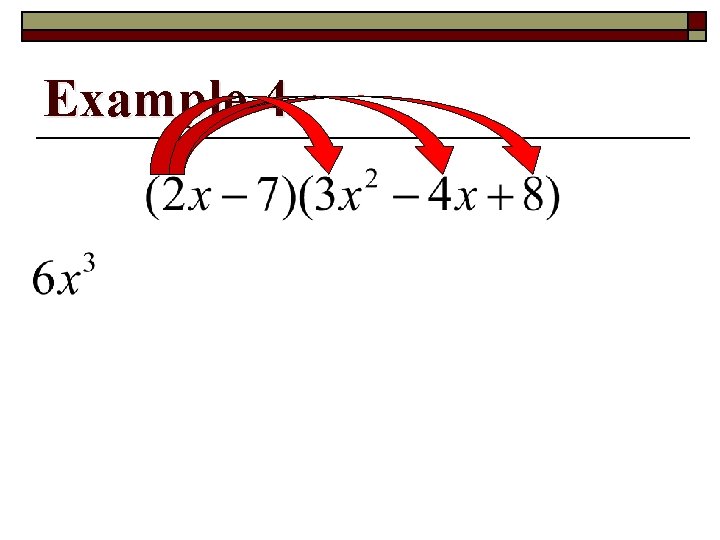
Example 4
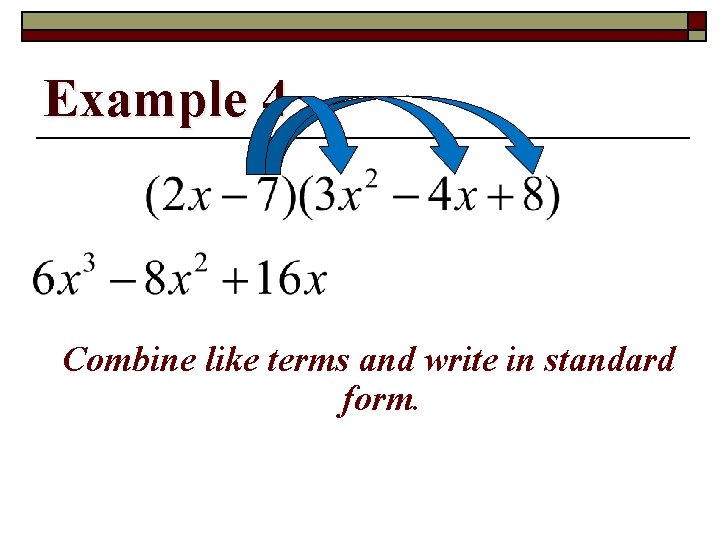
Example 4 Combine like terms and write in standard form.
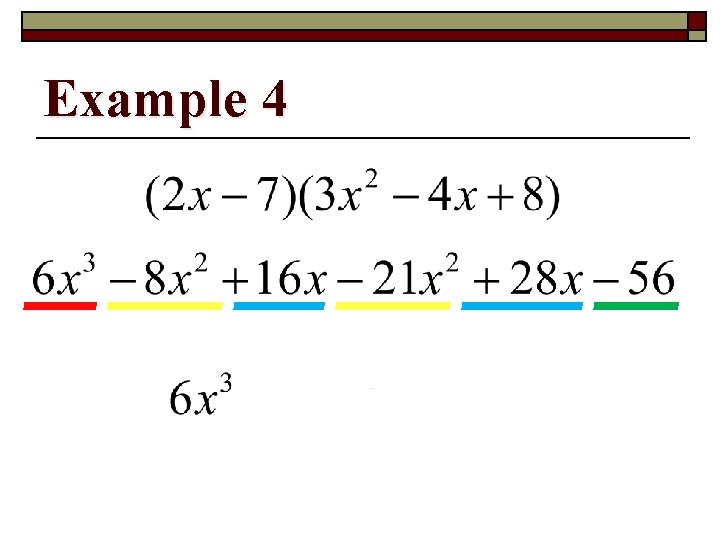
Example 4
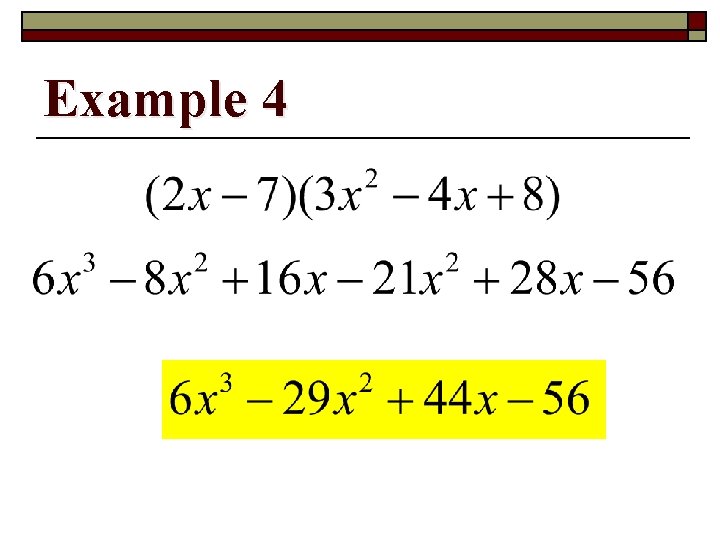
Example 4
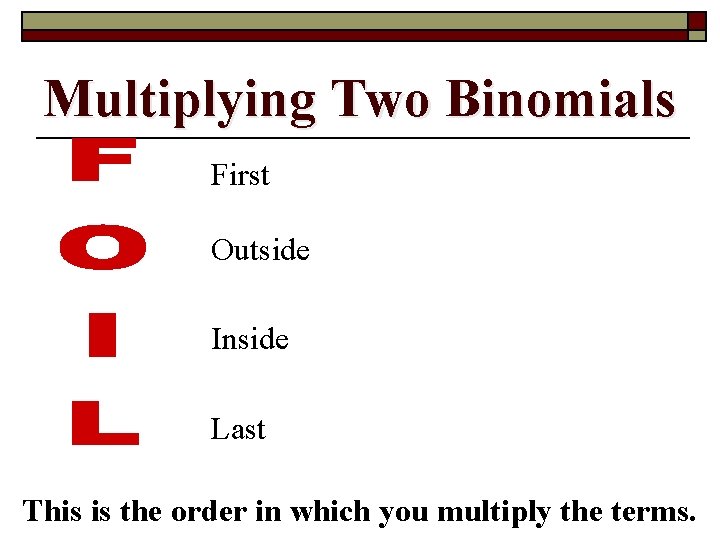
Multiplying Two Binomials First Outside Inside Last This is the order in which you multiply the terms.
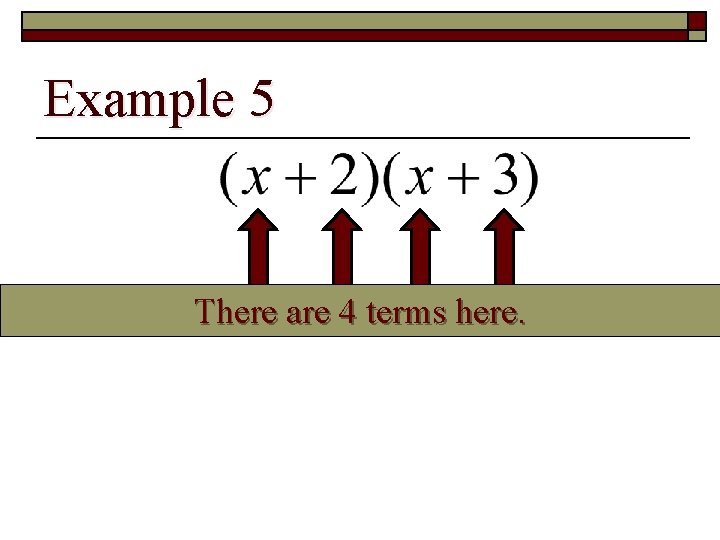
Example 5 There are 4 terms here.
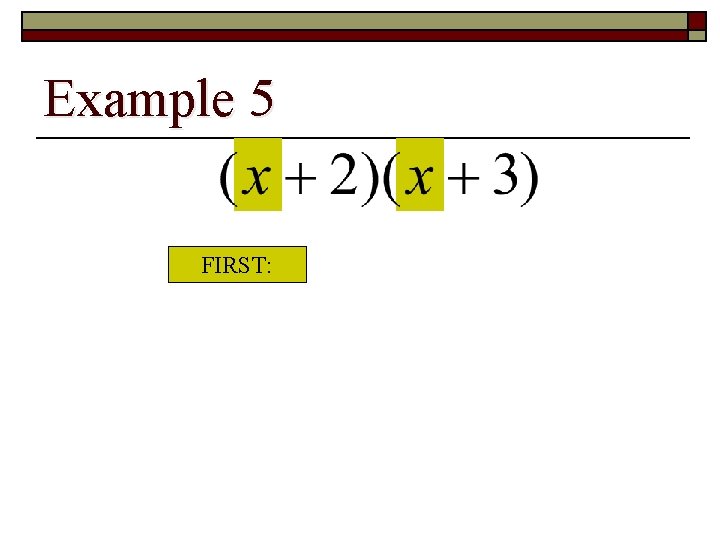
Example 5 FIRST:
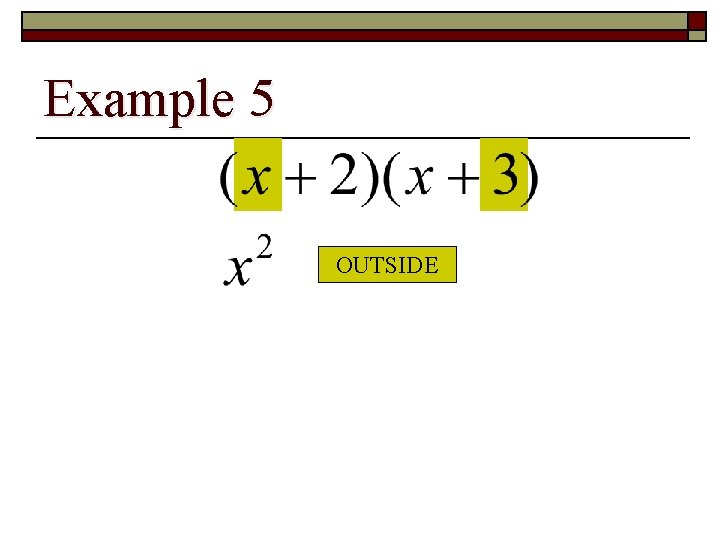
Example 5 OUTSIDE
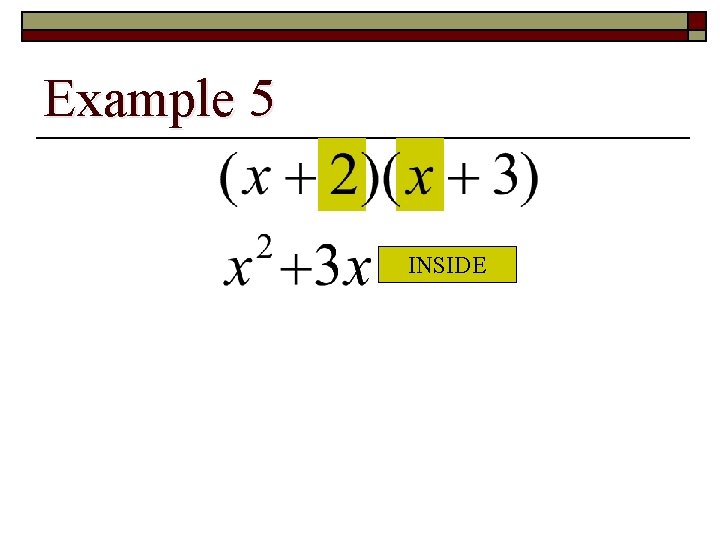
Example 5 INSIDE
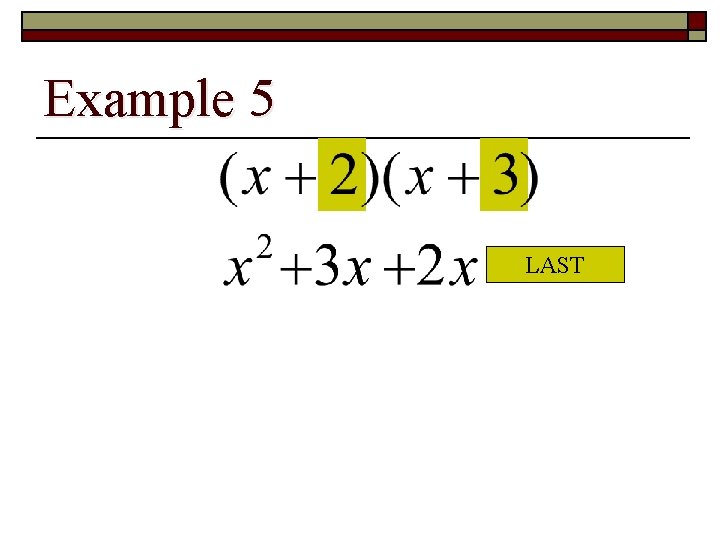
Example 5 LAST
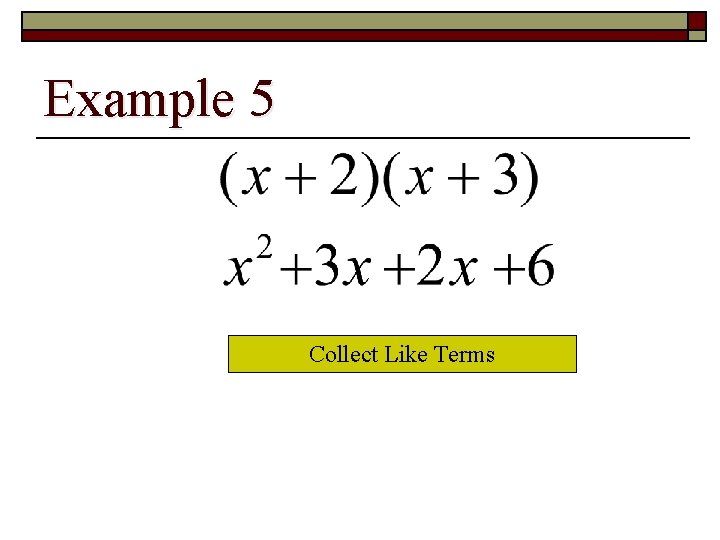
Example 5 Collect Like Terms
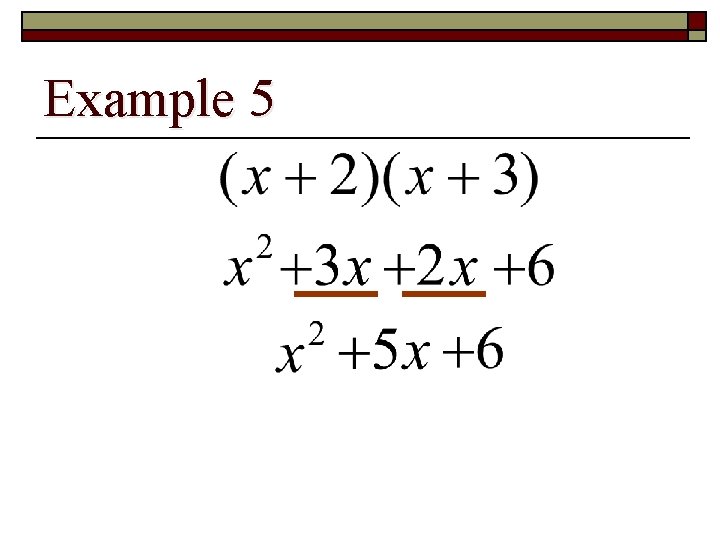
Example 5
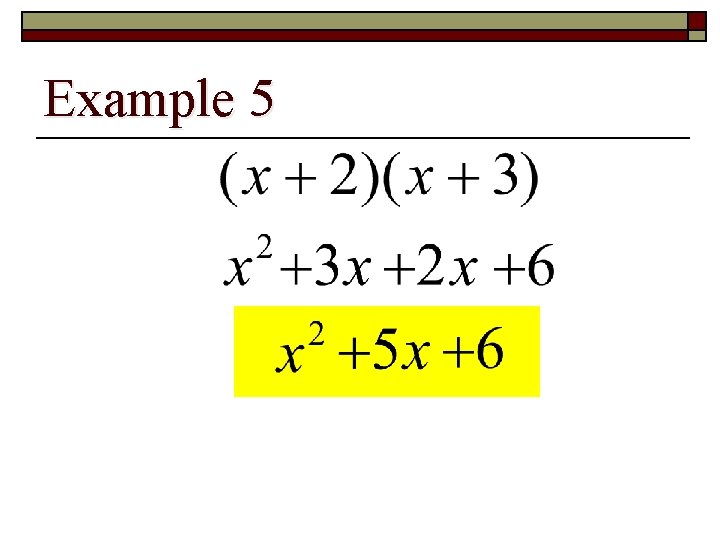
Example 5
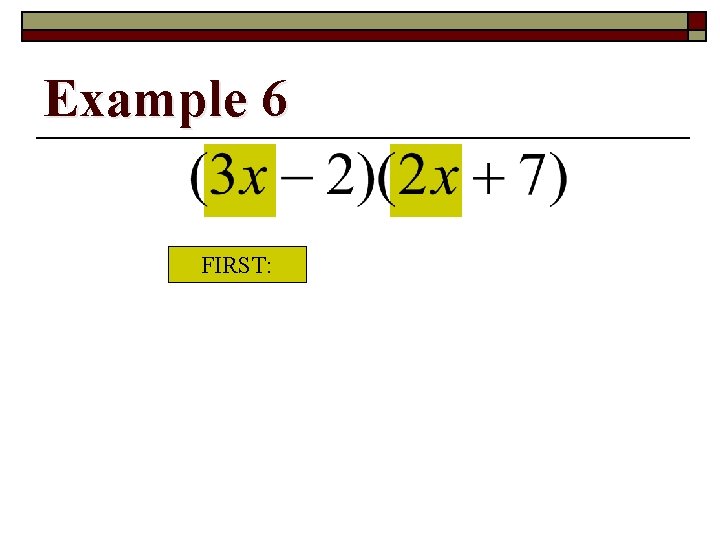
Example 6 FIRST:
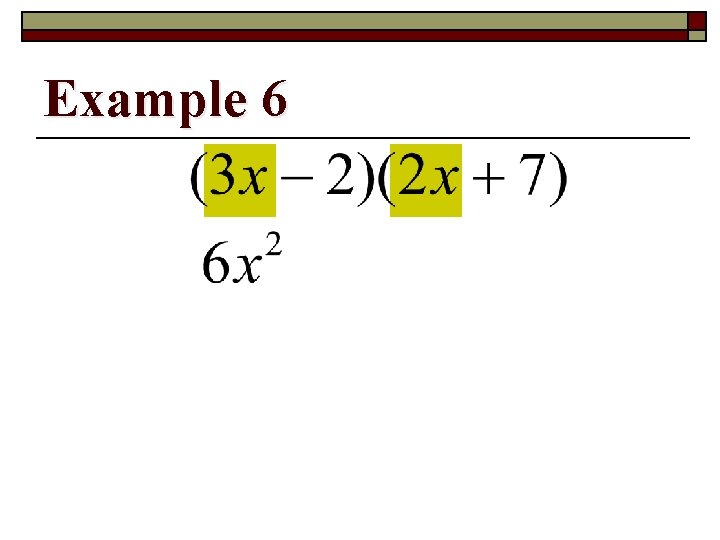
Example 6
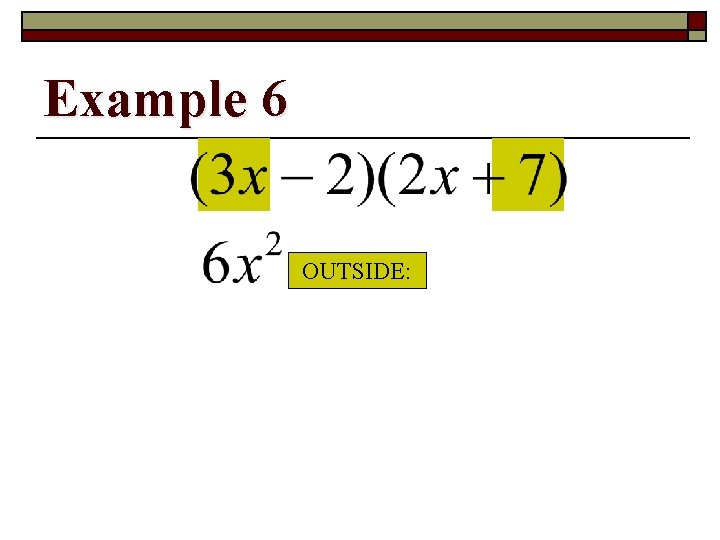
Example 6 OUTSIDE:
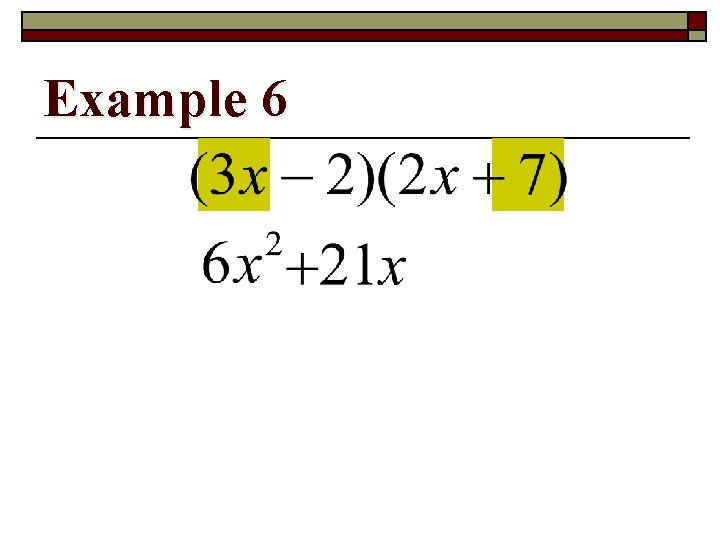
Example 6
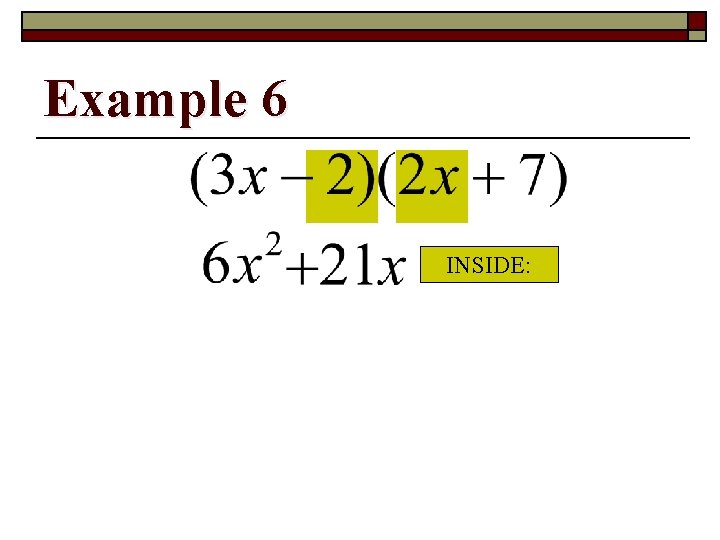
Example 6 INSIDE:
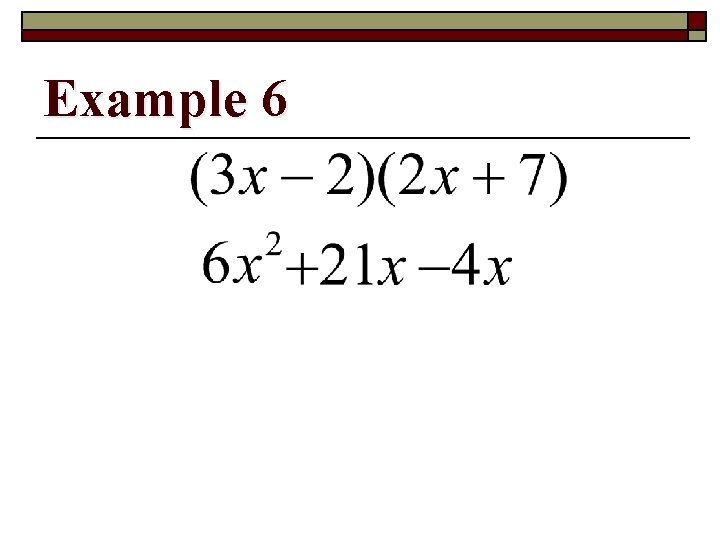
Example 6
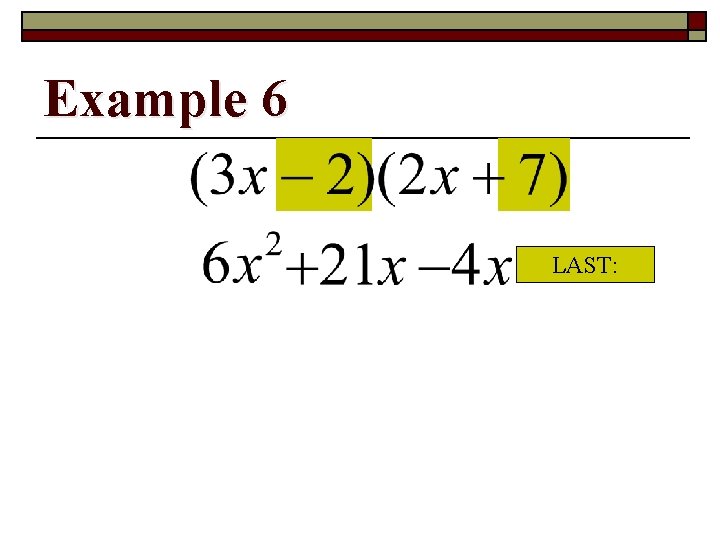
Example 6 LAST:
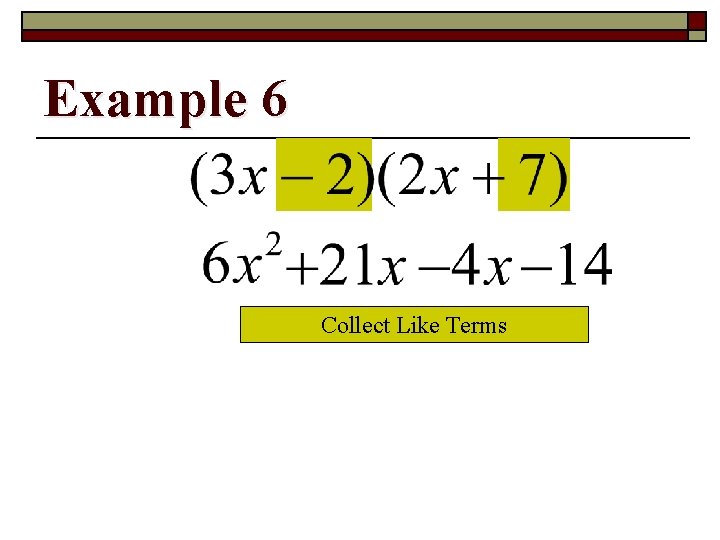
Example 6 Collect Like Terms
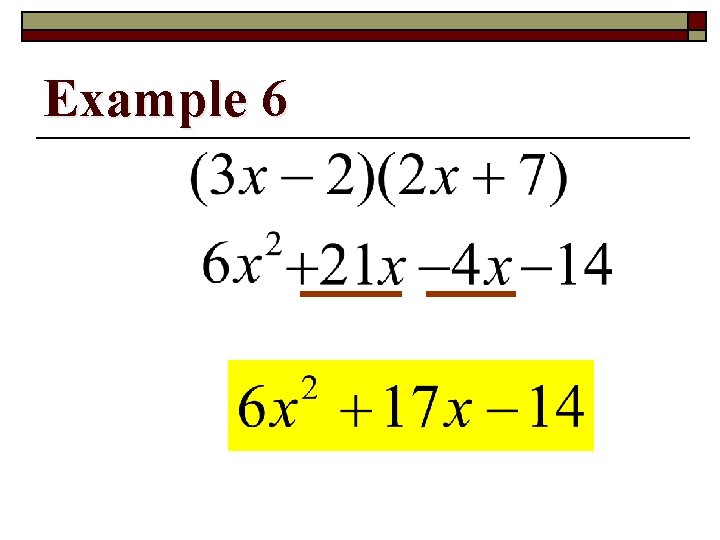
Example 6
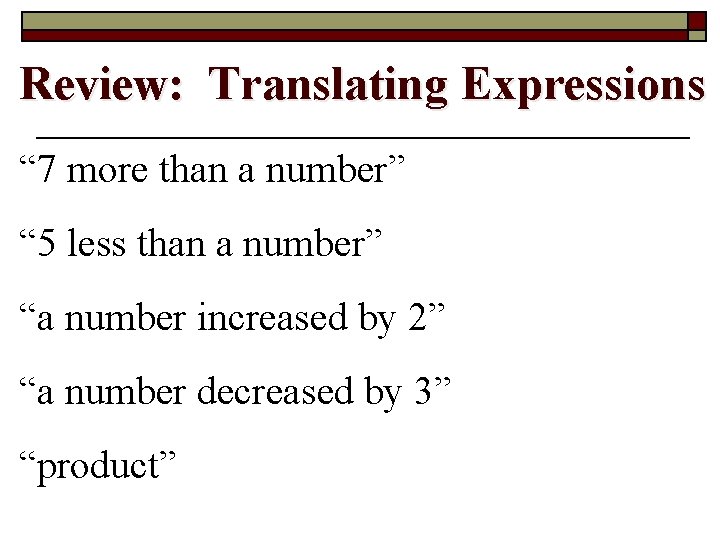
Review: Translating Expressions “ 7 more than a number” x+7 “ 5 less than a number” x– 5 “a number increased by 2” x+2 “a number decreased by 3” x– 3 “product” means to multiply
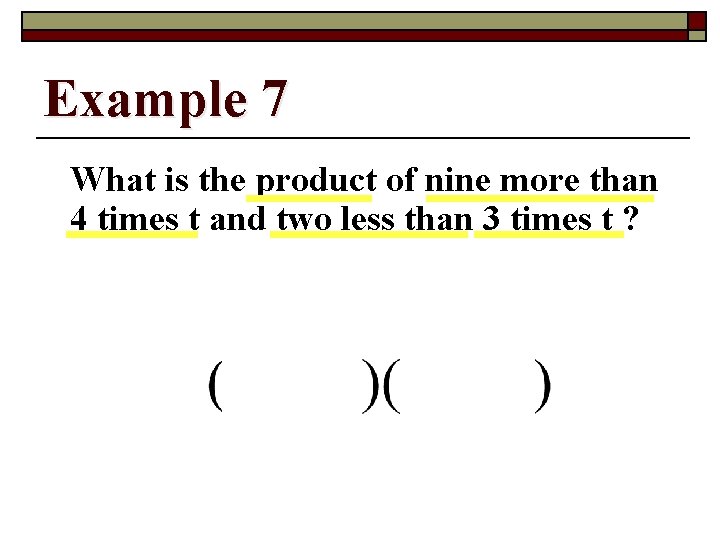
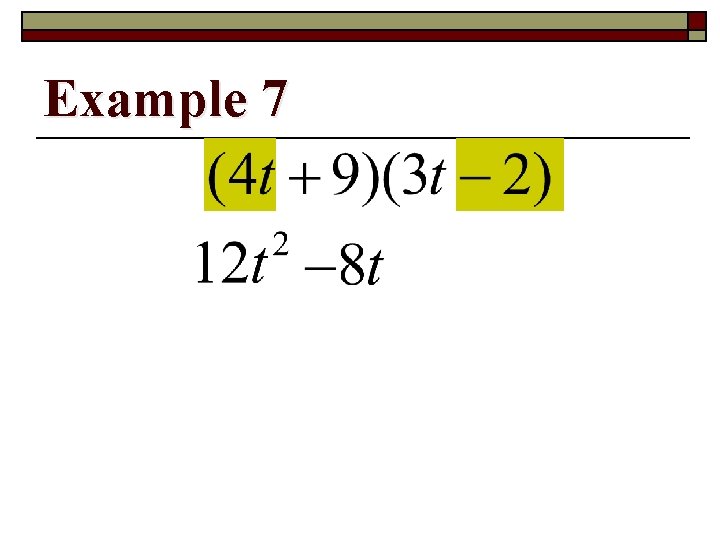
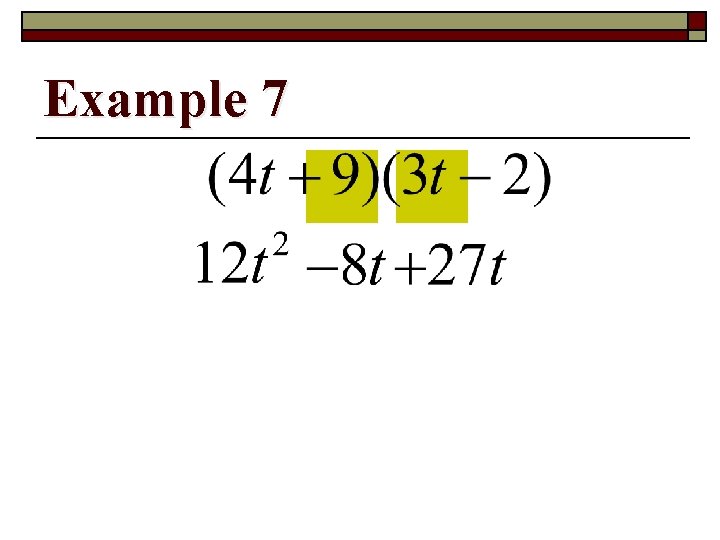
Example 7 What is the product of nine more than 4 times t and two less than 3 times t ?
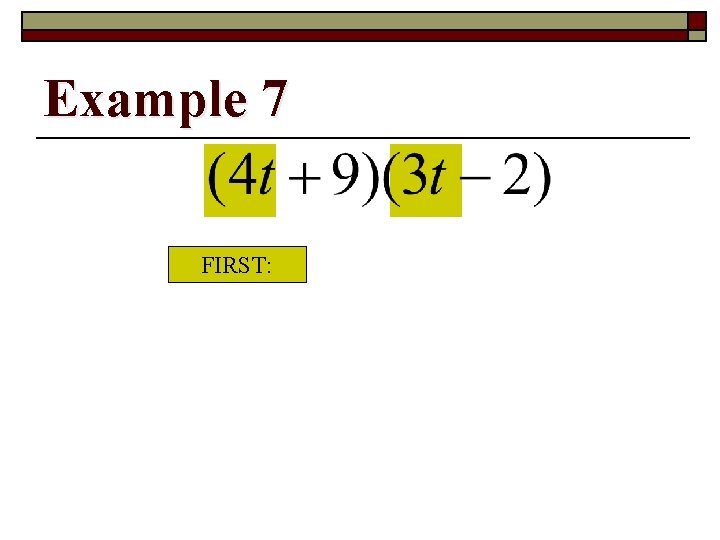
Example 7 FIRST:
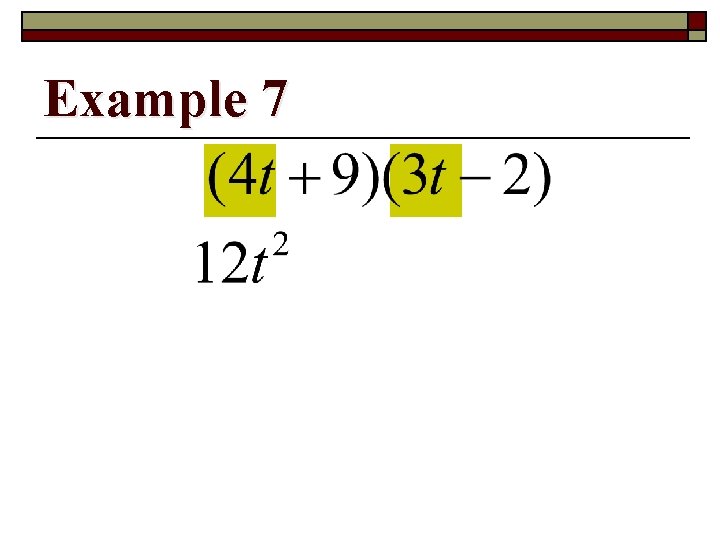
Example 7
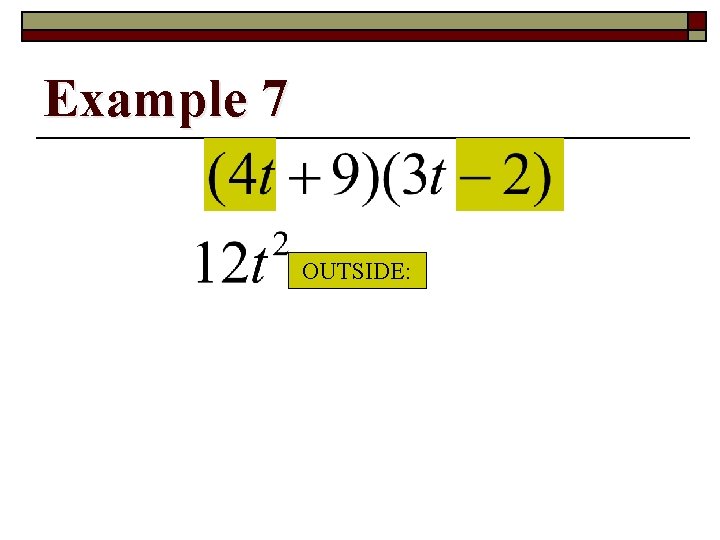
Example 7 OUTSIDE:
Example 7
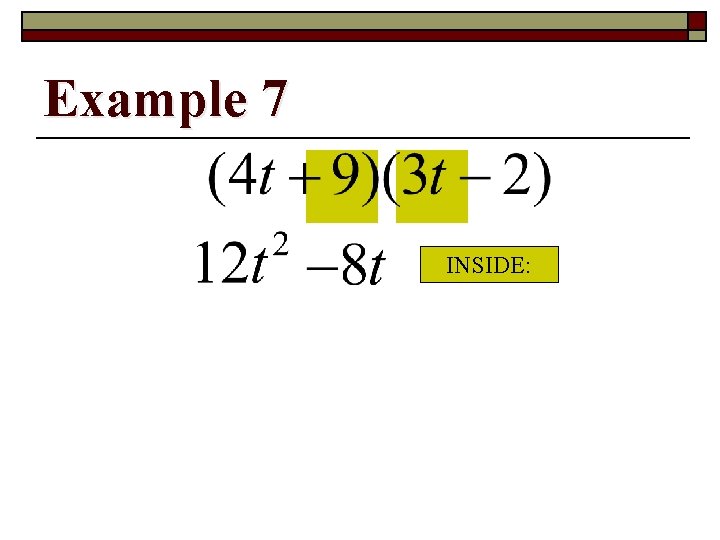
Example 7 INSIDE:
Example 7
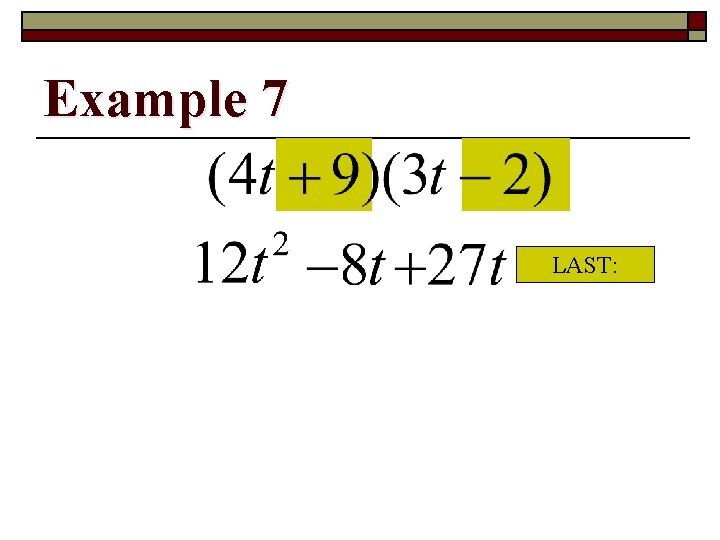
Example 7 LAST:
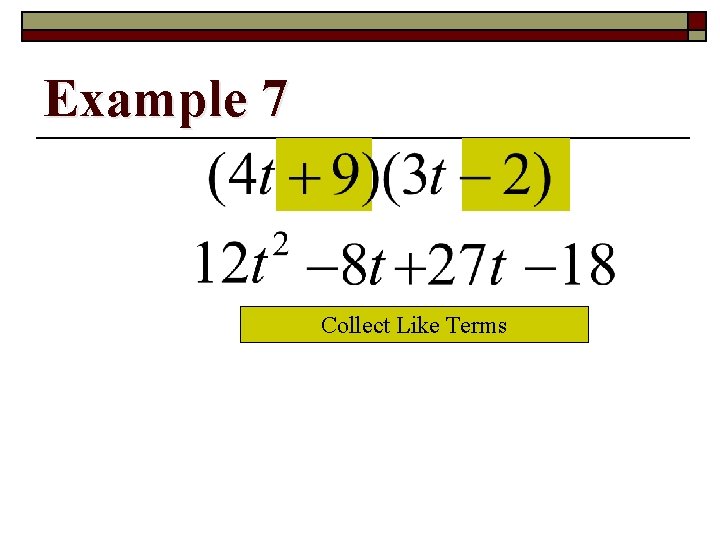
Example 7 Collect Like Terms
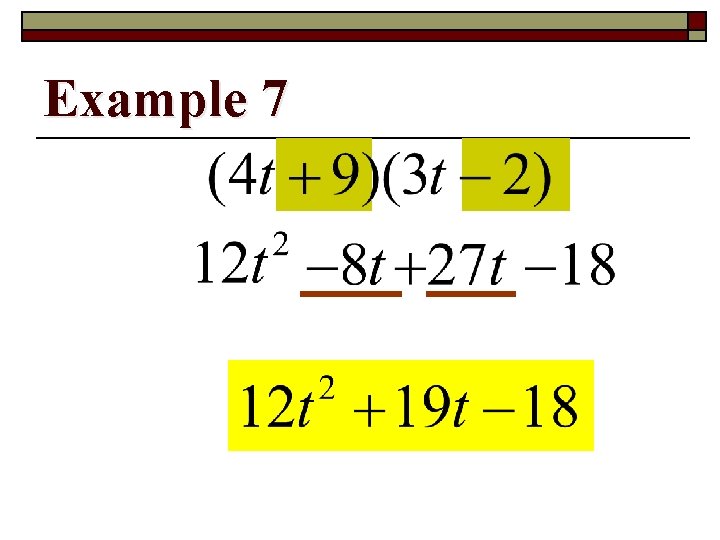
Example 7
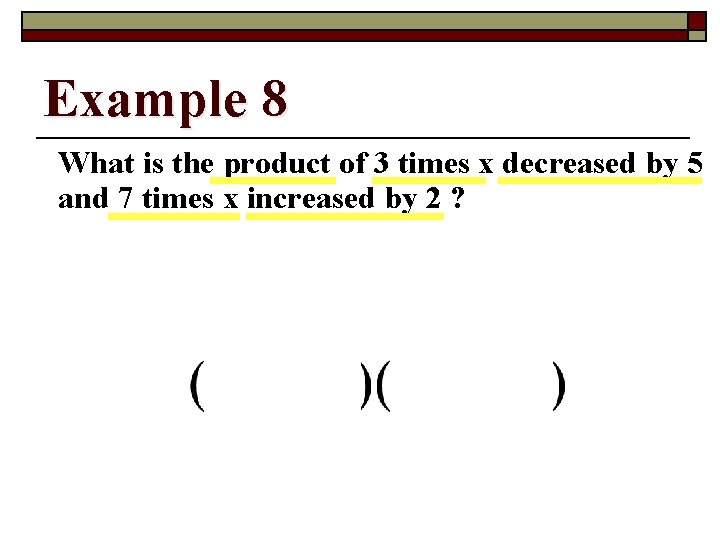
Example 8 What is the product of 3 times x decreased by 5 and 7 times x increased by 2 ?
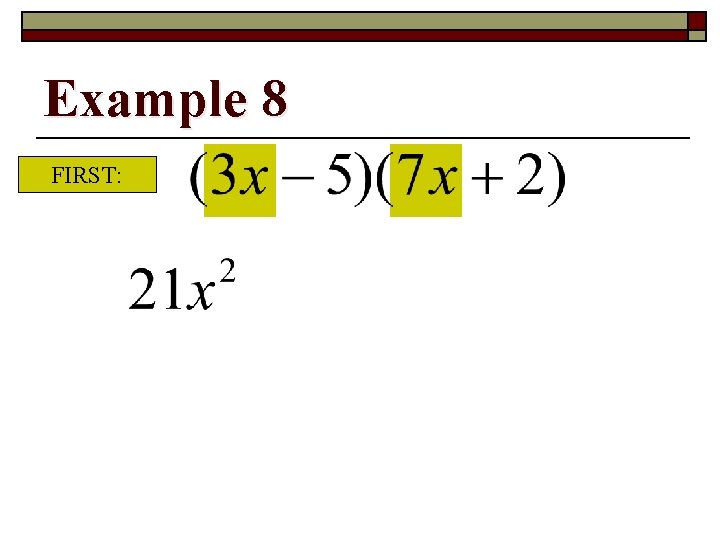
Example 8 FIRST:
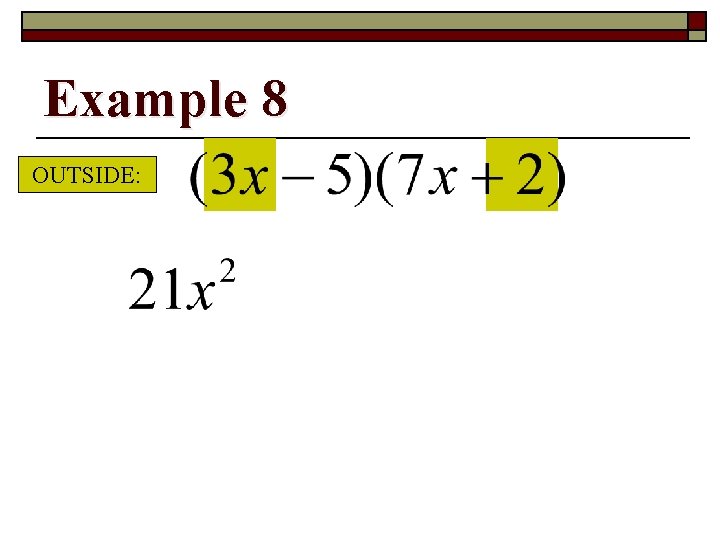
Example 8 OUTSIDE:
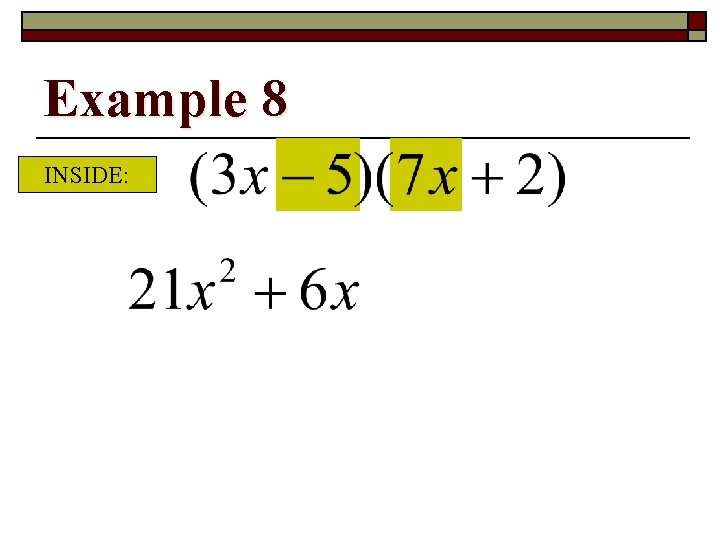
Example 8 INSIDE:
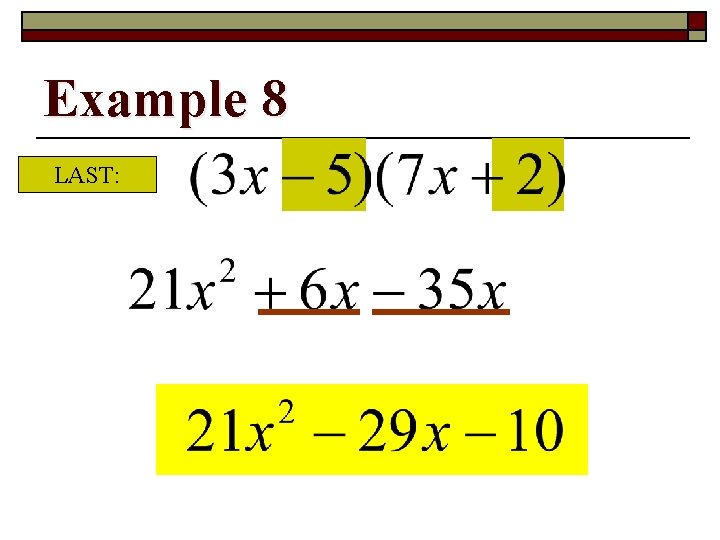
Example 8 LAST:
Multiplying Polynomials Let’s work a problem with more than one variable
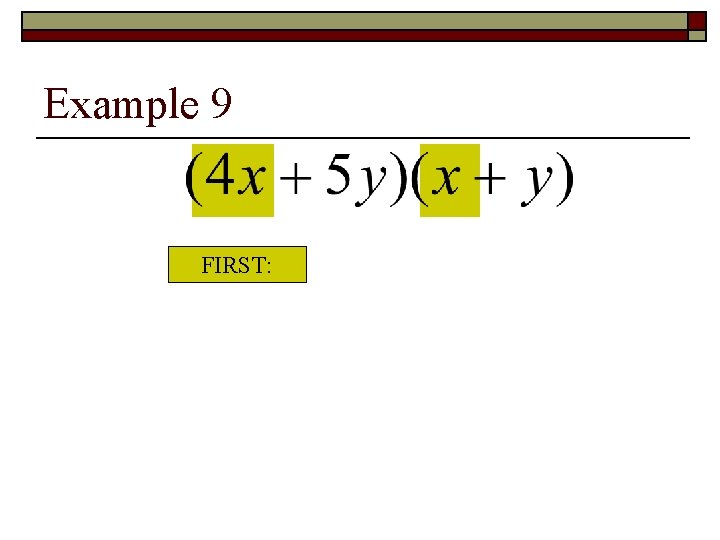
Example 9 FIRST:
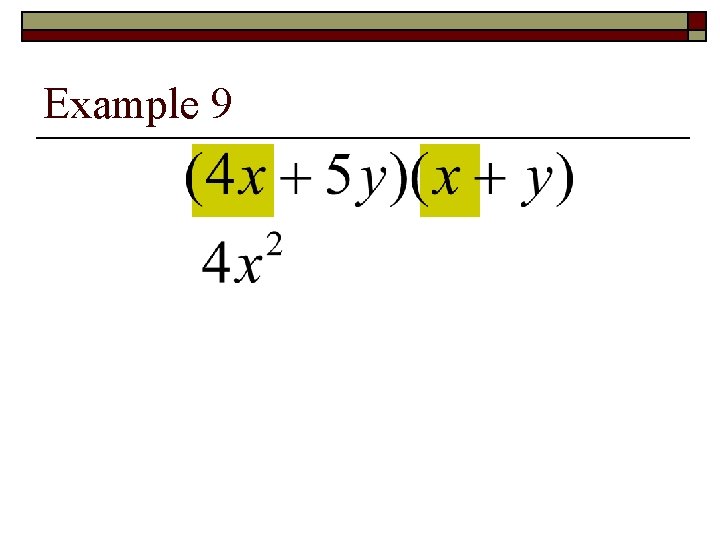
Example 9
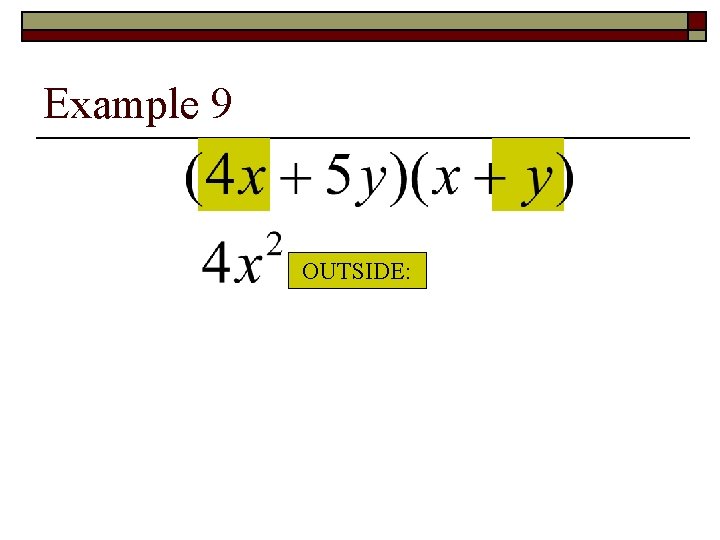
Example 9 OUTSIDE:
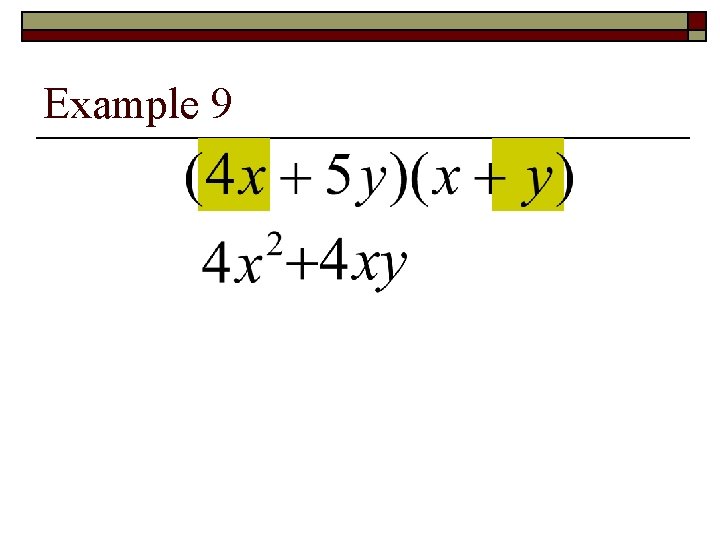
Example 9
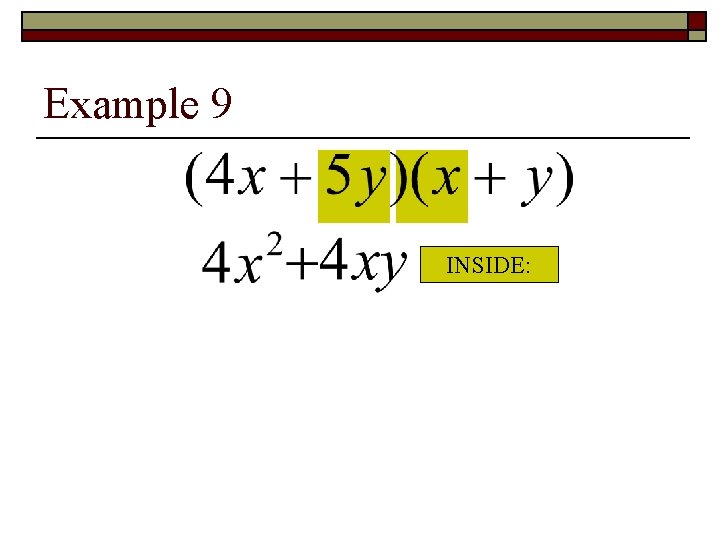
Example 9 INSIDE:
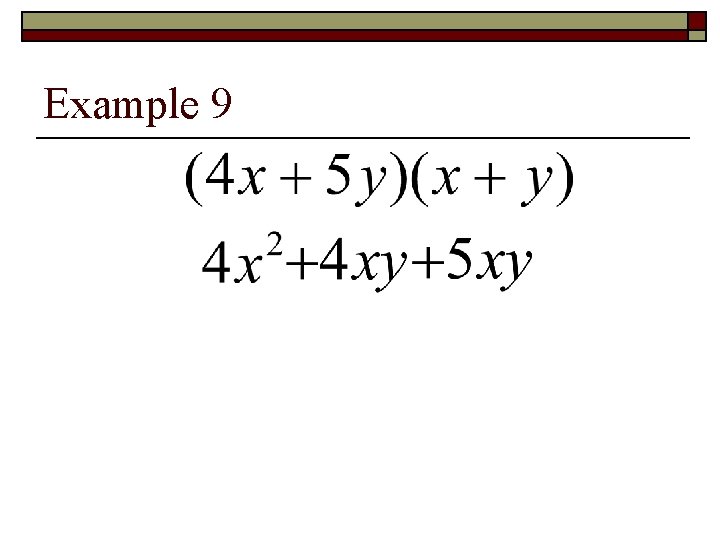
Example 9
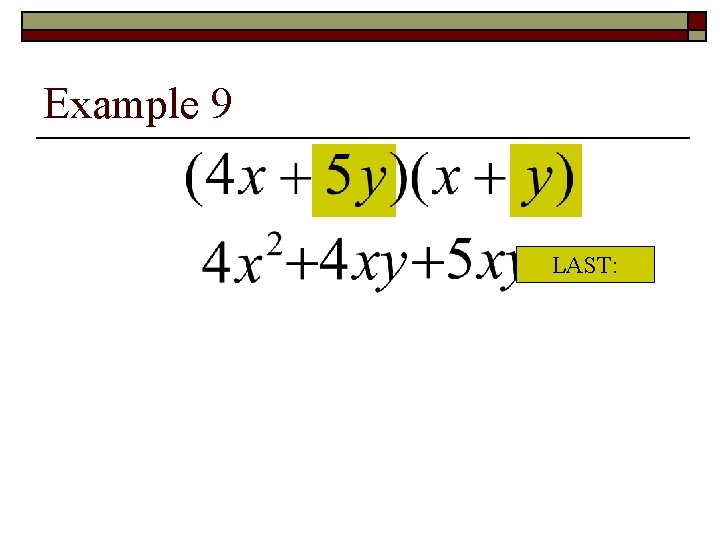
Example 9 LAST:
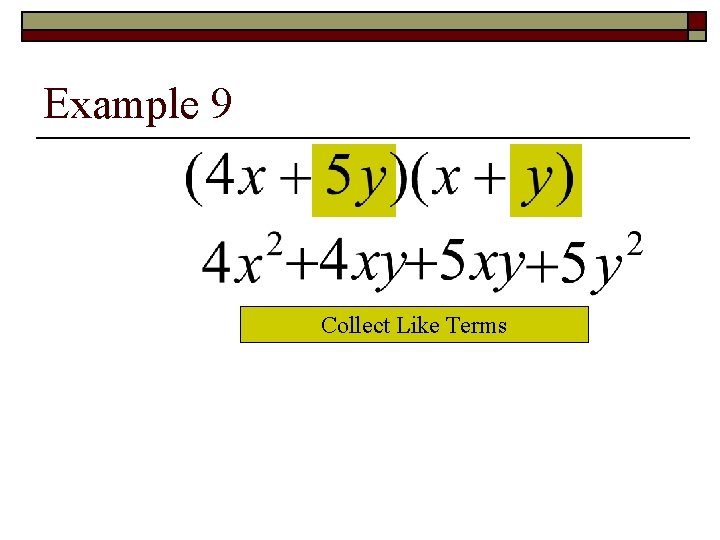
Example 9 Collect Like Terms
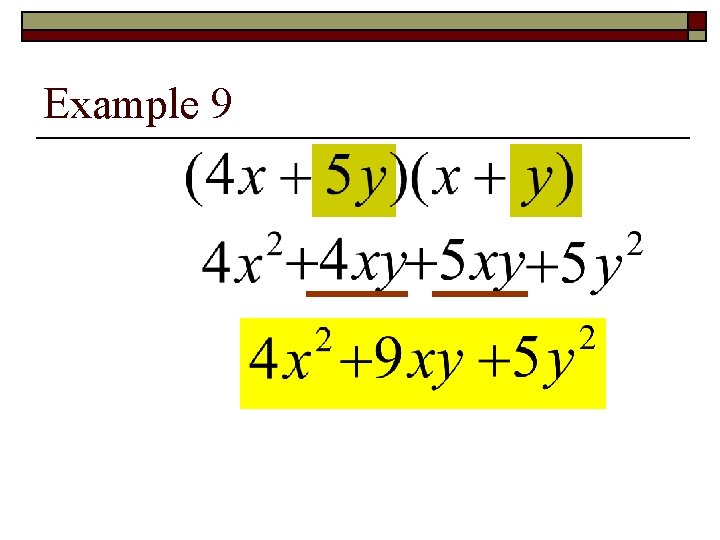
Example 9
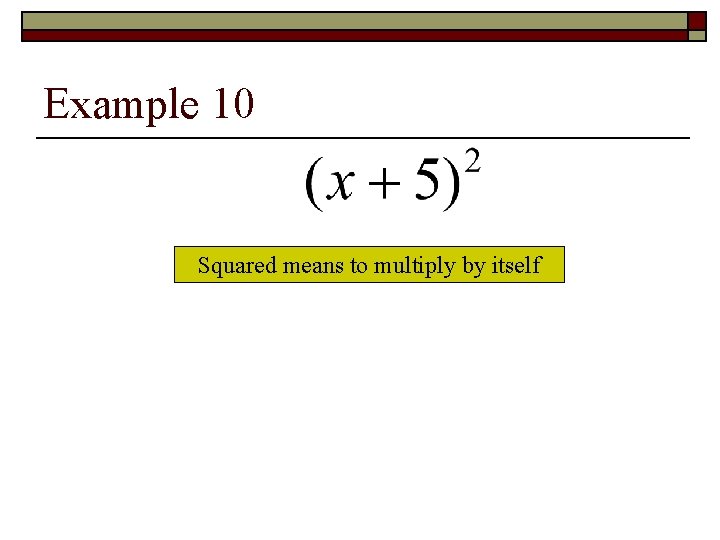
Example 10 Squared means to multiply by itself
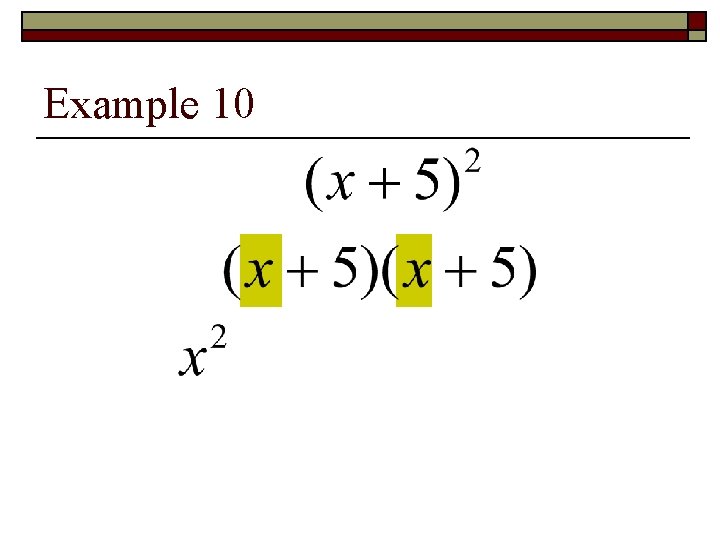
Example 10
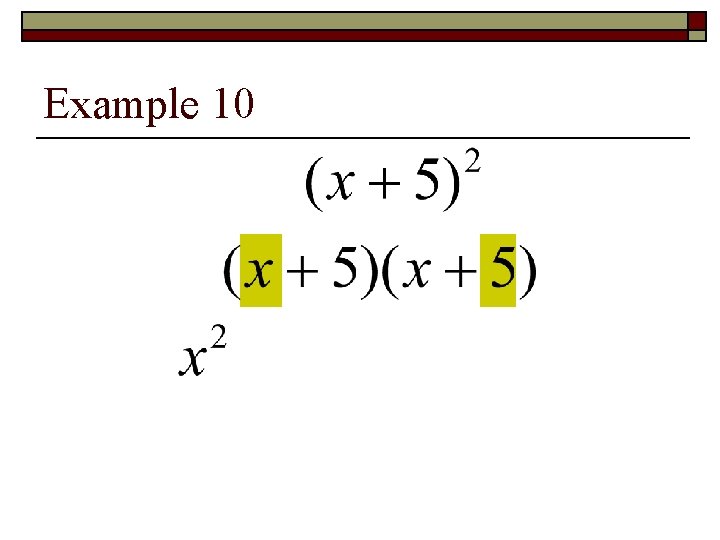
Example 10
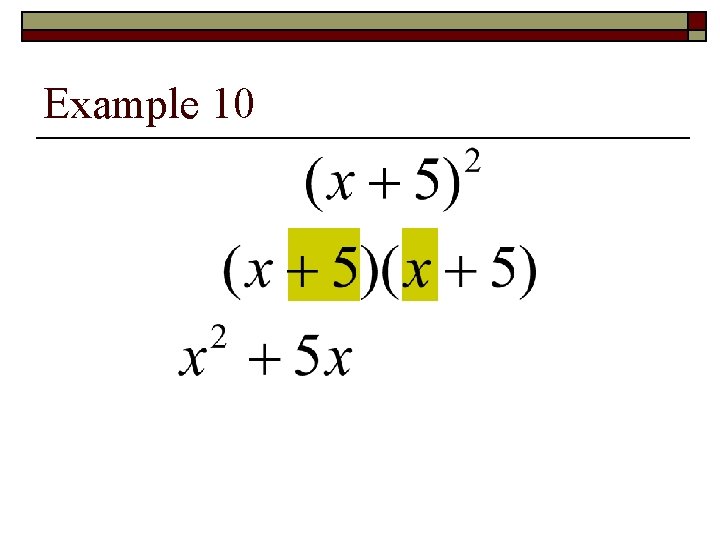
Example 10
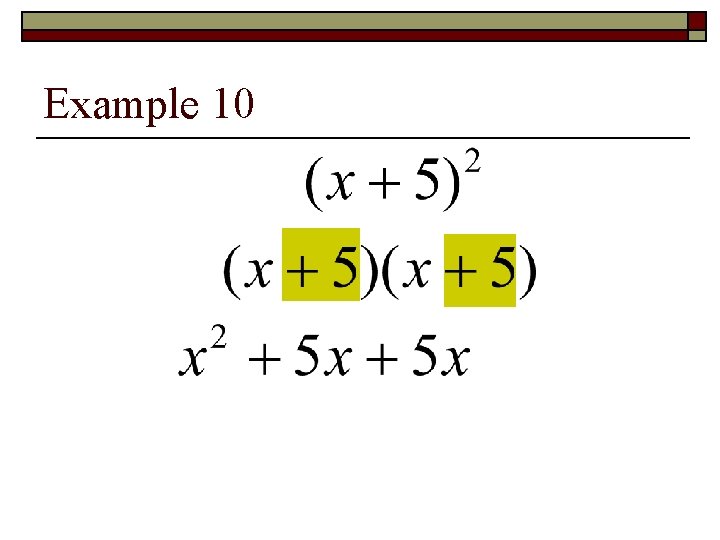
Example 10
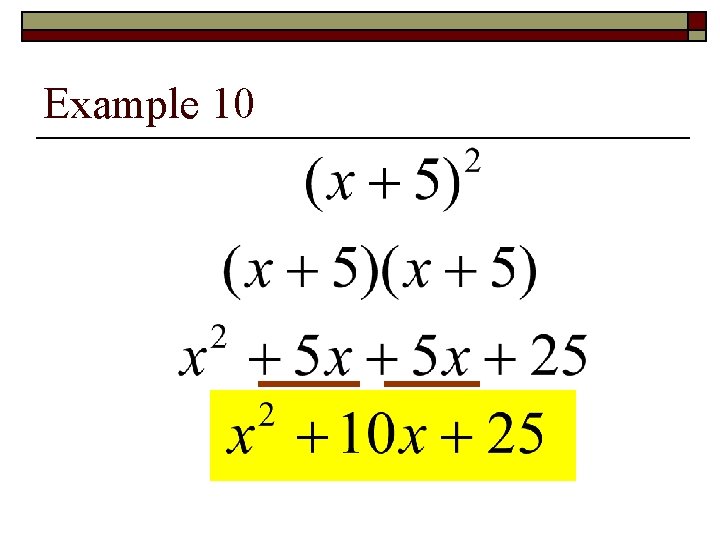
Example 10
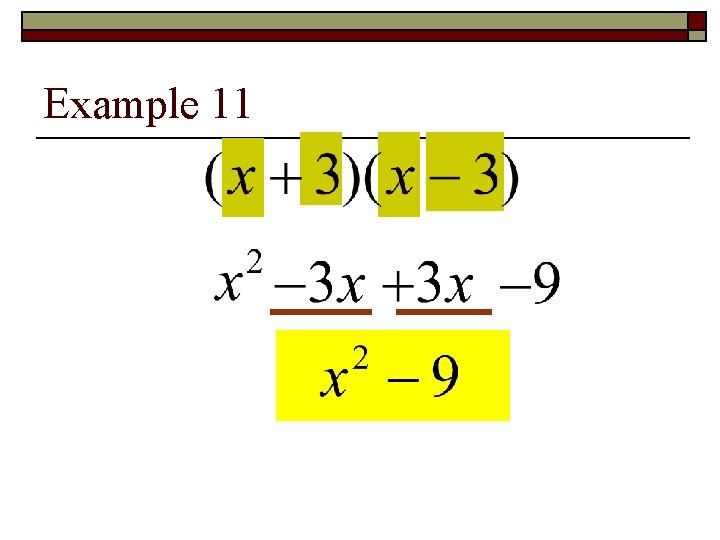
Example 11
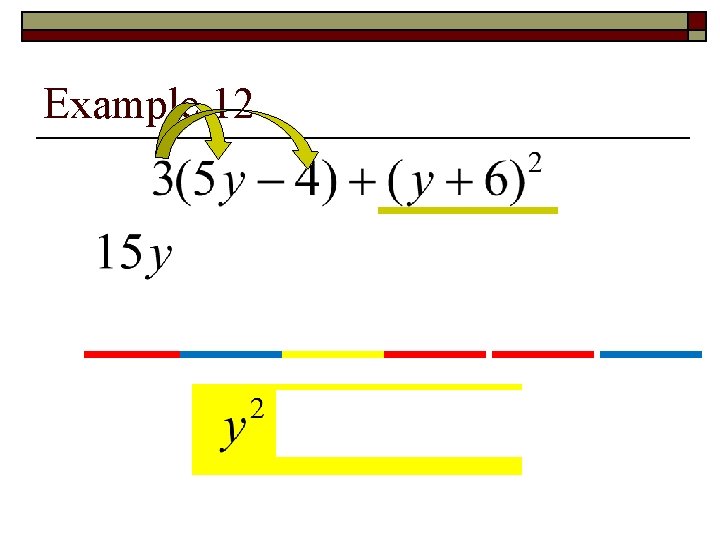
Example 12
- Slides: 130