
Polymers Macromolecule that is formed by linking of
Polymers • Macromolecule that is formed by linking of repeating units through covalent bonds in the main backbone • Properties are determined by – – – molecular weight length backbone structure side chains crystallinity • Resulting macromolecules have huge molecular weights 1
Polymers • To the person in the street “plastic” means one material, but there about 600 types of plastic and 4500 mixtures of many kinds • It is the job of the materials engineer to know and understand the differences between various plastic materials. You should know the tensile strength of LDPE compared with acrylic, be able to find out their comparative values of percentage of elongation, look up the maximum working temperature of both materials, etc. • Over the years the use of plastics for medical devices has increased as has the tendency towards the use of disposable products. • Advantages: easy of manufacturing in various shapes, reasonable cost, availability with desired mechanical and physical properties 2

Polymers • Polymers are large macromolecules composed of repeating units • Known as "mers" • Polymers are formed by chemical reactions in which monomers (or single mers) are joined with covalent bonds to form either linear or 3 D networks • Multiple polymer chains are held together with much weaker hydrogen bonds or van der Waals forces • Problems arise with viscoelastic behavior and “aging” of the polymers - aging is their oxidation or chain reduction due to O 2 and/or enzymatic activity • Biocompatibility is fairly good but: - potential problems are “mers” due to a non complete polymerization or additive from the preparation process 3
Polymers - Classifications • Organic - Carbon based - Biological: proteins, polysaccharides, polyaminoacids - Synthetic: polyethylene, polycarbonate, polystyrene • Inorganic - Based on other non-metal elements ie. phosphorous or silicon - Examples: polyphosphazenes, polysiloxanes (silicones, silicone rubbers) - Properties: Non-flammable Thermal stability Solvent resistance UV and Gamma radiation stability Important due to limited availability of petroleum (organic base) Provide more numerous chemical and structural options 4
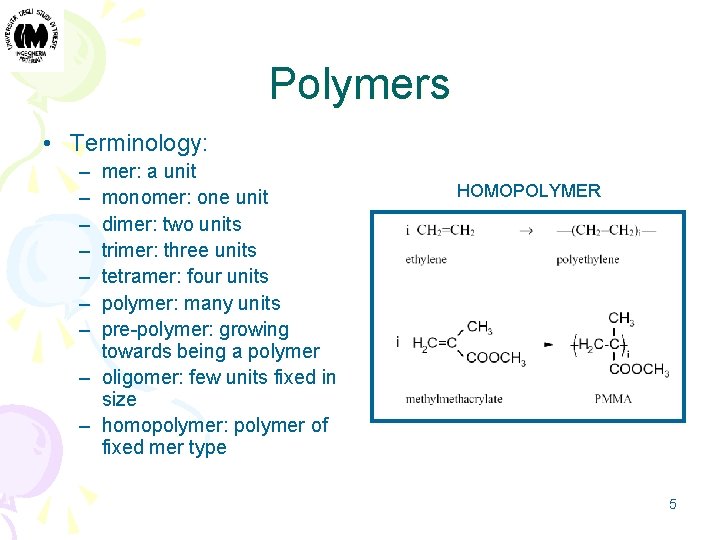
Polymers • Terminology: – – – – mer: a unit monomer: one unit dimer: two units trimer: three units tetramer: four units polymer: many units pre-polymer: growing towards being a polymer – oligomer: few units fixed in size – homopolymer: polymer of fixed mer type HOMOPOLYMER 5
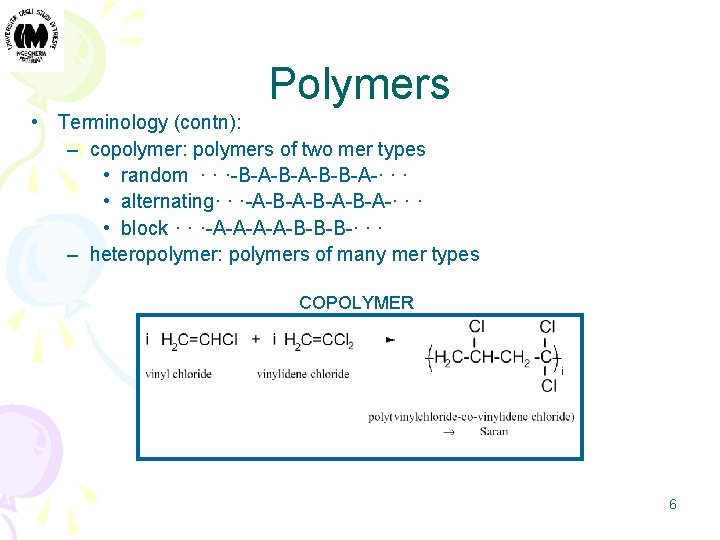
Polymers • Terminology (contn): – copolymer: polymers of two mer types • random · · ·-B-A-B-B-A-· · · • alternating· · ·-A-B-A-B-A-· · · • block · · ·-A-A-B-B-B-· · · – heteropolymer: polymers of many mer types COPOLYMER 6

Polymer Synthesis • Two common methods of polymerization – Condensation polymerization (or stepwise addition) – Addition reaction (or chain polymerization) • Condensation: – two monomers react to establish a covalent bond – a small molecule, such as water, HCl, methanol, or CO 2 is released. – the reaction continues until one type of reactant is used up 7
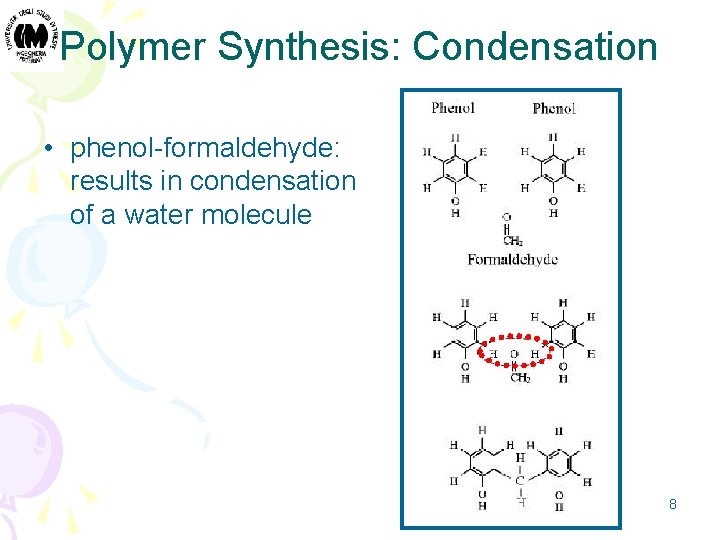
Polymer Synthesis: Condensation • phenol-formaldehyde: results in condensation of a water molecule 8
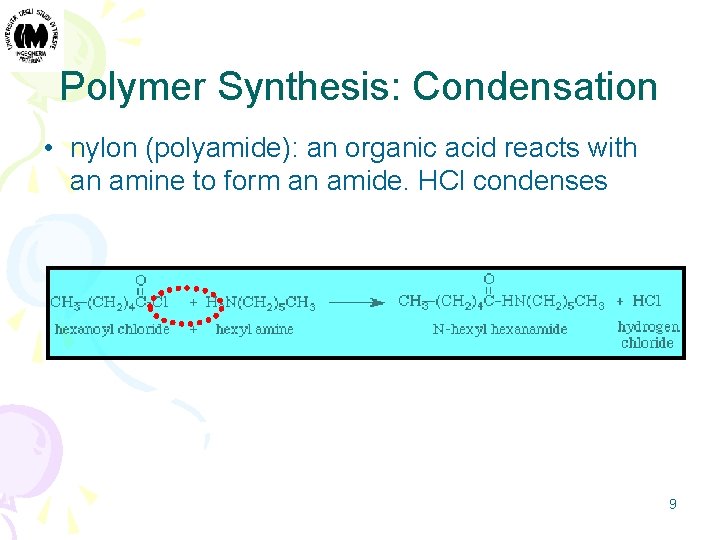
Polymer Synthesis: Condensation • nylon (polyamide): an organic acid reacts with an amine to form an amide. HCl condenses 9
Polymerization Reactions - Condensation (1) Also known as a Step Reaction Polymerization • Reaction of two functional groups (often organic molecules) with the formation of a low molecular weight byproduct (often H 2 O but also CH 3 OH, Na. Cl, HCl) - The resulting polymer can either be a homopolymer (all mers are the same) or a co-polymer (mers are not all the same) Example: used to produce nylons (1930’s) R-NH 2 + R’-COOH <--> R’-CONHR + H 2 O (amine + carboxylic acid <--> amide + water) • Typical condensation polymers: Polyester, Protein, Polysaccharides, Polyurethane, Cellulose • All natural polymers form by condensation reactions • By products must be eliminated (problems if the condensation takes place inside the body) • The mobility of the chains and reactant chemical species decreases as polymerization progresses. - Reaction rate is normally low and “mers” react all at the same time. 10
Polymerization Reactions - Condensation (2) • For true polymerization to take place, chemical reactions must be able to take place at two or more sites on the reactants - Depends on the end groups of the molecules - The number of sites at which a monomer can react is termed its functionality # Functionality of greater than two allows networks to be formed • The monomer concentration typically declines early in the reaction process and further polymerization occurs between intermediate length chains • Problems which reduce yield - An imbalance in the reactants (if different molecules) # Causes intermediate, short polymer molecules to be formed which are not able to react further - If the condensate (ie. H 2 O) is allowed to build up, an equilibrium can be reached and the reaction will not continue # Also possible to force the reaction back the other way and break the polymers # Can be remedied by removing the condensate as the reaction progresses - Polymerization reactions may be slow at ambient temperature # Requires increasing the temperature or adding a catalyst to increase the reaction rate 11
Polymer Synthesis • Addition: – monomers react through stages of initiation, propagation, and termination – initiators such as free radicals, cations, anions opens the double bond of the monomer – monomer becomes active and bonds with other such monomers – rapid chain reaction propagates – reaction is terminated by another free radical or another polymer 12
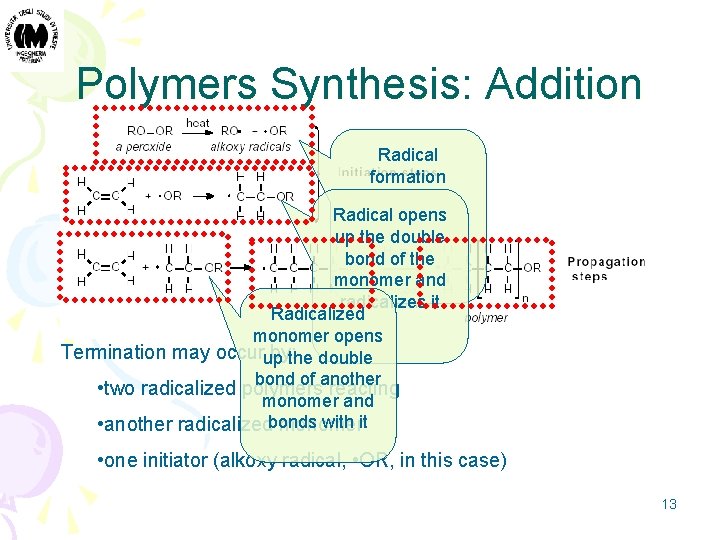
Polymers Synthesis: Addition Radical formation Radical opens up the double bond of the monomer and radicalizes it Radicalized monomer opens Termination may occurup by: the double bond of another • two radicalized polymers reacting monomer and with it • another radicalizedbonds monomer • one initiator (alkoxy radical, • OR, in this case) 13
Polymerization Reactions - Addition Also known as free radical polymerization • Occurs by the addition of monomer molecules to a growing polymer chain Example: n (C 2 H 4) --> CH 3 - (C 2 H 4)n - CH 3 • Requires the presence of unsaturated monomers - Unsaturated indicates that they contain double or triple bonds • Reaction can start with heat, light or addition of a chemical compound (initiator) • Chain lengthening typically takes place at only one end of the chain • The monomer concentration declines continuously throughout the process • Termination of chain growth occurs when two activated ends combine • There are no byproducts 14
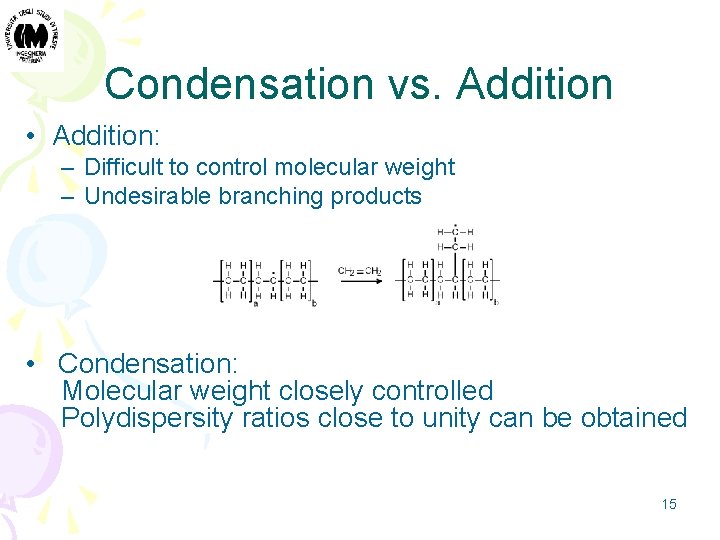
Condensation vs. Addition • Addition: – Difficult to control molecular weight – Undesirable branching products • Condensation: Molecular weight closely controlled Polydispersity ratios close to unity can be obtained 15
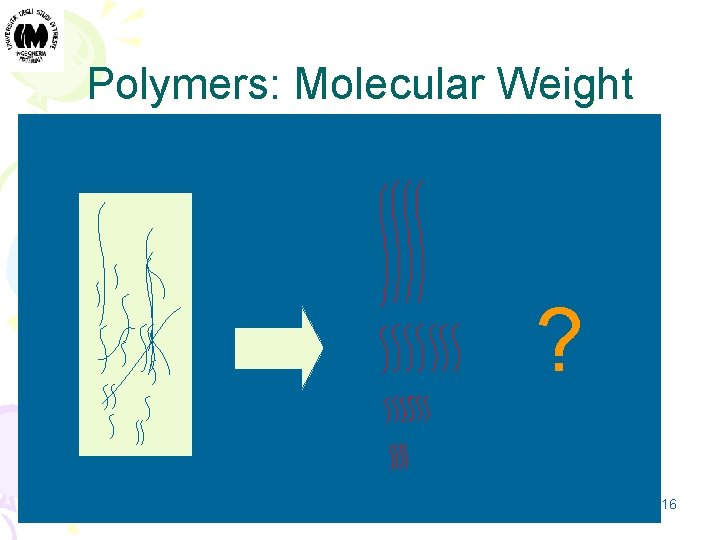
Polymers: Molecular Weight • i: degree of polymerization (# of monomer units) Mo: molecular weight of monomer Mi = i x M o Mi: molar mass of polymer molecule i • Typically all chains are not equally long but display a variation ? – monodisperse: equal chain lengths, specific to proteins – polydisperse: unequal length, specific to most synthetic molecules • Therefore we need to define an “average” molecular weight – number average, Mn – weight average, Mw 16
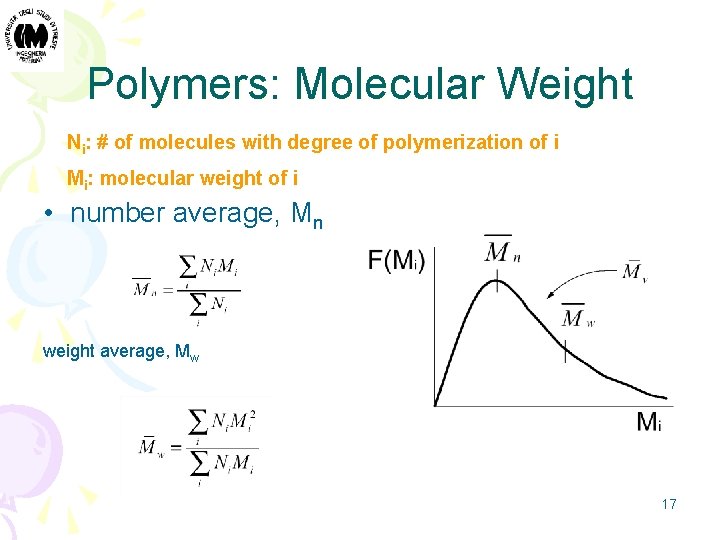
Polymers: Molecular Weight Ni: # of molecules with degree of polymerization of i Mi: molecular weight of i • number average, Mn weight average, Mw 17
Polymers: Molecular Weight • Ratio of Mw to Mn is known as the polydispersity index (PI) – a measure of the breadth of the molecular weight – PI = 1 indicates Mw = Mn, i. e. all molecules have equal length (monodisperse) – PI = 1 is possible for natural proteins whereas synthetic polymers have 1. 5 < PI < 5 – At best PI = 1. 1 can be attained with special techniques 18
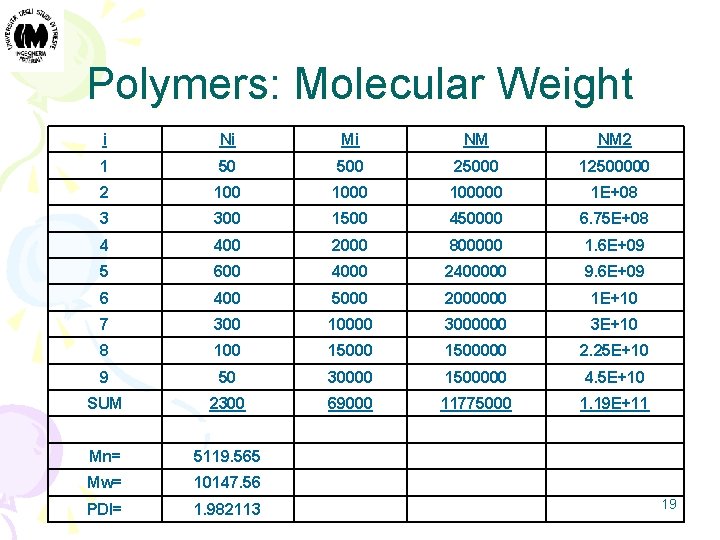
Polymers: Molecular Weight i Ni Mi NM NM 2 1 50 500 25000 12500000 2 100000 1 E+08 3 300 1500 450000 6. 75 E+08 4 400 2000 800000 1. 6 E+09 5 600 4000 2400000 9. 6 E+09 6 400 5000 2000000 1 E+10 7 300 10000 3000000 3 E+10 8 100 1500000 2. 25 E+10 9 50 30000 1500000 4. 5 E+10 SUM 2300 69000 11775000 1. 19 E+11 Mn= 5119. 565 Mw= 10147. 56 PDI= 1. 982113 19
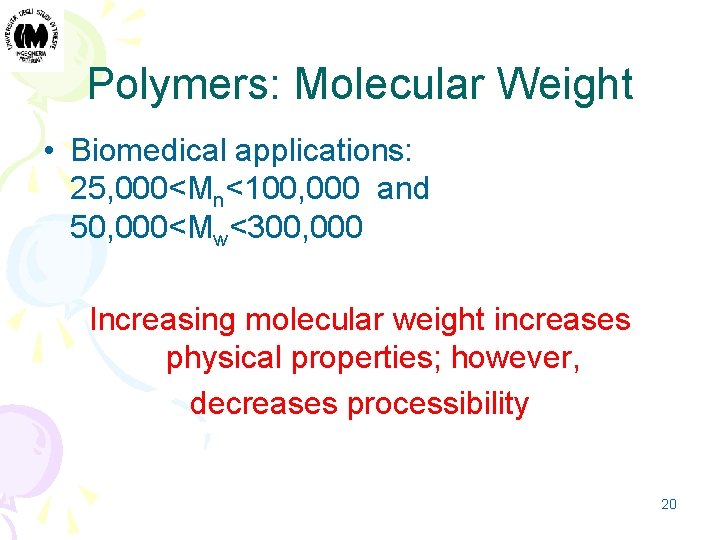
Polymers: Molecular Weight • Biomedical applications: 25, 000<Mn<100, 000 and 50, 000<Mw<300, 000 Increasing molecular weight increases physical properties; however, decreases processibility 20
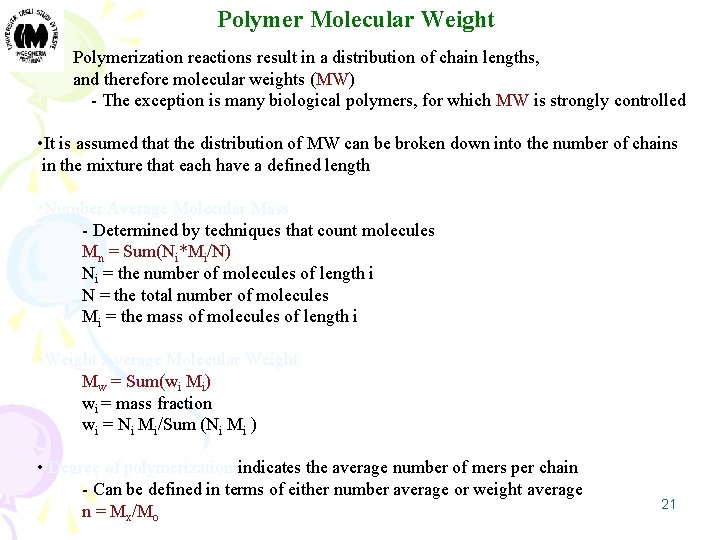
Polymer Molecular Weight Polymerization reactions result in a distribution of chain lengths, and therefore molecular weights (MW) - The exception is many biological polymers, for which MW is strongly controlled • It is assumed that the distribution of MW can be broken down into the number of chains in the mixture that each have a defined length • Number Average Molecular Mass - Determined by techniques that count molecules Mn = Sum(Ni*Mi/N) Ni = the number of molecules of length i N = the total number of molecules Mi = the mass of molecules of length i • Weight Average Molecular Weight Mw = Sum(wi Mi) wi = mass fraction wi = Ni Mi/Sum (Ni Mi ) • Degree of polymerization indicates the average number of mers per chain - Can be defined in terms of either number average or weight average n = Mx/Mo 21
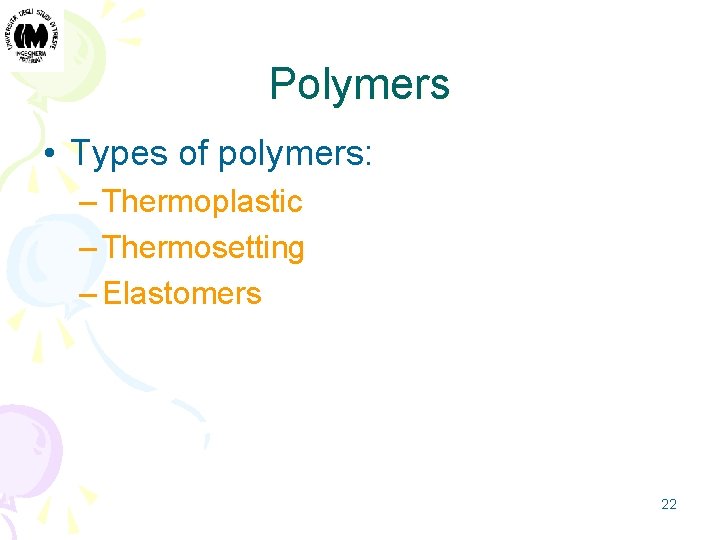
Polymers • Types of polymers: – Thermoplastic – Thermosetting – Elastomers 22
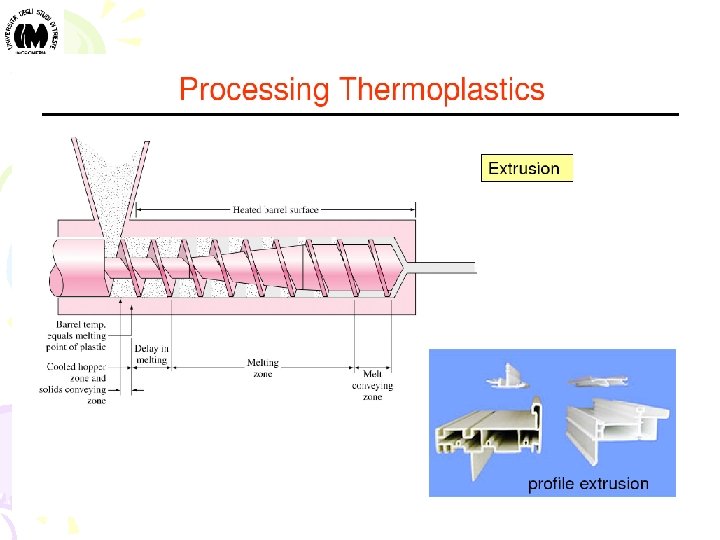
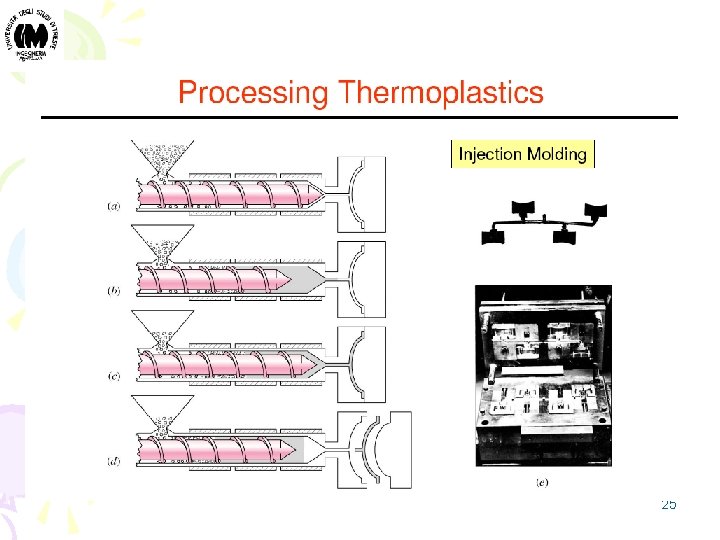
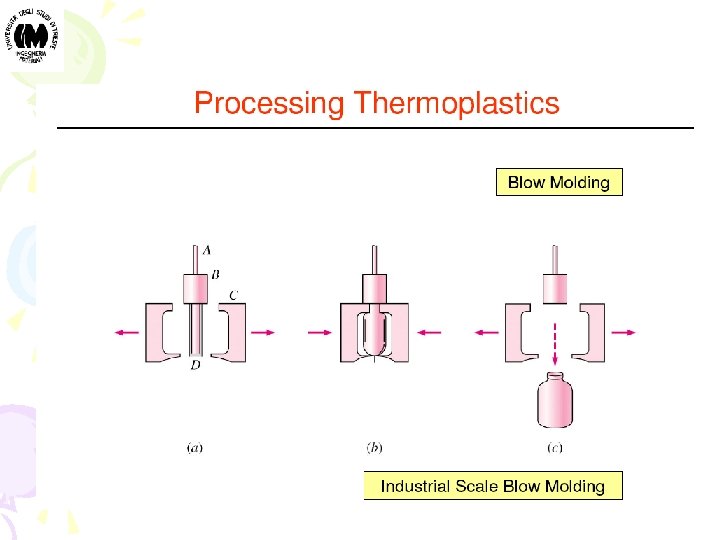
Polymers • Thermoplastic: – polymers that flow when heated – easily reshaped and recycled – due to presence of long chains with limited or no crosslinks – polyethylene, polyvinylchloride 23
24
25
26
Polymers • Thermosetting: – – decomposed when heated can not be reformed or recycled presence of extensive crosslinks between long chains induce decomposition upon heating and renders thermosetting polymers brittle – epoxy and polyesters 27
28
29
Polymers • Elastomers: – intermediate between thermoplastic and thermosetting polymers – some crosslinking – can undergo extensive elastic deformation – natural rubber, silicone 30
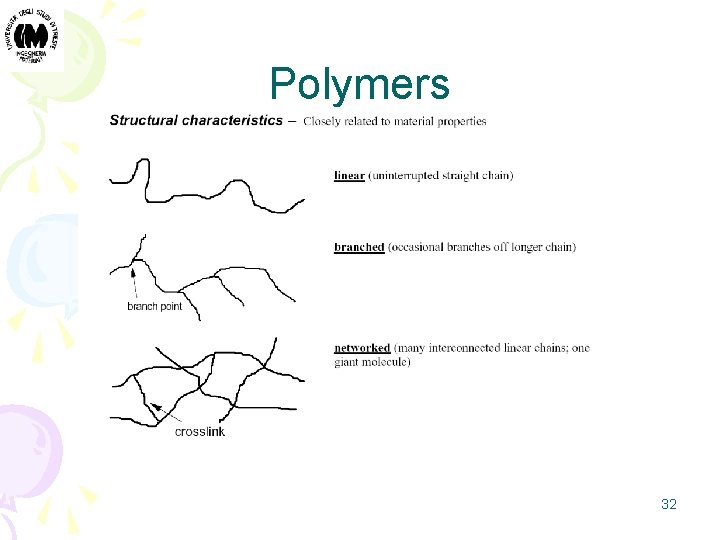
Polymers 32
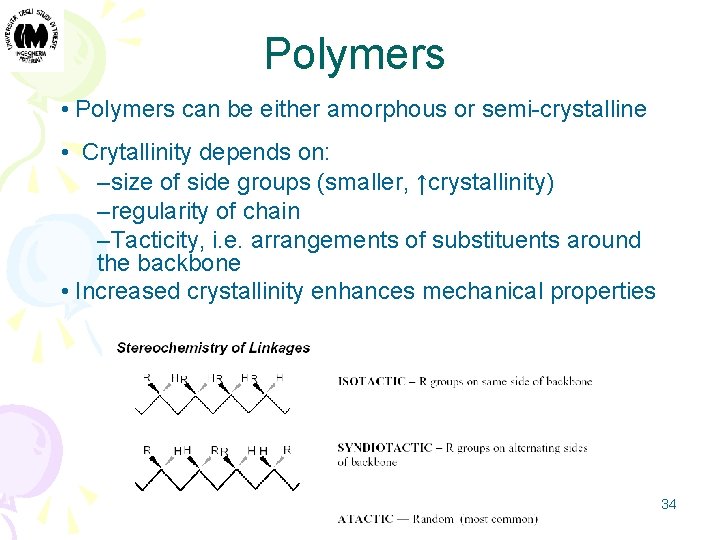
Polymers • Polymers can be either amorphous or semi-crystalline • Crytallinity depends on: –size of side groups (smaller, ↑crystallinity) –regularity of chain –Tacticity, i. e. arrangements of substituents around the backbone • Increased crystallinity enhances mechanical properties 34
Mechanical -Physical Properties • Generally, the higher the MW the lesser the mobility of the chains which results in - higher strength - greater thermal stability • Linear polymers are much easier to crystallize than the branched or 3 D - Chains in crystalline regions are combination of folded and extended chains • The addition of plasticizers keeps the chain separated from one anotherefore preventing crystallization - more flexible polymers (ex. celluloid from crystalline nitrocellulose with camphor) • Elastomers are noncrystalline polymers whit an intermediate structure consisting of long chains molecules in 3 D network • Crosslinks between chains, which act as pinning points, make elastomers not to behave like liquidis. The more crosslinks are introduced, the more rigid the structure becomes 35
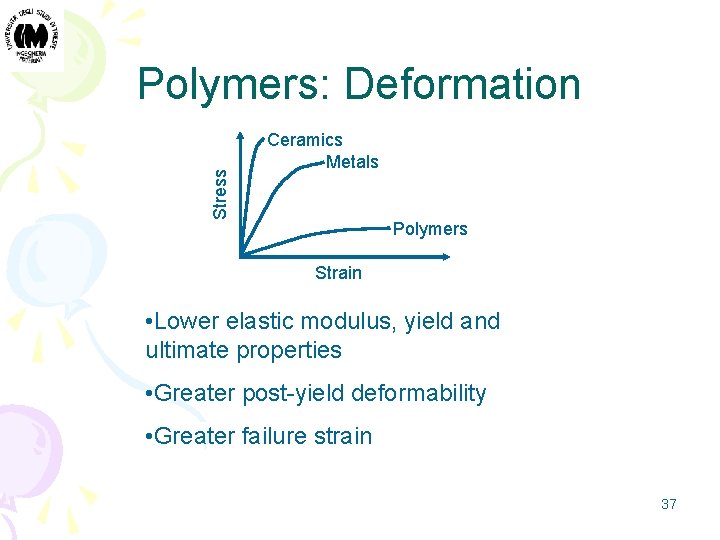
Stress Polymers: Deformation Ceramics Metals Polymers Strain • Lower elastic modulus, yield and ultimate properties • Greater post-yield deformability • Greater failure strain 37
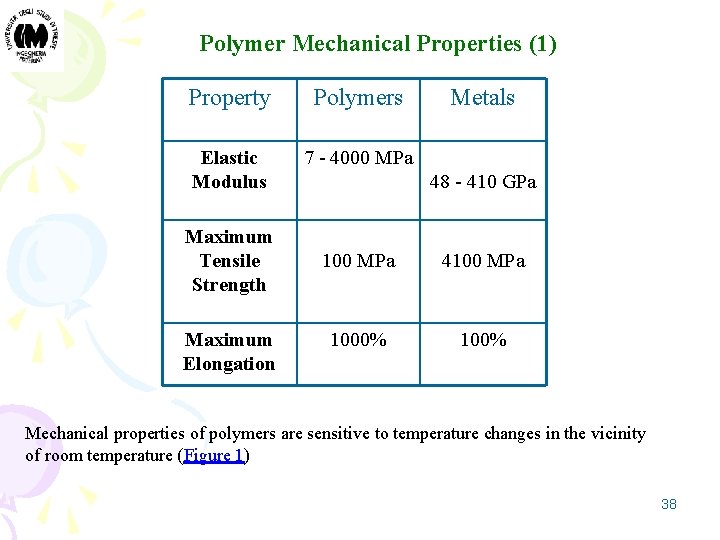
Polymer Mechanical Properties (1) Property Polymers Elastic Modulus 7 - 4000 MPa Maximum Tensile Strength Maximum Elongation Metals 48 - 410 GPa 100 MPa 4100 MPa 1000% 100% Mechanical properties of polymers are sensitive to temperature changes in the vicinity of room temperature (Figure 1) 38
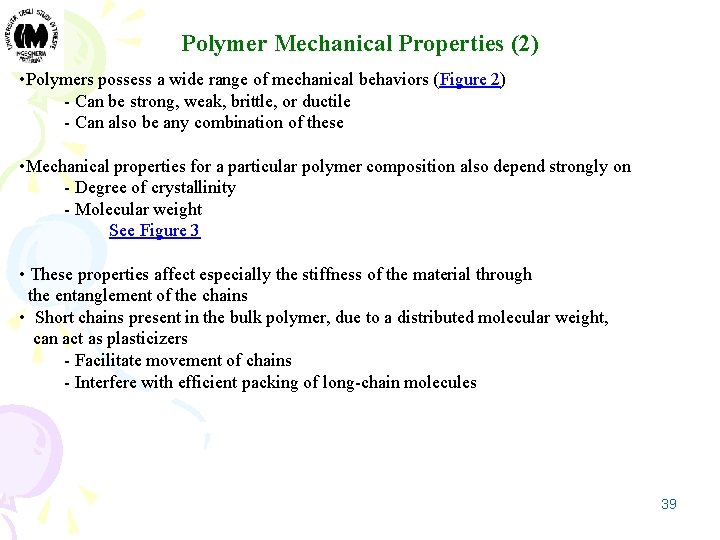
Polymer Mechanical Properties (2) • Polymers possess a wide range of mechanical behaviors (Figure 2) - Can be strong, weak, brittle, or ductile - Can also be any combination of these • Mechanical properties for a particular polymer composition also depend strongly on - Degree of crystallinity - Molecular weight See Figure 3 • These properties affect especially the stiffness of the material through the entanglement of the chains • Short chains present in the bulk polymer, due to a distributed molecular weight, can act as plasticizers - Facilitate movement of chains - Interfere with efficient packing of long-chain molecules 39
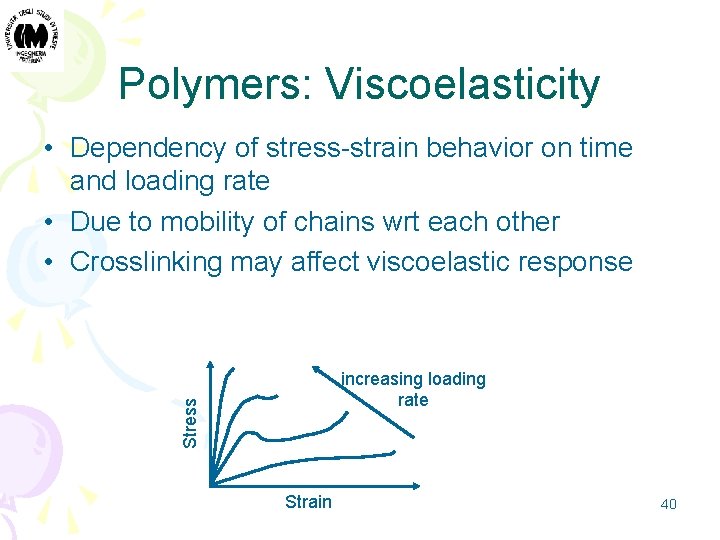
Polymers: Viscoelasticity • Dependency of stress-strain behavior on time and loading rate • Due to mobility of chains wrt each other • Crosslinking may affect viscoelastic response Stress increasing loading rate Strain 40
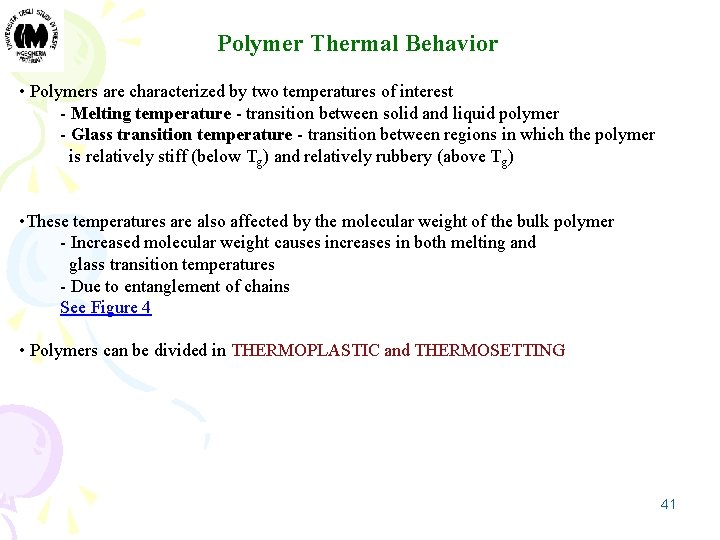
Polymer Thermal Behavior • Polymers are characterized by two temperatures of interest - Melting temperature - transition between solid and liquid polymer - Glass transition temperature - transition between regions in which the polymer is relatively stiff (below Tg) and relatively rubbery (above Tg) • These temperatures are also affected by the molecular weight of the bulk polymer - Increased molecular weight causes increases in both melting and glass transition temperatures - Due to entanglement of chains See Figure 4 • Polymers can be divided in THERMOPLASTIC and THERMOSETTING 41
Polymers: Thermal Properties • In the liquid/melt state enough thermal energy for random motion (Brownian motion) of chains • Motions decrease as the melt is cooled • Motion ceases at “glass transition temperature” • Polymer hard and glassy below Tg, rubbery above Tg 42
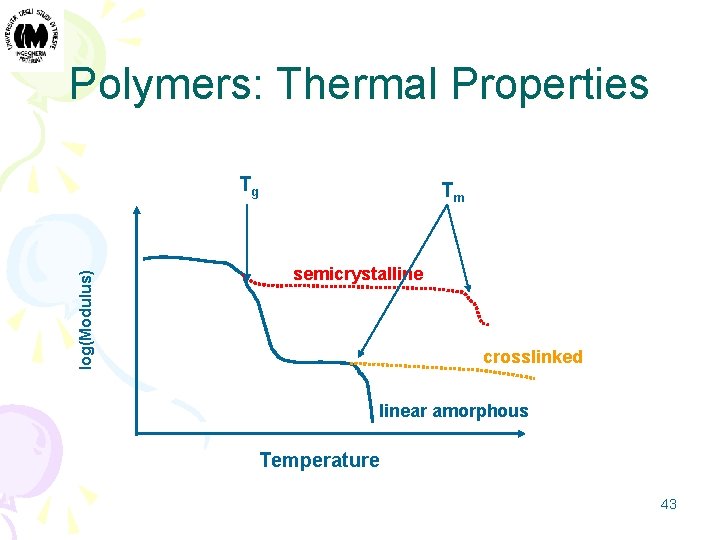
Polymers: Thermal Properties log(Modulus) Tg Tm semicrystalline crosslinked linear amorphous Temperature 43
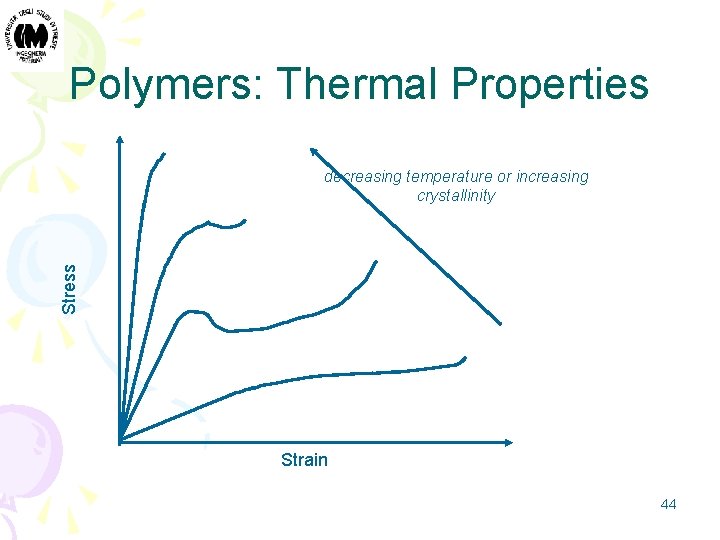
Polymers: Thermal Properties Stress decreasing temperature or increasing crystallinity Strain 44
Polymer Additives • Fillers - Powders or fibres used to improve properties such as tensile or compressive strength, abrasion resistance, toughness, thermal stability - Examples: silica, glass, clay, talc, limestone, synthetic polymer particles • Plasticizers - Act to swell the amorphous regions of the polymer and reduce chain cohesion - Increases flexbility, ductility, and toughness - Examples: high MW organic liquids and low MW polymers • Stabilizers - Prevent oxidation damage or cross-linking due to UV radiation or free radicals • Others: colorants and flame retardants 45
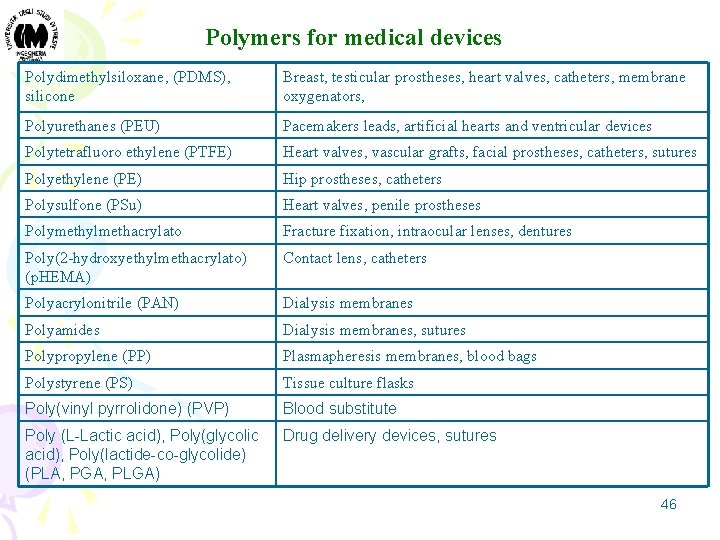
Polymers for medical devices Polydimethylsiloxane, (PDMS), silicone Breast, testicular prostheses, heart valves, catheters, membrane oxygenators, Polyurethanes (PEU) Pacemakers leads, artificial hearts and ventricular devices Polytetrafluoro ethylene (PTFE) Heart valves, vascular grafts, facial prostheses, catheters, sutures Polyethylene (PE) Hip prostheses, catheters Polysulfone (PSu) Heart valves, penile prostheses Polymethylmethacrylato Fracture fixation, intraocular lenses, dentures Poly(2 -hydroxyethylmethacrylato) (p. HEMA) Contact lens, catheters Polyacrylonitrile (PAN) Dialysis membranes Polyamides Dialysis membranes, sutures Polypropylene (PP) Plasmapheresis membranes, blood bags Polystyrene (PS) Tissue culture flasks Poly(vinyl pyrrolidone) (PVP) Blood substitute Poly (L-Lactic acid), Poly(glycolic acid), Poly(lactide-co-glycolide) (PLA, PGA, PLGA) Drug delivery devices, sutures 46
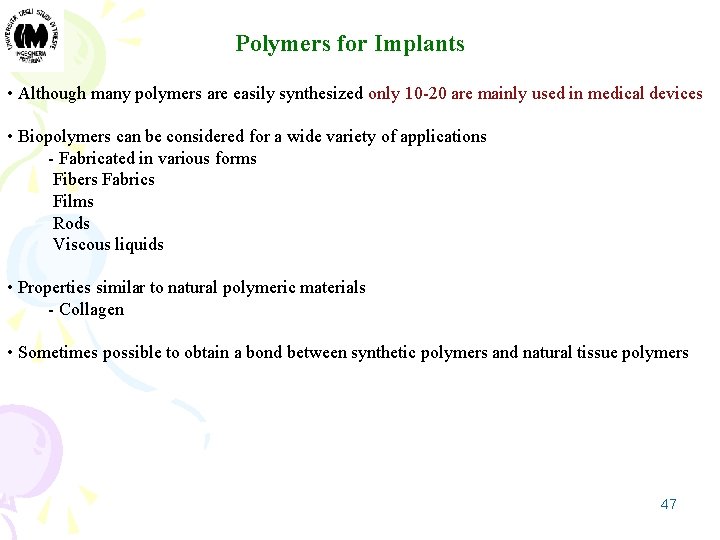
Polymers for Implants • Although many polymers are easily synthesized only 10 -20 are mainly used in medical devices • Biopolymers can be considered for a wide variety of applications - Fabricated in various forms Fibers Fabrics Films Rods Viscous liquids • Properties similar to natural polymeric materials - Collagen • Sometimes possible to obtain a bond between synthetic polymers and natural tissue polymers 47
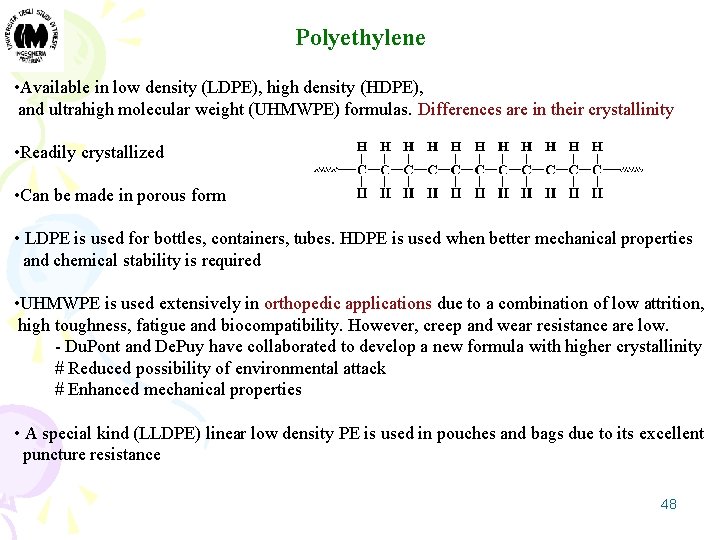
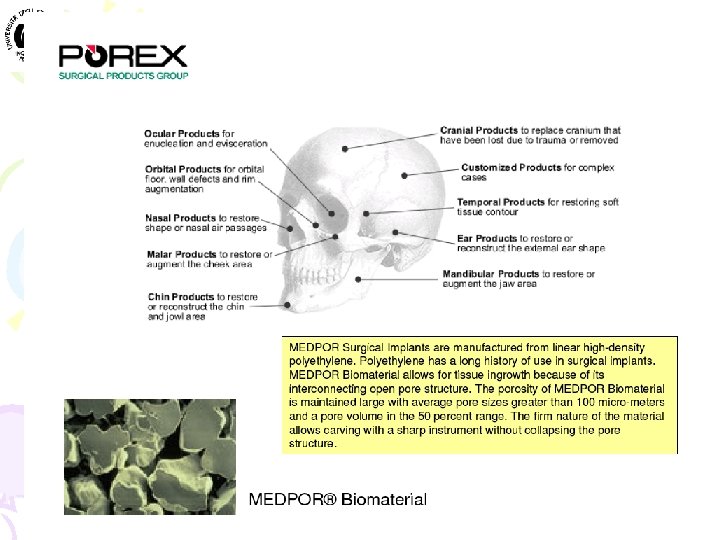
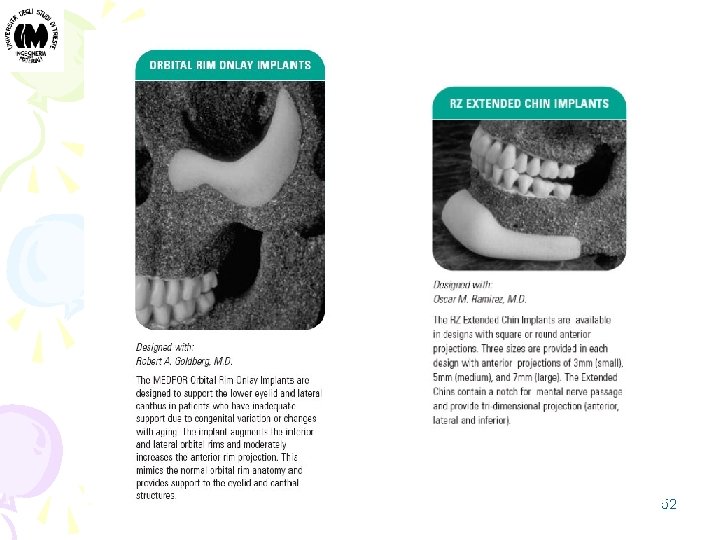
Polyethylene • Available in low density (LDPE), high density (HDPE), and ultrahigh molecular weight (UHMWPE) formulas. Differences are in their crystallinity • Readily crystallized • Can be made in porous form • LDPE is used for bottles, containers, tubes. HDPE is used when better mechanical properties and chemical stability is required • UHMWPE is used extensively in orthopedic applications due to a combination of low attrition, high toughness, fatigue and biocompatibility. However, creep and wear resistance are low. - Du. Pont and De. Puy have collaborated to develop a new formula with higher crystallinity # Reduced possibility of environmental attack # Enhanced mechanical properties • A special kind (LLDPE) linear low density PE is used in pouches and bags due to its excellent puncture resistance 48
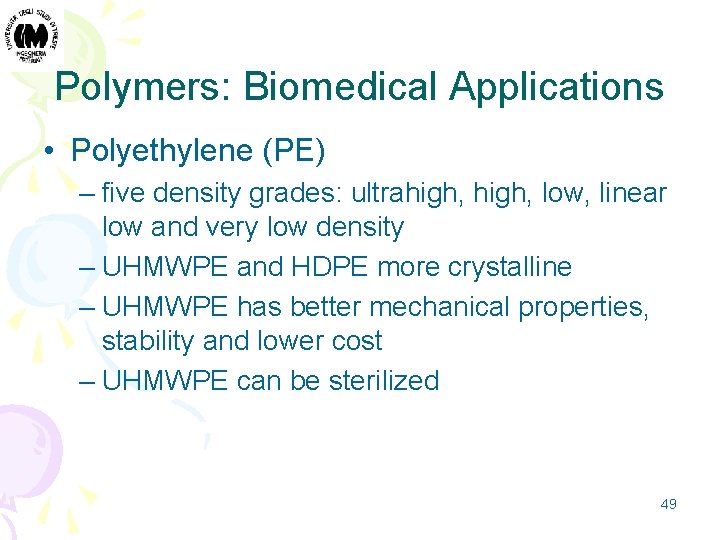
Polymers: Biomedical Applications • Polyethylene (PE) – five density grades: ultrahigh, low, linear low and very low density – UHMWPE and HDPE more crystalline – UHMWPE has better mechanical properties, stability and lower cost – UHMWPE can be sterilized 49
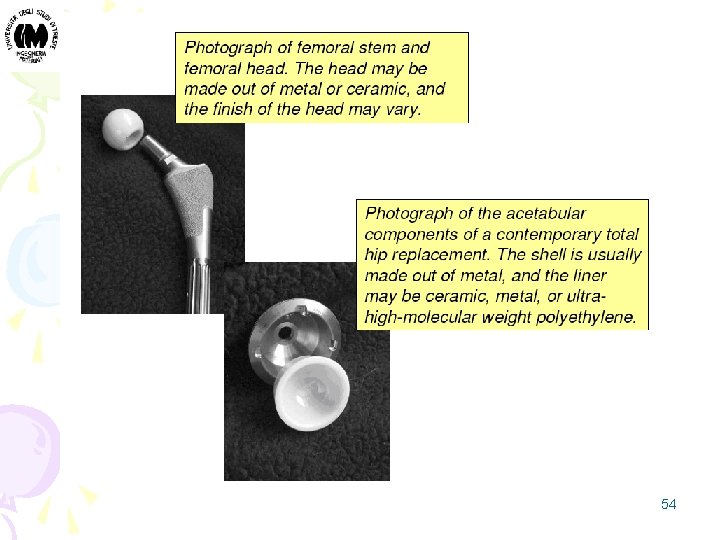
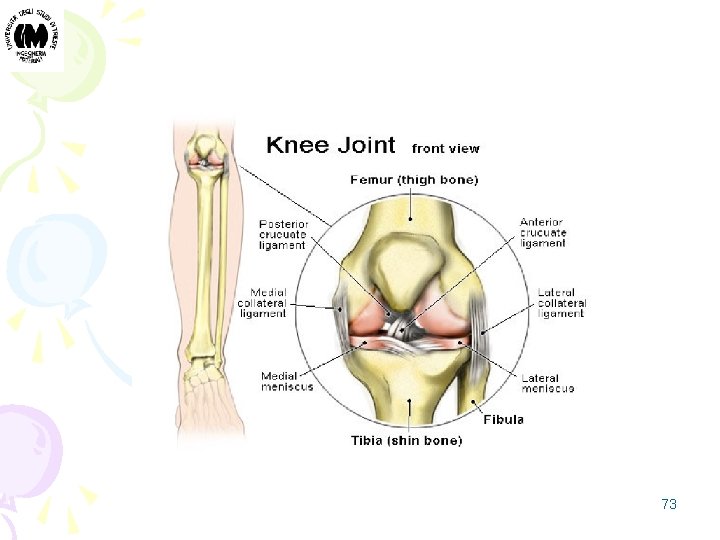
Polymers: Biomedical Applications • UHMWPE: acetabular caps in hip implants and patellar surface of knee joints • HDPE used as pharmaceutical bottles, fabrics • Others used as bags, pouches, tubes etc. 50
51
52
53
54
55
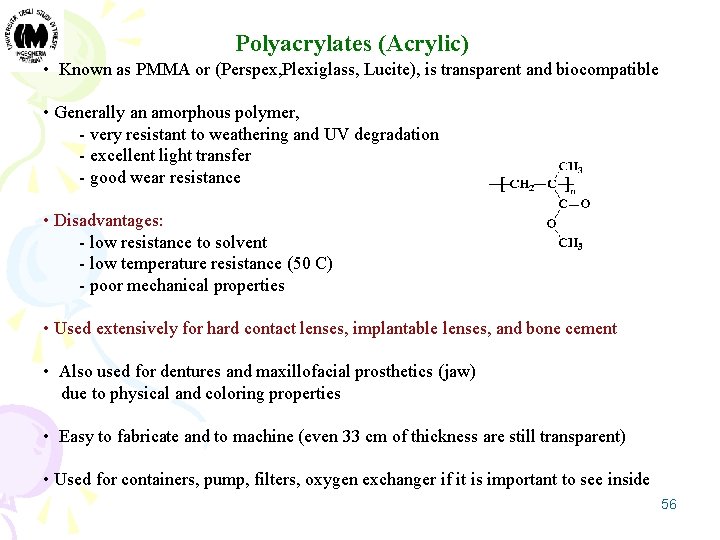
Polyacrylates (Acrylic) • Known as PMMA or (Perspex, Plexiglass, Lucite), is transparent and biocompatible • Generally an amorphous polymer, - very resistant to weathering and UV degradation - excellent light transfer - good wear resistance • Disadvantages: - low resistance to solvent - low temperature resistance (50 C) - poor mechanical properties • Used extensively for hard contact lenses, implantable lenses, and bone cement • Also used for dentures and maxillofacial prosthetics (jaw) due to physical and coloring properties • Easy to fabricate and to machine (even 33 cm of thickness are still transparent) • Used for containers, pump, filters, oxygen exchanger if it is important to see inside 56
Polymers: Biomedical Applications • Polymethylmethacrylate (PMMA, lucite, acrylic, plexiglas) – acrylics – transparency – tough – biocompatible • Used in dental restorations, membrane for dialysis, ocular lenses, contact lenses, bone cements 57
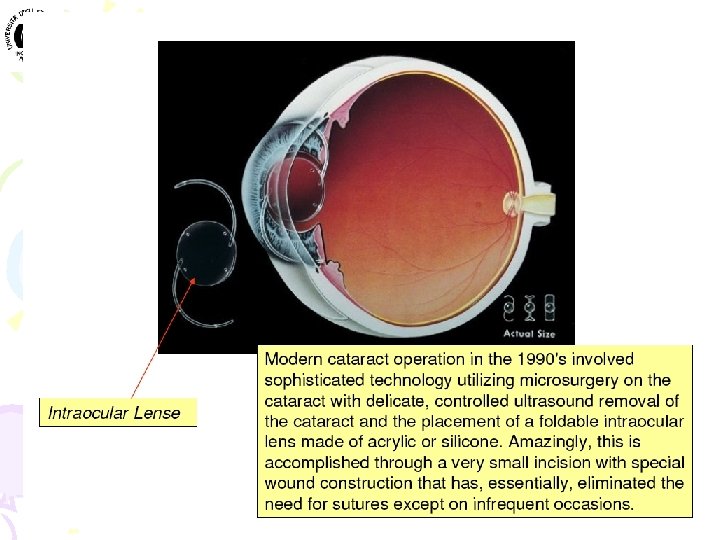
58
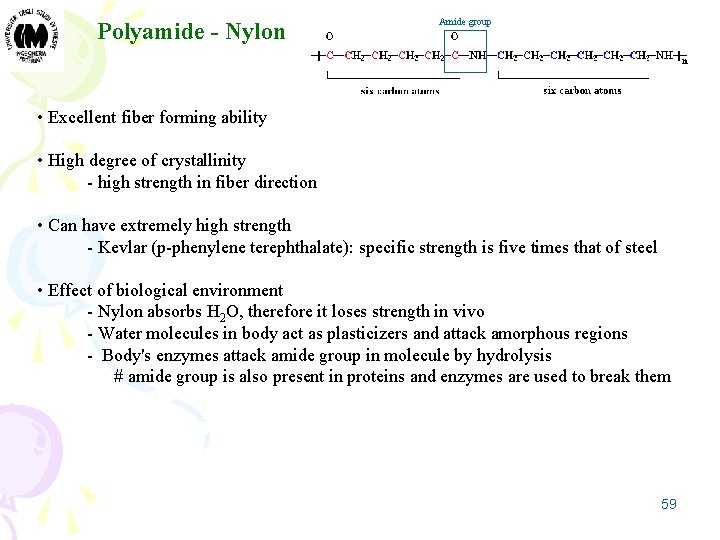
Polyamide - Nylon Amide group • Excellent fiber forming ability • High degree of crystallinity - high strength in fiber direction • Can have extremely high strength - Kevlar (p-phenylene terephthalate): specific strength is five times that of steel • Effect of biological environment - Nylon absorbs H 2 O, therefore it loses strength in vivo - Water molecules in body act as plasticizers and attack amorphous regions - Body's enzymes attack amide group in molecule by hydrolysis # amide group is also present in proteins and enzymes are used to break them 59
Polymers: Biomedical Applications • Polyamides (PA, nylon) – high degree of crystallinity – interchain hydrogen bonds provide superior mechanical strength (Kevlar fibers stronger than metals) – plasticized by water, not good in physiological environment • Used as sutures 60
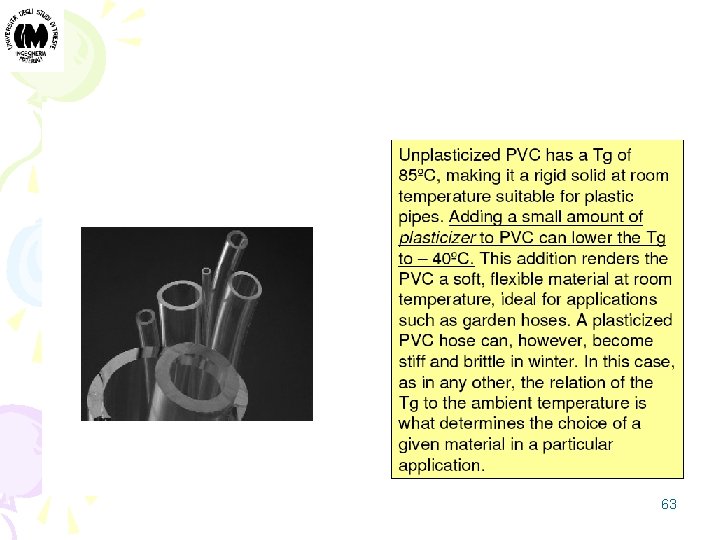
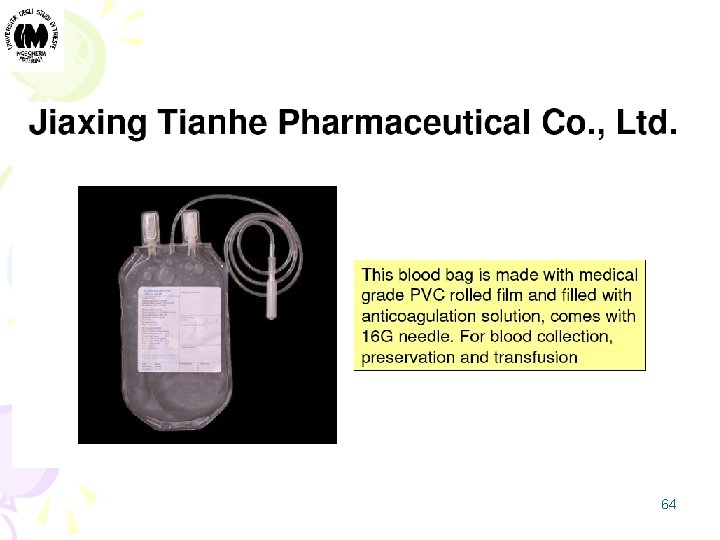
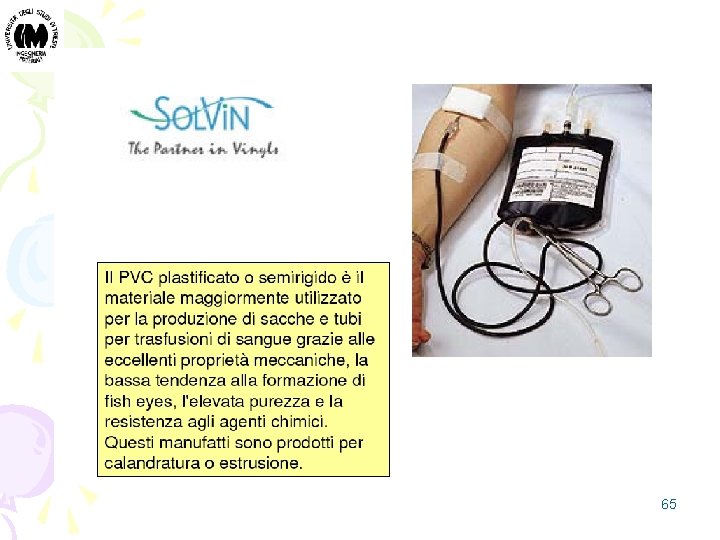
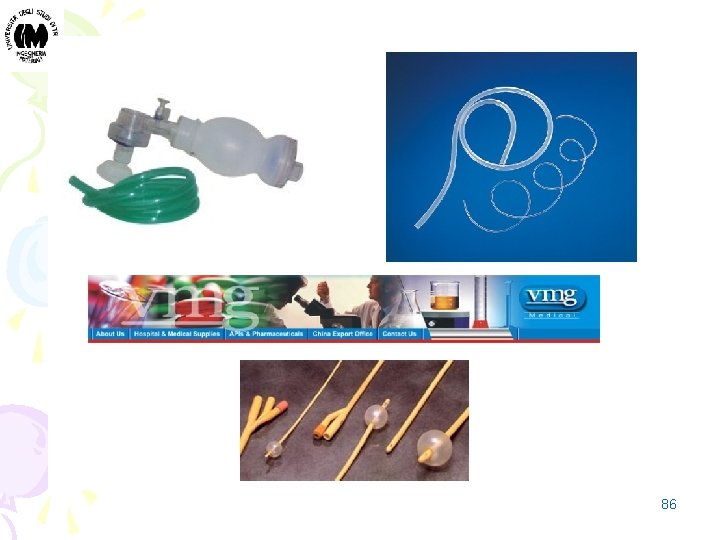
Polyvinylchloride - PVC • Amorphous, rigid polymer due to large side group (Cl) - High melt viscosity - Difficult to process HCl could be release, therefore thermal stabilizers (metallic soap or salts) are incorporated PVC sheets and films are used in blood and solution bags and surgical packaging PVC tubing is commonly used in dialysis devices, catheters and cannulae. 61
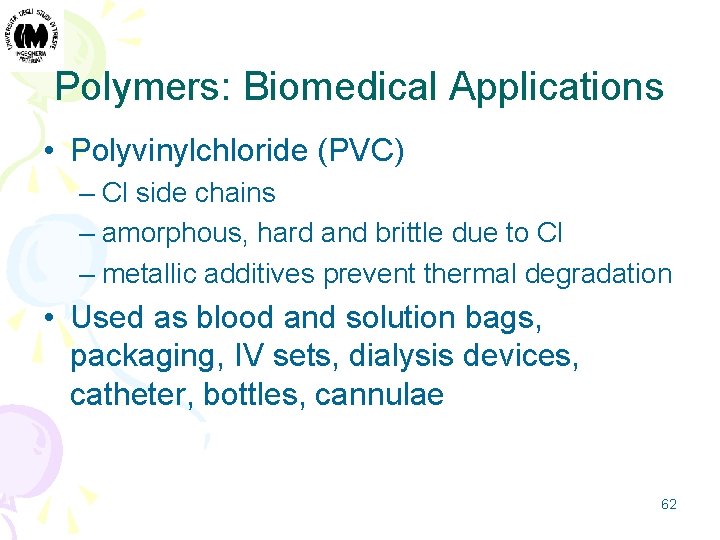
Polymers: Biomedical Applications • Polyvinylchloride (PVC) – Cl side chains – amorphous, hard and brittle due to Cl – metallic additives prevent thermal degradation • Used as blood and solution bags, packaging, IV sets, dialysis devices, catheter, bottles, cannulae 62
63
64
65
Polyepropylene - PP • Produced by Ziegler-Natta catalysis • Thermal and physical properties of PP are similar to those of PE • Has an exceptionally high flex life and excellent environment stress-cracking resistance - Used as finger joint prostheses • Used for disposable hypothermic syringes, blood oxygenator membrane, packaging, containers of solutions and drugs, suture, artificial vascular grafts, etc. 66
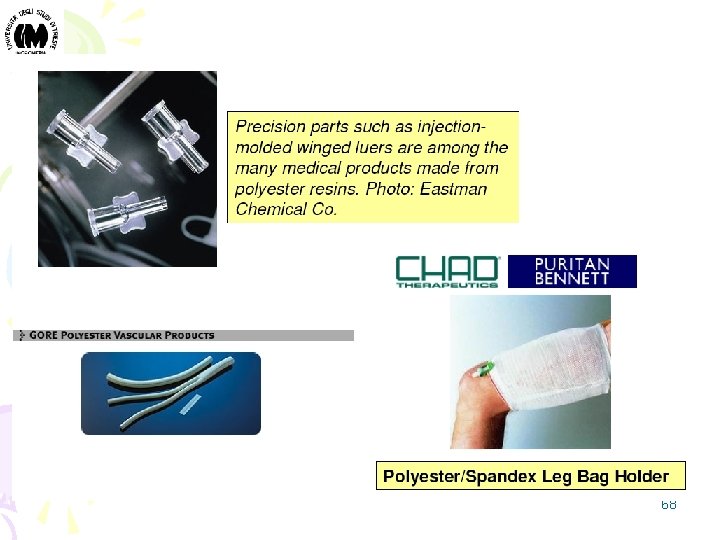
Polymers: Biomedical Applications • Polypropylene (PP) – properties similar to HDPE – good fatigue resistance • Used as syringes, oxygenator membranes, sutures, fabrics, vascular grafts • Polyesters (PE) – hydrophobic (beverage container PET) – molded into complex shapes • Used as vascular grafts, sutures, heart valves, catheter housings 67
68
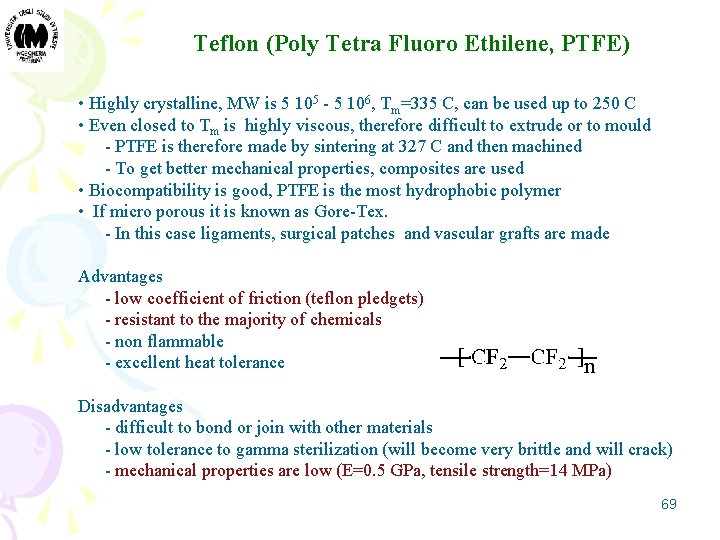
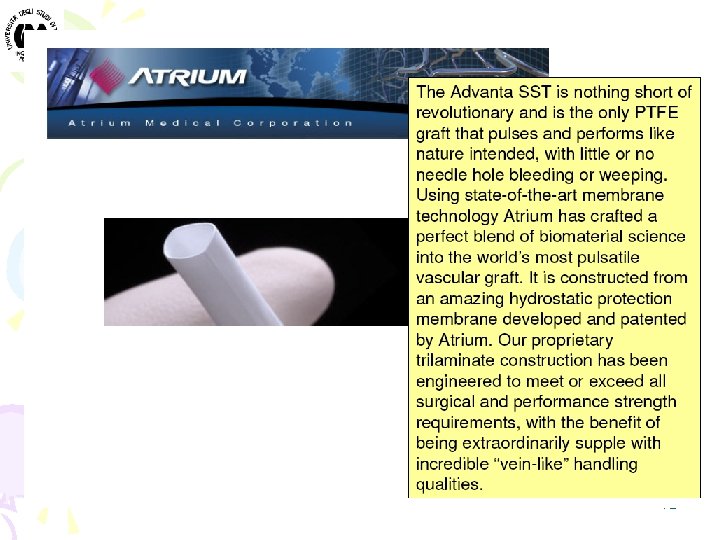
Teflon (Poly Tetra Fluoro Ethilene, PTFE) • Highly crystalline, MW is 5 105 - 5 106, Tm=335 C, can be used up to 250 C • Even closed to Tm is highly viscous, therefore difficult to extrude or to mould - PTFE is therefore made by sintering at 327 C and then machined - To get better mechanical properties, composites are used • Biocompatibility is good, PTFE is the most hydrophobic polymer • If micro porous it is known as Gore-Tex. - In this case ligaments, surgical patches and vascular grafts are made Advantages - low coefficient of friction (teflon pledgets) - resistant to the majority of chemicals - non flammable - excellent heat tolerance Disadvantages - difficult to bond or join with other materials - low tolerance to gamma sterilization (will become very brittle and will crack) - mechanical properties are low (E=0. 5 GPa, tensile strength=14 MPa) 69
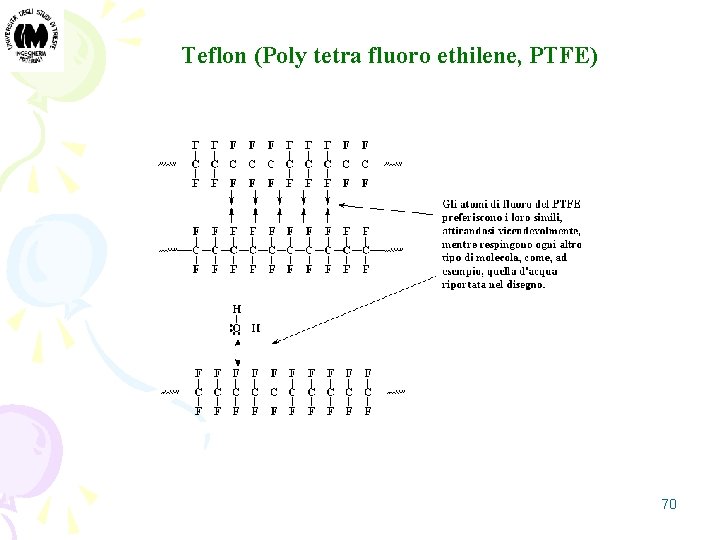
Teflon (Poly tetra fluoro ethilene, PTFE) 70
Polymers: Biomedical Applications • Polytetrafluoroethylene (PTFE, teflon) – low coefficient of friction (low interfacial forces between its surface and another material) – very low surface energy (see handout #8) – high crystallinity – low modulus and strength – difficult to process • catheters, artificial vascular grafts 71
72
73
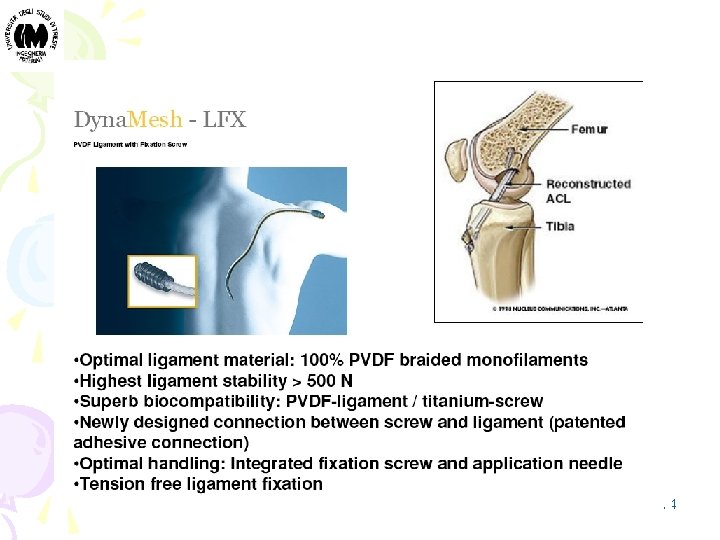
74
Polystyrene - PS • 3 grades are available: - GPPS unmodified general purpose (good transparency, no color, ease fabrication, low r) - HIPS high impact PS (contains a rubbery modifier), also environmental stress cracking is enhanced - PS foam (injection molded at 180 -250 C) • GPPS is used in tissue culture flasks, vacuum canister, filterware • Acrylonitrile-butadiene-styrene (ABS) copolymers are produced mixing the 3 monomers - Resistant to common inorganic solutions - Good surface properties - Dimensional stability • ABS used for clamps, blood dialyzers, diagnostic kits, etc. 75
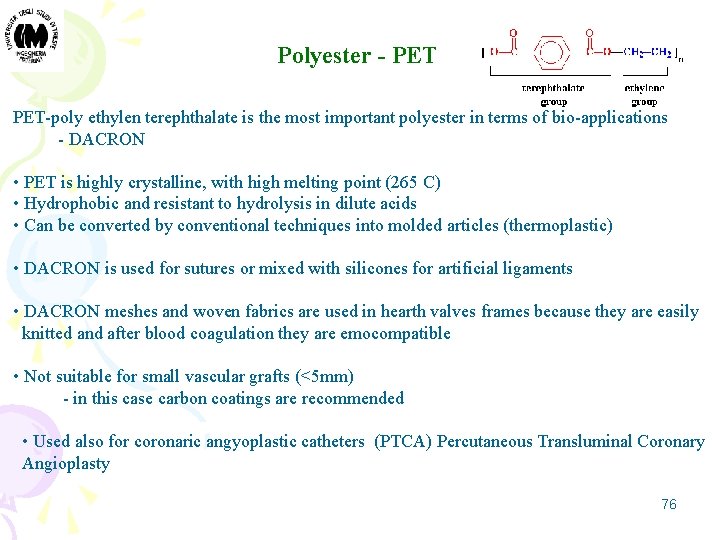
Polyester - PET-poly ethylen terephthalate is the most important polyester in terms of bio-applications - DACRON • PET is highly crystalline, with high melting point (265 C) • Hydrophobic and resistant to hydrolysis in dilute acids • Can be converted by conventional techniques into molded articles (thermoplastic) • DACRON is used for sutures or mixed with silicones for artificial ligaments • DACRON meshes and woven fabrics are used in hearth valves frames because they are easily knitted and after blood coagulation they are emocompatible • Not suitable for small vascular grafts (<5 mm) - in this case carbon coatings are recommended • Used also for coronaric angyoplastic catheters (PTCA) Percutaneous Transluminal Coronary Angioplasty 76
Polymers: Biomedical Applications • Rubbers – latex, silicone – good biocompatibility • Used as maxillofacial prosthetics 77
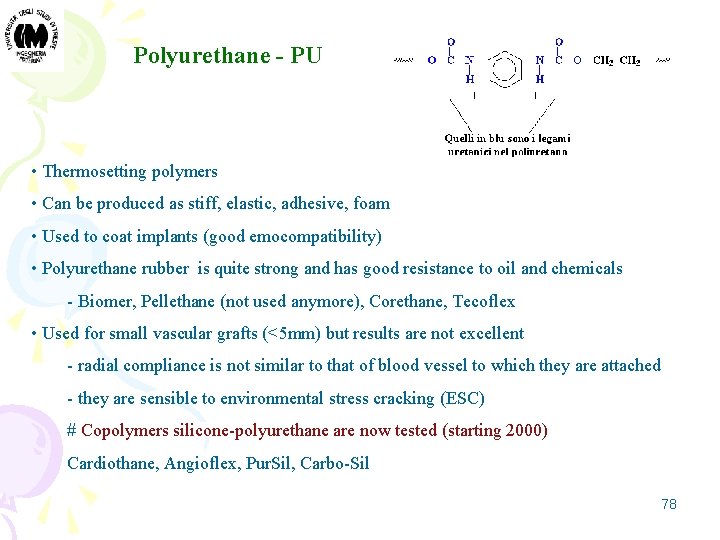
Polyurethane - PU • Thermosetting polymers • Can be produced as stiff, elastic, adhesive, foam • Used to coat implants (good emocompatibility) • Polyurethane rubber is quite strong and has good resistance to oil and chemicals - Biomer, Pellethane (not used anymore), Corethane, Tecoflex • Used for small vascular grafts (<5 mm) but results are not excellent - radial compliance is not similar to that of blood vessel to which they are attached - they are sensible to environmental stress cracking (ESC) # Copolymers silicone-polyurethane are now tested (starting 2000) Cardiothane, Angioflex, Pur. Sil, Carbo-Sil 78
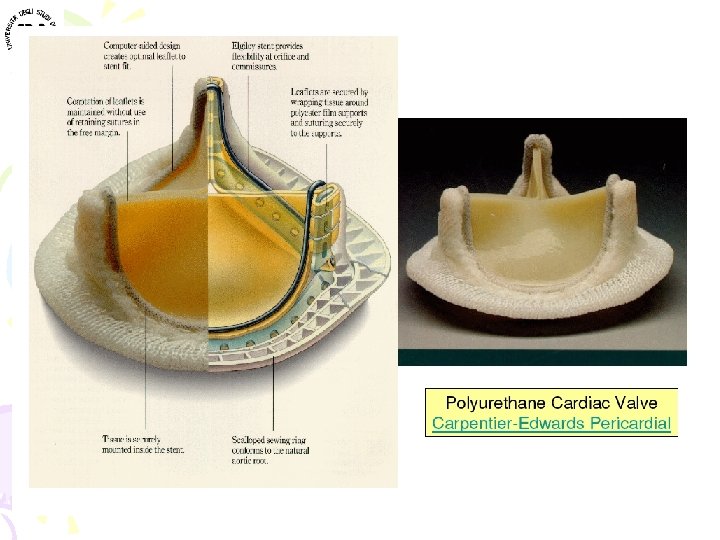
Polymers: Biomedical Applications • Polyurethanes – block copolymer structure – good mechanical properties – good biocompatibility • tubing, vascular grafts, pacemaker lead insulation, heart assist balloon pumps 79
80
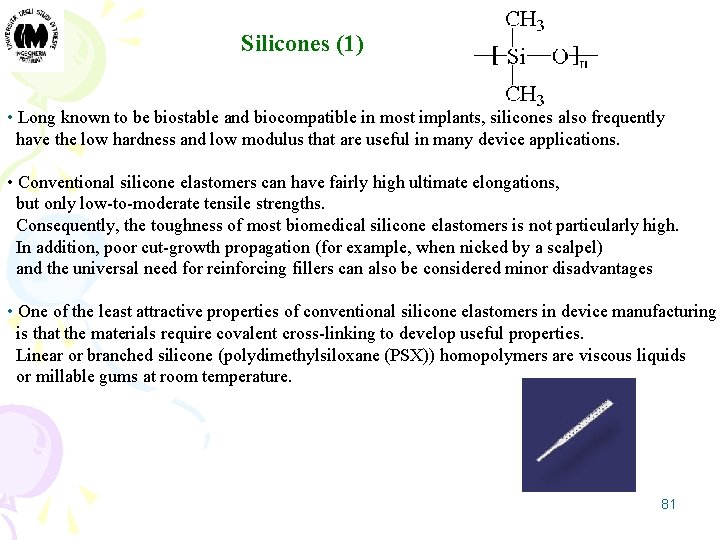
Silicones (1) • Long known to be biostable and biocompatible in most implants, silicones also frequently have the low hardness and low modulus that are useful in many device applications. • Conventional silicone elastomers can have fairly high ultimate elongations, but only low-to-moderate tensile strengths. Consequently, the toughness of most biomedical silicone elastomers is not particularly high. In addition, poor cut-growth propagation (for example, when nicked by a scalpel) and the universal need for reinforcing fillers can also be considered minor disadvantages • One of the least attractive properties of conventional silicone elastomers in device manufacturing is that the materials require covalent cross-linking to develop useful properties. Linear or branched silicone (polydimethylsiloxane (PSX)) homopolymers are viscous liquids or millable gums at room temperature. 81
Silicones (2) • Fabrication of device components must include, or be followed by, cross-linking to form chemical bonds among adjacent polymer chains. The infinite network thus formed gives the polymer its rubber elasticity and characteristic physical-mechanical properties • Regardless of how the cross-linking or vulcanization is effected, the resulting thermoset silicone cannot be redissolved or remelted. • Silicones withstand a wider range of temperature remaining viable from -50 to +240 C • Silicone rubbers have high tear and tensile strength, good elongation, great flexibility • They are odorless and tasteless, do not support bacteria growth, and will not stain or corrode other materials. Most importantly, silicone rubbers exhibit superior compatibility with human tissue and body fluids. • Silicones resist water and many chemicals, including some acids, oxidizing chemicals, ammonia and isopropyl alcohol. However, silicones should not be used with concentrated acids, alkalines and solvents. 82
Silicones (3) • Silicone came into use as a biomaterial as a result of experiments carried out by Rowe on behalf of Dow Corning in the 1950 s. • There an estimated 1 -2 million women with silicone breast implants • Rowe defined silicone suitable as a biomaterial based on: Lack of neutrophils or necrosis Mechanical properties and ease of fabrication Resistance to modification by soft tissues Chemically inertness Non-inflammatory nature Non-carcinogenic behaviour Non-allergenic chemistry 83
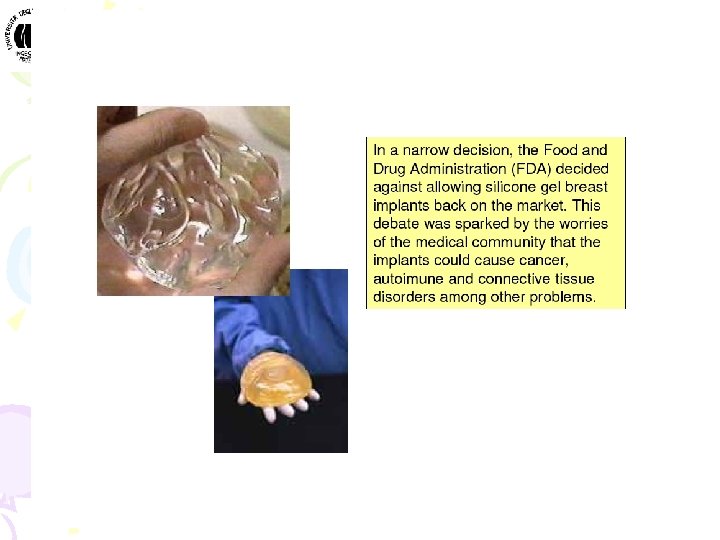
Silicones (4) • The product is water-resistant. It cannot be easily warmed up or cooled down, and it does not allow electricity to pass through it. So the polymer's fails to blend in to its new biological environment, and so the body must change to suit it. • Knowing how important it is for the body to maintain its controlled environment, silicone's very properties seem to imply that it is biologically incompatible. • The most common complications caused by the silicone breast implant are calcification of the capsule making the breasts painful and hard, and implant rupture. • Implant rupture rates is about 30% at five years, 50% at 10 years, 70% at 17 years post implantation 84
85
86
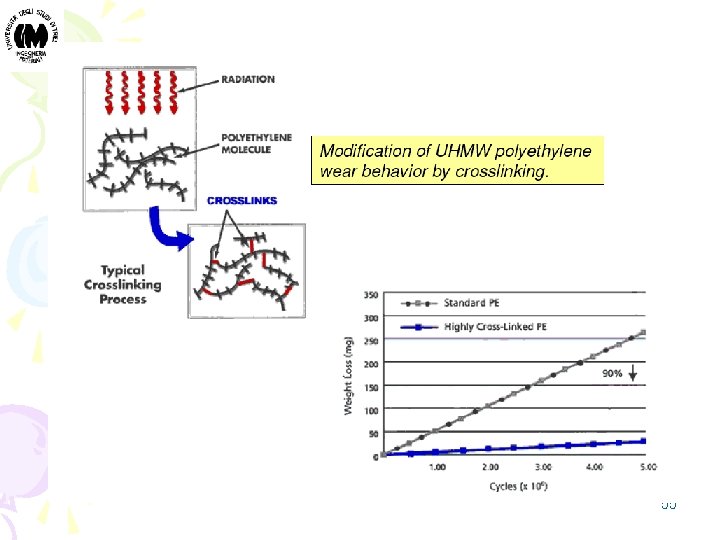
Sterilization • Polymers are difficult to sterilize using conventional techniques • Usually: - Dry heat (160 -190 C too high for PE, PMMA, nylon, good for PTFE and silicone) - Autoclaving (125 -130 C and high pressure, not suitable for PVC, PE, nylon) - Ethylene oxide gas (widely used for polymers because a low temperature can be used) - Radiation (60 Co can deteriorate polymers by chain dissociation or crosslink) # PE can become brittle and hard # PP can discolor and eventually crack * It is very important to remain below the safe level of g radiation 87
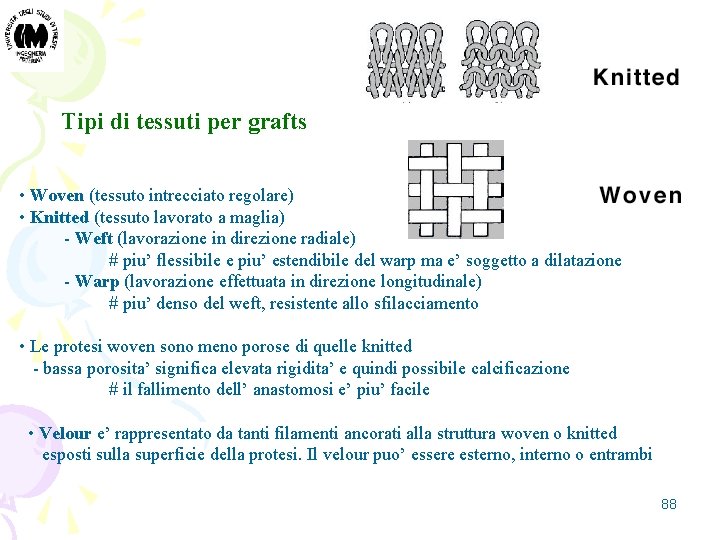
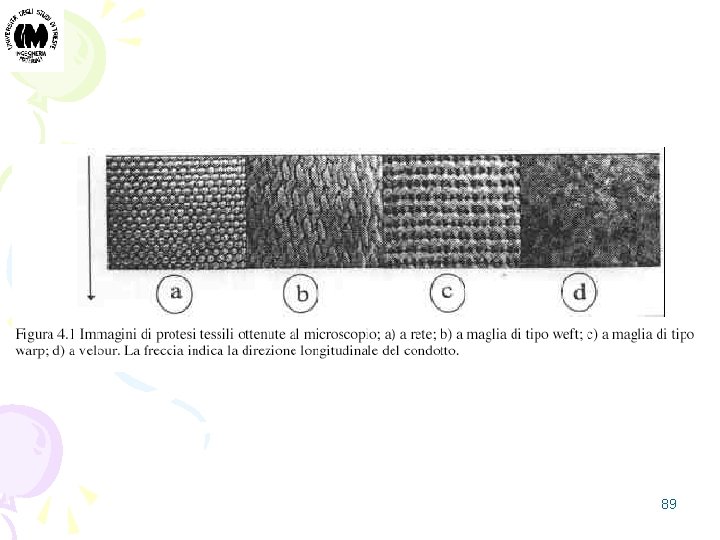
Tipi di tessuti per grafts • Woven (tessuto intrecciato regolare) • Knitted (tessuto lavorato a maglia) - Weft (lavorazione in direzione radiale) # piu’ flessibile e piu’ estendibile del warp ma e’ soggetto a dilatazione - Warp (lavorazione effettuata in direzione longitudinale) # piu’ denso del weft, resistente allo sfilacciamento • Le protesi woven sono meno porose di quelle knitted - bassa porosita’ significa elevata rigidita’ e quindi possibile calcificazione # il fallimento dell’ anastomosi e’ piu’ facile • Velour e’ rappresentato da tanti filamenti ancorati alla struttura woven o knitted esposti sulla superficie della protesi. Il velour puo’ essere esterno, interno o entrambi 88
89
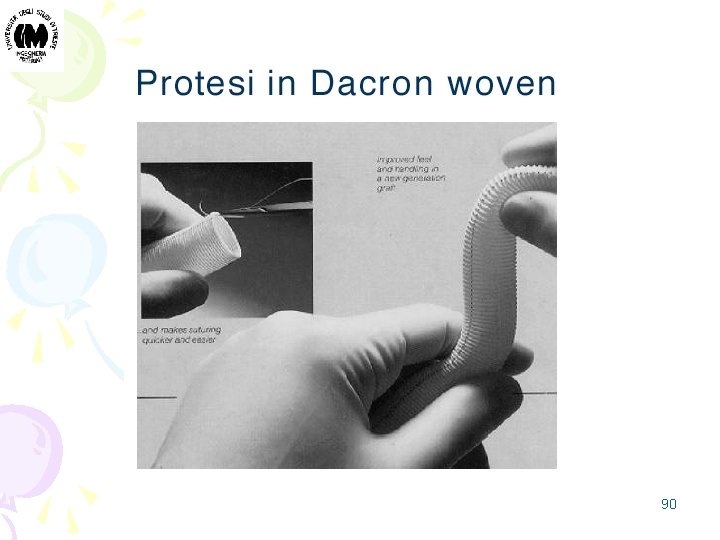
90
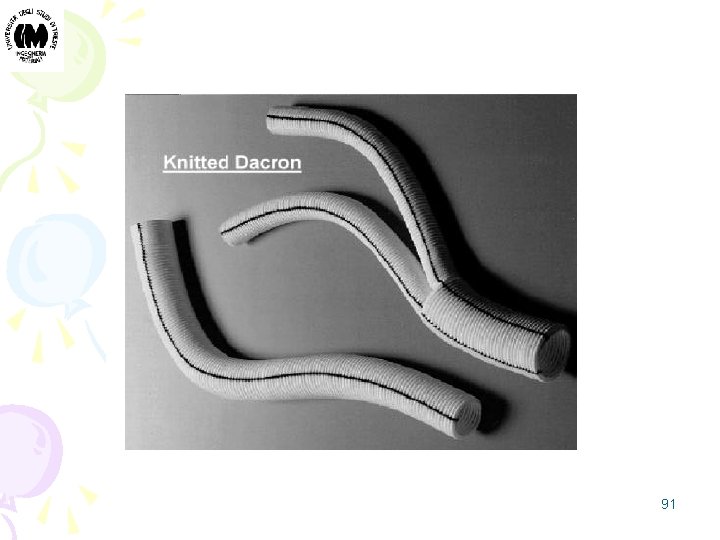
91
PHEMA Poly-Hydroxy Ethyl Meth. Acrylate The introduction of PHEMA (Poly-Hydroxy gels) as biomaterials in 1960 was considered as the initial development of synthetic polymeric hydrogels utilized for biomedical applications. Since then, extensive studies have been done on the structural, chemical properties, and applications of PHEMA. 92
Gel - Particolare stato della materia intermedio tra quello solido e quello liquido. - I gel si comportano come SOLIDI o quasi solidi (solid-like behaviour), benché siano costituiti a volte da più del 99% di liquidi - Un gel è costituito da una matrice solida reticolata (network) completamente permeata da liquido. La consistenza di un gel varia da fluido molto viscoso a solido rigido Idrogeli • Strutture polimeriche • reticolate e rigonfiate in acqua • prodotte dalla semplice reazione di uno o più monomeri di cui almeno uno con valenza superiore a 2 (tri- , tetra- valenti) • o da legami di associazione fisica tra le catene, come legami idrogeno e forti interazioni di tipo Van der Waals • Forma fisica di polimeri organici • Insolubili in acqua • Rigonfiabili in acqua fino a raggiungere un equilibrio • Di consistenza elastica (in quanto plastificati dall’acqua), • Memoria di forma nello stato rigonfia 93
With C – C backbone, PHEMA cannot be degraded enzymatically or hydrolyzed by acids or bases. PHEMA are neutral (non-ionic) with water content of approximately 40%. The water content can be regulated by copolymerization with hydrophobic or hydrophilic monomers. To avoid solubility, high percent conversion polymer is introduced by cross-linking with EDMA (Ethylene glycol Dimethyl Acrylate). 94
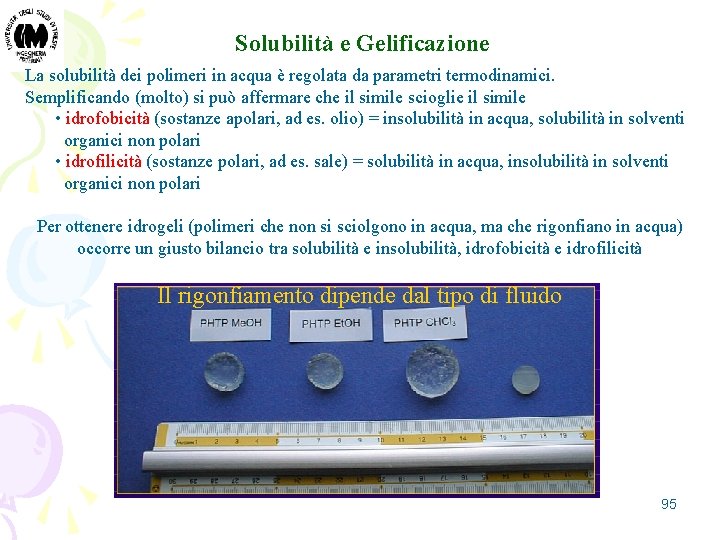
Solubilità e Gelificazione La solubilità dei polimeri in acqua è regolata da parametri termodinamici. Semplificando (molto) si può affermare che il simile scioglie il simile • idrofobicità (sostanze apolari, ad es. olio) = insolubilità in acqua, solubilità in solventi organici non polari • idrofilicità (sostanze polari, ad es. sale) = solubilità in acqua, insolubilità in solventi organici non polari Per ottenere idrogeli (polimeri che non si sciolgono in acqua, ma che rigonfiano in acqua) occorre un giusto bilancio tra solubilità e insolubilità, idrofobicità e idrofilicità Il rigonfiamento dipende dal tipo di fluido 95
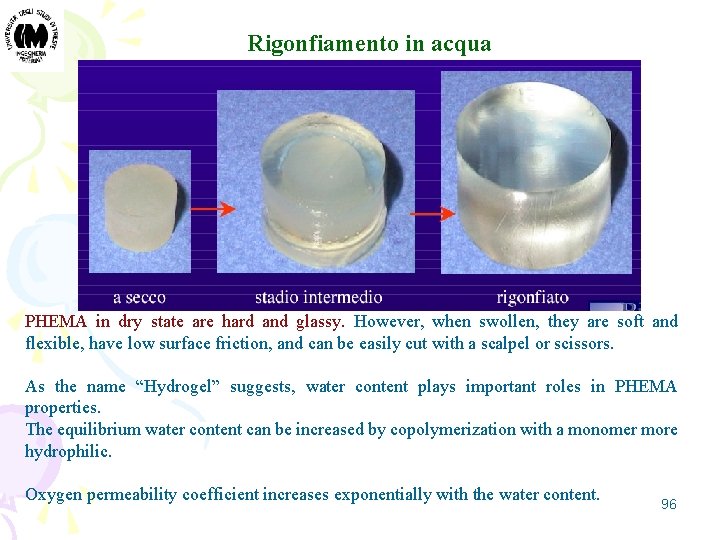
Rigonfiamento in acqua PHEMA in dry state are hard and glassy. However, when swollen, they are soft and flexible, have low surface friction, and can be easily cut with a scalpel or scissors. As the name “Hydrogel” suggests, water content plays important roles in PHEMA properties. The equilibrium water content can be increased by copolymerization with a monomer more hydrophilic. Oxygen permeability coefficient increases exponentially with the water content. 96
Applicazioni degli idrogeli Ease of purification, adjustable mechanical properties, and equilibrium water content contribute to the applications of PHEMA in as early as 1969. It was used as a coating for surgical sutures, which was also loaded with antibiotics to increase the rate of wound healing. In the 1980 s, spherical PHEMA particles were injected into pulmonary arteries to suppress hemorrhage and hemoptysis. - lenti a contatto (PHEMA) - rilascio controllato di farmaci - pelle artificiale - tendini artificiali e legamenti - riparazione e ricostruzione di tessuti - ricostruzione di tessuti cartilaginei - dispositivi a contatto con il sangue - protesi mammarie - corde vocali artificiali 97
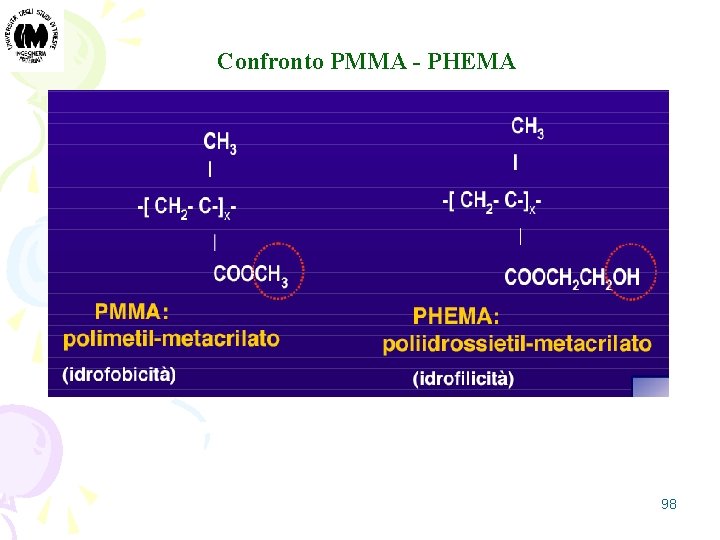
Confronto PMMA - PHEMA 98
Hydrogels • Water swollen crosslinked polymers • Crosslinks may occur: – by reaction of one or more monomers – hydrogen bonds – van der Waals interactions • Exceptional promises for biomedical use 99
Hydrogels • Classification based on preparation method – homopolymer hydrogels (one type of hydrophilic mer) – copolymer hydrogels (two types of mers, at least one hydrophilic) – multipolymer hydrogels (more than three types of mers) – interpenetrating polymeric hydrogels (swelling a network of polmer 1 in mer 2, making intermeshing network of polymer 1 and polymer 2) 100
Hydrogels • Classification based on ionic charges – – neutral hydrogels anionic hydrogels cationic hydrogels ampholytic hydrogels • Classification based on structure – amorphous hydrogels (chains randomly arranged) – semicrystalline hydrogels (dense regions of ordered macromolecules, i. e. crystallites) – hydrogen-bonded hydrogels 101
Hydrogels • Connection between chains called as crosslink or junction • Crosslinks may be induced during polymerization or by radiation following polymerization • Interchain connections can be: – – – a carbon atom chemical bridge van der Waals hydrogen bonds molecular entanglements 102
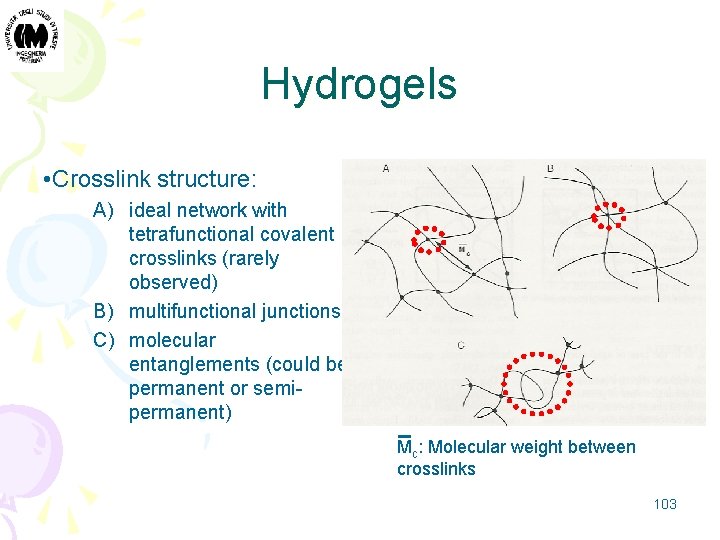
Hydrogels • Crosslink structure: A) ideal network with tetrafunctional covalent crosslinks (rarely observed) B) multifunctional junctions C) molecular entanglements (could be permanent or semipermanent) Mc: Molecular weight between crosslinks 103
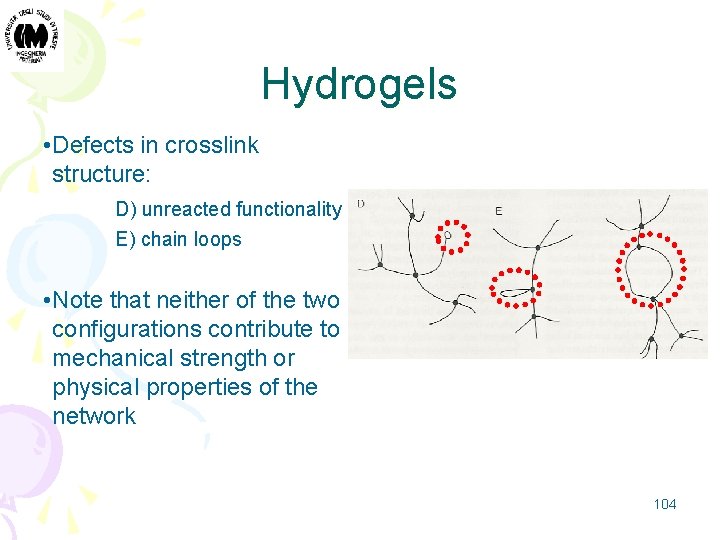
Hydrogels • Defects in crosslink structure: D) unreacted functionality E) chain loops • Note that neither of the two configurations contribute to mechanical strength or physical properties of the network 104
Hydrogels: Preparation • Prepared by swelling crosslinked structures in water or in biological fluids containing water • Crosslinks can be induced by radiation or chemical reaction – Radiation reactions include electron beams, gammarays, X-rays, or UV light – Chemical crosslinking • small molecular weight crosslinking agents that links two chains together through its di- or multifunctional groups • copolymerization-crosslinking reactions between the monomers and a multifunctional monomer that is present in small quantitites • combination of above 105
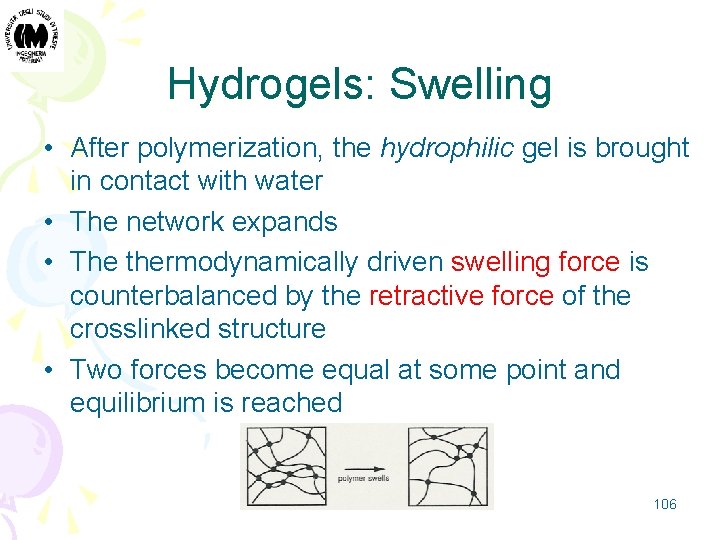
Hydrogels: Swelling • After polymerization, the hydrophilic gel is brought in contact with water • The network expands • The thermodynamically driven swelling force is counterbalanced by the retractive force of the crosslinked structure • Two forces become equal at some point and equilibrium is reached 106
Hydrogels: Swelling • Why is the degree of swelling important? – solute diffusion coefficient through the hydrogel – surface properties and surface mobility – optical properties (particularly for contact lens applications) – mechanical properties 107
Hydrogels: Swelling • Degree of swelling can be quantified by: – ratio of sample volume in the swollen state to volume in the dry state – weight degree of swelling: ratio of the weight of swollen sample to that of the dry sample 108
Hydrogels: Swelling • Highly swollen hydrogels: – – cellulose derivatives poly(vinyl alcohol) poly(N-vinyl 2 -pyrrolidone), PNVP poly(ethylene glycol) • Moderately or poorly swollen hydrogels: – poly(hydroxyethyl methacrylate), PHEMA and derivatives • One may copolymerize a highly hydrophilic monomer with other less hydrophilic monomers to achieve desired swelling properties 109
Hydrogels: PHEMA • • The most widely used hydrogel water content similar to living tissues inert to biological processes shows resistance to degradation permeable to metabolites not absorbed by the body withstands sterilization by heat prepared in various shaped and forms 110
Hydrogels: PHEMA • Properties depend on: – polymer volume fraction – degree of crosslinking – temperature – swelling agent • combined with other acrylic monomers to adjust properties 111
Hydrogels: Applications • Biomedical use due to bio- and blood-compatibility • Pharmaceutical use due to hydrophilicity (controlled/sustained drug release) • Earliest biomedical application contact lenses – – good mechanical stability favorable refractive index high oxygen permeability needs hygienic maintenance (does not apply for disposable) • lubricating surface coating – used with catheters, drainage tubes and gloves – non-toxic 112
Hydrogels: Applications • artificial tendon and cartilage • wound healing dressings (Vigilon®, Hydron®, Gelperm®) – non-antigenic, flexible wound cover – permeable to water and metabolites – low-strength • artificial kidney membranes • artificial skin • maxillofacial and sexual organ reconstruction materials • vocal cord replacement 113
Hydrogels: Applications • Pharmaceutical applications – monomer composition and relative amounts of multi-polymer hydrogels can be varied to alter the diffusion characteristic and permeability of the gel containing pharmaceutical agents • Methods for drug delivery – drug gets trapped in the hydrogel during polymerization – drug introduced during swelling in water 114
Hydrogels: Applications • Release occurs by outflow of drug from the gel and inflow of water to the gel • Rate of diffusion is explained by Fick’s law: – J = -D d. Cm/dx • J: flux (g/cm 2 sec) • D: diffusion coefficient • Cm: concentration of the diffusing material 115
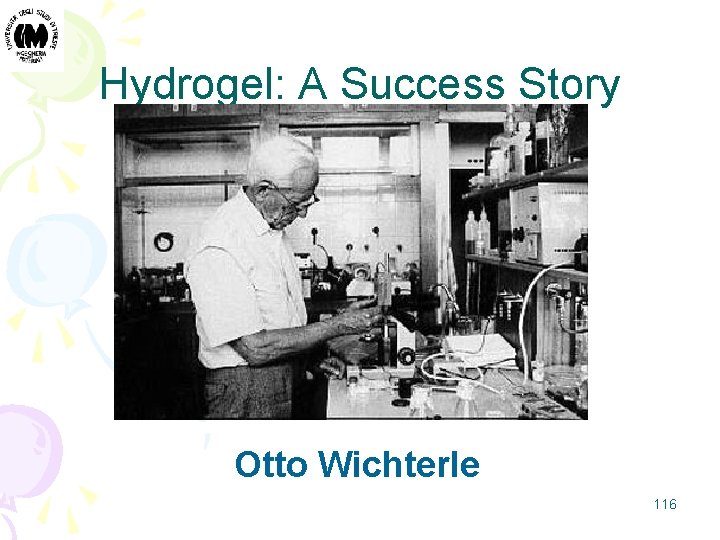
Hydrogel: A Success Story Otto Wichterle 116
Otto Wichterle • 1939: his research was interrupted when the Nazis closed the Czech universities • 1958: he had to leave the Institute of Chemical Technology after a political purge staged by its Communist leadership • 1968: he lost his job as head of his own research institute as a result of his participation in the Prague Spring uprising • never gave up on his research – improvising equipment in his own home – early prototypes for his invention were made in his kitchen on machines constructed from a bicycle dynamo and an old phonograph • Czech government sold the patent to the Americans, he did not receive any royalties for his invention 117 • Still used eyeglasses
The Cutting Edge…. • First implantable lens for nearsightedness was approved by the Food and Drug Administration • A surgeon slips the lens through a small incision and implants it in front of the natural lens. • Tiny hard plastic lens works behind the scenes to help the eye create in-focus images. • An alternative to glasses, contact lenses or Lasik surgery for people who have trouble seeing distant objects. 118
The Cutting Edge…. • Already in use in Europe, the lens is manufactured by Ophtec USA Inc. , of Boca Raton, Fla. , under the trade name Artisan, which will be distributed by American Medical Optics under the Verisyse brand name. • Will cost $3, 000 to $4, 000 per eye, currently is targeted at patients who, for various reasons, can't get Lasik • Robert K. Maloney, an ophthalmology associate professor who has corrected the vision of Cindy Crawford and Kenny G with Lasik. – 50 percent more accurate than Lasik. – better quality of vision: The vision is crisper, brighter and clearer • 92 percent of 662 patients had 20/40 or better vision, considered standard vision necessary to obtain a driver's license, and 44 percent had 20/20 or better, the FDA said, citing Ophtec research. 119
The Cutting Edge…. • • May not eliminate the need for glasses for night driving or other activities performed in low light. Count Rosalia de Firmian of Santa Barbara, among the grateful. – Her vision began deteriorating when she was 6 years old. – corrective contact lenses for 40 years, – I can see my shoes, my slippers. Everything. I see the wall, the clock. " • others warn of the risk of patients developing cataracts or eye-destroying infections. – Balamurali Ambati, an ophthalmologist and corneal specialist at the Medical College of Georgia. "Anytime the eye is opened, bacteria can get in. " – Nicholas Tarantino, vice president of global clinical research and development for Advanced Medical Optics, said no patients in the U. S. clinical trials developed cataracts. • The FDA is requiring the company to do a follow-up, five-year study of users of the lens to determine any side effects. – One possible concern, FDA said, is the loss of endothelial cells in the corneas of patients who received the implants. – These cells form a layer on the undersurface of the cornea and are essential to keeping the cornea clear. – In the tests, there was a steady loss of endothelial cells of 1. 8 percent a year. – The FDA is requiring the lens label to specify it be used only in patients with a dense enough layer of these cells to stand some loss over time. 120
- Slides: 117