
Polymerdagene Campus Gjvik 23 24 september By Eng
Polymerdagene Campus Gjøvik 23. -24. september By Eng. Pietro Russo
2 The Company Towards the Enviroment Enyax Srl is based in Milan with a production plant in the province of Varese, for over 10 years engaged in the development of technologies for the plastics industry with the aim of improving the environmental impact. To date it has two auxiliary technologies: Poly-Bi ® additive biodegradation of plastics Bio-Dì ® Compostable raw material for the biodegradation an compostability in compliance with EN 13432 www. enyax. com
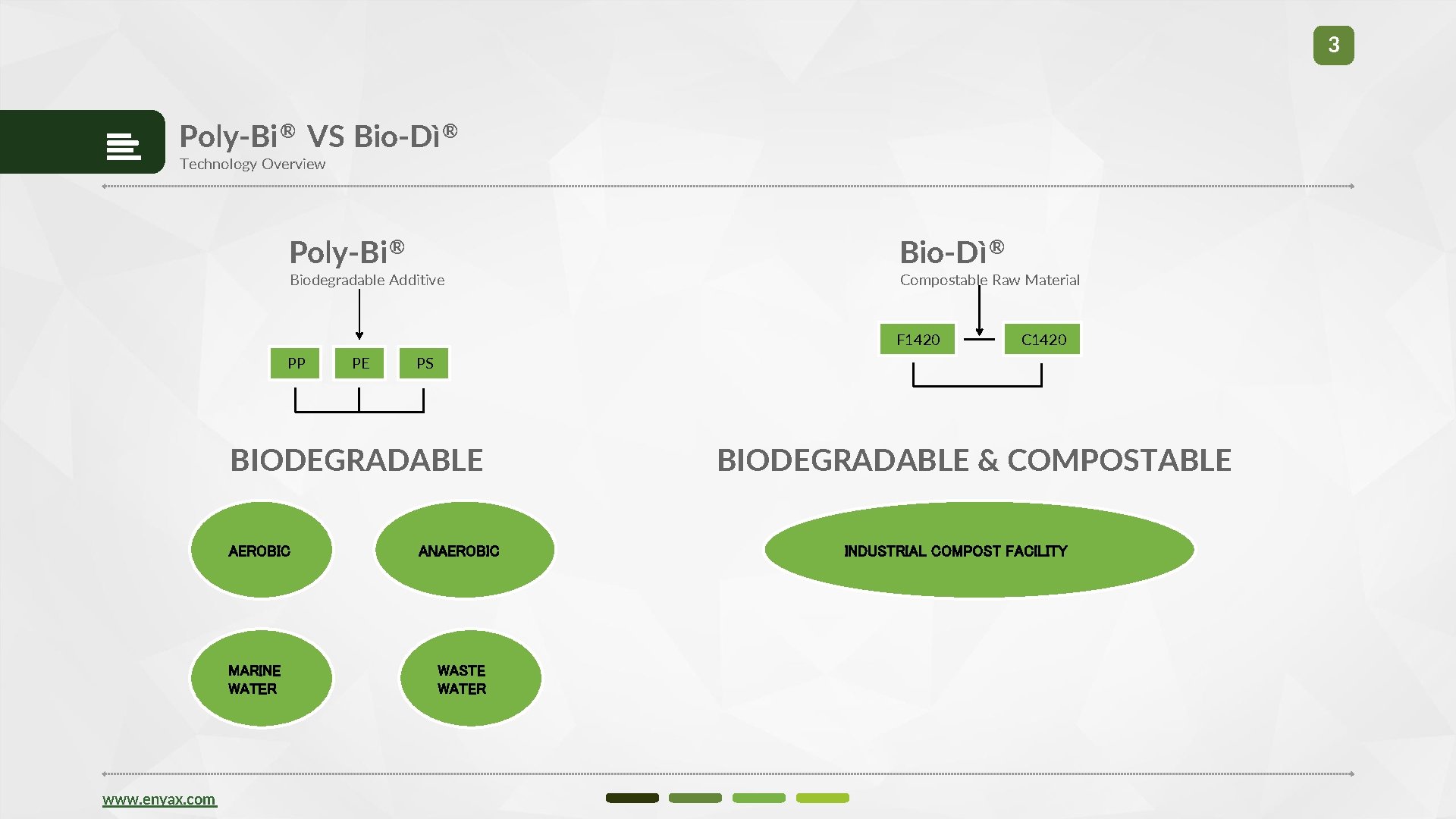
3 Poly-Bi ® VS Bio-Dì ® Technology Overview Poly-Bi ® Bio-Dì ® Biodegradable Additive Compostable Raw Material F 1420 PP PE PS BIODEGRADABLE AEROBIC MARINE WATER www. enyax. com C 1420 ANAEROBIC WASTE WATER BIODEGRADABLE & COMPOSTABLE INDUSTRIAL COMPOST FACILITY
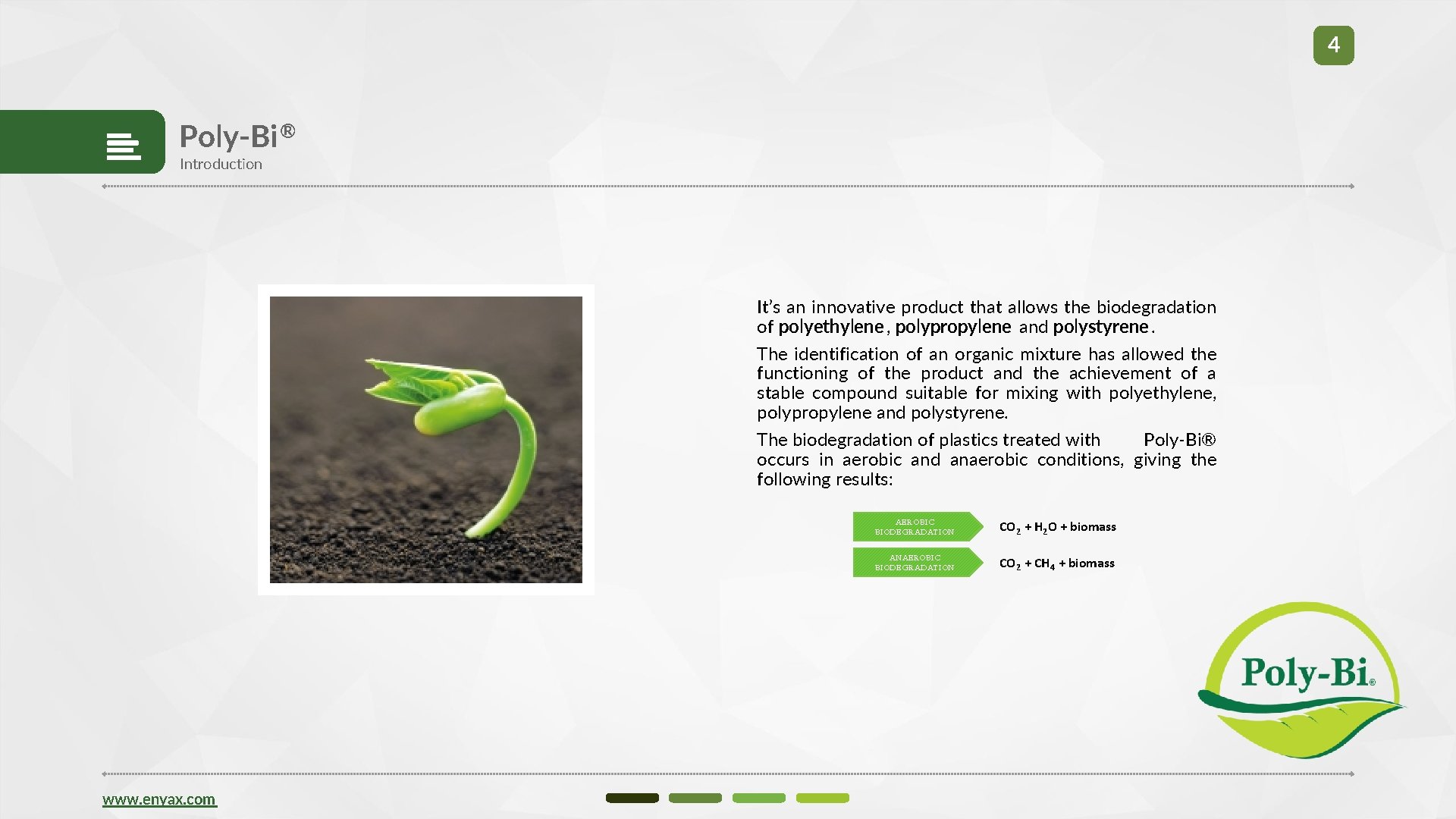
4 Poly-Bi ® Introduction It’s an innovative product that allows the biodegradation of polyethylene , polypropylene and polystyrene. The identification of an organic mixture has allowed the functioning of the product and the achievement of a stable compound suitable for mixing with polyethylene, polypropylene and polystyrene. The biodegradation of plastics treated with Poly-Bi® occurs in aerobic and anaerobic conditions, giving the following results: www. enyax. com AEROBIC BIODEGRADATION CO 2 + H 2 O + biomass ANAEROBIC BIODEGRADATION CO 2 + CH 4 + biomass
5 Poly-Bi ® Biodegradation The biodegradation is defined as the demolitive action operated by microorganisms on organic substances, with the formation of stable compounds, such as carbon dioxide and water, environmentally friendly and not susceptible of further fermentation. The minimum concentration of Poly-Bi® required for the biodegradation process is the 2% by weight, this quantity does not change the properties of the polymer, and in this way you get a polymeric material with the same properties of the starting polymer and uniformly biodegradable. It’s important to remember that the polymers are naturally biodegradable, as the polymerisation process is reversible, but this usually occurs over a very long period of time as demonstrated by Albertsson and Karlsson, Potts and Otake’s experiments. The aim is to accelerate this process so that biodegradation occurs quickly. Polyethylene is resistant to biodegradation because of its high molecular weight, its three-dimensional structure and it is hydrophobic, which interfere with the attack of the microorganisms. www. enyax. com
6 Poly-Bi ® Biodegradation Mechanism The biodegradation mechanism of a pure polymer can be divided into the following steps: -Attachment of the microorganisms to the surface of the polymer ; -Growth of microorganisms utilising the polymer as the carbon source ; -Primary degradation of the polymer, the breaking of the main chain leads to the formation of low molecular weight fragments (oligomers), dimers and monomers; degradation is due to the extracellular enzymes secreted by the microorganisms; -Ultimate degradation, the low molecular weight compounds are used as a source of carbon by the microbes. Microorganisms can adhere if the polymer surface is hydrophilic. PP and PE only have CH 2 groups and their surface are hydrophobic in order to allow biodegradation the surface must be made hydrophilic. If the microorganisms are able to adhere to the surface of the polymer, colonies can begin to grow by using the polymer as the carbon source. Under aerobic conditions, the end products of degradation are CO 2, H 2 O and biomass. (Under anaerobic conditions the end products of degradation are CO 2, CH 4 and biomass under methanogenic conditions or H 2 S, CO 2 and H 2 O under sulfidogenic conditions. The environmental conditions determine the groups of microorganisms and the degradation sequence involved. www. enyax. com
7 Poly-Bi ® Aerobic Biodegradation Mechanism in detail 1. Metabolization: The Poly-Bi® metabolization made by microorganism present on the surface. 2. Bacterial Colony: The formation of microorganisms structures and bacterial colony able to produce enzymes and acids; 3. Primary Biodegradation: The contact of the polyolefin with enzymes and acids produced by microorganisms allows the formation of a mixture of oxidized molecules. 4. Final Biodegradation: The microorganisms using the acetyl coenzyme A continue the process until the production of CO 2 by TCA cycle (tricarboxylic acid cycle). 5. Propagation: Subsequently the underlying layer lose out the same mechanism due to the dispersion of Poly-Bi® technology in the polymer, that in the presence of appropriate microorganisms allows the formation of the bacterial colony required for the biodegradation process. In this way, the process continues by converting the polymer into CO 2, H 2 O and biomass. Under anaerobic conditions the mechanism is similar. The most important differences are: - Type of microorganisms involved in the process; - CO 2, CH 4, and biomass or H 2 S, CO 2 and H 2 O are produced instead of CO 2, H 2 O and biomass; - Reaction sequence and reaction intermediates. www. enyax. com
8 Poly-Bi ® Biodegradation Mechanism The correct mixing of the base polymer with Poly-Bi® technology allows its properties to be transferred within the product, therefore the continuity of the biodegradation process comes from the uniform distribution of the technology. The biodegradation process of products made with Poly-Bi® will only begin when they are disposed in an environment where physical, chemical and biological factors determine a biologically active ecosystem. Storage in warehouse, on shelves, exposure to heat and/or sunlight does not affect the product. We can therefore state that the shelf-life of products containing the Poly-Bi® technology is similar to that for traditional plastic products. www. enyax. com
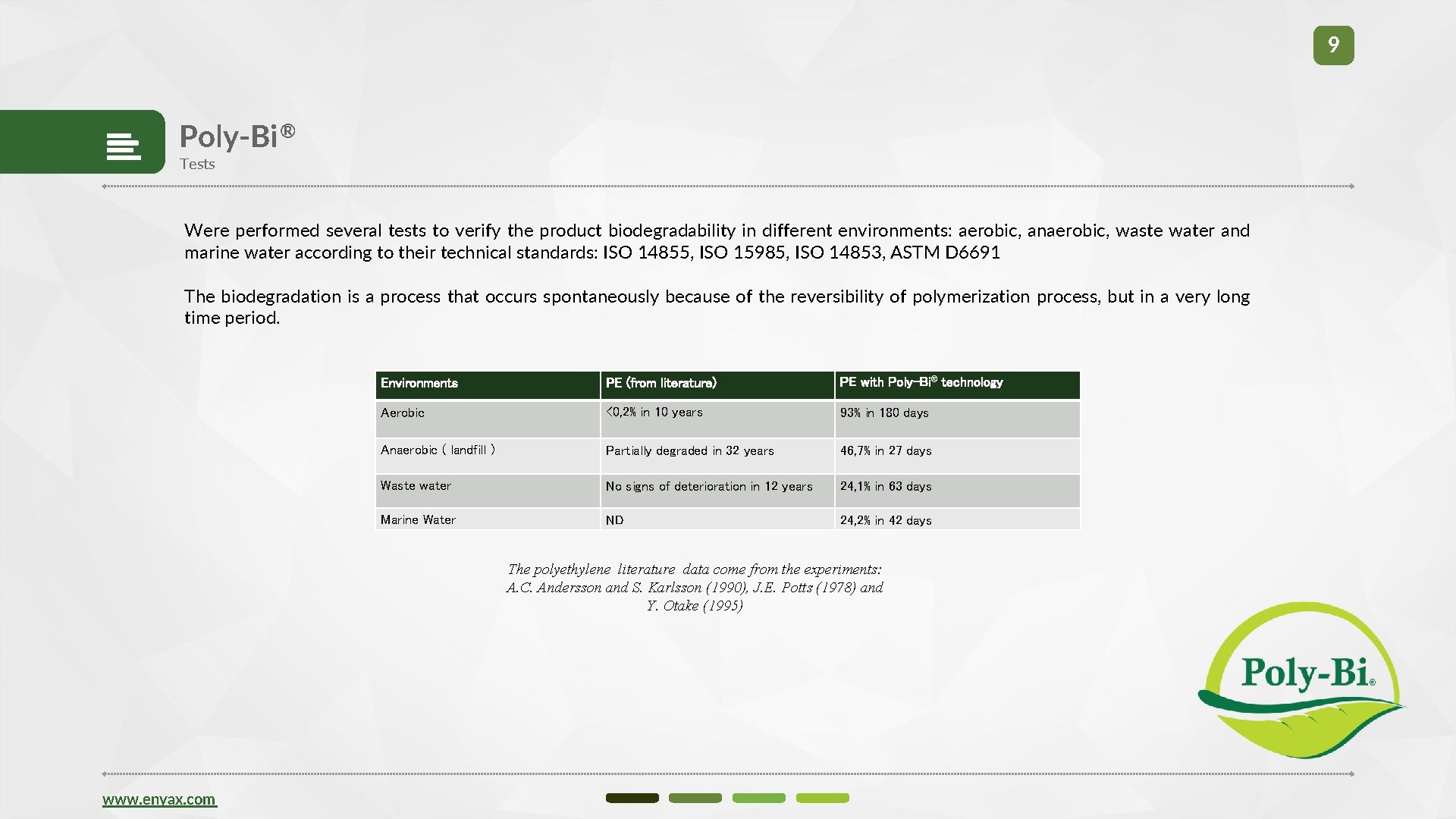
9 Poly-Bi ® Tests Were performed several tests to verify the product biodegradability in different environments: aerobic, anaerobic, waste water and marine water according to their technical standards: ISO 14855, ISO 15985, ISO 14853, ASTM D 6691 The biodegradation is a process that occurs spontaneously because of the reversibility of polymerization process, but in a very long time period. Environments PE (from literature) PE with Poly-Bi® technology Aerobic <0, 2% in 10 years 93% in 180 days Anaerobic ( landfill ) Partially degraded in 32 years 46, 7% in 27 days Waste water No signs of deterioration in 12 years 24, 1% in 63 days Marine Water ND 24, 2% in 42 days The polyethylene literature data come from the experiments: A. C. Andersson and S. Karlsson (1990), J. E. Potts (1978) and Y. Otake (1995) www. enyax. com
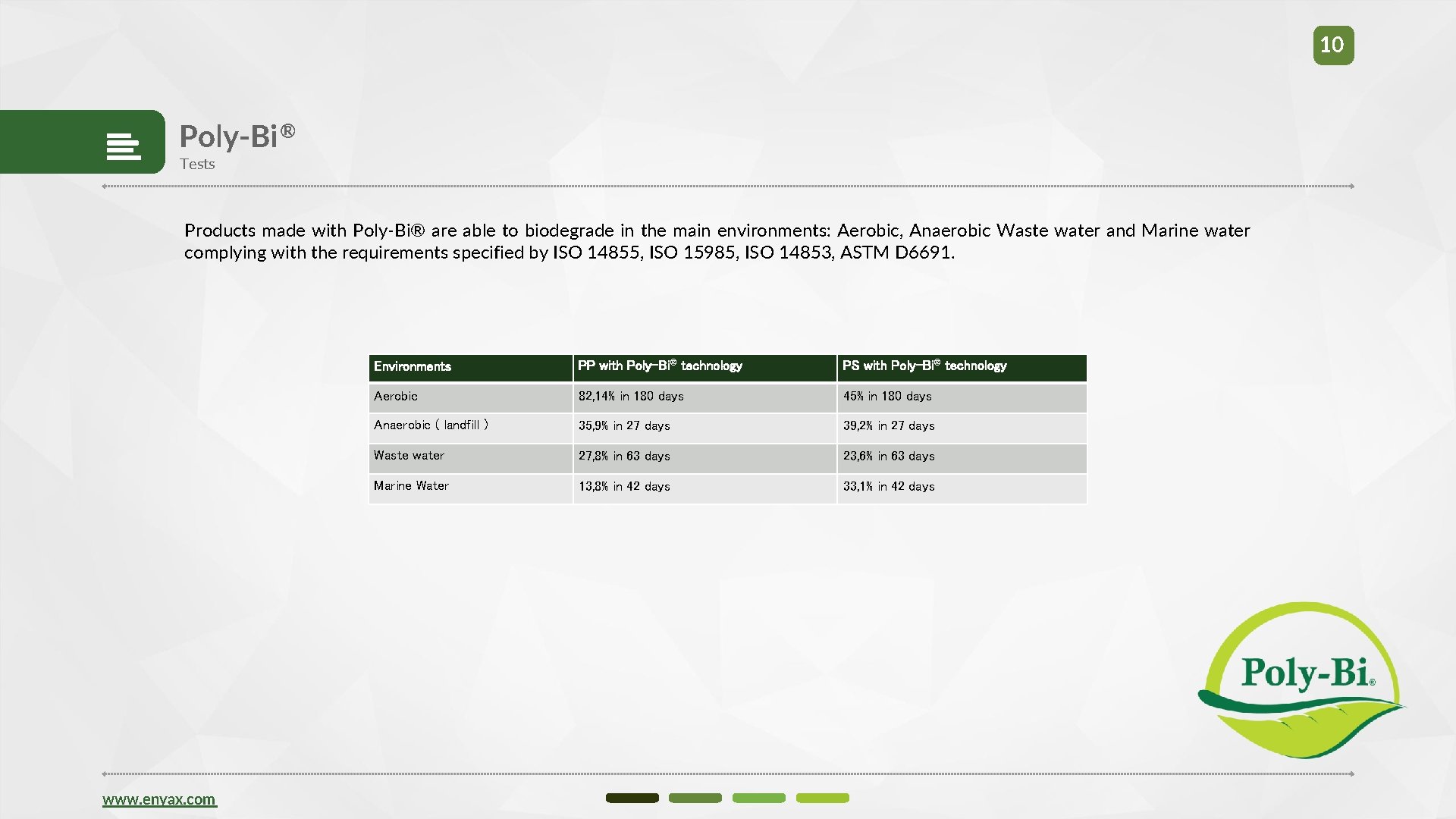
10 Poly-Bi ® Tests Products made with Poly-Bi® are able to biodegrade in the main environments: Aerobic, Anaerobic Waste water and Marine water complying with the requirements specified by ISO 14855, ISO 15985, ISO 14853, ASTM D 6691. www. enyax. com Environments PP with Poly-Bi® technology PS with Poly-Bi® technology Aerobic 82, 14% in 180 days 45% in 180 days Anaerobic ( landfill ) 35, 9% in 27 days 39, 2% in 27 days Waste water 27, 8% in 63 days 23, 6% in 63 days Marine Water 13, 8% in 42 days 33, 1% in 42 days
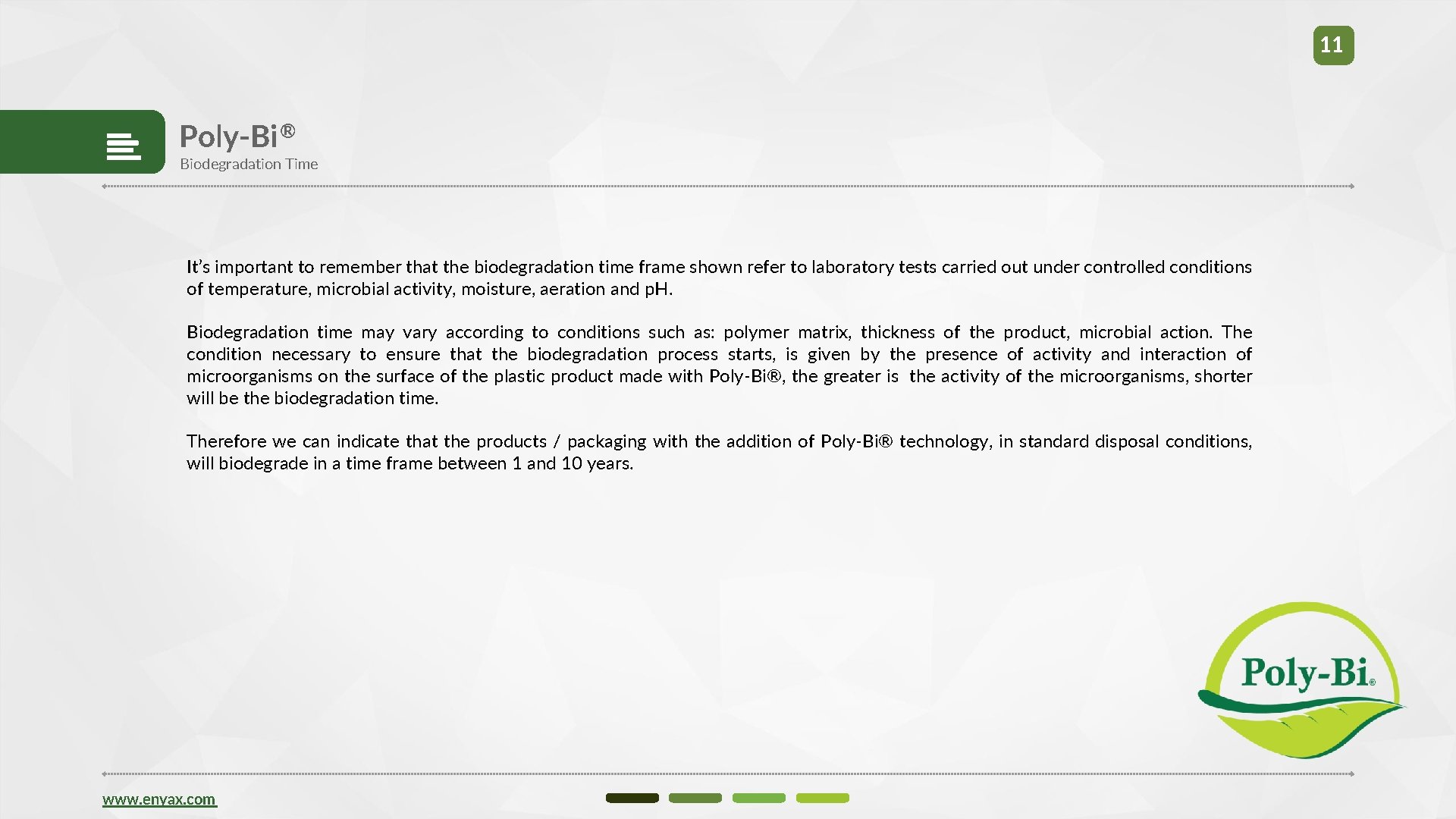
11 Poly-Bi ® Biodegradation Time It’s important to remember that the biodegradation time frame shown refer to laboratory tests carried out under controlled conditions of temperature, microbial activity, moisture, aeration and p. H. Biodegradation time may vary according to conditions such as: polymer matrix, thickness of the product, microbial action. The condition necessary to ensure that the biodegradation process starts, is given by the presence of activity and interaction of microorganisms on the surface of the plastic product made with Poly-Bi®, the greater is the activity of the microorganisms, shorter will be the biodegradation time. Therefore we can indicate that the products / packaging with the addition of Poly-Bi® technology, in standard disposal conditions, will biodegrade in a time frame between 1 and 10 years. www. enyax. com
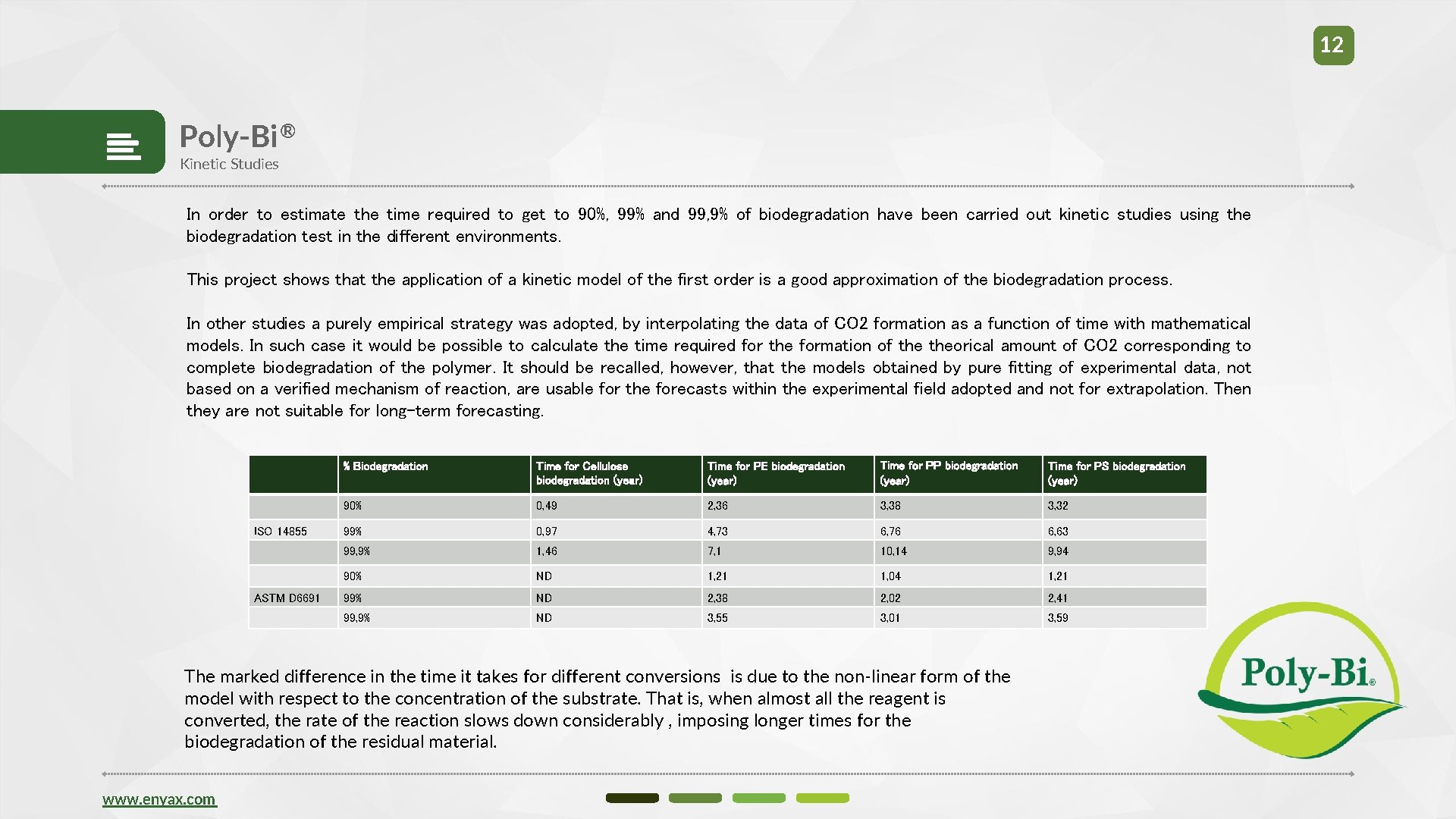
12 Poly-Bi ® Kinetic Studies In order to estimate the time required to get to 90%, 99% and 99, 9% of biodegradation have been carried out kinetic studies using the biodegradation test in the different environments. This project shows that the application of a kinetic model of the first order is a good approximation of the biodegradation process. In other studies a purely empirical strategy was adopted, by interpolating the data of CO 2 formation as a function of time with mathematical models. In such case it would be possible to calculate the time required for the formation of theorical amount of CO 2 corresponding to complete biodegradation of the polymer. It should be recalled, however, that the models obtained by pure fitting of experimental data, not based on a verified mechanism of reaction, are usable for the forecasts within the experimental field adopted and not for extrapolation. Then they are not suitable for long-term forecasting. ISO 14855 ASTM D 6691 % Biodegradation Time for Cellulose biodegradation (year) Time for PE biodegradation (year) Time for PP biodegradation (year) Time for PS biodegradation (year) 90% 0, 49 2, 36 3, 38 3, 32 99% 0, 97 4, 73 6, 76 6, 63 99, 9% 1, 46 7, 1 10, 14 9, 94 90% ND 1, 21 1, 04 1, 21 99% ND 2, 38 2, 02 2, 41 99, 9% ND 3, 55 3, 01 3, 59 The marked difference in the time it takes for different conversions is due to the non-linear form of the model with respect to the concentration of the substrate. That is, when almost all the reagent is converted, the rate of the reaction slows down considerably , imposing longer times for the biodegradation of the residual material. www. enyax. com
13 Poly-Bi ® Kinetic Studies The polymer manages to be completely biodegraded in the course of the tests. It should be noticed, however, that is not possible to estimate directly the convertion time of the polymer to 100% because the CO 2 produced may not be up to 100% compared with theorical. Indeed, a part of the carbon of the substrate contributes to the formation of the population of microorganisms responsible for the digestion and is not found in gaseous phase. www. enyax. com
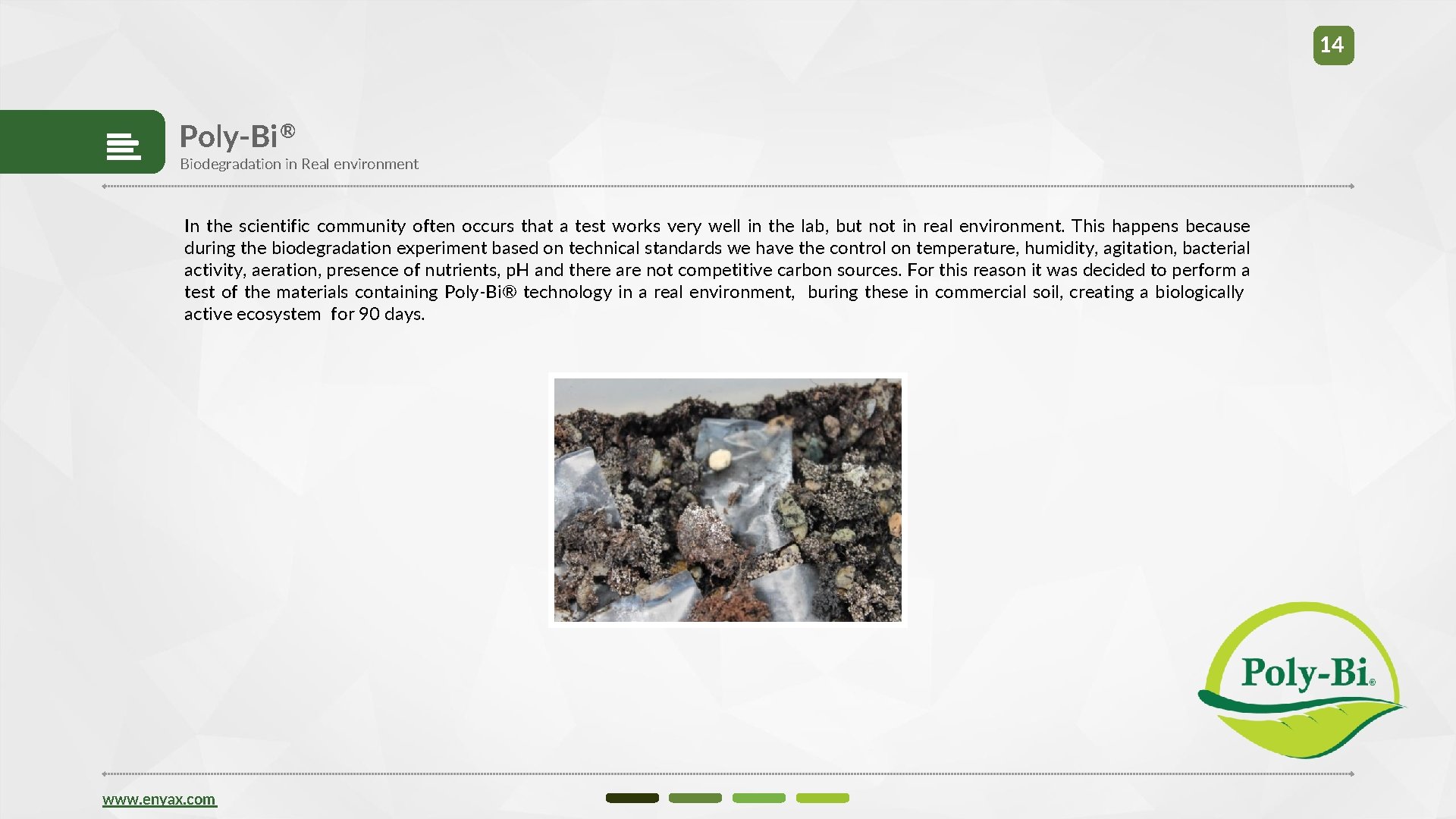
14 Poly-Bi ® Biodegradation in Real environment In the scientific community often occurs that a test works very well in the lab, but not in real environment. This happens because during the biodegradation experiment based on technical standards we have the control on temperature, humidity, agitation, bacterial activity, aeration, presence of nutrients, p. H and there are not competitive carbon sources. For this reason it was decided to perform a test of the materials containing Poly-Bi® technology in a real environment, buring these in commercial soil, creating a biologically active ecosystem for 90 days. www. enyax. com
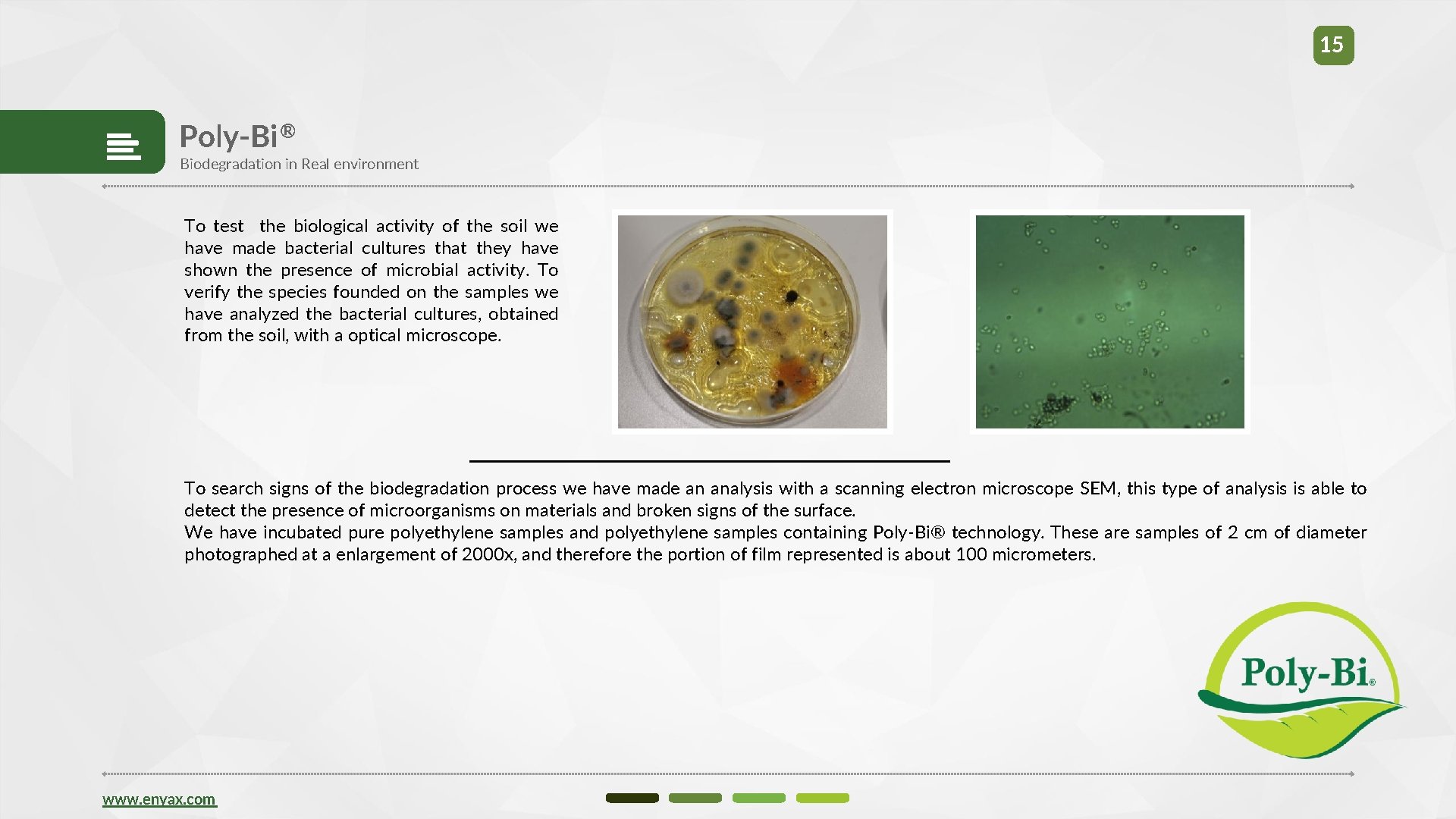
15 Poly-Bi ® Biodegradation in Real environment To test the biological activity of the soil we have made bacterial cultures that they have shown the presence of microbial activity. To verify the species founded on the samples we have analyzed the bacterial cultures, obtained from the soil, with a optical microscope. To search signs of the biodegradation process we have made an analysis with a scanning electron microscope SEM, this type of analysis is able to detect the presence of microorganisms on materials and broken signs of the surface. We have incubated pure polyethylene samples and polyethylene samples containing Poly-Bi® technology. These are samples of 2 cm of diameter photographed at a enlargement of 2000 x, and therefore the portion of film represented is about 100 micrometers. www. enyax. com
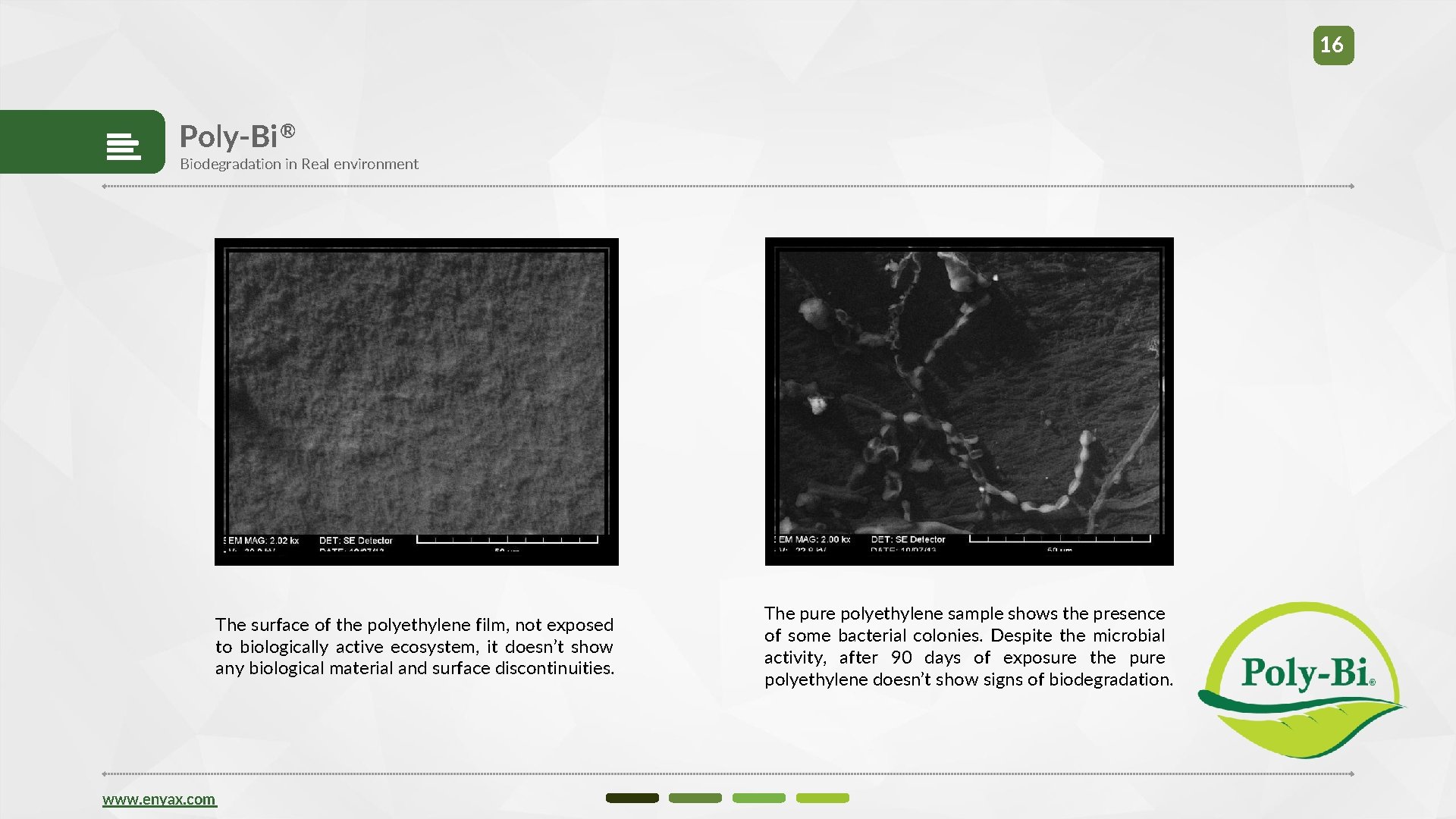
16 Poly-Bi ® Biodegradation in Real environment The surface of the polyethylene film, not exposed to biologically active ecosystem, it doesn’t show any biological material and surface discontinuities. www. enyax. com The pure polyethylene sample shows the presence of some bacterial colonies. Despite the microbial activity, after 90 days of exposure the pure polyethylene doesn’t show signs of biodegradation.
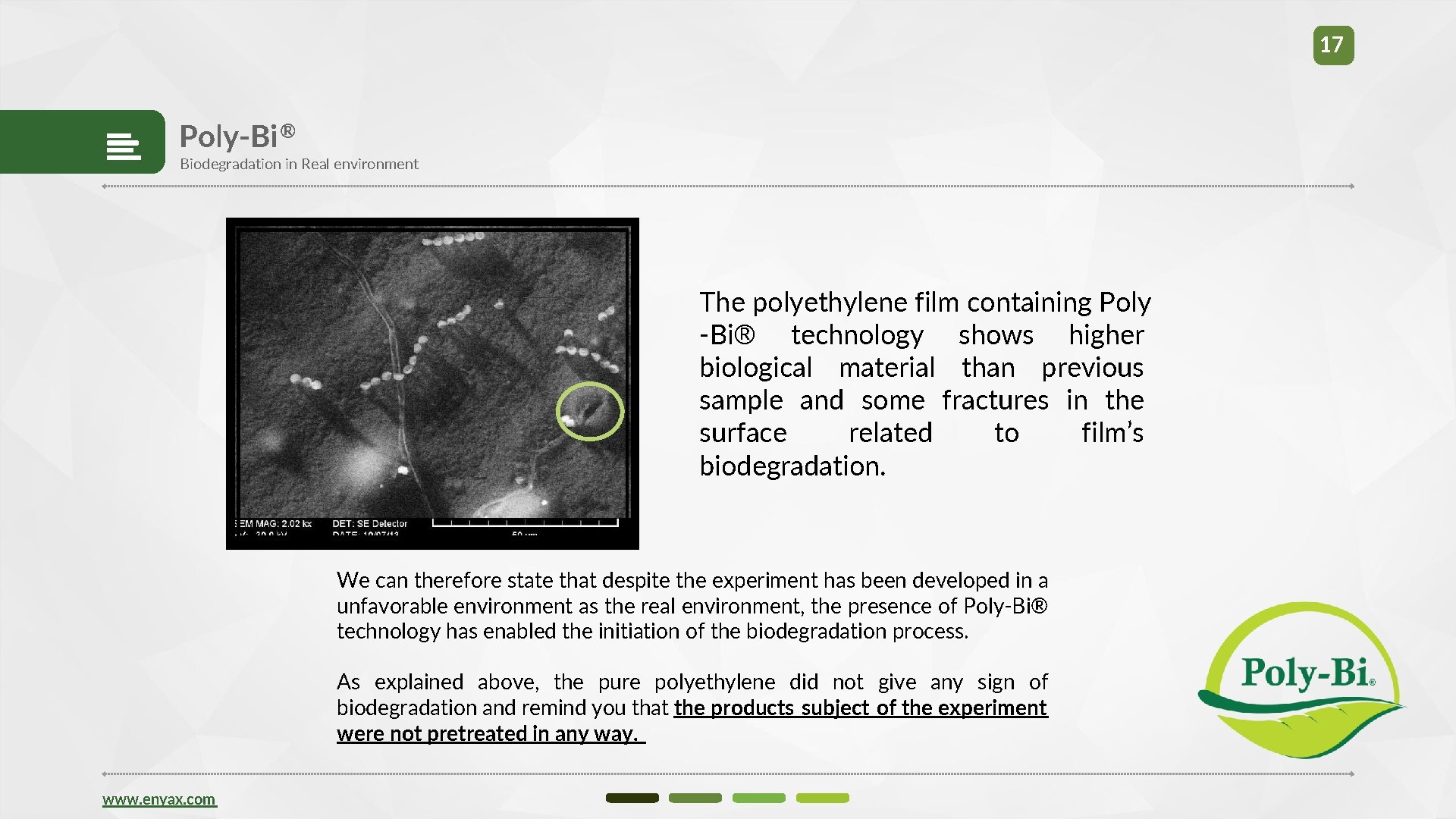
17 Poly-Bi ® Biodegradation in Real environment The polyethylene film containing Poly -Bi® technology shows higher biological material than previous sample and some fractures in the surface related to film’s biodegradation. We can therefore state that despite the experiment has been developed in a unfavorable environment as the real environment, the presence of Poly-Bi® technology has enabled the initiation of the biodegradation process. As explained above, the pure polyethylene did not give any sign of biodegradation and remind you that the products subject of the experiment were not pretreated in any way. www. enyax. com
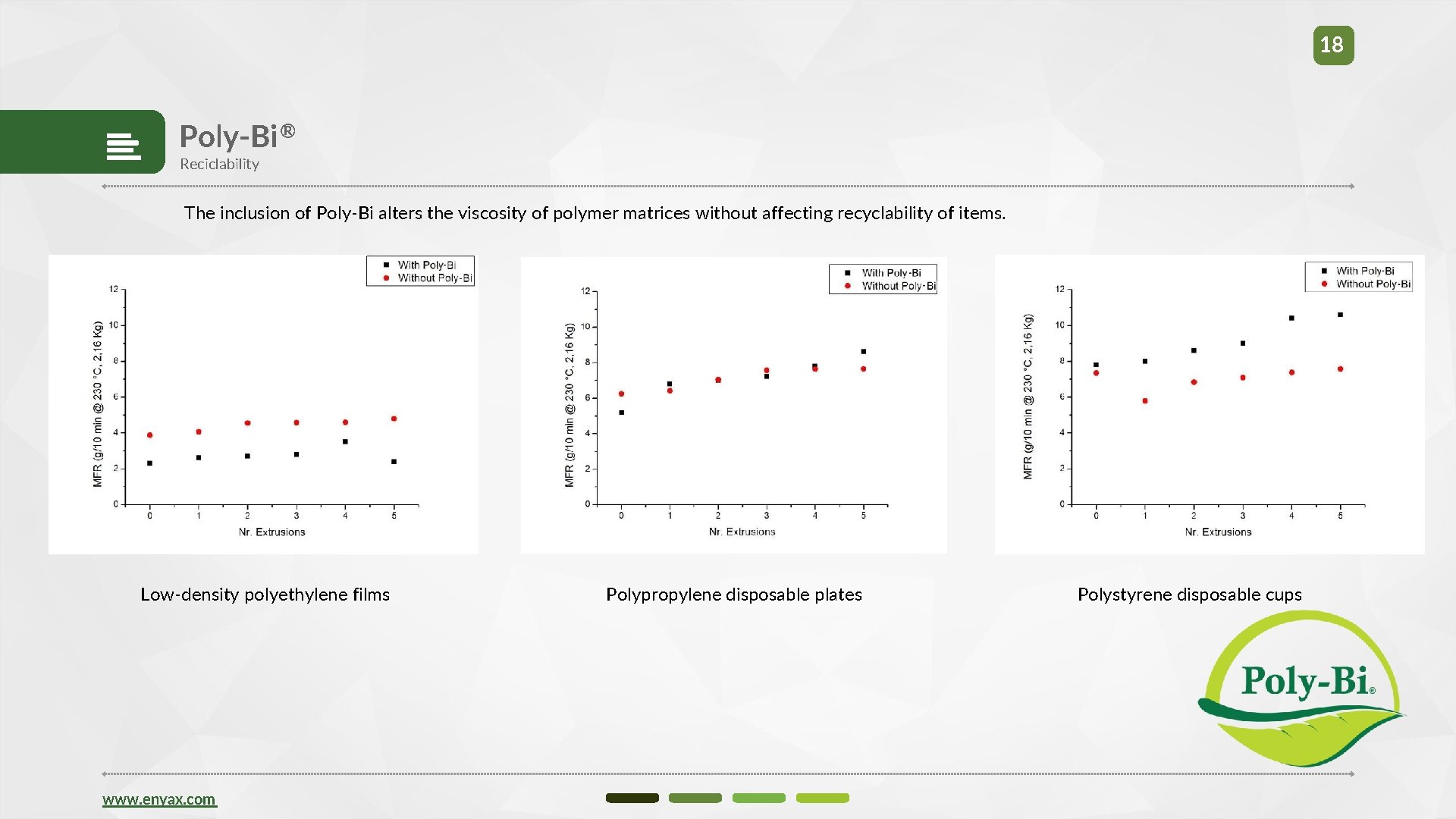
18 Poly-Bi ® Reciclability The inclusion of Poly-Bi alters the viscosity of polymer matrices without affecting recyclability of items. Low-density polyethylene films www. enyax. com Polypropylene disposable plates Polystyrene disposable cups
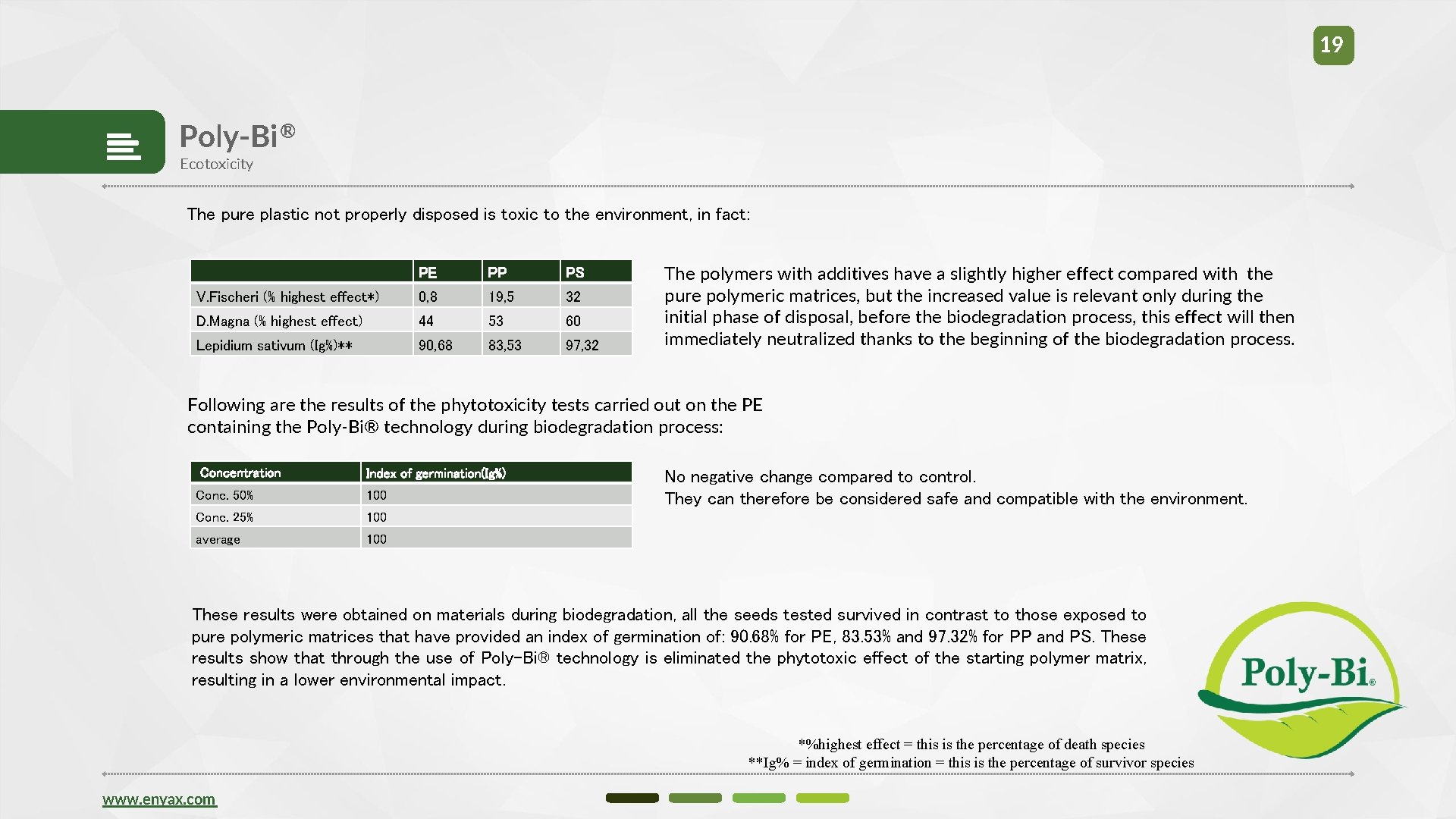
19 Poly-Bi ® Ecotoxicity The pure plastic not properly disposed is toxic to the environment, in fact: PE PP PS V. Fischeri (% highest effect*) 0, 8 19, 5 32 D. Magna (% highest effect) 44 53 60 Lepidium sativum (Ig%)** 90, 68 83, 53 97, 32 The polymers with additives have a slightly higher effect compared with the pure polymeric matrices, but the increased value is relevant only during the initial phase of disposal, before the biodegradation process, this effect will then immediately neutralized thanks to the beginning of the biodegradation process. Following are the results of the phytotoxicity tests carried out on the PE containing the Poly-Bi® technology during biodegradation process: Concentration Index of germination(Ig%) Conc. 50% 100 Conc. 25% 100 average 100 No negative change compared to control. They can therefore be considered safe and compatible with the environment. These results were obtained on materials during biodegradation, all the seeds tested survived in contrast to those exposed to pure polymeric matrices that have provided an index of germination of: 90. 68% for PE, 83. 53% and 97. 32% for PP and PS. These results show that through the use of Poly-Bi® technology is eliminated the phytotoxic effect of the starting polymer matrix, resulting in a lower environmental impact. *%highest effect = this is the percentage of death species **Ig% = index of germination = this is the percentage of survivor species www. enyax. com
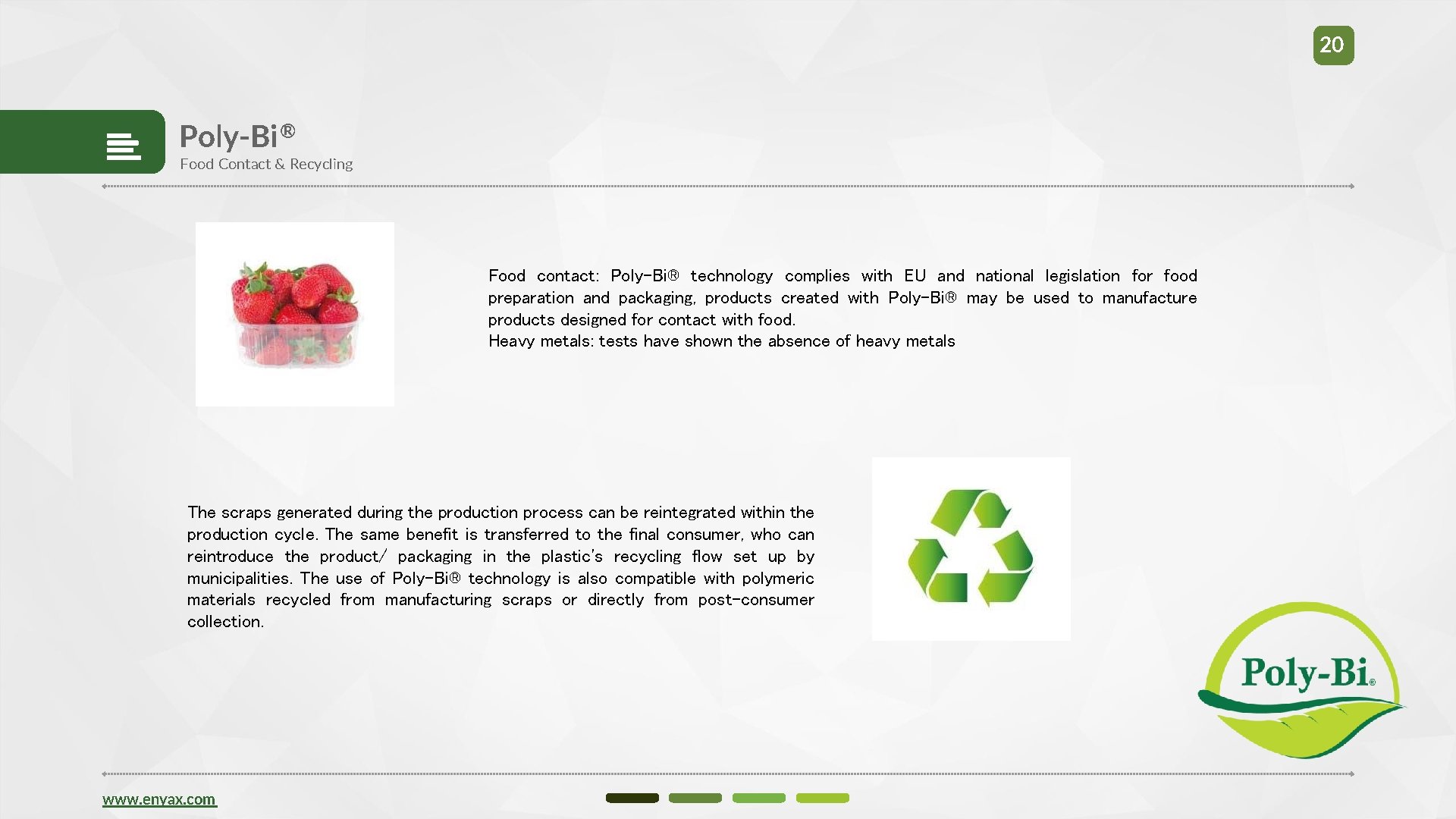
20 Poly-Bi ® Food Contact & Recycling Food contact: Poly-Bi® technology complies with EU and national legislation for food preparation and packaging, products created with Poly-Bi® may be used to manufacture products designed for contact with food. Heavy metals: tests have shown the absence of heavy metals The scraps generated during the production process can be reintegrated within the production cycle. The same benefit is transferred to the final consumer, who can reintroduce the product/ packaging in the plastic's recycling flow set up by municipalities. The use of Poly-Bi® technology is also compatible with polymeric materials recycled from manufacturing scraps or directly from post-consumer collection. www. enyax. com
21 Poly-Bi ® Certification Poly-Bi® has been certified by TÜV Rheinland, which defines products made from polyethylene, polypropylene and polystyrene that contain Poly-Bi® as biodegradable, in line with ISO 14855 for aerobic biodegradability, ISO 15985 for anaerobic biodegradability, ISO 14853 for biodegradability in an aqueous system, and ASTM D 6691 -09 for the biodegradability in marine environment. It also states that the product does not contain heavy metals, is not phytotoxic and complies with DE 94/62 EC requirements. www. enyax. com
22 Poly-Bi ® Features and Value The high technical / mechanical properties such as strength, reusability, recyclability, determine an easy acceptance by the consumer and by the manufacturer as they do not have to change their habits, process from the industrial side, and use by the consumer side. The value transmitted by Poly-Bi® technology is expressed in relation to the growing demand for sustainable products in terms of biodegradability and environmental compatibility, this value can then be transmitted to both manufacturing companies, more and more active in achieving sustainability objectives, which the final consumers are increasingly aware of environmental issues. www. enyax. com
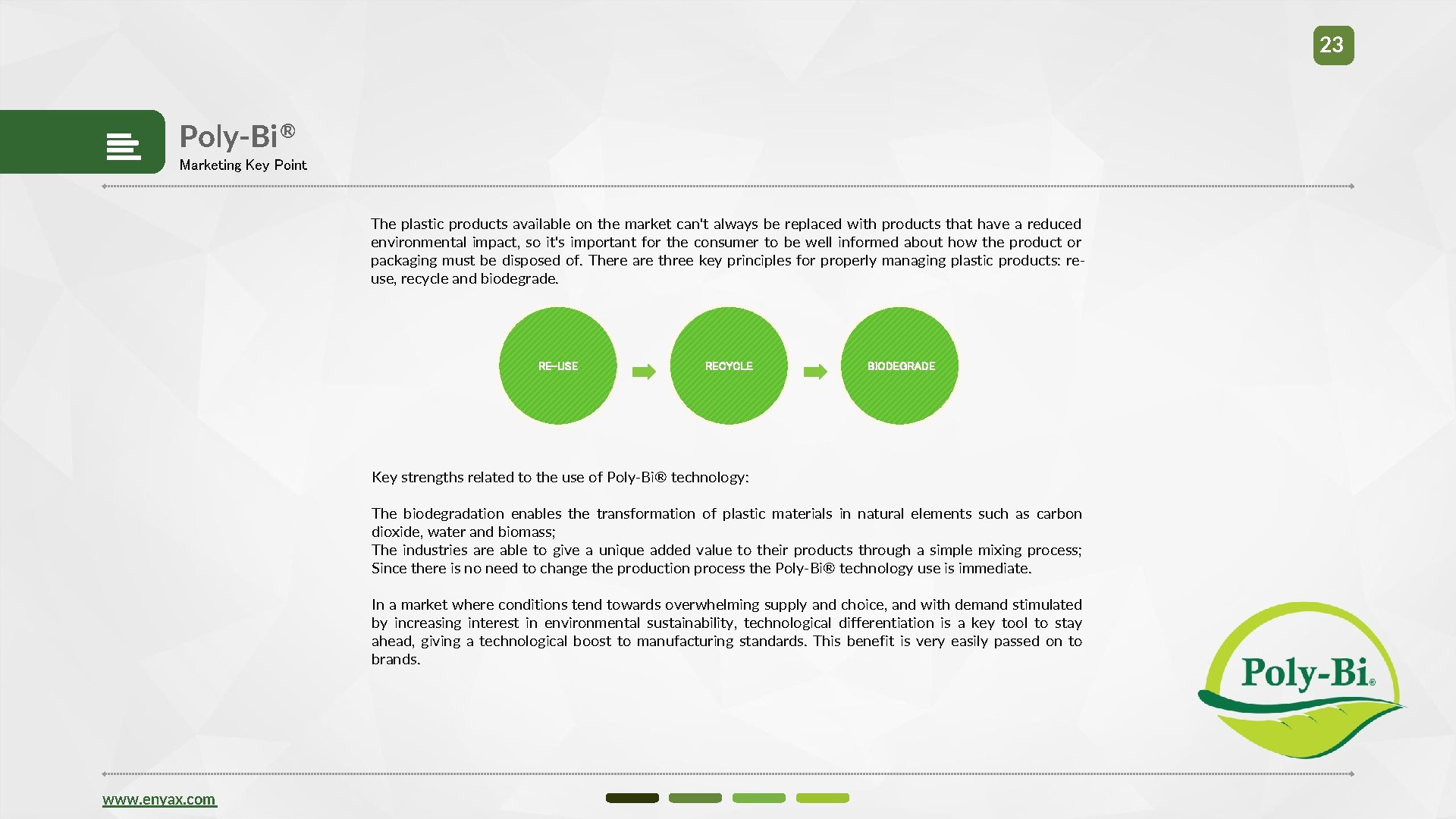
23 Poly-Bi ® Marketing Key Point The plastic products available on the market can't always be replaced with products that have a reduced environmental impact, so it's important for the consumer to be well informed about how the product or packaging must be disposed of. There are three key principles for properly managing plastic products: reuse, recycle and biodegrade. RE-USE RECYCLE BIODEGRADE Key strengths related to the use of Poly-Bi® technology: The biodegradation enables the transformation of plastic materials in natural elements such as carbon dioxide, water and biomass; The industries are able to give a unique added value to their products through a simple mixing process; Since there is no need to change the production process the Poly-Bi® technology use is immediate. In a market where conditions tend towards overwhelming supply and choice, and with demand stimulated by increasing interest in environmental sustainability, technological differentiation is a key tool to stay ahead, giving a technological boost to manufacturing standards. This benefit is very easily passed on to brands. www. enyax. com
24 Poly-Bi ® Marketing Key Point Possible application of Poly-Bi®: Food containers, Coffee capsules, Disposable dishes, Toys, Cosmetics bottles, Pluriball, Film, Packaging, Cotton buds, Cigarette packaging, Household items, Packaging tape, and many others possible applications. In conclusion we can state that: Poly-Bi® technology provides an excellent opportunity of technological innovation for the plastics market as it allows the biodegradation in an aerobic, anaerobic, waste water, marine water in accordance with: ISO 14855, ISO 15985, ISO 14853, ASTM D 6691 in a time between 1 -10 years. The products containing Poly-Bi® technology biodegrade in an unfavorable environment as real environment. Plastic products made with Poly-Bi® technology, do not contain heavy metals, are not phytotoxic and are suitable for food contact. Poly-Bi® technology can be processed within traditional equipment without any change, facing a small investment given the minimum percentage of use, allowing to keep the properties of the starting polymer matrix. www. enyax. com
25 COMPOSTABLE PRODUCTS FOR A GREENER FUTURE www. enyax. com
26 Description Bio-Dì: New Biopolymer generation Bio-Dì belongs to the range of new generation biopolymer. Bio-Dì’s application are biodegradable and compostable products. The development occurs through a precise step polymerization process. The stable Bio-Dì biopolymer morphology allows the creation of biodegradable and compostable products with increased strength and stability. The same stability of the proprietary formulation allows the manufacturing companies to process it through the classical production systems, without making any changes to the machineries and following internationally applied production models. The unlimited availability of the product allows processors to promote continuous production stream without interruption due to lack of material, this characteristic becomes a great competitive advantage. www. enyax. com
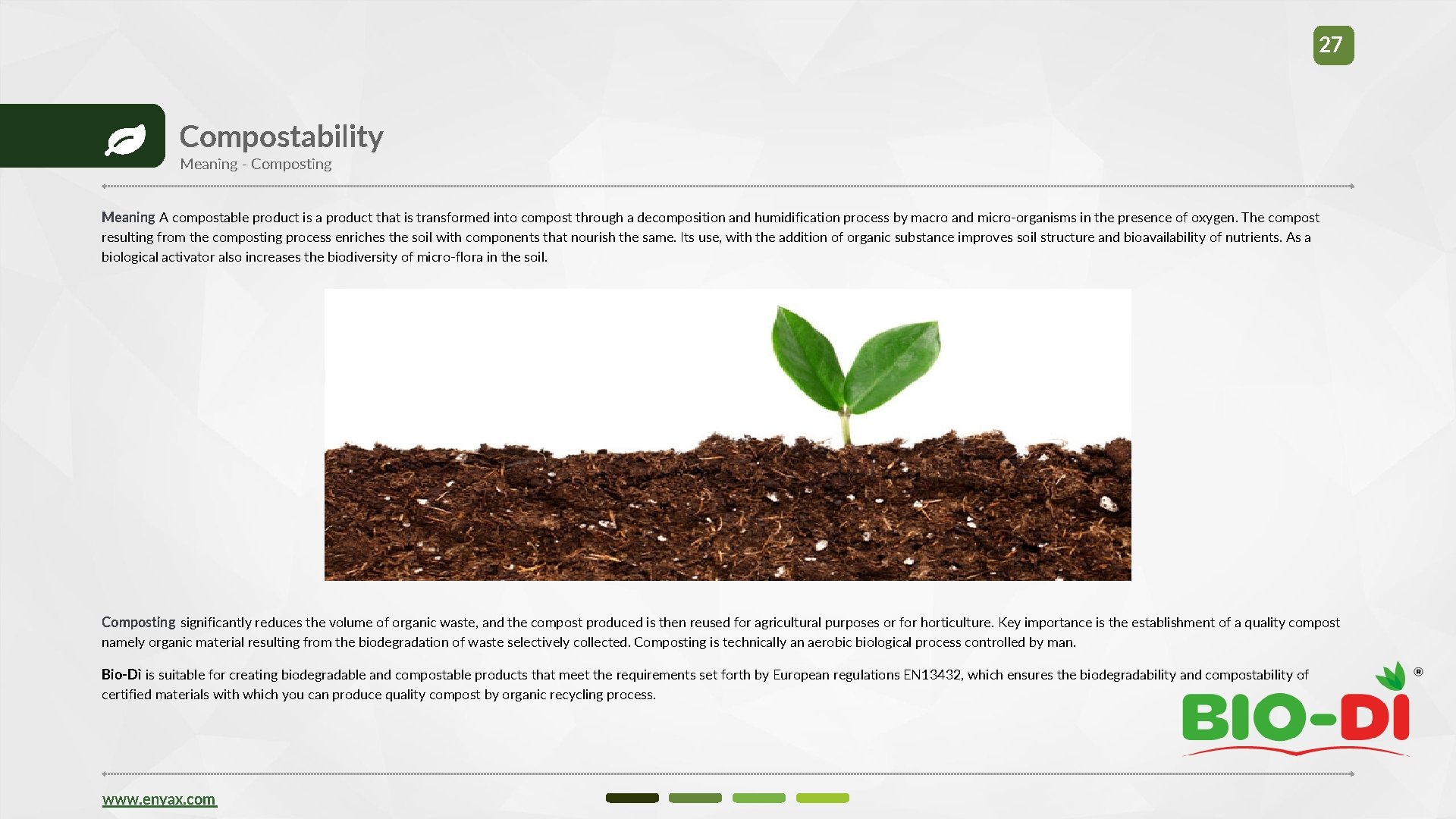
27 Compostability Meaning - Composting Meaning A compostable product is a product that is transformed into compost through a decomposition and humidification process by macro and micro-organisms in the presence of oxygen. The compost resulting from the composting process enriches the soil with components that nourish the same. Its use, with the addition of organic substance improves soil structure and bioavailability of nutrients. As a biological activator also increases the biodiversity of micro-flora in the soil. Composting significantly reduces the volume of organic waste, and the compost produced is then reused for agricultural purposes or for horticulture. Key importance is the establishment of a quality compost namely organic material resulting from the biodegradation of waste selectively collected. Composting is technically an aerobic biological process controlled by man. Bio-Dì is suitable for creating biodegradable and compostable products that meet the requirements set forth by European regulations EN 13432, which ensures the biodegradability and compostability of certified materials with which you can produce quality compost by organic recycling process. www. enyax. com
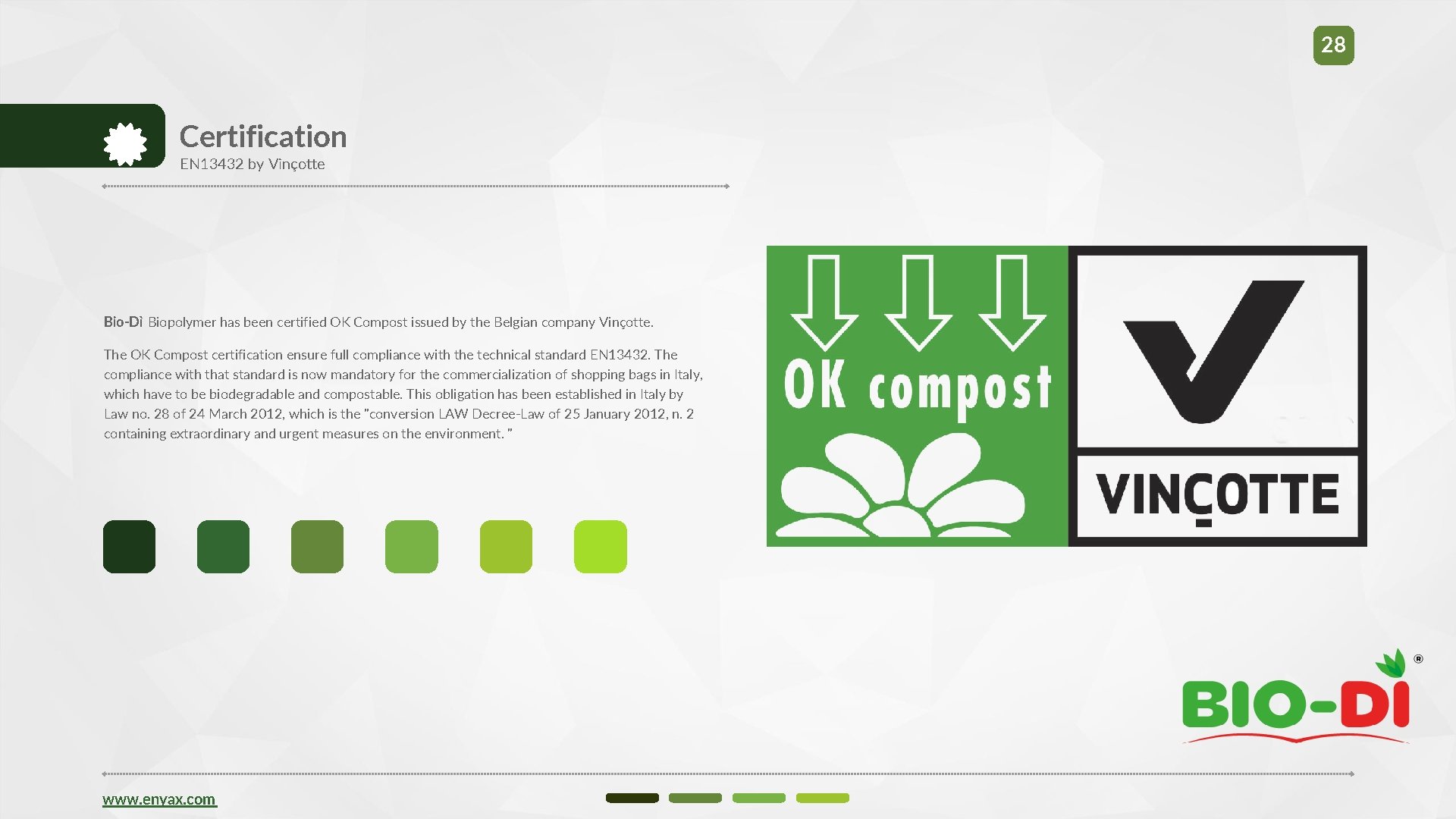
28 Certification EN 13432 by Vinçotte Bio-Dì Biopolymer has been certified OK Compost issued by the Belgian company Vinçotte. The OK Compost certification ensure full compliance with the technical standard EN 13432. The compliance with that standard is now mandatory for the commercialization of shopping bags in Italy, which have to be biodegradable and compostable. This obligation has been established in Italy by Law no. 28 of 24 March 2012, which is the "conversion LAW Decree-Law of 25 January 2012, n. 2 containing extraordinary and urgent measures on the environment. " www. enyax. com
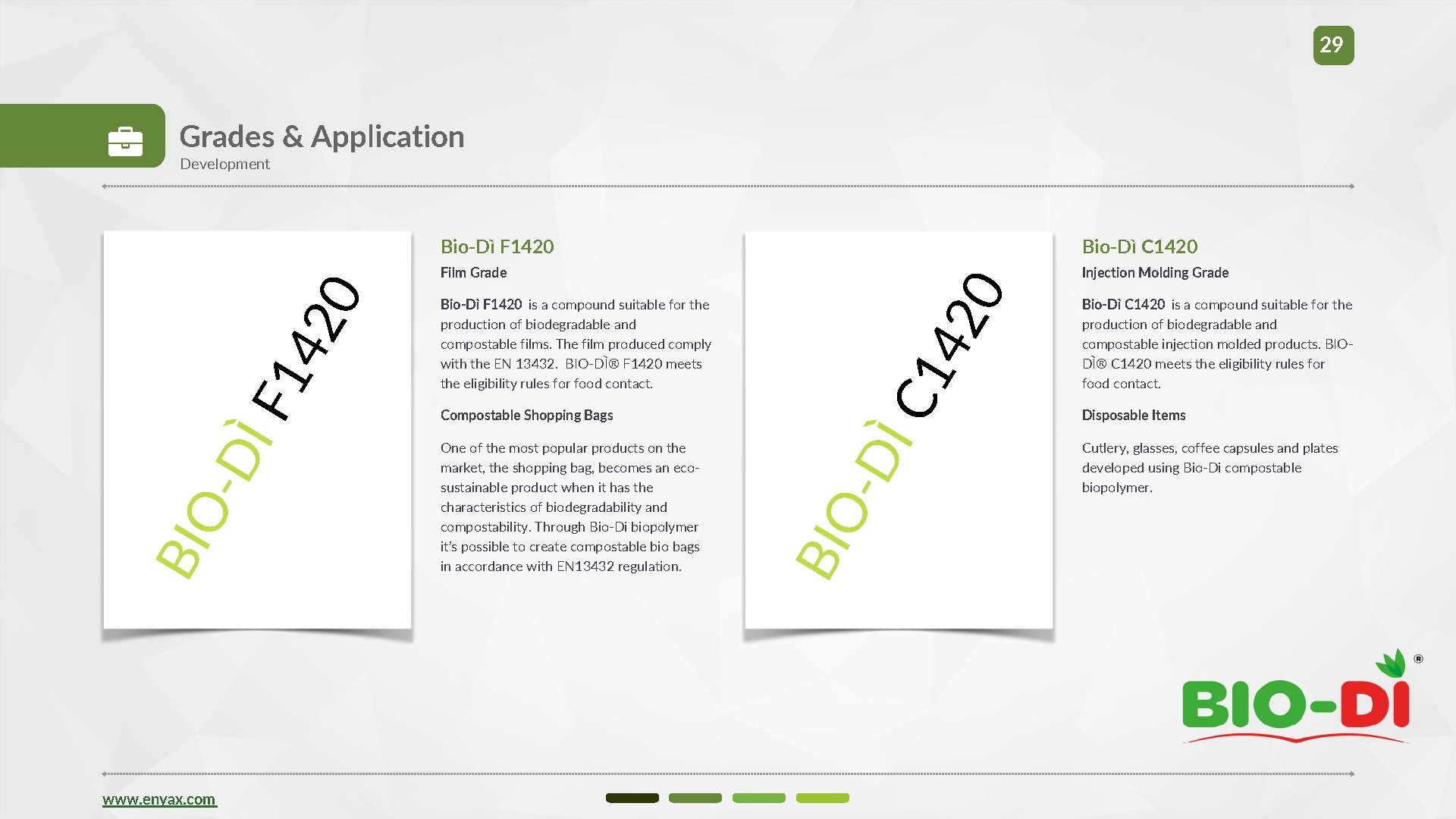
29 Grades & Application Development www. enyax. com Bio-Dì C 1420 Film Grade Injection Molding Grade 20 Bio-Dì F 1420 ÌC One of the most popular products on the market, the shopping bag, becomes an ecosustainable product when it has the characteristics of biodegradability and compostability. Through Bio-Di biopolymer it’s possible to create compostable bio bags in accordance with EN 13432 regulation. -D Compostable Shopping Bags 14 Bio-Dì F 1420 is a compound suitable for the production of biodegradable and compostable films. The film produced comply with the EN 13432. BIO-DÌ® F 1420 meets the eligibility rules for food contact. BIO -D ÌF 14 20 Bio-Dì C 1420 is a compound suitable for the production of biodegradable and compostable injection molded products. BIODÌ® C 1420 meets the eligibility rules for food contact. Disposable Items Cutlery, glasses, coffee capsules and plates developed using Bio-Di compostable biopolymer.
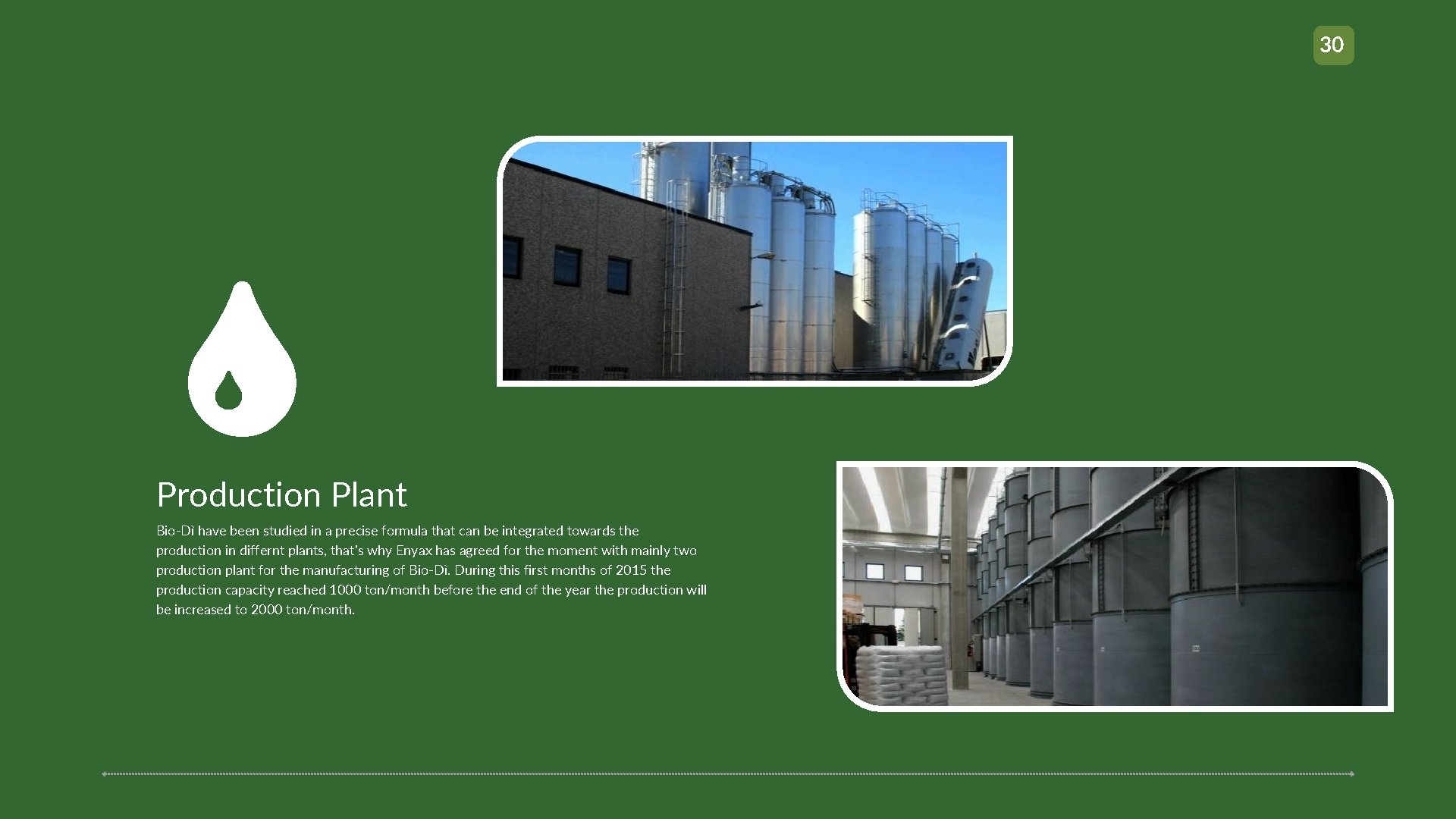
30 Production Plant Bio-Dì have been studied in a precise formula that can be integrated towards the production in differnt plants, that's why Enyax has agreed for the moment with mainly two production plant for the manufacturing of Bio-Dì. During this first months of 2015 the production capacity reached 1000 ton/month before the end of the year the production will be increased to 2000 ton/month. www. enyax. com
31 Compostable Shopping Bags Production BIO-DÌ F 1420 BIO-DÌ® F 1420 is a compound suitable for film extrusion process, for the production of biodegradable and compostable shopping bags, in accordance with the technical standard UNI EN 13432 (placed in a normal composting plant is transformed into water, carbon dioxide and humus in 180 days, for a percentage higher than 90% of their initial weight). Extrusion Welding Printing Easiest adaptability Perfect welding Easily Printable The BIO-DÌ® F 1420 can normally be transformed on standard extruder for polyethylene without making major changes, with particular attention to the efficiency of the cooling system. Generally the screws for the processing of LDPE are also suitable for the processing of the BIO-DÌ® F 1420. The processing conditions will vary, depending on the characteristics of the plant, between 145 and 180°C. www. enyax. com With BIO-DÌ® F 1420 you can still use the same welding equipment, the structure of the extruded film makes the welding procedure very efficient and easy to manage. The operative temperature in exercise of the blades cut / weld between 350 -450°C. The compound is easily printable (also without crown treatment) on-line and off -line, using solvent-based inks. Tests performed using water-based inks gave good results even in the absence or mild crown treatment.
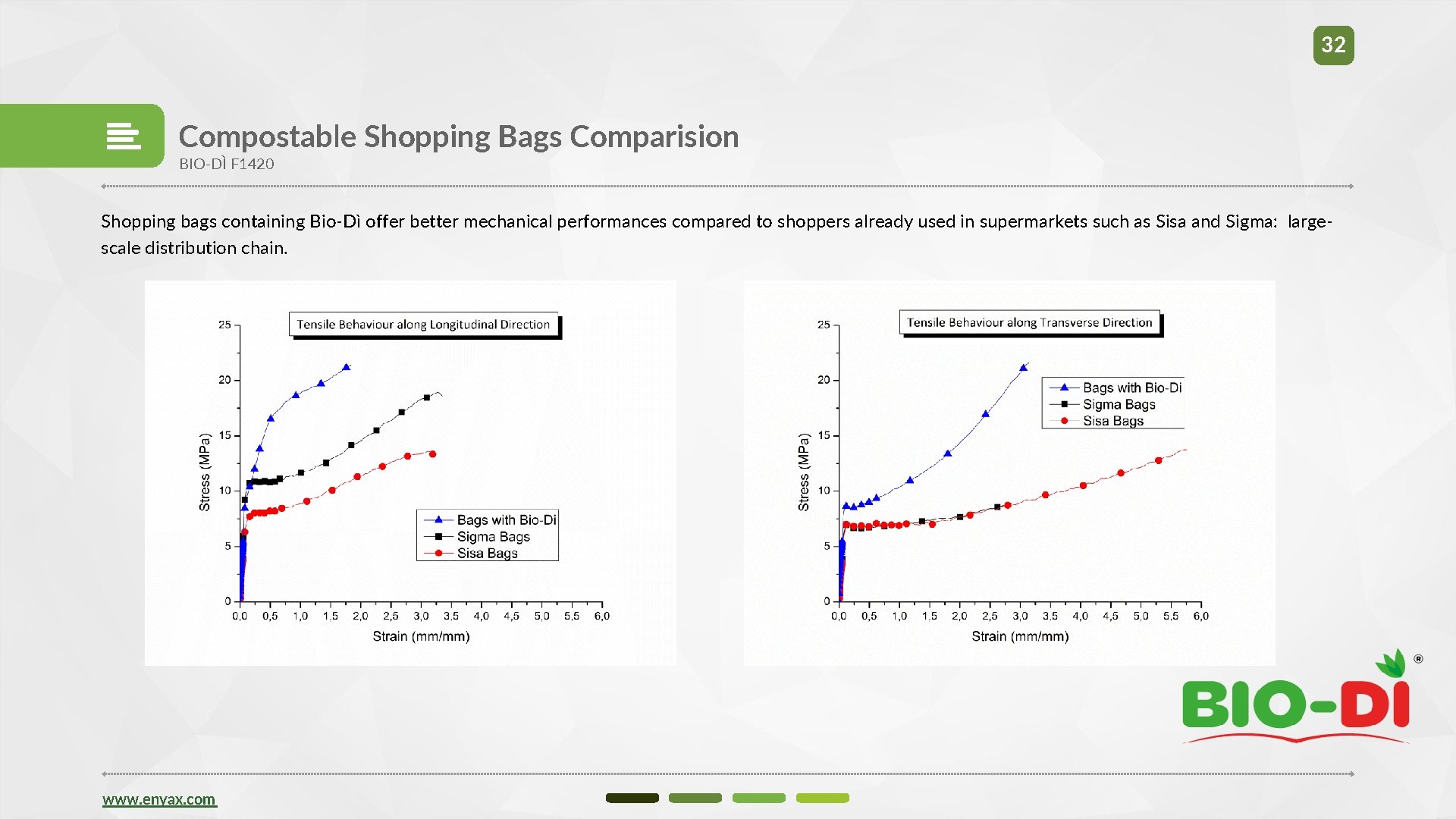
32 Compostable Shopping Bags Comparision BIO-DÌ F 1420 Shopping bags containing Bio-Dì offer better mechanical performances compared to shoppers already used in supermarkets such as Sisa and Sigma: largescale distribution chain. www. enyax. com
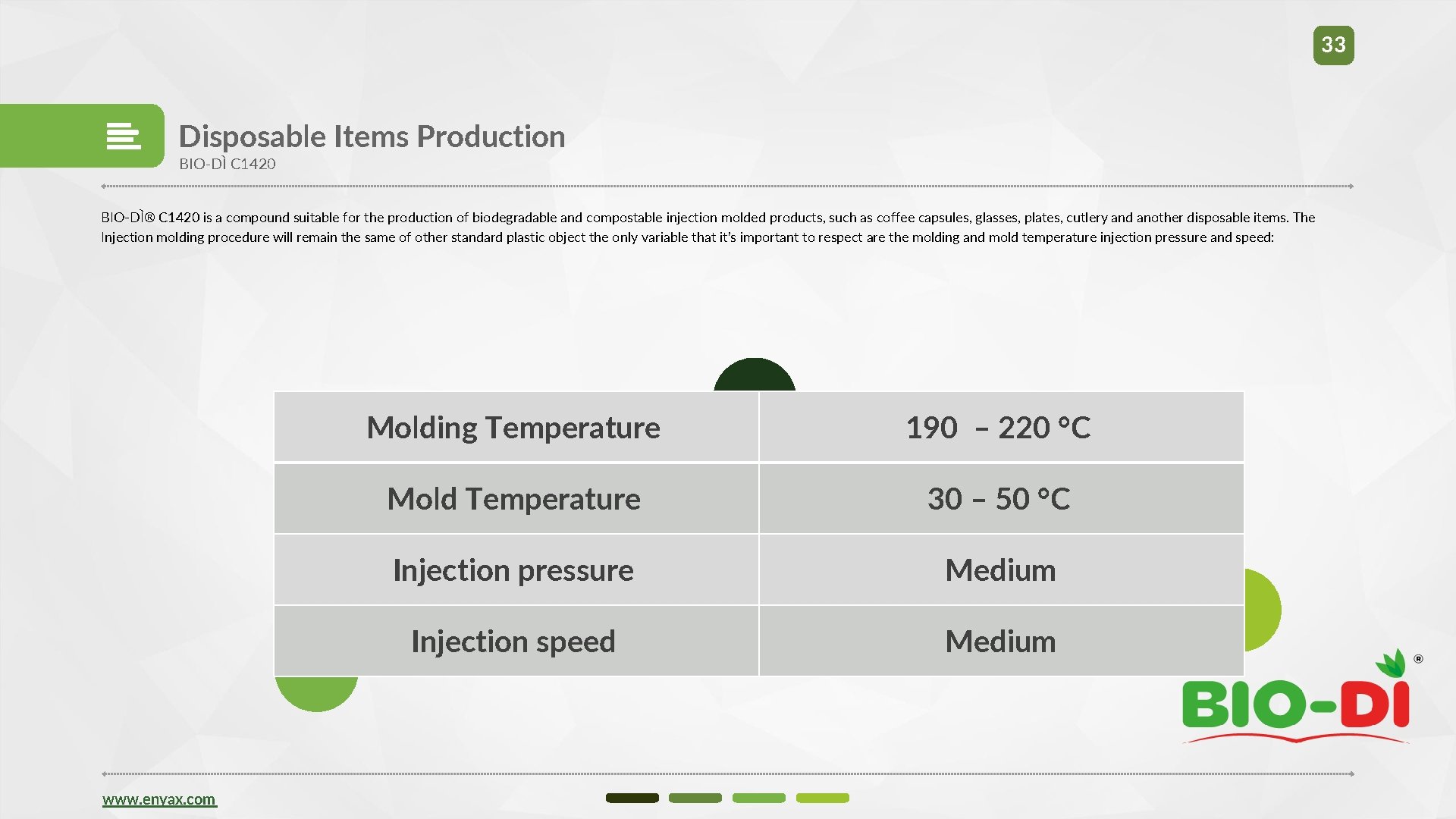
33 Disposable Items Production BIO-DÌ C 1420 BIO-DÌ® C 1420 is a compound suitable for the production of biodegradable and compostable injection molded products, such as coffee capsules, glasses, plates, cutlery and another disposable items. The Injection molding procedure will remain the same of other standard plastic object the only variable that it’s important to respect are the molding and mold temperature injection pressure and speed: www. enyax. com Molding Temperature 190 – 220 °C Mold Temperature 30 – 50 °C Injection pressure Medium Injection speed Medium

34 Food Contact BIO-DÌ C 1420 & BIO-DÌ F 1420 The composition of Bio-Dì® F 1420 and Bio-Dì® C 1420 compound, in its original packaging as supplied from our factory, complies with the requirements for use in contact with food of: • EU Regulation n° 10/2011 • Regulation 202/2014 • Regulation 1282/2011 EC • Regulation 2004/1935/EC • Regulation 2007/19/EC www. enyax. com
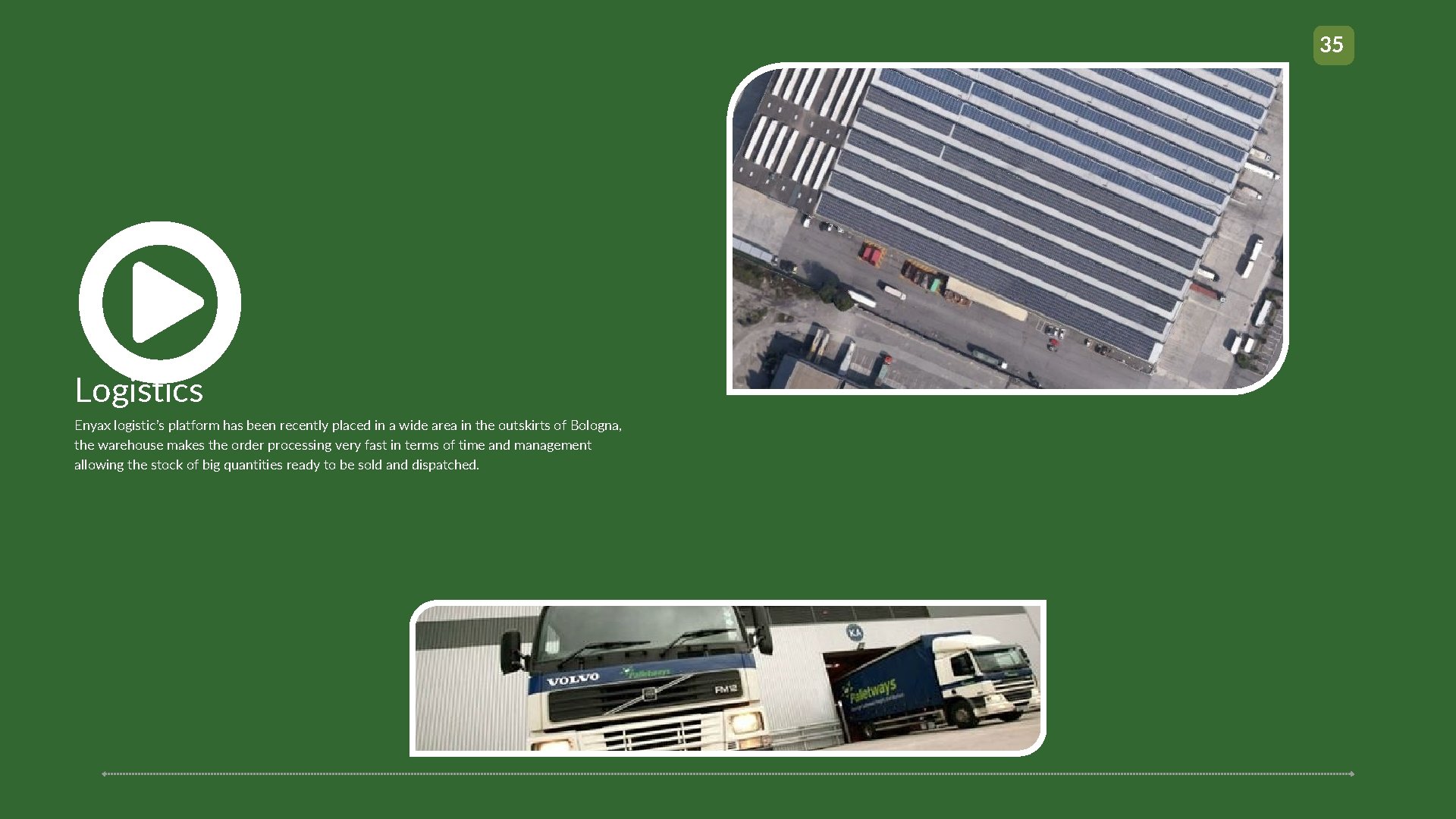
35 Logistics Enyax logistic’s platform has been recently placed in a wide area in the outskirts of Bologna, the warehouse makes the order processing very fast in terms of time and management allowing the stock of big quantities ready to be sold and dispatched. www. enyax. com
36 ) Highlights For a greener future BIODEGRADABLE COMPOSTABLE RESISTANT ENVIROMENTALLY FRIENDLY INNOVATIVE www. enyax. com
37 Conclusion Final Comments In conclusion we can say that thanks to a complete offer for commercial and industrial use, with Poly-Bi® and Bio-Dì® any company doing business in the world of plastics sector can make a major contribution to the environment, will be interest of the industry or the brand holder to make the choice between a product containing Poly-Bi or a product made entirely with Bio-Dì®. With support of IMCD Group N. V. , it is secured to the client a personalized consulting service and the certainty of holding a quality product. Strengthened by a long-lasting collaboration with the group we look forward to share our success with new realities, hoping for a wide spread in Norway of our valuable products. www. enyax. com
38 Conclusion Final Comments Thanks for your attention www. enyax. com www. poly-bi. com / www. bio-di. com
- Slides: 38