
Polymerase Chain Reaction PCR DNA Example of bonding
Polymerase Chain Reaction (PCR)

DNA Example of bonding pattern. • Primary strand CCGAATGGGATGC GGCTTACCCTACG • Complementary strand
PCR is a technique that takes a specific sequence of DNA of small amounts and amplifies it to be used for further testing. Consists of 3 phases: Denaturation Primer Annealing Extension/Elongation
PCR Targets The targets in PCR are the sequences of DNA on each end of the region of interest, which can be a complete gene or small sequence.
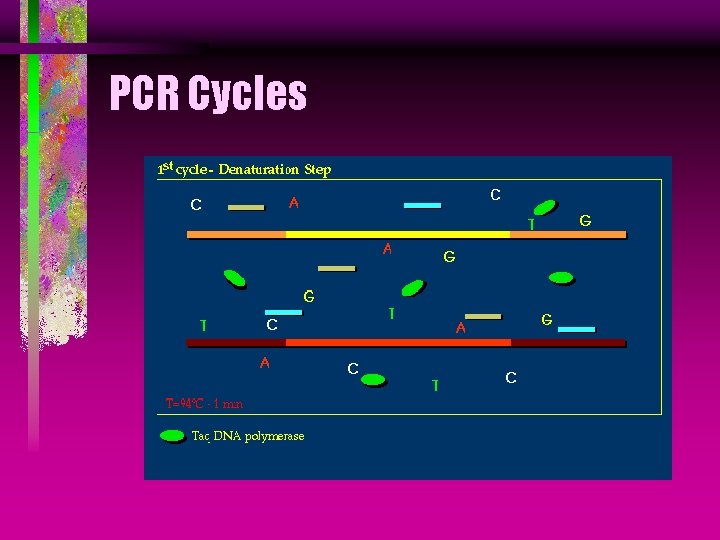
PCR Denaturing is the first step in PCR, in which the DNA strands are separated by heating to 95°C.
PCR Primers range from 15 to 30 nucleotides, are single-stranded, and are used for the complementary building blocks of the target sequence.
PCR Primers A primer for each target sequence on the end of your DNA is needed. This allows both strands to be copied simultaneously in both directions.
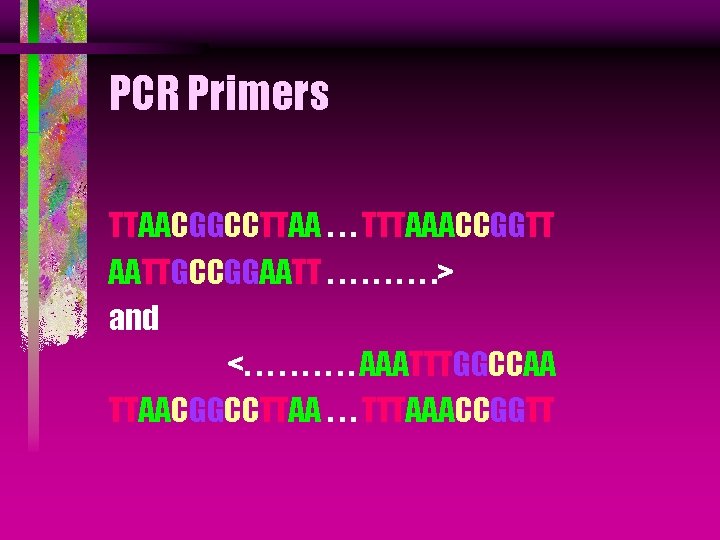
PCR Primers TTAACGGCCTTAA. . . TTTAAACCGGTT AATTGCCGGAATT. . > and <. . AAATTTGGCCAA TTAACGGCCTTAA. . . TTTAAACCGGTT
PCR Primers The primers are added in excess so they will bind to the target DNA instead of the two strands binding back to each other.
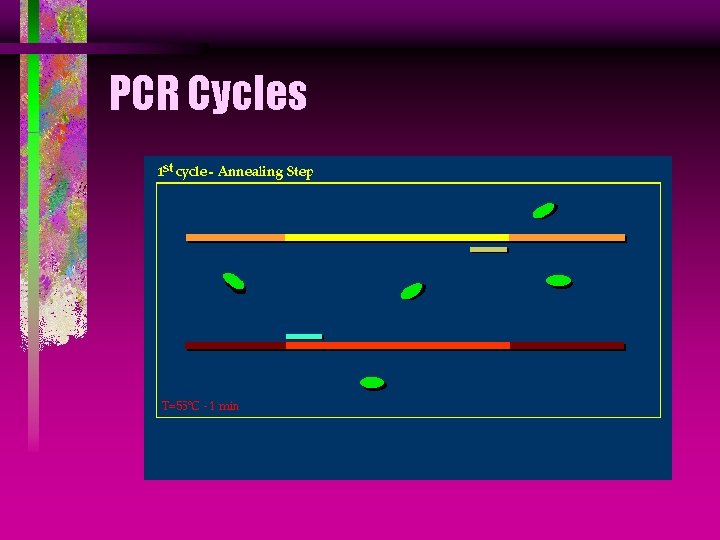
PCR Annealing is the process of allowing two sequences of DNA to form hydrogen bonds. The annealing of the target sequences and primers is done by cooling the DNA to 55°C.
PCR Taq DNA Polymerase Taq stands for Thermus aquaticus, which is a microbe found in 176°F hot springs in Yellow Stone National Forest.
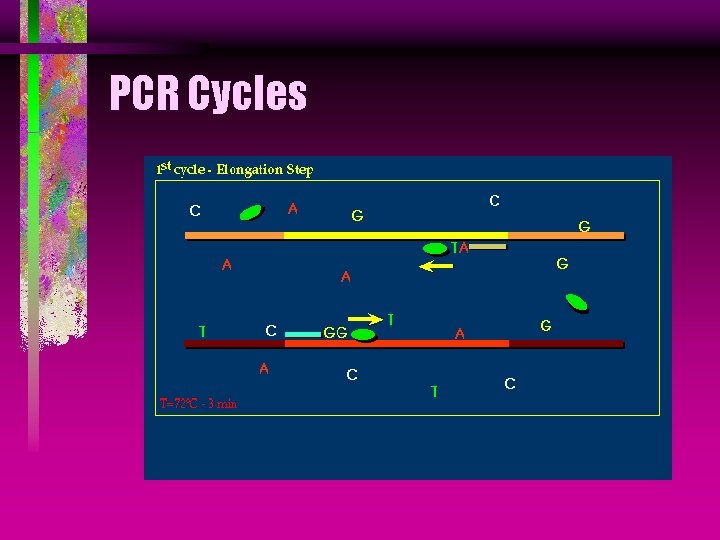
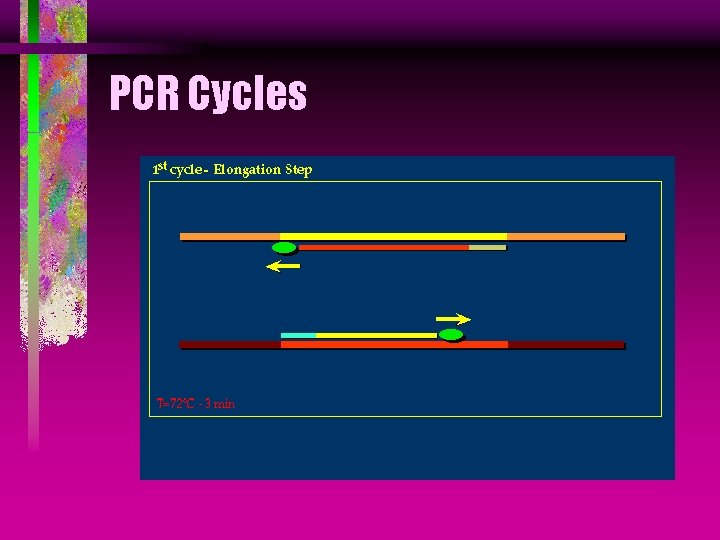
PCR Taq DNA Polymerase Taq produces an enzyme called DNA polymerase, that amplifies the DNA from the primers by the polymerase chain reaction, in the presence of Mg.
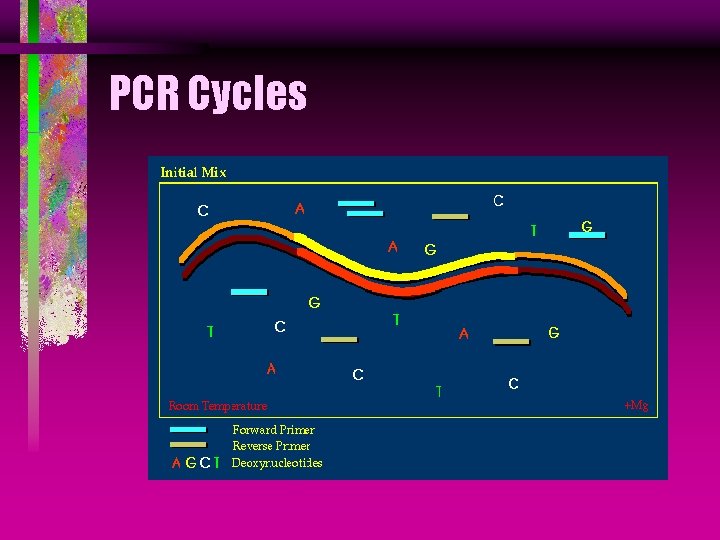
PCR Cycles
PCR Cycles
PCR Cycles
PCR Cycles
PCR Cycles
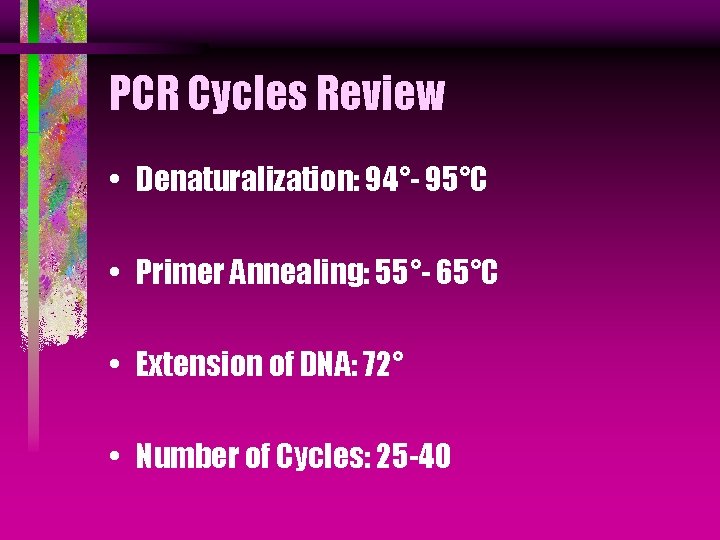
PCR Cycles Review • Denaturalization: 94°- 95°C • Primer Annealing: 55°- 65°C • Extension of DNA: 72° • Number of Cycles: 25 -40
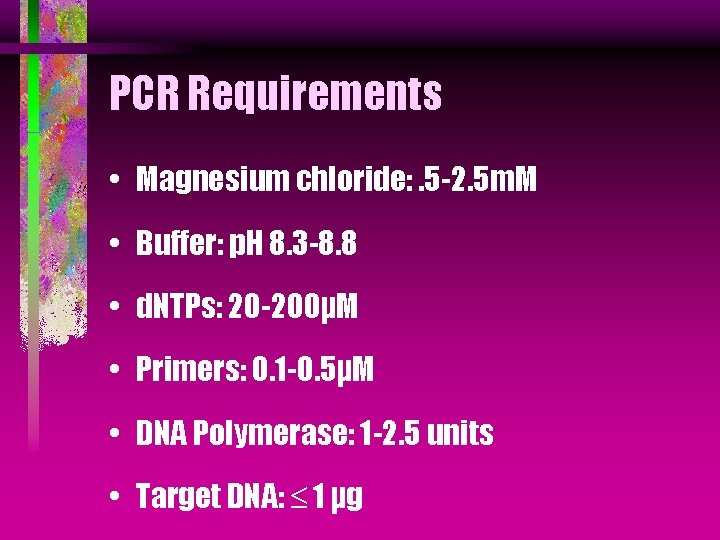
PCR Requirements • Magnesium chloride: . 5 -2. 5 m. M • Buffer: p. H 8. 3 -8. 8 • d. NTPs: 20 -200µM • Primers: 0. 1 -0. 5µM • DNA Polymerase: 1 -2. 5 units • Target DNA: 1 µg
Applications of PCR • • • Neisseria gonorrhea Chlamydia trachomatis HIV-1 Factor V Leiden Forensic testing and many others
Applications of PCR Neisseria gonorrhea and Chlamydia trachomatis are two of the most common sexually transmitted diseases. The infections are asymptomatic and can lead to pelvic inflammatory disease, salpingitis in women, epididymitis in men, infertility, and ectopic pregnancy.
Applications of PCR Specimens include endocervical swabs, urethral swabs, and urine samples. The swabs are placed in a vial with transport buffer containing 50 m. M Mg. CL 2 and sodium azide as a preservative.
Applications of PCR The swab specimens can be stored 2 -30°C for 4 days or frozen at -20°C. The urine samples are refrigerated at 2 -8°C or stored at -20°C. A target sequence is chosen for both, amplified with polymerase, and then evaluated with an enzyme immunoassay.
Applications of PCR HIV-1 and Factor V Leiden also have a specific target sequence amplified, and then quantitated.
Applications of PCR The HIV-1 test is used as a monitor of the severity of the virus. The HIV-1 causes a depletion of CD 4+ T lymphocytes, causing immunodeficiency, multiple opportunistic infections, malignancies, and death.
Applications of PCR The HIV-1 specimen is plasma collected in EDTA that must be separated from the cells within 6 hours. Heparin cannot be used as an anticoagulant because it inhibits PCR.
Applications of PCR A 142 base target sequence in the HIV-1 gag gene is converted from RNA to complementary DNA, and to double stranded.
Applications of PCR The standard specimen procedure can quantitate HIV-1 RNA in a range of 40075, 000 copies/m. L.
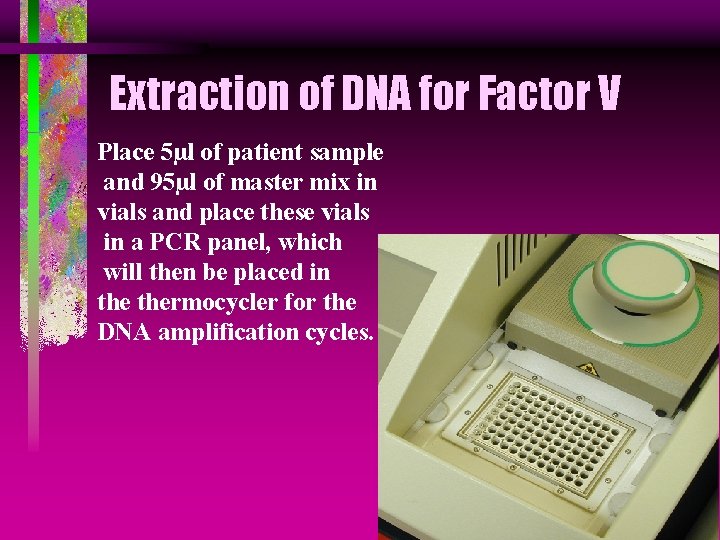
Extraction of DNA for Factor V Place 5µl of patient sample and 95µl of master mix in vials and place these vials in a PCR panel, which will then be placed in thermocycler for the DNA amplification cycles.
References • Ronald H. Holton, Ph. D. : – Molecular Diagnostics in the Clinical Laboratory – Molecular Biology in the Clinical Laboratory – Molecular Pathology: Basic Methodologies and Clinical Applications – Expanding applications of PCR, by Peter Gwynne and Guy Page
- Slides: 30