
Polymerase Chain Reaction PCR and its Applications Introduction
- Slides: 35
Polymerase Chain Reaction (PCR) and its Applications
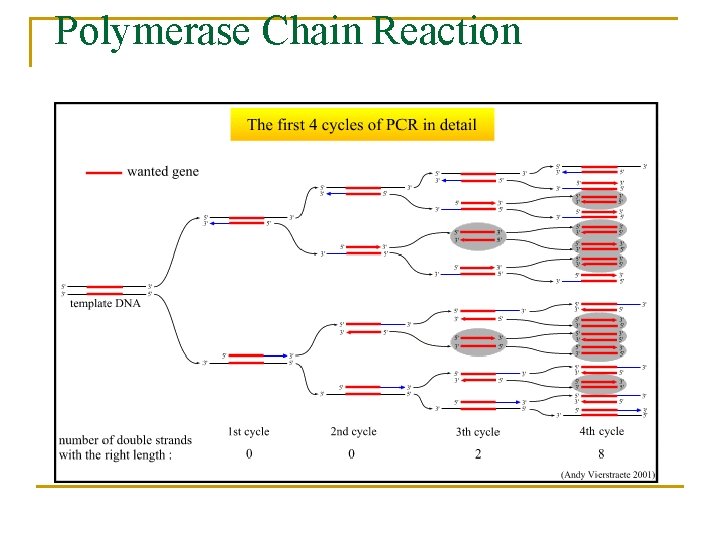
Introduction n Method for exponential amplification of DNA or RNA sequences
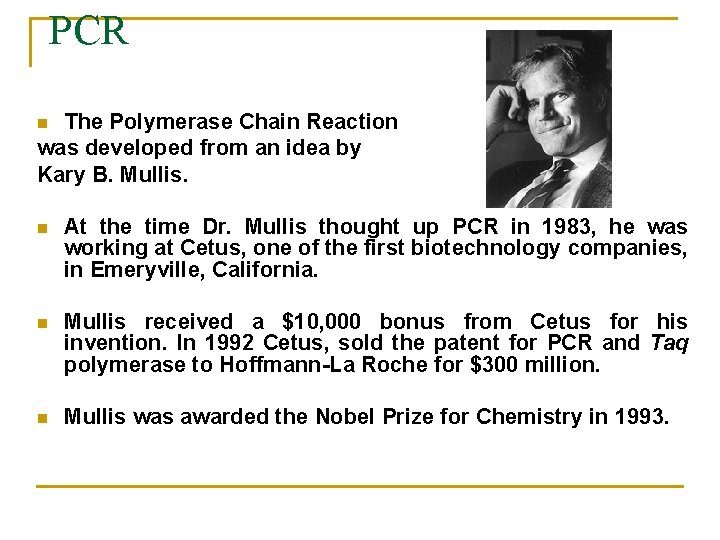
PCR The Polymerase Chain Reaction was developed from an idea by Kary B. Mullis. n n At the time Dr. Mullis thought up PCR in 1983, he was working at Cetus, one of the first biotechnology companies, in Emeryville, California. n Mullis received a $10, 000 bonus from Cetus for his invention. In 1992 Cetus, sold the patent for PCR and Taq polymerase to Hoffmann-La Roche for $300 million. n Mullis was awarded the Nobel Prize for Chemistry in 1993.
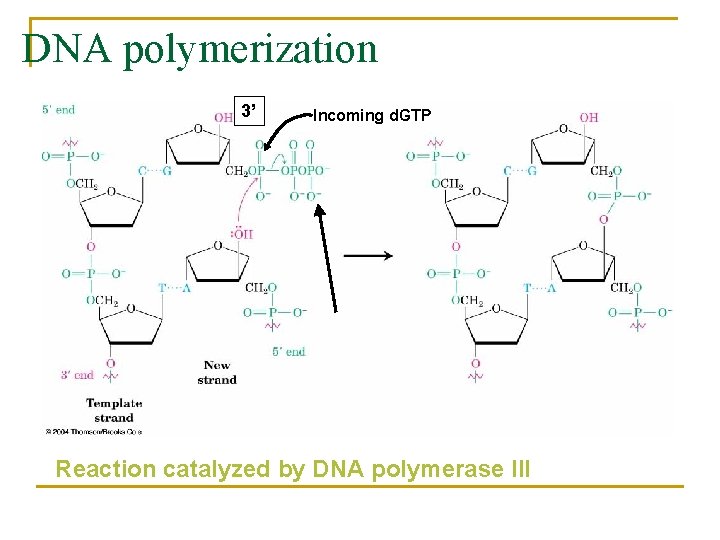
DNA polymerization 3’ Incoming d. GTP Reaction catalyzed by DNA polymerase III
Polymerase Chain Reaction
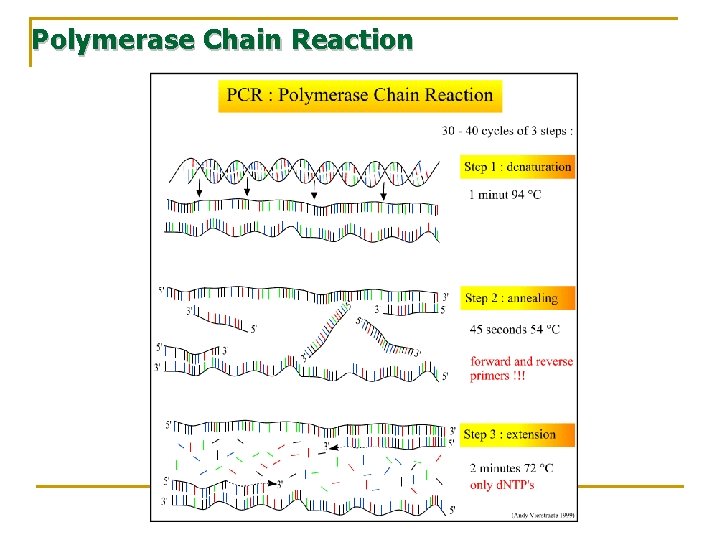
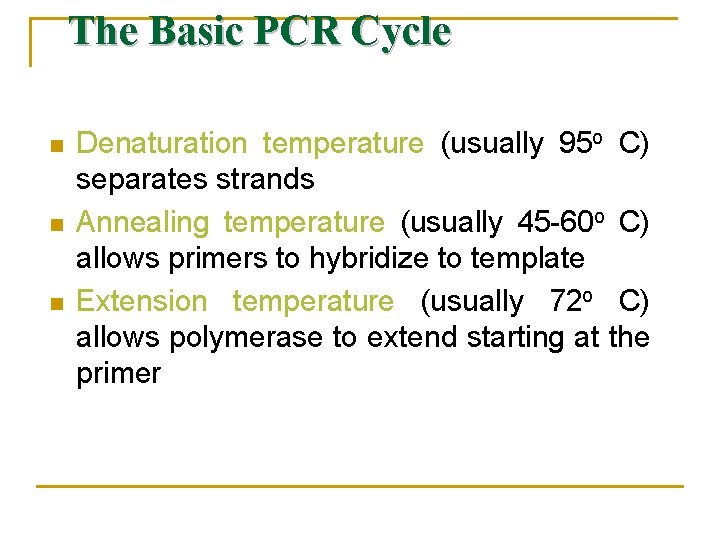
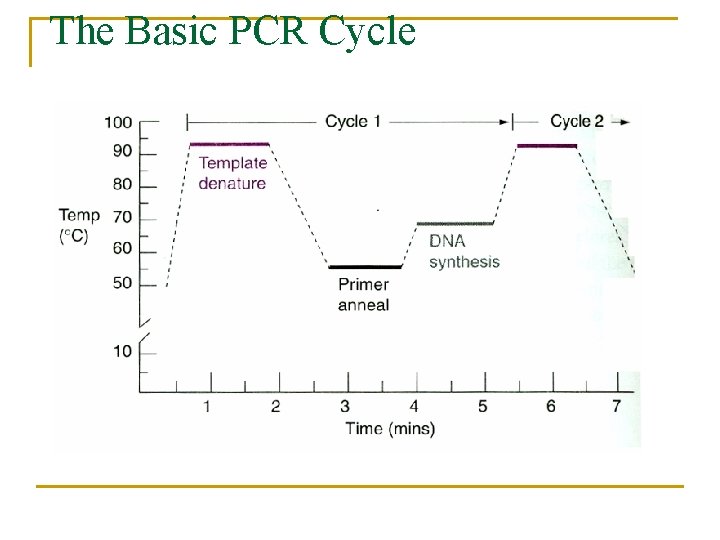
The Basic PCR Cycle n n n Denaturation temperature (usually 95 o C) separates strands Annealing temperature (usually 45 -60 o C) allows primers to hybridize to template Extension temperature (usually 72 o C) allows polymerase to extend starting at the primer
The Basic PCR Cycle
Polymerase Chain Reaction
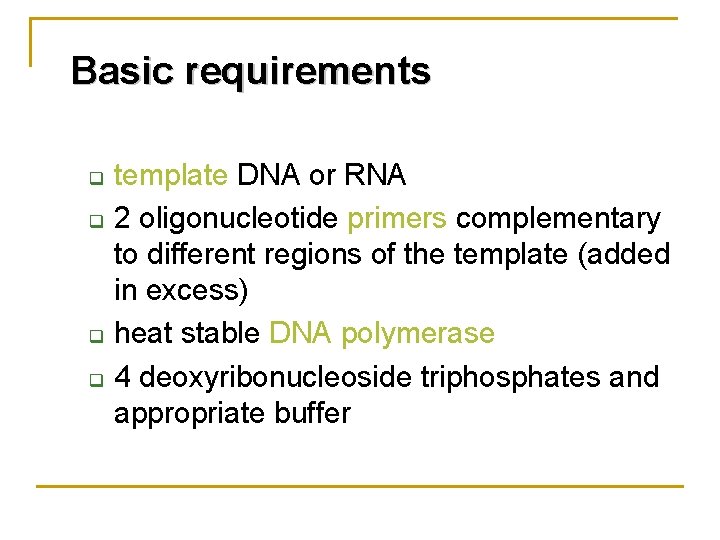
Basic requirements q q template DNA or RNA 2 oligonucleotide primers complementary to different regions of the template (added in excess) heat stable DNA polymerase 4 deoxyribonucleoside triphosphates and appropriate buffer
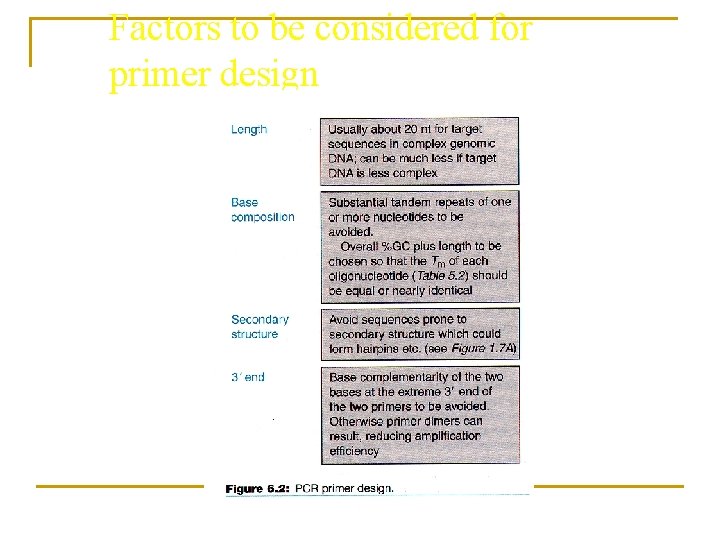
Factors to be considered for primer design
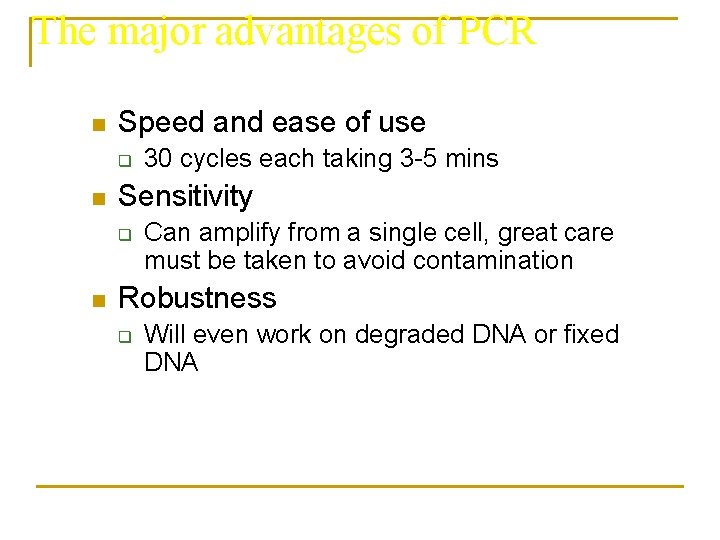
The major advantages of PCR n Speed and ease of use q n Sensitivity q n 30 cycles each taking 3 -5 mins Can amplify from a single cell, great care must be taken to avoid contamination Robustness q Will even work on degraded DNA or fixed DNA
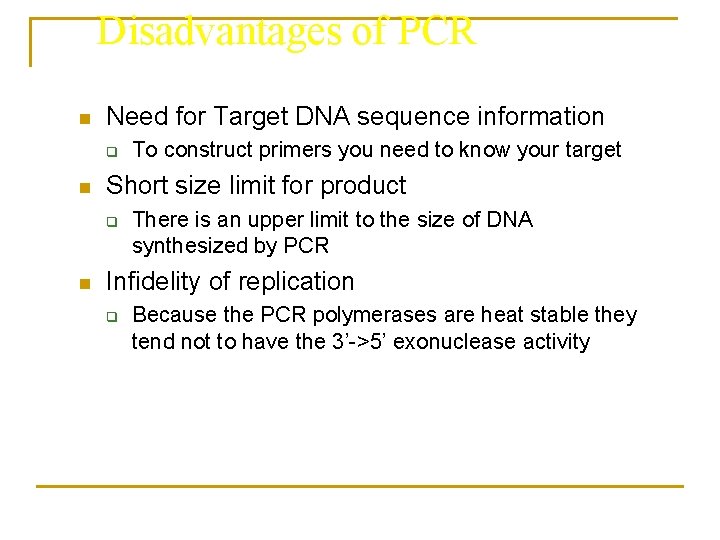
Disadvantages of PCR n Need for Target DNA sequence information q n Short size limit for product q n To construct primers you need to know your target There is an upper limit to the size of DNA synthesized by PCR Infidelity of replication q Because the PCR polymerases are heat stable they tend not to have the 3’->5’ exonuclease activity
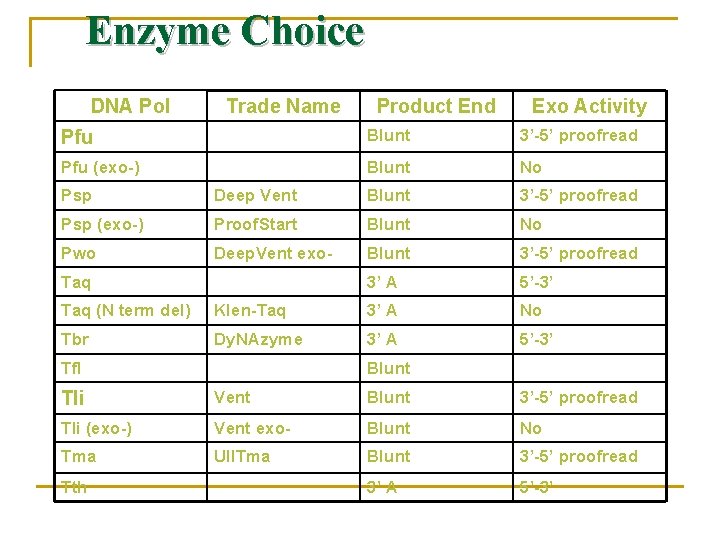
Enzyme Choice DNA Pol Trade Name Product End Exo Activity Pfu Blunt 3’-5’ proofread Pfu (exo-) Blunt No Psp Deep Vent Blunt 3’-5’ proofread Psp (exo-) Proof. Start Blunt No Pwo Deep. Vent exo- Blunt 3’-5’ proofread 3’ A 5’-3’ Taq (N term del) Klen-Taq 3’ A No Tbr Dy. NAzyme 3’ A 5’-3’ Tfl Blunt Tli Vent Blunt 3’-5’ proofread Tli (exo-) Vent exo- Blunt No Tma UIITma Blunt 3’-5’ proofread 3’ A 5’-3’ Tth
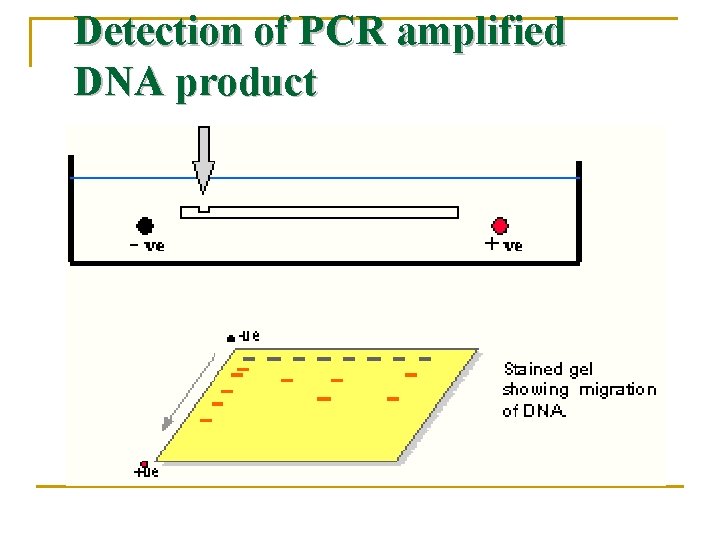
Detection of PCR amplified DNA product
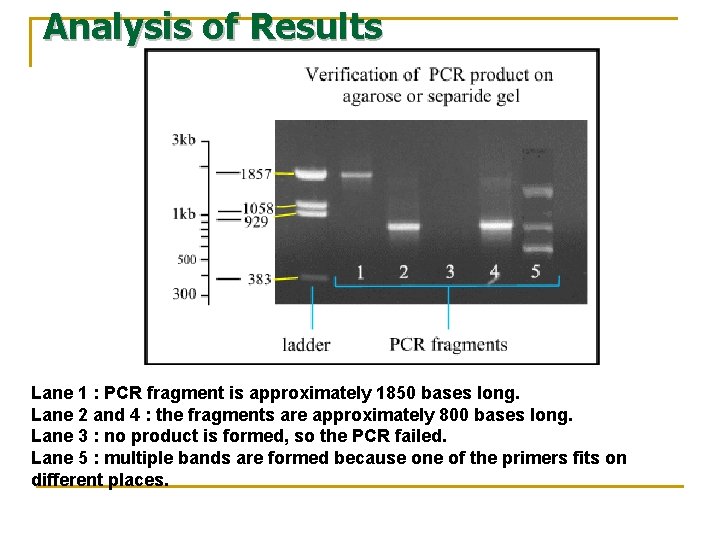
Analysis of Results Lane 1 : PCR fragment is approximately 1850 bases long. Lane 2 and 4 : the fragments are approximately 800 bases long. Lane 3 : no product is formed, so the PCR failed. Lane 5 : multiple bands are formed because one of the primers fits on different places.
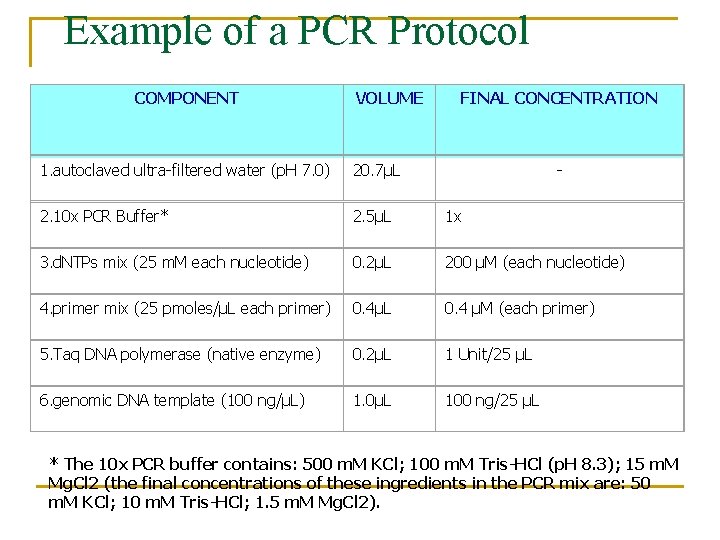
Example of a PCR Protocol COMPONENT VOLUME FINAL CONCENTRATION 1. autoclaved ultra-filtered water (p. H 7. 0) 20. 7µL - 2. 10 x PCR Buffer* 2. 5µL 1 x 3. d. NTPs mix (25 m. M each nucleotide) 0. 2µL 200 µM (each nucleotide) 4. primer mix (25 pmoles/µL each primer) 0. 4µL 0. 4 µM (each primer) 5. Taq DNA polymerase (native enzyme) 0. 2µL 1 Unit/25 µL 6. genomic DNA template (100 ng/µL) 1. 0µL 100 ng/25 µL * The 10 x PCR buffer contains: 500 m. M KCl; 100 m. M Tris-HCl (p. H 8. 3); 15 m. M Mg. Cl 2 (the final concentrations of these ingredients in the PCR mix are: 50 m. M KCl; 10 m. M Tris-HCl; 1. 5 m. M Mg. Cl 2).
PCR APPLICATIONS • PCR has revolutionized molecular biology. • The ability to synthesize short oligos and the advances in DNA enzymology lead to the ability to amplify DNA sequences. • This technique is flexible and powerful and has many different applications.
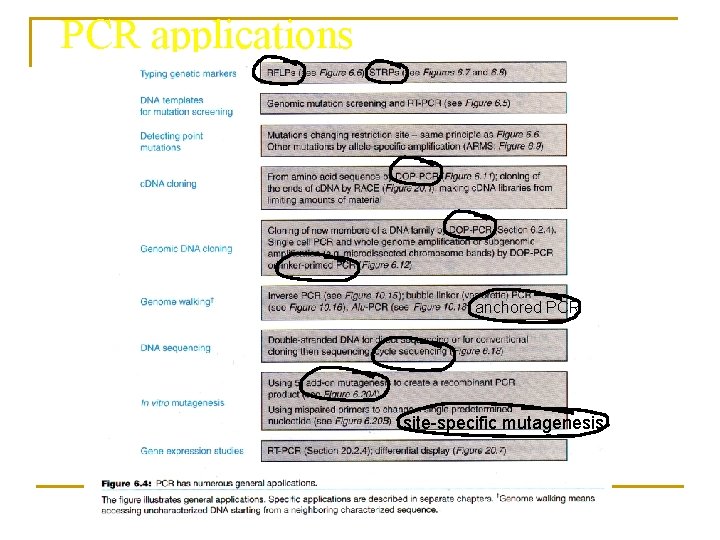
PCR applications anchored PCR site-specific mutagenesis
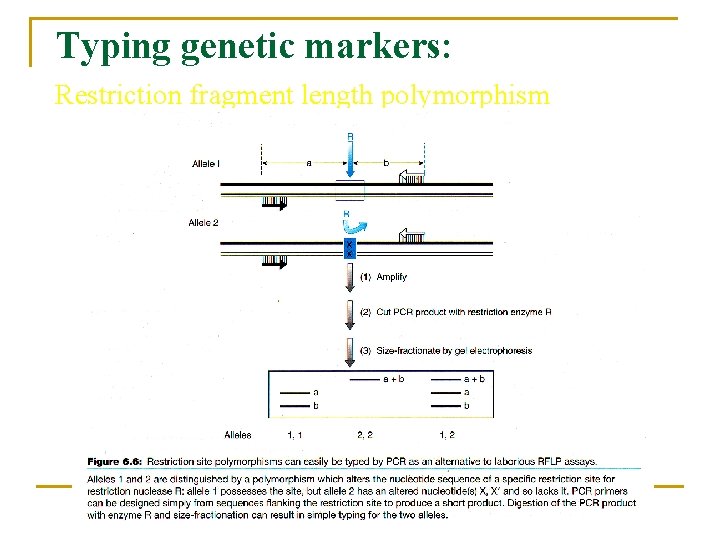
Typing genetic markers: Restriction fragment length polymorphism
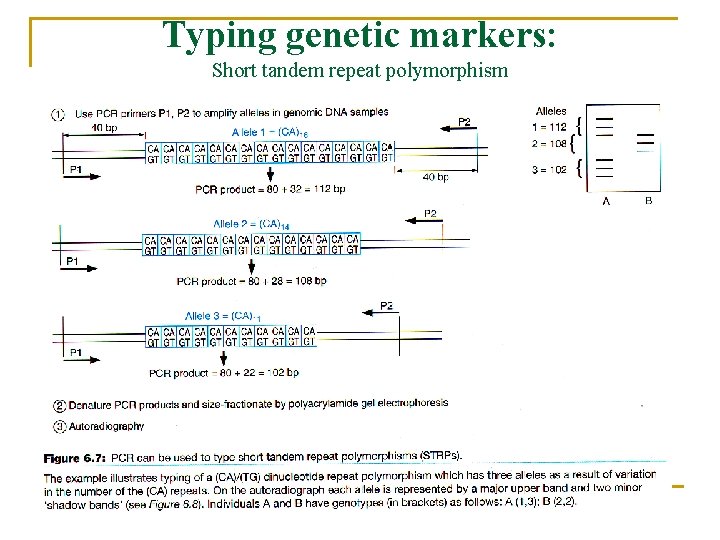
Typing genetic markers: Short tandem repeat polymorphism
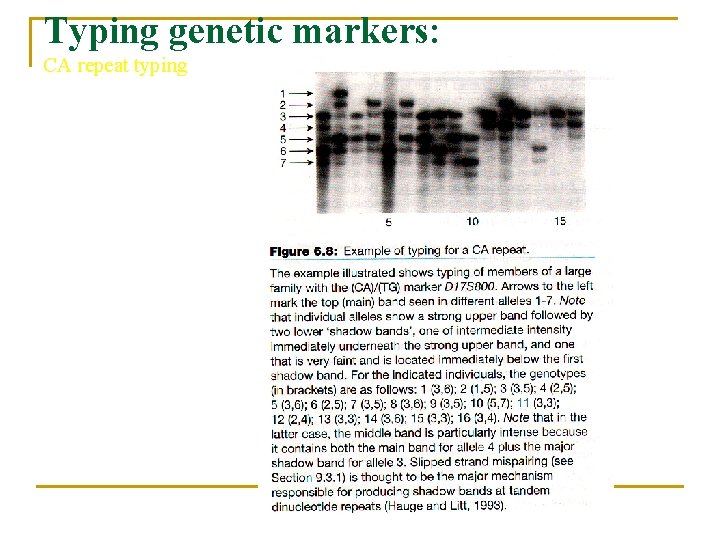
Typing genetic markers: CA repeat typing
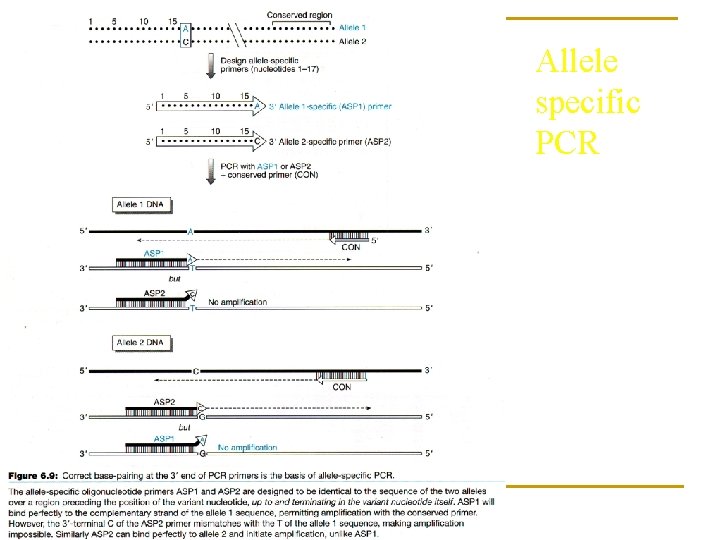
Allele specific PCR
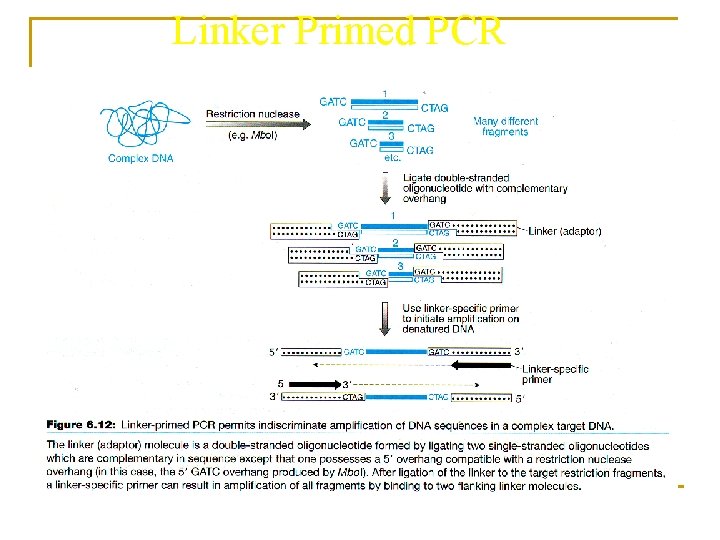
Linker Primed PCR
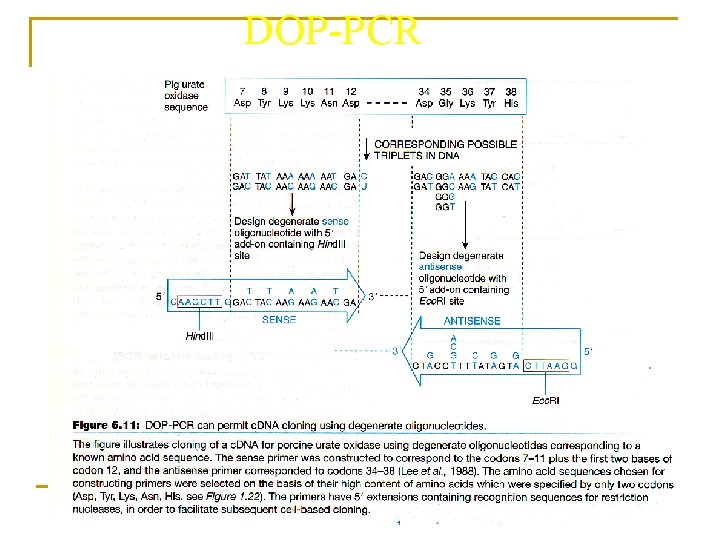
DOP-PCR
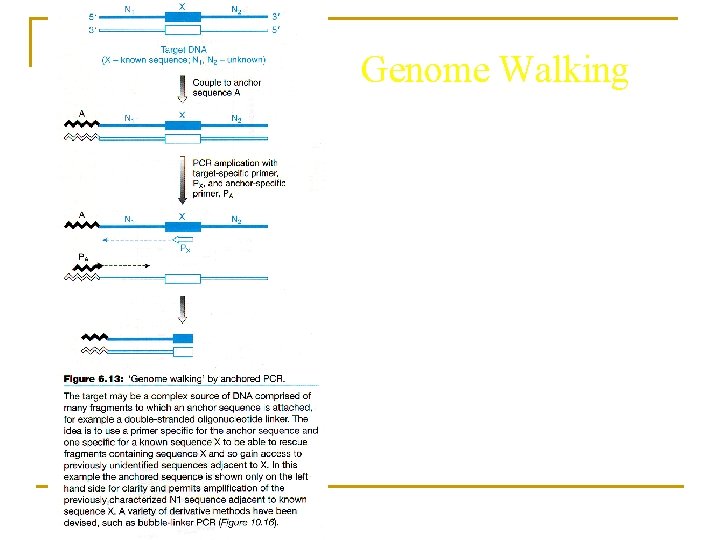
Genome Walking
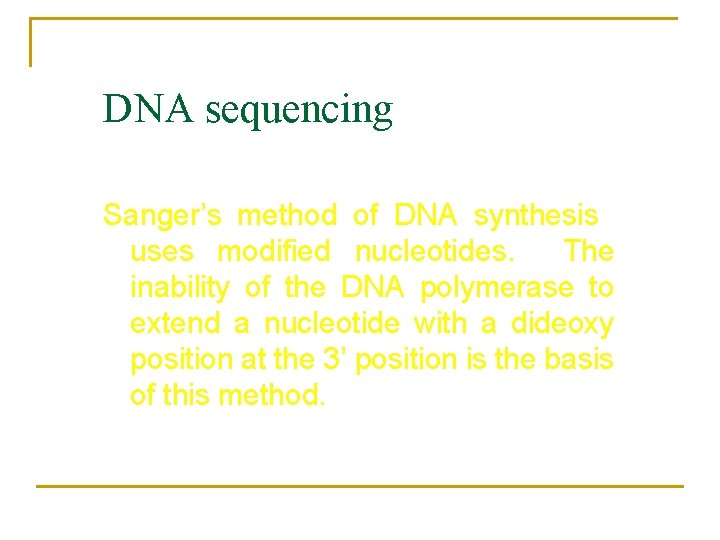
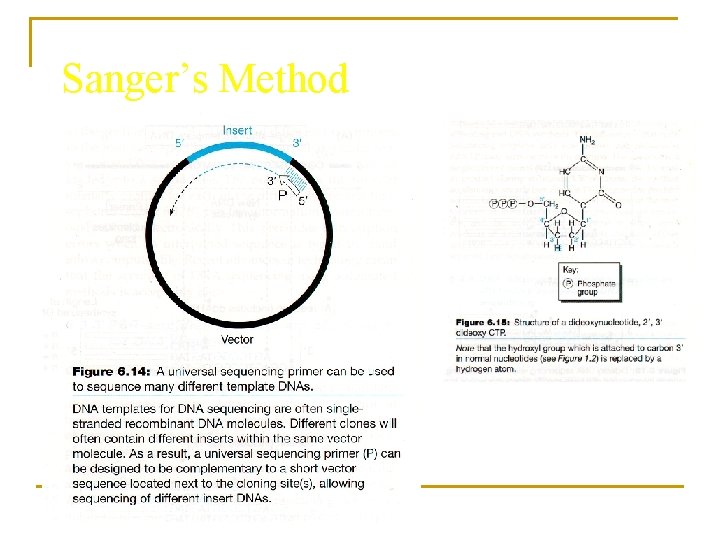
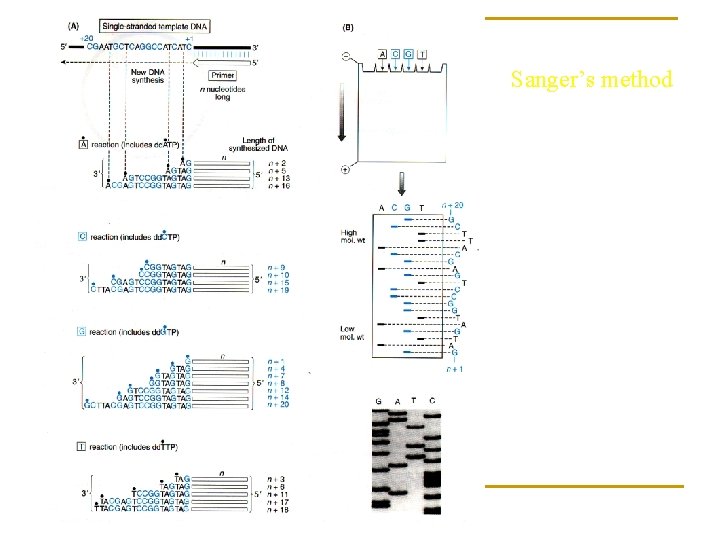
DNA sequencing Sanger’s method of DNA synthesis uses modified nucleotides. The inability of the DNA polymerase to extend a nucleotide with a dideoxy position at the 3’ position is the basis of this method.
Sanger’s Method
Sanger’s method
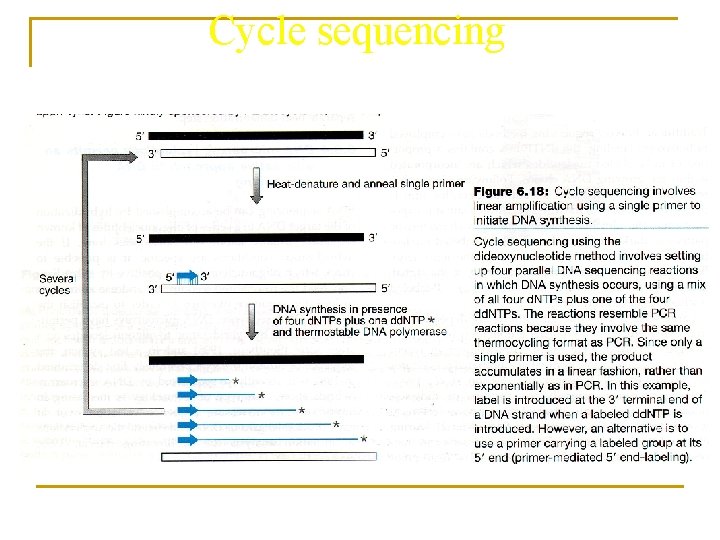
Cycle sequencing
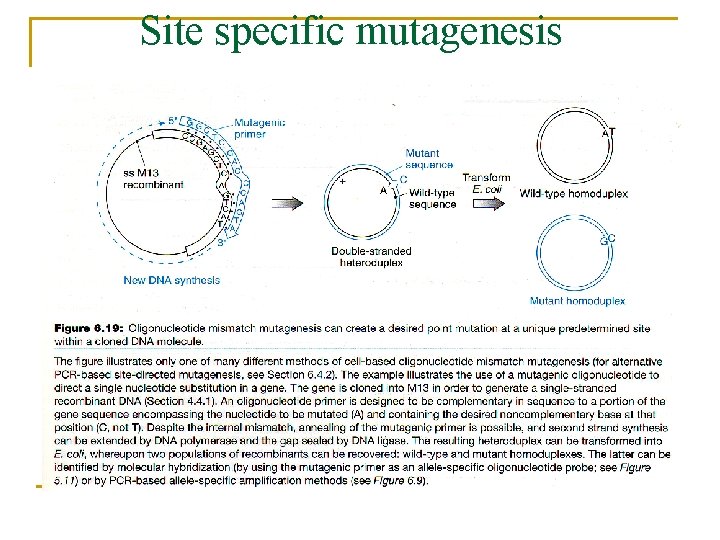
Site specific mutagenesis
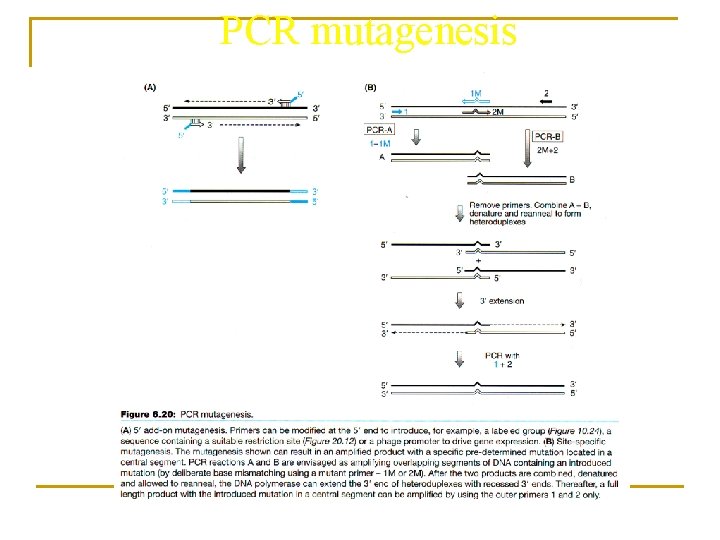
PCR mutagenesis
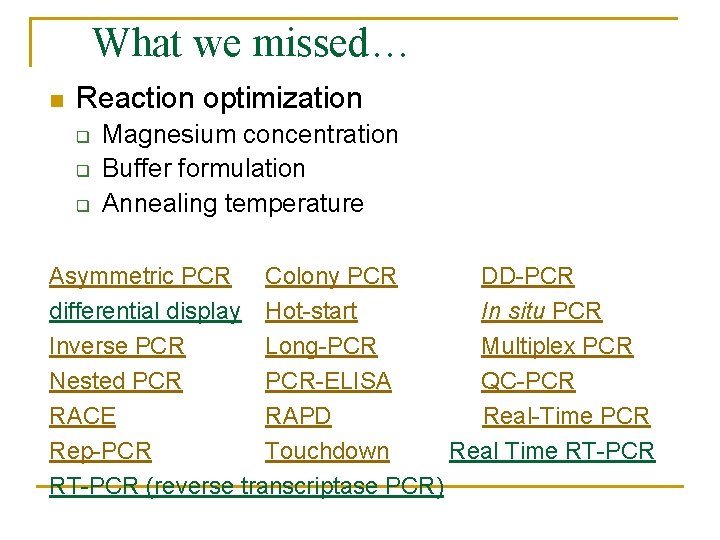
What we missed… n Reaction optimization q q q Magnesium concentration Buffer formulation Annealing temperature Asymmetric PCR Colony PCR DD-PCR differential display Hot-start In situ PCR Inverse PCR Long-PCR Multiplex PCR Nested PCR-ELISA QC-PCR RACE RAPD Real-Time PCR Rep-PCR Touchdown Real Time RT-PCR (reverse transcriptase PCR)
References 1) Principles of gene manipulation Sandy Primrose, Richard Twyman and Robert W. Old Blackwell Science, London, 6 th Ed. , 2001 2) PCR technology; current innovations Ed. by Thomas Weissensteiner, Hugh G. Griffin, and Annette Griffin, 2 nd ed. , CRC press, New York, 2004 Those interested in questions involving cycle number may read the following slides.
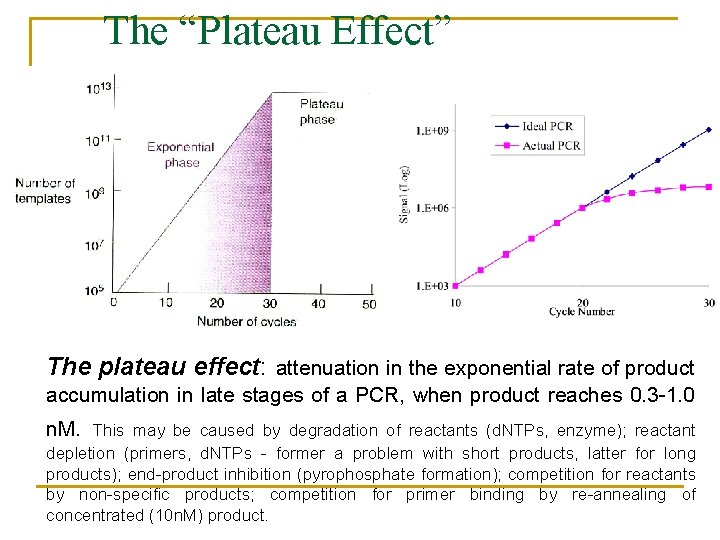
The “Plateau Effect” The plateau effect: attenuation in the exponential rate of product accumulation in late stages of a PCR, when product reaches 0. 3 -1. 0 n. M. This may be caused by degradation of reactants (d. NTPs, enzyme); reactant depletion (primers, d. NTPs - former a problem with short products, latter for long products); end-product inhibition (pyrophosphate formation); competition for reactants by non-specific products; competition for primer binding by re-annealing of concentrated (10 n. M) product.
Several conditions can effect the plateau: n n n The utilization of substrates, either primers or d. NTPs. The stability of the reactants. End product inhibition. Competition for reactants by nonspecific products or primer-dimers. Reannealing of product at higher concentrations which prevents the extension process. Incomplete denaturation at higher product concentration.