
Polymer Synthesis CHEM 421 Odian Book Chapter 5
Polymer Synthesis CHEM 421 • Odian Book Chapter 5 -2
Polymer Synthesis CHEM 421 Cationic Polymerization
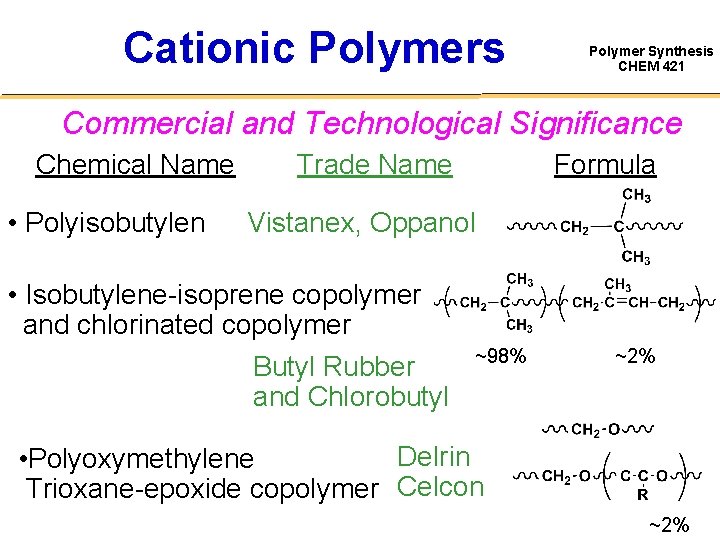
Cationic Polymers Polymer Synthesis CHEM 421 Commercial and Technological Significance Chemical Name • Polyisobutylen Trade Name Formula Vistanex, Oppanol • Isobutylene-isoprene copolymer and chlorinated copolymer Butyl Rubber and Chlorobutyl ~98% ~2% Delrin • Polyoxymethylene Trioxane-epoxide copolymer Celcon ~2%
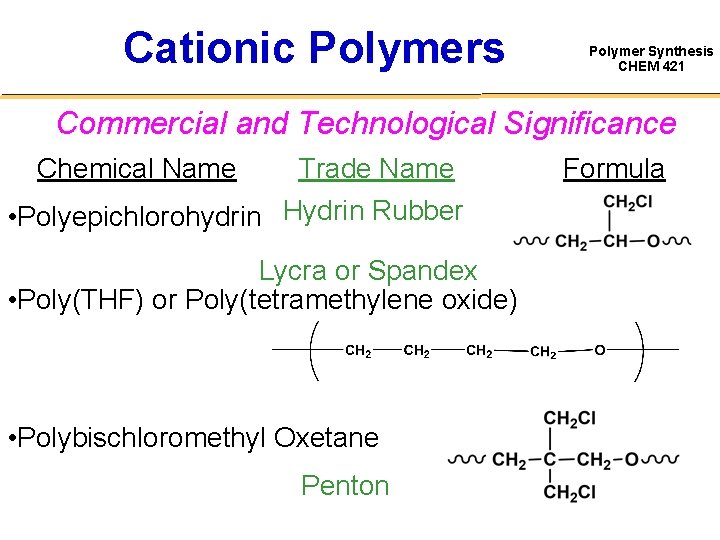
Cationic Polymers Polymer Synthesis CHEM 421 Commercial and Technological Significance Chemical Name Trade Name • Polyepichlorohydrin Hydrin Rubber Lycra or Spandex • Poly(THF) or Poly(tetramethylene oxide) • Polybischloromethyl Oxetane Penton Formula
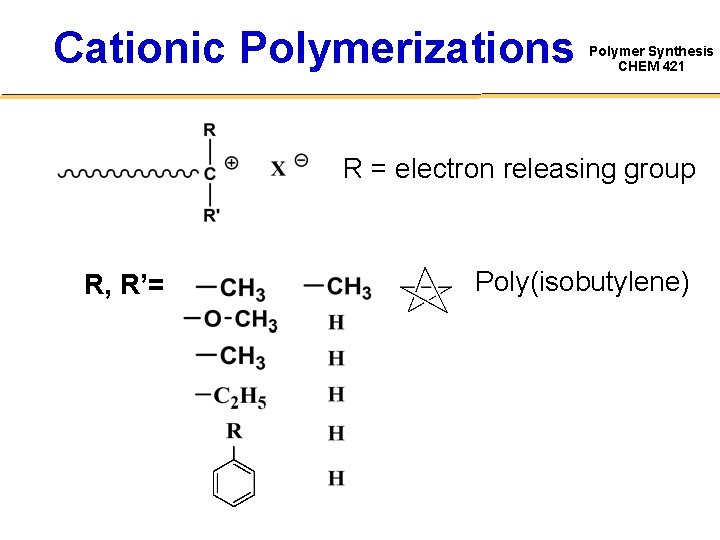
Cationic Polymerizations Polymer Synthesis CHEM 421 R = electron releasing group R, R’= Poly(isobutylene)
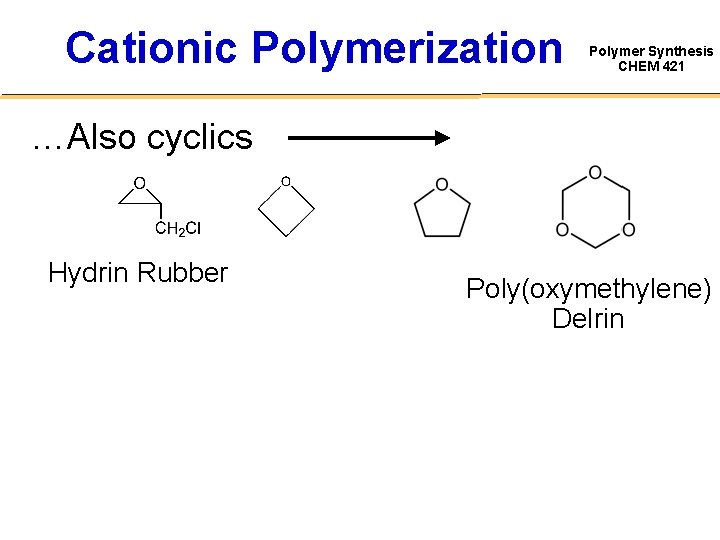
Cationic Polymerization Polymer Synthesis CHEM 421 …Also cyclics Hydrin Rubber Poly(oxymethylene) Delrin
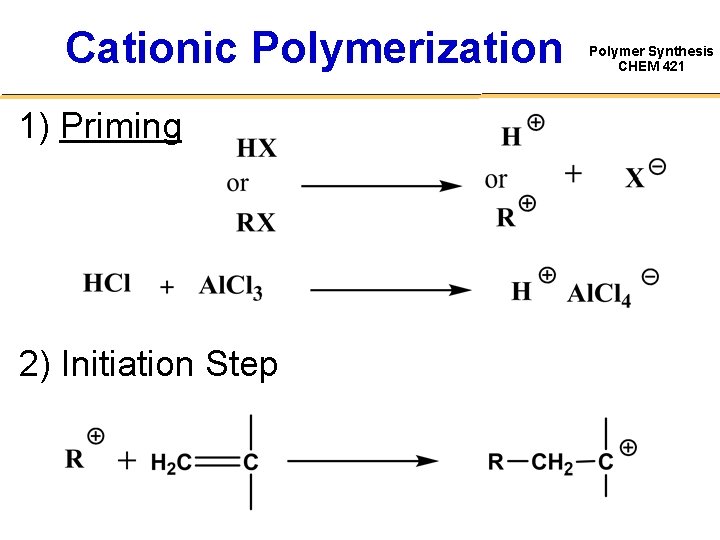
Cationic Polymerization 1) Priming 2) Initiation Step Polymer Synthesis CHEM 421
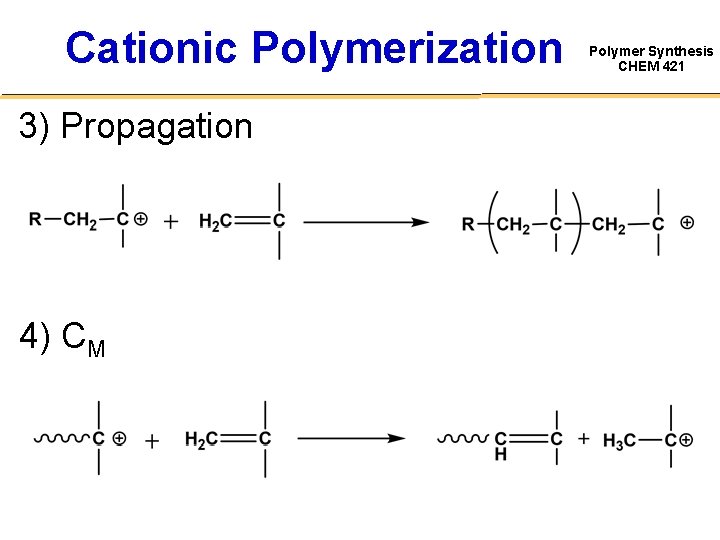
Cationic Polymerization 3) Propagation 4) CM Polymer Synthesis CHEM 421
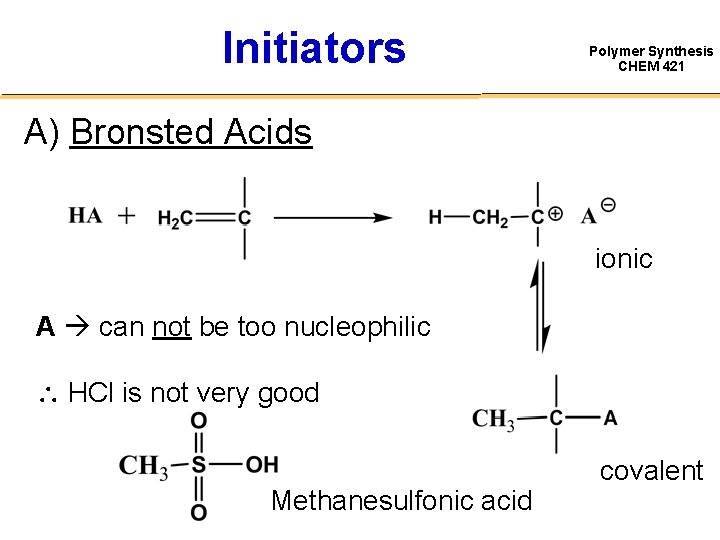
Initiators Polymer Synthesis CHEM 421 A) Bronsted Acids ionic A can not be too nucleophilic HCl is not very good Methanesulfonic acid covalent
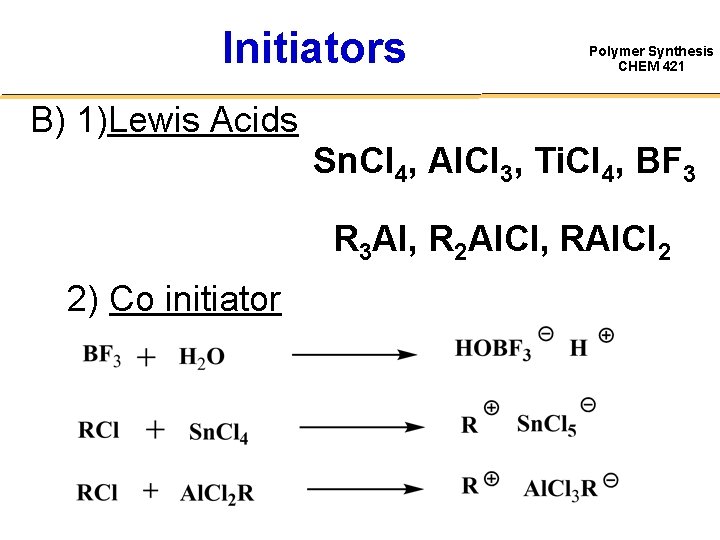
Initiators Polymer Synthesis CHEM 421 B) 1)Lewis Acids Sn. Cl 4, Al. Cl 3, Ti. Cl 4, BF 3 R 3 Al, R 2 Al. Cl, RAl. Cl 2 2) Co initiator
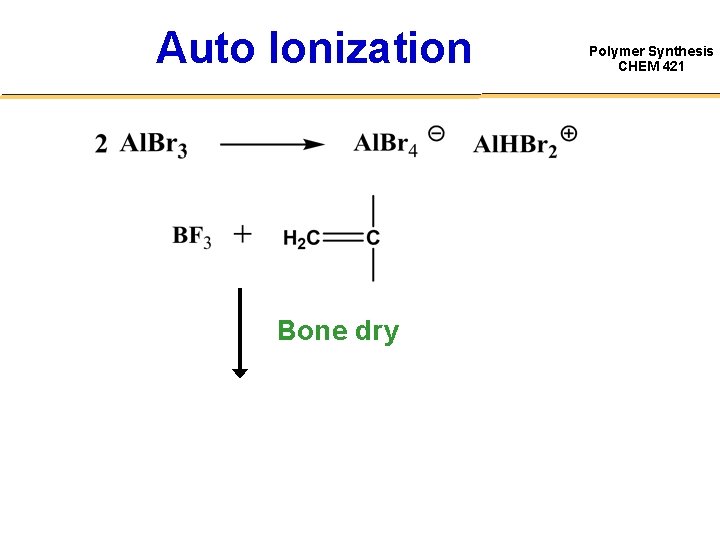
Auto Ionization Bone dry Polymer Synthesis CHEM 421
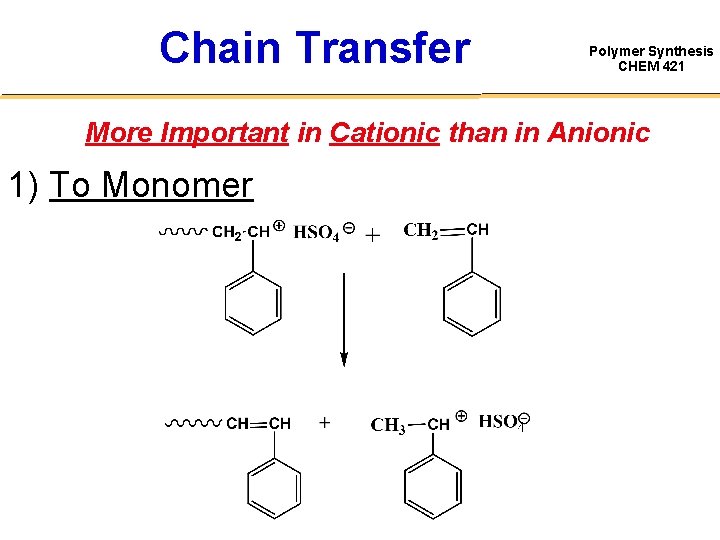
Chain Transfer Polymer Synthesis CHEM 421 More Important in Cationic than in Anionic 1) To Monomer
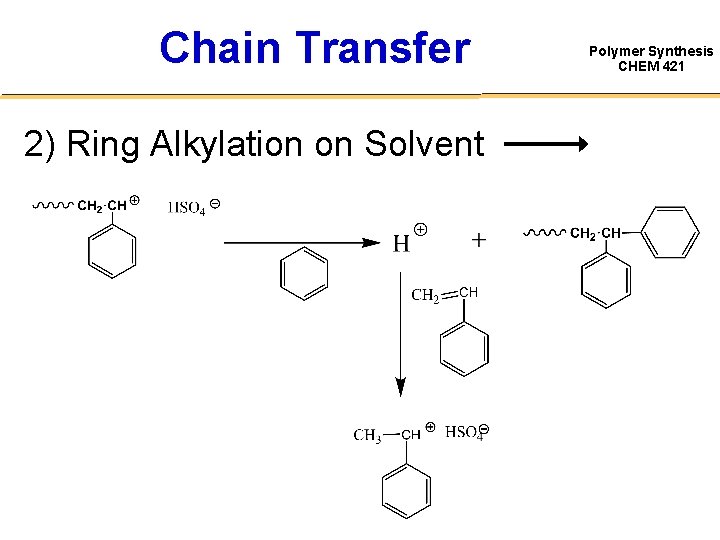
Chain Transfer 2) Ring Alkylation on Solvent Polymer Synthesis CHEM 421
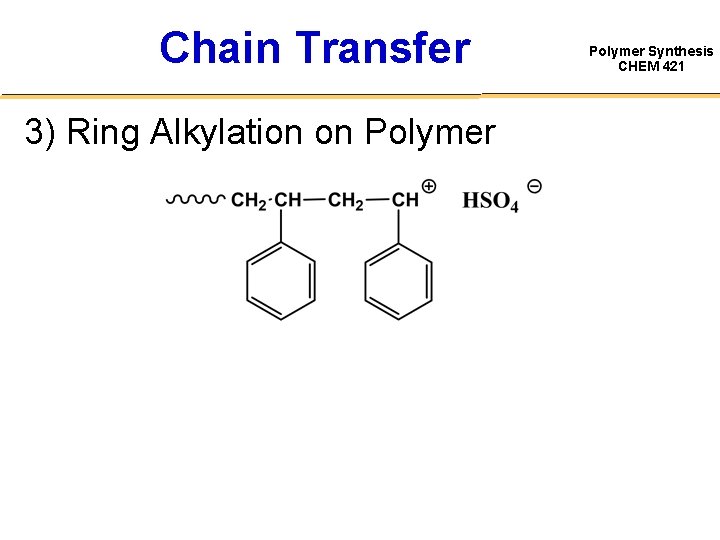
Chain Transfer 3) Ring Alkylation on Polymer Synthesis CHEM 421
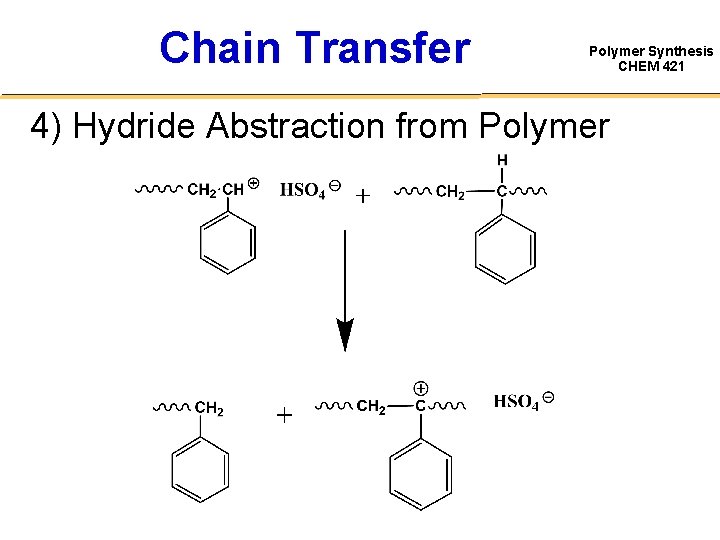
Chain Transfer Polymer Synthesis CHEM 421 4) Hydride Abstraction from Polymer
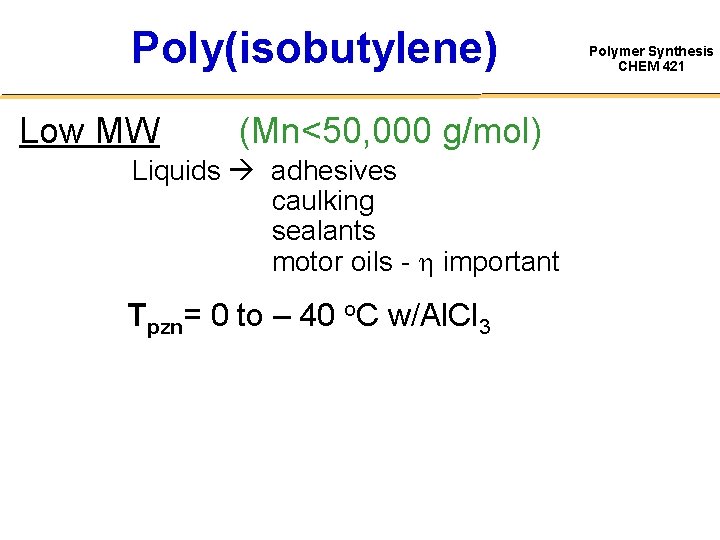
Poly(isobutylene) Low MW (Mn<50, 000 g/mol) Liquids adhesives caulking sealants motor oils - important Tpzn= 0 to – 40 o. C w/Al. Cl 3 Polymer Synthesis CHEM 421
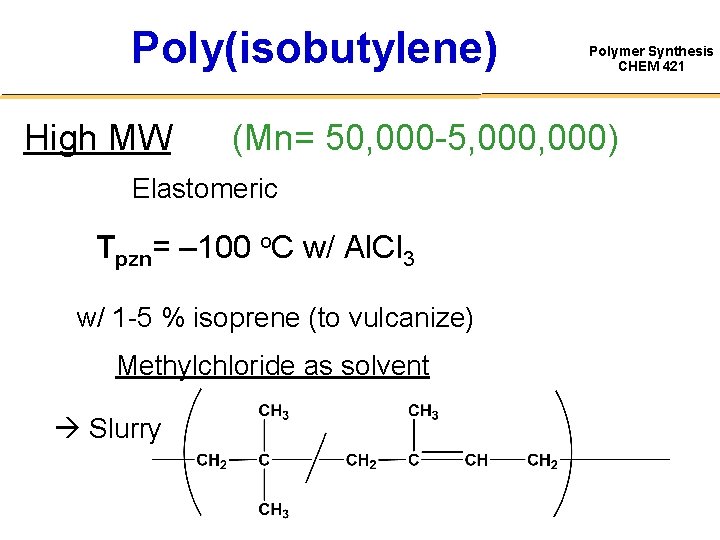
Poly(isobutylene) High MW (Mn= 50, 000 -5, 000) Elastomeric Tpzn= – 100 o. C w/ Al. Cl 3 w/ 1 -5 % isoprene (to vulcanize) Methylchloride as solvent Slurry Polymer Synthesis CHEM 421
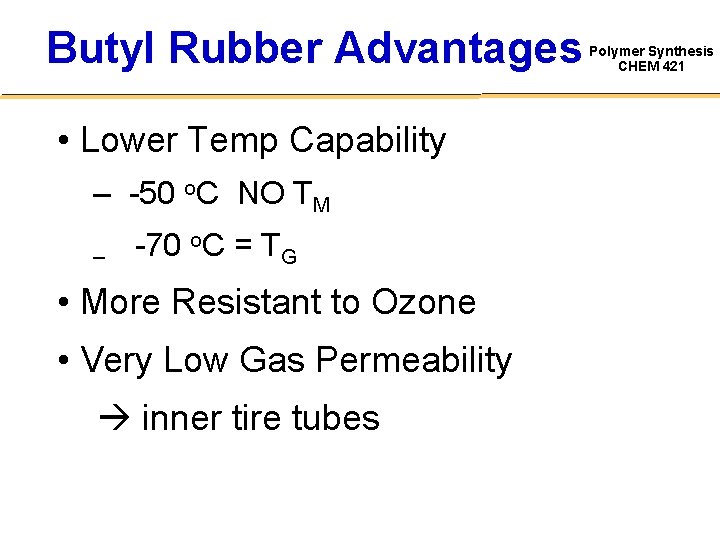
Butyl Rubber Advantages • Lower Temp Capability – -50 o. C NO TM – -70 o. C = TG • More Resistant to Ozone • Very Low Gas Permeability inner tire tubes Polymer Synthesis CHEM 421
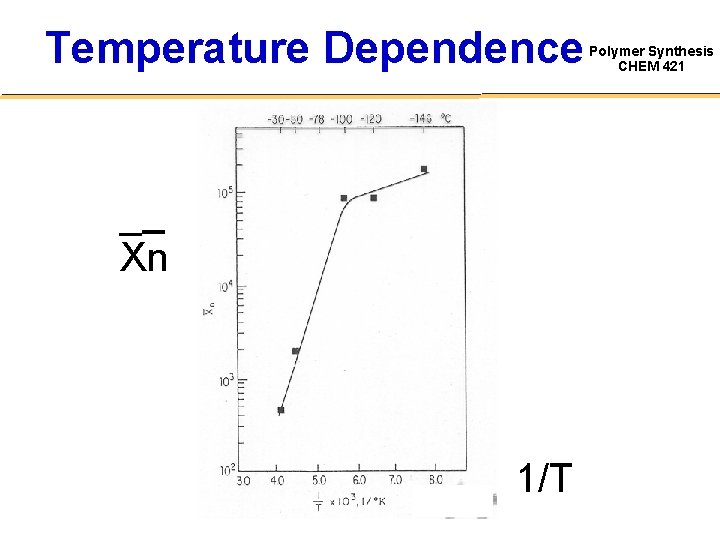
Temperature Dependence _ Xn 1/T Polymer Synthesis CHEM 421
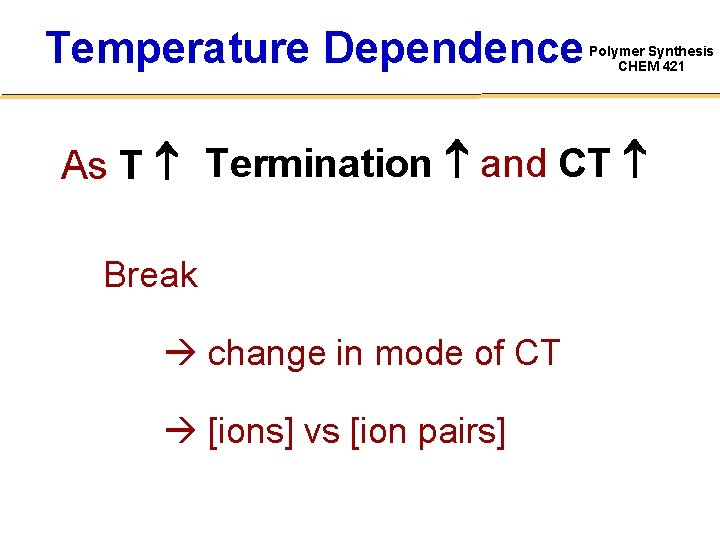
Temperature Dependence Polymer Synthesis CHEM 421 As T Termination and CT Break change in mode of CT [ions] vs [ion pairs]
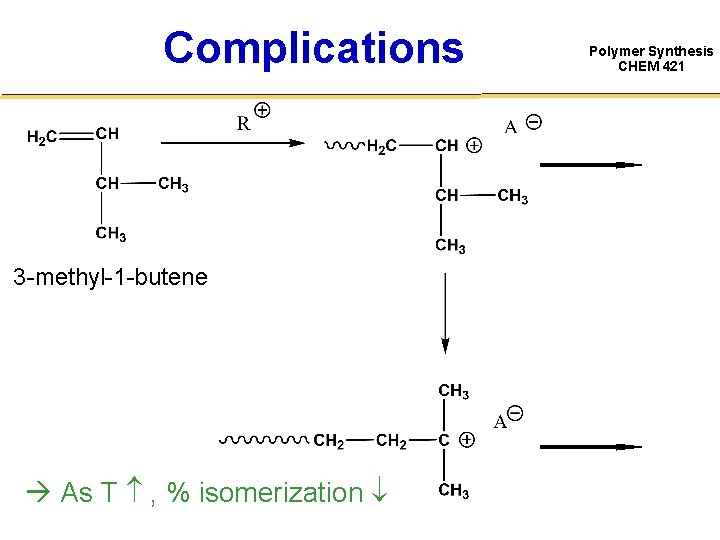
Complications 3 -methyl-1 -butene As T , % isomerization Polymer Synthesis CHEM 421
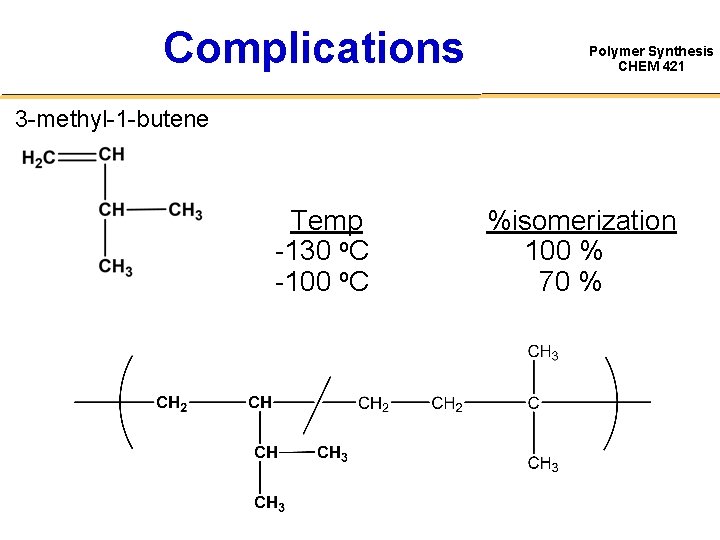
Complications Polymer Synthesis CHEM 421 3 -methyl-1 -butene Temp -130 o. C -100 o. C %isomerization 100 % 70 %
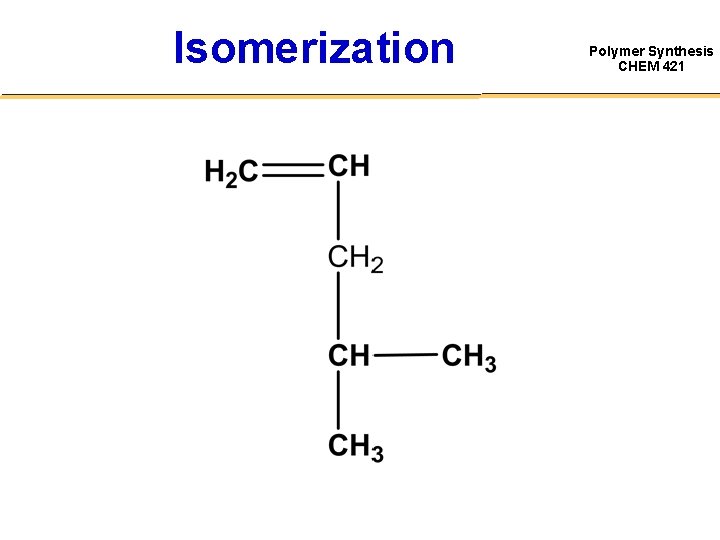
Isomerization Polymer Synthesis CHEM 421
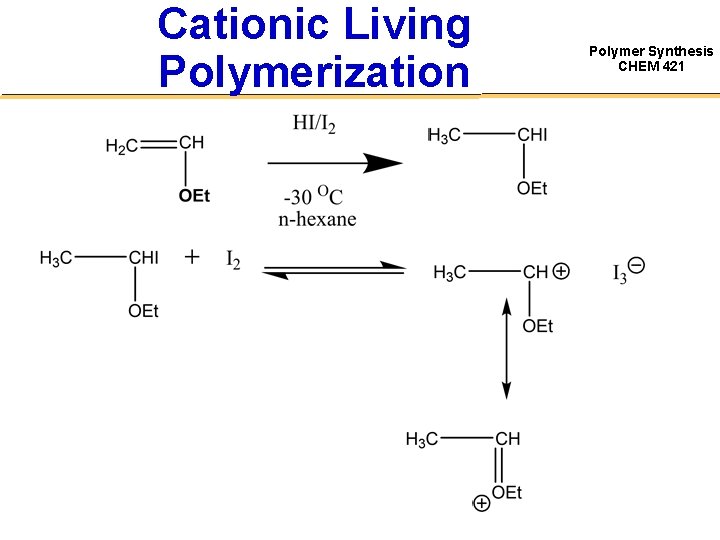
Cationic Living Polymerization Polymer Synthesis CHEM 421
- Slides: 24