
Polymer Synthesis CHEM 421 Chemical Review 2000 Issue
- Slides: 23
Polymer Synthesis CHEM 421 Chemical Review 2000, Issue 4 “FRONTIERS IN METAL-CATALYZED POLYMERIZATION” Also Angew. Chem. Int. Ed. 1999, 38, 428 ± 447
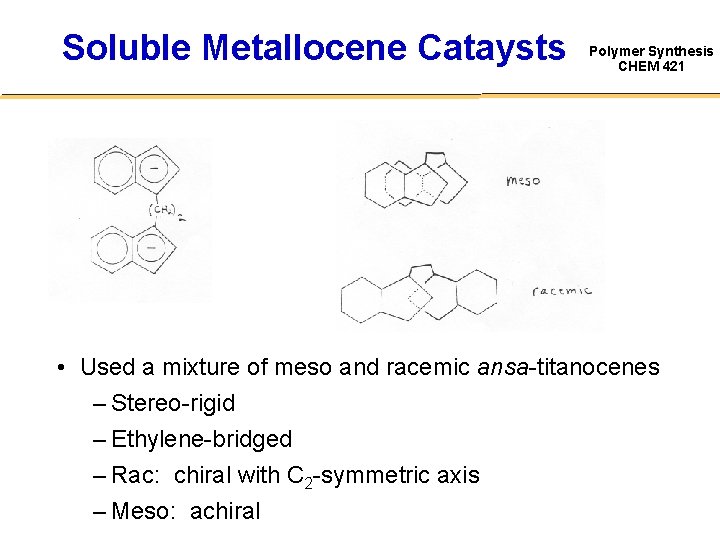
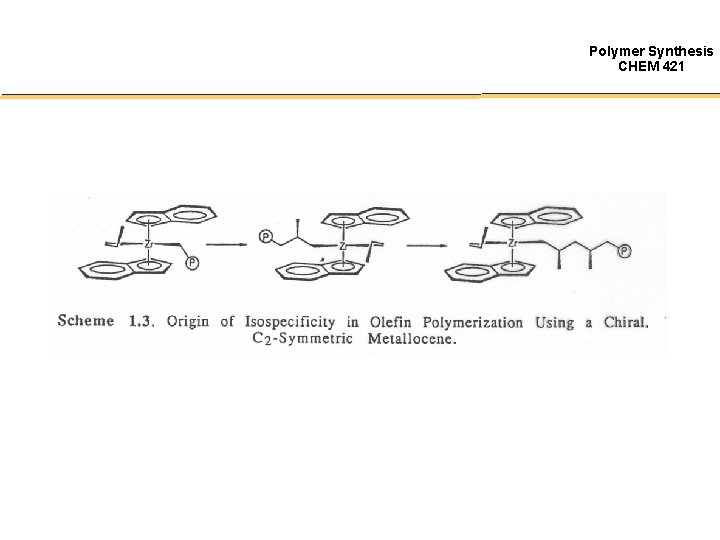
Soluble Metallocene Cataysts Polymer Synthesis CHEM 421 • Used a mixture of meso and racemic ansa-titanocenes – Stereo-rigid – Ethylene-bridged – Rac: chiral with C 2 -symmetric axis – Meso: achiral
Polymer Synthesis CHEM 421
Polymer Synthesis CHEM 421
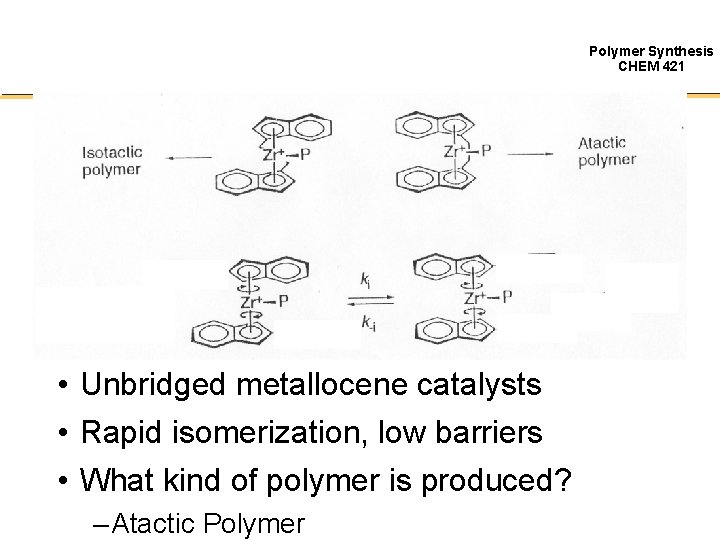
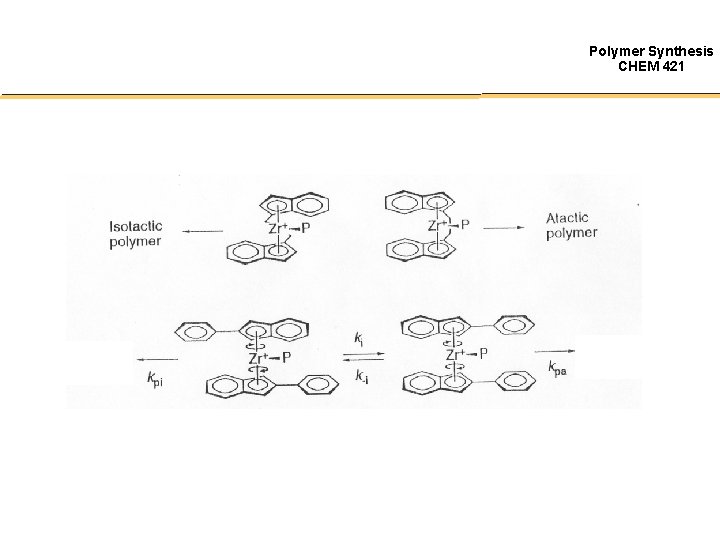
Polymer Synthesis CHEM 421 • Unbridged metallocene catalysts • Rapid isomerization, low barriers • What kind of polymer is produced? – Atactic Polymer
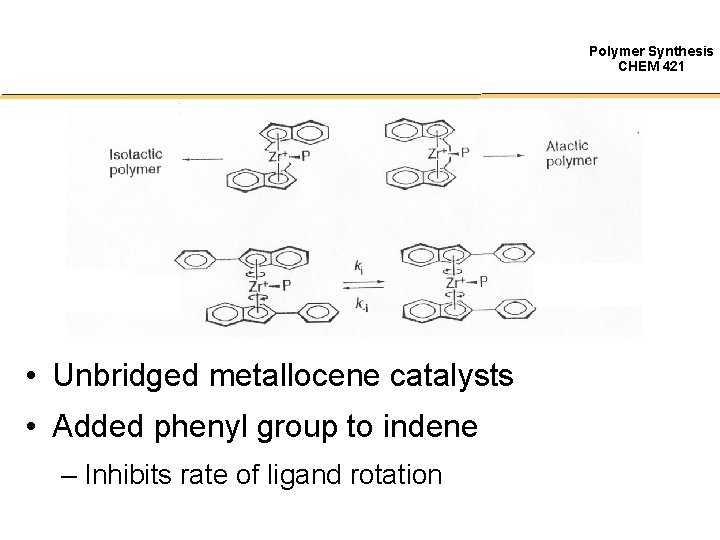
Polymer Synthesis CHEM 421 • Unbridged metallocene catalysts • Added phenyl group to indene – Inhibits rate of ligand rotation
Polymer Synthesis CHEM 421
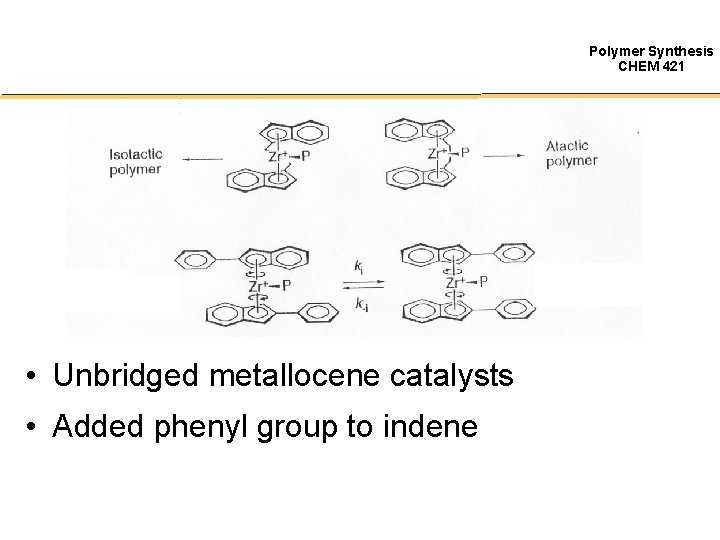
Polymer Synthesis CHEM 421 • Unbridged metallocene catalysts • Added phenyl group to indene
Polymer Synthesis CHEM 421
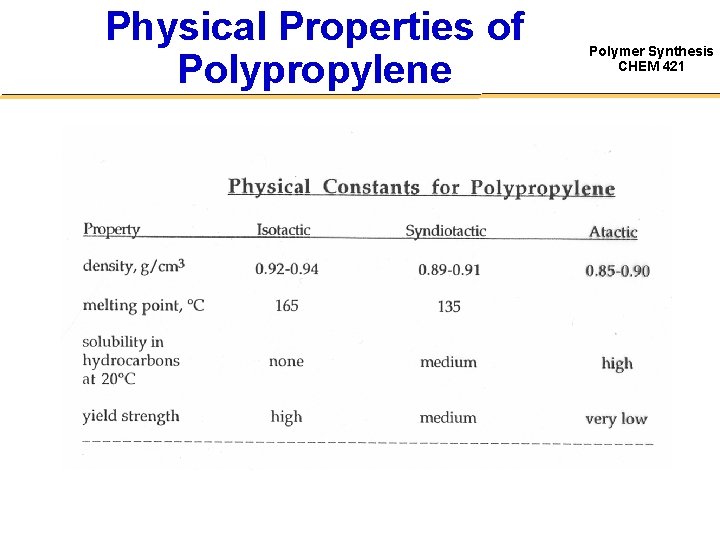
Physical Properties of Polypropylene Polymer Synthesis CHEM 421
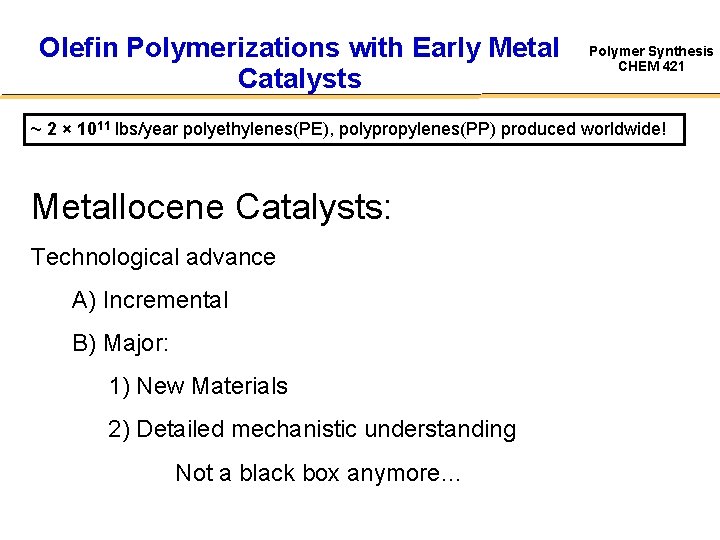
Olefin Polymerizations with Early Metal Catalysts Polymer Synthesis CHEM 421 ~ 2 × 10¹¹ lbs/year polyethylenes(PE), polypropylenes(PP) produced worldwide! Metallocene Catalysts: Technological advance A) Incremental B) Major: 1) New Materials 2) Detailed mechanistic understanding Not a black box anymore…
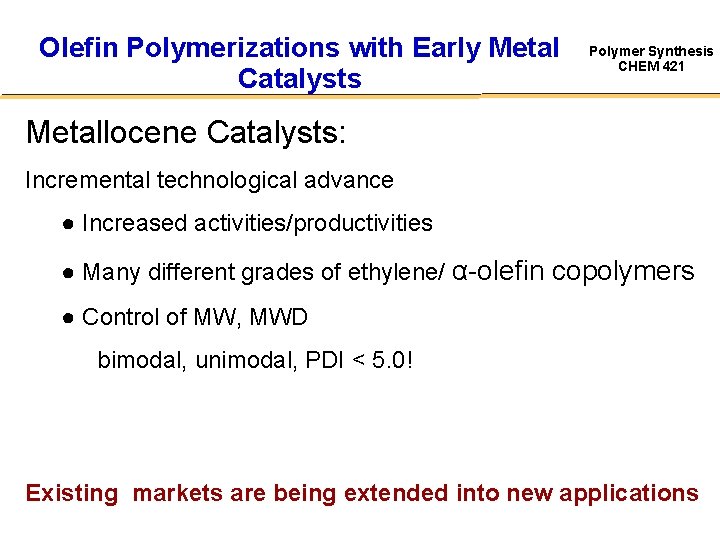
Olefin Polymerizations with Early Metal Catalysts Polymer Synthesis CHEM 421 Metallocene Catalysts: Incremental technological advance ● Increased activities/productivities ● Many different grades of ethylene/ α-olefin copolymers ● Control of MW, MWD bimodal, unimodal, PDI < 5. 0! Existing markets are being extended into new applications
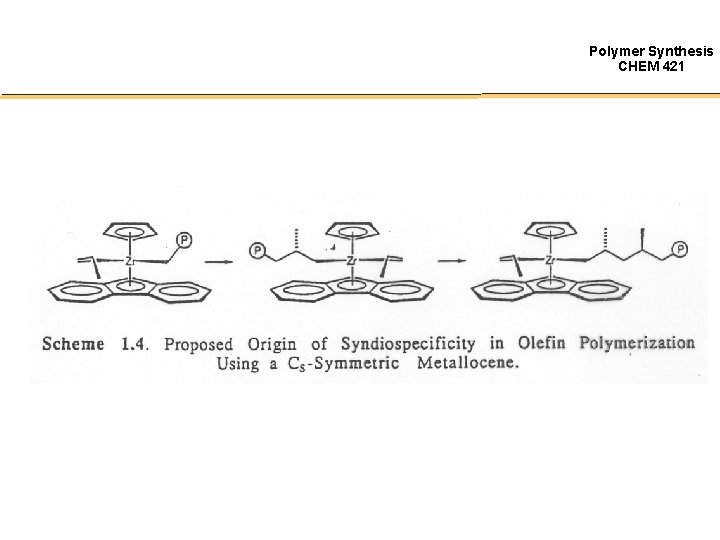
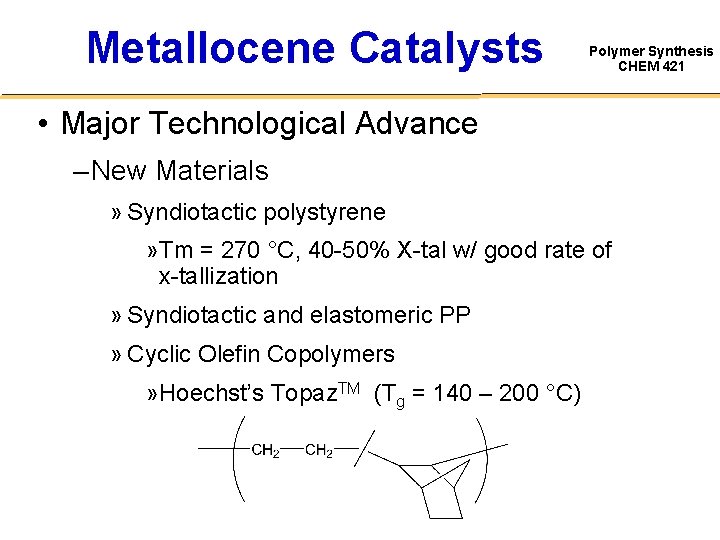
Metallocene Catalysts Polymer Synthesis CHEM 421 • Major Technological Advance – New Materials » Syndiotactic polystyrene » Tm = 270 °C, 40 -50% X-tal w/ good rate of x-tallization » Syndiotactic and elastomeric PP » Cyclic Olefin Copolymers » Hoechst’s Topaz. TM (Tg = 140 – 200 °C)
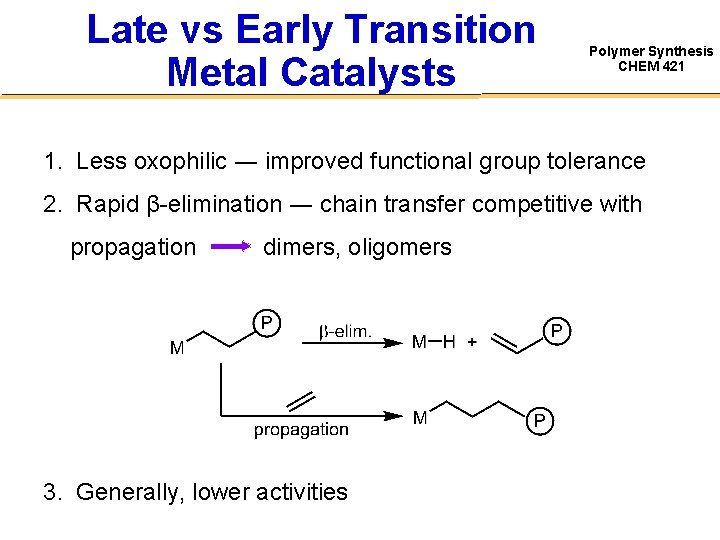
Late vs Early Transition Metal Catalysts Polymer Synthesis CHEM 421 1. Less oxophilic ― improved functional group tolerance 2. Rapid β-elimination ― chain transfer competitive with propagation dimers, oligomers 3. Generally, lower activities
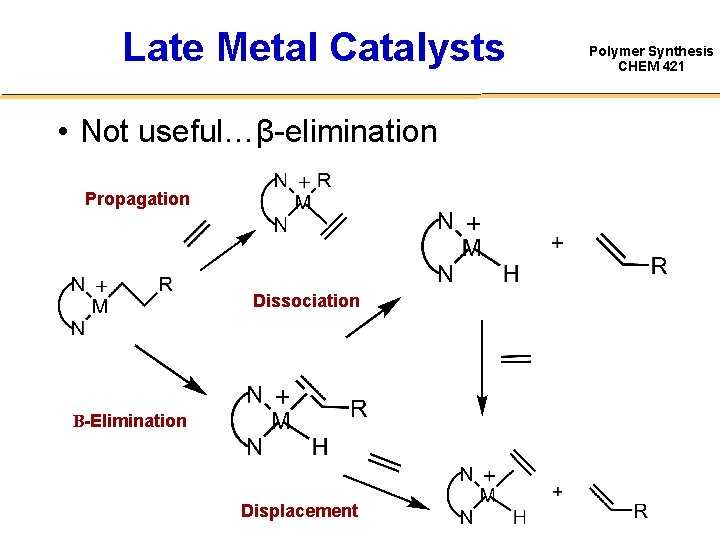
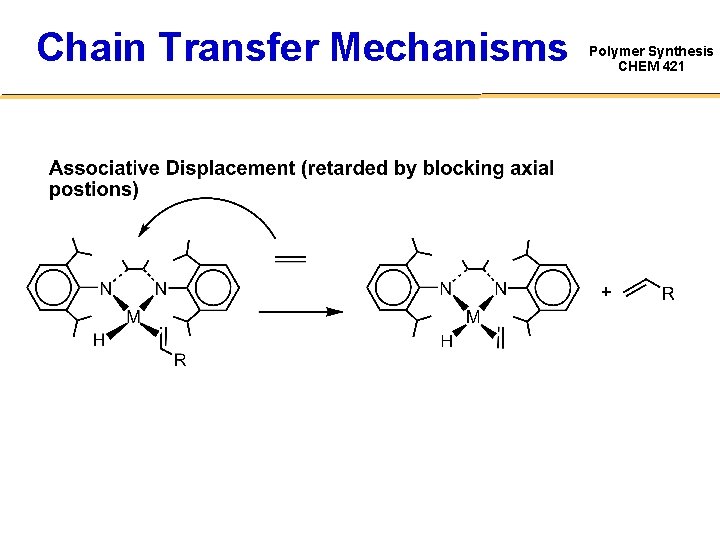
Late Metal Catalysts • Not useful…β-elimination Propagation Dissociation Β-Elimination Displacement Polymer Synthesis CHEM 421
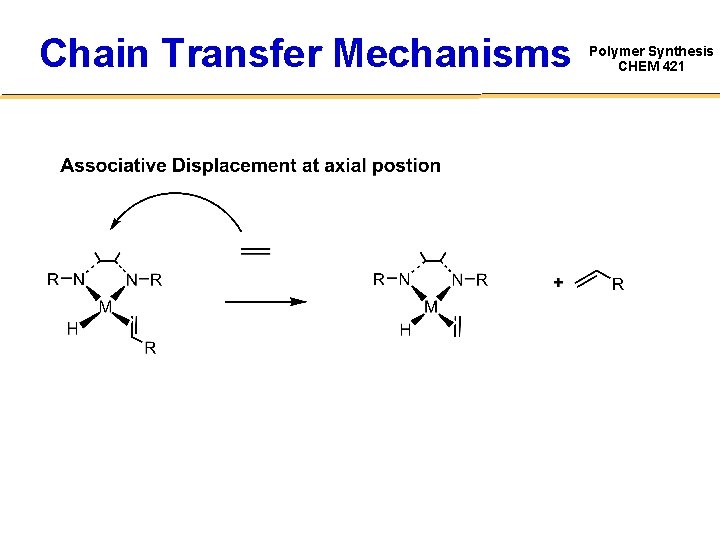
Chain Transfer Mechanisms Polymer Synthesis CHEM 421
Chain Transfer Mechanisms Polymer Synthesis CHEM 421
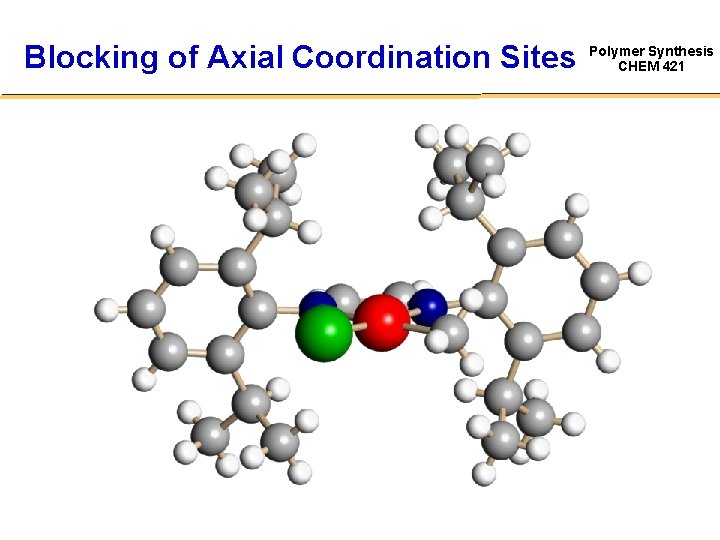
Blocking of Axial Coordination Sites Polymer Synthesis CHEM 421
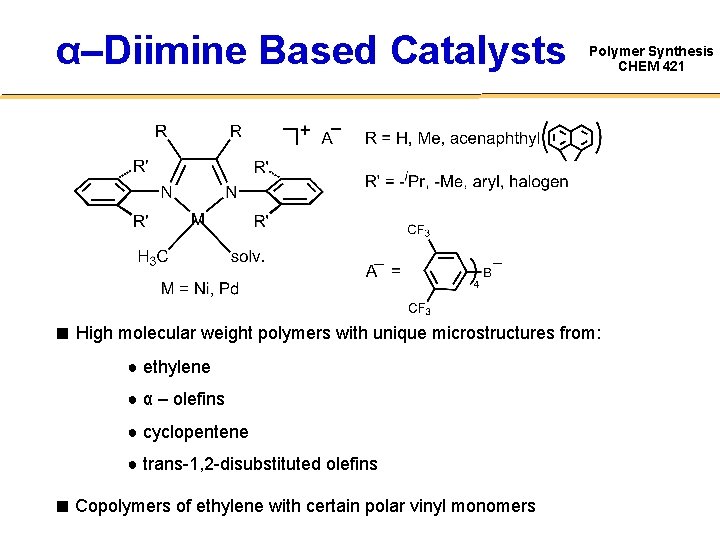
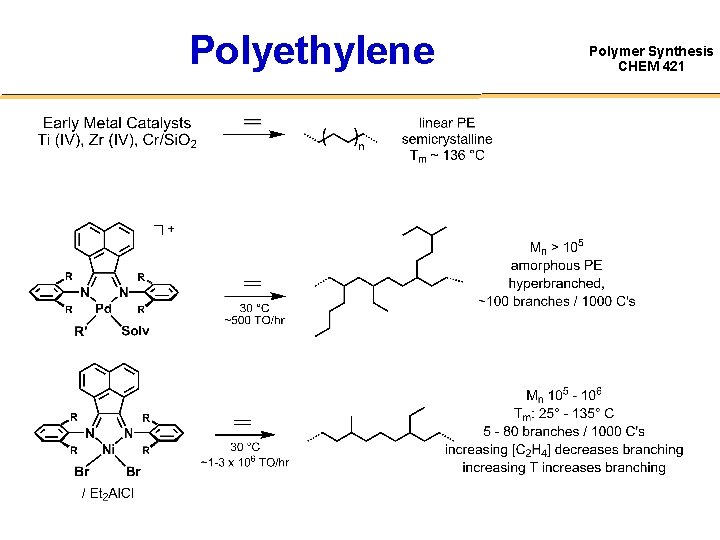
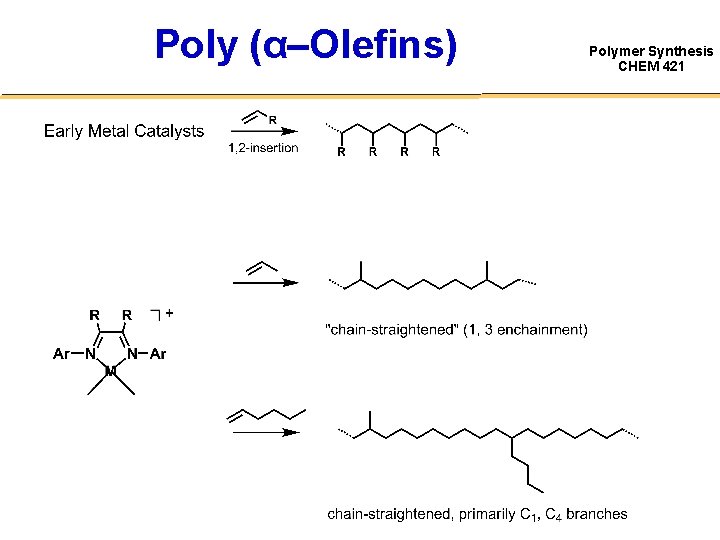
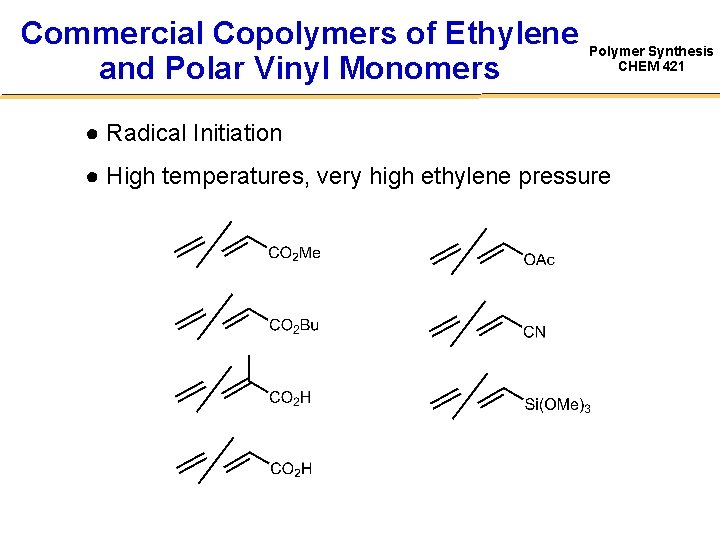
α–Diimine Based Catalysts Polymer Synthesis CHEM 421 ■ High molecular weight polymers with unique microstructures from: ● ethylene ● α – olefins ● cyclopentene ● trans-1, 2 -disubstituted olefins ■ Copolymers of ethylene with certain polar vinyl monomers
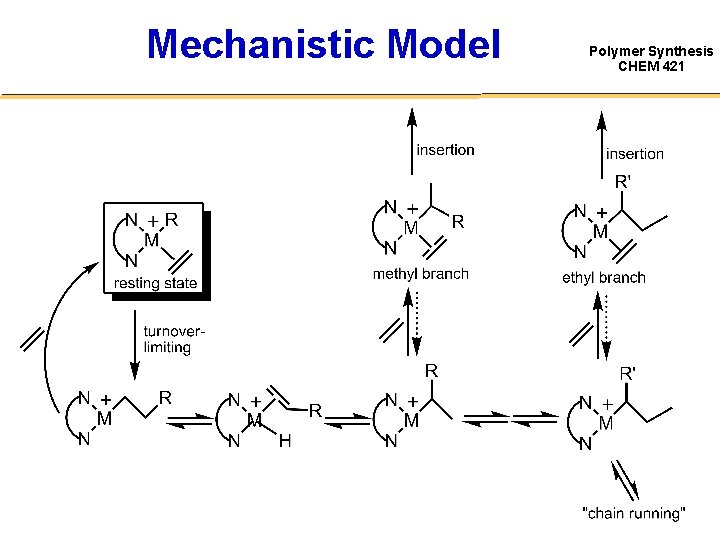
Mechanistic Model Polymer Synthesis CHEM 421
Polyethylene Polymer Synthesis CHEM 421
Poly (α–Olefins) Polymer Synthesis CHEM 421
Commercial Copolymers of Ethylene and Polar Vinyl Monomers Polymer Synthesis CHEM 421 ● Radical Initiation ● High temperatures, very high ethylene pressure