
Polymer Processing References Billmeyer Ch 17 18 Elias
Polymer Processing References • Billmeyer* Ch. 17, 18 • Elias** Ch. 14 *Textbook of Polymer Science 2 nd Ed. Wiley-Interscience, New York (1962, 1971) **An Introduction to Polymer Science VCH, New York (1997)

Legacy Lecture of Fall 2000 This lecture was contributed by the MS-I class of Fall 2000. Left to Right Nhan Thai, Lee Madsen, Lu Ziqiang, Zu Yichuan, Nikhil Gupta Simon Mwongela, Andrea Dupre, Mariah Mc. Masters, Vera Verdree, Angela Davis Nadia Edwin, Thomas Morgan, Amy Morara, Xiaoming Liang Missing: Justin Mecomber
Not just one polystyrene Selected PS grades from BASF. VEF=very easy flow; HM=high molar mass; HR = heat resistant. Taken from Elias, Ch. 14. Processing engineers select grades using data such as these, perhaps relying on such numbers more than the molecular data such as M or Rg that chemists are used to. Note how completely unmolecular! What molecular properties do you suppose correspond to EF, HR or HM?
Back to the Beginning Early in the course, we tried several ways to categorize polymers, such as condensation vs. addition, etc. From a processing point of view, the main classes are: Thermoplastic: the resin is heated to make a viscous liquid and then processed into a usable object without much additional chemistry. Example: polyethylene, polystyrene. Thermoset: upon heating, further reaction occurs to make molecules “set up” into a useful product. Chemistry occurs, so these are sometimes called “reactive polymers”. The resin may be provided as either small molecules or “prepregs”—partially polymerized stuff. Example: polyurethanes, phenolformaldehyde, melamine-formaldehyde, epoxy glue.
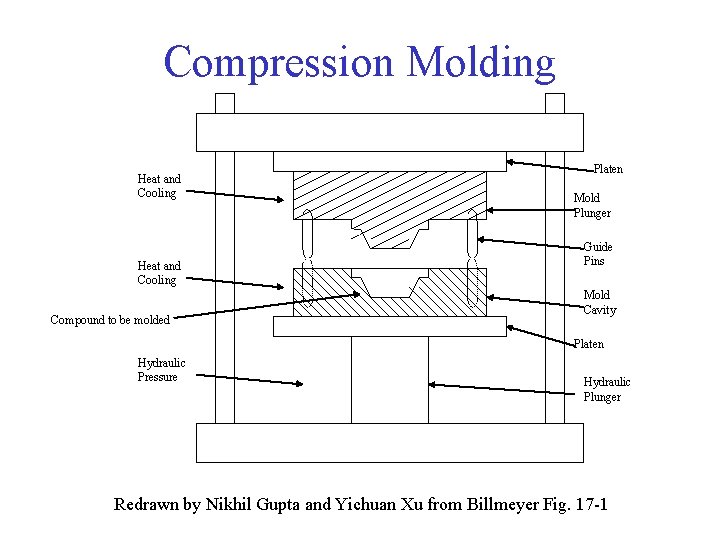
Compression Molding Heat and Cooling Compound to be molded Platen Mold Plunger Guide Pins Mold Cavity Platen Hydraulic Pressure Hydraulic Plunger Redrawn by Nikhil Gupta and Yichuan Xu from Billmeyer Fig. 17 -1
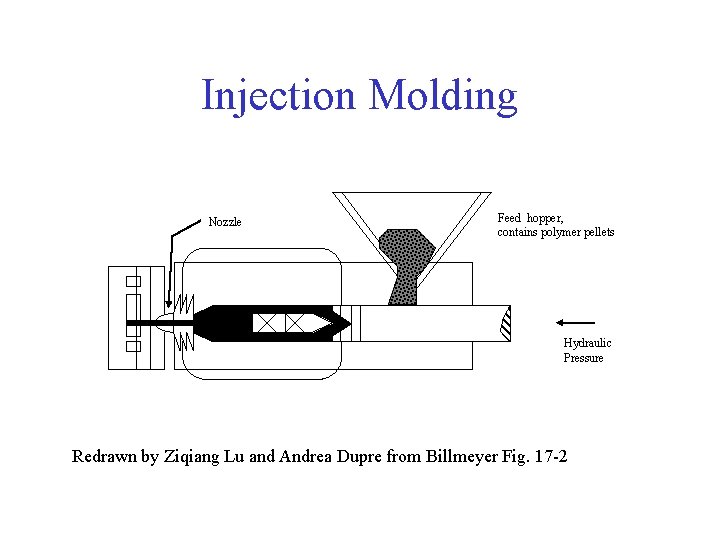
Injection Molding Nozzle Feed hopper, contains polymer pellets Hydraulic Pressure Redrawn by Ziqiang Lu and Andrea Dupre from Billmeyer Fig. 17 -2
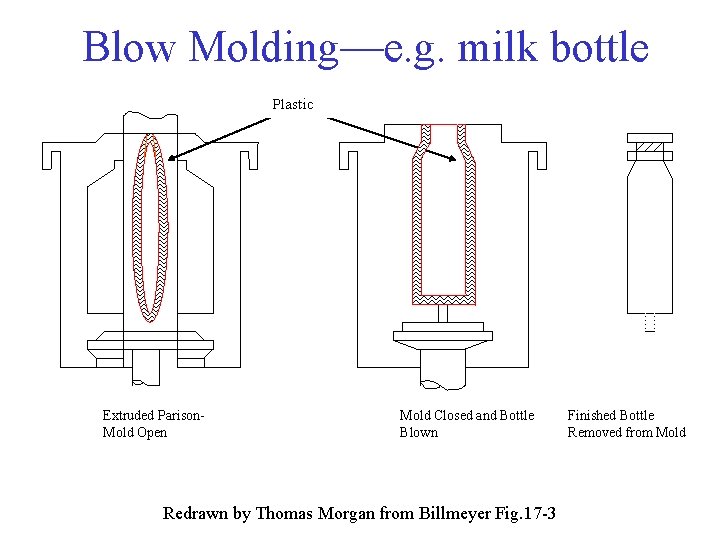
Blow Molding—e. g. milk bottle Plastic Extruded Parison. Mold Open Mold Closed and Bottle Blown Redrawn by Thomas Morgan from Billmeyer Fig. 17 -3 Finished Bottle Removed from Mold
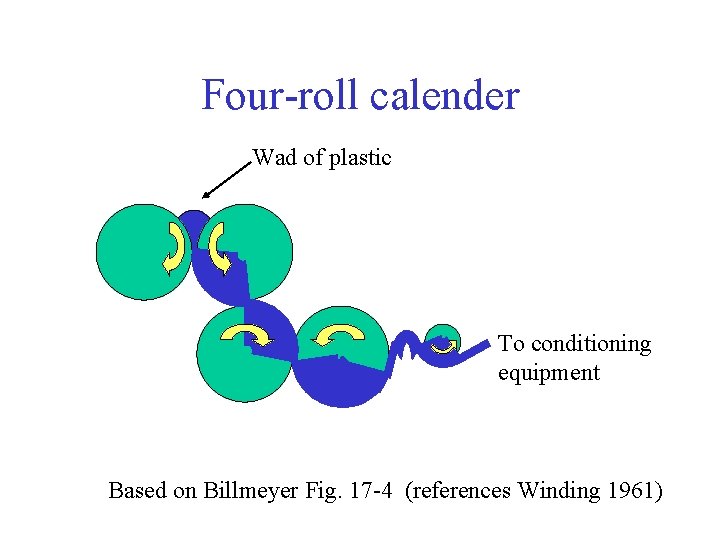
Four-roll calender Wad of plastic To conditioning equipment Based on Billmeyer Fig. 17 -4 (references Winding 1961)
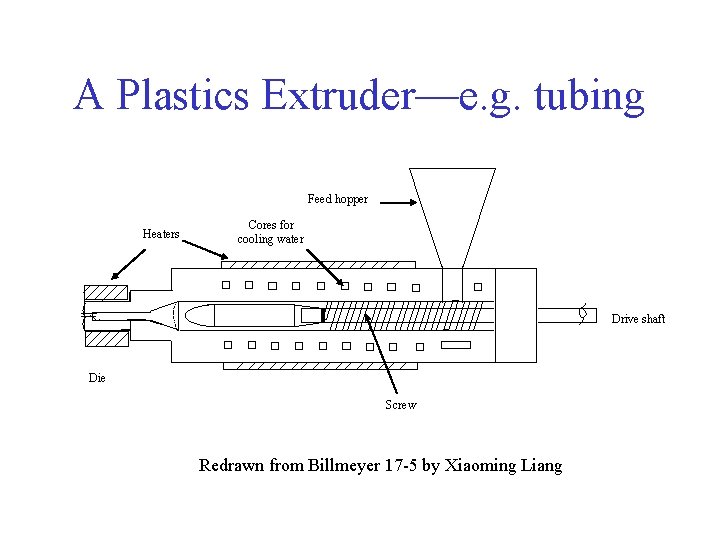
A Plastics Extruder—e. g. tubing Feed hopper Heaters Cores for cooling water Drive shaft Die Screw Redrawn from Billmeyer 17 -5 by Xiaoming Liang
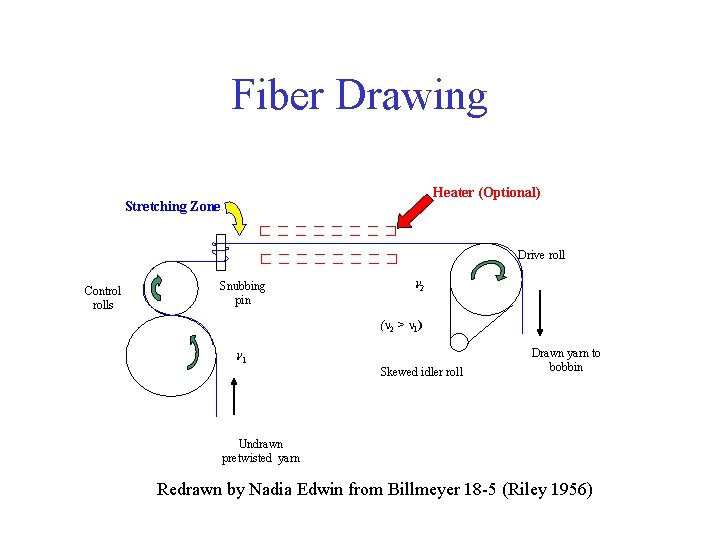
Fiber Drawing Heater (Optional) Stretching Zone Drive roll Control rolls Snubbing pin 2 ( 2 > 1) 1 Skewed idler roll Drawn yarn to bobbin Undrawn pretwisted yarn Redrawn by Nadia Edwin from Billmeyer 18 -5 (Riley 1956)
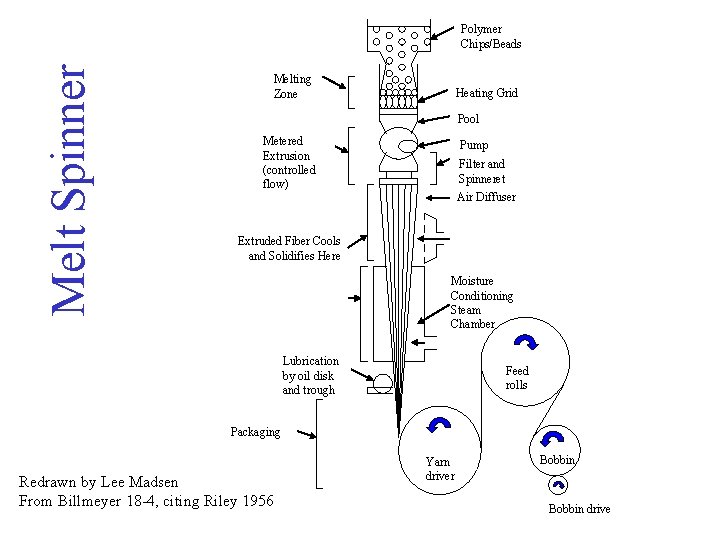
Melt Spinner Polymer Chips/Beads Melting Zone Heating Grid Pool Metered Extrusion (controlled flow) Pump Filter and Spinneret Air Diffuser Extruded Fiber Cools and Solidifies Here Moisture Conditioning Steam Chamber Lubrication by oil disk and trough Feed rolls Packaging Redrawn by Lee Madsen From Billmeyer 18 -4, citing Riley 1956 Yarn driver Bobbin drive

Dry Spinning of Fibers from a Solution
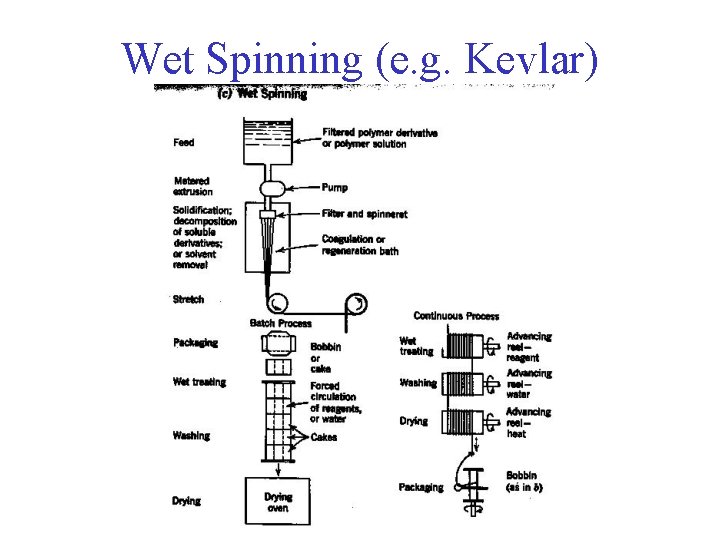
Wet Spinning (e. g. Kevlar)
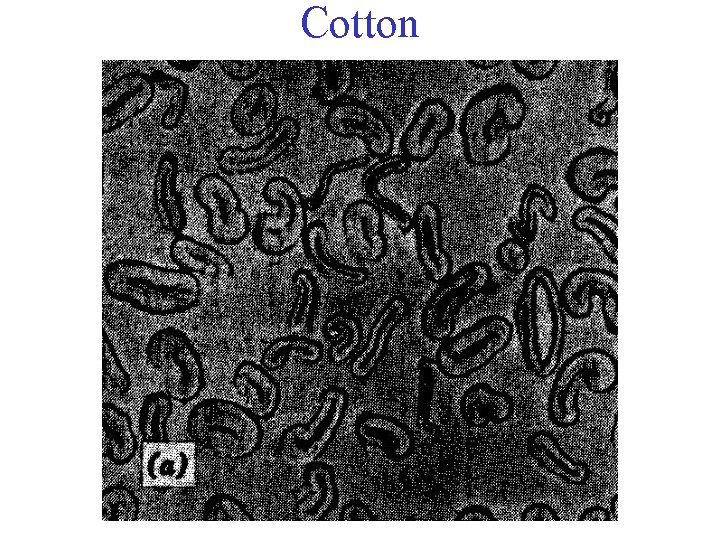
Cotton
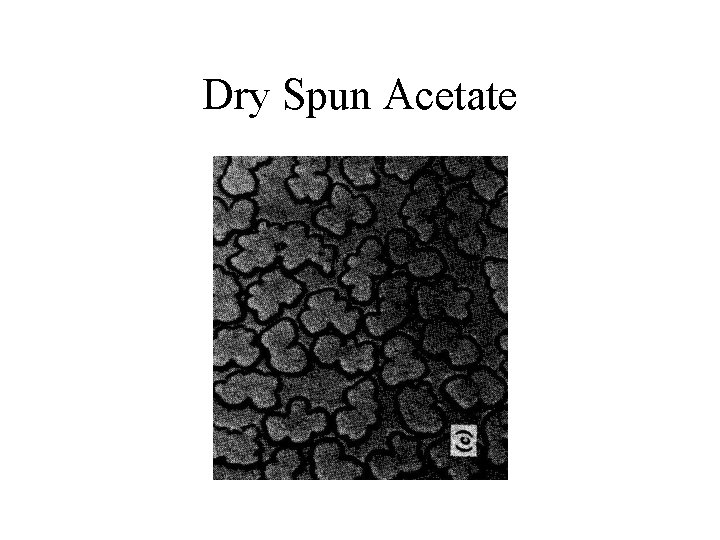
Dry Spun Acetate

Need tenacity vs. Elongation Plot—a Student Project like Billmeyer 18 -1
Fiber properties for textile use Adapted from Billmeyer Table 18 -1.
- Slides: 17