
Polymer Principles n n Four classes of macromolecules
- Slides: 27
Polymer Principles n n Four classes of macromolecules: ¡ Carbohydrates ¡ Lipids ¡ Proteins ¡ Nucleic Acids Polymers are made up of smaller parts called monomers. Polymers are formed through condensation reactions. Polymers are broken apart through a hydrolysis reaction.
General Information about Carbohydrates v v Made of C, H, and O v “Carbo”-contains carbon v “Hydrate”-hydrogen and oxygen are present in the same proportions as in water (2 H: 1 O) Often end in “-ose”
General Information about Carbohydrates v v Immediate energy source for cells. Energy storage for later use. Raw material for building other materials. Important role in cell membrane recognition. About 17 KJ of energy per dry gram. About the same as protein but ½ that of lipids.
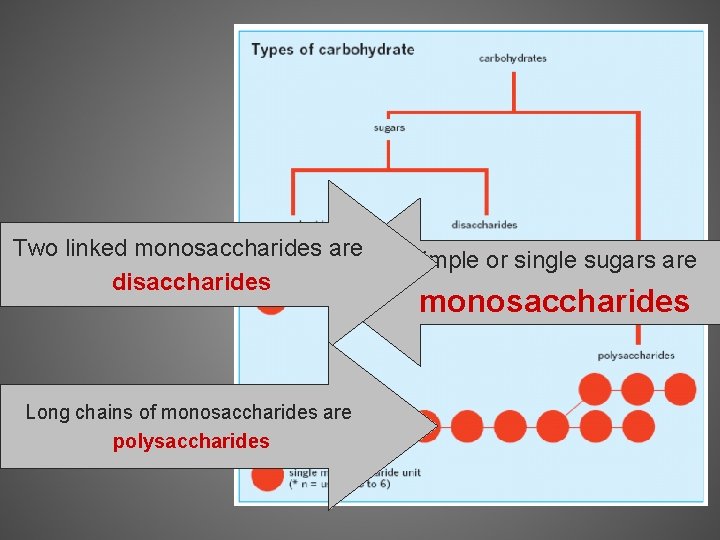
Two linked monosaccharides are disaccharides Long chains of monosaccharides are polysaccharides Simple or single sugars are monosaccharides
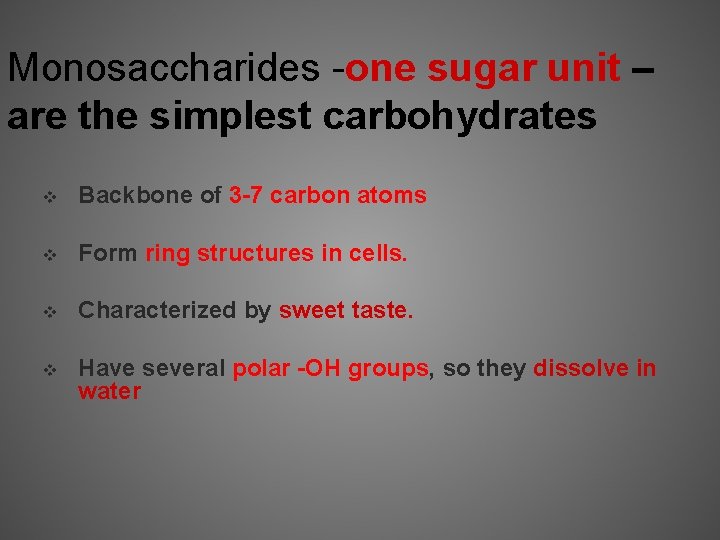
Monosaccharides -one sugar unit – are the simplest carbohydrates v Backbone of 3 -7 carbon atoms v Form ring structures in cells. v Characterized by sweet taste. v Have several polar -OH groups, so they dissolve in water
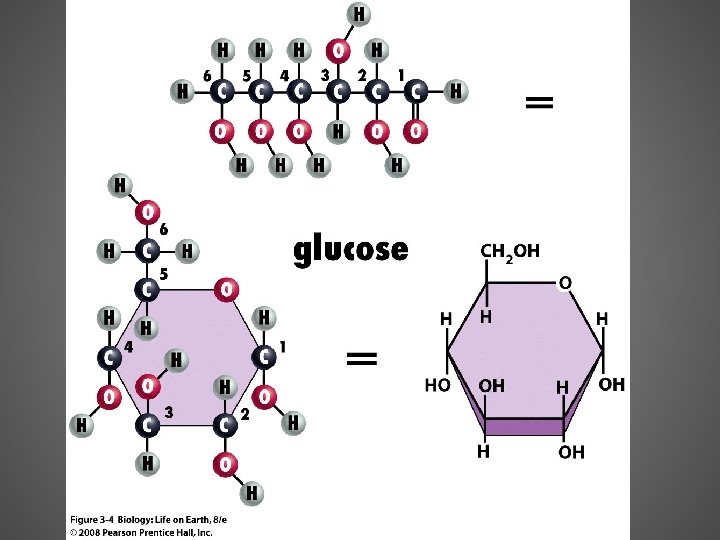
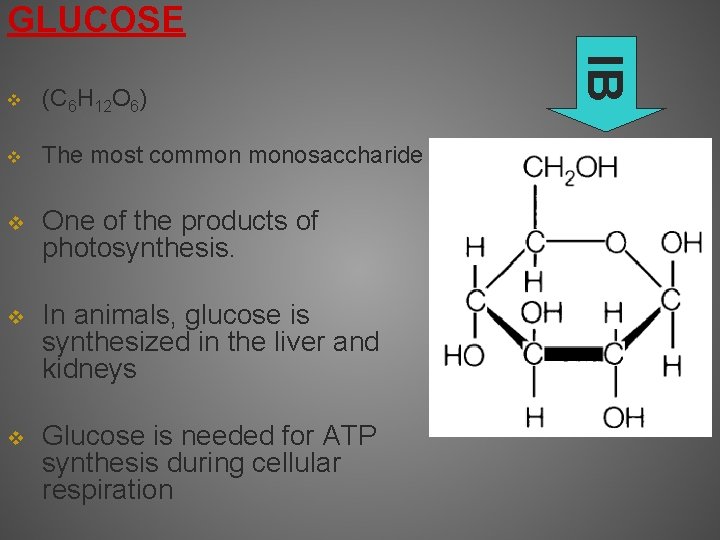
GLUCOSE (C 6 H 12 O 6) v The most common monosaccharide v One of the products of photosynthesis. v In animals, glucose is synthesized in the liver and kidneys v Glucose is needed for ATP synthesis during cellular respiration IB v
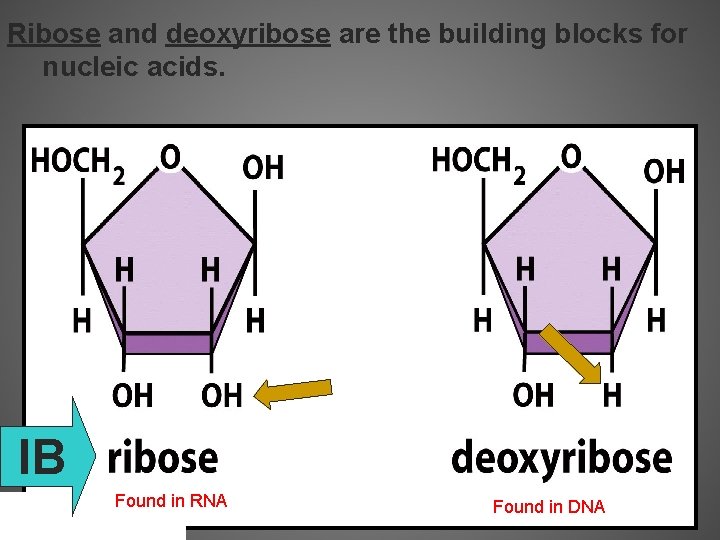
Ribose and deoxyribose are the building blocks for nucleic acids. IB Found in RNA Found in DNA
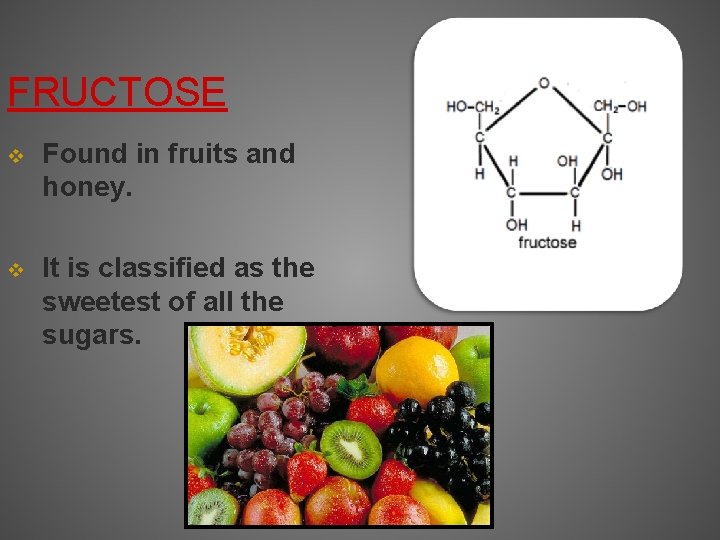
FRUCTOSE v Found in fruits and honey. v It is classified as the sweetest of all the sugars.
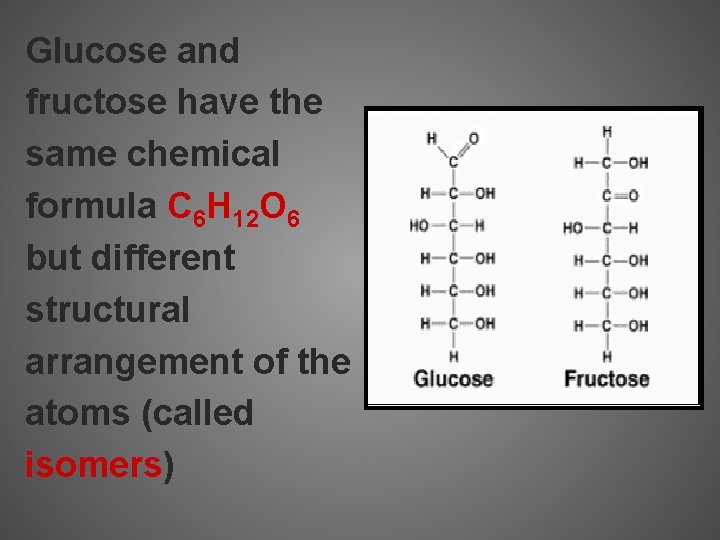
Glucose and fructose have the same chemical formula C 6 H 12 O 6 but different structural arrangement of the atoms (called isomers)
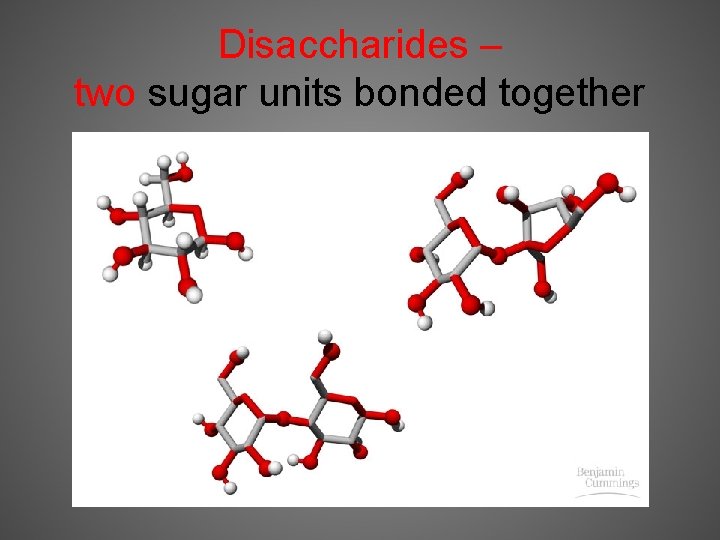
Disaccharides – two sugar units bonded together
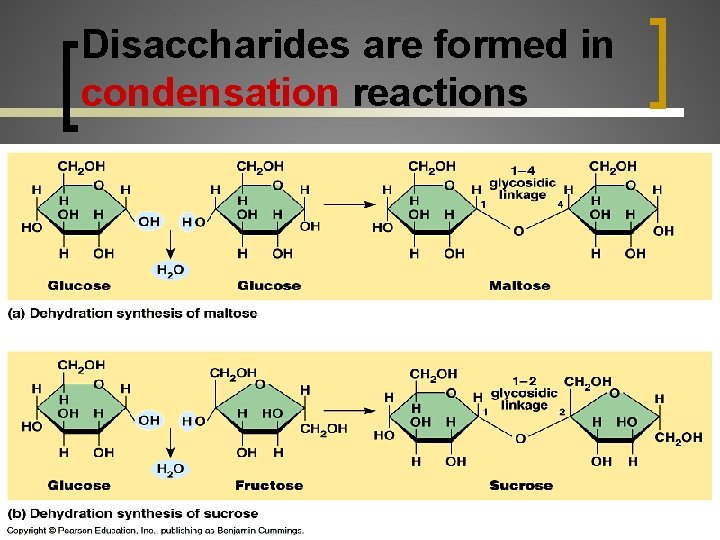
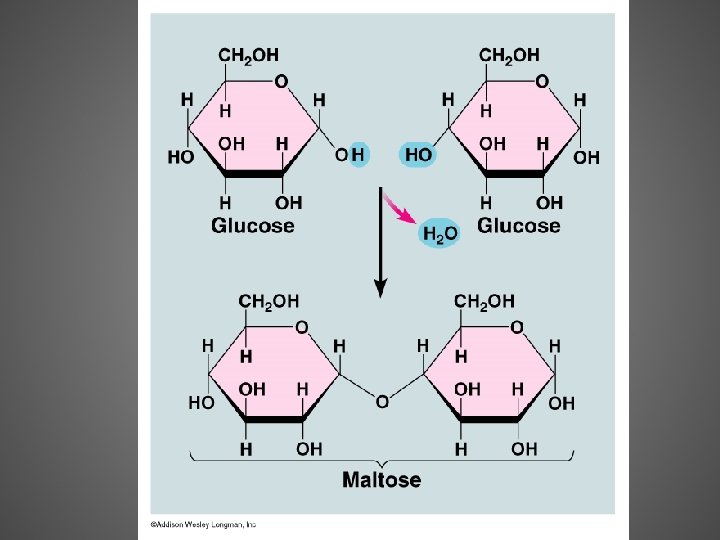
Disaccharides are formed in condensation reactions
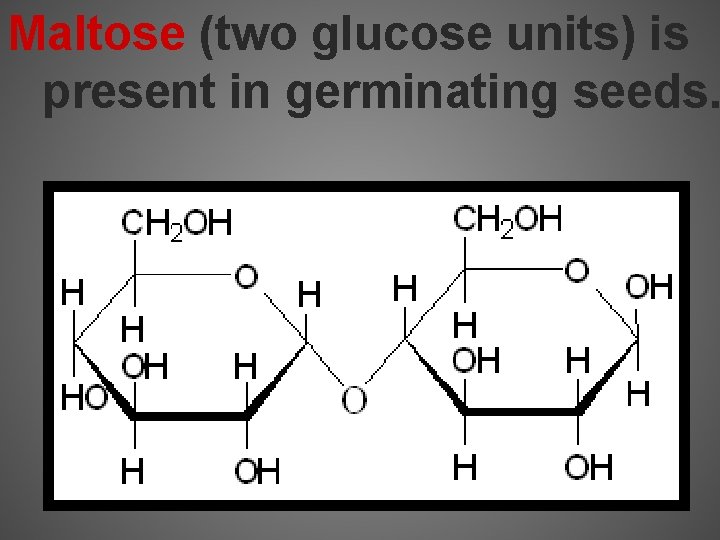
Maltose (two glucose units) is present in germinating seeds.
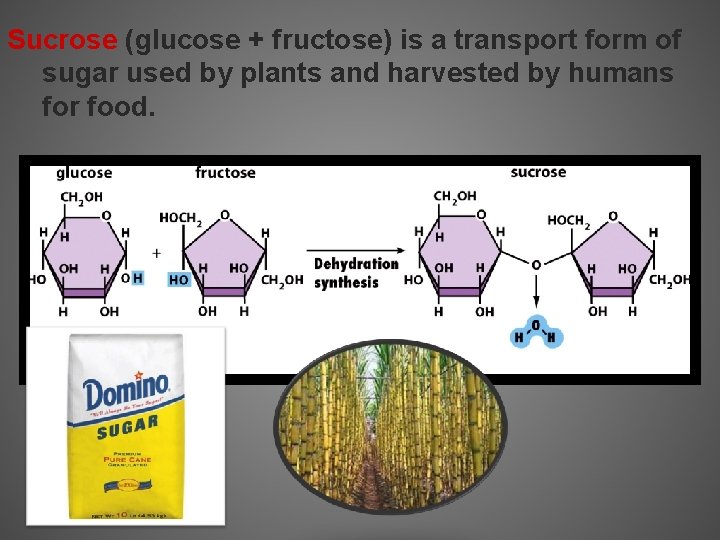
Sucrose (glucose + fructose) is a transport form of sugar used by plants and harvested by humans for food.
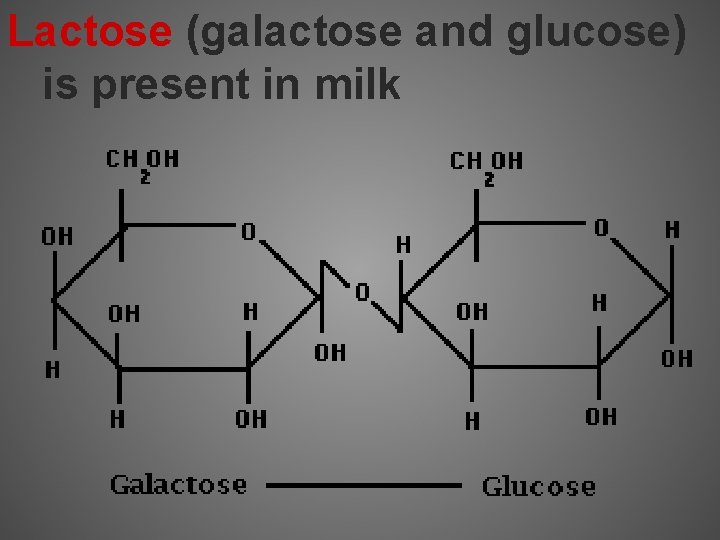
Lactose (galactose and glucose) is present in milk
Complex carbohydrates: polysaccharides v A polysaccharide is a straight or branched chain of hundreds or thousands of sugar monomers. v Costs little energy to build. v easily reversible = releases energy when digested
Polysaccharides Store What does it mean to STORE something?
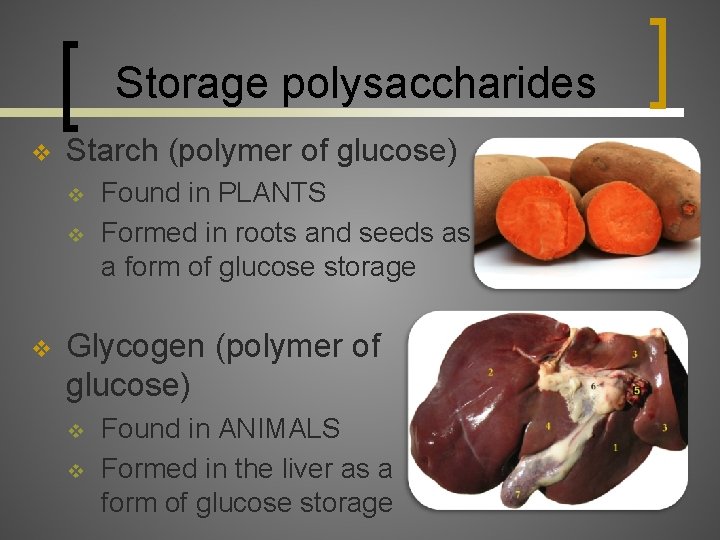
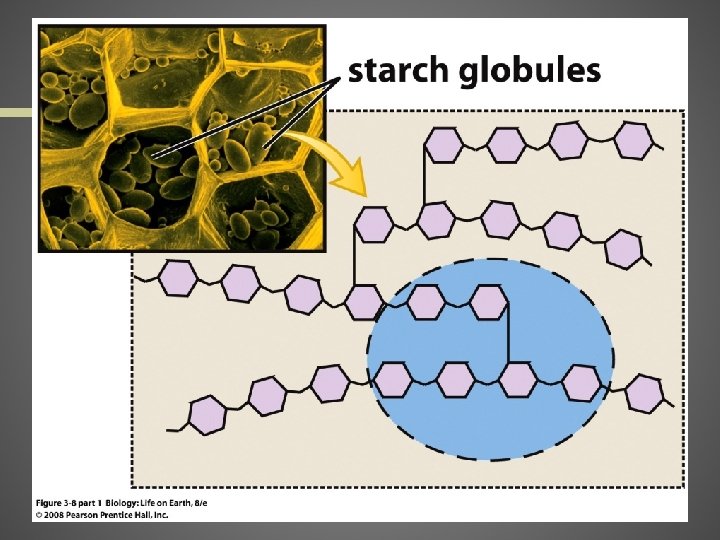
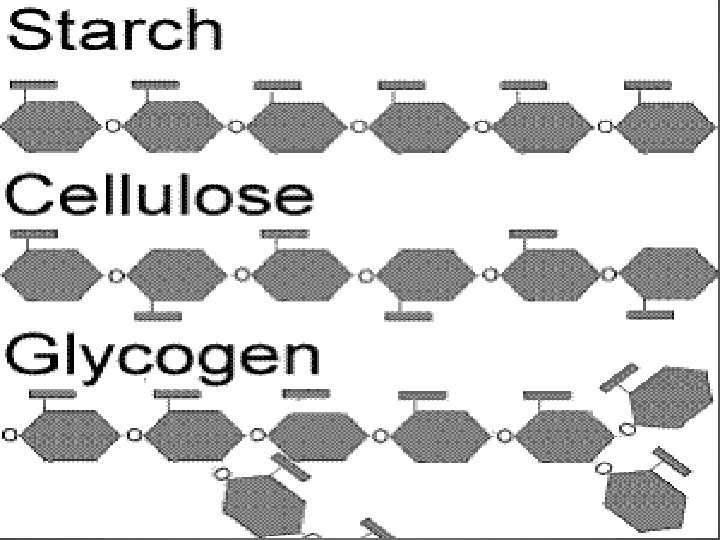
Storage polysaccharides v Starch (polymer of glucose) v v v Found in PLANTS Formed in roots and seeds as a form of glucose storage Glycogen (polymer of glucose) v v Found in ANIMALS Formed in the liver as a form of glucose storage
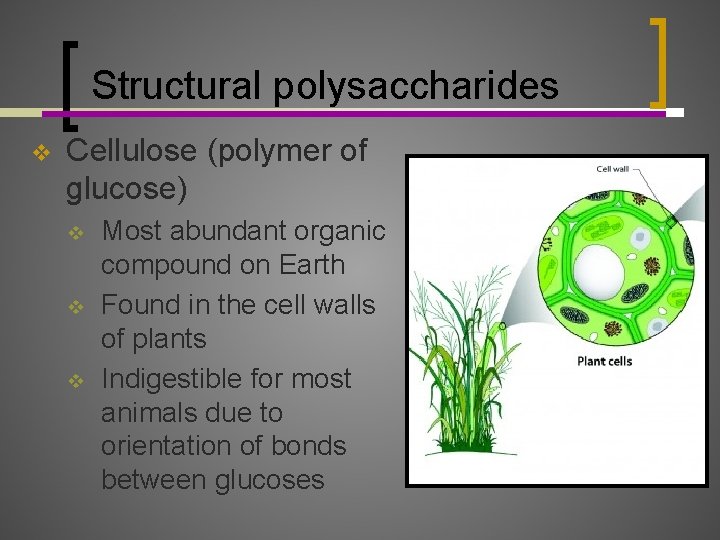
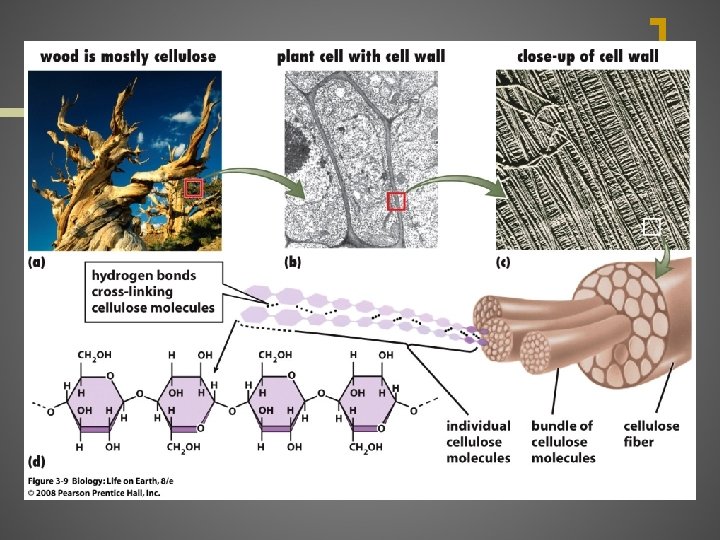
Structural polysaccharides v Cellulose (polymer of glucose) v v v Most abundant organic compound on Earth Found in the cell walls of plants Indigestible for most animals due to orientation of bonds between glucoses
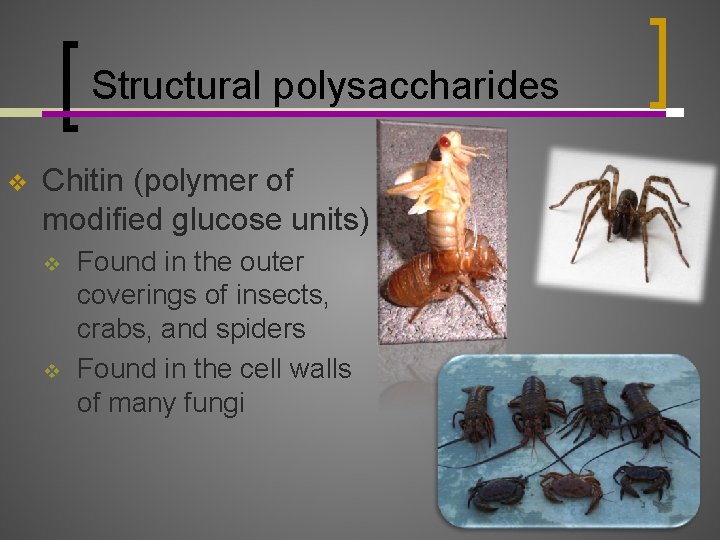
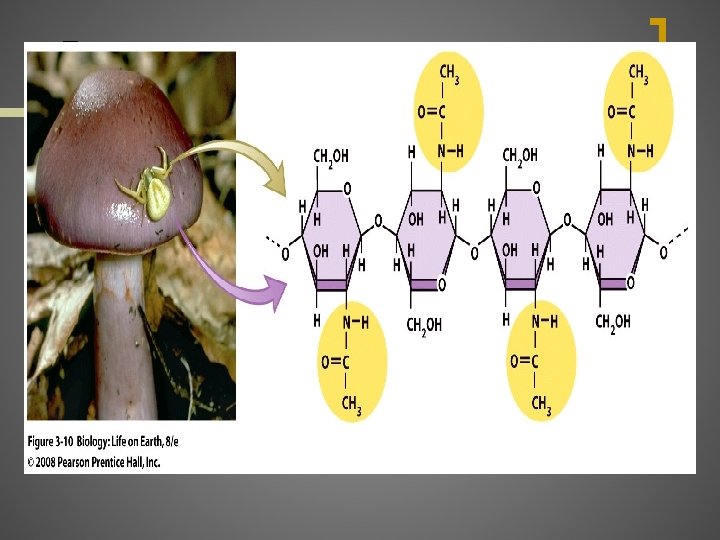
Structural polysaccharides v Chitin (polymer of modified glucose units) v v Found in the outer coverings of insects, crabs, and spiders Found in the cell walls of many fungi
Molecular Structure Determines Function Starch Easy to Digest Cellulose is NOT Easy to Digest
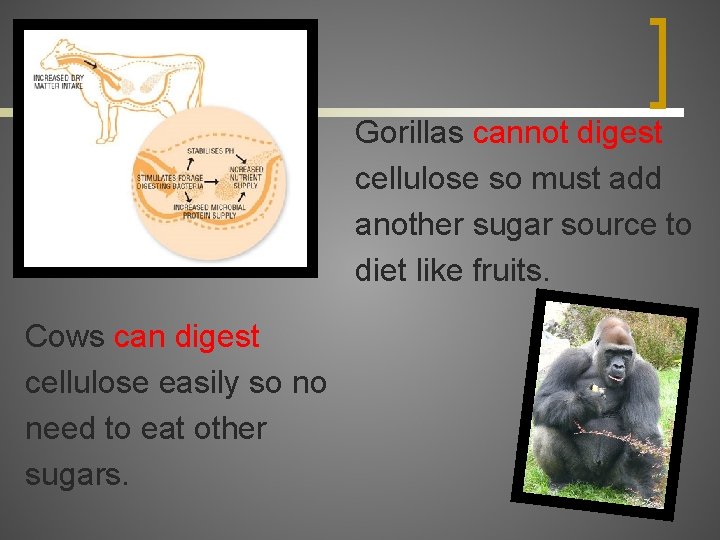
Gorillas cannot digest cellulose so must add another sugar source to diet like fruits. Cows can digest cellulose easily so no need to eat other sugars.