
Polygram 98 Biofeedback Application FUNCTIONAL DIAGNOSTICS GASTROINTESTINAL Agenda

Polygram 98 Biofeedback Application FUNCTIONAL DIAGNOSTICS GASTROINTESTINAL
Agenda n Clinical information in short n The biofeedback concept n Polygram 98 Biofeedback application n EMG FUNCTIONAL DIAGNOSTICS GASTROINTESTINAL
Which patients? n Incontinent patients n Constipated patients n Patients with other voiding disorders FUNCTIONAL DIAGNOSTICS GASTROINTESTINAL
The Patient Selection Process n Evaluate patient - diagnostic tests: AFT/others n Diagnose patient n n Incontinence Constipation Others Evaluate whether this patient would benefit from Biofeedback FUNCTIONAL DIAGNOSTICS GASTROINTESTINAL
The biofeedback process n n n Perform first biofeedback training in clinic Help patient train at home Perform biofeedback assessment in clinic to evaluate progress n n n Change difficulty level More home training Biofeedback assessment to evaluate progress n Change difficulty level FUNCTIONAL DIAGNOSTICS GASTROINTESTINAL

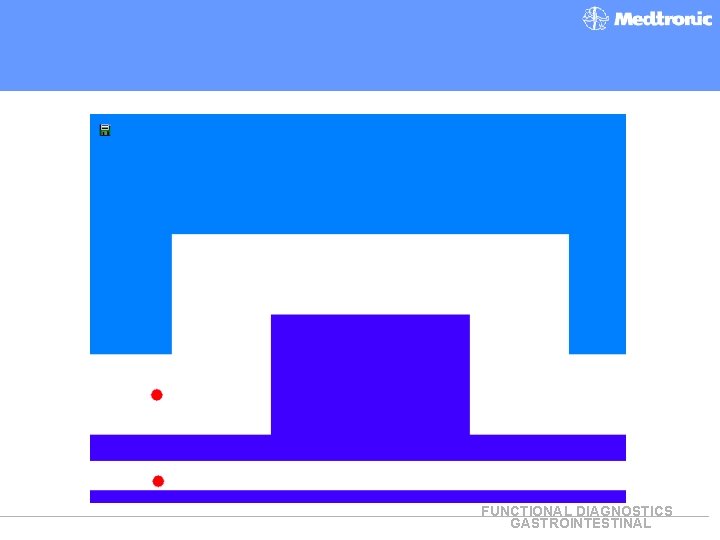
Biofeedback q Biofeedback is a therapy, which improves muscular strength and coordination of the pelvic floor. q This is done by recording pressure or EMG signals from the anorectal sphincter, the abdomen or the gluteal muscular group Descending q Watching a real-time monitor Anal kanal S 2 S 3 S 4 Motor display provides both the patient and the physician with immediate information about the patient’s muscular strength and the coordination of different muscular groups q The Goal is to Improve Pelvic Floor Function by teaching patients to change physiologic responses FUNCTIONAL DIAGNOSTICS GASTROINTESTINAL
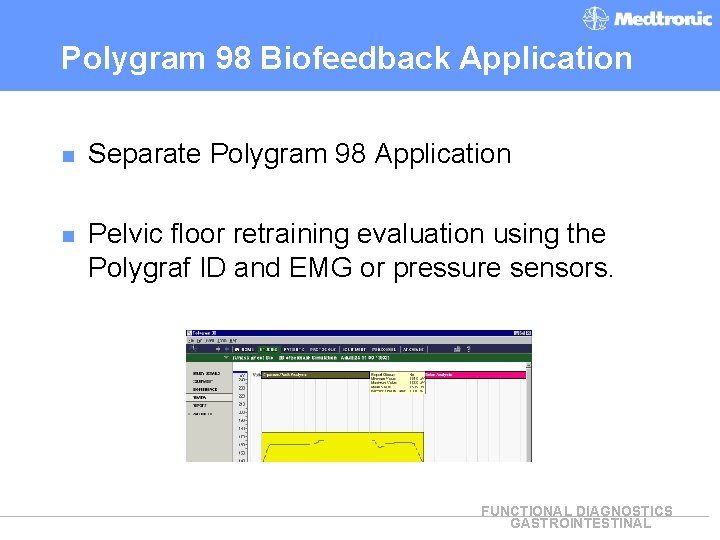
Polygram 98 Biofeedback Application n Separate Polygram 98 Application n Pelvic floor retraining evaluation using the Polygraf ID and EMG or pressure sensors. FUNCTIONAL DIAGNOSTICS GASTROINTESTINAL
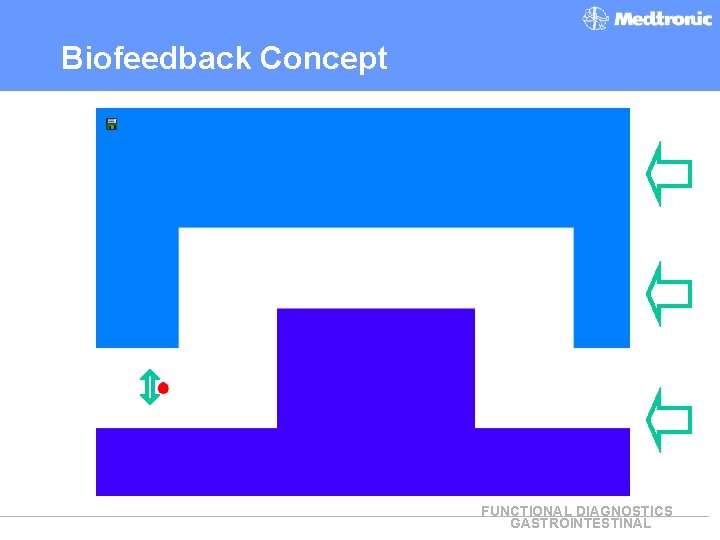
Biofeedback Concept FUNCTIONAL DIAGNOSTICS GASTROINTESTINAL
FUNCTIONAL DIAGNOSTICS GASTROINTESTINAL
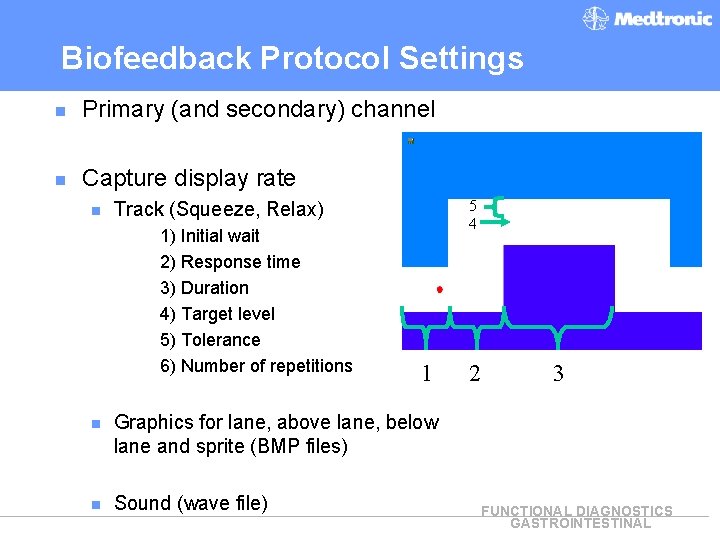
Biofeedback Protocol Settings n Primary (and secondary) channel n Capture display rate n 5 4 Track (Squeeze, Relax) 1) Initial wait 2) Response time 3) Duration 4) Target level 5) Tolerance 6) Number of repetitions 1 n Graphics for lane, above lane, below lane and sprite (BMP files) n Sound (wave file) 2 3 FUNCTIONAL DIAGNOSTICS GASTROINTESTINAL
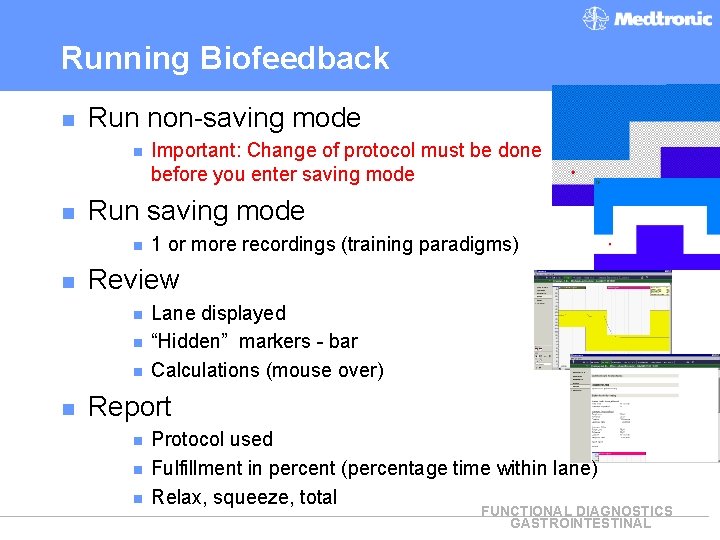
Running Biofeedback n Run non-saving mode n n Run saving mode n n 1 or more recordings (training paradigms) Review n n Important: Change of protocol must be done before you enter saving mode Lane displayed “Hidden” markers - bar Calculations (mouse over) Report n n n Protocol used Fulfillment in percent (percentage time within lane) Relax, squeeze, total FUNCTIONAL DIAGNOSTICS GASTROINTESTINAL
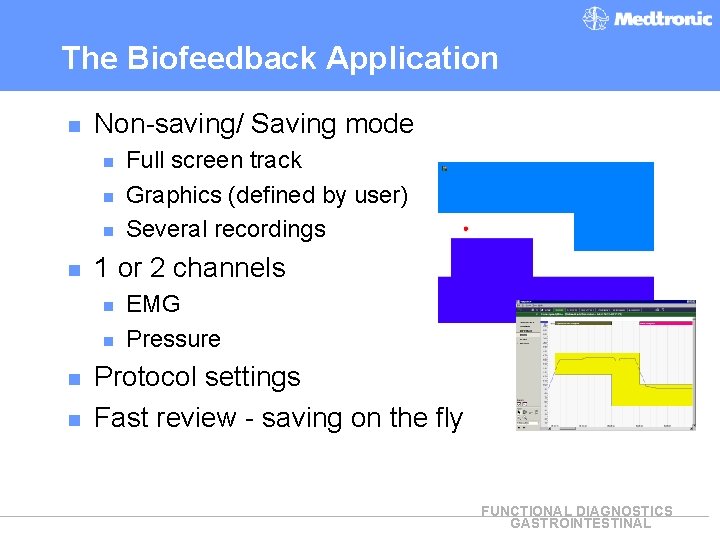
The Biofeedback Application n Non-saving/ Saving mode n n 1 or 2 channels n n Full screen track Graphics (defined by user) Several recordings EMG Pressure Protocol settings Fast review - saving on the fly FUNCTIONAL DIAGNOSTICS GASTROINTESTINAL

For kids FUNCTIONAL DIAGNOSTICS GASTROINTESTINAL
Market feedback n n n Children center, Odense University Hospital, DK The patients understood the concept and put a lot of interest/effort into it The parents approved it Very easy to make customized programs Wish for more “life” to the graphics FUNCTIONAL DIAGNOSTICS GASTROINTESTINAL
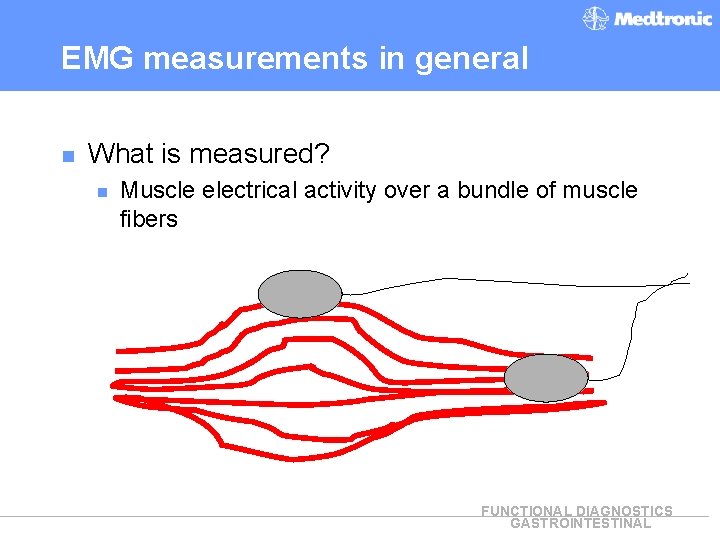
EMG measurements in general n What is measured? n Muscle electrical activity over a bundle of muscle fibers FUNCTIONAL DIAGNOSTICS GASTROINTESTINAL
EMG measurements in general n How is it measured? n Absolute: n n n Pre-calibrated with a known amplifier and sensor sensitivity. Measured in V Relative n n Patient relaxation and maximum squeeze is the calibration points. Measured in percent FUNCTIONAL DIAGNOSTICS GASTROINTESTINAL
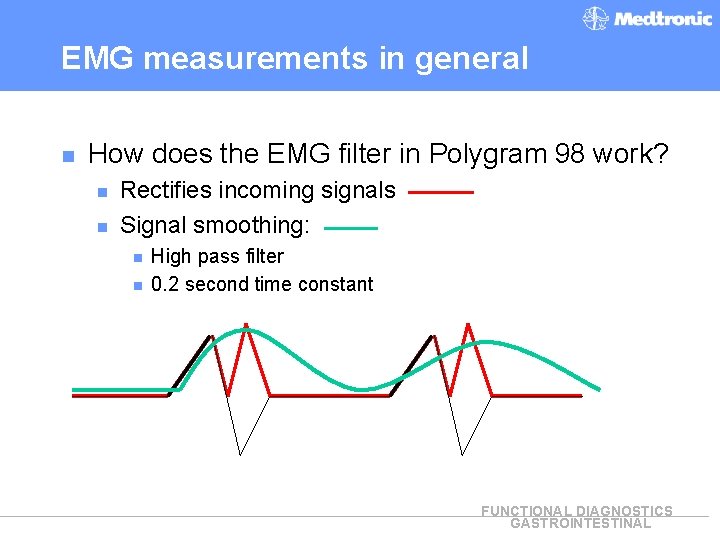
EMG measurements in general n How does the EMG filter in Polygram 98 work? n n Rectifies incoming signals Signal smoothing: n n High pass filter 0. 2 second time constant FUNCTIONAL DIAGNOSTICS GASTROINTESTINAL
- Slides: 17