
Polygonal Compound Shapes Area Demonstration This resource provides

- Slides: 14
Polygonal Compound Shapes – Area – Demonstration This resource provides animated demonstrations of the mathematical method. Check animations and delete slides not needed for your class.
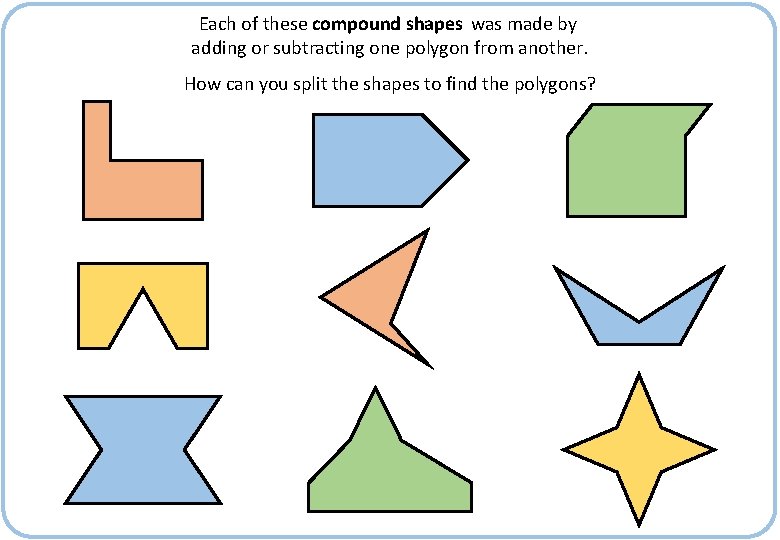
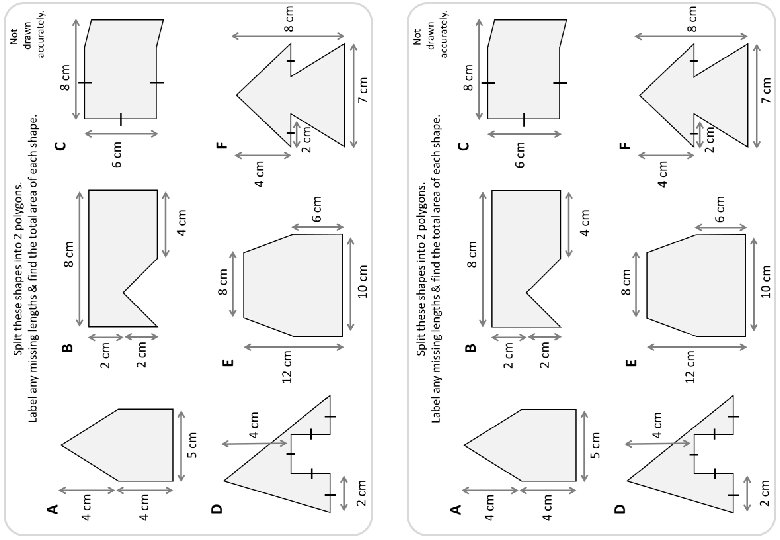
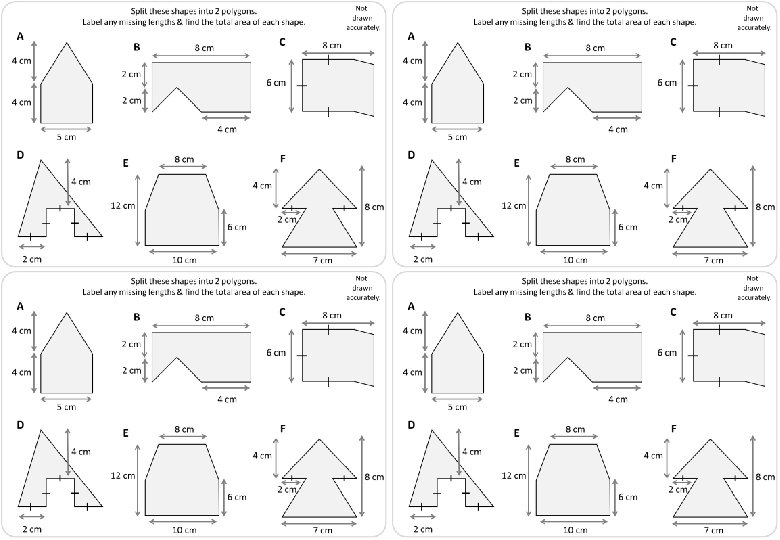
Each of these compound shapes was made by adding or subtracting one polygon from another. How can you split the shapes to find the polygons?
Each of these compound shapes was made by adding or subtracting one polygon from another. How can you split the shapes to find the polygons?
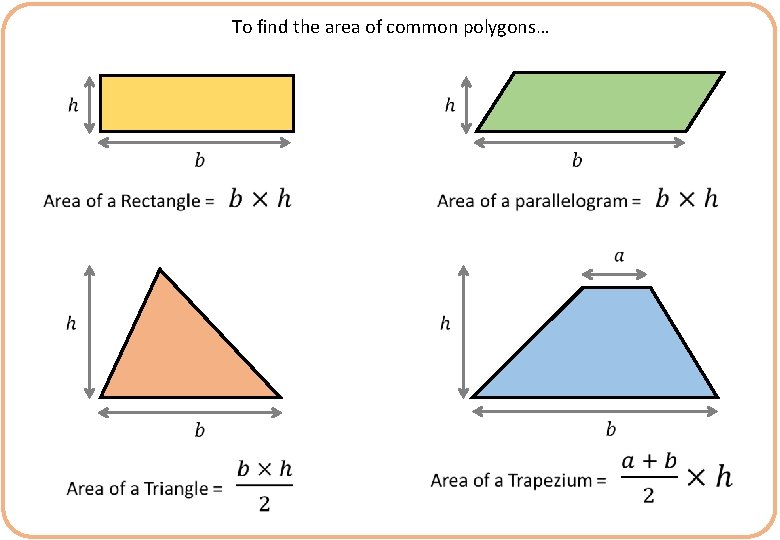
To find the area of common polygons…
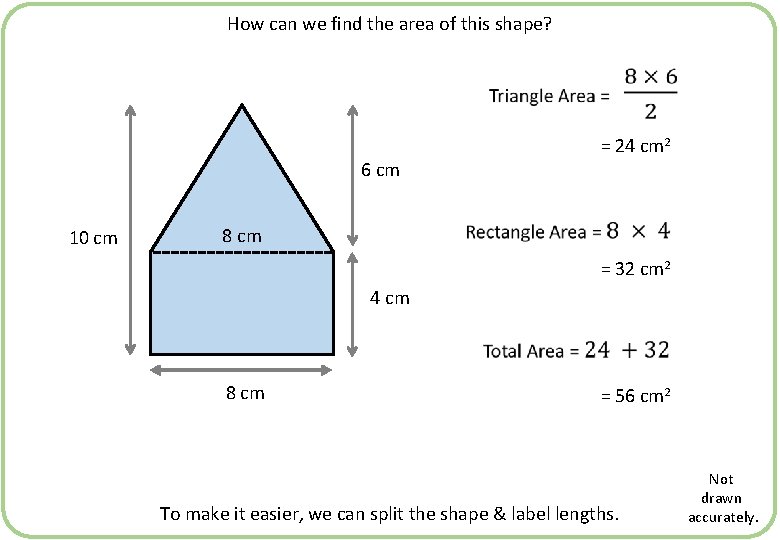
How can we find the area of this shape? = 24 cm 2 6 cm 10 cm 8 cm = 32 cm 2 4 cm 8 cm = 56 cm 2 To make it easier, we can split the shape & label lengths. Not drawn accurately.
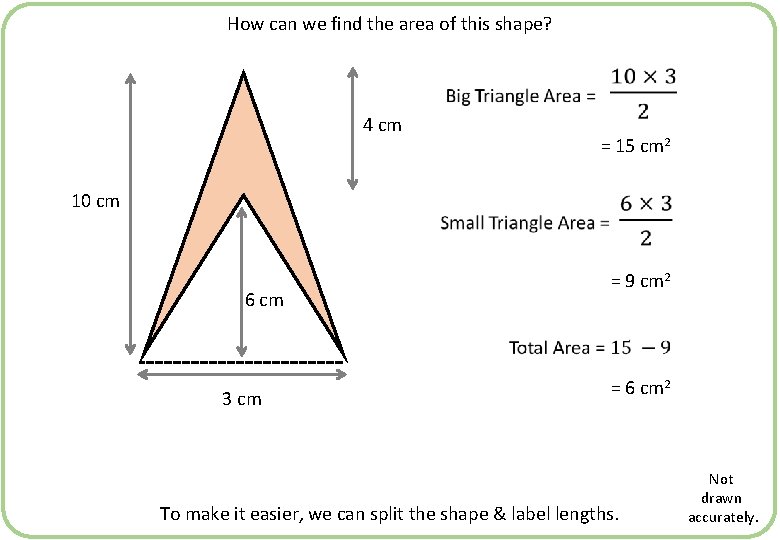
How can we find the area of this shape? 4 cm = 15 cm 2 10 cm 6 cm 3 cm = 9 cm 2 = 6 cm 2 To make it easier, we can split the shape & label lengths. Not drawn accurately.
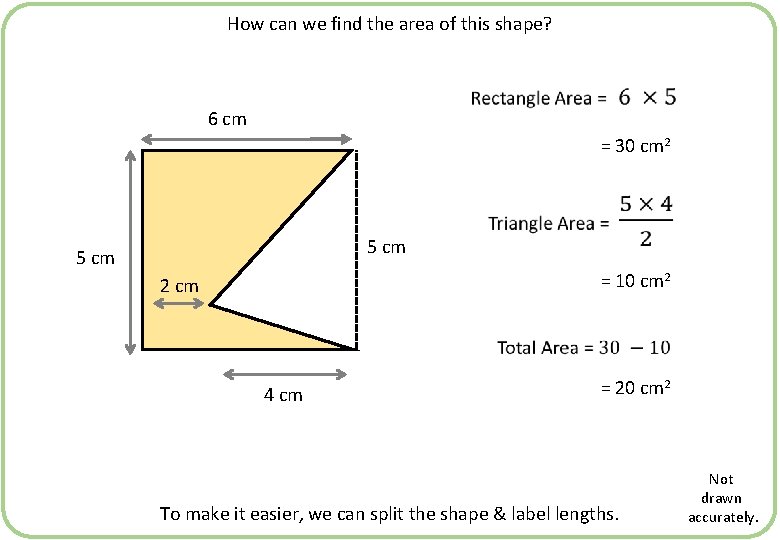
How can we find the area of this shape? 6 cm = 30 cm 2 5 cm = 10 cm 2 2 cm 4 cm = 20 cm 2 To make it easier, we can split the shape & label lengths. Not drawn accurately.
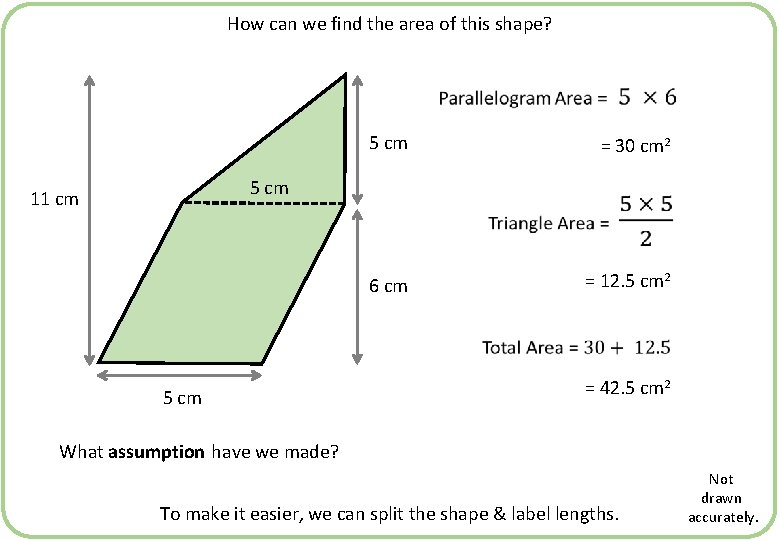
How can we find the area of this shape? 5 cm = 30 cm 2 6 cm = 12. 5 cm 2 5 cm 11 cm 5 cm = 42. 5 cm 2 What assumption have we made? To make it easier, we can split the shape & label lengths. Not drawn accurately.
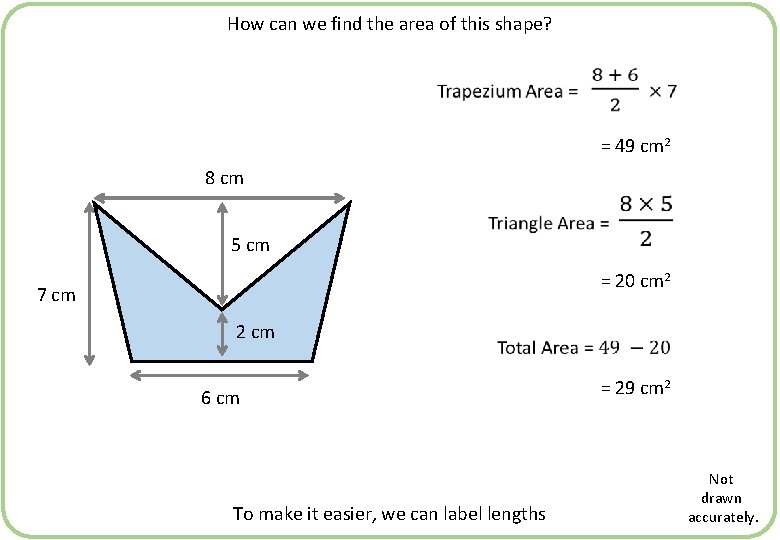
How can we find the area of this shape? = 49 cm 2 8 cm 5 cm = 20 cm 2 7 cm 2 cm 6 cm To make it easier, we can label lengths = 29 cm 2 Not drawn accurately.
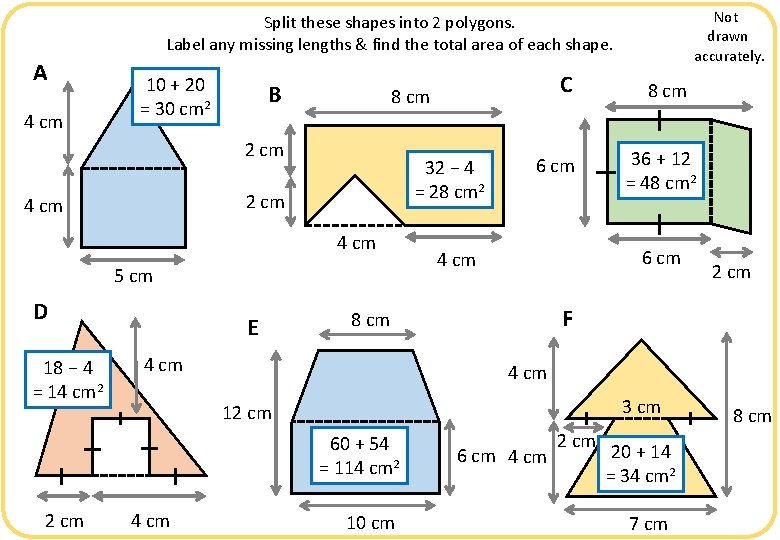
Not drawn accurately. Split these shapes into 2 polygons. Label any missing lengths & find the total area of each shape. A 4 cm 10 + 20 = 30 cm 2 B 2 cm 32 − 4 = 28 cm 2 2 cm 4 cm 5 cm D 18 − 4 = 14 cm 2 E 6 cm 4 cm 36 + 12 = 48 cm 2 2 cm F 4 cm 3 cm 12 cm 4 cm 8 cm 60 + 54 = 114 cm 2 2 cm C 8 cm 10 cm 6 cm 4 cm 20 + 14 = 34 cm 2 7 cm 8 cm
Questions? Comments? Suggestions? …or have you found a mistake!? Any feedback would be appreciated . Please feel free to email: tom@goteachmaths. co. uk