
Polycythemia Vera lots of red cells for real

- Slides: 22
Polycythemia Vera (lots of red cells - for real) • An uncommon disorder - distinguish from other causes of erythrocytosis • Diagnosis depends on knowledge of erythropoeisis • Complications most commonly from thrombosis and vascular incidents • Long natural history with treatment
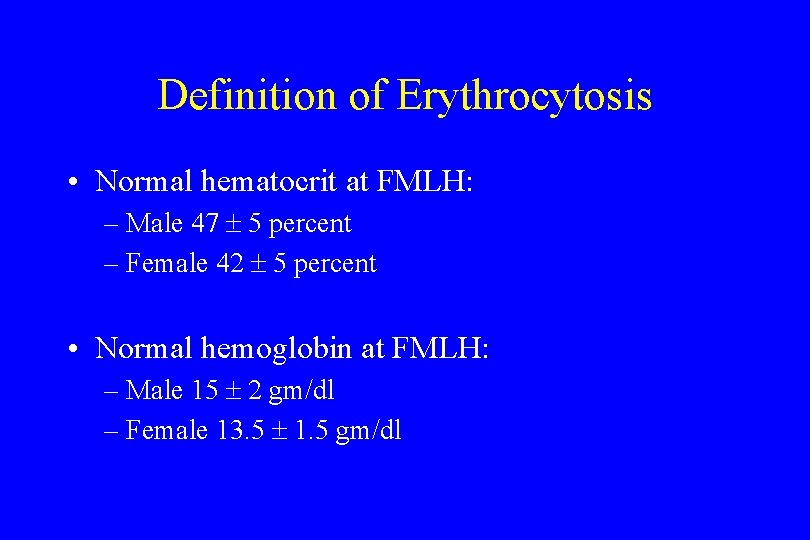
Definition of Erythrocytosis • Normal hematocrit at FMLH: – Male 47 5 percent – Female 42 5 percent • Normal hemoglobin at FMLH: – Male 15 2 gm/dl – Female 13. 5 1. 5 gm/dl
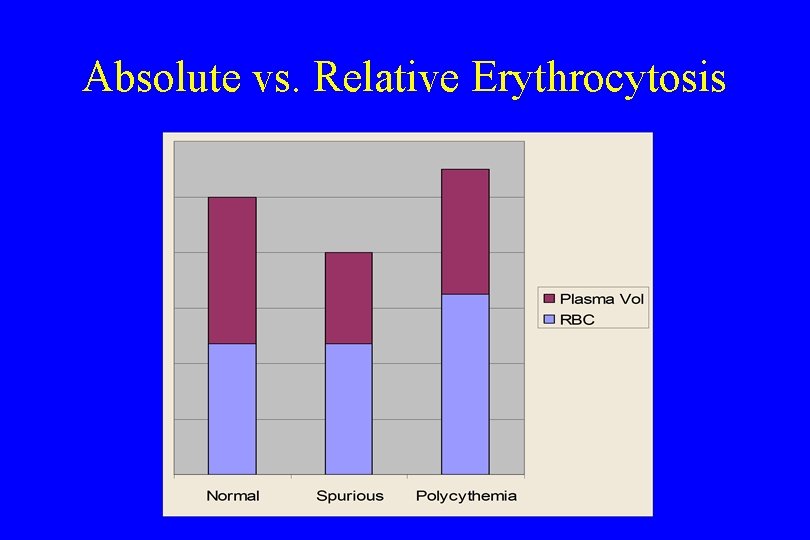
Absolute vs. Relative Erythrocytosis
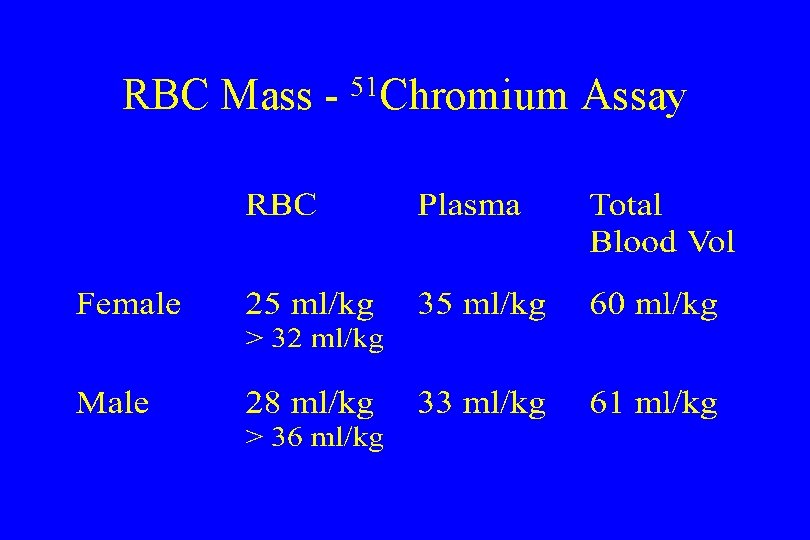
RBC Mass - 51 Chromium Assay
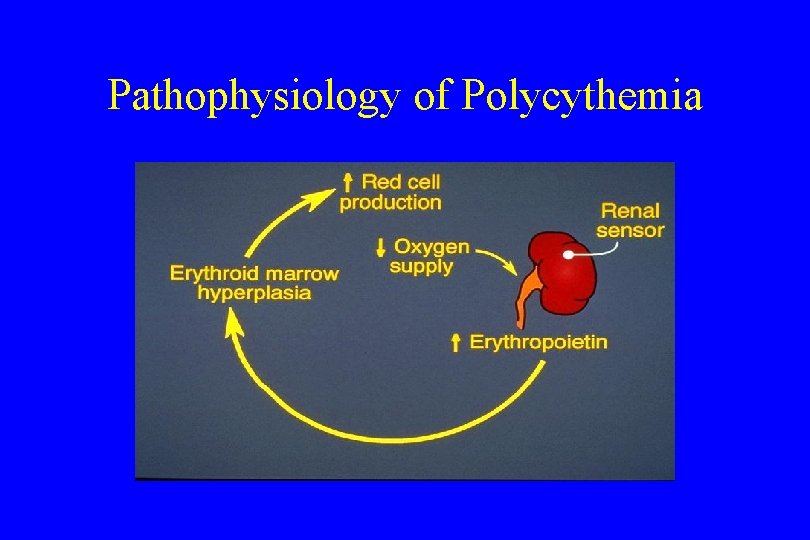
Pathophysiology of Polycythemia
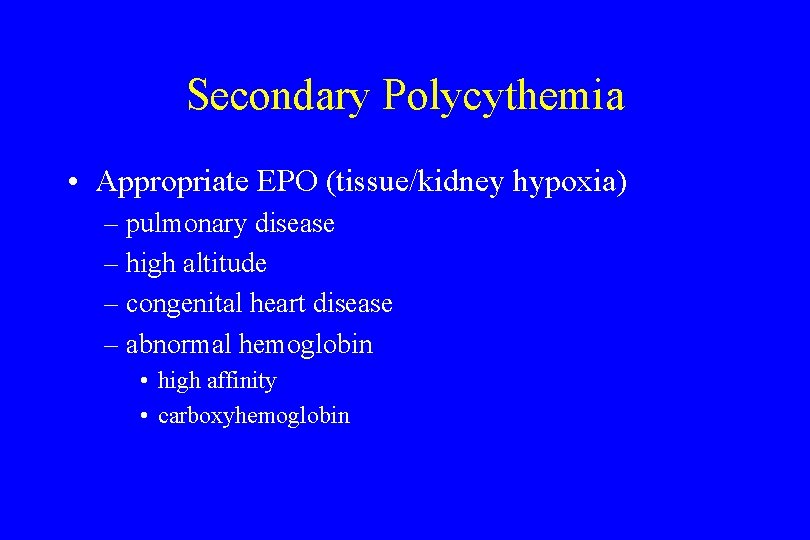
Secondary Polycythemia • Appropriate EPO (tissue/kidney hypoxia) – pulmonary disease – high altitude – congenital heart disease – abnormal hemoglobin • high affinity • carboxyhemoglobin
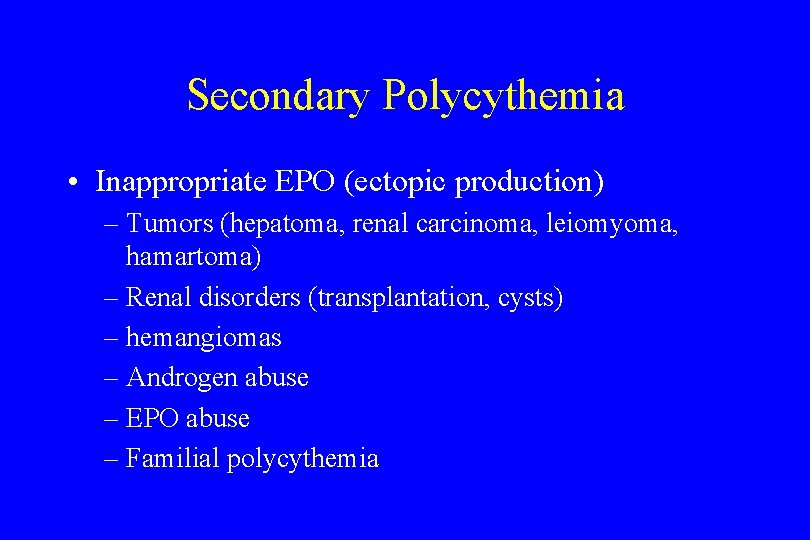
Secondary Polycythemia • Inappropriate EPO (ectopic production) – Tumors (hepatoma, renal carcinoma, leiomyoma, hamartoma) – Renal disorders (transplantation, cysts) – hemangiomas – Androgen abuse – EPO abuse – Familial polycythemia
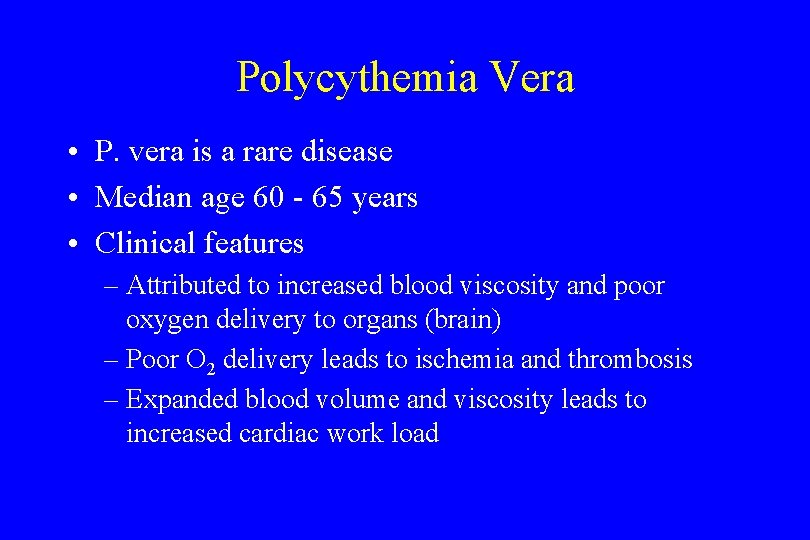
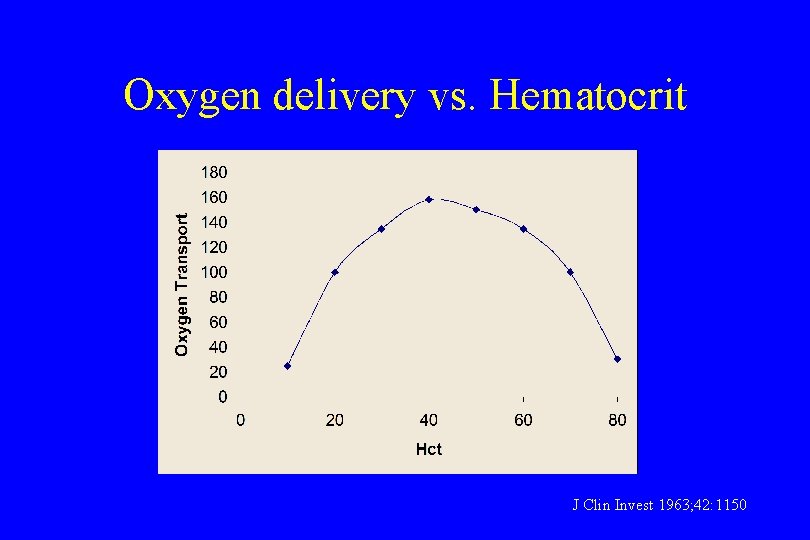
Polycythemia Vera • P. vera is a rare disease • Median age 60 - 65 years • Clinical features – Attributed to increased blood viscosity and poor oxygen delivery to organs (brain) – Poor O 2 delivery leads to ischemia and thrombosis – Expanded blood volume and viscosity leads to increased cardiac work load
Oxygen delivery vs. Hematocrit J Clin Invest 1963; 42: 1150
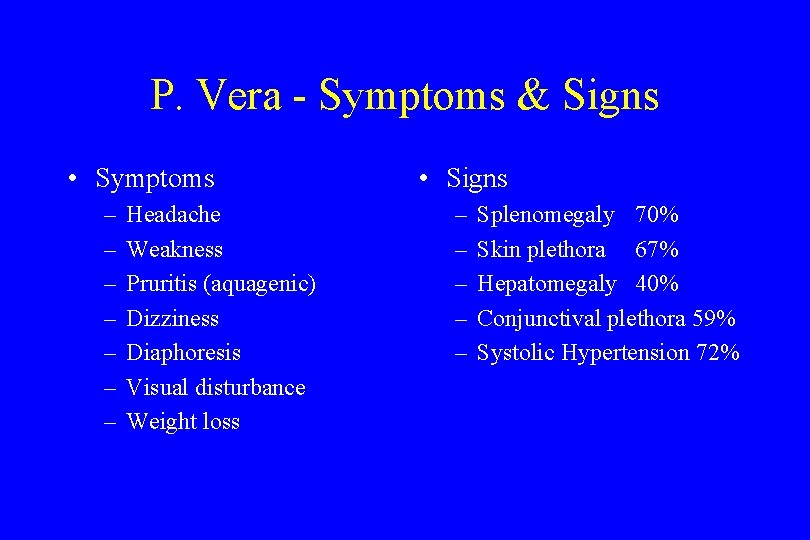
P. Vera - Symptoms & Signs • Symptoms – – – – Headache Weakness Pruritis (aquagenic) Dizziness Diaphoresis Visual disturbance Weight loss • Signs – – – Splenomegaly 70% Skin plethora 67% Hepatomegaly 40% Conjunctival plethora 59% Systolic Hypertension 72%
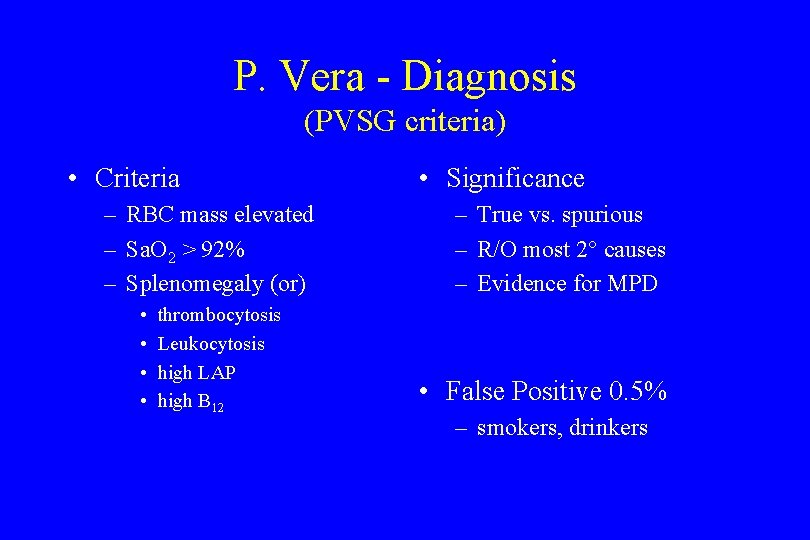
P. Vera - Diagnosis (PVSG criteria) • Criteria – RBC mass elevated – Sa. O 2 > 92% – Splenomegaly (or) • • thrombocytosis Leukocytosis high LAP high B 12 • Significance – True vs. spurious – R/O most 2 causes – Evidence for MPD • False Positive 0. 5% – smokers, drinkers
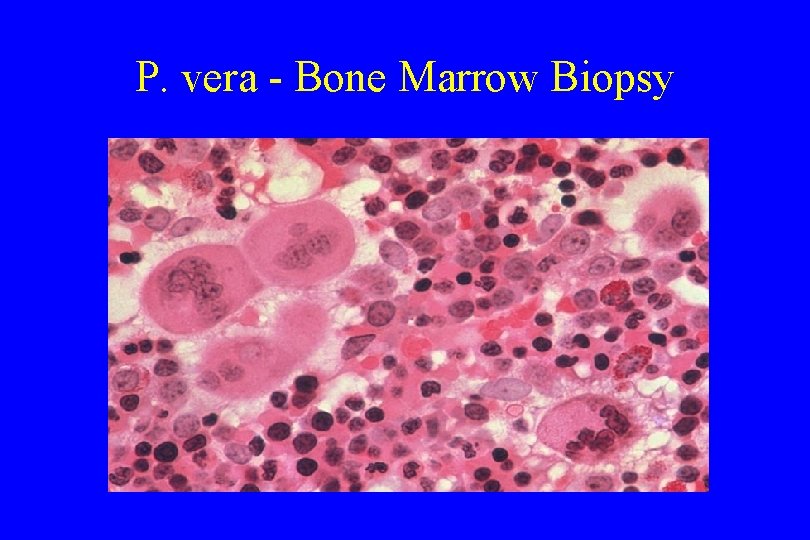
P. vera - Bone Marrow Biopsy
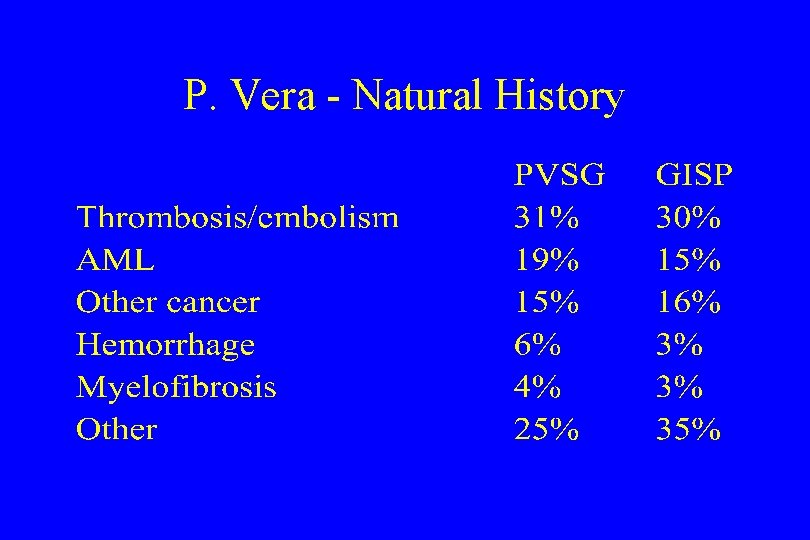
P. Vera - Natural History
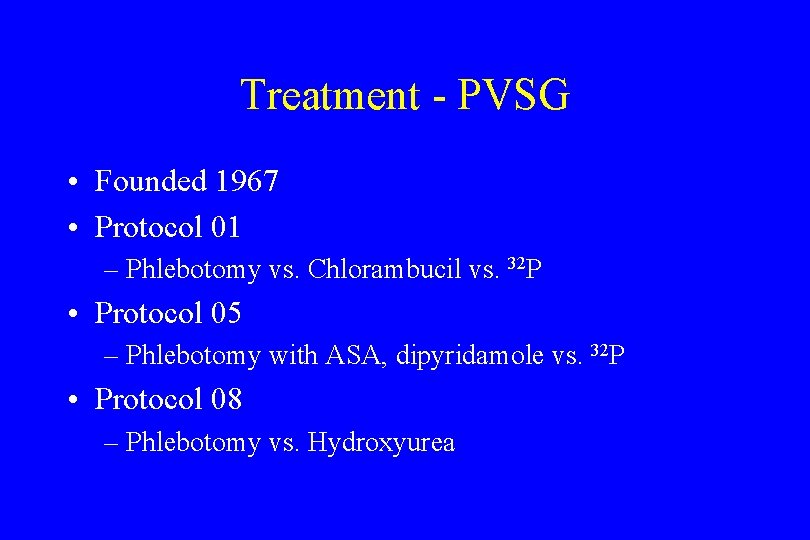
Treatment - PVSG • Founded 1967 • Protocol 01 – Phlebotomy vs. Chlorambucil vs. 32 P • Protocol 05 – Phlebotomy with ASA, dipyridamole vs. 32 P • Protocol 08 – Phlebotomy vs. Hydroxyurea
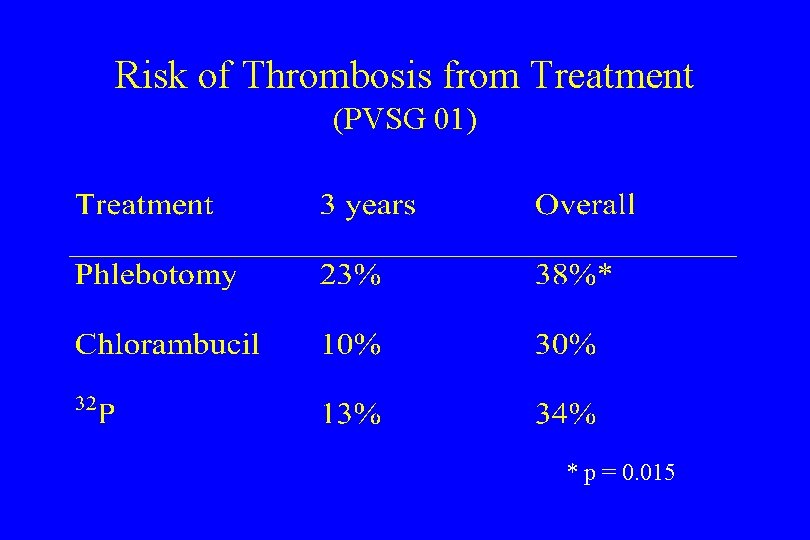
Risk of Thrombosis from Treatment (PVSG 01) * p = 0. 015
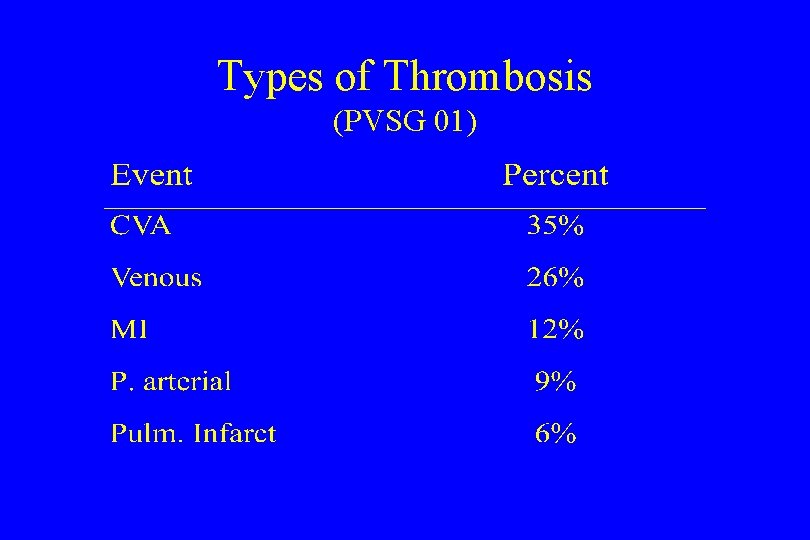
Types of Thrombosis (PVSG 01)
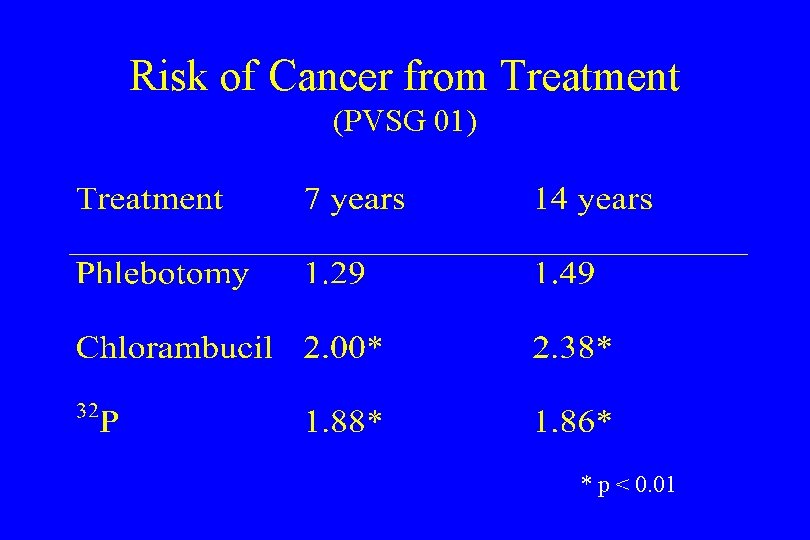
Risk of Cancer from Treatment (PVSG 01) * p < 0. 01
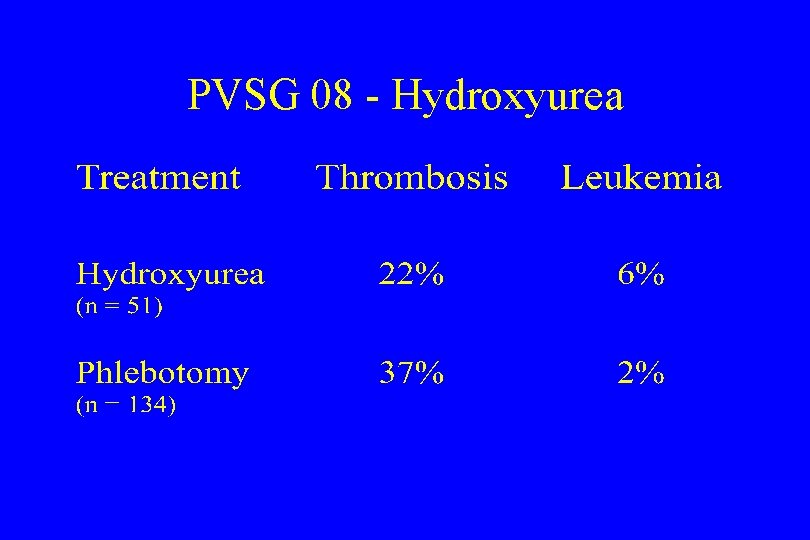
PVSG 08 - Hydroxyurea
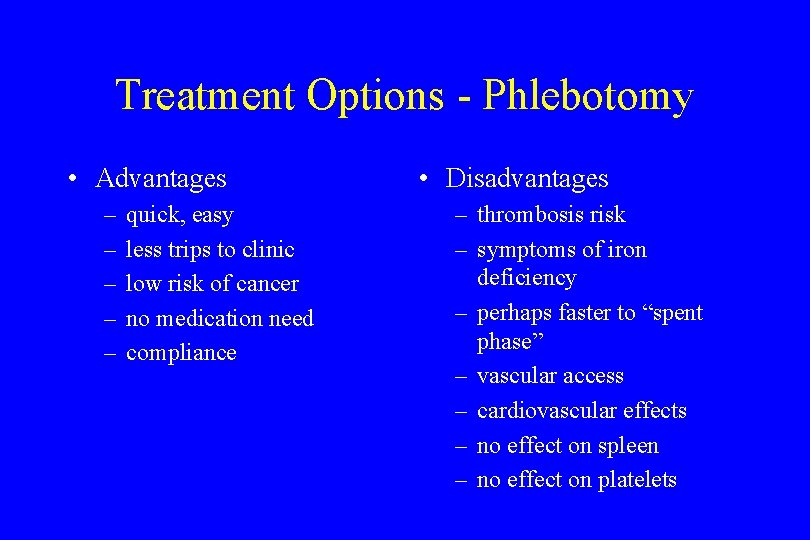
Treatment Options - Phlebotomy • Advantages – – – quick, easy less trips to clinic low risk of cancer no medication need compliance • Disadvantages – thrombosis risk – symptoms of iron deficiency – perhaps faster to “spent phase” – vascular access – cardiovascular effects – no effect on spleen – no effect on platelets
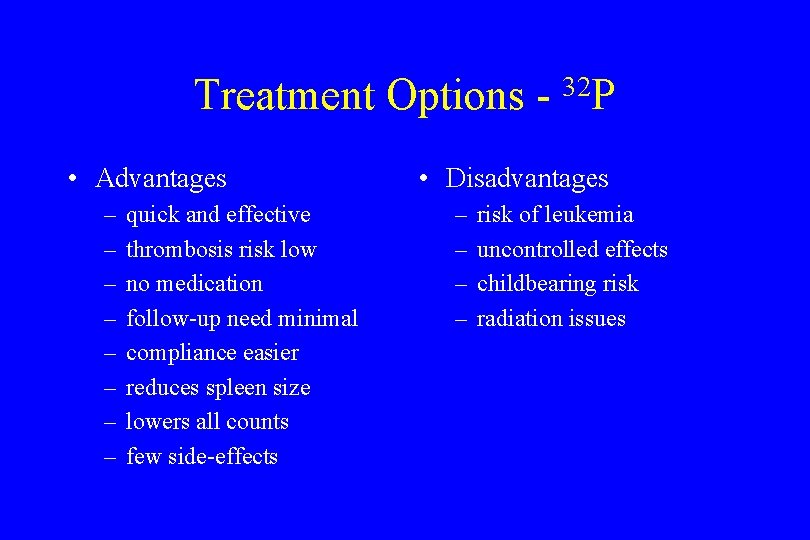
Treatment Options • Advantages – – – – quick and effective thrombosis risk low no medication follow-up need minimal compliance easier reduces spleen size lowers all counts few side-effects 32 P • Disadvantages – – risk of leukemia uncontrolled effects childbearing risk radiation issues
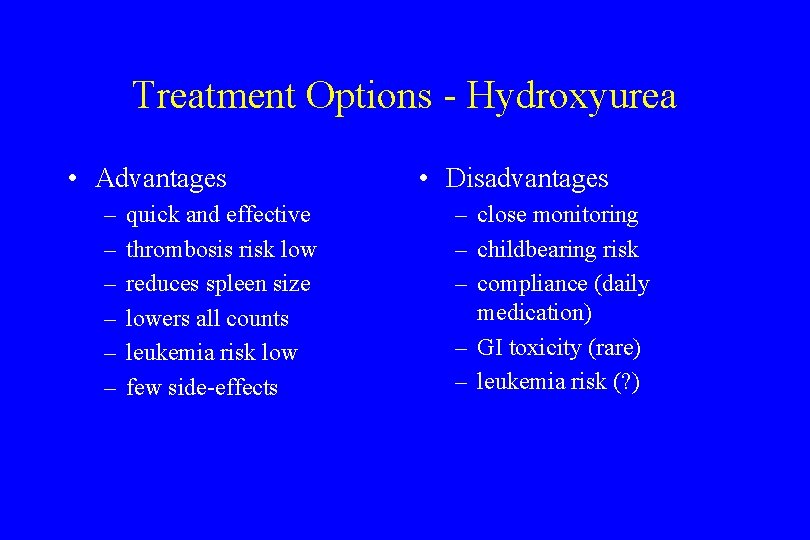
Treatment Options - Hydroxyurea • Advantages – – – quick and effective thrombosis risk low reduces spleen size lowers all counts leukemia risk low few side-effects • Disadvantages – close monitoring – childbearing risk – compliance (daily medication) – GI toxicity (rare) – leukemia risk (? )
Treatment Options - Summary