
Polycystic Ovary Syndrome PCO By Prof Dr Rizwana
Polycystic Ovary Syndrome (PCO) By: Prof. Dr. Rizwana Chaudhri Head of the Gynae/Obs Unit - I Holy Family Hospital, Rawalpindi.
Rawalpindi Medical College, Rawalpindi. College of Physicians & Surgeons Pakistan. Holy Family Hospital, Rawalpindi. Faisal Mosque & Margalla Hills, Islamabad.
PCO v Commonest endocrine disorder in women. v Prevalence- 15 - 20%. v Complex Interaction of Environmental and Genetic factors. v Runs in families , effecting 50% first degree relatives.
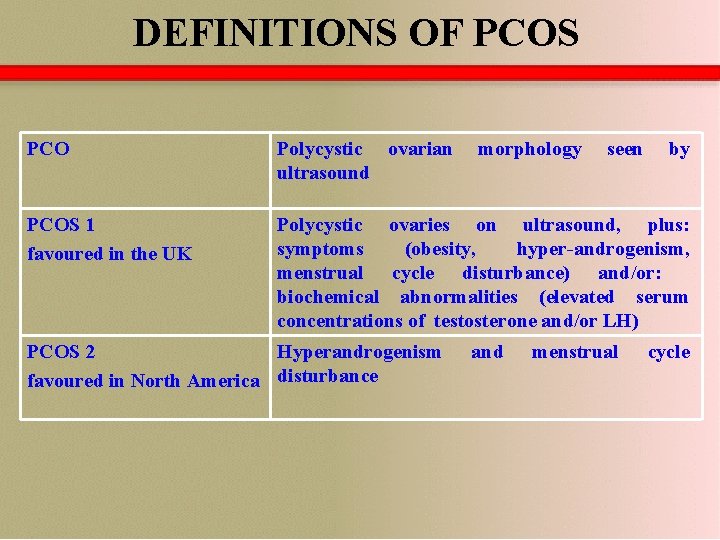
DEFINITIONS OF PCOS PCO Polycystic ovarian ultrasound PCOS 1 favoured in the UK Polycystic ovaries on ultrasound, plus: symptoms (obesity, hyper-androgenism, menstrual cycle disturbance) and/or: biochemical abnormalities (elevated serum concentrations of testosterone and/or LH) PCOS 2 Hyperandrogenism favoured in North America disturbance morphology and seen menstrual by cycle

DEFINITION OF PCOS • NIH-Criteria 1990 – Chronic anovulation – Clinical and / or biochemical signs of hyperandrogenemia and exclusion of other causes • Rotterdam-Criteria 2003 – Oligo- and / or anovulation – Clinical and / or biochemical signs of hyperandrogenism – Polycystic ovaries (Ultrasound) and exclusion of other causes (Adrenal hyperplasia, androgen-producing tumor, Cushing Syndrome) ESHRE/ ASRM-sponsored PCOS Workshop Group Human Reprod. 19, 41, 2004
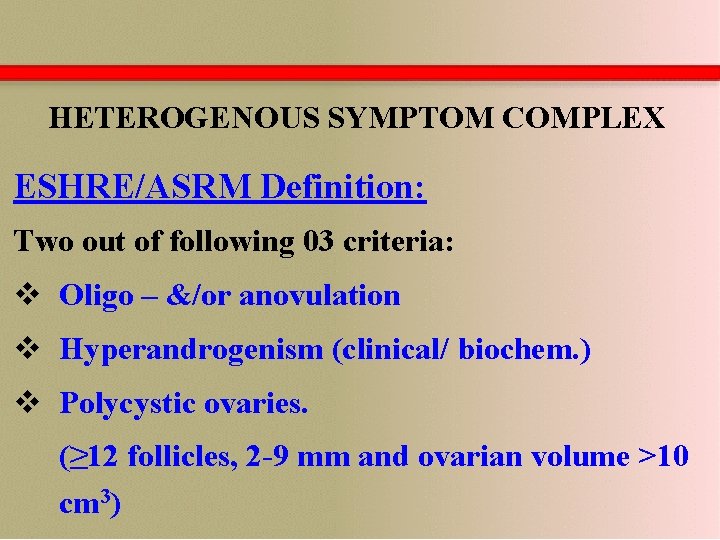
HETEROGENOUS SYMPTOM COMPLEX ESHRE/ASRM Definition: Two out of following 03 criteria: v Oligo – &/or anovulation v Hyperandrogenism (clinical/ biochem. ) v Polycystic ovaries. (≥ 12 follicles, 2 -9 mm and ovarian volume >10 cm 3)
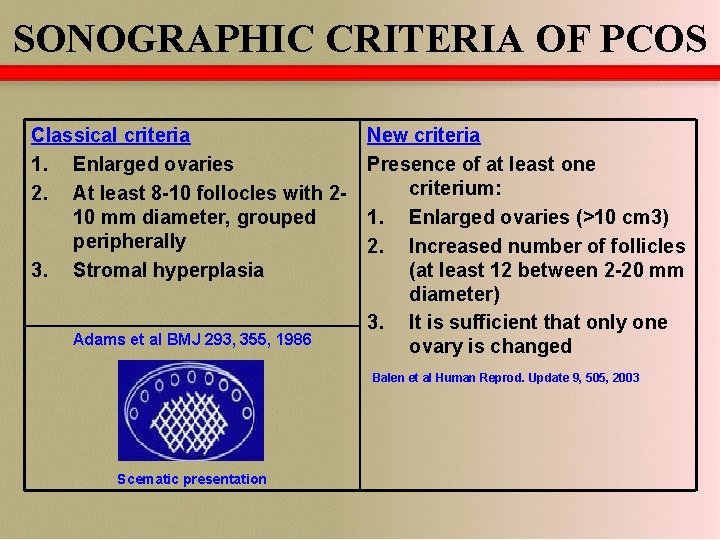
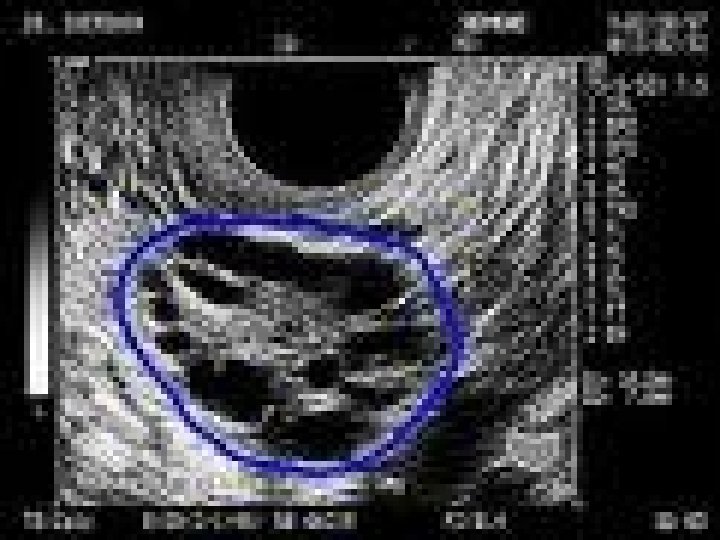
SONOGRAPHIC CRITERIA OF PCOS Classical criteria 1. Enlarged ovaries 2. At least 8 -10 follocles with 210 mm diameter, grouped peripherally 3. Stromal hyperplasia Adams et al BMJ 293, 355, 1986 New criteria Presence of at least one criterium: 1. Enlarged ovaries (>10 cm 3) 2. Increased number of follicles (at least 12 between 2 -20 mm diameter) 3. It is sufficient that only one ovary is changed Balen et al Human Reprod. Update 9, 505, 2003 Scematic presentation
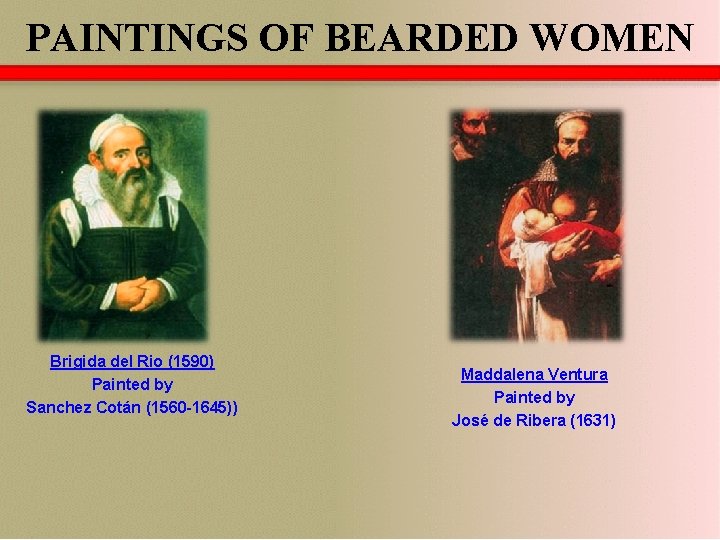
PAINTINGS OF BEARDED WOMEN Brigida del Rio (1590) Painted by Sanchez Cotán (1560 -1645)) Maddalena Ventura Painted by José de Ribera (1631)
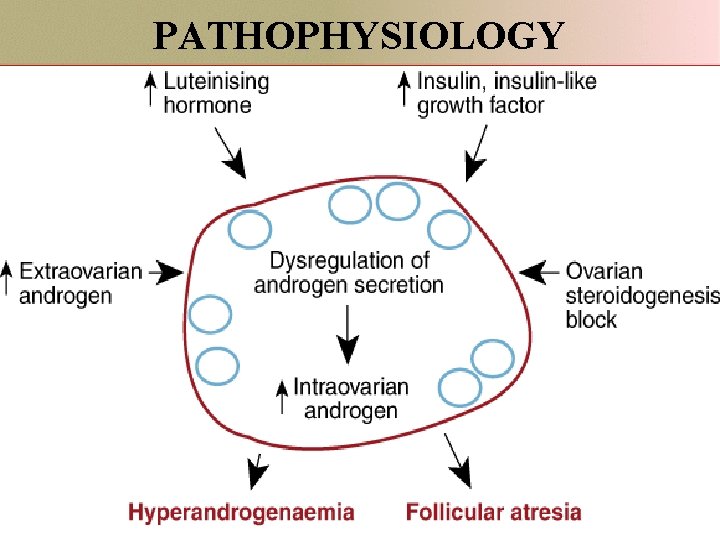
PATHOPHYSIOLOGY

SYMPTOMS v Hyperandrogenism. v Menstrual disturbances. v Infertility. v Obesity. v Asymptomatic.
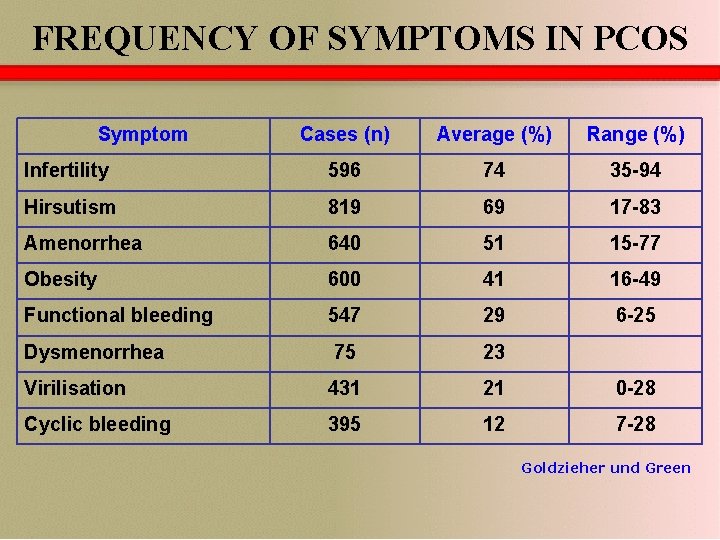
FREQUENCY OF SYMPTOMS IN PCOS Symptom Cases (n) Average (%) Range (%) Infertility 596 74 35 -94 Hirsutism 819 69 17 -83 Amenorrhea 640 51 15 -77 Obesity 600 41 16 -49 Functional bleeding 547 29 6 -25 Dysmenorrhea 75 23 Virilisation 431 21 0 -28 Cyclic bleeding 395 12 7 -28 Goldzieher und Green
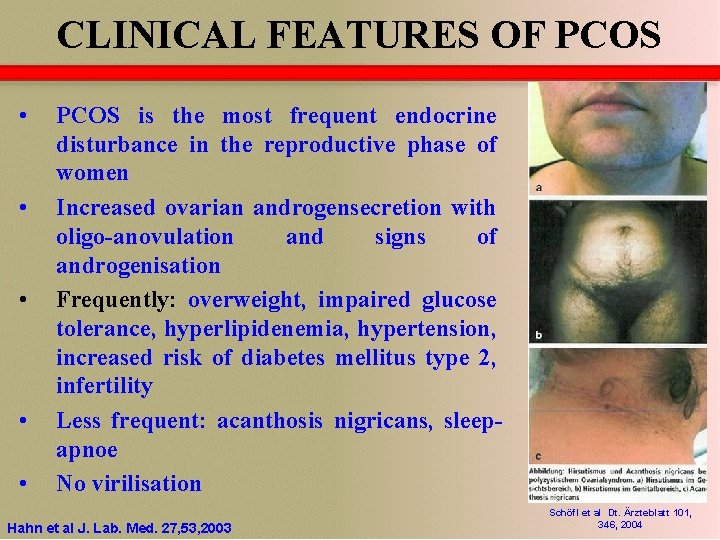
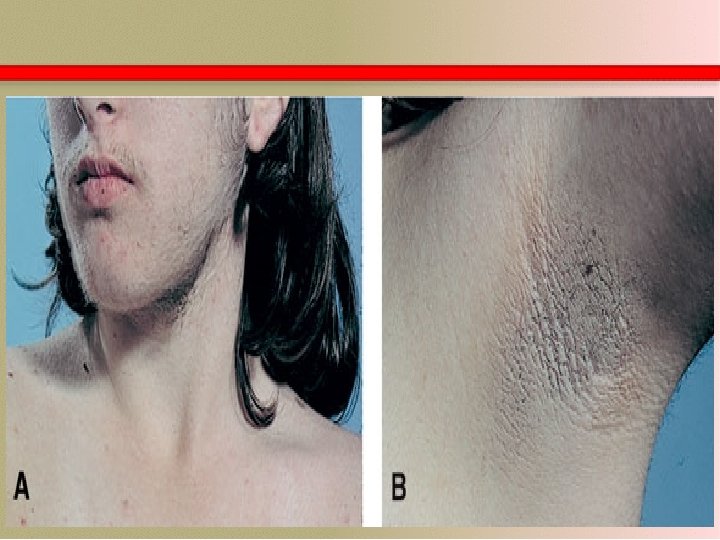
CLINICAL FEATURES OF PCOS • • • PCOS is the most frequent endocrine disturbance in the reproductive phase of women Increased ovarian androgensecretion with oligo-anovulation and signs of androgenisation Frequently: overweight, impaired glucose tolerance, hyperlipidenemia, hypertension, increased risk of diabetes mellitus type 2, infertility Less frequent: acanthosis nigricans, sleepapnoe No virilisation Hahn et al J. Lab. Med. 27, 53, 2003 Schöfl et al Dt. Ärzteblatt 101, 346, 2004
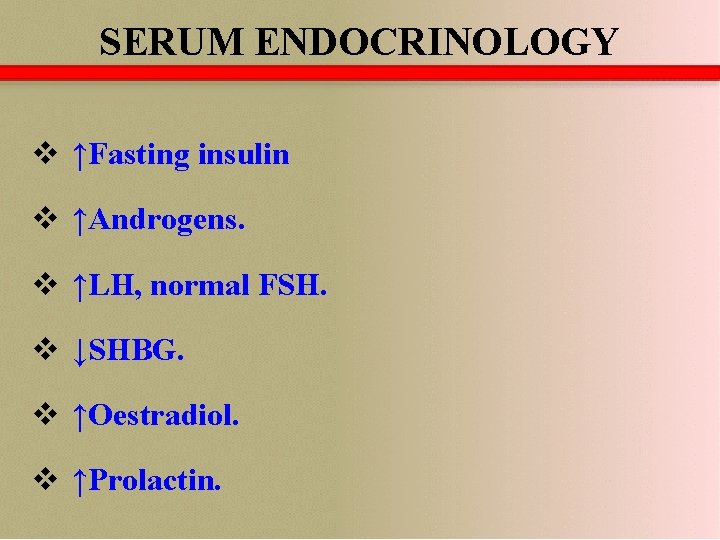
SERUM ENDOCRINOLOGY v ↑Fasting insulin v ↑Androgens. v ↑LH, normal FSH. v ↓SHBG. v ↑Oestradiol. v ↑Prolactin.
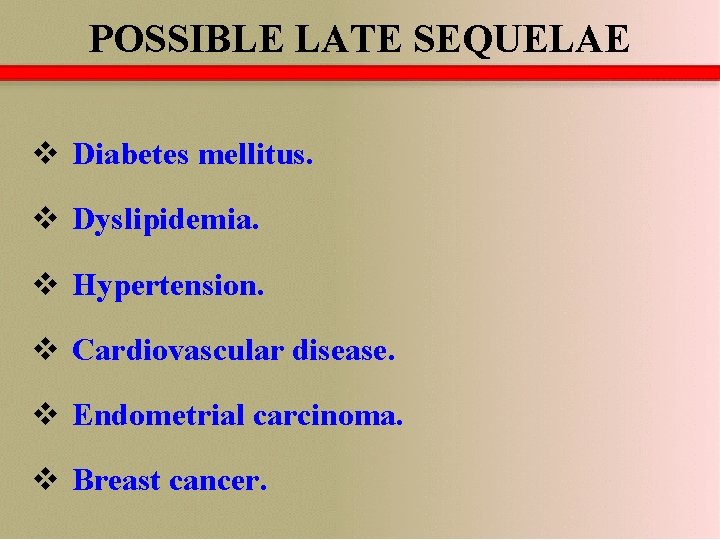
POSSIBLE LATE SEQUELAE v Diabetes mellitus. v Dyslipidemia. v Hypertension. v Cardiovascular disease. v Endometrial carcinoma. v Breast cancer.
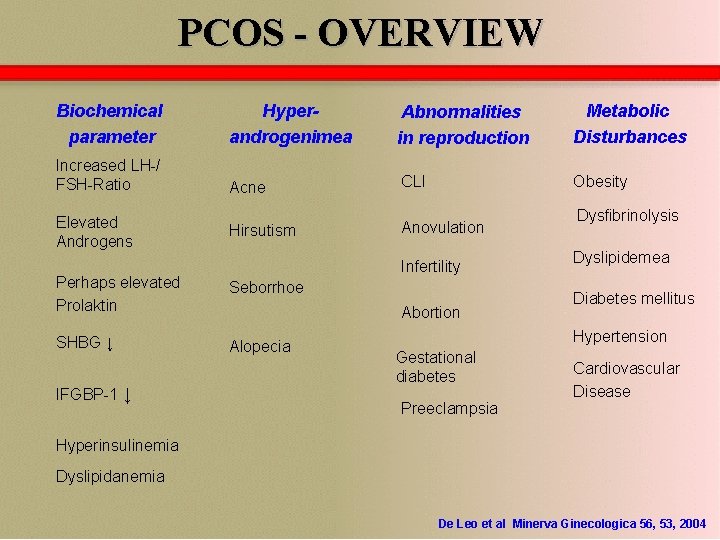
PCOS - OVERVIEW Biochemical parameter Hyperandrogenimea Abnormalities in reproduction Metabolic Disturbances Increased LH-/ FSH-Ratio Acne CLI Obesity Hirsutism Anovulation Elevated Androgens Infertility Perhaps elevated Prolaktin Seborrhoe SHBG ↓ Alopecia IFGBP-1 ↓ Abortion Dysfibrinolysis Dyslipidemea Diabetes mellitus Hypertension Gestational diabetes Preeclampsia Cardiovascular Disease Hyperinsulinemia Dyslipidanemia De Leo et al Minerva Ginecologica 56, 53, 2004
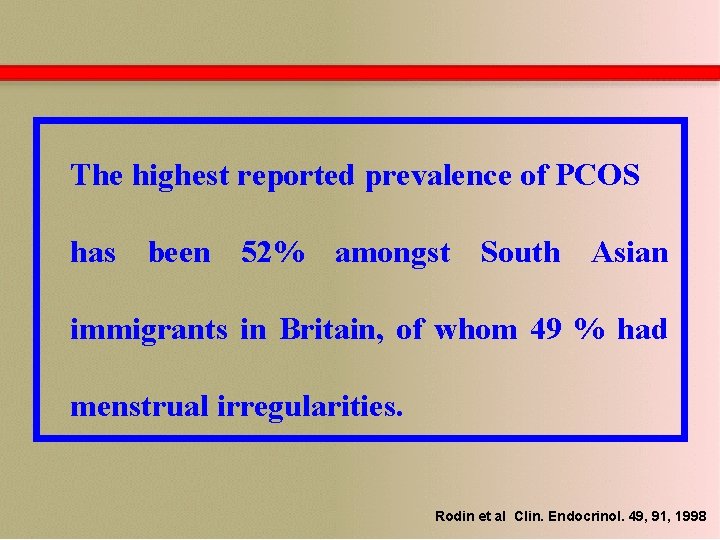
The highest reported prevalence of PCOS has been 52% amongst South Asian immigrants in Britain, of whom 49 % had menstrual irregularities. Rodin et al Clin. Endocrinol. 49, 91, 1998
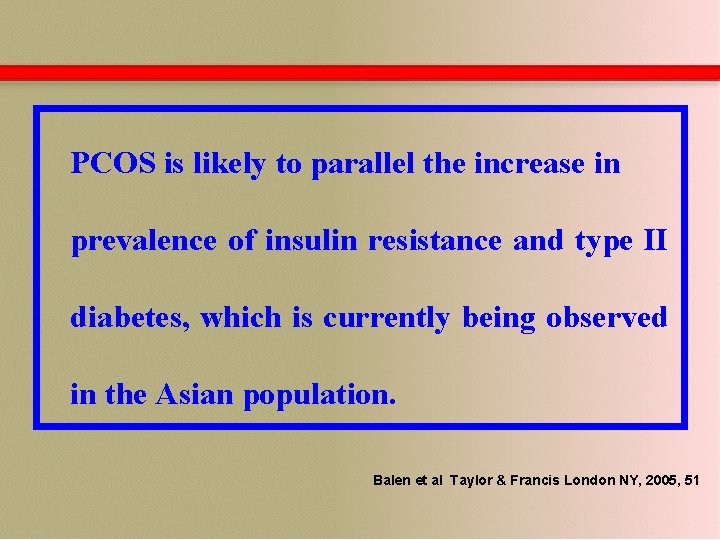
PCOS is likely to parallel the increase in prevalence of insulin resistance and type II diabetes, which is currently being observed in the Asian population. Balen et al Taylor & Francis London NY, 2005, 51
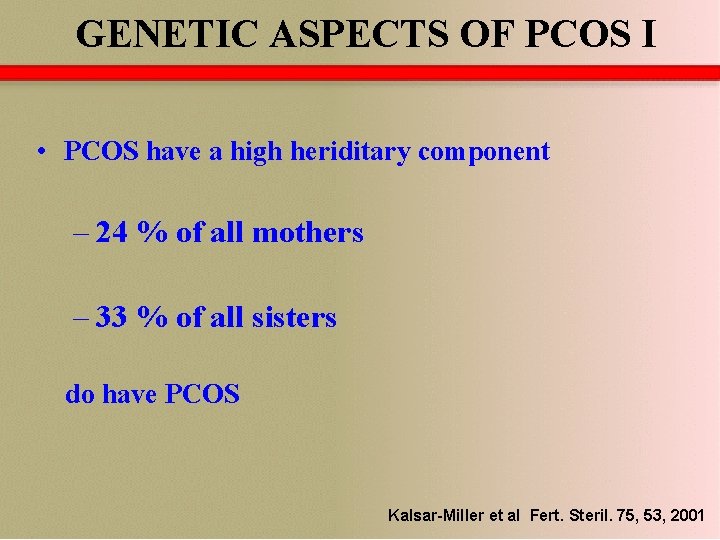
GENETIC ASPECTS OF PCOS I • PCOS have a high heriditary component – 24 % of all mothers – 33 % of all sisters do have PCOS Kalsar-Miller et al Fert. Steril. 75, 53, 2001
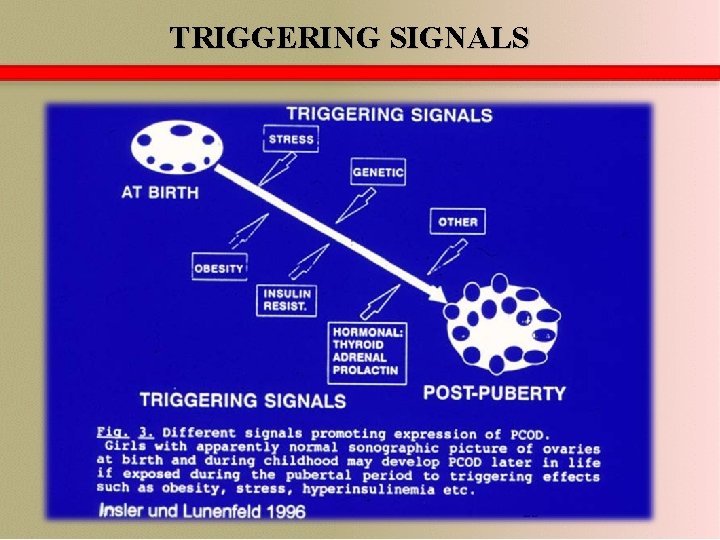
TRIGGERING SIGNALS 23
MANAGEMENT Mainly symptom oriented
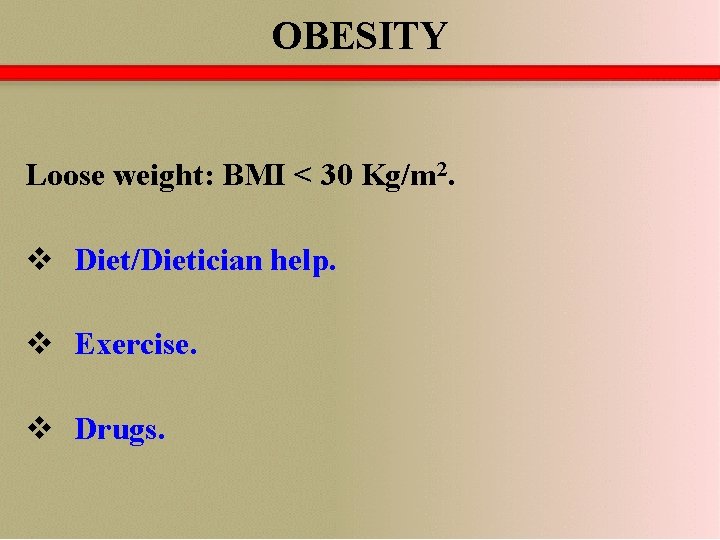
OBESITY Loose weight: BMI < 30 Kg/m 2. v Diet/Dietician help. v Exercise. v Drugs.
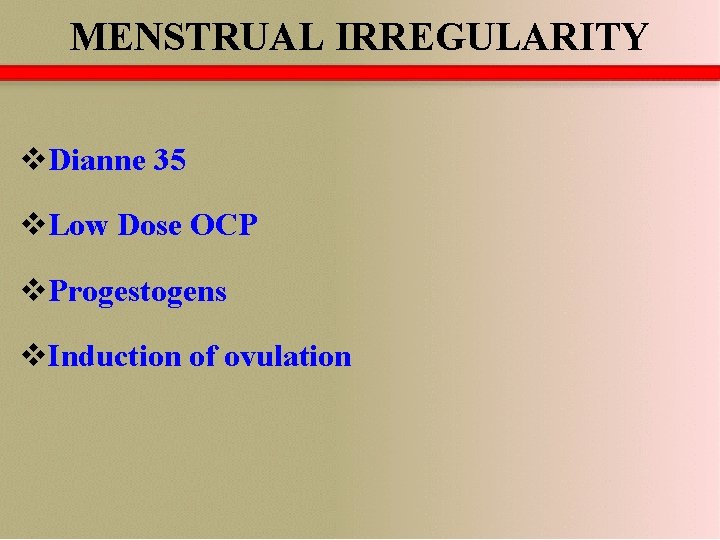
MENSTRUAL IRREGULARITY v. Dianne 35 v. Low Dose OCP v. Progestogens v. Induction of ovulation
HYPERANDROGENISM / HIRSUTISM 1. Physical treatment. 2. Medical treatment.
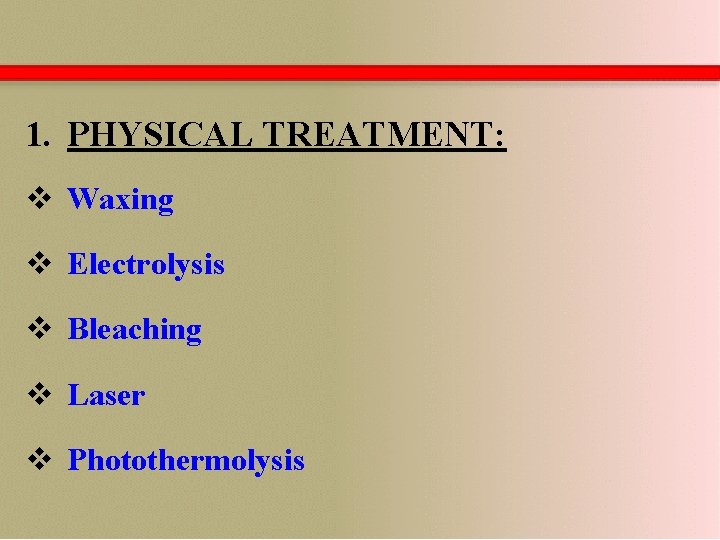
1. PHYSICAL TREATMENT: v Waxing v Electrolysis v Bleaching v Laser v Photothermolysis
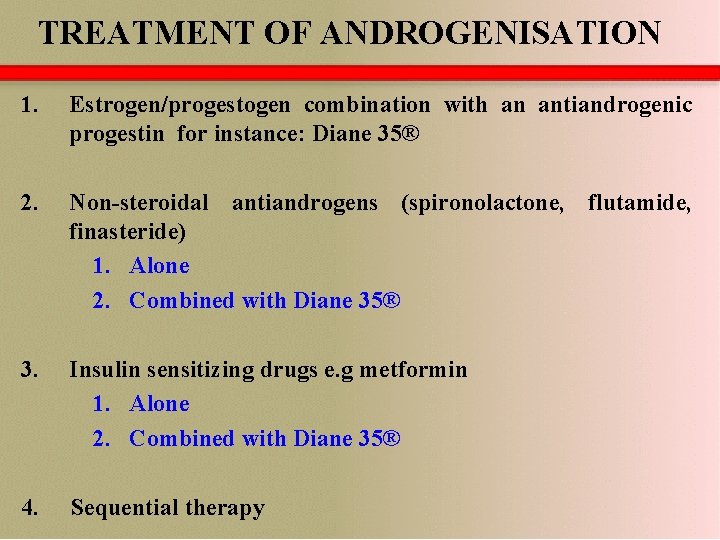
TREATMENT OF ANDROGENISATION 1. Estrogen/progestogen combination with an antiandrogenic progestin for instance: Diane 35® 2. Non-steroidal antiandrogens (spironolactone, flutamide, finasteride) 1. Alone 2. Combined with Diane 35® 3. Insulin sensitizing drugs e. g metformin 1. Alone 2. Combined with Diane 35® 4. Sequential therapy
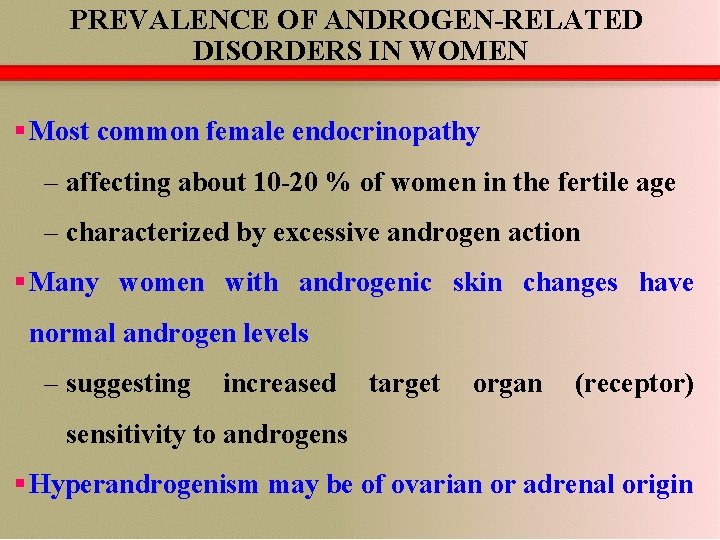
PREVALENCE OF ANDROGEN-RELATED DISORDERS IN WOMEN § Most common female endocrinopathy – affecting about 10 -20 % of women in the fertile age – characterized by excessive androgen action § Many women with androgenic skin changes have normal androgen levels – suggesting increased target organ (receptor) sensitivity to androgens § Hyperandrogenism may be of ovarian or adrenal origin
DIANE-35 INDICATION §Androgen-dependent diseases in women – Seborrhea – Acne – Mild to moderate cases of hirsutism – Androgenetic alopecia §In women who also need or accept contraception
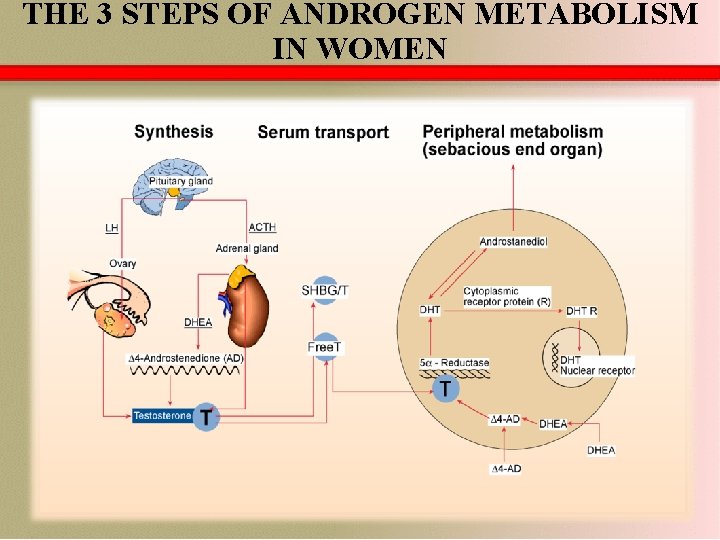
THE 3 STEPS OF ANDROGEN METABOLISM IN WOMEN
REASONS FOR ANDROGEN-RELATED DISORDERS IN WOMEN § Increased secretion of testosterone from the ovaries or adrenals § Increase in the level of freely circulating androgens not bound to transport protein (SHBG) § Increased enzyme activity (5 a-reductase) in target organs, i. e. increased production of biologically active dihydrotestosterone (DHT) § Increased sensitivity of the target organs to DHT
DIANE-35 (CPA 2 MG / EE 35 µG) § Highly effective in the treatment of androgen-related disorders – based on antiandrogenic effect of CPA – supported by antigonadotropic activity of CPA/EE combination § Very reliable contraception – based on progestogenic effect of CPA and antigonadotropic effect of CPA/EE combination – comparable to other oral contraceptives – Pearl index 0. 1
ANTI-ANDROGENIC EFFECT OF DIANE-35 § Receptor level: By competition with binding of testosterone and DHT to their nuclear receptors § Enzymatic: increasing androgen metabolic clearance at the hepatic level and reducing the peripheral activity of 5 a-reductase at skin level § Antigonadotropic: Reduction of LH secretion and suppression of ovarian androgen secretion § Increase in SHBG and decrease of free testosterone è The anti-androgenic treatment used most: Diane-35
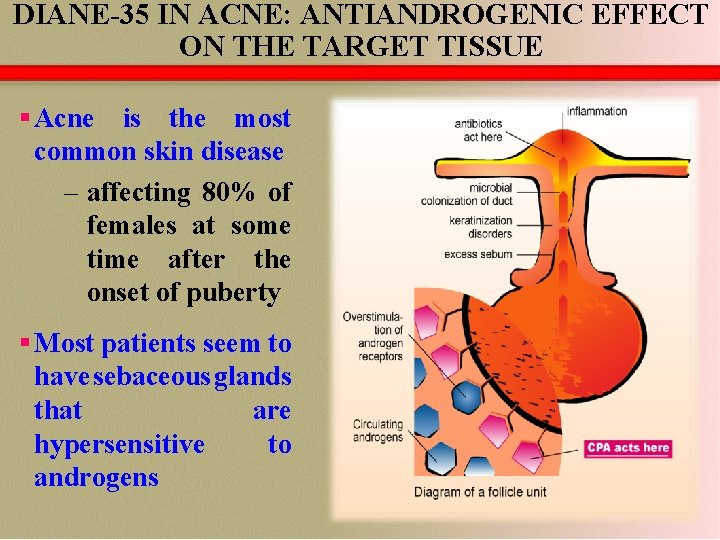
DIANE-35 IN ACNE: ANTIANDROGENIC EFFECT ON THE TARGET TISSUE § Acne is the most common skin disease – affecting 80% of females at some time after the onset of puberty § Most patients seem to have sebaceous glands that are hypersensitive to androgens
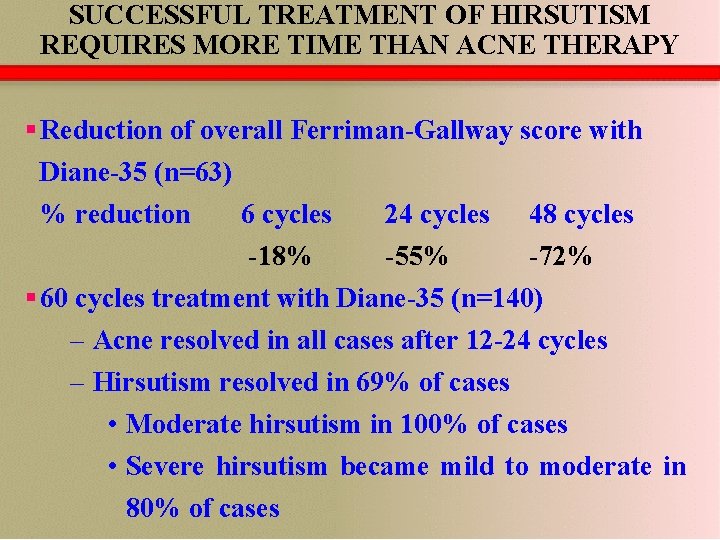
SUCCESSFUL TREATMENT OF HIRSUTISM REQUIRES MORE TIME THAN ACNE THERAPY § Reduction of overall Ferriman-Gallway score with Diane-35 (n=63) % reduction 6 cycles 24 cycles 48 cycles -18% -55% -72% § 60 cycles treatment with Diane-35 (n=140) – Acne resolved in all cases after 12 -24 cycles – Hirsutism resolved in 69% of cases • Moderate hirsutism in 100% of cases • Severe hirsutism became mild to moderate in 80% of cases
HYPERINSULINAEMIA METFORMIN: v. Ameliorates hyperinsulinaemia and hyperandrogenism. v. No effect on weight loss. v. Dose: 850 mg bd/500 mg tds. v. Further long term evaluation required.
INFERTILITY Ovulation Induction: WEIGHT REDUCTION IMP, to improve the prospects of both spontaneous and drug induced ovulation. v Medical Method. v Surgical Method.
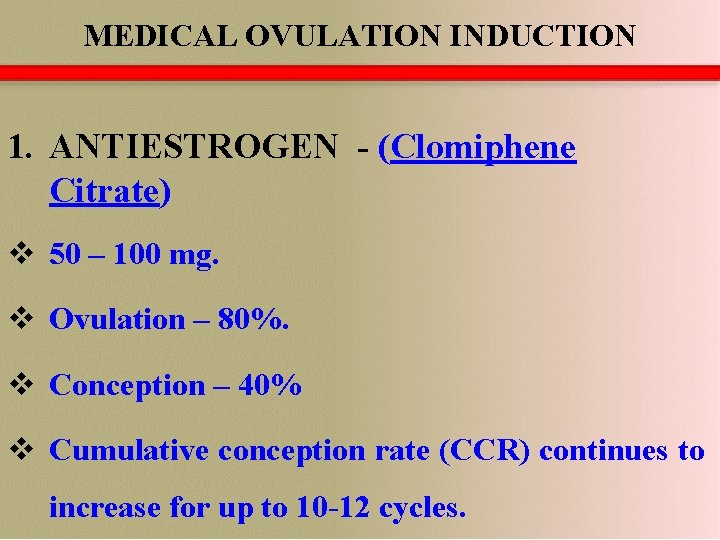
MEDICAL OVULATION INDUCTION 1. ANTIESTROGEN - (Clomiphene Citrate) v 50 – 100 mg. v Ovulation – 80%. v Conception – 40% v Cumulative conception rate (CCR) continues to increase for up to 10 -12 cycles.
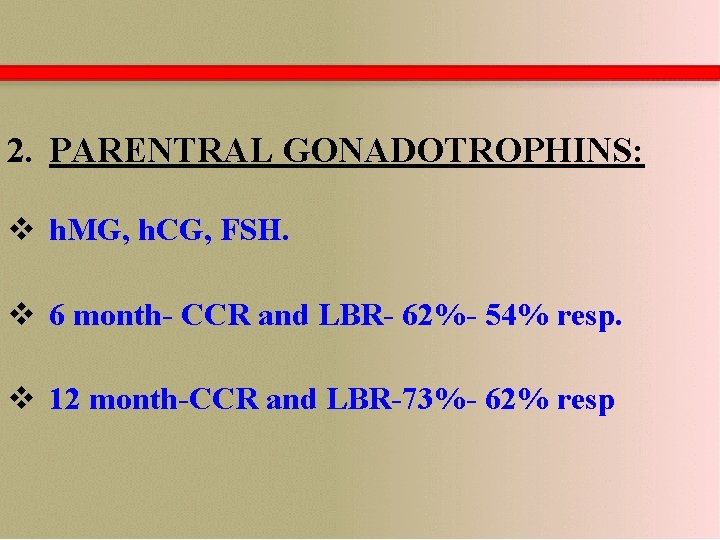
2. PARENTRAL GONADOTROPHINS: v h. MG, h. CG, FSH. v 6 month- CCR and LBR- 62%- 54% resp. v 12 month-CCR and LBR-73%- 62% resp
SIDE EFFECTS: v Multiple pregnancy; 05 -10%. v Ovarian Hyperstimulation syndrome (OHSS); 0. 5 -10%.
SURGICAL OVULATION INDUCTION 1. Ovarian Wedge Resection. 2. Ovarian Diathermy
1. OVARIAN WEDGE RESECTION: v Used to be done in 1970’s. v Abandoned b/c: * * Extensive tissue loss. Extensive periovarian and tubal adhesions.
2. Laparoscopic Ovarian Diathermy (LOD) • Technique 40 w, 04 points, 04 sec. • Unilateral/Bilateral.
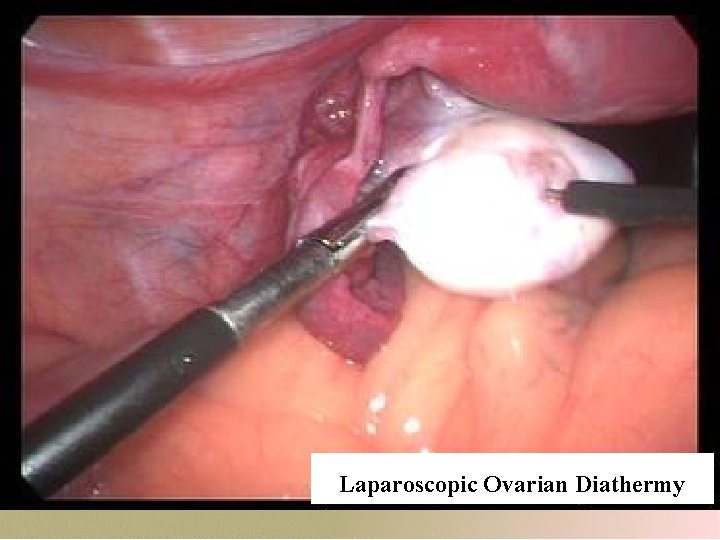
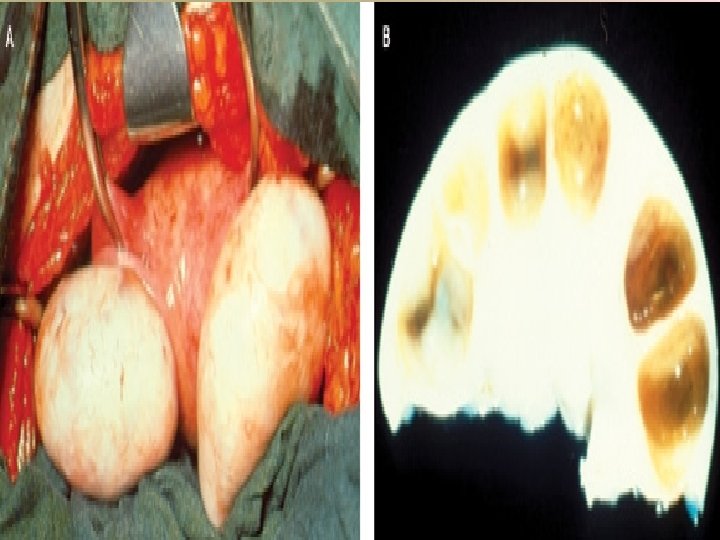
Laparoscopic Ovarian Diathermy
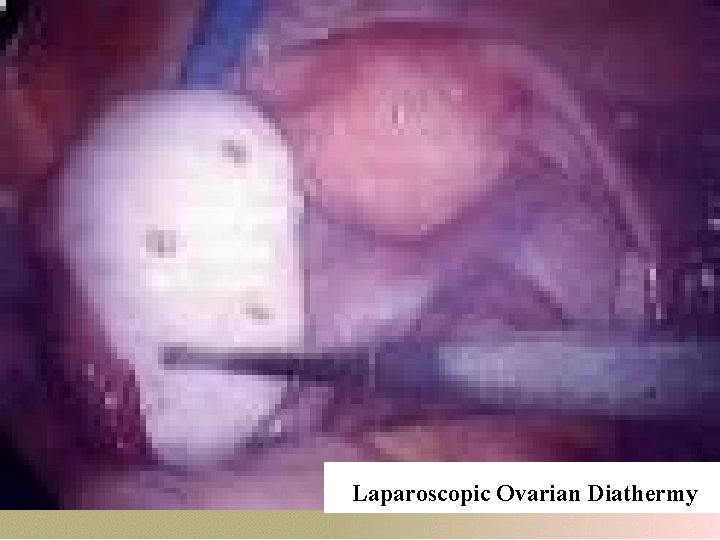
Laparoscopic Ovarian Diathermy
MECH. OF ACTION OF LOD Exactly not known: v. Ruptures thick ovarian capsule. v. Sensitizes ovary to endogenous /exogenous FSH. v. End result is a decrease in LH androgen levels, restoring normal ovulation.
ADVANTAGES OF LOD v Improved endocrine profiles. v Spontaneous ovulation. v Reduction in gonadotropin doses for ovulation induction and hence reduction in cost of further stimulated cycles. v Reduction in multiple pregnancy rates. v Reduction in first trimester abortions. Continued:
v Reduction in ovarian hyper stimulation. v No prolonged USG follow ups. v Tubal patency checked at the same time. v A meta analysis showed pregnancy rates greater with 06 months gonadotrophins treatment, compared with LOD but same after 12 months. v Conception rate with LOD in 12 months is 60 -80%.
DISADVANTAGES OF LOD v Risk of anaesthesia. v Risk of minimal adhesions. v Requires expertise.
CONCLUSION PCO syndrome is a mixed clinical entity and should be dealt with according to the problems of the patients

hope we all have a better tomorrow Thank You
- Slides: 53