
POLY JET PROCESS An effective RP Technique for


- Slides: 16
POLY JET PROCESS An effective RP Technique for Sheet Metal Works 1
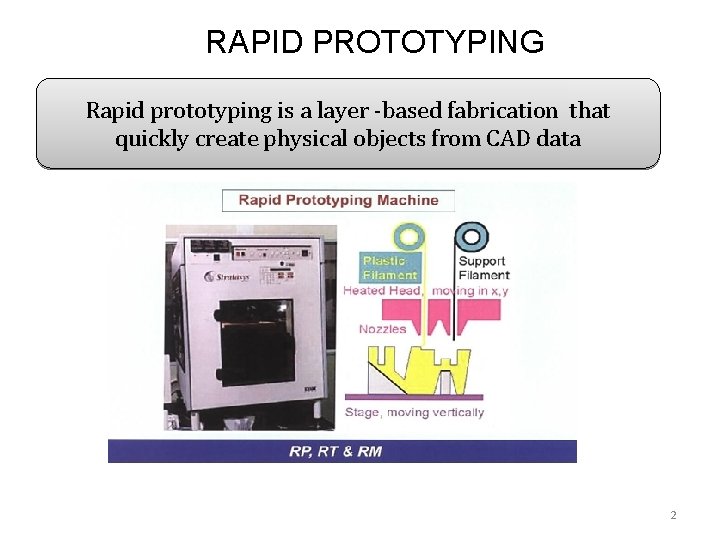
RAPID PROTOTYPING Rapid prototyping is a layer -based fabrication that quickly create physical objects from CAD data 2
Technology Overview • These tools range in cost from $30, 000 to $800, 000 • >$100 K are typically called rapid prototyping systems • <$100 K are usually called 3 D Printers • There are significant differences in speed, cost of operation and materials used. These differences drive different firms to make different choices for different use occasions 3
Different types of RP methods • • The Poly jet process Stereo lithography (SLA for stereo lithography apparatus), Selective laser sintering (SLS), Fused deposition modeling (FDM), Laminated object manufacturing (LOM), Inkjet systems and three dimensional printing (3 DP). Solid Ground Curing 4
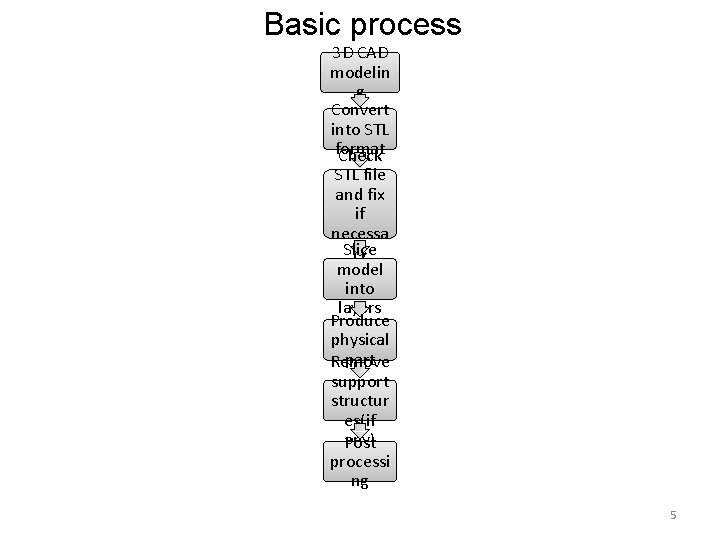
Basic process 3 D CAD modelin g Convert into STL format Check STL file and fix if necessa Slice ry model into layers Produce physical part Remove support structur es(if any) Post processi ng 5
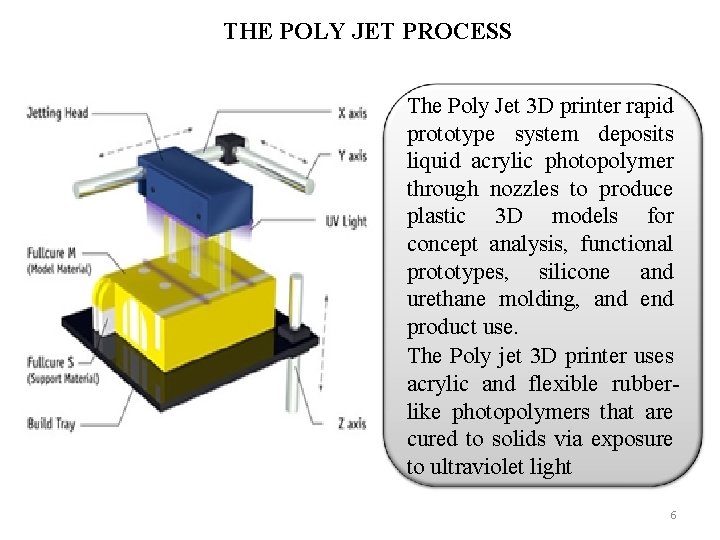
THE POLY JET PROCESS The Poly Jet 3 D printer rapid prototype system deposits liquid acrylic photopolymer through nozzles to produce plastic 3 D models for concept analysis, functional prototypes, silicone and urethane molding, and end product use. The Poly jet 3 D printer uses acrylic and flexible rubberlike photopolymers that are cured to solids via exposure to ultraviolet light 6
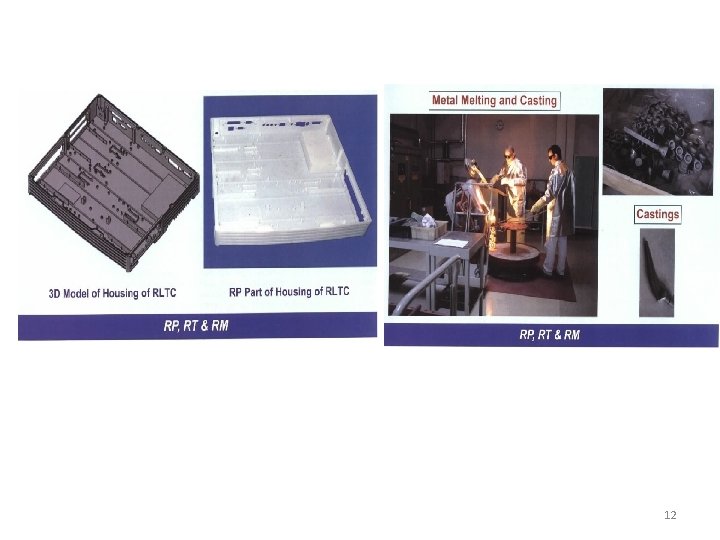
RAPID PROTOTYPING TECHNIQUES TO MANUFACTURE SHEET METAL • By using Rapid Prototyping Techniques (RPT) car manufacturer today produce plastic parts for Prototypes faster and even cheaper compared to the techniques used up to now. • As well metal parts made either by RPT combined with metal casting processes or by poly jet, are inserted earlier as usual into dummies and tests. • As a consequence of this process the automotive industry increasingly demands to have sheet metal parts also earlier than now at their disposal. • Sheet metal forming tools are geometrically complex, massive and require a high surface quality. The material must be stiff and resistant to pressure and wear. 7
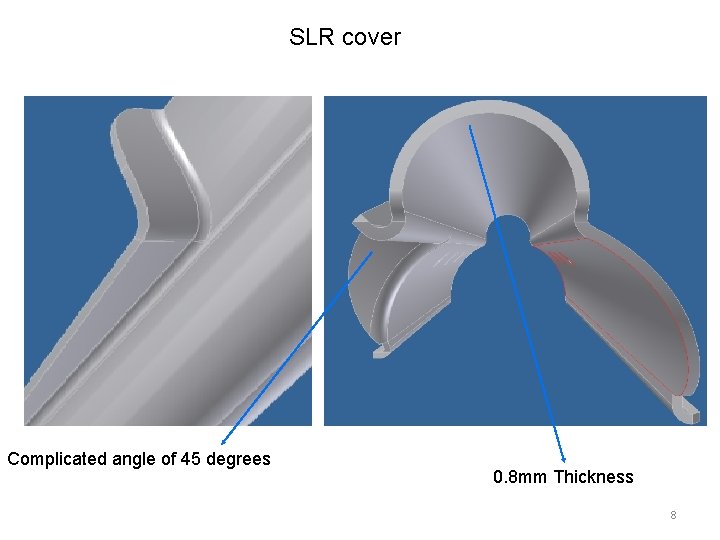
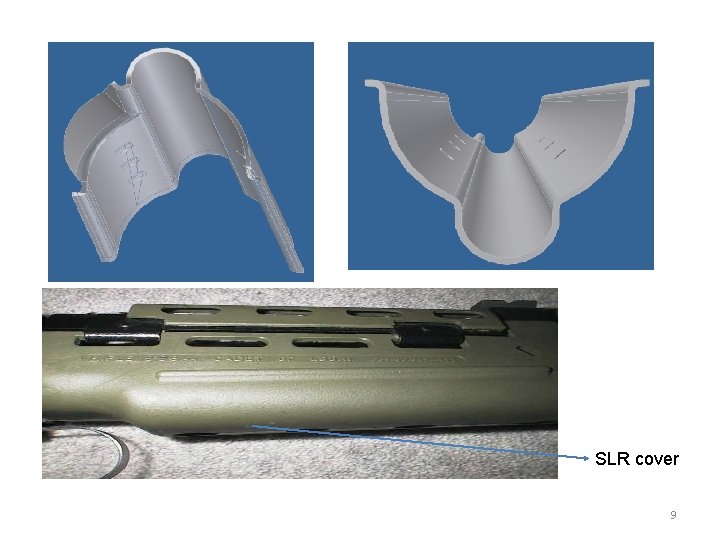
SLR cover Complicated angle of 45 degrees 0. 8 mm Thickness 8
SLR cover 9
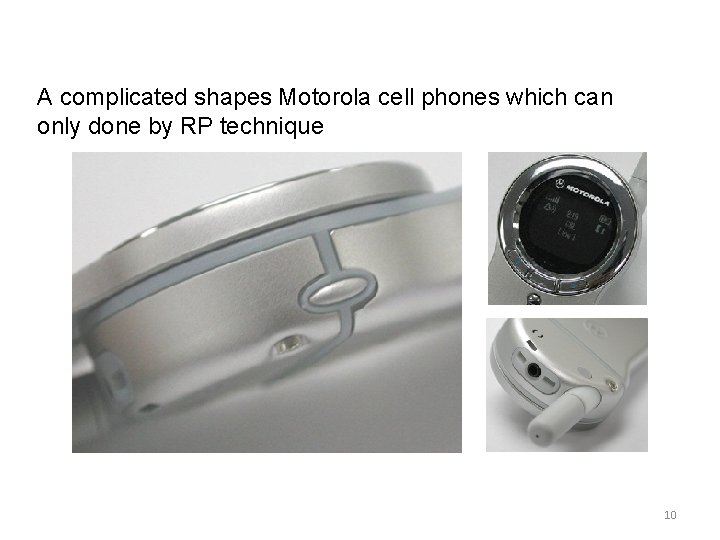
A complicated shapes Motorola cell phones which can only done by RP technique 10
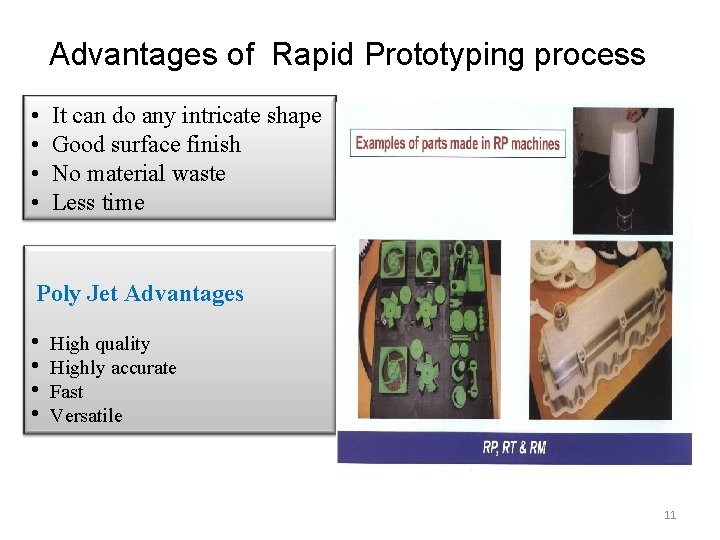
Advantages of Rapid Prototyping process • It can do any intricate shape • Good surface finish • No material waste • Less time Poly Jet Advantages • High quality • Highly accurate • Fast • Versatile 11
12
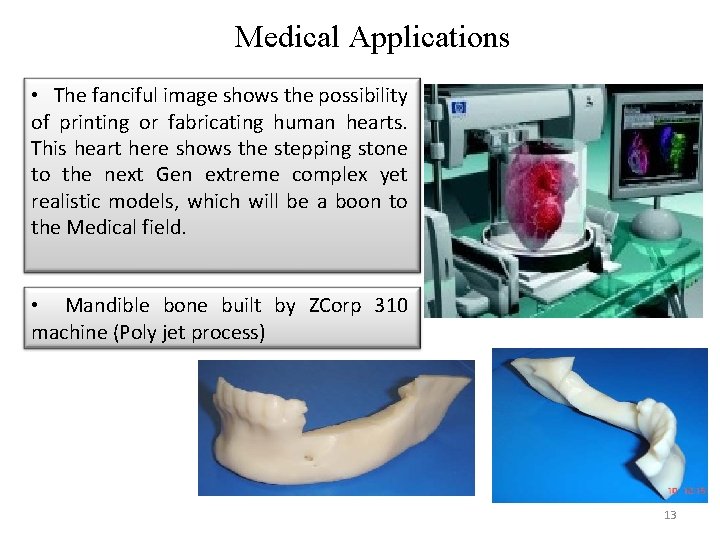
Medical Applications • The fanciful image shows the possibility of printing or fabricating human hearts. This heart here shows the stepping stone to the next Gen extreme complex yet realistic models, which will be a boon to the Medical field. • Mandible bone built by ZCorp 310 machine (Poly jet process) 13
Conclusion • Finally, the rise of rapid prototyping has spurred progress in traditional subtractive methods as well. Advances in computerized path planning, numeric control, and machine dynamics are increasing the speed and accuracy of machining • For certain applications, particularly metals, machining will continue to be a useful manufacturing process. Rapid prototyping will not make machining obsolete, but rather complement it. 14
26 -02 -2010 DMS SVH College of Engineering, Machilipatnam 15
Any Suggestions 16