
Pollution and Air Quality Types of Pollutantsdefinition Weather
- Slides: 21
Pollution and Air Quality • Types of Pollutants/definition • Weather Effects • Emissions and Legislation • Major Pollution issues • Acid Rain our focus • Mercury Contamination • Ozone, high and low • Smog • Greenhouse gases
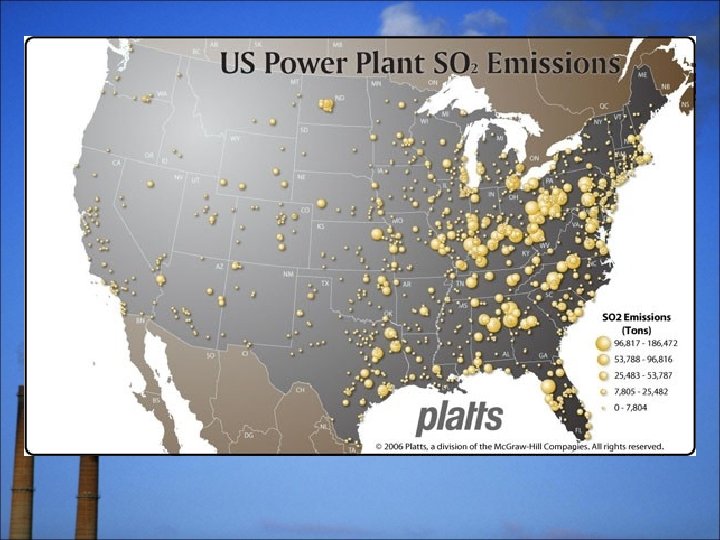
Pollution Types • Chemical (air, water, soil) • Noise • Light Definition: The contamination of air, water, or soil by substances that are harmful to living organisms. Effects of SO 2 and NO 2: Lung Damage Heart attacks Acid Rain formation Smog formation Ground ozone formation Note: Air pollution comes from natural and anthropogenic sources
Types of air pollution: Anthropogenic Processes producing primary air pollutants • Combustion (Power generation, Industrial, Transportation, Heating) • Chemical Processes (Industrial refining processes) • Farming (Pesticides, Herbicides, Fertilizers, Dust, Methane) Natural processes producing pollutants • Volcanoes • Breaking waves • Pollens, terpenes (pine-tree scent) • Forest Fire • Blowing Dust Secondary pollutant prodution 1)・Photodissociation (sun energy breakup) of primary pollutants -> new pollutants 2)・Wet chemistry in cloud drops 3)・Surface chemistry on ice crystal surfaces
Types of air pollution: Major primary pollutants produced by human activity include: 1)・Sulfur oxides (SOx) especially sulfur dioxide (SO 2) 2)・Nitrogen oxides (NOx) especially nitrogen dioxide (NO 2) 3)・Carbon monoxide (CO) 4)・Carbon dioxide (CO 2), a greenhouse gas 5)・Volatile organic compounds (VOC), such as hydrocarbon fuel vapors and solvents 6)・Particulate matter (PM), such as smoke and dust. • PM 10 is used to describe suspended particles 10 microns in diameter and smaller, • PM 2. 5 has a maximum particle size of 2. 5 microns. 7)・Metal oxides, especially those of lead and mercury, and to a lesser degree cadmium, copper, and iron 8)・Chlorofluorocarbons (CFCs), harmful to the ozone layer 9)・Ammonia (NH 3) Secondary pollutants include: 1)・Particulate matter and SOx forming smog 2)・Ground level ozone (O 3) 3)・Acid Rain
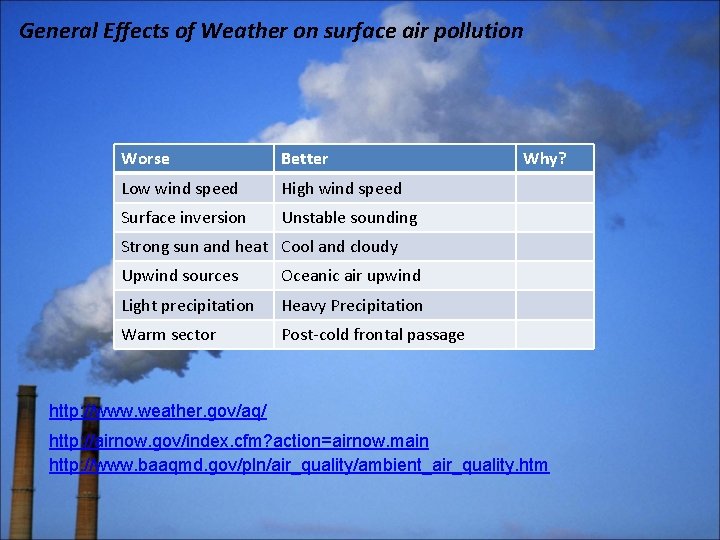
General Effects of Weather on surface air pollution Worse Better Low wind speed High wind speed Surface inversion Unstable sounding Why? Strong sun and heat Cool and cloudy Upwind sources Oceanic air upwind Light precipitation Heavy Precipitation Warm sector Post-cold frontal passage http: //www. weather. gov/aq/ http: //airnow. gov/index. cfm? action=airnow. main http: //www. baaqmd. gov/pln/air_quality/ambient_air_quality. htm
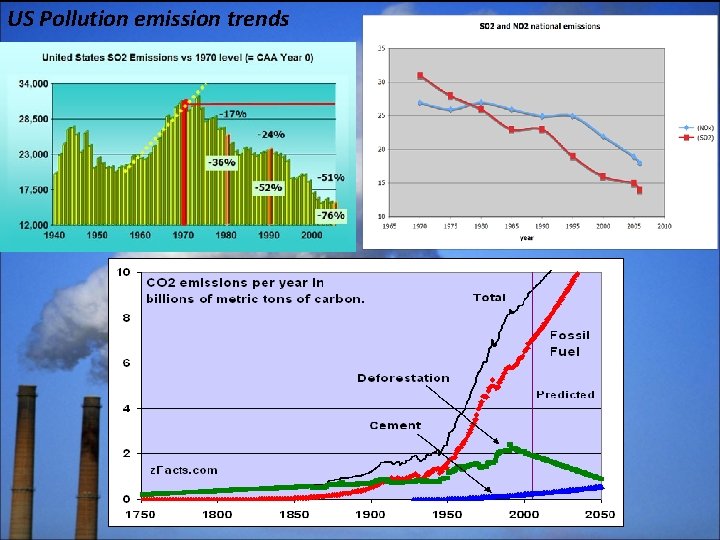
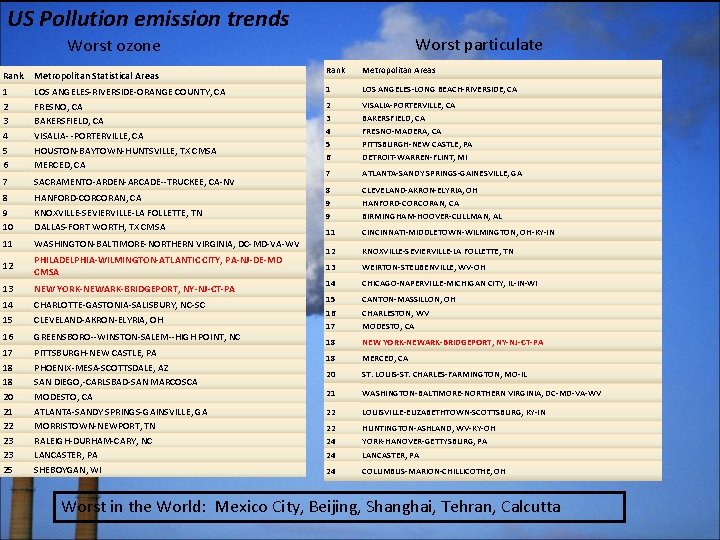
US Pollution emission trends
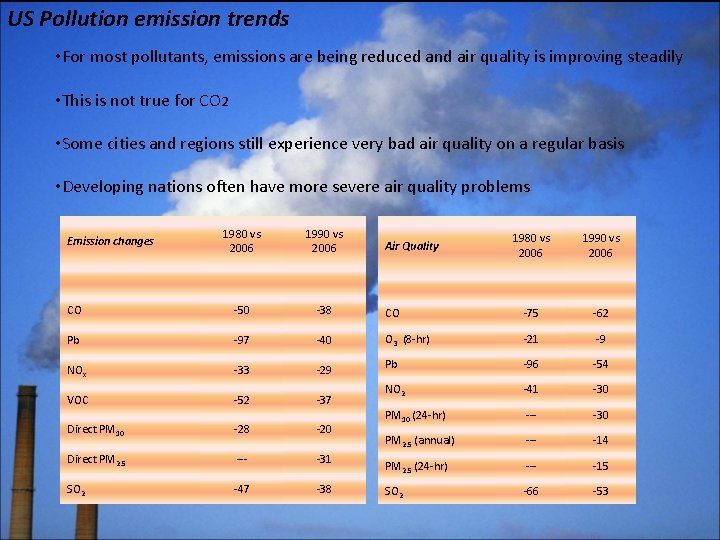
US Pollution emission trends • For most pollutants, emissions are being reduced and air quality is improving steadily • This is not true for CO 2 • Some cities and regions still experience very bad air quality on a regular basis • Developing nations often have more severe air quality problems 1980 vs 2006 1990 vs 2006 CO -50 -38 Pb -97 NOx VOC Emission changes 1980 vs 2006 1990 vs 2006 CO -75 -62 -40 O 3 (8 -hr) -21 -9 -33 -29 Pb -96 -54 -52 -37 NO 2 -41 -30 PM 10 (24 -hr) --- -30 PM 2. 5 (annual) --- -14 PM 2. 5 (24 -hr) --- -15 SO 2 -66 -53 Direct PM 10 -28 -20 Direct PM 2. 5 --- -31 SO 2 -47 -38 Air Quality
US Pollution emission trends Worst particulate Worst ozone Rank Metropolitan Statistical Areas 1 2 3 4 5 6 LOS ANGELES-RIVERSIDE-ORANGE COUNTY, CA FRESNO, CA BAKERSFIELD, CA VISALIA- -PORTERVILLE, CA HOUSTON-BAYTOWN-HUNTSVILLE, TX CMSA MERCED, CA 7 SACRAMENTO-ARDEN-ARCADE--TRUCKEE, CA-NV 8 9 10 HANFORD-CORCORAN, CA KNOXVILLE-SEVIERVILLE-LA FOLLETTE, TN DALLAS-FORT WORTH, TX CMSA 11 WASHINGTON-BALTIMORE-NORTHERN VIRGINIA, DC-MD-VA-WV 12 PHILADELPHIA-WILMINGTON-ATLANTIC CITY, PA-NJ-DE-MD CMSA 13 NEW YORK-NEWARK-BRIDGEPORT, NY-NJ-CT-PA 14 15 CHARLOTTE-GASTONIA-SALISBURY, NC-SC CLEVELAND-AKRON-ELYRIA, OH 16 GREENSBORO--WINSTON-SALEM--HIGH POINT, NC 17 18 18 20 21 22 23 23 25 PITTSBURGH-NEW CASTLE, PA PHOENIX-MESA-SCOTTSDALE, AZ SAN DIEGO, -CARLSBAD-SAN MARCOSCA MODESTO, CA ATLANTA-SANDY SPRINGS-GAINSVILLE, GA MORRISTOWN-NEWPORT, TN RALEIGH-DURHAM-CARY, NC LANCASTER, PA SHEBOYGAN, WI Rank Metropolitan Areas 1 LOS ANGELES-LONG BEACH-RIVERSIDE, CA 2 3 4 5 6 VISALIA-PORTERVILLE, CA BAKERSFIELD, CA FRESNO-MADERA, CA PITTSBURGH-NEW CASTLE, PA DETROIT-WARREN-FLINT, MI 7 ATLANTA-SANDY SPRINGS-GAINESVILLE, GA 8 9 9 CLEVELAND-AKRON-ELYRIA, OH HANFORD-CORCORAN, CA BIRMINGHAM-HOOVER-CULLMAN, AL 11 CINCINNATI-MIDDLETOWN-WILMINGTON, OH-KY-IN 12 KNOXVILLE-SEVIERVILLE-LA FOLLETTE, TN 13 WEIRTON-STEUBENVILLE, WV-OH 14 CHICAGO-NAPERVILLE-MICHIGAN CITY, IL-IN-WI 15 16 17 CANTON-MASSILLON, OH CHARLESTON, WV MODESTO, CA 18 NEW YORK-NEWARK-BRIDGEPORT, NY-NJ-CT-PA 18 MERCED, CA 20 ST. LOUIS-ST. CHARLES-FARMINGTON, MO-IL 21 WASHINGTON-BALTIMORE-NORTHERN VIRGINIA, DC-MD-VA-WV 22 LOUISVILLE-ELIZABETHTOWN-SCOTTSBURG, KY-IN 22 24 24 HUNTINGTON-ASHLAND, WV-KY-OH YORK-HANOVER-GETTYSBURG, PA LANCASTER, PA 24 COLUMBUS-MARION-CHILLICOTHE, OH Worst in the World: Mexico City, Beijing, Shanghai, Tehran, Calcutta
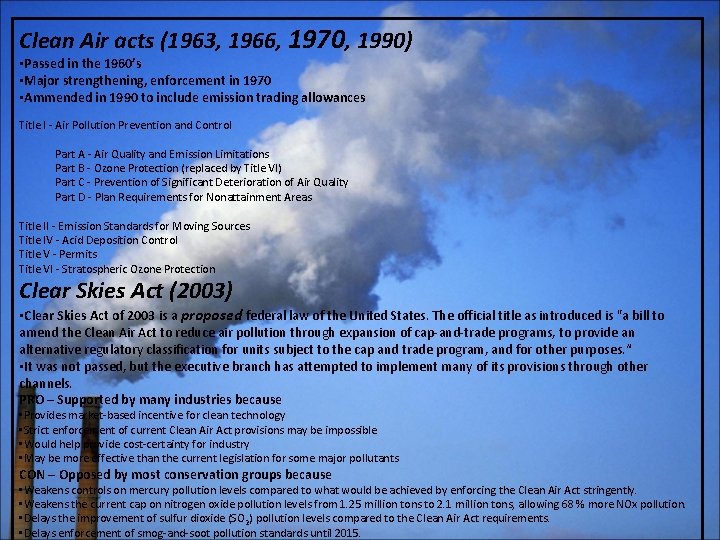
Clean Air acts (1963, 1966, 1970, 1990) • Passed in the 1960’s • Major strengthening, enforcement in 1970 • Ammended in 1990 to include emission trading allowances Title I - Air Pollution Prevention and Control Part A - Air Quality and Emission Limitations Part B - Ozone Protection (replaced by Title VI) Part C - Prevention of Significant Deterioration of Air Quality Part D - Plan Requirements for Nonattainment Areas Title II - Emission Standards for Moving Sources Title IV - Acid Deposition Control Title V - Permits Title VI - Stratospheric Ozone Protection Clear Skies Act (2003) • Clear Skies Act of 2003 is a proposed federal law of the United States. The official title as introduced is "a bill to amend the Clean Air Act to reduce air pollution through expansion of cap-and-trade programs, to provide an alternative regulatory classification for units subject to the cap and trade program, and for other purposes. “ • It was not passed, but the executive branch has attempted to implement many of its provisions through other channels. PRO – Supported by many industries because • Provides market-based incentive for clean technology • Strict enforcement of current Clean Air Act provisions may be impossible • Would help provide cost-certainty for industry • May be more effective than the current legislation for some major pollutants CON – Opposed by most conservation groups because • Weakens controls on mercury pollution levels compared to what would be achieved by enforcing the Clean Air Act stringently. • Weakens the current cap on nitrogen oxide pollution levels from 1. 25 million tons to 2. 1 million tons, allowing 68 % more NOx pollution. • Delays the improvement of sulfur dioxide (SO 2) pollution levels compared to the Clean Air Act requirements. • Delays enforcement of smog-and-soot pollution standards until 2015.
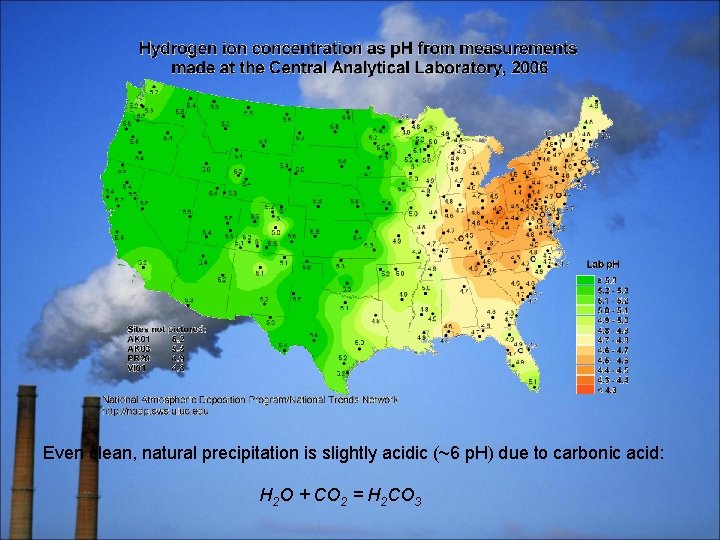
Even clean, natural precipitation is slightly acidic (~6 p. H) due to carbonic acid: H 2 O + CO 2 = H 2 CO 3
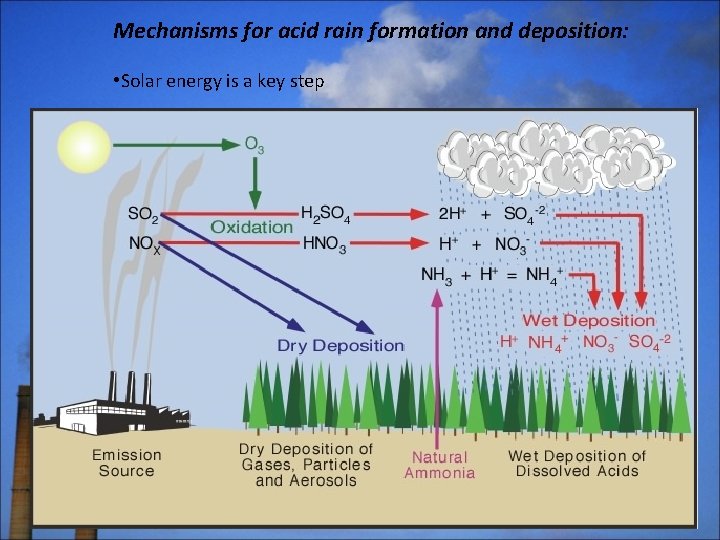
Mechanisms for acid rain formation and deposition: • Solar energy is a key step
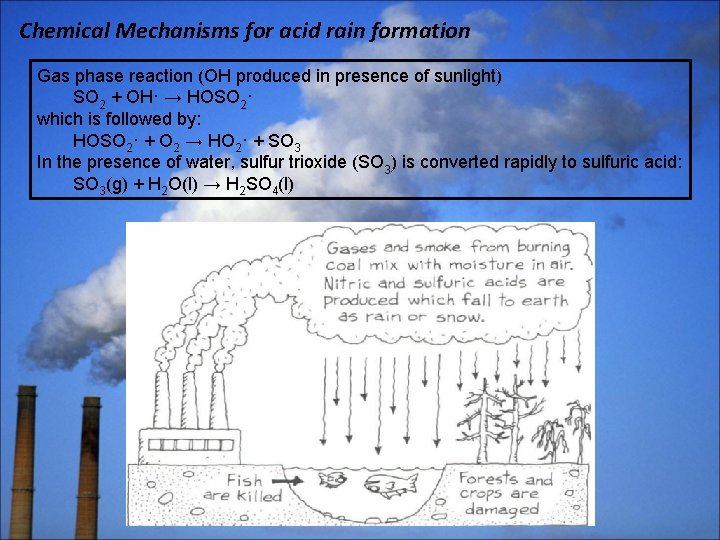
Chemical Mechanisms for acid rain formation Gas phase reaction (OH produced in presence of sunlight) SO 2 + OH· → HOSO 2· which is followed by: HOSO 2· + O 2 → HO 2· + SO 3 In the presence of water, sulfur trioxide (SO 3) is converted rapidly to sulfuric acid: SO 3(g) + H 2 O(l) → H 2 SO 4(l)
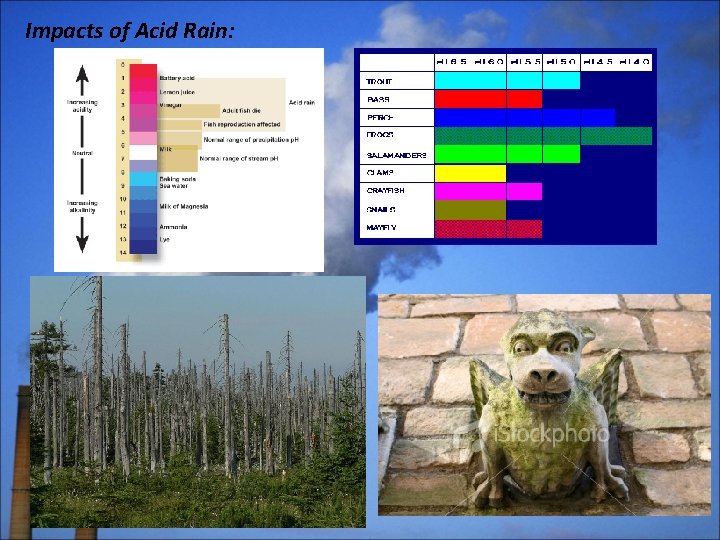
Impacts of Acid Rain:
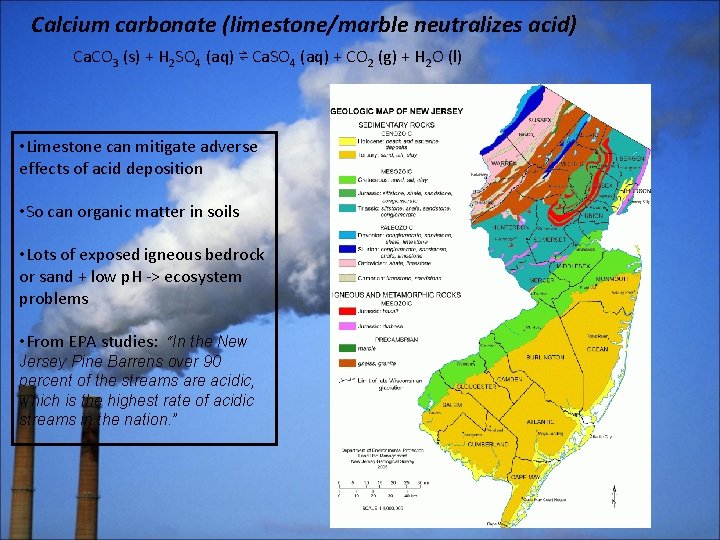
Calcium carbonate (limestone/marble neutralizes acid) Ca. CO 3 (s) + H 2 SO 4 (aq) ⇌ Ca. SO 4 (aq) + CO 2 (g) + H 2 O (l) • Limestone can mitigate adverse effects of acid deposition • So can organic matter in soils • Lots of exposed igneous bedrock or sand + low p. H -> ecosystem problems • From EPA studies: “In the New Jersey Pine Barrens over 90 percent of the streams are acidic, which is the highest rate of acidic streams in the nation. ”
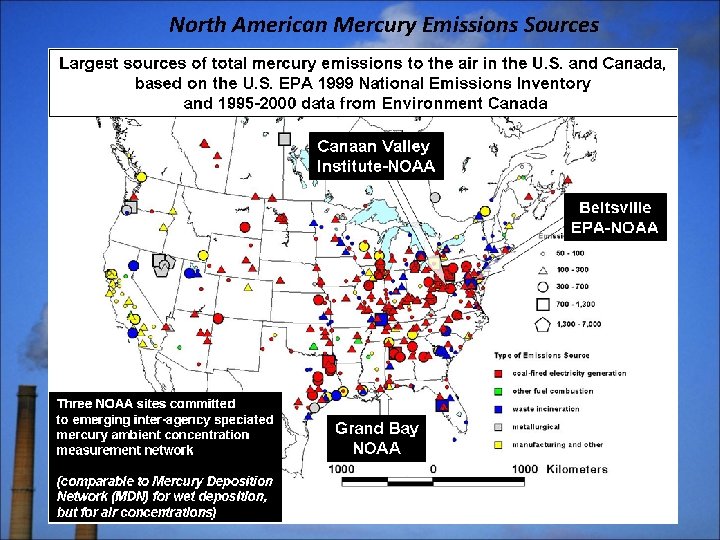
North American Mercury Emissions Sources
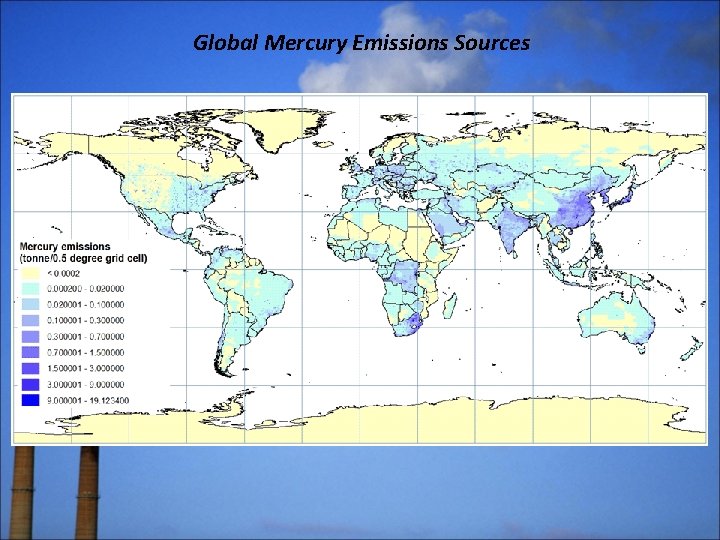
Global Mercury Emissions Sources
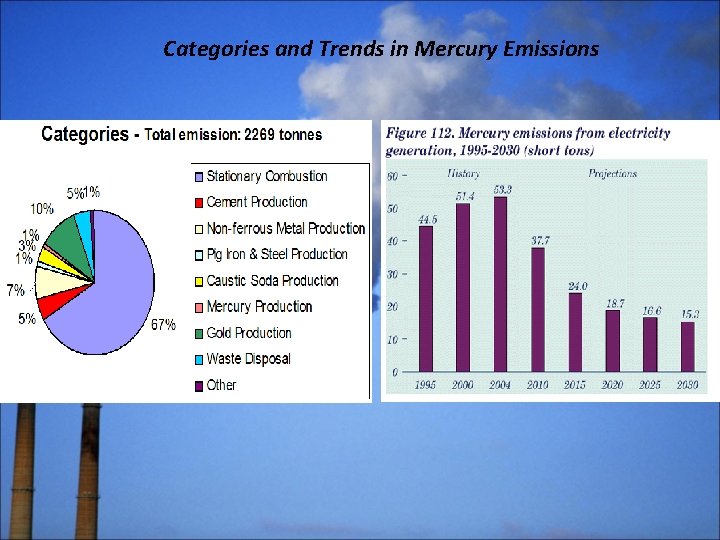
Categories and Trends in Mercury Emissions
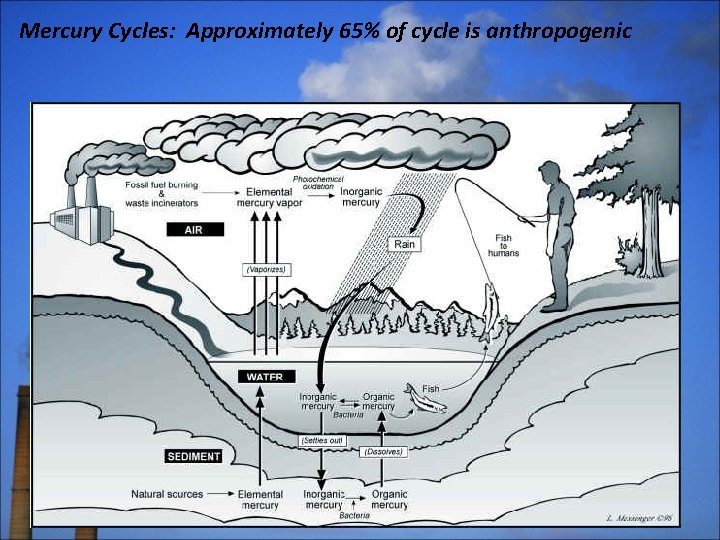
Mercury Cycles: Approximately 65% of cycle is anthropogenic
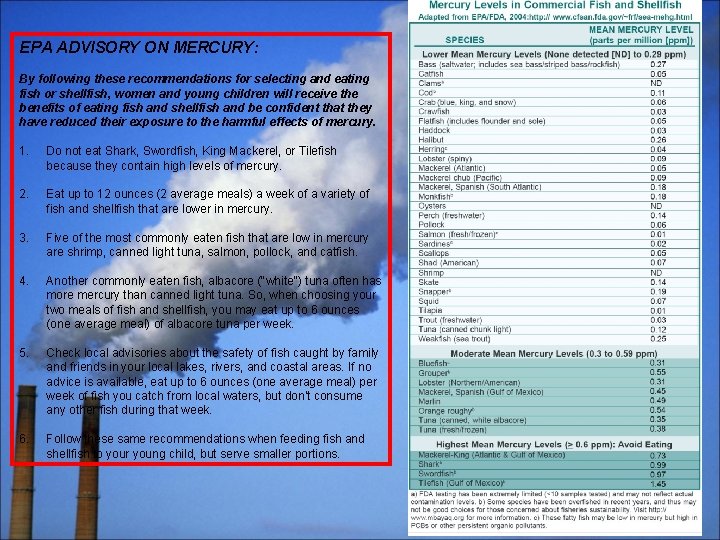
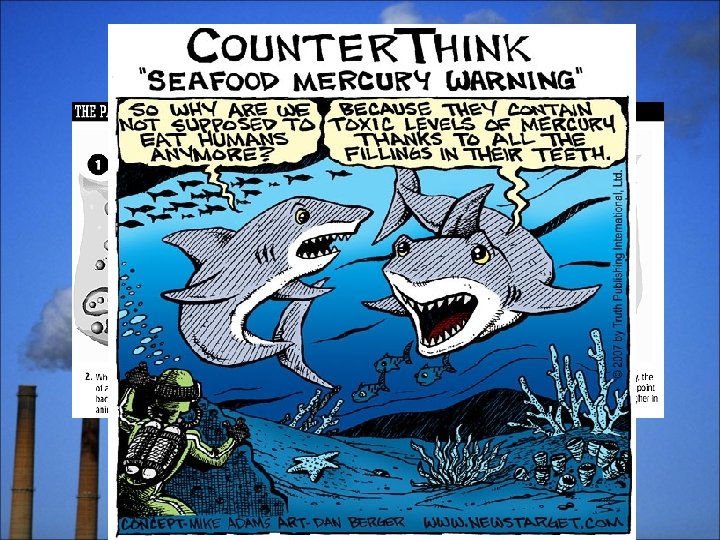
EPA ADVISORY ON MERCURY: By following these recommendations for selecting and eating fish or shellfish, women and young children will receive the benefits of eating fish and shellfish and be confident that they have reduced their exposure to the harmful effects of mercury. 1. Do not eat Shark, Swordfish, King Mackerel, or Tilefish because they contain high levels of mercury. 2. Eat up to 12 ounces (2 average meals) a week of a variety of fish and shellfish that are lower in mercury. 3. Five of the most commonly eaten fish that are low in mercury are shrimp, canned light tuna, salmon, pollock, and catfish. 4. Another commonly eaten fish, albacore ("white") tuna often has more mercury than canned light tuna. So, when choosing your two meals of fish and shellfish, you may eat up to 6 ounces (one average meal) of albacore tuna per week. 5. Check local advisories about the safety of fish caught by family and friends in your local lakes, rivers, and coastal areas. If no advice is available, eat up to 6 ounces (one average meal) per week of fish you catch from local waters, but don't consume any other fish during that week. 6. Follow these same recommendations when feeding fish and shellfish to your young child, but serve smaller portions.