
Polling Points Are all polls accurate Its important
- Slides: 28
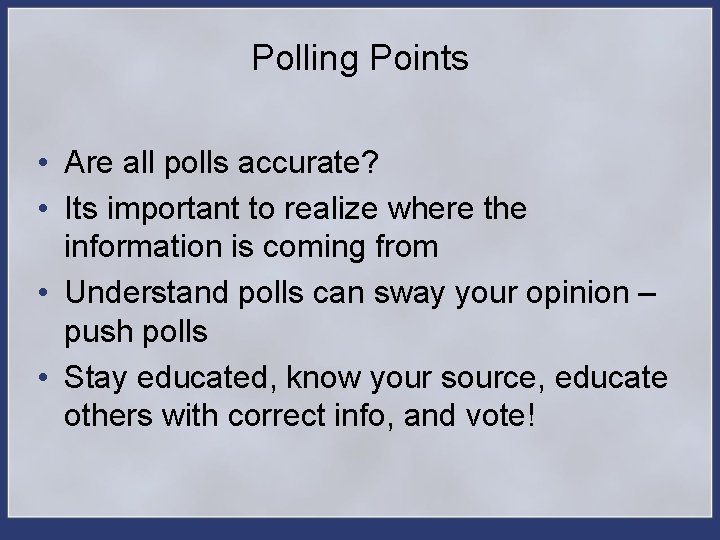
Polling Points • Are all polls accurate? • Its important to realize where the information is coming from • Understand polls can sway your opinion – push polls • Stay educated, know your source, educate others with correct info, and vote!
4|2
Chapter Four American Political Culture
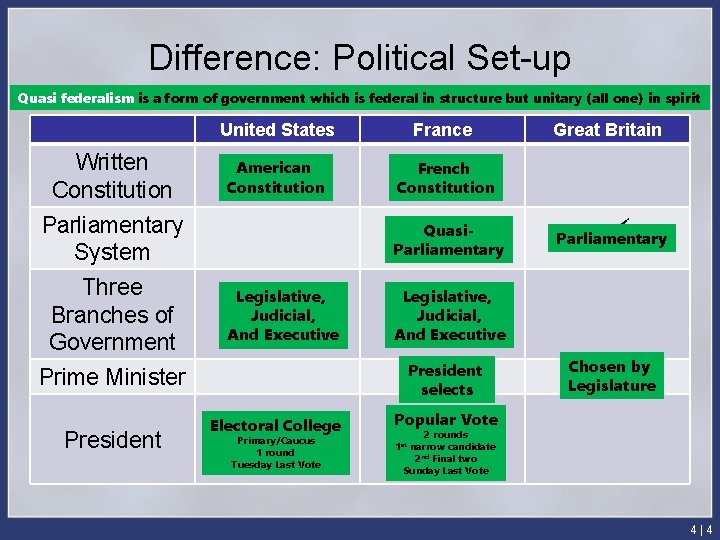
Difference: Political Set-up Quasi federalism is a form of government which is federal in structure but unitary (all one) in spirit Written Constitution United States France American Constitution French Constitution Parliamentary System Three Branches of Government Quasi. Parliamentary Legislative, Judicial, And Executive President Electoral College Primary/Caucus 1 round Tuesday Last Vote Parliamentary Legislative, Judicial, And Executive President selects Prime Minister Great Britain Chosen by Legislature Popular Vote 2 rounds 1 st narrow candidate 2 nd Final two Sunday Last Vote 4|4
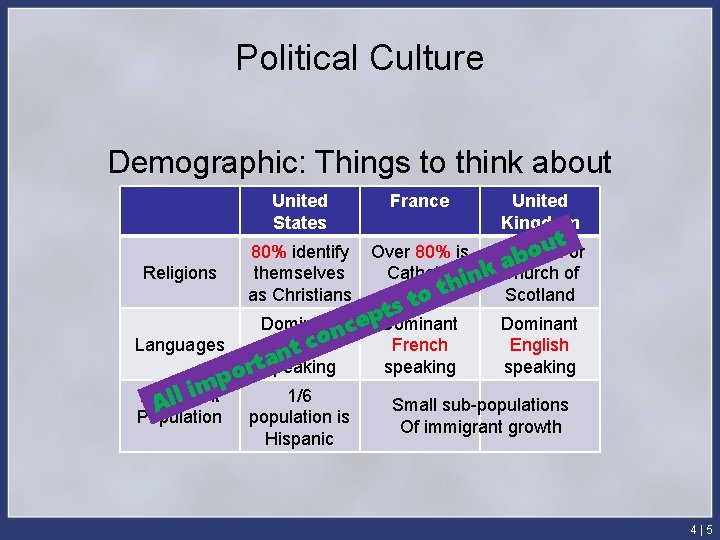
Political Culture Demographic: Things to think about United States Religions France 80% identify themselves as Christians t u or Over 80% is Anglican o b a Catholic ink Church of th Scotland to s t p ce Dominant n o c Languages English t n a t or speaking p m i Immigrant ll A Population 1/6 population is Hispanic United Kingdom French speaking Dominant English speaking Small sub-populations Of immigrant growth 4|5
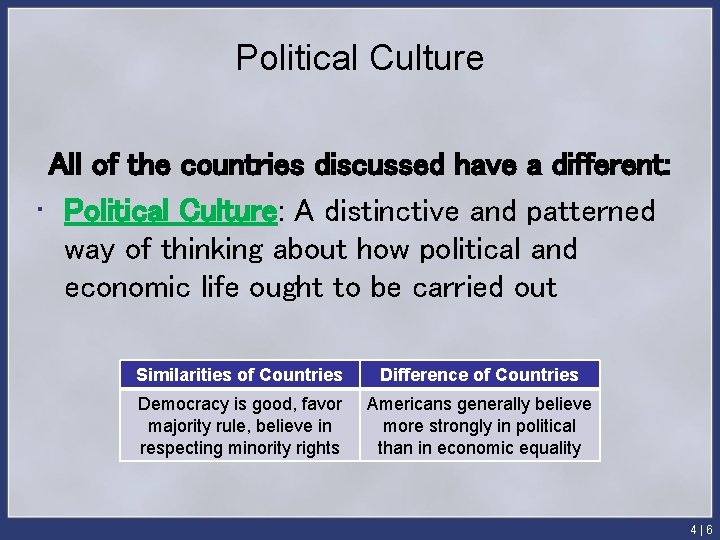
Political Culture All of the countries discussed have a different: • Political Culture: A distinctive and patterned way of thinking about how political and economic life ought to be carried out Similarities of Countries Difference of Countries Democracy is good, favor majority rule, believe in respecting minority rights Americans generally believe more strongly in political than in economic equality 4|6
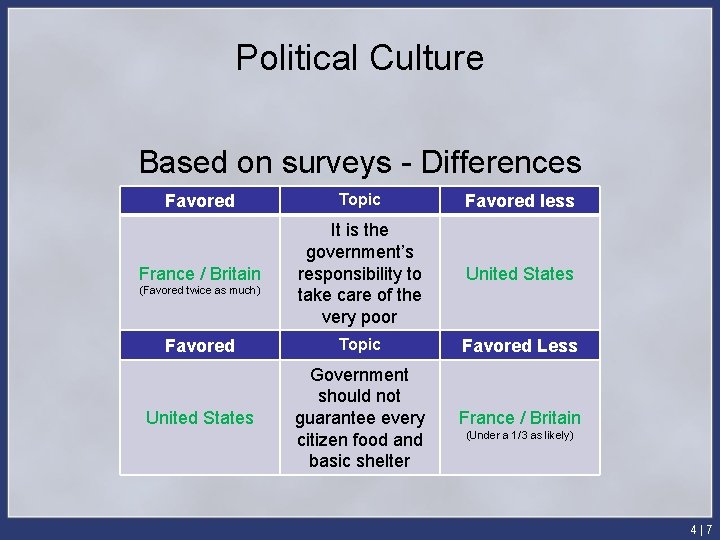
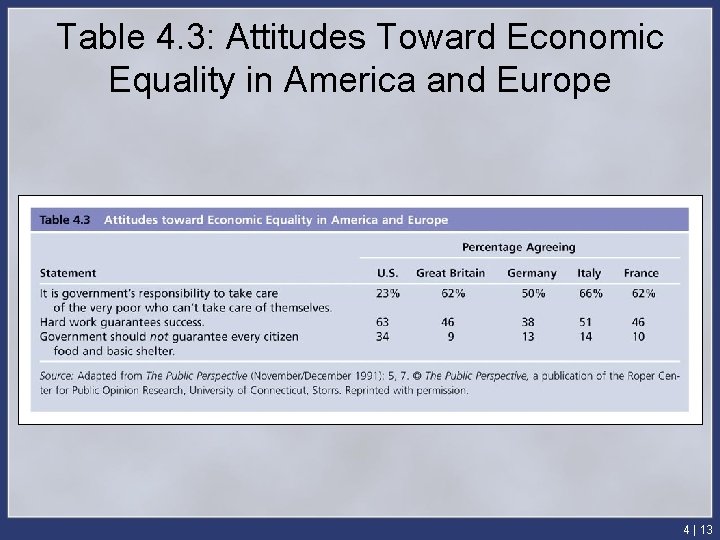
Political Culture Based on surveys - Differences Favored Topic Favored less France / Britain It is the government’s responsibility to take care of the very poor United States Favored Topic Favored Less United States Government should not guarantee every citizen food and basic shelter France / Britain (Favored twice as much) (Under a 1/3 as likely) 4|7
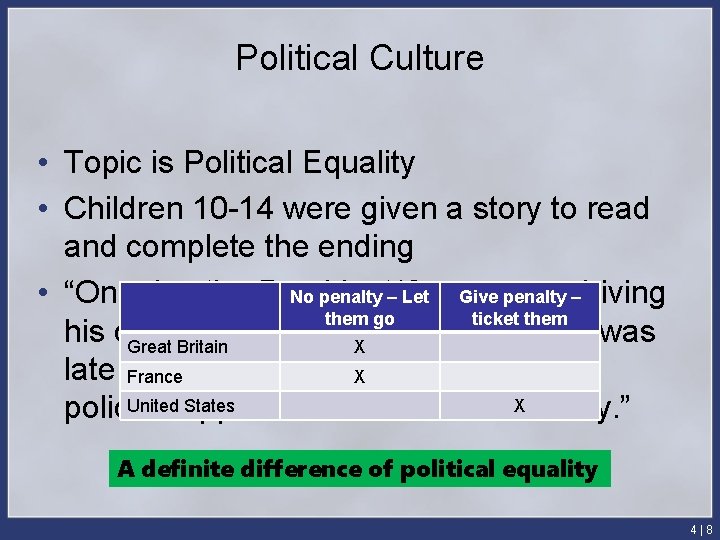
Political Culture • Topic is Political Equality • Children 10 -14 were given a story to read and complete the ending No penalty – Let Give penalty • “One day the President/Queen was –driving them go ticket them his car to a meeting. XBecause he/she was Great Britain late, France he/she was driving very fast. The X United States X story. ” police stopped the car: Finish the A definite difference of political equality 4|8
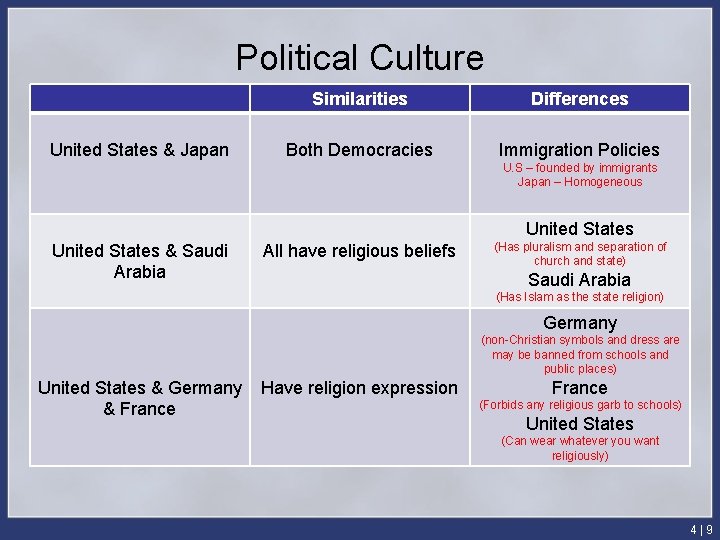
Political Culture United States & Japan Similarities Differences Both Democracies Immigration Policies U. S – founded by immigrants Japan – Homogeneous United States & Saudi Arabia All have religious beliefs (Has pluralism and separation of church and state) Saudi Arabia (Has Islam as the state religion) Germany (non-Christian symbols and dress are may be banned from schools and public places) United States & Germany & France Have religion expression France (Forbids any religious garb to schools) United States (Can wear whatever you want religiously) 4|9
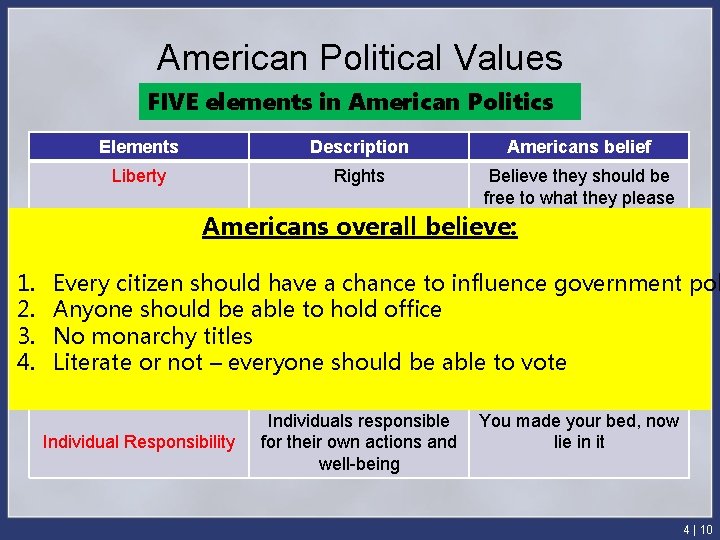
American Political Values FIVE elements in American Politics Elements Description Americans belief Liberty Rights Believe they should be free to what they please Equality Equaloverall chance to believe: Believe everyone should Americans participate and succeed 1. 2. 3. 4. have an equal vote Government is to influence Think accountability is pol Every citizen should have a chance government Democracy accountable to the people huge – someone to Anyone should be able to hold office blame No monarchy titles Take community affairs Believe in giving back to Literate not – everyone should be ablehelp to the vote Civic or Duty seriously and become well-being of our Individual Responsibility involved when possible country Individuals responsible for their own actions and well-being You made your bed, now lie in it 4 | 10
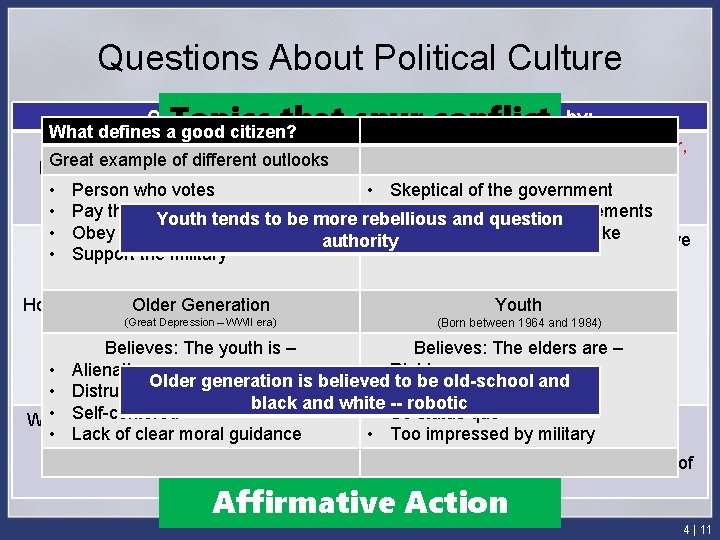
Questions About Political Culture Answered by: Topics that spur conflict Question What defines a good citizen? • Books we read - speeches they hear, Great example of different outlooks How do we know people share these • Slogans we respond to & political beliefs? choices of the government • Person who votes • Skeptical Observations of foreign visitors • Pay their taxes • Ready to joinquestion protest movements Youth tends to be more rebellious and • Obey the law • • Boycott good. White they do not like believe Hypocritical; Americans authority • Support the military in equality of opportunity, but many Abortion Mortality long deny equality of African How do we explain inconsistent Americans. Youth Older behavior Generation (Great Depression – WWII era) betweento 1964 1984) but yet with these beliefs? • People(Born preach beand honest, steal from employers or are on taxes Believes: The youth is – Believes: The elders – Inconsistency between values and • Alienating • Rigid Older generation is believed to be old-school and behavior • Distrustful • Conformist black and white -- robotic • is. Self-centered status liberties quo Why there so much political conflict in • • So Personal conflict • Lack of U. S. clear history? moral guidance • • Too impressedofby military Interpretation conflicts Religion Immigration • Civil War: Rights of slaves v. Rights of slave owner Affirmative Action 4 | 11
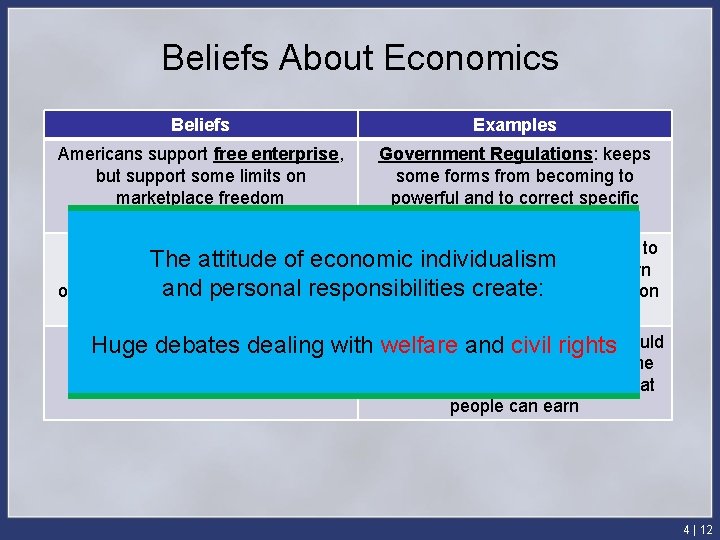
Beliefs About Economics Beliefs Americans support free enterprise, but support some limits on marketplace freedom Examples Government Regulations: keeps some forms from becoming to powerful and to correct specific abuses show: Polls If everyone equal opportunity to Americans are willing toindividualism trulyhas help The attitude of economic Americans believe equality getthe ahead, then is alright to earn people “in in need” butofagainst idea of ithelping and responsibilities create: opportunity but not personal equality of result higher salaries and wages based on who they deem “able to take care of themselves” how hard people work Americans have a widely shared with. Support the idea that earnings should Huge debates dealing welfare and civil rights Dislike preferential and theand useoppose ofand the commitment to economichiring programs be based on ability Economic Individualism quotas to deal with racial inequality individualism idea of. Personal having any top limit on what Responsibility people can earn 4 | 12
Table 4. 3: Attitudes Toward Economic Equality in America and Europe 4 | 13
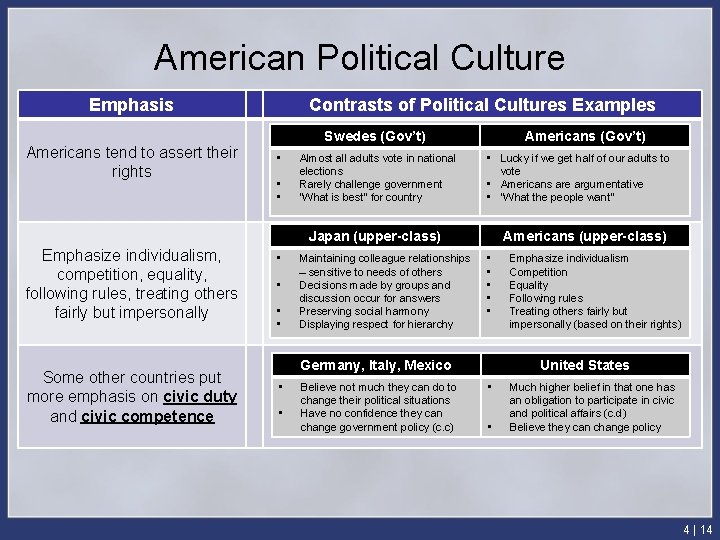
American Political Culture Emphasis Americans tend to assert their rights Contrasts of Political Cultures Examples Swedes (Gov’t) • • • Almost all adults vote in national elections Rarely challenge government “What is best” for country Americans (Gov’t) • Lucky if we get half of our adults to vote • Americans are argumentative • “What the people want” Japan (upper-class) Emphasize individualism, competition, equality, following rules, treating others fairly but impersonally Some other countries put more emphasis on civic duty and civic competence • • Maintaining colleague relationships – sensitive to needs of others Decisions made by groups and discussion occur for answers Preserving social harmony Displaying respect for hierarchy Americans (upper-class) • • • Germany, Italy, Mexico • • Believe not much they can do to change their political situations Have no confidence they can change government policy (c. c) Emphasize individualism Competition Equality Following rules Treating others fairly but impersonally (based on their rights) United States • • Much higher belief in that one has an obligation to participate in civic and political affairs (c. d) Believe they can change policy 4 | 14
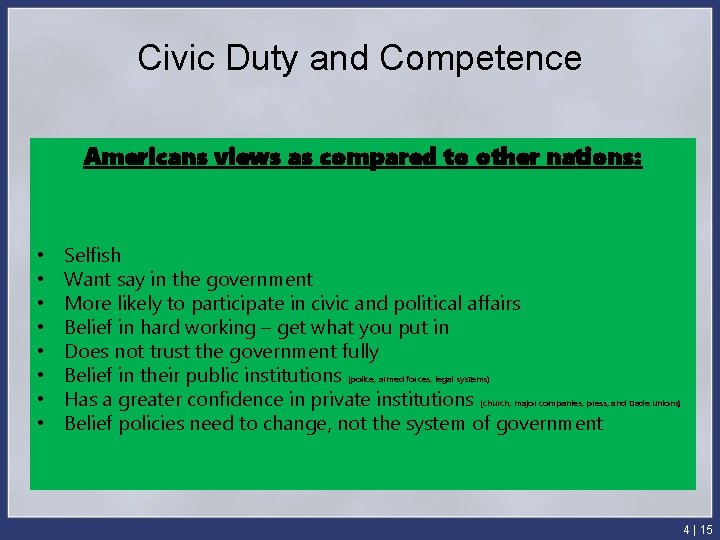
Civic Duty and Competence Americans as compared to other nations: • Civic duty: views a belief that one has an obligation to participate in civic and political affairs • • Civic Selfish competence: a belief that one can affect • Want say in the government policies • More likely to participate in civic and political affairs • • • Belief in hard working – get what you put in Does not trust the government fully Belief in their public institutions (police, armed forces, legal systems) Has a greater confidence in private institutions (church, major companies, press, and trade unions) Belief policies need to change, not the system of government 4 | 15
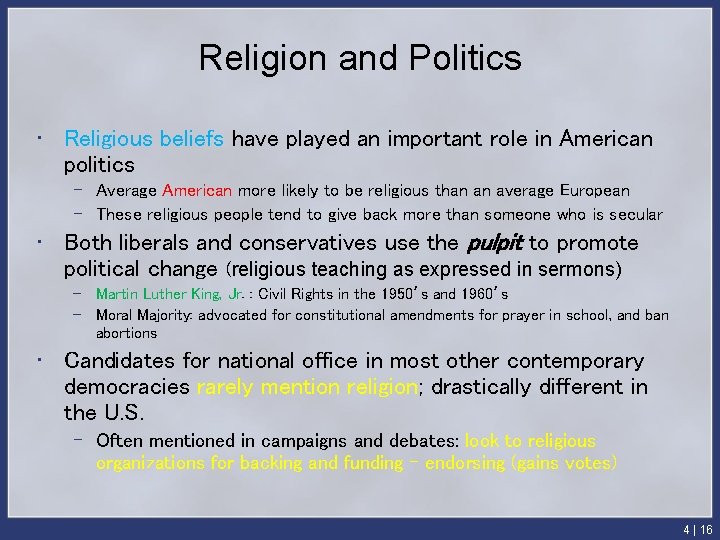
Religion and Politics • Religious beliefs have played an important role in American politics – Average American more likely to be religious than an average European – These religious people tend to give back more than someone who is secular • Both liberals and conservatives use the pulpit to promote political change (religious teaching as expressed in sermons) – Martin Luther King, Jr. : Civil Rights in the 1950’s and 1960’s – Moral Majority: advocated for constitutional amendments for prayer in school, and ban abortions • Candidates for national office in most other contemporary democracies rarely mention religion; drastically different in the U. S. – Often mentioned in campaigns and debates: look to religious organizations for backing and funding – endorsing (gains votes) 4 | 16
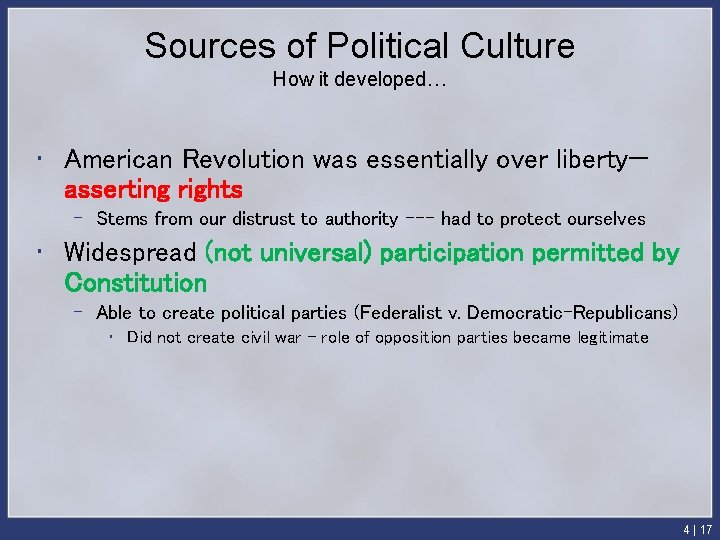
Sources of Political Culture How it developed… • American Revolution was essentially over liberty— asserting rights – Stems from our distrust to authority --- had to protect ourselves • Widespread (not universal) participation permitted by Constitution – Able to create political parties (Federalist v. Democratic-Republicans) • Did not create civil war – role of opposition parties became legitimate 4 | 17
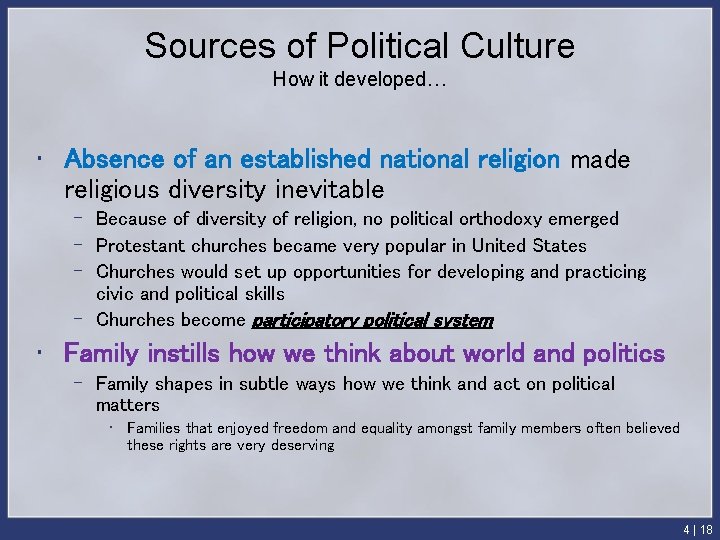
Sources of Political Culture How it developed… • Absence of an established national religion made religious diversity inevitable – Because of diversity of religion, no political orthodoxy emerged – Protestant churches became very popular in United States – Churches would set up opportunities for developing and practicing civic and political skills – Churches become participatory political system • Family instills how we think about world and politics – Family shapes in subtle ways how we think and act on political matters • Families that enjoyed freedom and equality amongst family members often believed these rights are very deserving 4 | 18
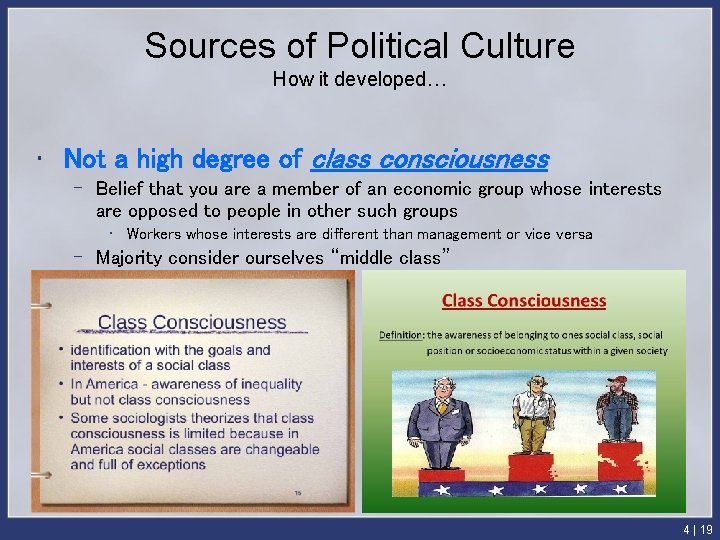
Sources of Political Culture How it developed… • Not a high degree of class consciousness – Belief that you are a member of an economic group whose interests are opposed to people in other such groups • Workers whose interests are different than management or vice versa – Majority consider ourselves “middle class” 4 | 19
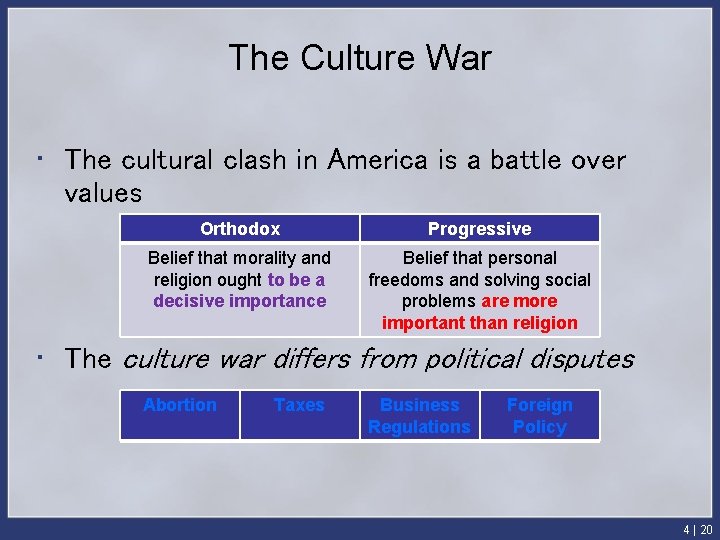
The Culture War • The cultural clash in America is a battle over values Orthodox Progressive Belief that morality and religion ought to be a decisive importance Belief that personal freedoms and solving social problems are more important than religion • The culture war differs from political disputes Abortion Taxes Business Regulations Foreign Policy 4 | 20
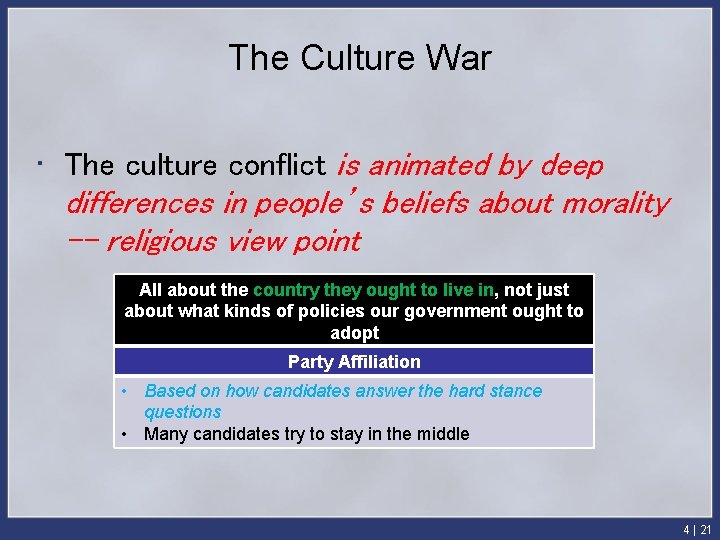
The Culture War • The culture conflict is animated by deep differences in people’s beliefs about morality -- religious view point All about the country they ought to live in, not just about what kinds of policies our government ought to adopt Party Affiliation • Based on how candidates answer the hard stance questions • Many candidates try to stay in the middle 4 | 21
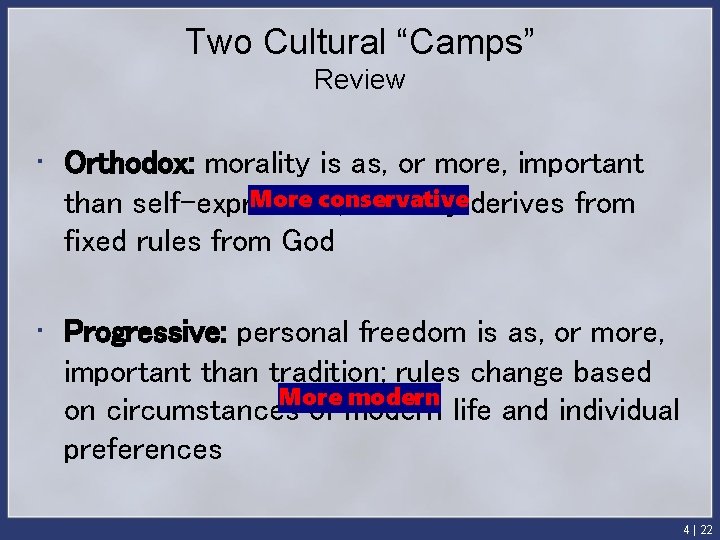
Two Cultural “Camps” Review • Orthodox: morality is as, or more, important More conservative than self-expression; morality derives from fixed rules from God • Progressive: personal freedom is as, or more, important than tradition; rules change based More modern on circumstances of modern life and individual preferences 4 | 22
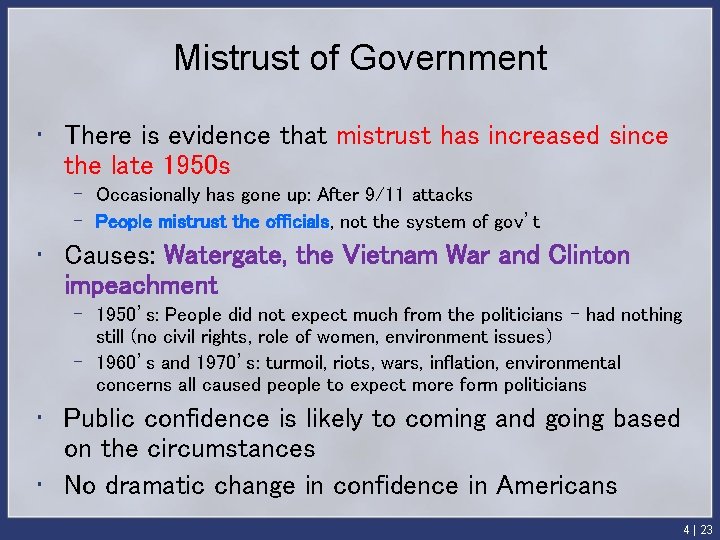
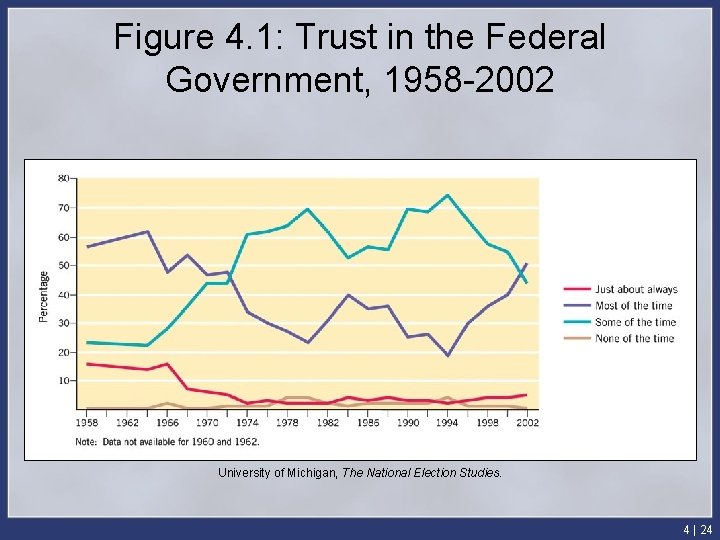
Mistrust of Government • There is evidence that mistrust has increased since the late 1950 s – Occasionally has gone up: After 9/11 attacks – People mistrust the officials, not the system of gov’t • Causes: Watergate, the Vietnam War and Clinton impeachment – 1950’s: People did not expect much from the politicians – had nothing still (no civil rights, role of women, environment issues) – 1960’s and 1970’s: turmoil, riots, wars, inflation, environmental concerns all caused people to expect more form politicians • Public confidence is likely to coming and going based on the circumstances • No dramatic change in confidence in Americans 4 | 23
Figure 4. 1: Trust in the Federal Government, 1958 -2002 University of Michigan, The National Election Studies. 4 | 24
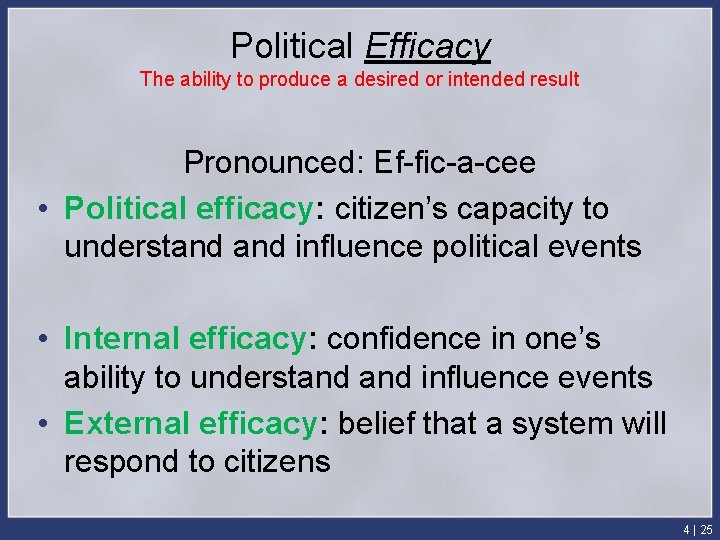
Political Efficacy The ability to produce a desired or intended result Pronounced: Ef-fic-a-cee • Political efficacy: citizen’s capacity to understand influence political events • Internal efficacy: confidence in one’s ability to understand influence events • External efficacy: belief that a system will respond to citizens 4 | 25
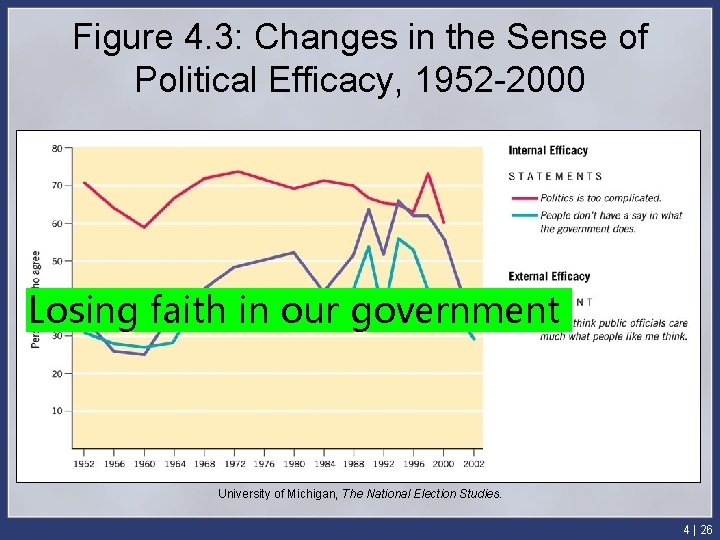
Figure 4. 3: Changes in the Sense of Political Efficacy, 1952 -2000 Losing faith in our government University of Michigan, The National Election Studies. 4 | 26
Political Tolerance • A minimal level of tolerance is crucial to democratic politics – Must have reasonable tolerance of opinions and actions of others – Not being open minded would result in a failed democracy – Must be able to have a discussion of ideas • Most Americans support tolerance in the abstract – Existing in thought or as an idea but not having a physical or concrete existence • Most Americans would deny these rights in specific cases – An individual always has one case they feel strongly about causing intolerance 4 | 27
How Very Unpopular Groups Survive 1. Most people do not act on their beliefs – Majority of the public think about their disapproval rather than act on it -- (i. e) not many block a person from speaking or teaching 2. Officeholders and activists are more tolerant than the general public – This point has been disputed a lot 3. Usually there is no consensus on whom to persecute – 1950’s: communist were disliked because they were considered a threat – were they really? 4. Courts are sufficiently insulated from public opinion so they can act to enforce constitutional protections – Their judgements are not tainted or influenced 4 | 28