
Pollinators Whats happening and what you can do
- Slides: 26
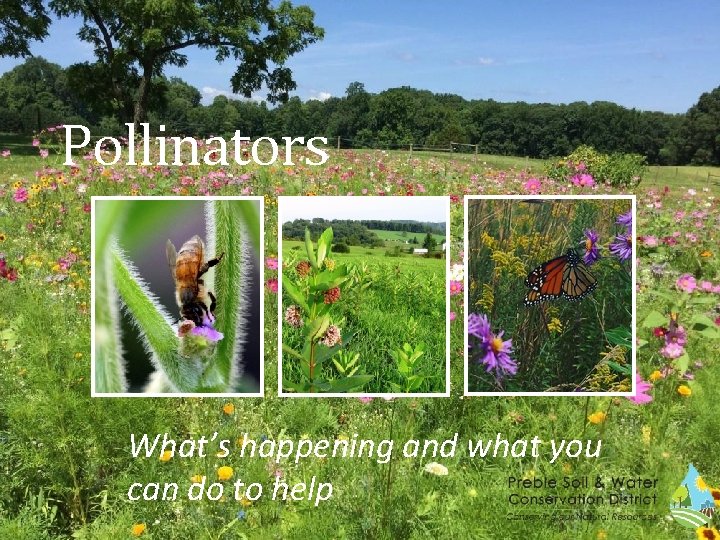
Pollinators What’s happening and what you can do to help
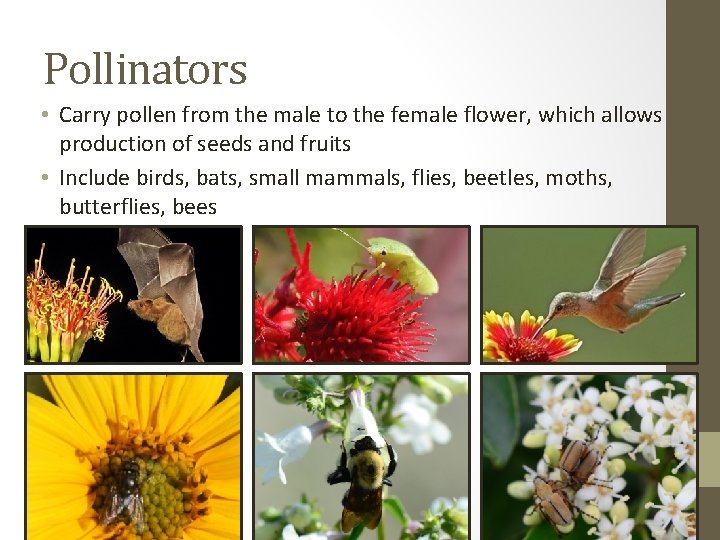
Pollinators • Carry pollen from the male to the female flower, which allows production of seeds and fruits • Include birds, bats, small mammals, flies, beetles, moths, butterflies, bees
Importance of Pollinators
Importance of Pollinators • Vital to creating and maintaining habitats and ecosystems, affects animals and our environment • Biodiversity • Agriculture and the economy • Benefits to self pollinating crops
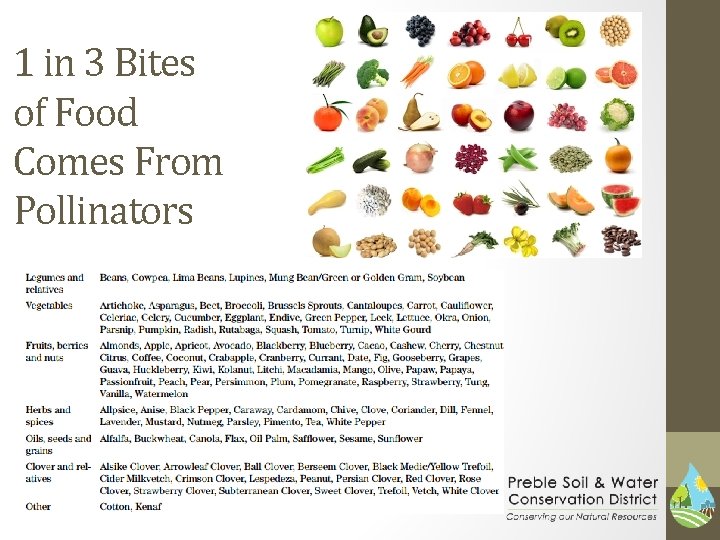
1 in 3 Bites of Food Comes From Pollinators
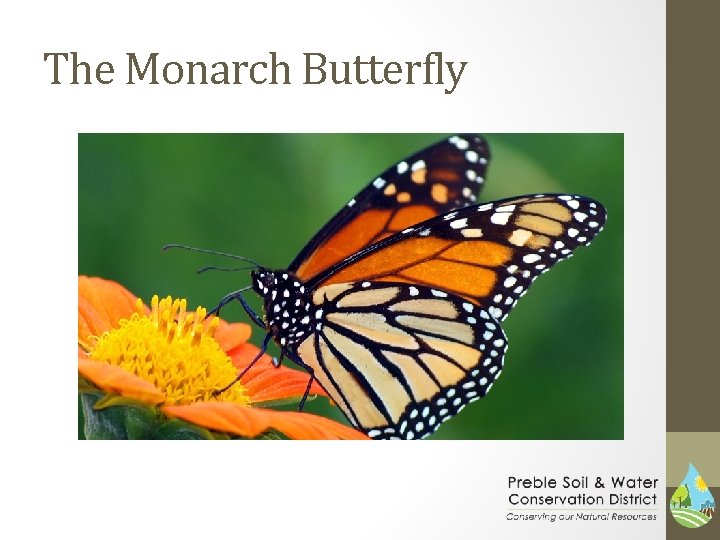
The Monarch Butterfly
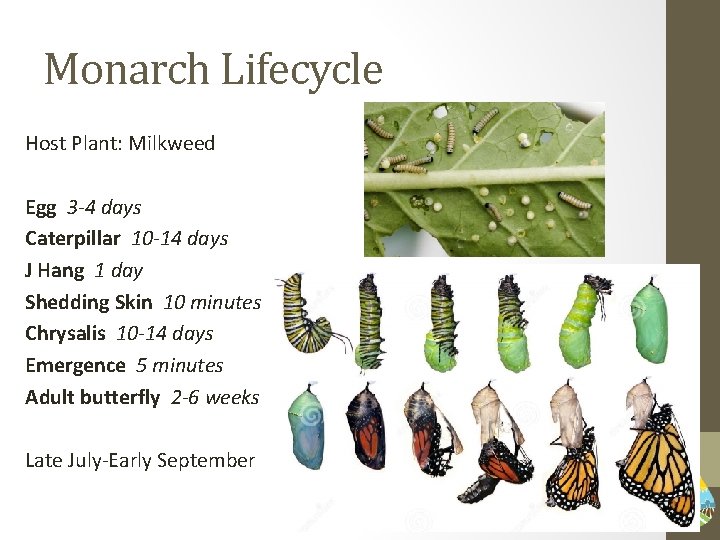
Monarch Lifecycle Host Plant: Milkweed Egg 3 -4 days Caterpillar 10 -14 days J Hang 1 day Shedding Skin 10 minutes Chrysalis 10 -14 days Emergence 5 minutes Adult butterfly 2 -6 weeks Late July-Early September
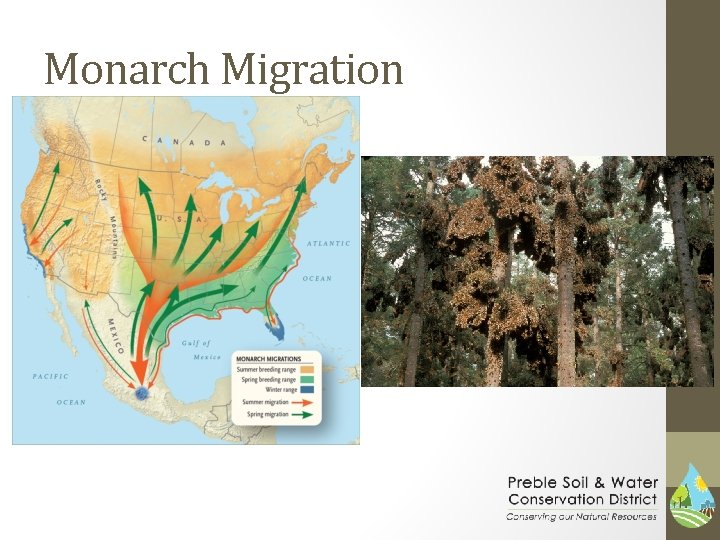
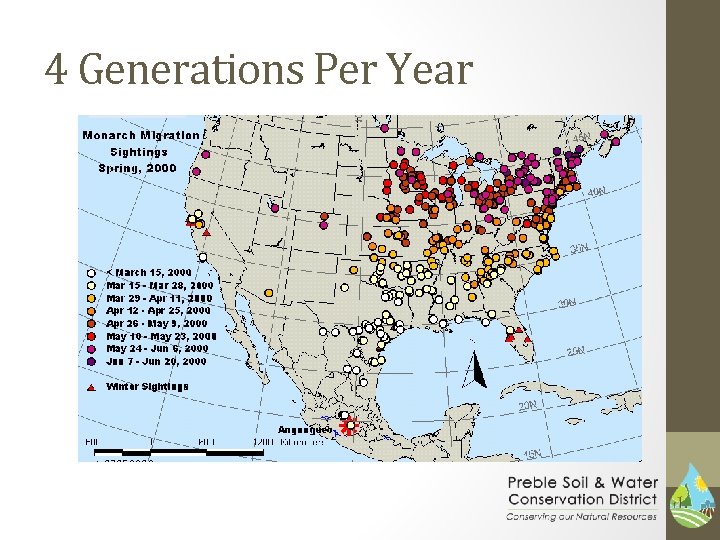
Monarch Migration
4 Generations Per Year
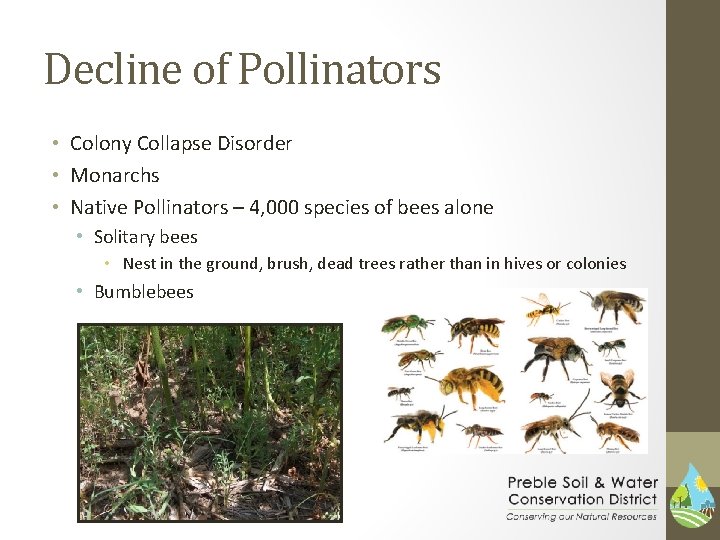
Decline of Pollinators • Colony Collapse Disorder • Monarchs • Native Pollinators – 4, 000 species of bees alone • Solitary bees • Nest in the ground, brush, dead trees rather than in hives or colonies • Bumblebees
Causes • Loss of habitat • Land conversion • Invasive species • Herbicide use • • Disease Parasites Insecticides Changing weather patterns
National Strategy to Help Pollinators and Their Habitat • Released by the White House in 2015 • 3 Main Goals • Honey Bees: Reduce honey bee colony losses during winter to no more than 15% within 10 years. • Monarch Butterflies: Increase the Eastern population of the monarch butterfly to 225 million butterflies occupying an area of approximately 15 acres (6 hectares) in the overwintering grounds in Mexico, through domestic/international actions and publicprivate partnerships, by 2020. • Pollinator Habitat Acreage: Restore or enhance 7 million acres of land for pollinators over the next 5 years through federal actions and public/private partnerships.
In the Headlines • In August, Minnesota Governor Mark Dayton issued an executive order regarding the use of neonicotinoid insecticides. Now must prove a need before applying. • Last spring Scotts Miracle-Gro Company announced they will no longer use neonicotinoids in their Ortho lawn and garden products beginning in 2017. • General Mills to donate $2 million to establish 100, 000 acres of pollinator habitat • Report from the United Nations estimates 40% of the world’s pollinators are facing extinction
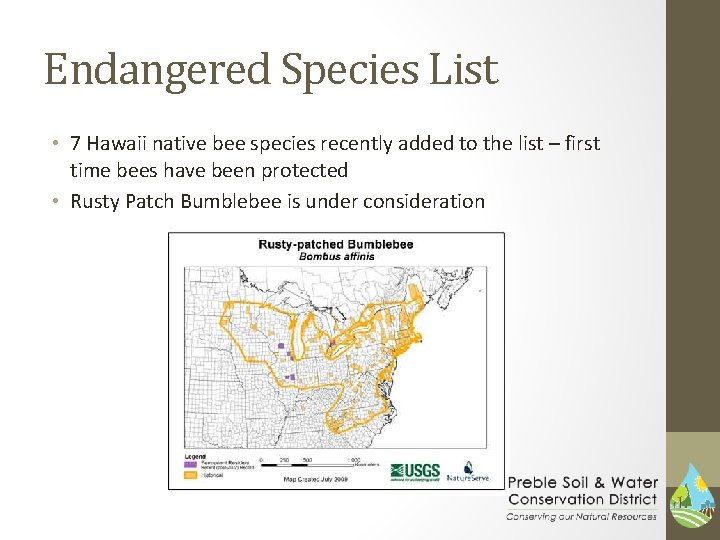
Endangered Species List • 7 Hawaii native bee species recently added to the list – first time bees have been protected • Rusty Patch Bumblebee is under consideration
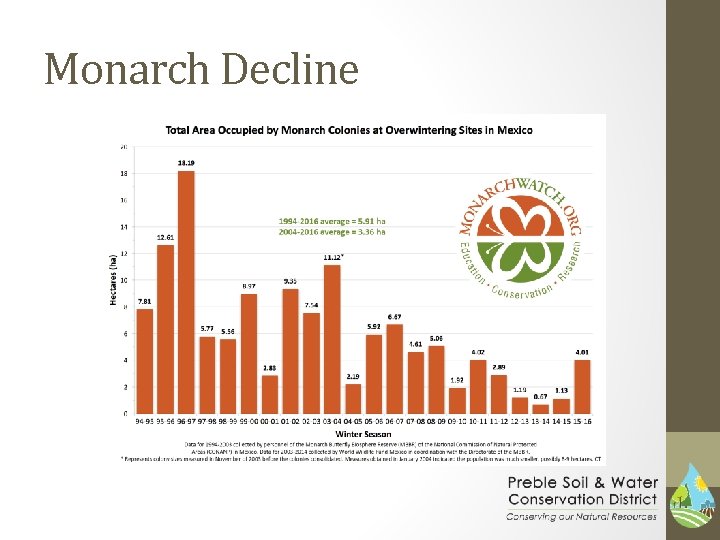
Monarch Decline
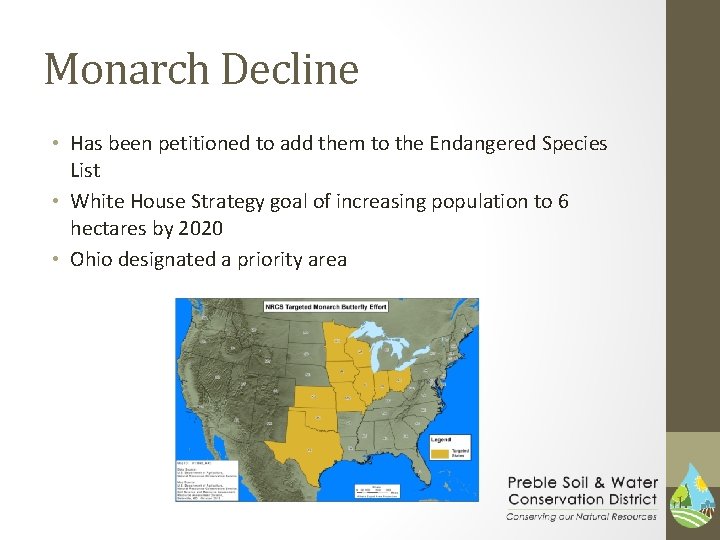
Monarch Decline • Has been petitioned to add them to the Endangered Species List • White House Strategy goal of increasing population to 6 hectares by 2020 • Ohio designated a priority area
Voluntary Initiatives • What if the goal is reached? • What if the goal isn’t reached? • Protection of milkweed • Mowing • Spraying • Regulation of insecticides • Fields, pasture, roadsides, backyards, construction projects • “If the Monarch is listed as endangered, it’s no longer a conversation. At that point there are no more options. ”
A Sign of a Bigger Problem • Native pollinators are keystone species that indicate ecosystem health • Many species are suffering • Monarchs = Ambassador species Building habitat for pollinators will benefit many species
Think about your property • How much would you consider natural habitat beneficial for wildlife? • What can we do with the property we own to help the cause?
All You Can, Where You Can
Closing
Where to Go From Here • Small steps by many • Get involved • • Begin with your property Milkweed pod collection Groups Citizen science
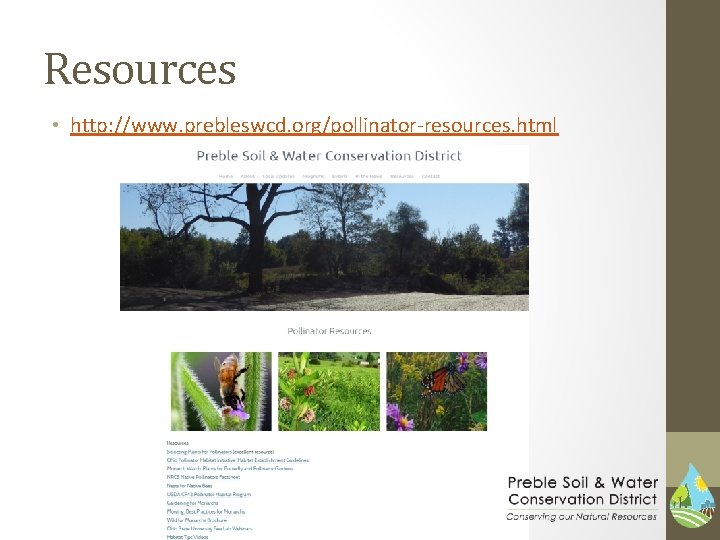
Resources • http: //www. prebleswcd. org/pollinator-resources. html
Contact Information Anna Smith Preble SWCD Outreach Coordinator (937)456 -5159 annasmith@prebleswcd. org Renee Buck Pheasants Forever Farm Bill Biologist (937)578 -8264 rbuck@pheasantsforever. org
All You Can, Where You Can