
Politics Presidents Warren G Harding R 1920 1923

- Slides: 17
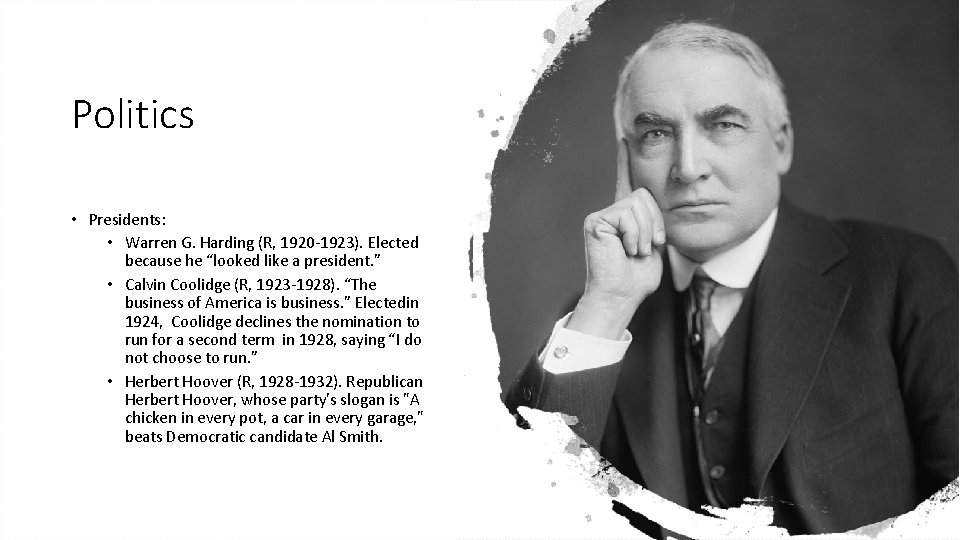
Politics • Presidents: • Warren G. Harding (R, 1920 -1923). Elected because he “looked like a president. ” • Calvin Coolidge (R, 1923 -1928). “The business of America is business. ” Electedin 1924, Coolidge declines the nomination to run for a second term in 1928, saying “I do not choose to run. ” • Herbert Hoover (R, 1928 -1932). Republican Herbert Hoover, whose party's slogan is "A chicken in every pot, a car in every garage, " beats Democratic candidate Al Smith.
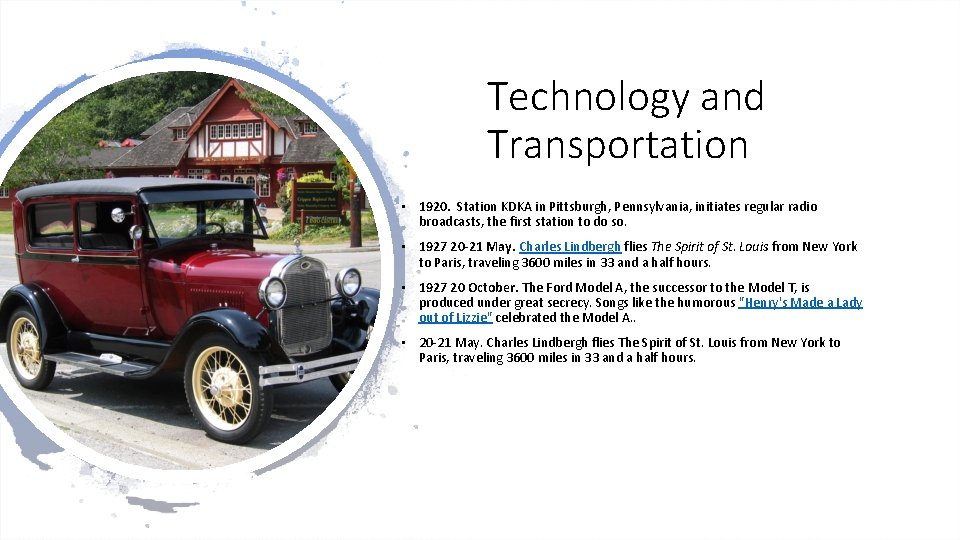
Technology and Transportation • 1920. Station KDKA in Pittsburgh, Pennsylvania, initiates regular radio broadcasts, the first station to do so. • 1927 20 -21 May. Charles Lindbergh flies The Spirit of St. Louis from New York to Paris, traveling 3600 miles in 33 and a half hours. • 1927 20 October. The Ford Model A, the successor to the Model T, is produced under great secrecy. Songs like the humorous "Henry's Made a Lady out of Lizzie" celebrated the Model A. . • 20 -21 May. Charles Lindbergh flies The Spirit of St. Louis from New York to Paris, traveling 3600 miles in 33 and a half hours.
Foreign Affairs • 1922. The World War Foreign Debt commission tries to sort out the issue of war debts owed to the United States, which insists on full payment and thereby causes ill will among European nations. • 1926. U. S. Marines land in Nicaragua to suppress a revolt and will stay until 1933. • 1928. The Kellogg-Briand Pact proposes to substitute diplomacy for warfare as a means of settling international disputes; 62 nations ultimately sign the pact. The U. S. Senate approves the pact in 1929.
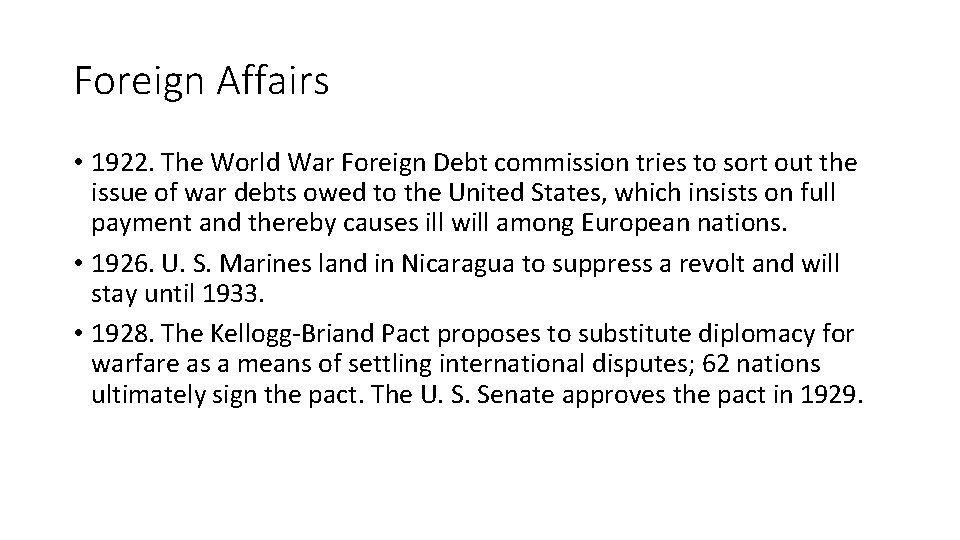
Immigration • 1920. The Emergency Quota Act restricts immigration by setting limits based on the number of foreign-born people already in the country in 1910. Immigration must not exceed three percent of each nationality already in the United States in that year. • 1924. Congress passes a new and more restrictive immigration law; quotas are now set at only 2 percent of existing nationalities in the U. S. in 1920, and Japanese immigration is suspended.
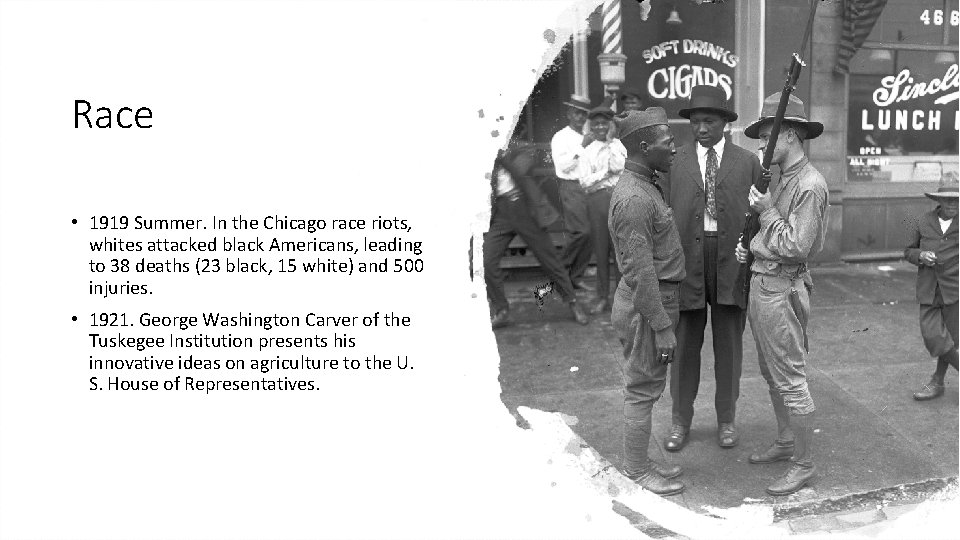
Race • 1919 Summer. In the Chicago race riots, whites attacked black Americans, leading to 38 deaths (23 black, 15 white) and 500 injuries. • 1921. George Washington Carver of the Tuskegee Institution presents his innovative ideas on agriculture to the U. S. House of Representatives.
Labor • 1921. July-September. Wage cuts and massive unemployment cause unrest and an increase in violence. The newly formed Hoover Commission suggests price cuts and shorter hours rather than an increase in wages; the average working day is 12 -14 hours. • 1922. The Capper-Volstead Act permits farmers to form cooperatives for buying and selling goods without being prosecuted for anti-trust violations. • 1923. U. S. Steel implements the 8 -hour day, a victory for labor.
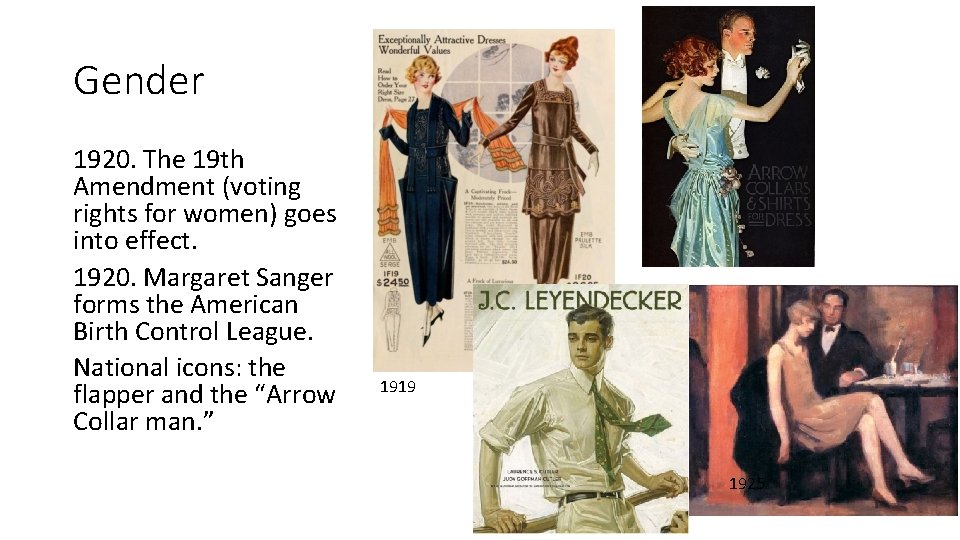
Gender 1920. The 19 th Amendment (voting rights for women) goes into effect. 1920. Margaret Sanger forms the American Birth Control League. National icons: the flapper and the “Arrow Collar man. ” 1919 1925
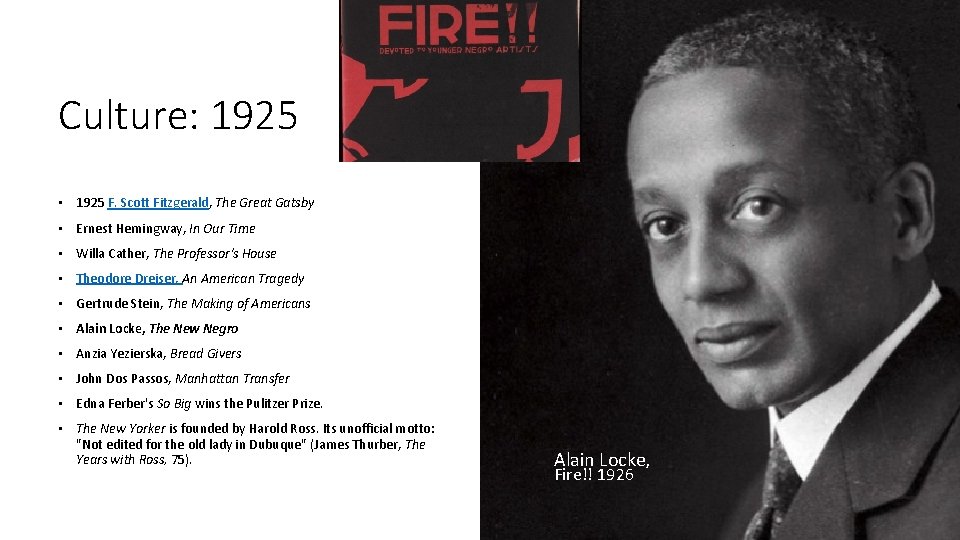
Culture: 1925 • 1925 F. Scott Fitzgerald, The Great Gatsby • Ernest Hemingway, In Our Time • Willa Cather, The Professor's House • Theodore Dreiser, An American Tragedy • Gertrude Stein, The Making of Americans • Alain Locke, The New Negro • Anzia Yezierska, Bread Givers • John Dos Passos, Manhattan Transfer • Edna Ferber's So Big wins the Pulitzer Prize. • The New Yorker is founded by Harold Ross. Its unofficial motto: "Not edited for the old lady in Dubuque" (James Thurber, The Years with Ross, 75). Alain Locke, Fire!! 1926
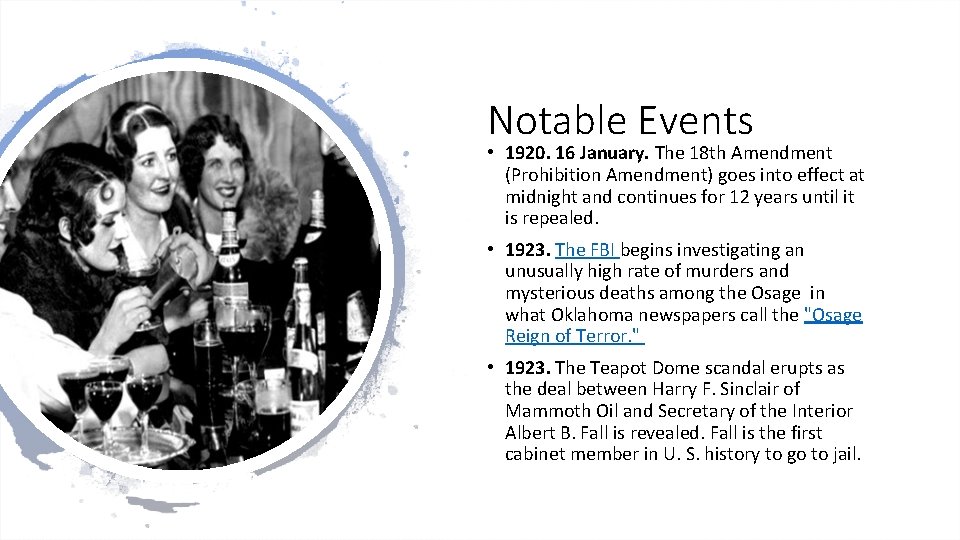
Notable Events • 1920. 16 January. The 18 th Amendment (Prohibition Amendment) goes into effect at midnight and continues for 12 years until it is repealed. • 1923. The FBI begins investigating an unusually high rate of murders and mysterious deaths among the Osage in what Oklahoma newspapers call the "Osage Reign of Terror. " • 1923. The Teapot Dome scandal erupts as the deal between Harry F. Sinclair of Mammoth Oil and Secretary of the Interior Albert B. Fall is revealed. Fall is the first cabinet member in U. S. history to go to jail.
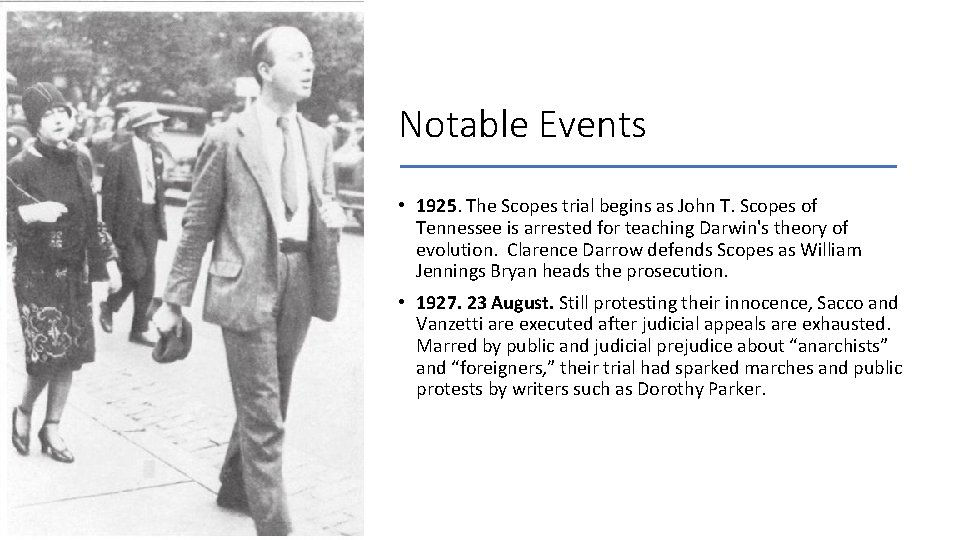
Notable Events • 1925. The Scopes trial begins as John T. Scopes of Tennessee is arrested for teaching Darwin's theory of evolution. Clarence Darrow defends Scopes as William Jennings Bryan heads the prosecution. • 1927. 23 August. Still protesting their innocence, Sacco and Vanzetti are executed after judicial appeals are exhausted. Marred by public and judicial prejudice about “anarchists” and “foreigners, ” their trial had sparked marches and public protests by writers such as Dorothy Parker.
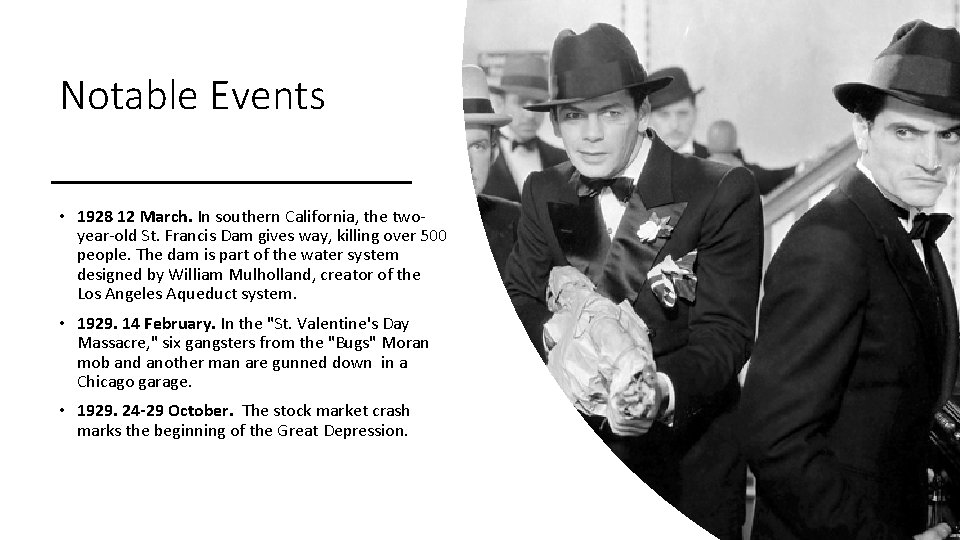
Notable Events • 1928 12 March. In southern California, the twoyear-old St. Francis Dam gives way, killing over 500 people. The dam is part of the water system designed by William Mulholland, creator of the Los Angeles Aqueduct system. • 1929. 14 February. In the "St. Valentine's Day Massacre, " six gangsters from the "Bugs" Moran mob and another man are gunned down in a Chicago garage. • 1929. 24 -29 October. The stock market crash marks the beginning of the Great Depression.
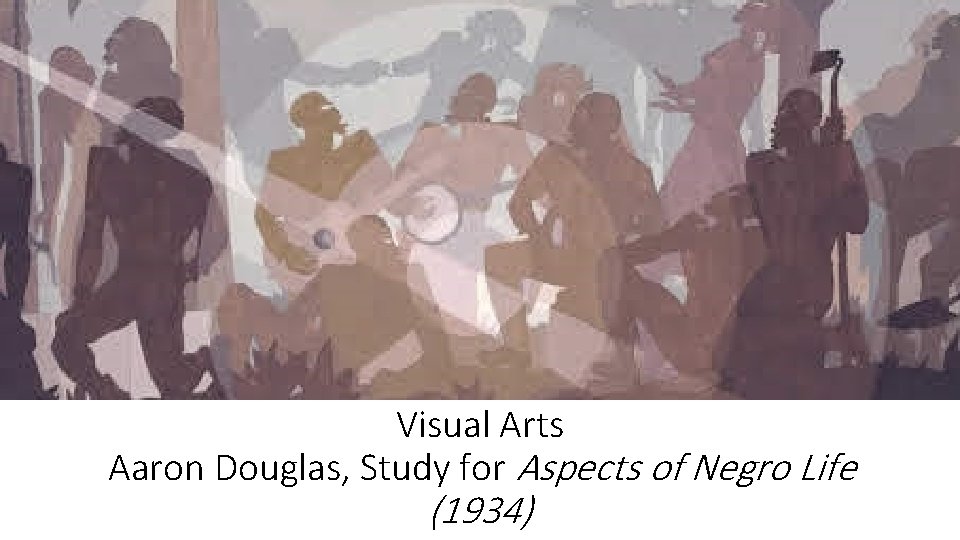
Visual Arts Aaron Douglas, Study for Aspects of Negro Life (1934)
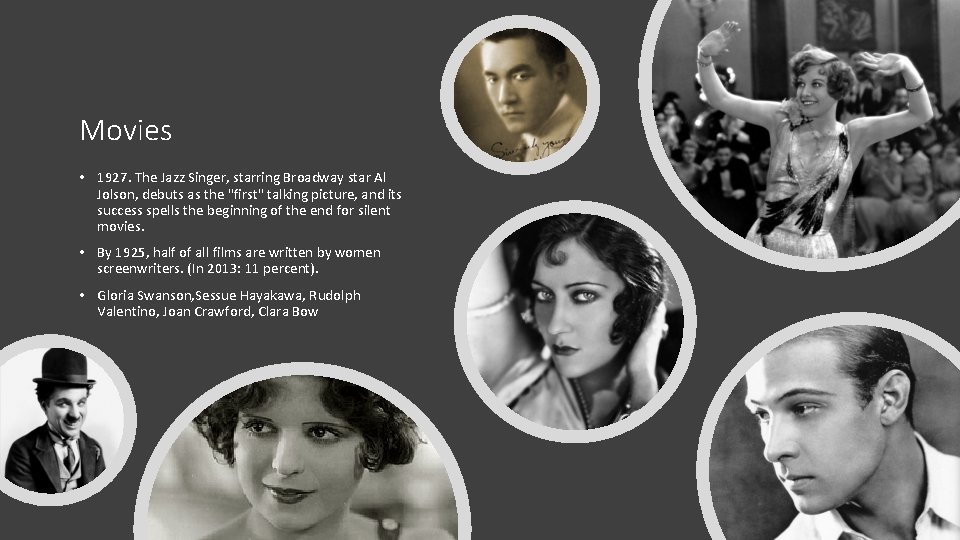
Movies • 1927. The Jazz Singer, starring Broadway star Al Jolson, debuts as the "first" talking picture, and its success spells the beginning of the end for silent movies. • By 1925, half of all films are written by women screenwriters. (In 2013: 11 percent). • Gloria Swanson, Sessue Hayakawa, Rudolph Valentino, Joan Crawford, Clara Bow
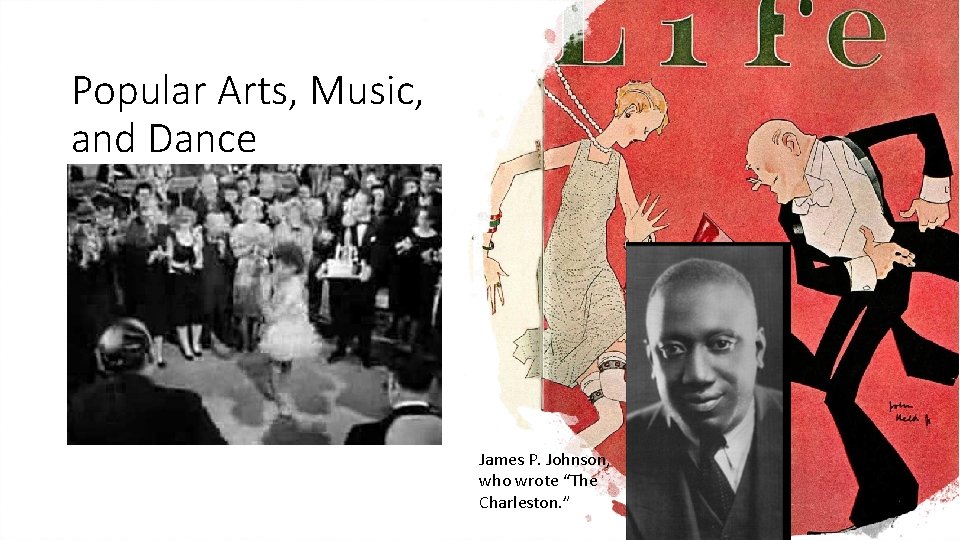
Popular Arts, Music, and Dance James P. Johnson, who wrote “The Charleston. ”
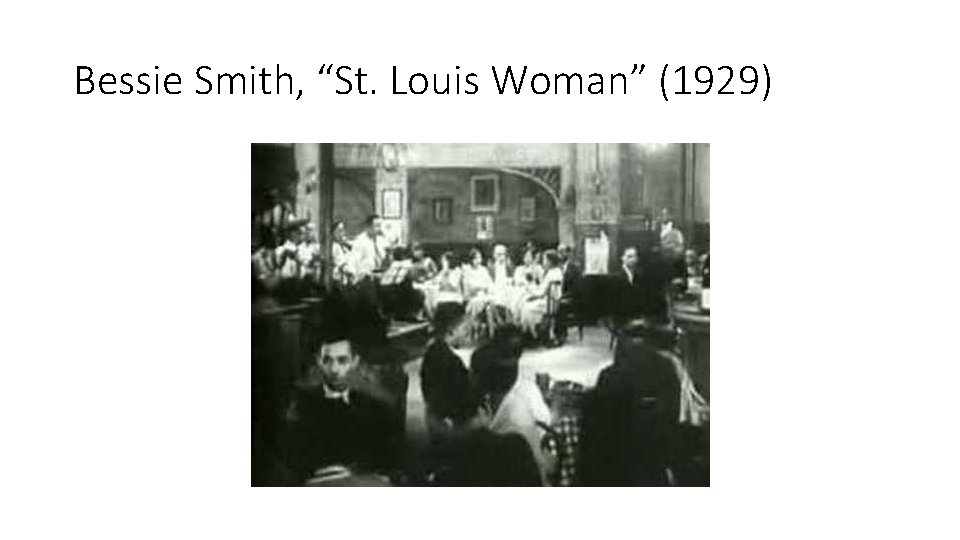
Bessie Smith, “St. Louis Woman” (1929)
Source • https: //public. wsu. edu/~campbelld/amlit/1920. htm