
Politics of the Third World Third World countries
- Slides: 20
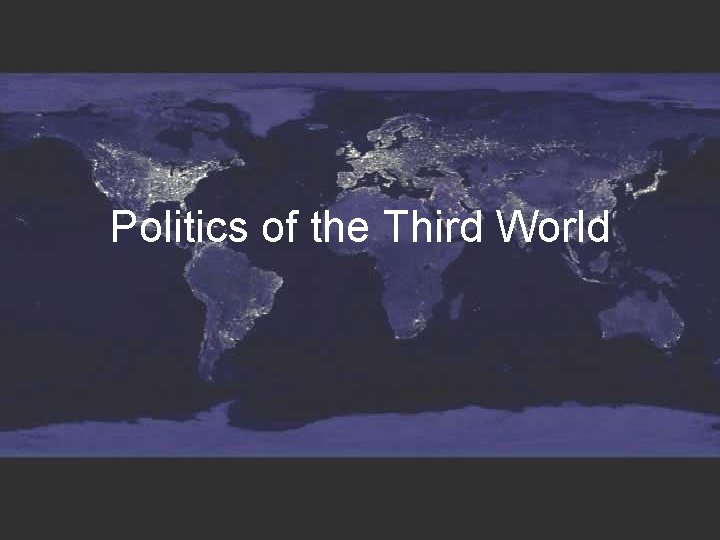
Politics of the Third World
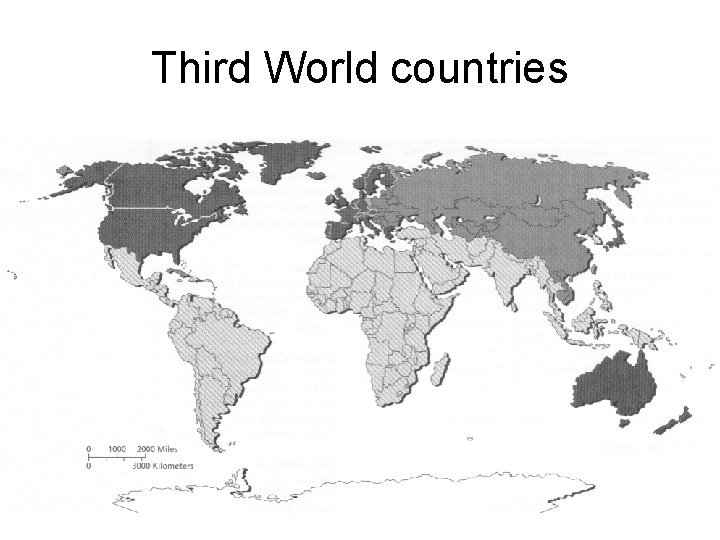
Third World countries
5 most important issues • facing the Third World today – poverty • developing countries – globalization – weak state – ethnicity – environment
Why study the Third World? • Interdependence and globalization • most of the world – population – area • most of the natural resources – raw materials and energy resources – Organization of Petroleum Exporting Countries
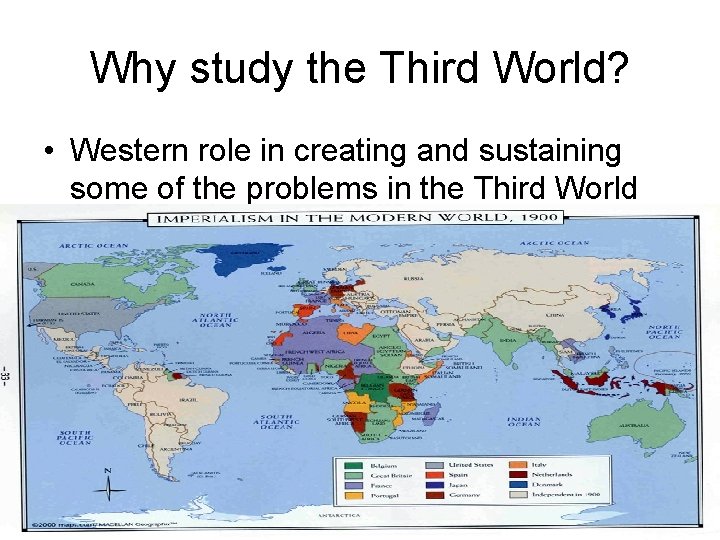
Why study the Third World? • Western role in creating and sustaining some of the problems in the Third World
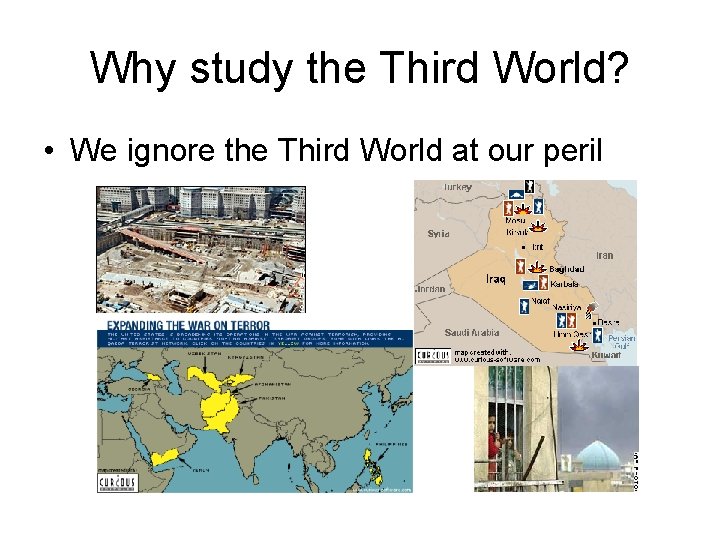
Why study the Third World? • We ignore the Third World at our peril
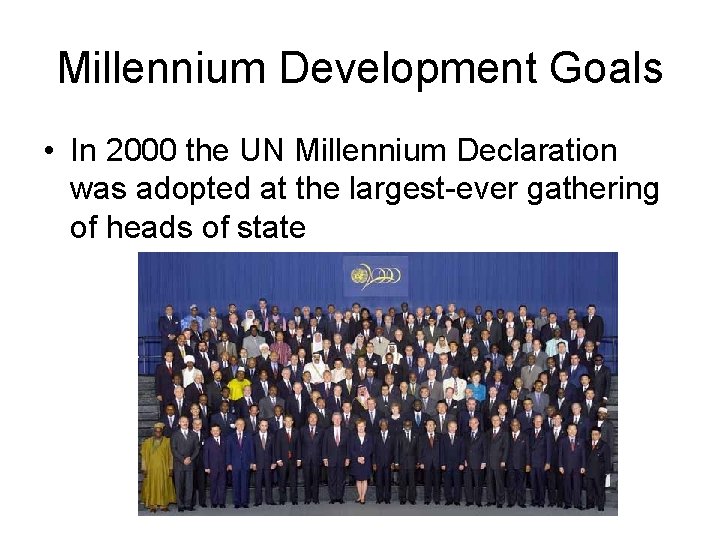
Millennium Development Goals • In 2000 the UN Millennium Declaration was adopted at the largest-ever gathering of heads of state
Millennium Development Goals 1 eradicate extreme poverty and hunger 2 achieve universal primary education 3 promote gender equality 4 reduce child mortality 5 improve maternal health 6 combat HIV/AIDS, malaria, etc. 7 ensure environmental sustainability 8 global partnership for development
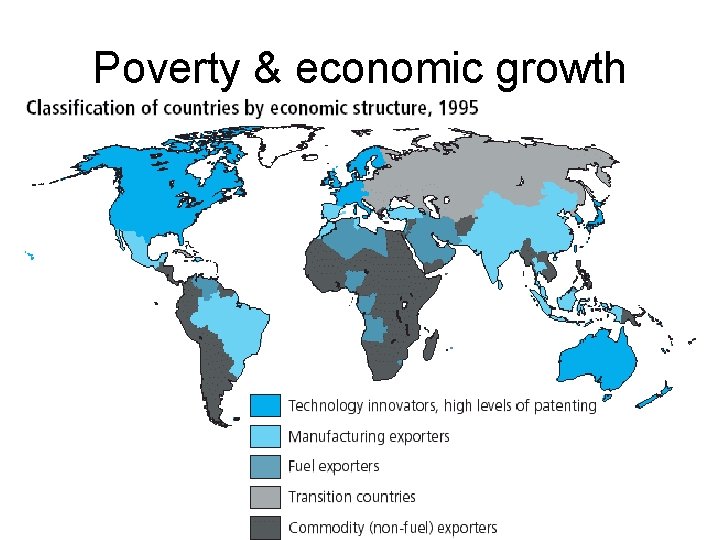
Poverty & economic growth
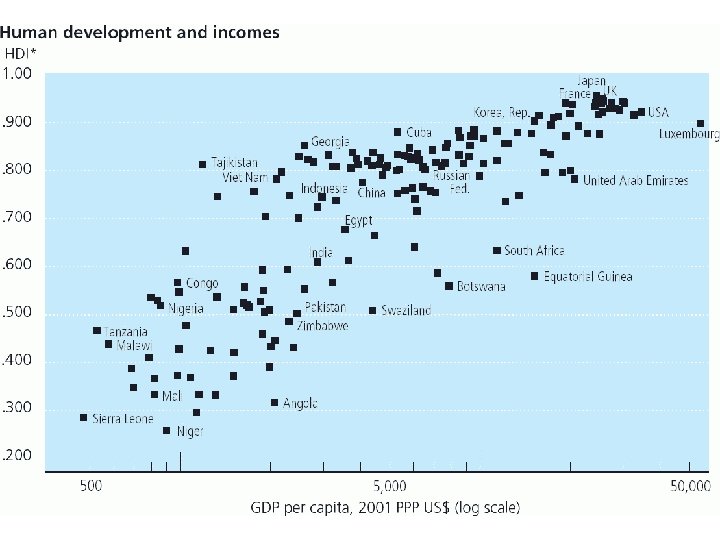
Poverty & economic growth
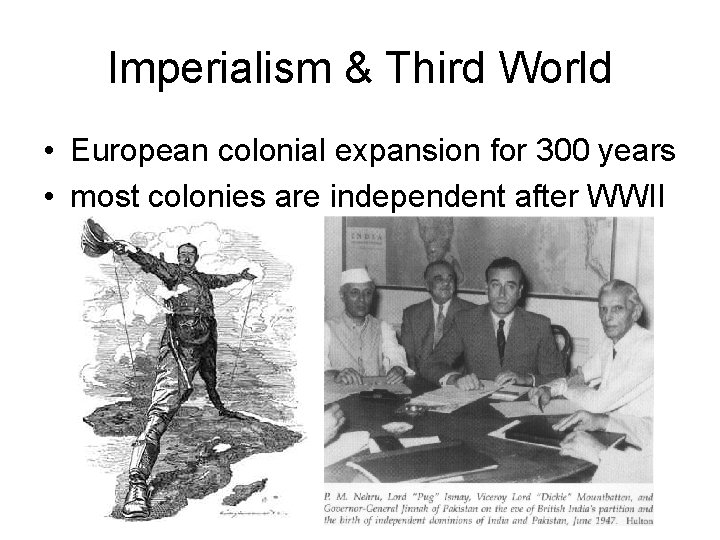
Imperialism & Third World • European colonial expansion for 300 years • most colonies are independent after WWII
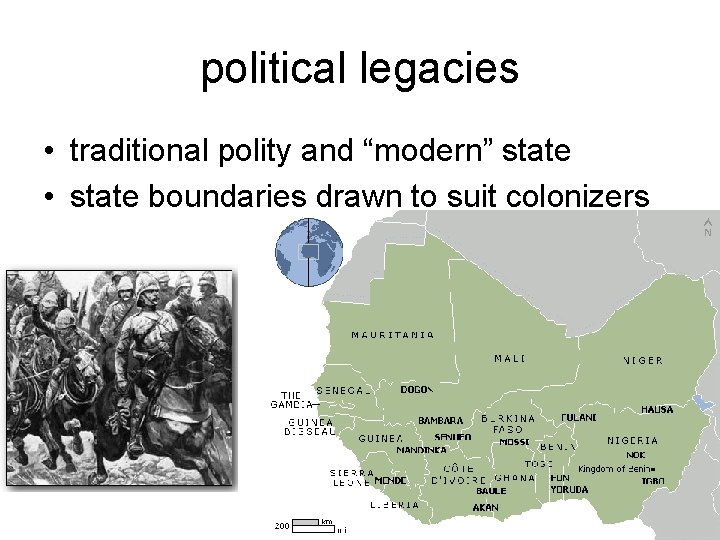
political legacies • traditional polity and “modern” state • state boundaries drawn to suit colonizers
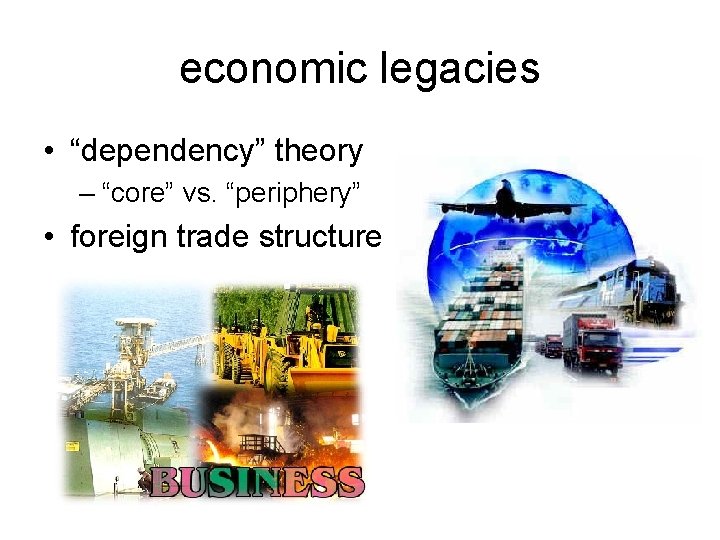
economic legacies • “dependency” theory – “core” vs. “periphery” • foreign trade structure
Types of state • strong states • weak states – multi-party democracies – single-party regimes – military regimes – personal dictatorships • failed states
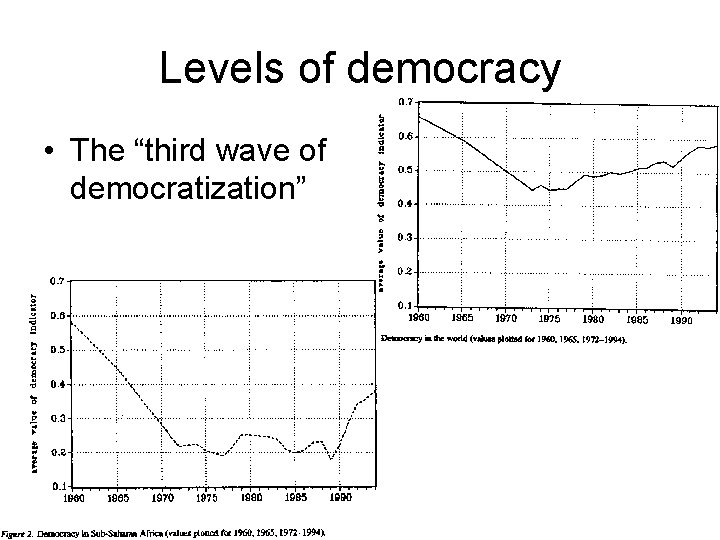
Levels of democracy • The “third wave of democratization”
State & economic development • weaknesses in physical and human infrastructure • political instability harms investment and consumption • political allocation of scarce resources • weak and ineffective state institutions to implement economic policies • widespread corruption
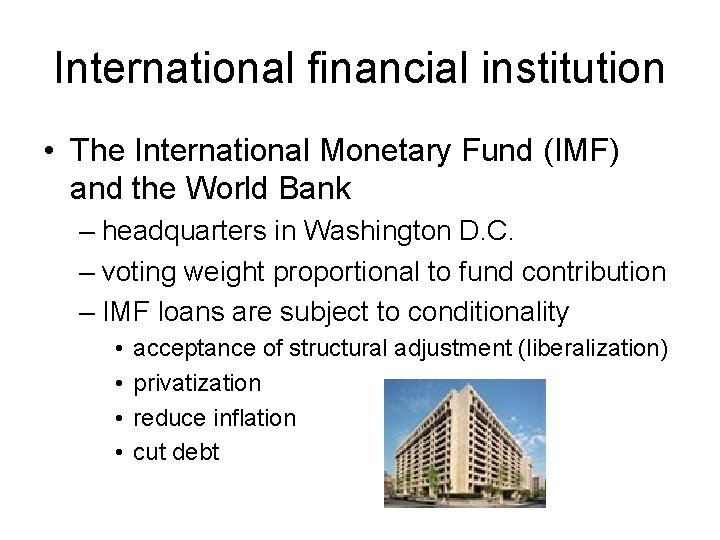
International financial institution • The International Monetary Fund (IMF) and the World Bank – headquarters in Washington D. C. – voting weight proportional to fund contribution – IMF loans are subject to conditionality • • acceptance of structural adjustment (liberalization) privatization reduce inflation cut debt
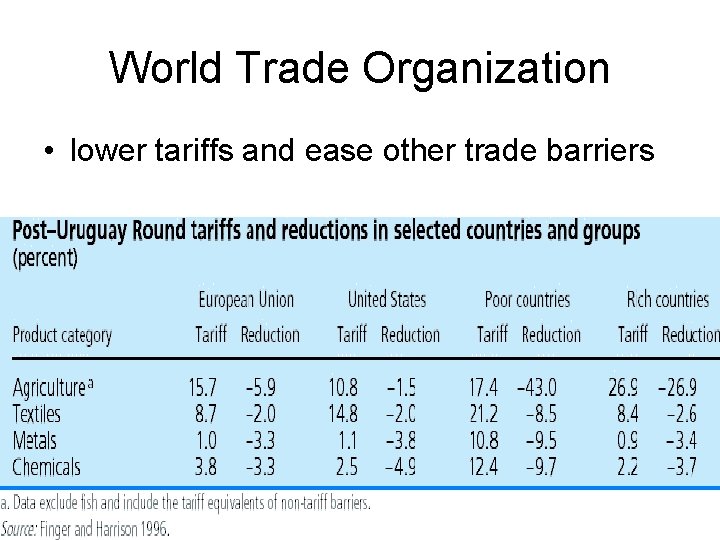
World Trade Organization • lower tariffs and ease other trade barriers
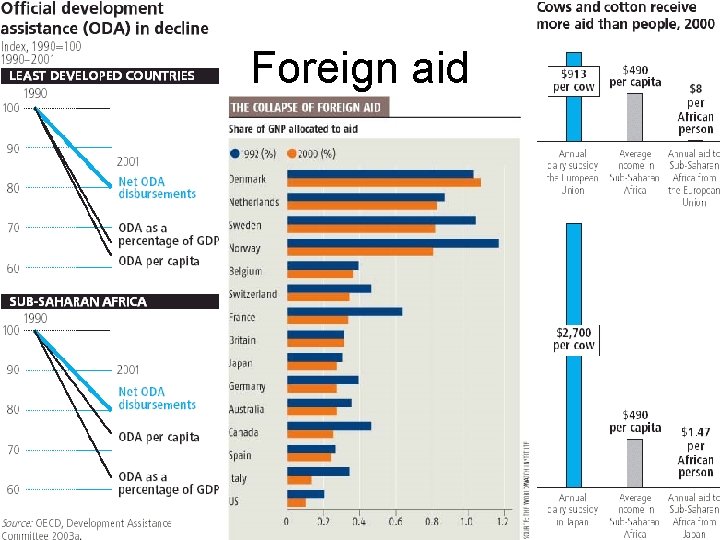
Foreign aid