
Politics of the Foundational Economy John Tomaney UCL
- Slides: 20
Politics of the Foundational Economy John Tomaney UCL Bartlett School of Planning j. tomaney@ucl. ac. uk @johntomaney “Socio-ecological economic transitions: making space for the foundational economy”. 2 nd Colloquium of the Foundational Economy Collective, Cosmoplis – Center for Urban Research, Vrije Universteit Brussels. 9 -11 September 2019
Foundational economy • Major contribution to thinking about a pragmatic, credible alternative to postneoliberalism • Strengths: deep scholarship, rigorous research, policy and practical orientation • Sympathetic critique: – – Gendered nature of FE: needs further analysis and elaboration FE and the ecological crisis Politics and governance of the FE (“Left-behind places”)
Politics of the Foundational Economy • Key questions: – – How will the FE be governed, especially at the local and regional scale? What structures will hinder/enable the FE? What are the lessons of history? Current debates/controversies: governing urban agglomeration versus governing the FE
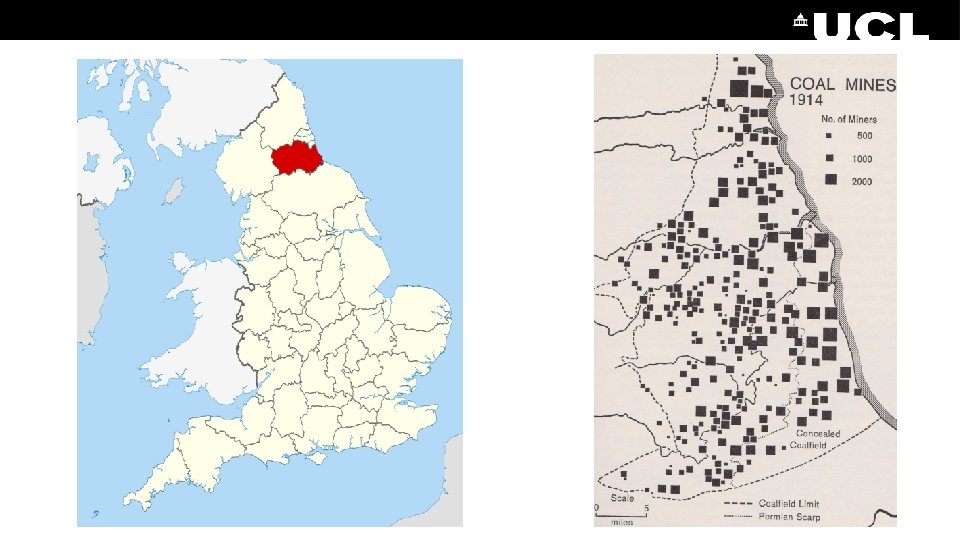
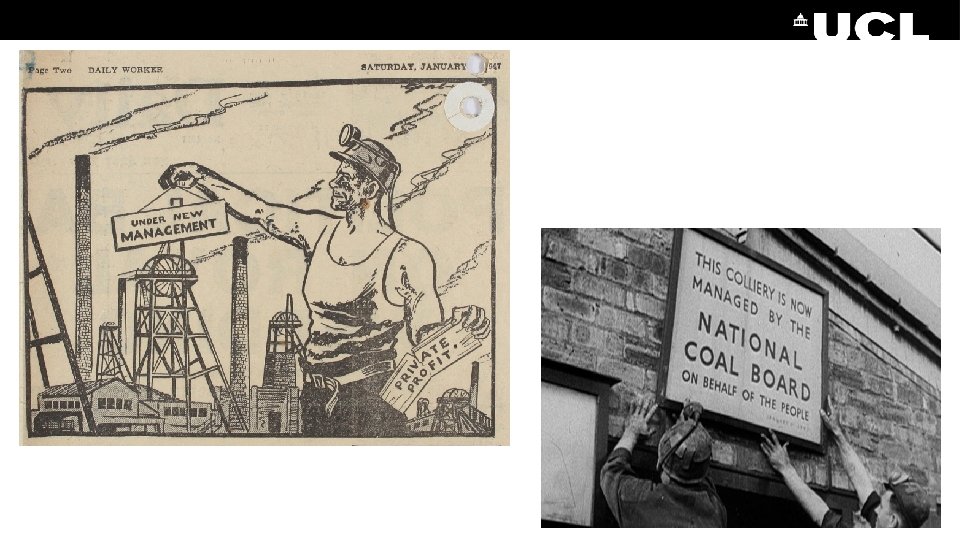
Lessons of history • FE 1. 0: on the origins of the Foundational Economy • The case of County Durham • Post-democracy and FE. 2. 0
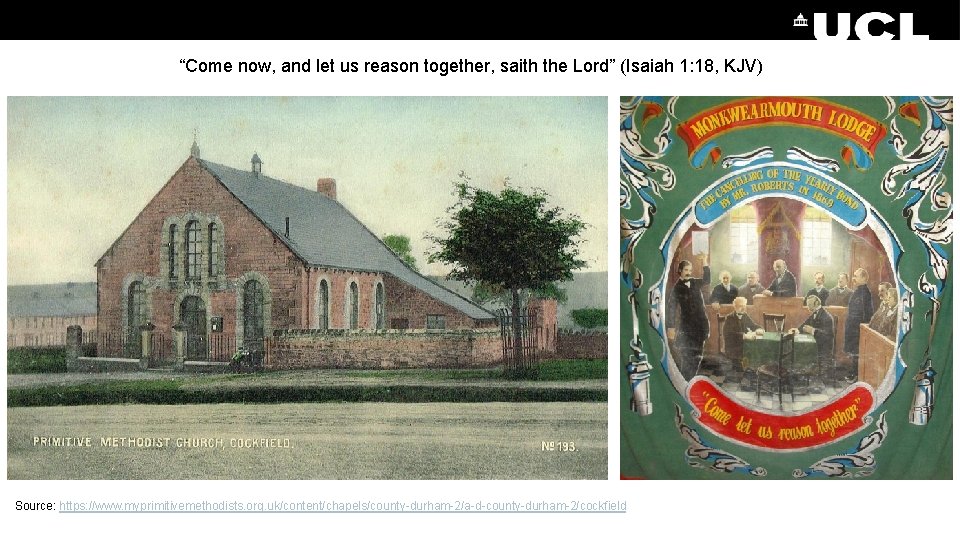
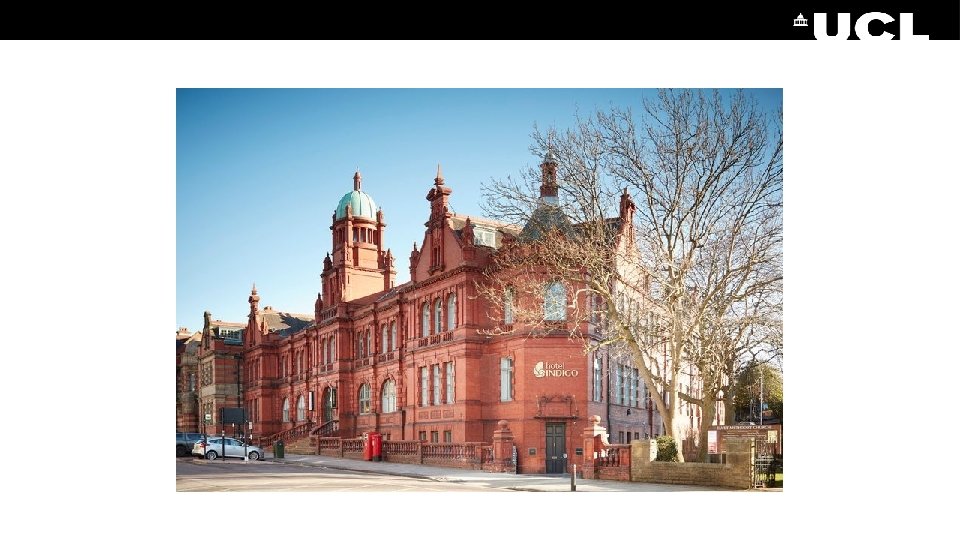
“Come now, and let us reason together, saith the Lord” (Isaiah 1: 18, KJV) Source: https: //www. myprimitivemethodists. org. uk/content/chapels/county-durham-2/a-d-county-durham-2/cockfield
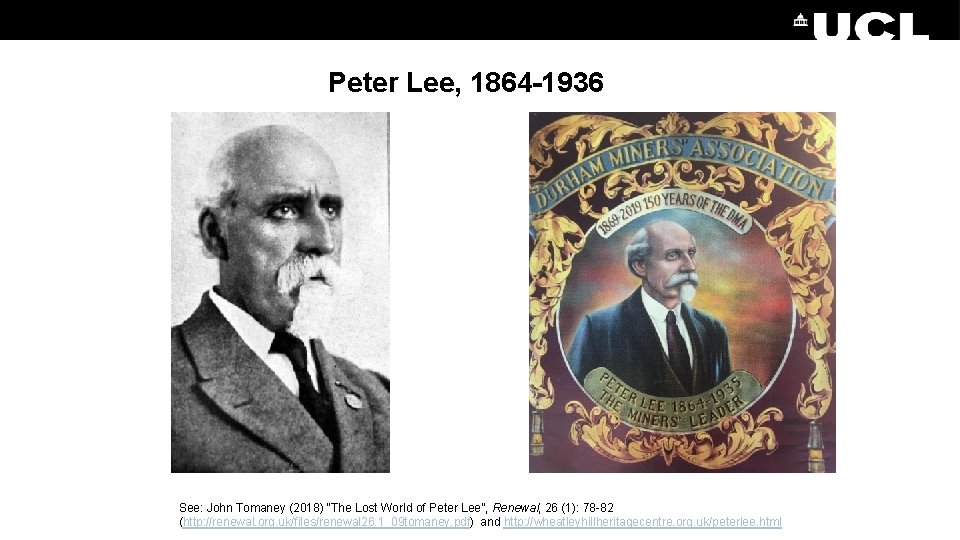
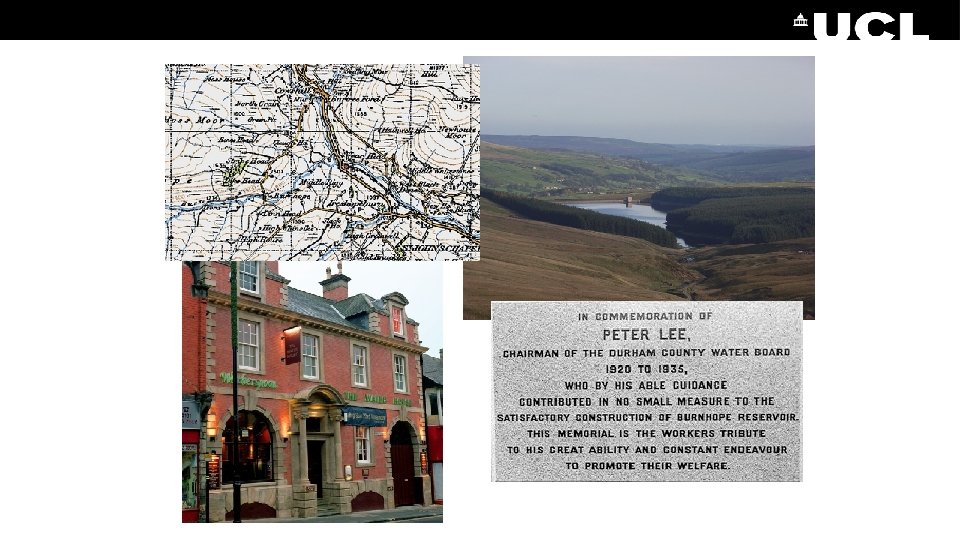
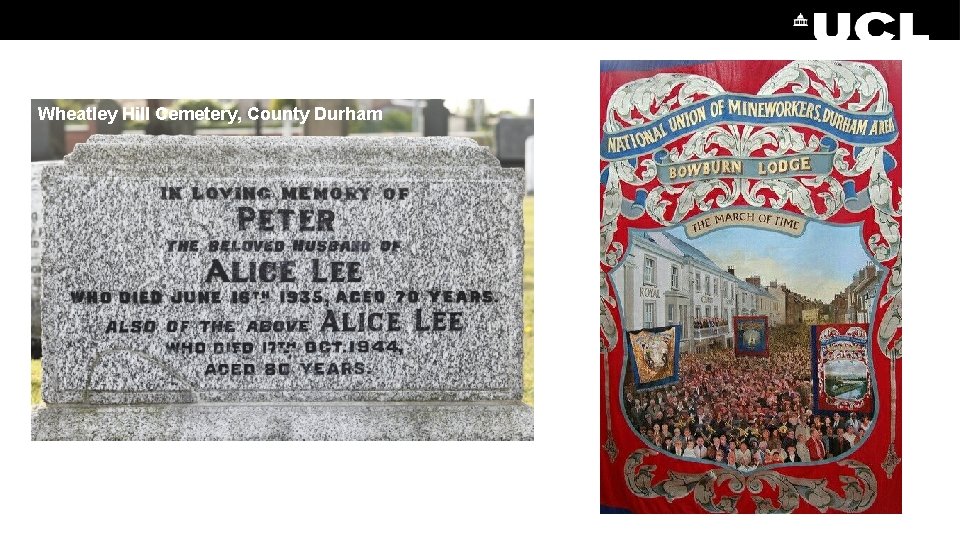
Peter Lee, 1864 -1936 See: John Tomaney (2018) “The Lost World of Peter Lee”, Renewal, 26 (1): 78 -82 (http: //renewal. org. uk/files/renewal 26. 1_09 tomaney. pdf) and http: //wheatleyhillheritagecentre. org. uk/peterlee. html
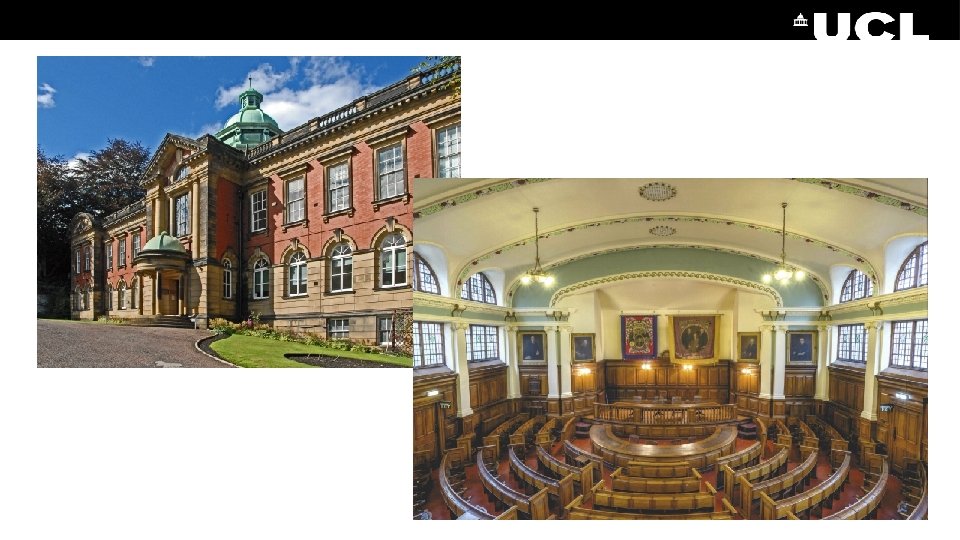
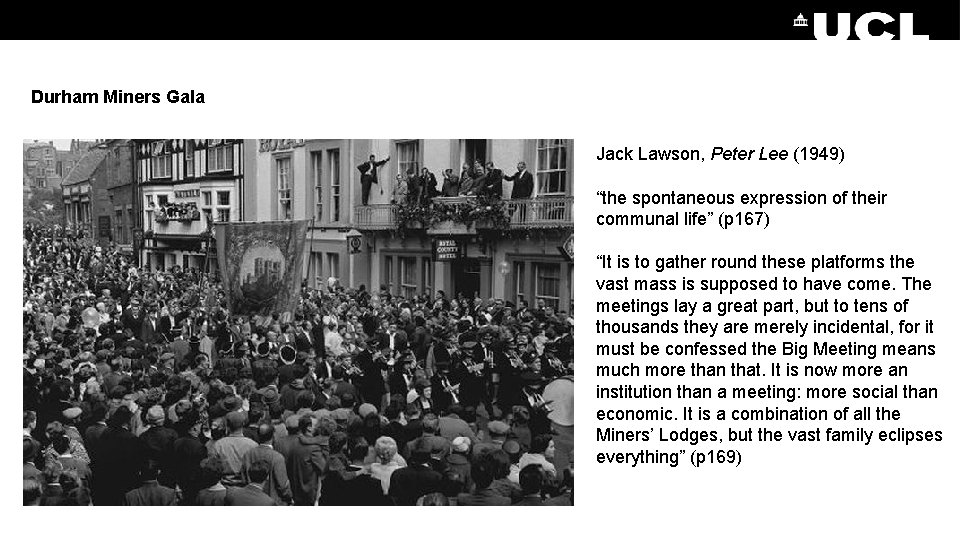
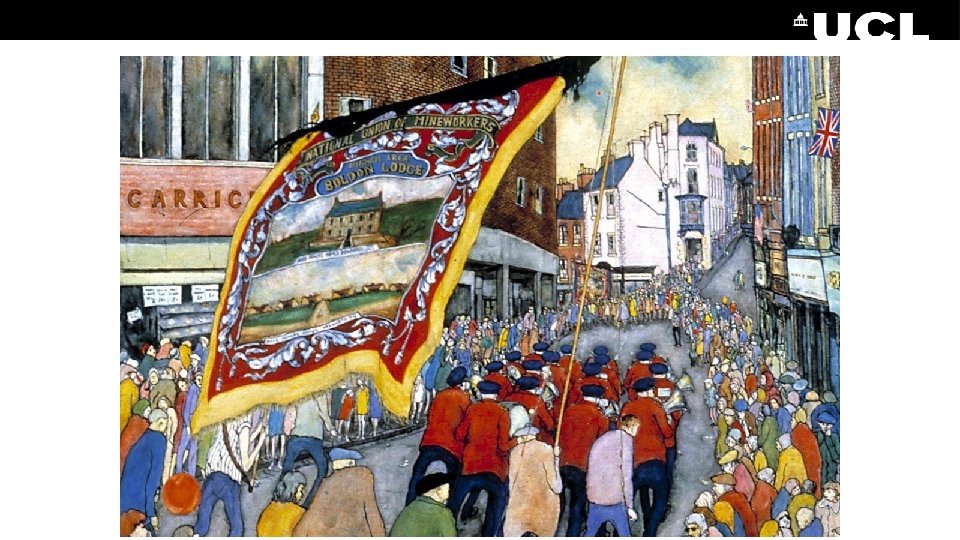
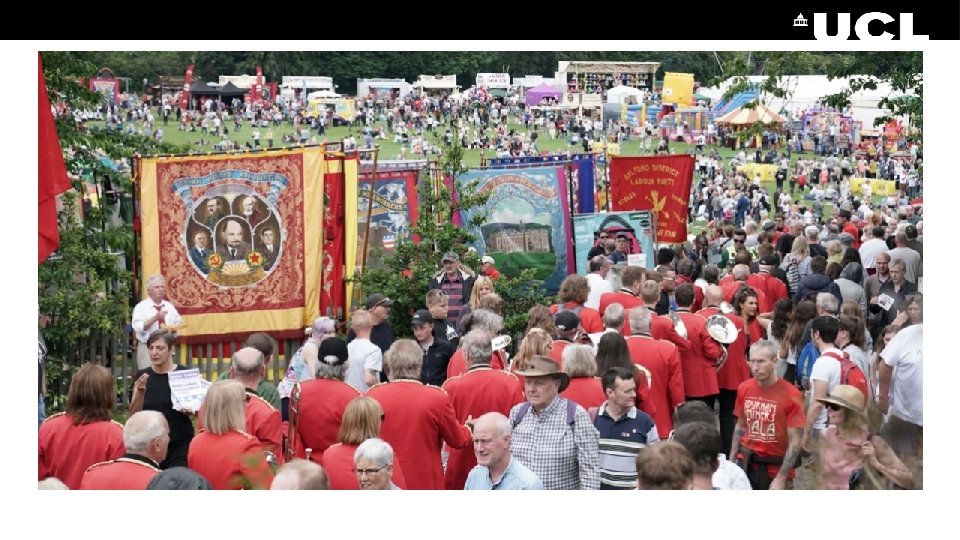
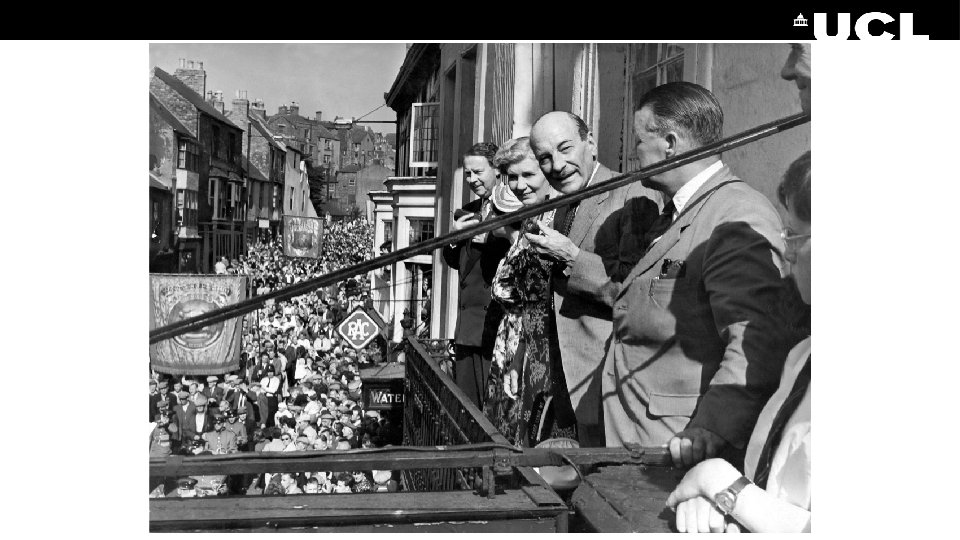
Durham Miners Gala Jack Lawson, Peter Lee (1949) “the spontaneous expression of their communal life” (p 167) “It is to gather round these platforms the vast mass is supposed to have come. The meetings lay a great part, but to tens of thousands they are merely incidental, for it must be confessed the Big Meeting means much more than that. It is now more an institution than a meeting: more social than economic. It is a combination of all the Miners’ Lodges, but the vast family eclipses everything” (p 169)
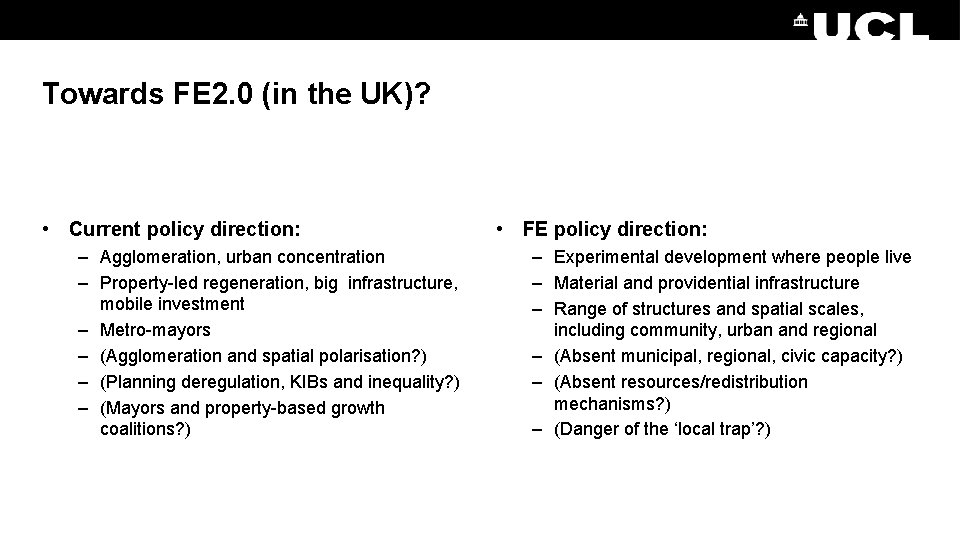
Towards FE 2. 0 (in the UK)? • Current policy direction: – Agglomeration, urban concentration – Property-led regeneration, big infrastructure, mobile investment – Metro-mayors – (Agglomeration and spatial polarisation? ) – (Planning deregulation, KIBs and inequality? ) – (Mayors and property-based growth coalitions? ) • FE policy direction: – Experimental development where people live – Material and providential infrastructure – Range of structures and spatial scales, including community, urban and regional – (Absent municipal, regional, civic capacity? ) – (Absent resources/redistribution mechanisms? ) – (Danger of the ‘local trap’? )
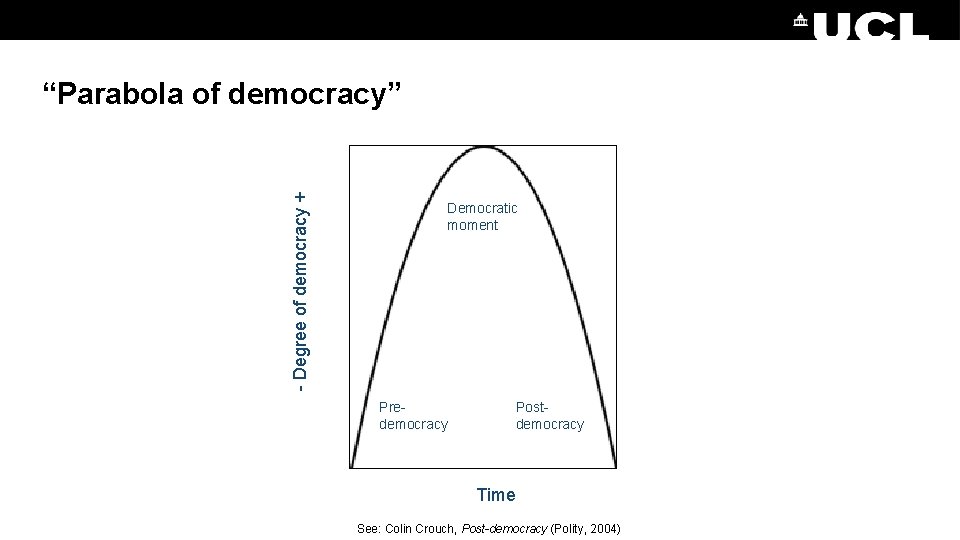
- Degree of democracy + “Parabola of democracy” Democratic moment Predemocracy Postdemocracy Time See: Colin Crouch, Post-democracy (Polity, 2004)
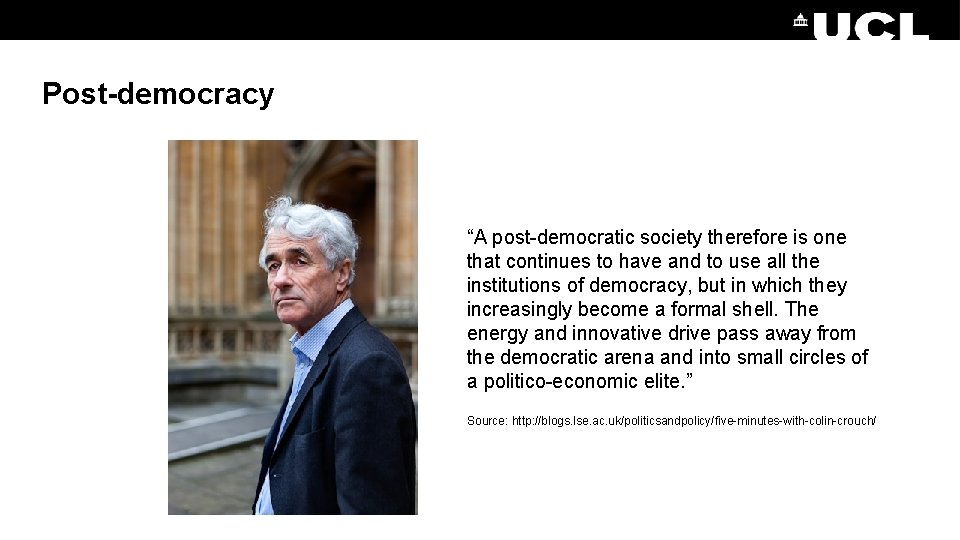
Post-democracy “A post-democratic society therefore is one that continues to have and to use all the institutions of democracy, but in which they increasingly become a formal shell. The energy and innovative drive pass away from the democratic arena and into small circles of a politico-economic elite. ” Source: http: //blogs. lse. ac. uk/politicsandpolicy/five-minutes-with-colin-crouch/
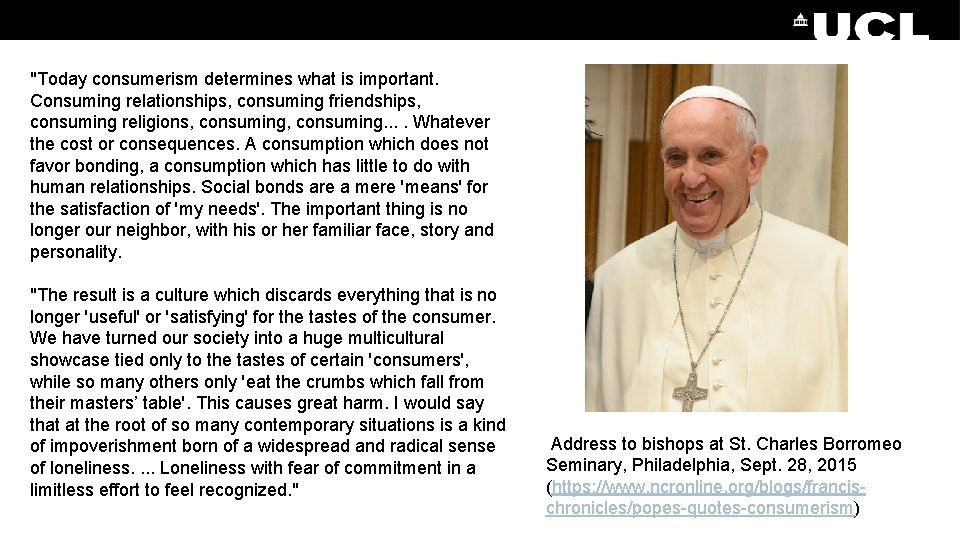
"Today consumerism determines what is important. Consuming relationships, consuming friendships, consuming religions, consuming. . Whatever the cost or consequences. A consumption which does not favor bonding, a consumption which has little to do with human relationships. Social bonds are a mere 'means' for the satisfaction of 'my needs'. The important thing is no longer our neighbor, with his or her familiar face, story and personality. "The result is a culture which discards everything that is no longer 'useful' or 'satisfying' for the tastes of the consumer. We have turned our society into a huge multicultural showcase tied only to the tastes of certain 'consumers', while so many others only 'eat the crumbs which fall from their masters’ table'. This causes great harm. I would say that at the root of so many contemporary situations is a kind of impoverishment born of a widespread and radical sense of loneliness. . Loneliness with fear of commitment in a limitless effort to feel recognized. " Address to bishops at St. Charles Borromeo Seminary, Philadelphia, Sept. 28, 2015 (https: //www. ncronline. org/blogs/francischronicles/popes-quotes-consumerism)
Wheatley Hill Cemetery, County Durham