
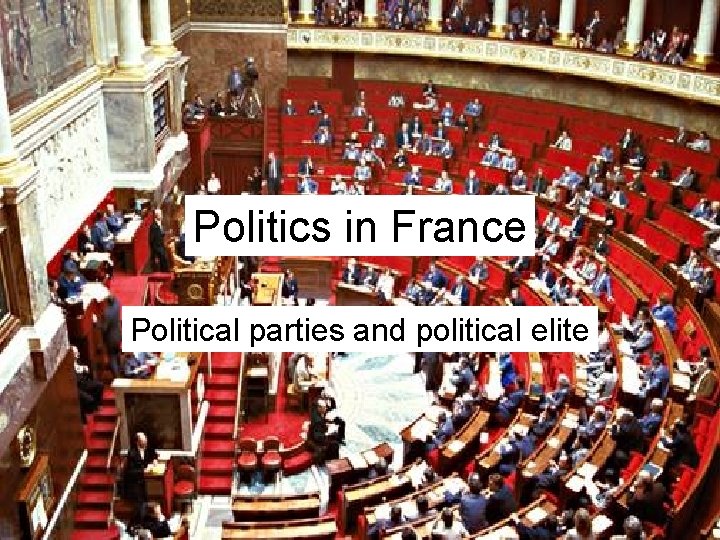
Politics in France Political parties and political elite
- Slides: 23
Politics in France Political parties and political elite
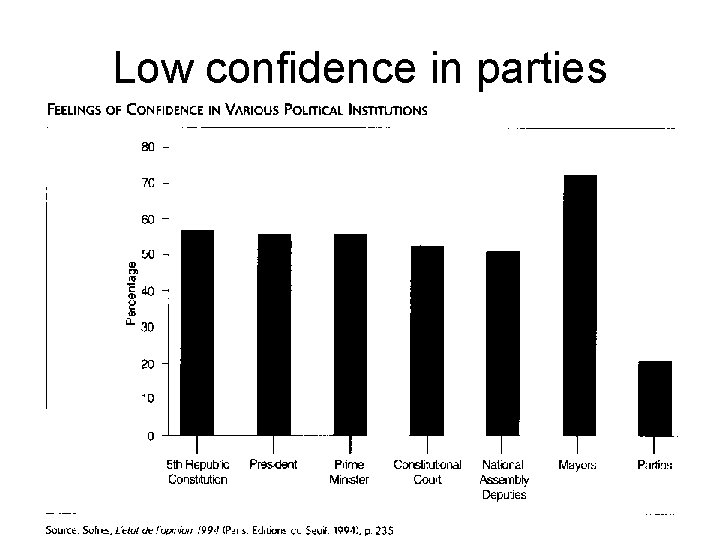
Low confidence in parties
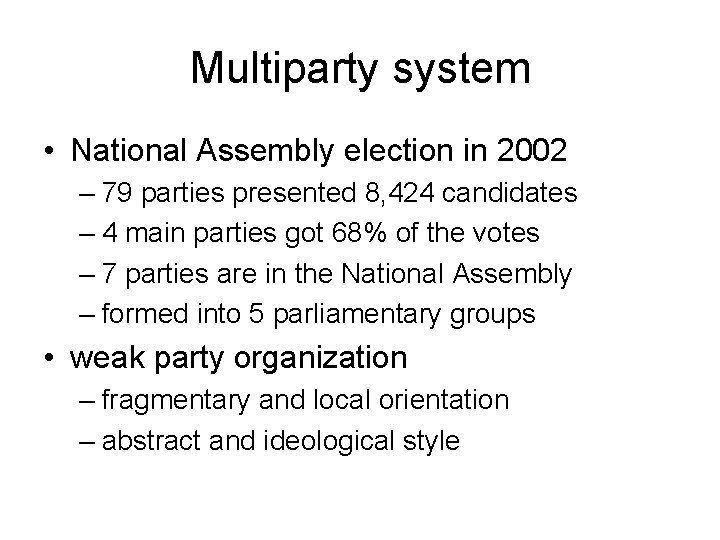
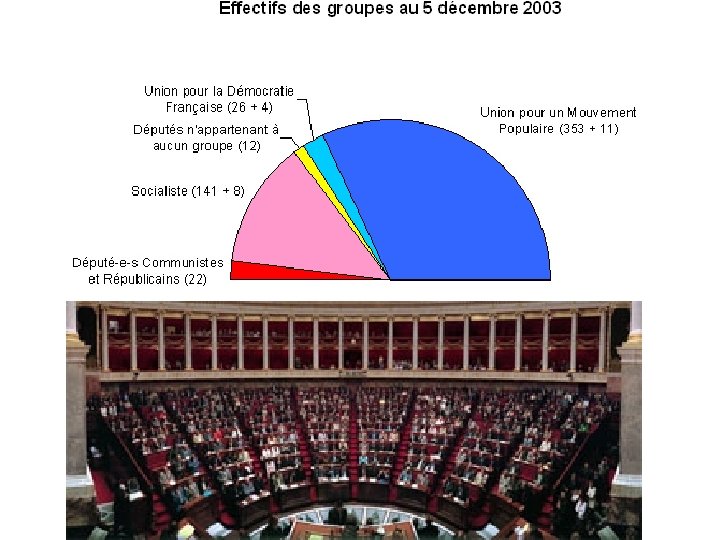
Multiparty system • National Assembly election in 2002 – 79 parties presented 8, 424 candidates – 4 main parties got 68% of the votes – 7 parties are in the National Assembly – formed into 5 parliamentary groups • weak party organization – fragmentary and local orientation – abstract and ideological style
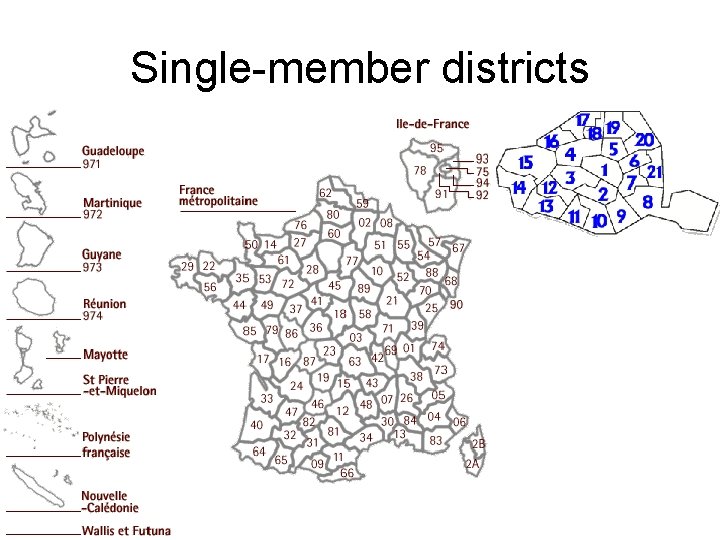
Single-member districts
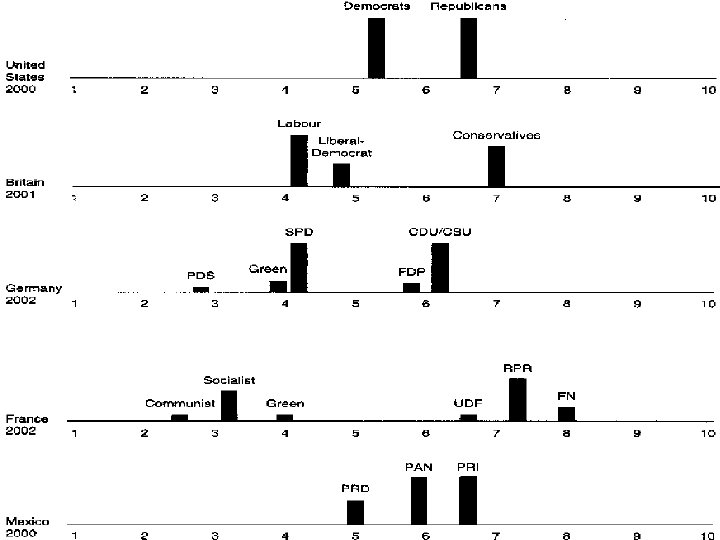
Main parties • • • Rally for the Republic (RPR) Union for French Democracy (UDF) National Front (FN) Socialist Party (PS) French Communist Party (PCF) Greens
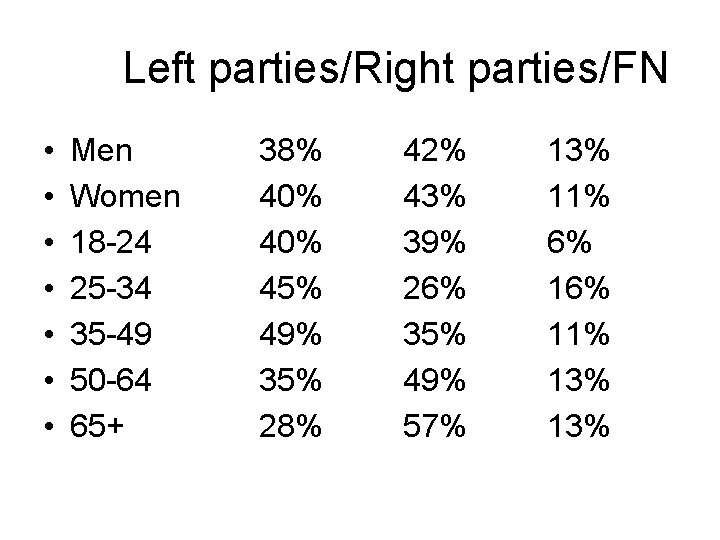
Left parties/Right parties/FN • • Men Women 18 -24 25 -34 35 -49 50 -64 65+ 38% 40% 45% 49% 35% 28% 42% 43% 39% 26% 35% 49% 57% 13% 11% 6% 11% 13%
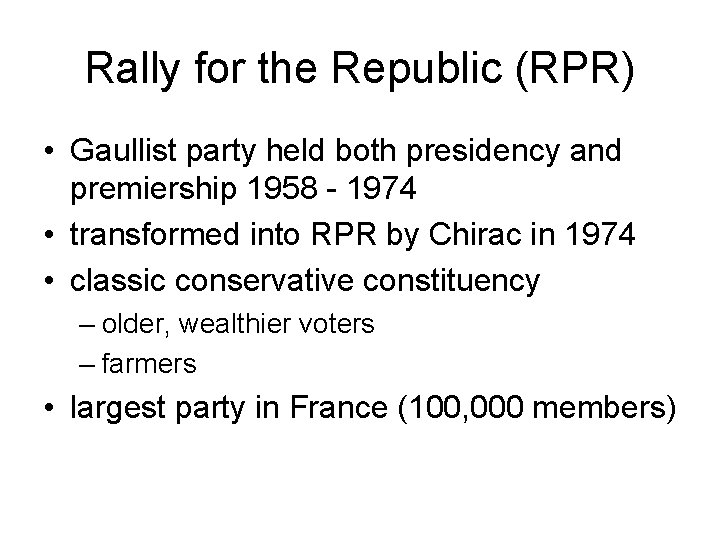
Rally for the Republic (RPR) • Gaullist party held both presidency and premiership 1958 - 1974 • transformed into RPR by Chirac in 1974 • classic conservative constituency – older, wealthier voters – farmers • largest party in France (100, 000 members)
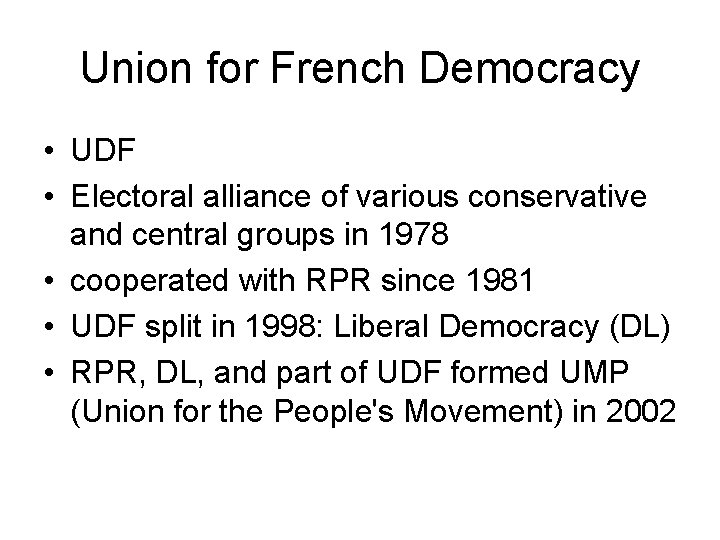
Union for French Democracy • UDF • Electoral alliance of various conservative and central groups in 1978 • cooperated with RPR since 1981 • UDF split in 1998: Liberal Democracy (DL) • RPR, DL, and part of UDF formed UMP (Union for the People's Movement) in 2002
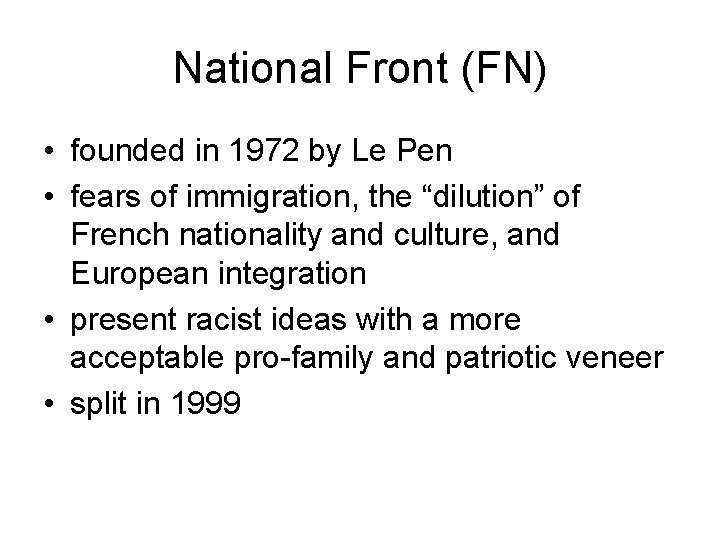
National Front (FN) • founded in 1972 by Le Pen • fears of immigration, the “dilution” of French nationality and culture, and European integration • present racist ideas with a more acceptable pro-family and patriotic veneer • split in 1999
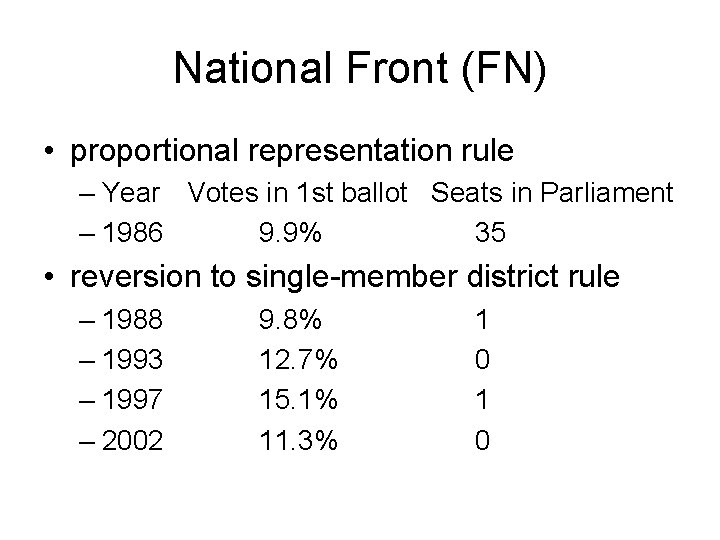
National Front (FN) • proportional representation rule – Year Votes in 1 st ballot Seats in Parliament – 1986 9. 9% 35 • reversion to single-member district rule – 1988 – 1993 – 1997 – 2002 9. 8% 12. 7% 15. 1% 11. 3% 1 0
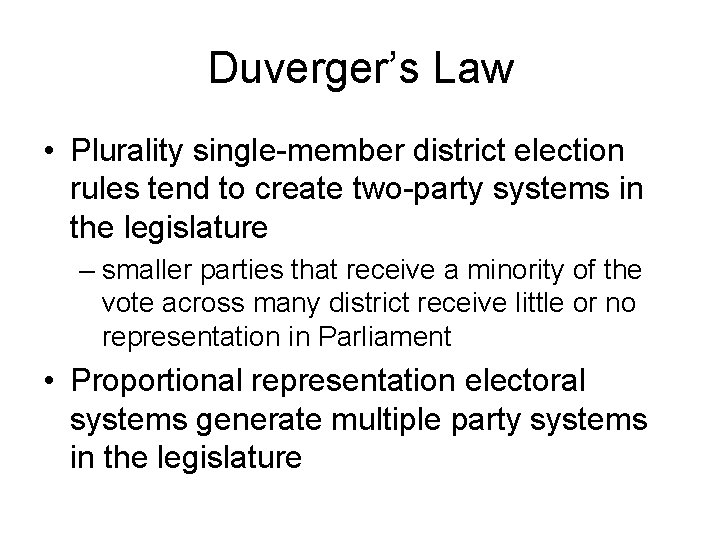
Duverger’s Law • Plurality single-member district election rules tend to create two-party systems in the legislature – smaller parties that receive a minority of the vote across many district receive little or no representation in Parliament • Proportional representation electoral systems generate multiple party systems in the legislature
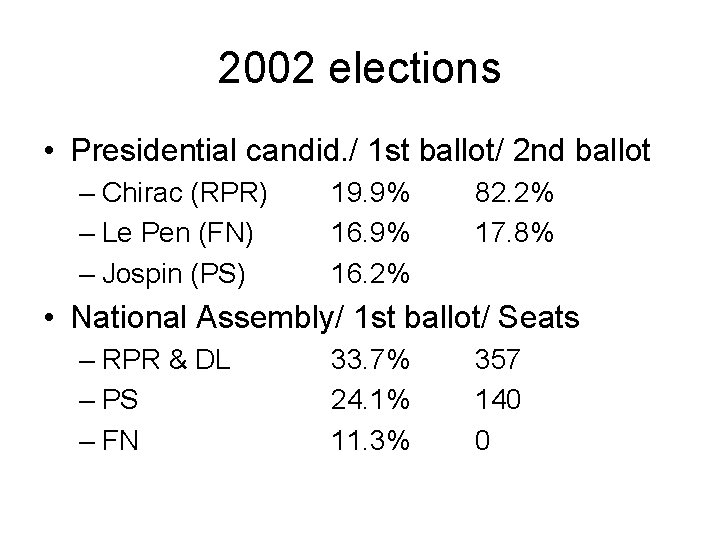
2002 elections • Presidential candid. / 1 st ballot/ 2 nd ballot – Chirac (RPR) – Le Pen (FN) – Jospin (PS) 19. 9% 16. 2% 82. 2% 17. 8% • National Assembly/ 1 st ballot/ Seats – RPR & DL – PS – FN 33. 7% 24. 1% 11. 3% 357 140 0
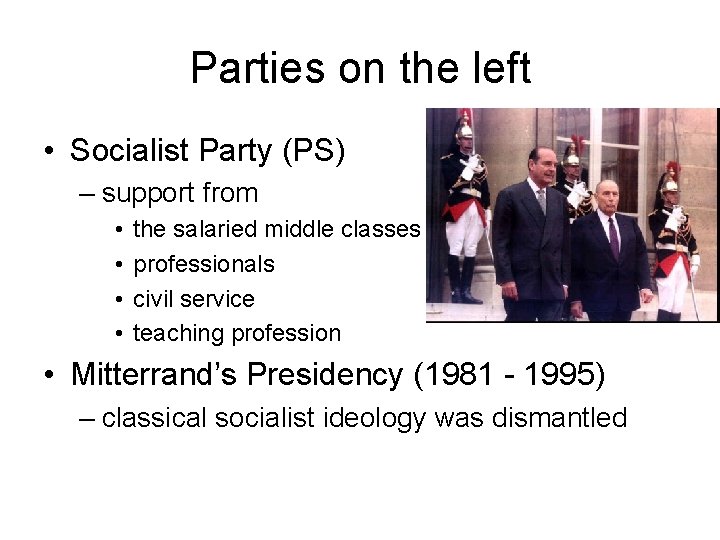
Parties on the left • Socialist Party (PS) – support from • • the salaried middle classes professionals civil service teaching profession • Mitterrand’s Presidency (1981 - 1995) – classical socialist ideology was dismantled
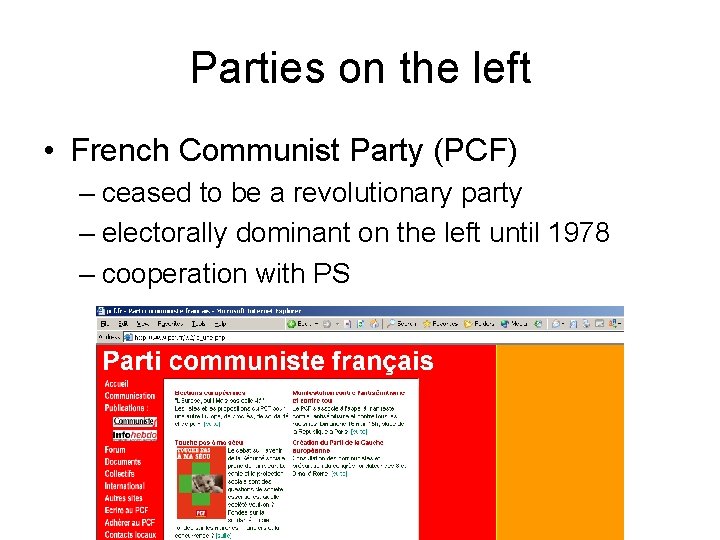
Parties on the left • French Communist Party (PCF) – ceased to be a revolutionary party – electorally dominant on the left until 1978 – cooperation with PS
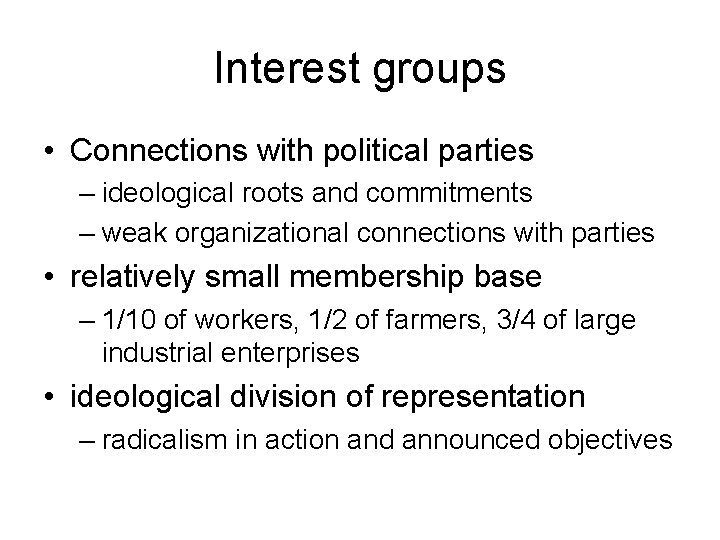
Interest groups • Connections with political parties – ideological roots and commitments – weak organizational connections with parties • relatively small membership base – 1/10 of workers, 1/2 of farmers, 3/4 of large industrial enterprises • ideological division of representation – radicalism in action and announced objectives
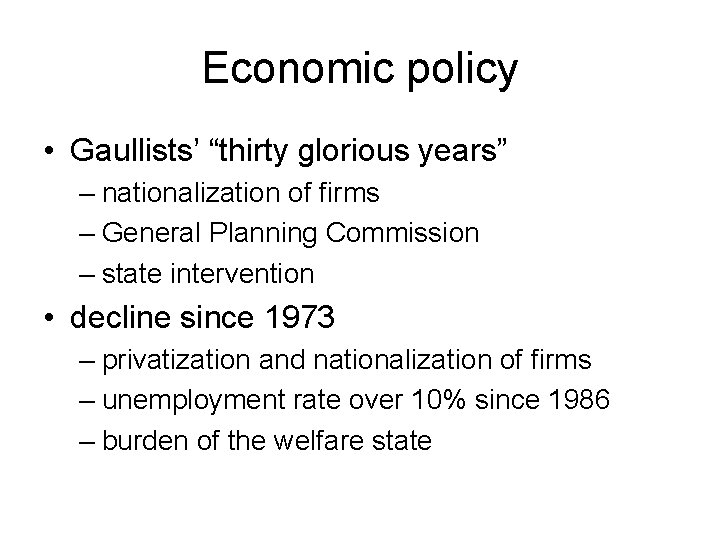
Economic policy • Gaullists’ “thirty glorious years” – nationalization of firms – General Planning Commission – state intervention • decline since 1973 – privatization and nationalization of firms – unemployment rate over 10% since 1986 – burden of the welfare state
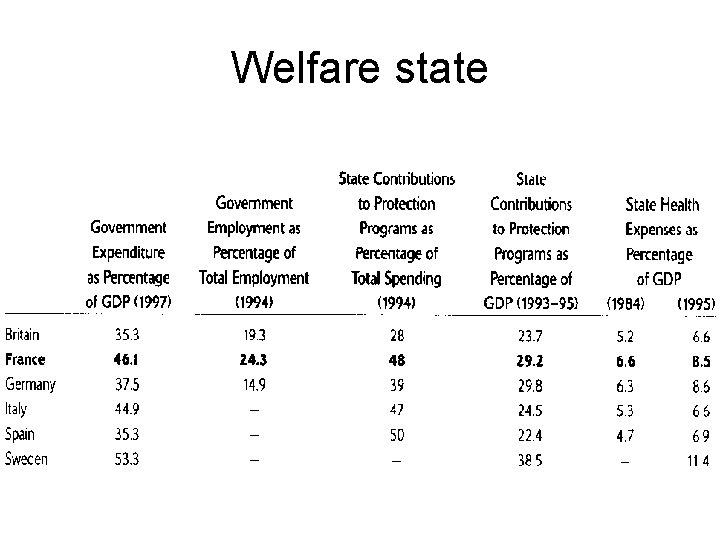
Welfare state
Elite recruitment • Grandes écoles – ENA: National School of Administration • graduates dominate – key branches of civil service – key positions in politics – top business executives
“Political class” • Political elite - decision makers – Parliament members – elected local government officials – local party leaders – journalists of national renown –… – no more than 15 to 20 thousand people
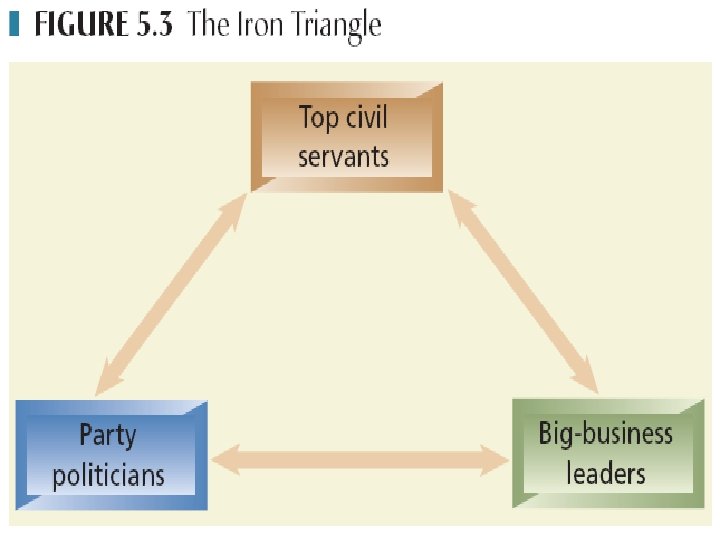
“Iron triangle” • Top civil servants – in National Assembly – training and recruitment grounds for top positions in both politics and industry • Effort at opening up the narrow elite recruitment process since 1980 s – new admissions procedures – top bureaucrats impact national government