
POLITICAL THOUGHT AND THE ARTS After the Renaissance

- Slides: 13
POLITICAL THOUGHT AND THE ARTS After the Renaissance
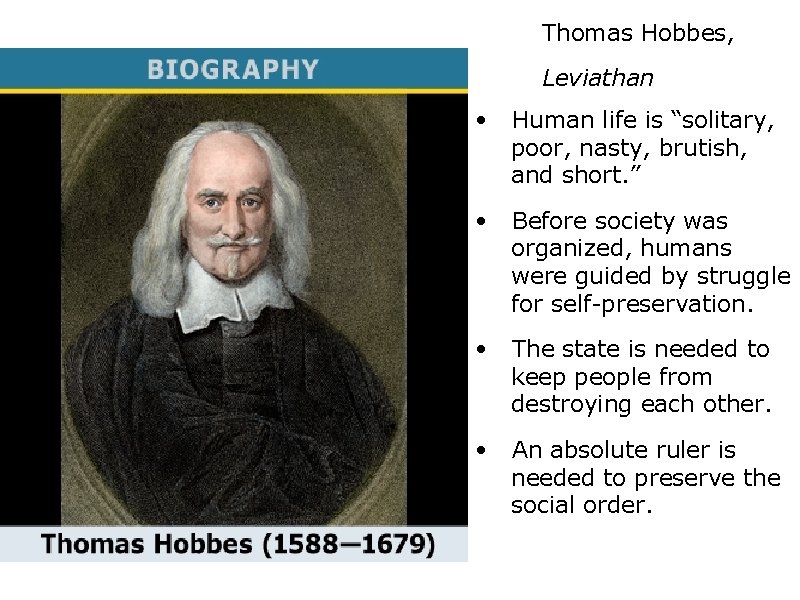
Seventeenth-Century Political Thought in England Thomas Hobbes, Leviathan • Human life is “solitary, poor, nasty, brutish, and short. ” • Before society was organized, humans were guided by struggle for self-preservation. • The state is needed to keep people from destroying each other. • An absolute ruler is needed to preserve the social order.
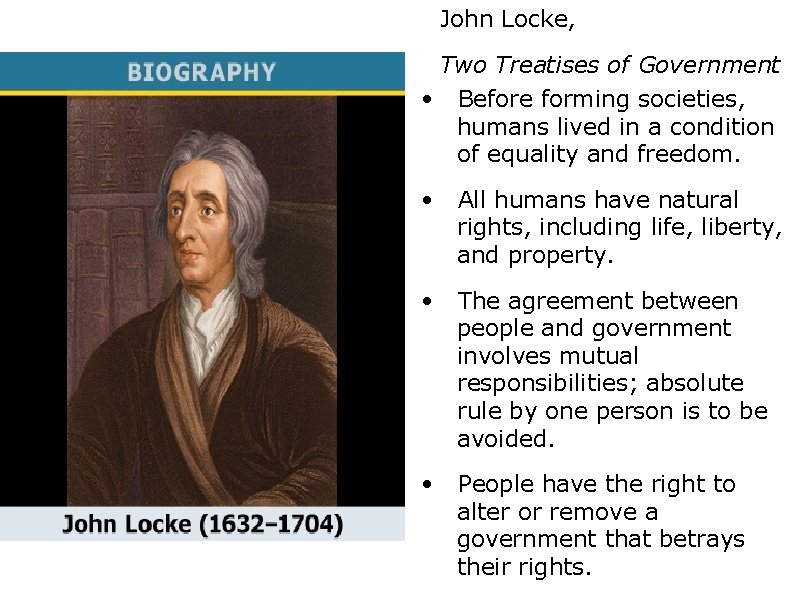
John Locke, Seventeenth-Century Political Thought in England Two Treatises of Government • Before forming societies, humans lived in a condition of equality and freedom. • All humans have natural rights, including life, liberty, and property. • The agreement between people and government involves mutual responsibilities; absolute rule by one person is to be avoided. • People have the right to alter or remove a government that betrays their rights.
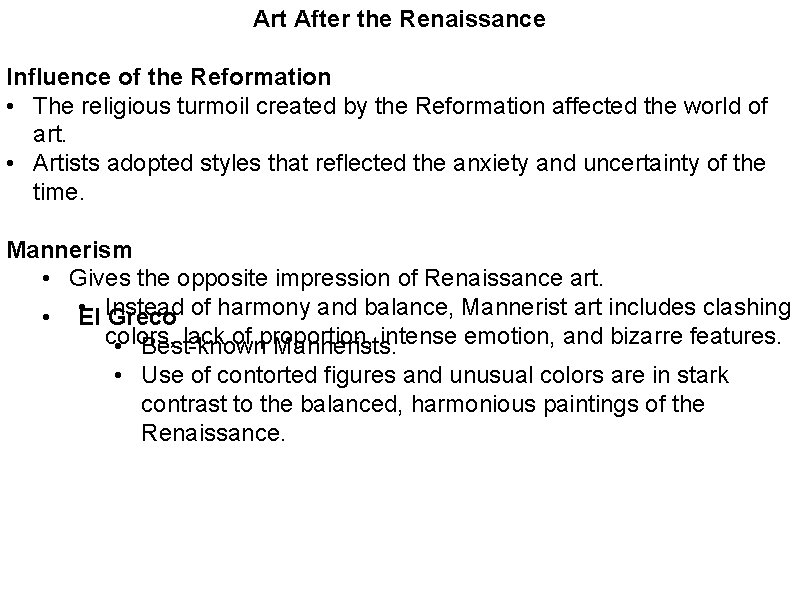
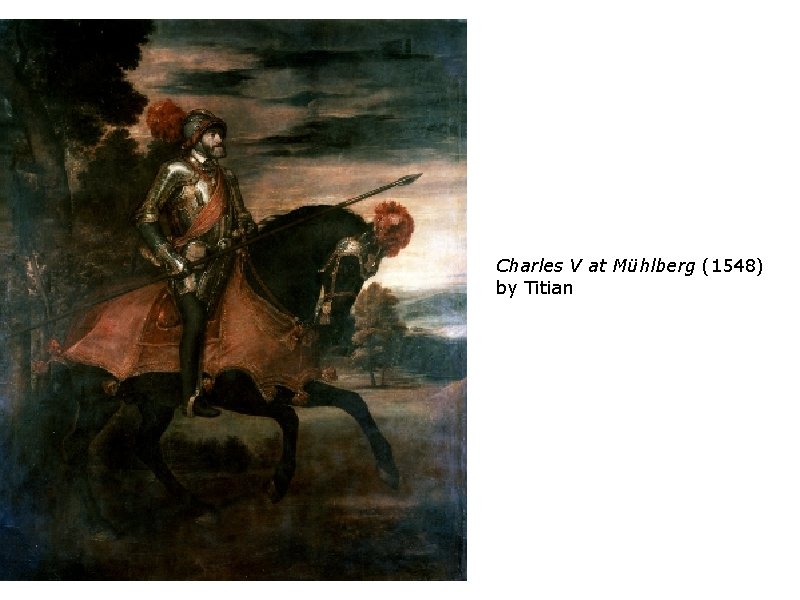
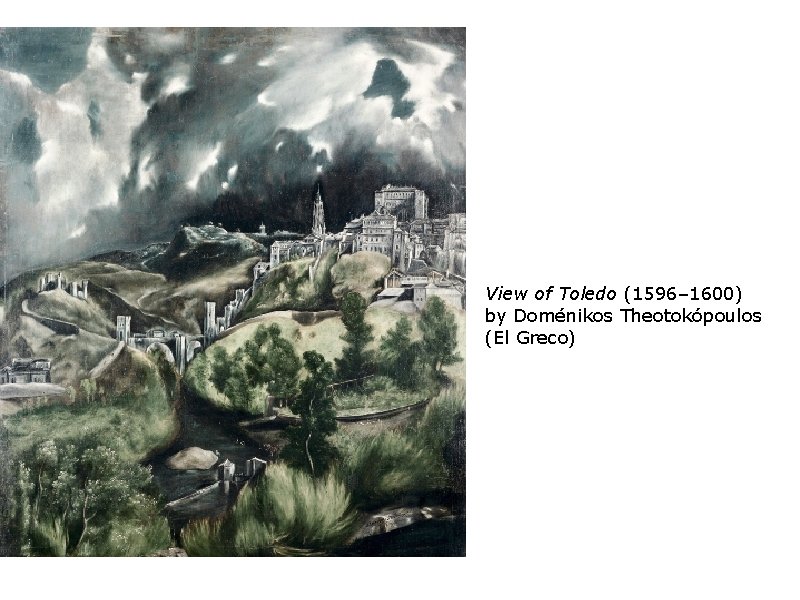
Art After the Renaissance Influence of the Reformation • The religious turmoil created by the Reformation affected the world of art. • Artists adopted styles that reflected the anxiety and uncertainty of the time. Mannerism • Gives the opposite impression of Renaissance art. • Instead • El Greco of harmony and balance, Mannerist art includes clashing colors, lack of proportion, intense emotion, and bizarre features. • Best-known Mannerists. • Use of contorted figures and unusual colors are in stark contrast to the balanced, harmonious paintings of the Renaissance.
Charles V at Mühlberg (1548) by Titian
View of Toledo (1596– 1600) by Doménikos Theotokópoulos (El Greco)
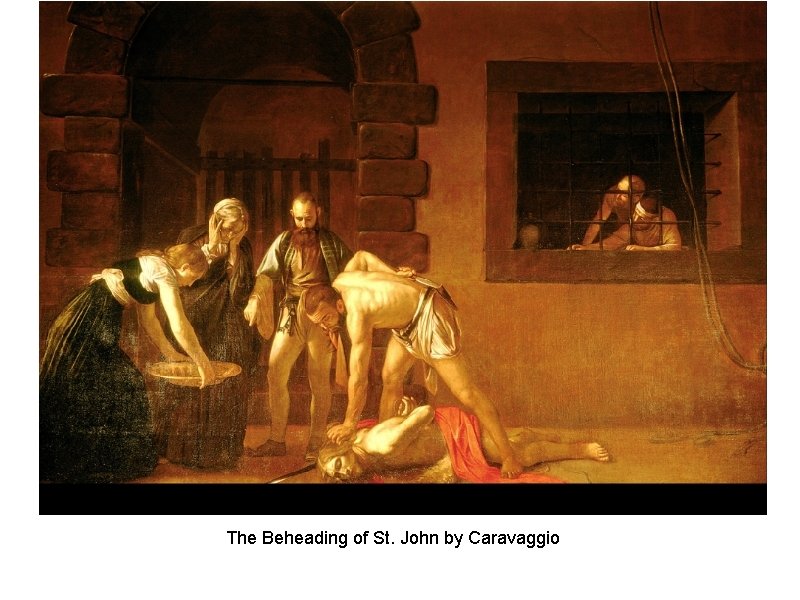
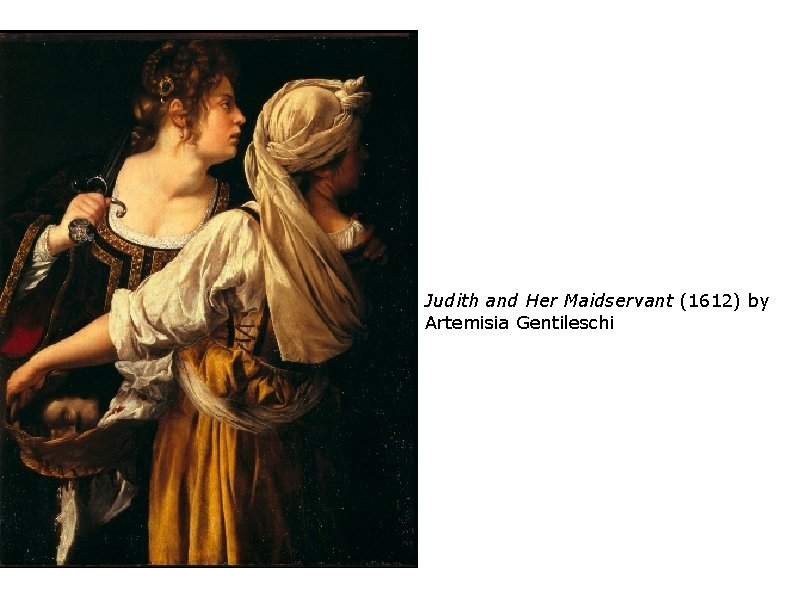
Baroque • The baroque style began to replace mannerism in the mid 1500 s. The style emphasized rich detail and powerful themes. • Reflects religious tension typical of the mid-sixteenth century. • Art • Baroque painters sought to create dramatic effects that created emotional responses. • The works of the Italian painter Caravaggio are famous for their dramatic use of light. • Characteristics of baroque art include: • Tension and dramatic movement, • Deep vibrant colors • Intense shading known as chiaroscuro • Intense, often violent, emotion.
• Architecture • European political and religious leaders wanted to create buildings that reflected their power. • St. Peter's Basilica in Rome, the traditional seat of the pope. • Music • Two composers, Johann Sebastian Bach and George Frideric Handel, perfected the baroque style of music. Both created religious music that is still immensely popular today.
The Beheading of St. John by Caravaggio
Judith and Her Maidservant (1612) by Artemisia Gentileschi
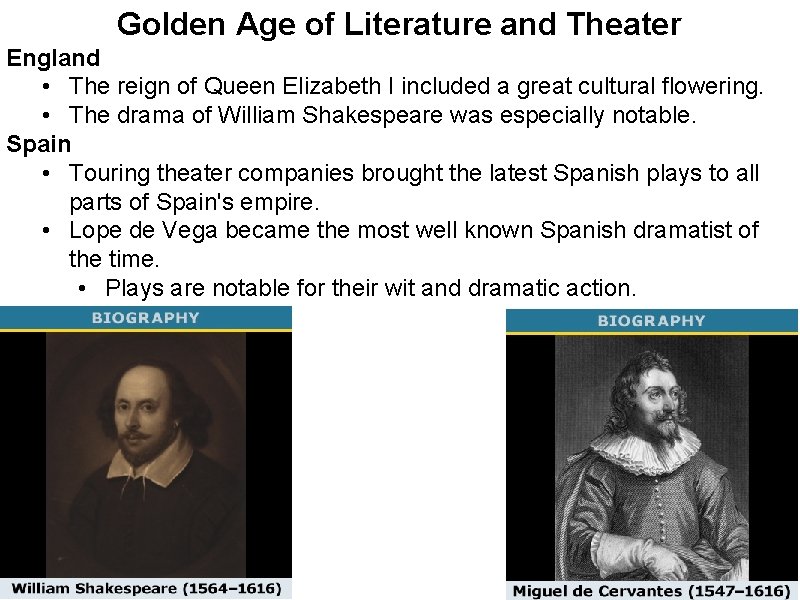
Golden Age of Literature and Theater England • The reign of Queen Elizabeth I included a great cultural flowering. • The drama of William Shakespeare was especially notable. Spain • Touring theater companies brought the latest Spanish plays to all parts of Spain's empire. • Lope de Vega became the most well known Spanish dramatist of the time. • Plays are notable for their wit and dramatic action.
WILLIAM SHAKESPEARE • In his plays, Shakespeare showed a remarkable understanding of the human condition. • Elizabethan theaters sold tickets at different price levels so that both rich and poor could enjoy the plays of Shakespeare and others. • Also famous for a form of poetry called the sonnet.
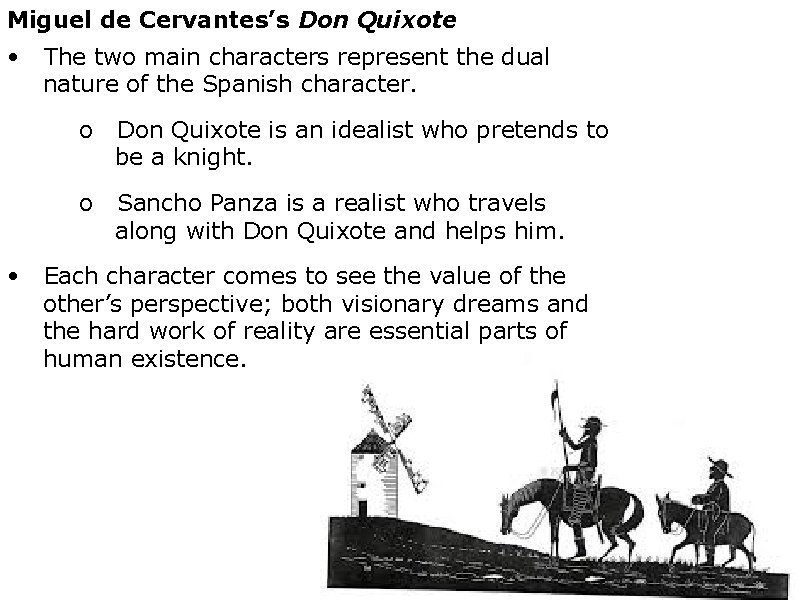
Miguelde de. Cervantes’s Don Quixote Miguel Don Quixote • • The two main characters represent the dual nature of the Spanish character. o Don Quixote is an idealist who pretends to be a knight. o Sancho Panza is a realist who travels along with Don Quixote and helps him. Each character comes to see the value of the other’s perspective; both visionary dreams and the hard work of reality are essential parts of human existence.