
POLITICAL SOCIOLOGY OF CENTRAL EUROPE Gender and Feminism
- Slides: 26
POLITICAL SOCIOLOGY OF CENTRAL EUROPE Gender and Feminism 16 May 2019
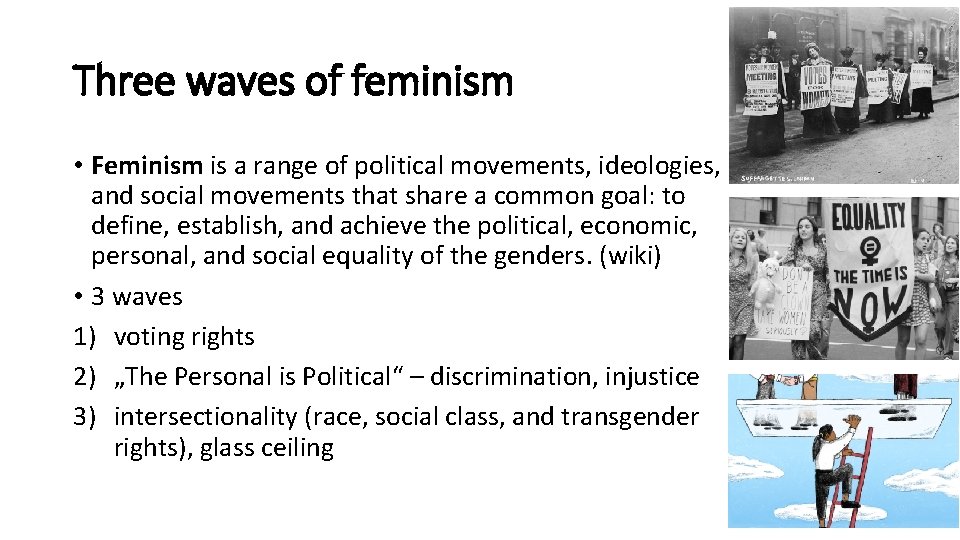
Three waves of feminism • Feminism is a range of political movements, ideologies, and social movements that share a common goal: to define, establish, and achieve the political, economic, personal, and social equality of the genders. (wiki) • 3 waves 1) voting rights 2) „The Personal is Political“ – discrimination, injustice 3) intersectionality (race, social class, and transgender rights), glass ceiling
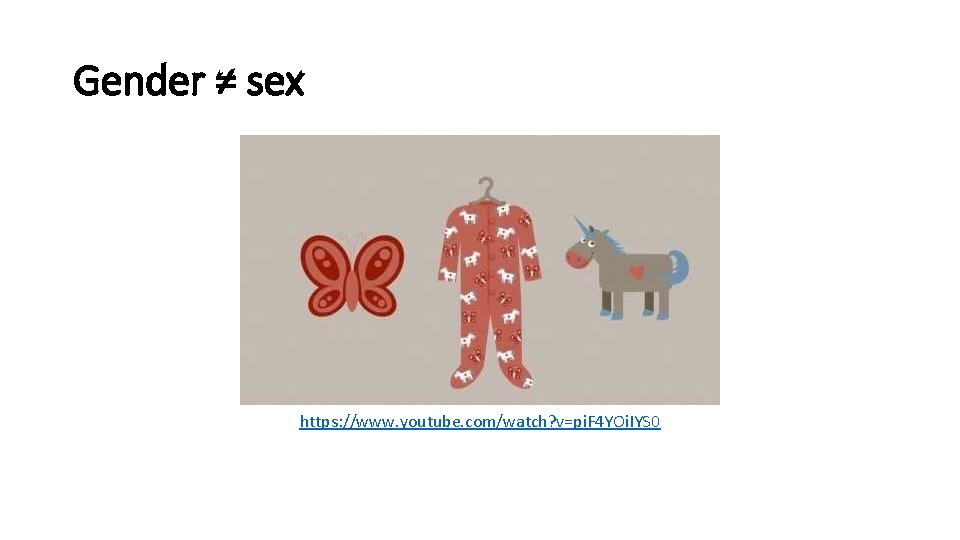
Gender ≠ sex https: //www. youtube. com/watch? v=pi. F 4 YOi. IYS 0
Feminism in CE – pesimistic interpretation • suffragettes in Poland Czechoslovakia already in 19 th century • socialism – enabling women to work (X double-work: profession + house-work) • widespread expectations for the growth of a ‘women’s movement’ in Central and Eastern Europe - times of political change in which new opportunities for activism arise (Einhorn, Sever 2003) • apparent ‘absence’ of women’s political activity • women mobilizing only around single strategic issues • „inability of women in these countries to utilize the newly opened democratic space of civil society to form a collective feminist movement“ (p. 183) • feminism as often used as a curse word
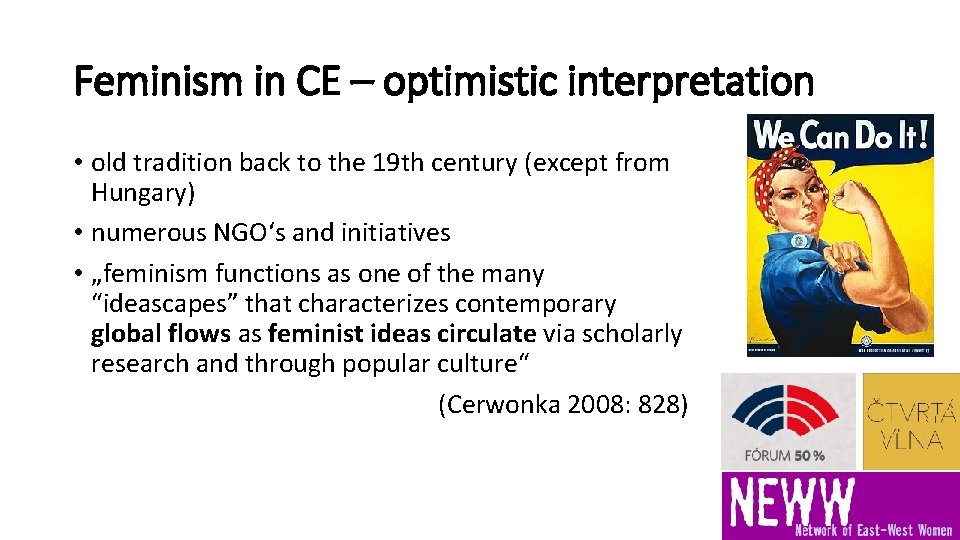
Feminism in CE – optimistic interpretation • old tradition back to the 19 th century (except from Hungary) • numerous NGO‘s and initiatives • „feminism functions as one of the many “ideascapes” that characterizes contemporary global flows as feminist ideas circulate via scholarly research and through popular culture“ (Cerwonka 2008: 828)
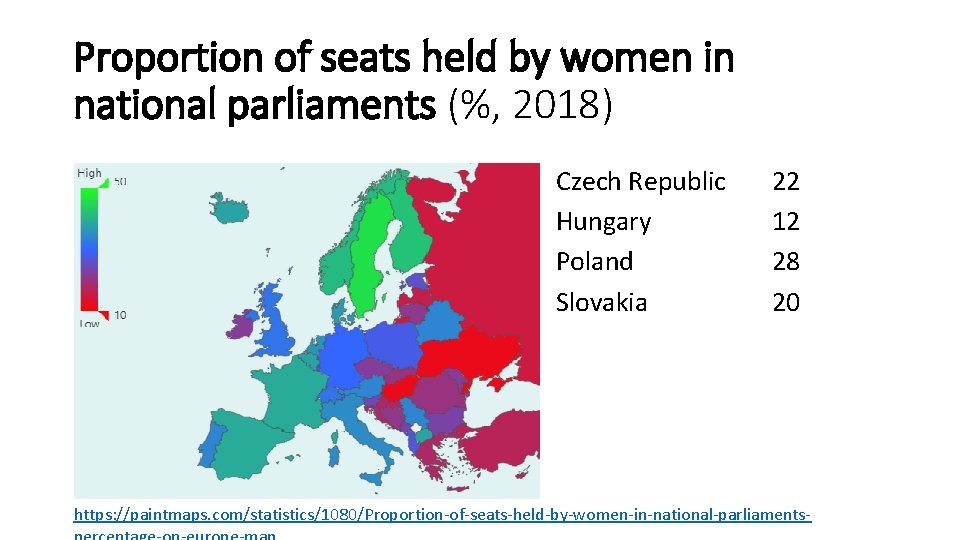
Proportion of seats held by women in national parliaments (%, 2018) Czech Republic Hungary Poland Slovakia 22 12 28 20 https: //paintmaps. com/statistics/1080/Proportion-of-seats-held-by-women-in-national-parliaments-
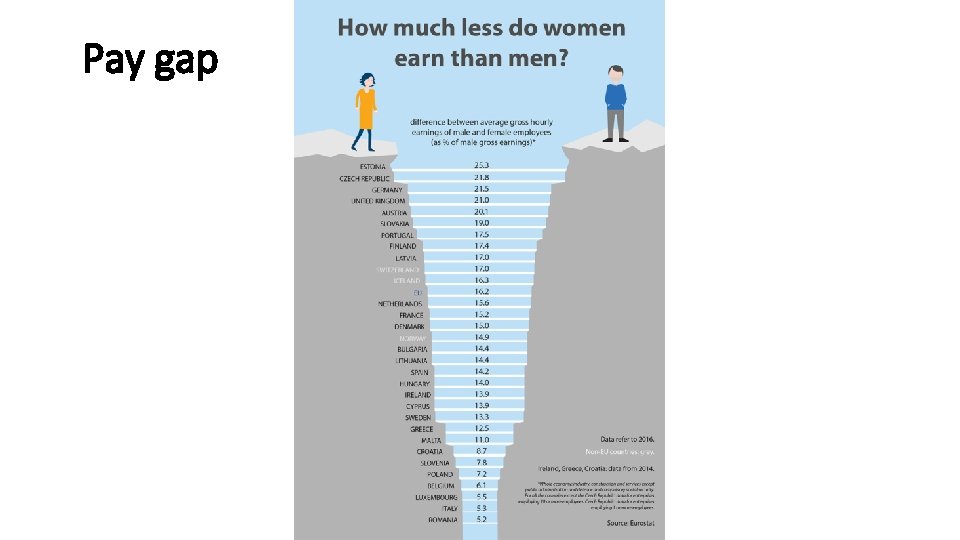
Pay gap
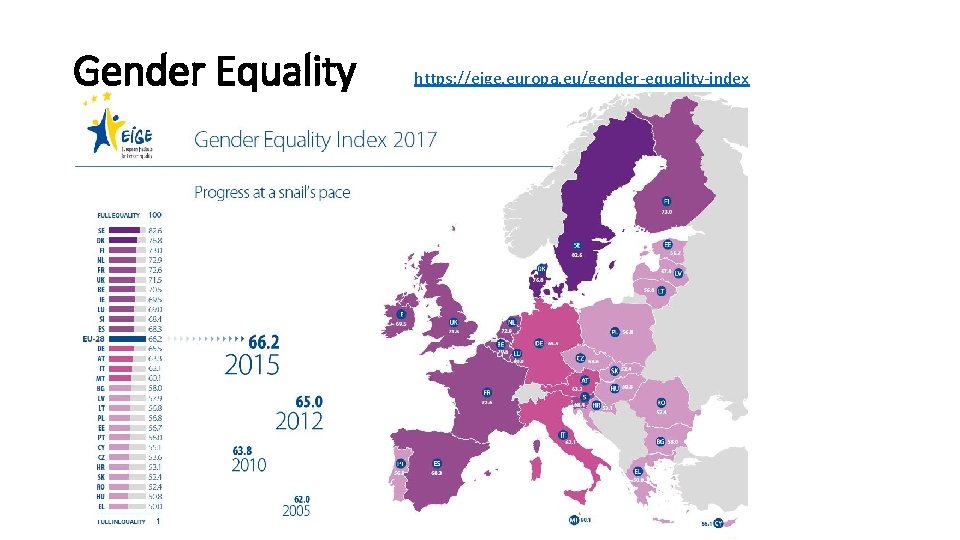
Gender Equality https: //eige. europa. eu/gender-equality-index
Illiberal turn in women‘s rights (Poland Hungary) • feminists and progressive NGOs have become underfunded and demonized; unable to influence government policy through previously existing channels – advocacy, consultations or media • privileging family over women’s rights • nationalist ideas about the family to attack human rights, emphasizing the rights and interests of “traditional” families over those of individuals and minorities • Fidesz and Pi. S: the concept of “family mainstreaming” (shift from the discourse of gender equality to the value of traditional families)
Gendered illiberalism Illiberalism „as a deeply gendered political transformation which is reliant on a certain gender regime – constructions of gender as well as institutionalized relations of power between them – and which transforms the meanings of human rights, women's rights and equality in a way which privileges the rights and normative needs of families over women‘s rights. “ (Grzebalska, Pető 2018: 164)
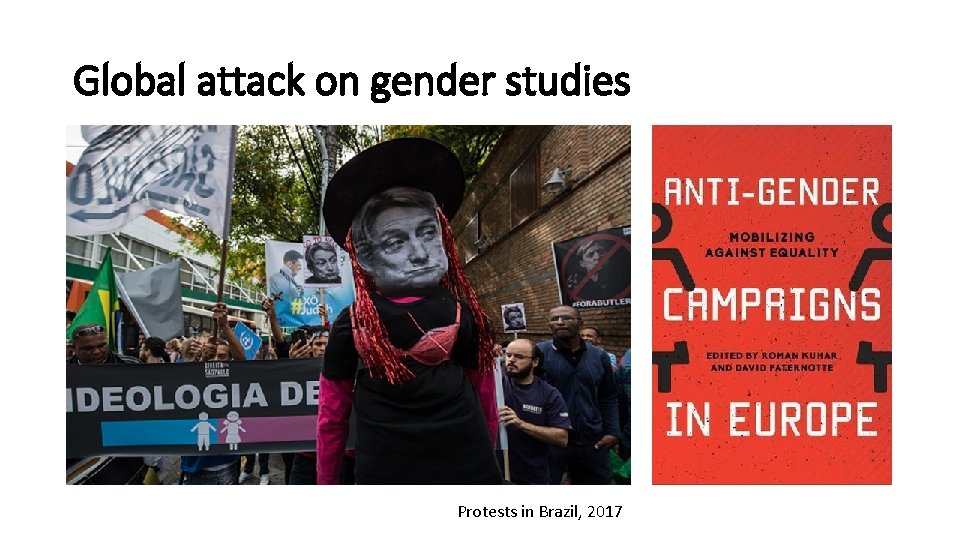
Global attack on gender studies Protests in Brazil, 2017
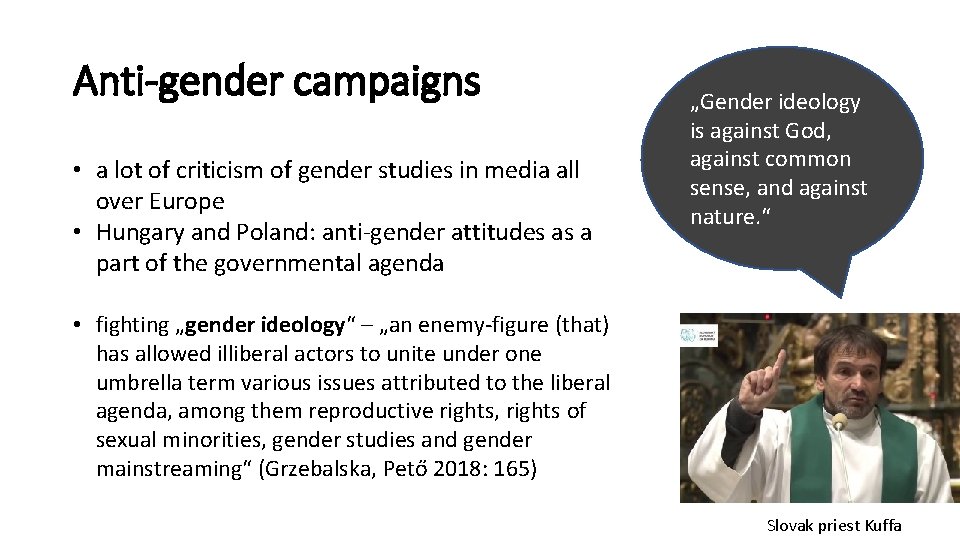
Anti-gender campaigns • a lot of criticism of gender studies in media all over Europe • Hungary and Poland: anti-gender attitudes as a part of the governmental agenda „Gender ideology is against God, against common sense, and against nature. “ • fighting „gender ideology“ – „an enemy-figure (that) has allowed illiberal actors to unite under one umbrella term various issues attributed to the liberal agenda, among them reproductive rights, rights of sexual minorities, gender studies and gender mainstreaming“ (Grzebalska, Pető 2018: 165) Slovak priest Kuffa
„Antigenderism“ Antigenderism as „the shift from conservative antifeminism, which focused on reproductive and sexual rights, to a much broader ideological construct that effectively combines a critique of liberal value systems (individualism, human rights, and gender equality) with opposition toward contemporary global capitalism“ (Korolczuk, Graff 2018: 798)
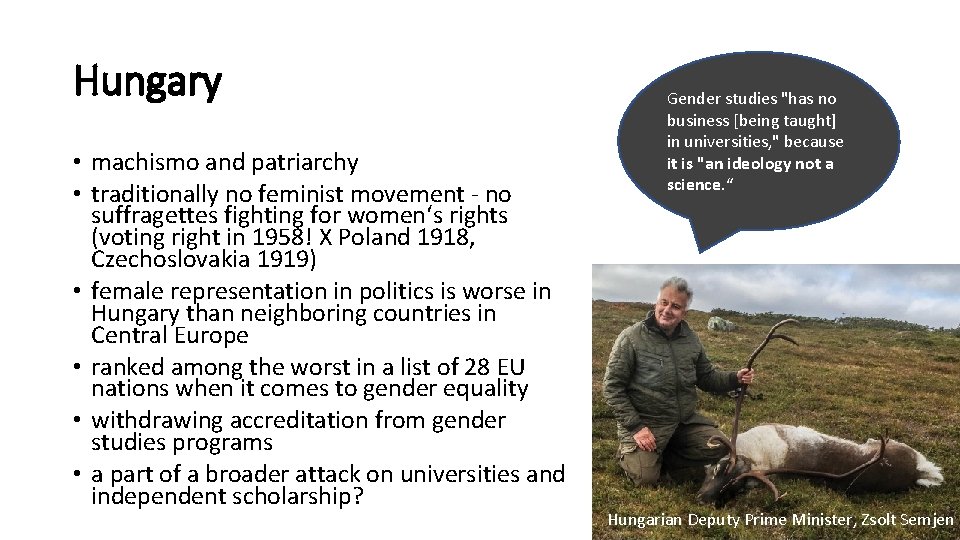
Hungary • machismo and patriarchy • traditionally no feminist movement - no suffragettes fighting for women‘s rights (voting right in 1958! X Poland 1918, Czechoslovakia 1919) • female representation in politics is worse in Hungary than neighboring countries in Central Europe • ranked among the worst in a list of 28 EU nations when it comes to gender equality • withdrawing accreditation from gender studies programs • a part of a broader attack on universities and independent scholarship? Gender studies "has no business [being taught] in universities, " because it is "an ideology not a science. “ Hungarian Deputy Prime Minister, Zsolt Semjen
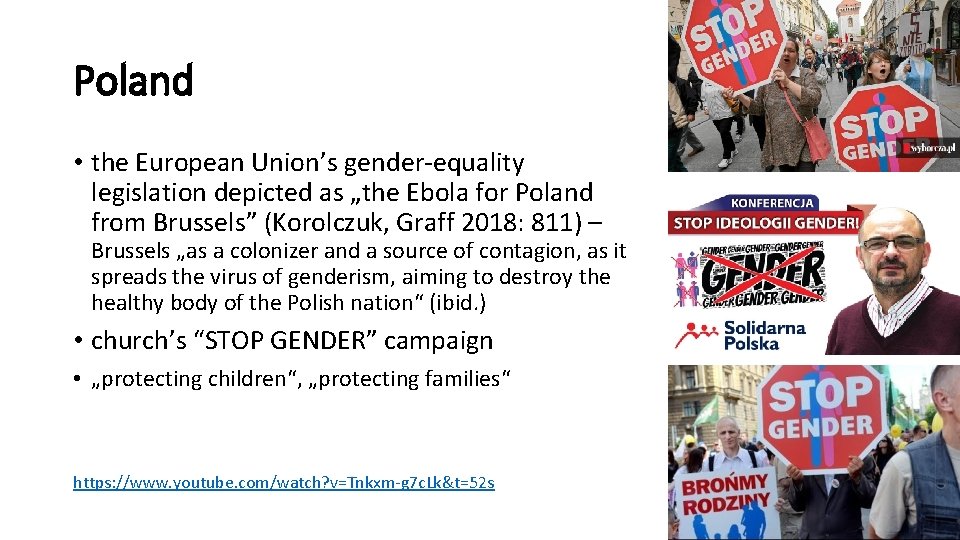
Poland • the European Union’s gender-equality legislation depicted as „the Ebola for Poland from Brussels” (Korolczuk, Graff 2018: 811) – Brussels „as a colonizer and a source of contagion, as it spreads the virus of genderism, aiming to destroy the healthy body of the Polish nation“ (ibid. ) • church’s “STOP GENDER” campaign • „protecting children“, „protecting families“ https: //www. youtube. com/watch? v=Tnkxm-g 7 c. Lk&t=52 s
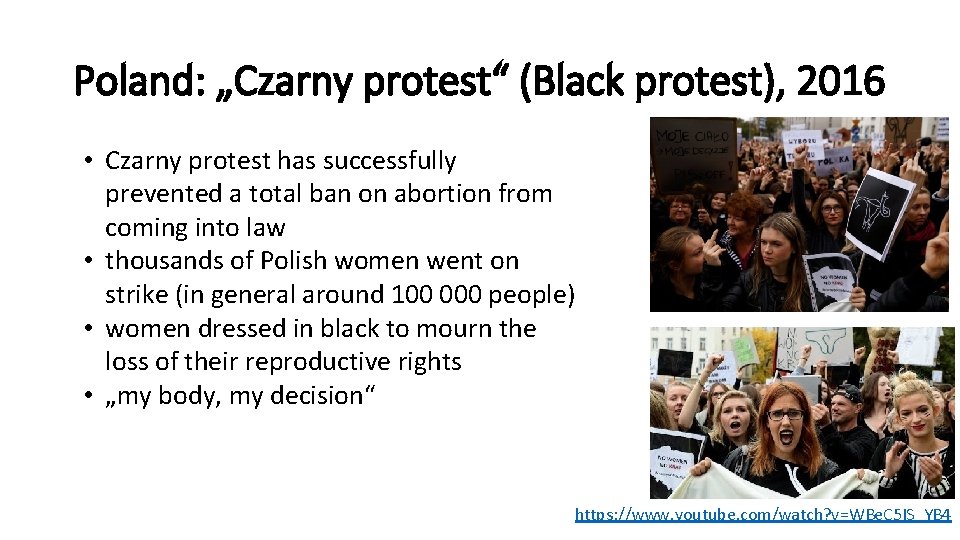
Poland: „Czarny protest“ (Black protest), 2016 • Czarny protest has successfully prevented a total ban on abortion from coming into law • thousands of Polish women went on strike (in general around 100 000 people) • women dressed in black to mourn the loss of their reproductive rights • „my body, my decision“ https: //www. youtube. com/watch? v=WBe. C 5 IS_YB 4
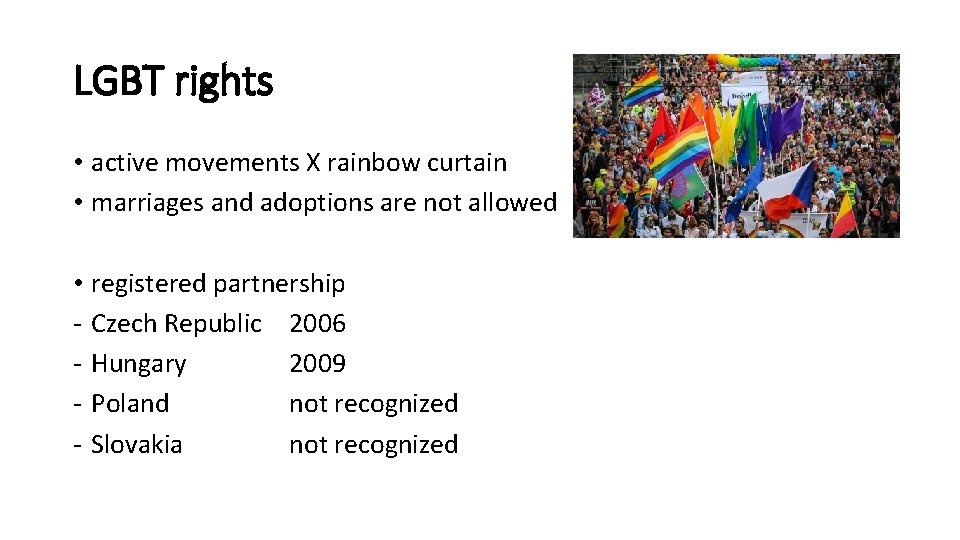
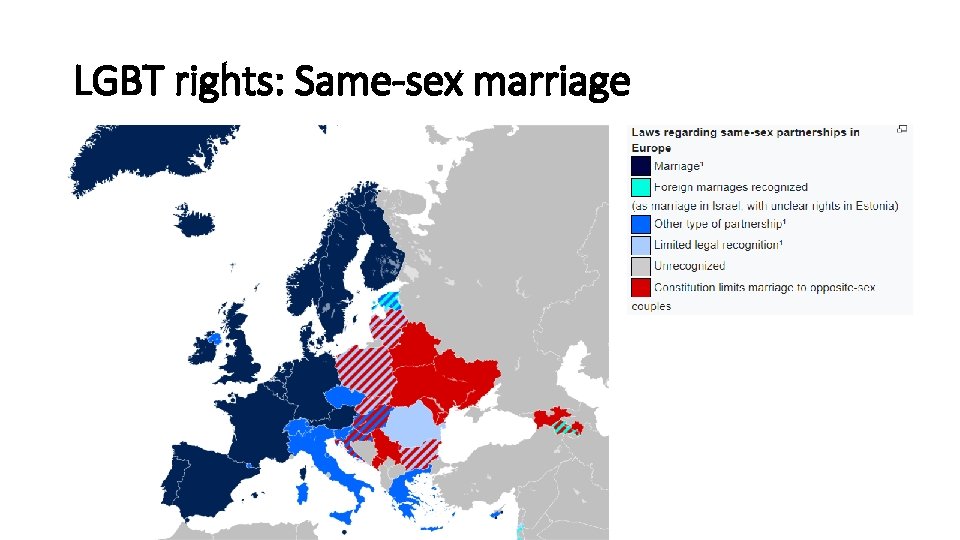
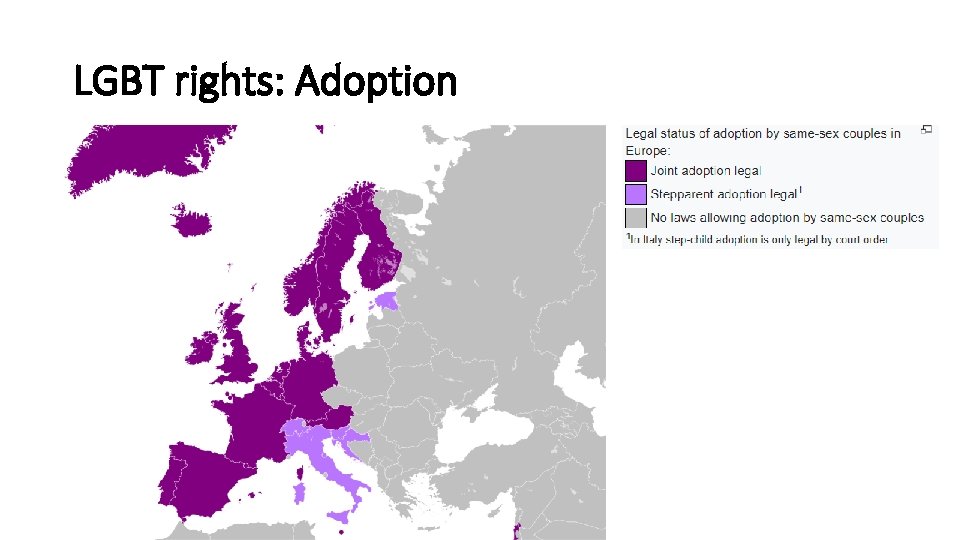
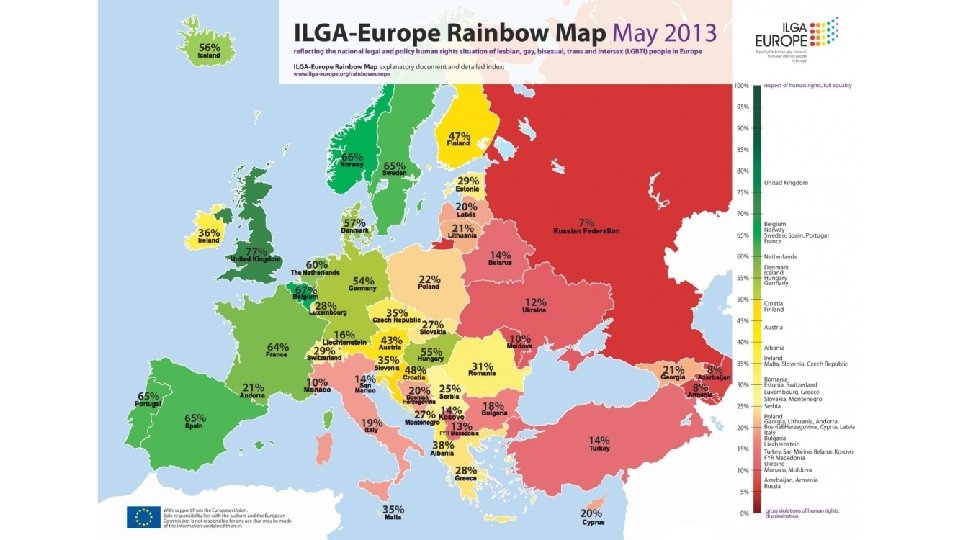
LGBT rights • active movements X rainbow curtain • marriages and adoptions are not allowed • registered partnership - Czech Republic 2006 - Hungary 2009 - Poland not recognized - Slovakia not recognized
LGBT rights: Same-sex marriage
LGBT rights: Adoption
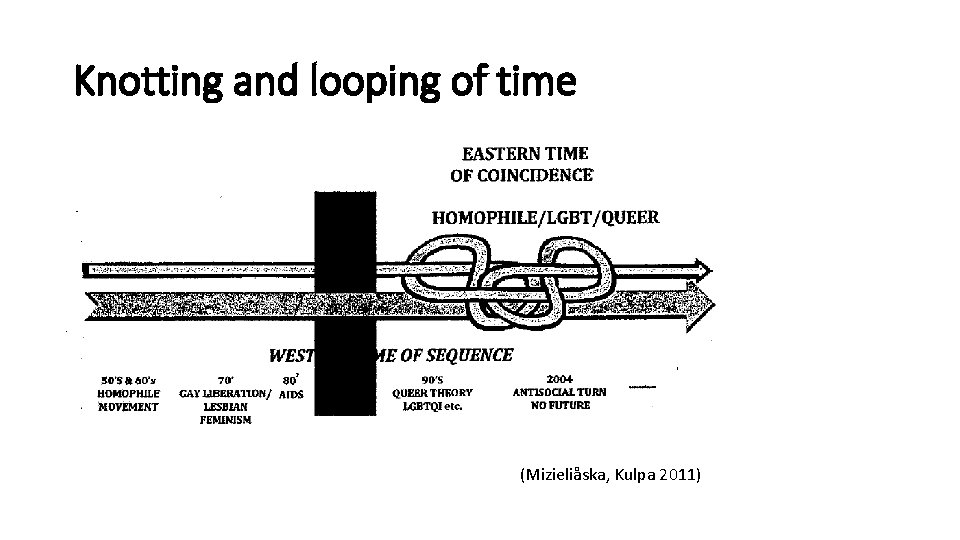
Knotting and looping of time (Mizieliåska, Kulpa 2011)
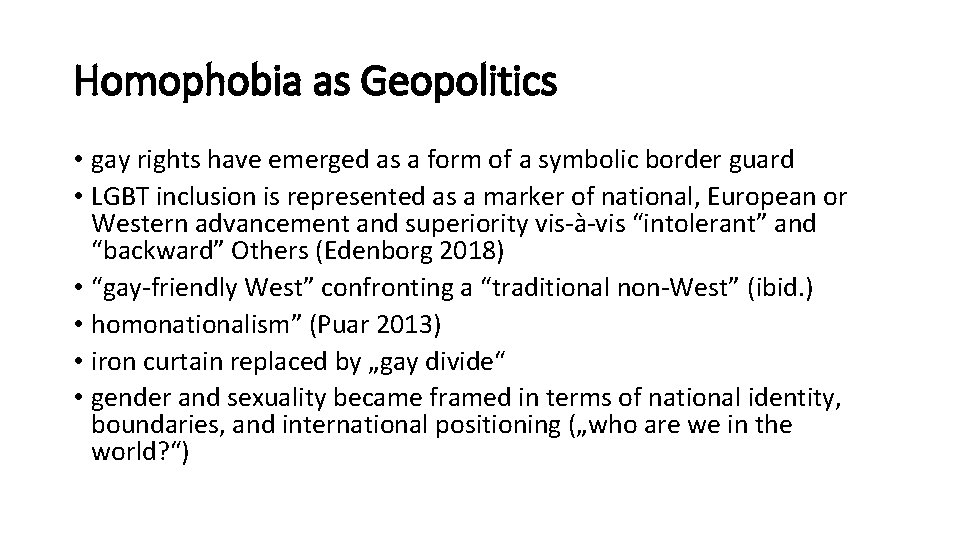
Homophobia as Geopolitics • gay rights have emerged as a form of a symbolic border guard • LGBT inclusion is represented as a marker of national, European or Western advancement and superiority vis-à-vis “intolerant” and “backward” Others (Edenborg 2018) • “gay-friendly West” confronting a “traditional non-West” (ibid. ) • homonationalism” (Puar 2013) • iron curtain replaced by „gay divide“ • gender and sexuality became framed in terms of national identity, boundaries, and international positioning („who are we in the world? “)
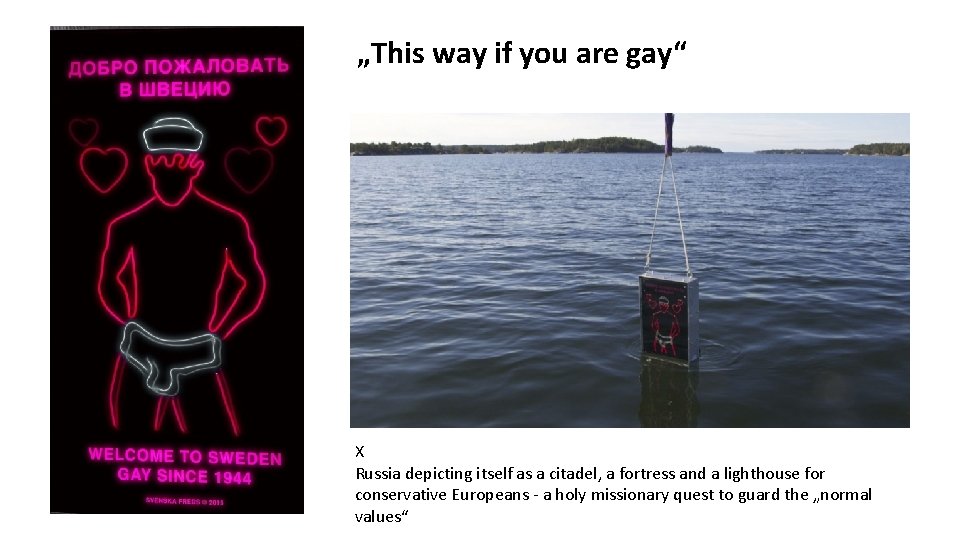
„This way if you are gay“ X Russia depicting itself as a citadel, a fortress and a lighthouse for conservative Europeans - a holy missionary quest to guard the „normal values“
References • Cerwonka, A. (2008). „Traveling Feminist Thought: Difference and Transculturation in Central and Eastern European Feminism. “Journal of Women in Culture and Society 33 (4): 809 -832. • Edenborg, Emil. (2018). „Homophobia as Geopolitics: ‚Traditional Values‘ and the Negotiation of Russia’s Place in the World. “ In Mulholland, J. ; N. Montagna; E. S. Mc. Donagh (Eds. ). Gendering Nationalism: Intersections of Nation, Gender and Sexuality. London: Palgrave. • Einhorn, B. ; Sever, C. (2003). „Gender and Civil Society in Central and Eastern Europe. “ International Feminist Journal of Politics 5 (2): 163– 190. • Grzebalska, W. ; A. Pető. (2018). „The gendered modus operandi of the illiberal transformation in Hungary and Poland. “ Women's Studies International Forum 68: 164– 172.
References • Korolczuk, E. (2016). „Explaining mass protests against abortion ban in Poland: the power of connective action. “ Zoon Politikon 7: 91 -113. • Korolczuk, E. ; A. Graff. (2018). „Gender as ‚Ebola from Brussels‘: The Anticolonial Frame and the Rise of Illiberal Populism. “ Journal of Women in Culture and Society 43 (4): 797 -821. • Mizielinska, J. ; R. Kulpa. (2011). ”‘Contemporary peripheries‘: Queer studies, circulation of knowledge and East/West divide. “ In Kulpa, R. , J. Mizielinska (Eds. ). De-centring Western Sexualities: Central and Eastern European Perspectives. London: Routledge. • Puar, J. (2013). Rethinking homonationalism. International Journal of Middle East Studies, 45 (2), 336 -339.
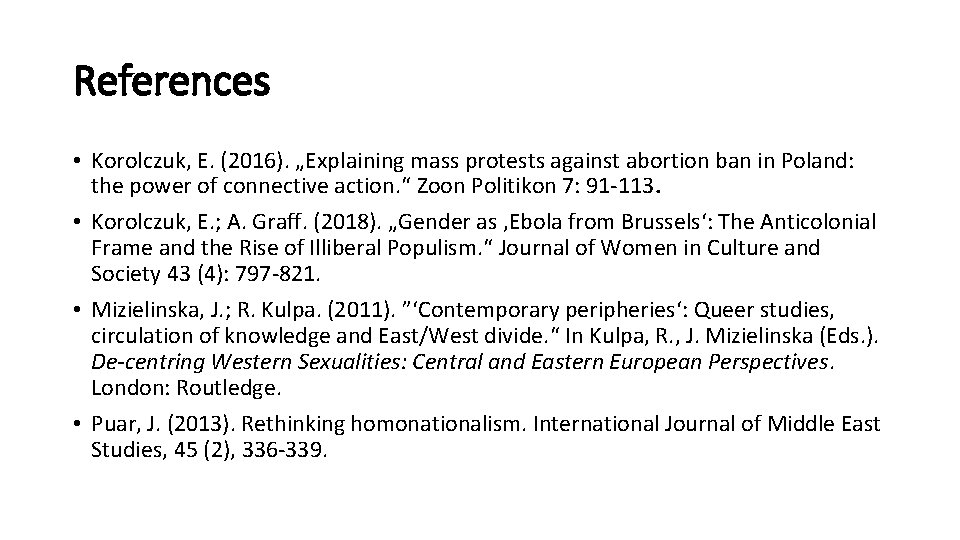
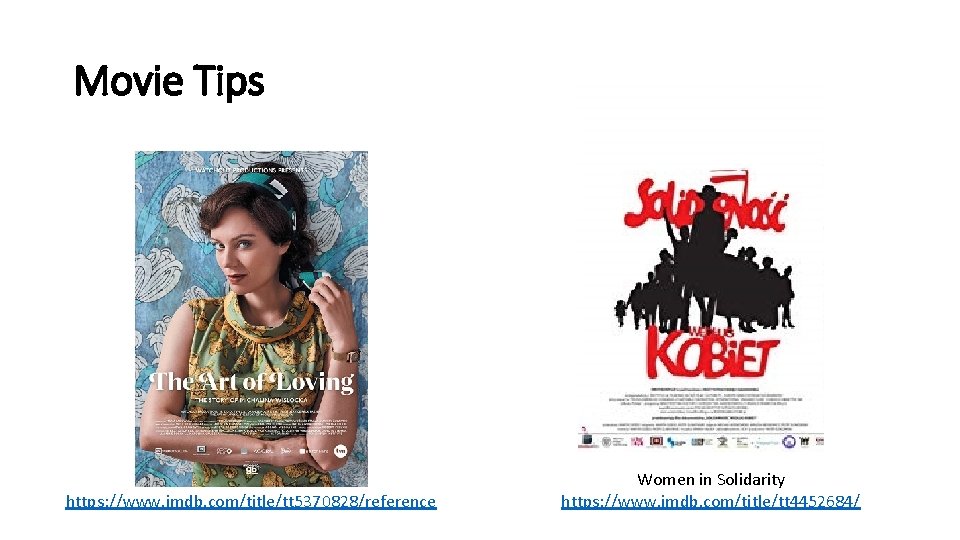
Movie Tips https: //www. imdb. com/title/tt 5370828/reference Women in Solidarity https: //www. imdb. com/title/tt 4452684/