
Political Science 30 The Grammar of Hypotheses Lecture

- Slides: 12
Political Science 30: The Grammar of Hypotheses
Lecture Outline �How � to spot a theory and a hypothesis. The grammar of a hypothesis Independent variables The dependent variable Values that variables take on �Intervening variables �Confounding variables
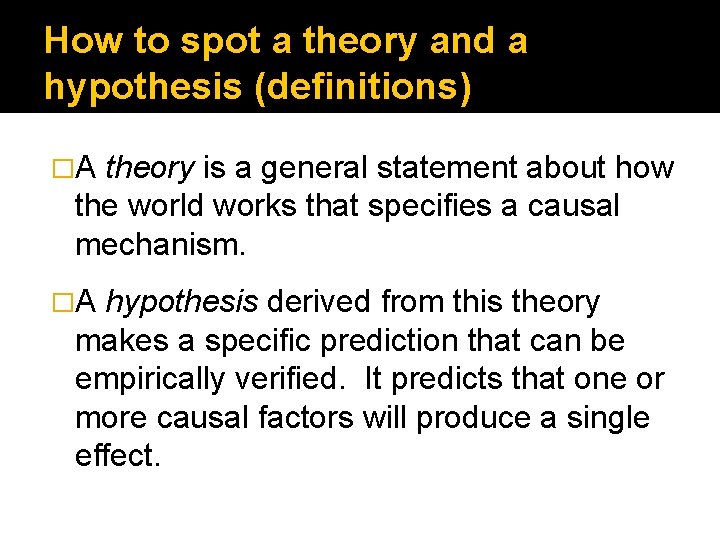
How to spot a theory and a hypothesis (definitions) �A theory is a general statement about how the world works that specifies a causal mechanism. �A hypothesis derived from this theory makes a specific prediction that can be empirically verified. It predicts that one or more causal factors will produce a single effect.
How to spot a theory and a hypothesis (for instance) �My theory is that people will be happy with their political system whenever their basic needs are fulfilled. �What are some testable hypotheses that spring forth from this theory?
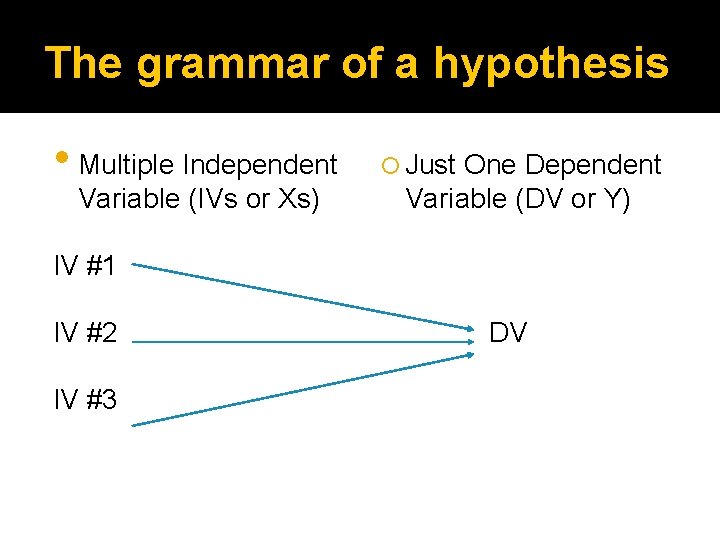
The grammar of a hypothesis • Multiple Independent Variable (IVs or Xs) Just One Dependent Variable (DV or Y) IV #1 IV #2 IV #3 DV
The grammar of a hypothesis �“Countries where citizens are healthy or wealthy will be less likely to experience successful revolutions. ” �What are the independent and dependent variables?
The grammar of a hypothesis �Independent variables: Wealth, measured by 1980 per capita GDP Health, measured by 1980 presence or absence of universal care system �Dependent variable: Presence or absence of successful revolution since 1980 �What values can these variables take on?
Variables and their Values �You can think of any variable as a question: What is the average lifespan in a country? �The potential values that the variable can take on are possible answers to that question: 45. 9 years (Afghanistan) 71. 1 years (The Bahamas) 50. 2 years (Benin) 80. 7 years (Japan)
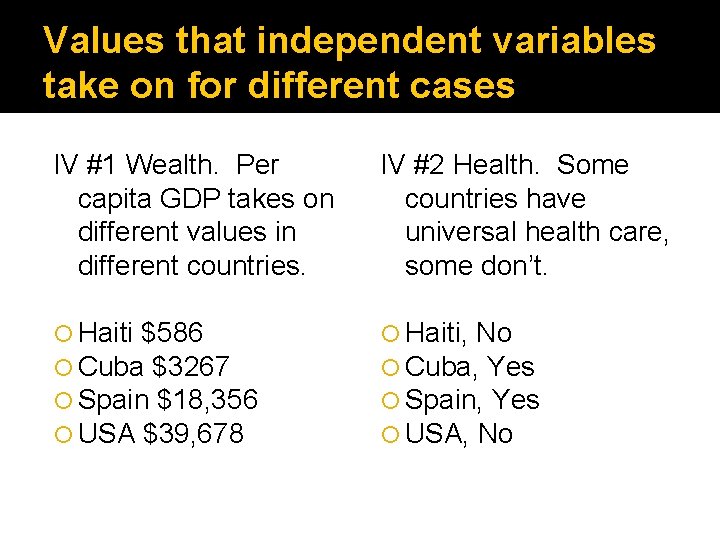
Values that independent variables take on for different cases IV #1 Wealth. Per capita GDP takes on different values in different countries. IV #2 Health. Some countries have universal health care, some don’t. Haiti $586 Cuba $3267 Spain $18, 356 USA $39, 678 Haiti, No Cuba, Yes Spain, Yes USA, No
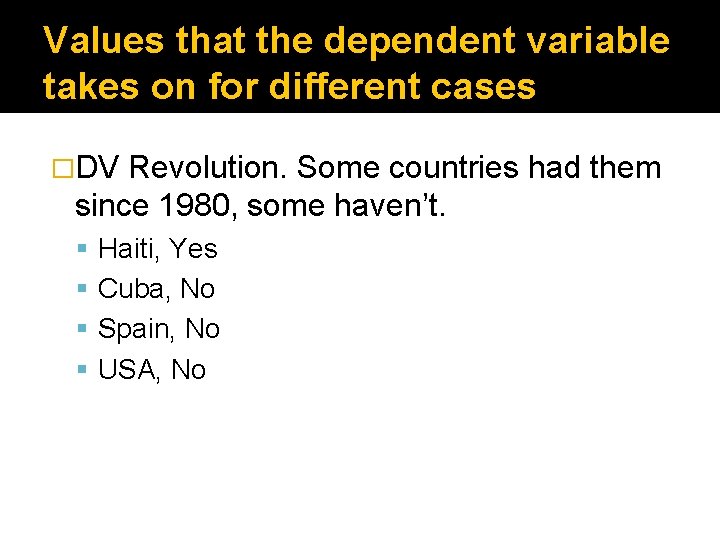
Values that the dependent variable takes on for different cases �DV Revolution. Some countries had them since 1980, some haven’t. Haiti, Yes Cuba, No Spain, No USA, No
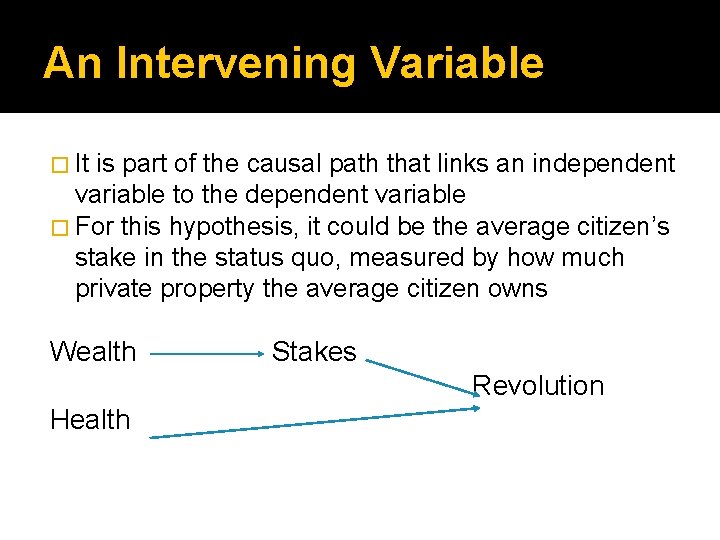
An Intervening Variable � It is part of the causal path that links an independent variable to the dependent variable � For this hypothesis, it could be the average citizen’s stake in the status quo, measured by how much private property the average citizen owns Wealth Stakes Revolution Health
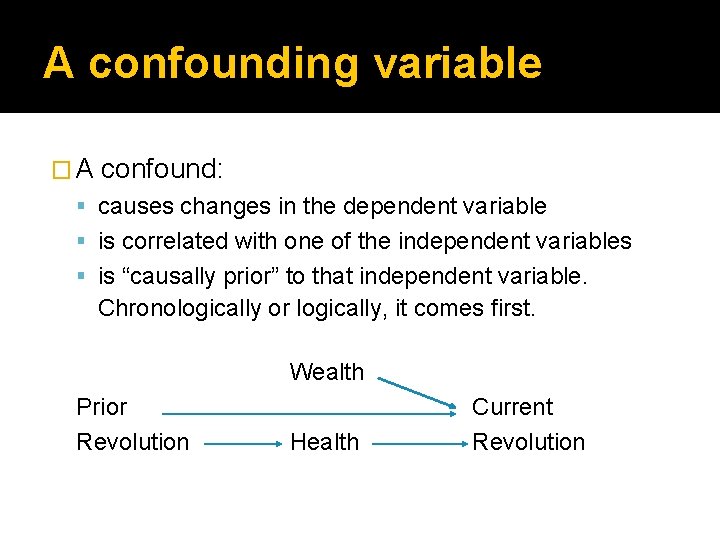
A confounding variable �A confound: causes changes in the dependent variable is correlated with one of the independent variables is “causally prior” to that independent variable. Chronologically or logically, it comes first. Wealth Prior Revolution Health Current Revolution