
Political Science 30 Political Inquiry Drawing a Sample
- Slides: 12
Political Science 30 Political Inquiry Drawing a Sample
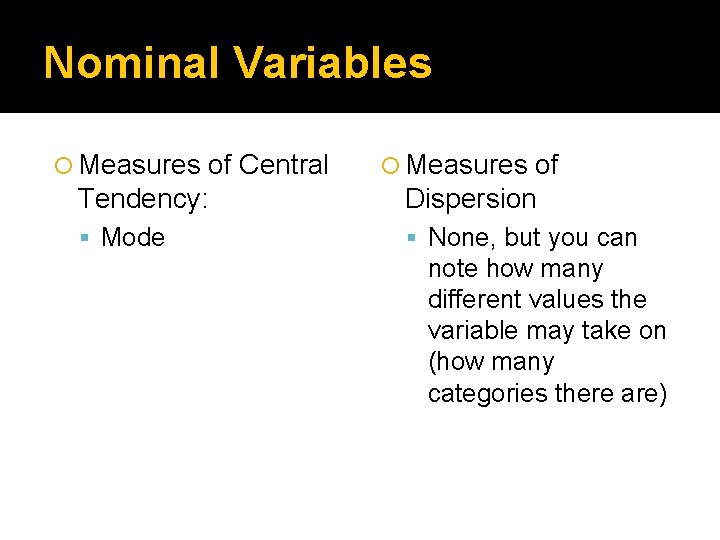
Nominal Variables Measures of Central Measures Tendency: of Dispersion Mode None, but you can note how many different values the variable may take on (how many categories there are)
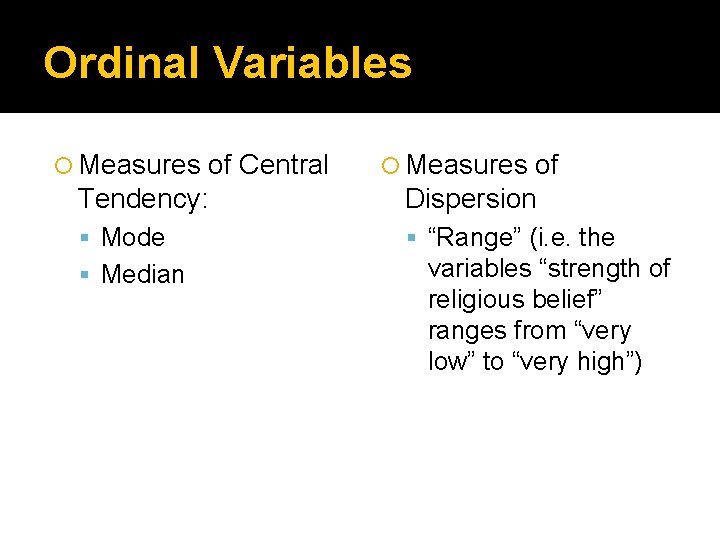
Ordinal Variables Measures Tendency: of Dispersion Mode “Range” (i. e. the Median of Central Measures variables “strength of religious belief” ranges from “very low” to “very high”)
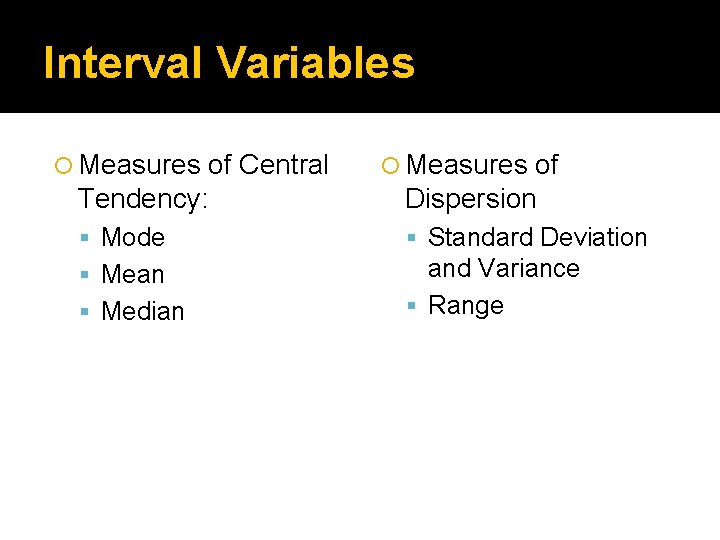
Interval Variables Measures Tendency: of Dispersion Mode Standard Deviation Mean and Variance Range Median of Central Measures
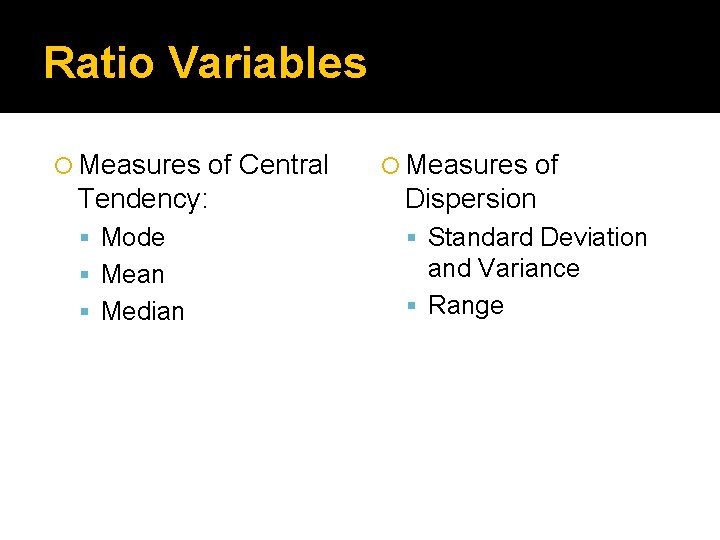
Ratio Variables Measures Tendency: of Dispersion Mode Standard Deviation Mean and Variance Range Median of Central Measures
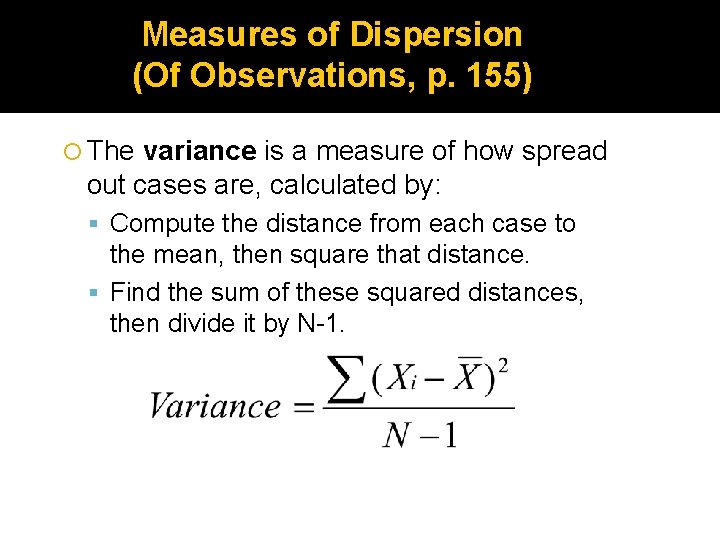
Measures of Dispersion (Of Observations, p. 155) The variance is a measure of how spread out cases are, calculated by: Compute the distance from each case to the mean, then square that distance. Find the sum of these squared distances, then divide it by N-1.
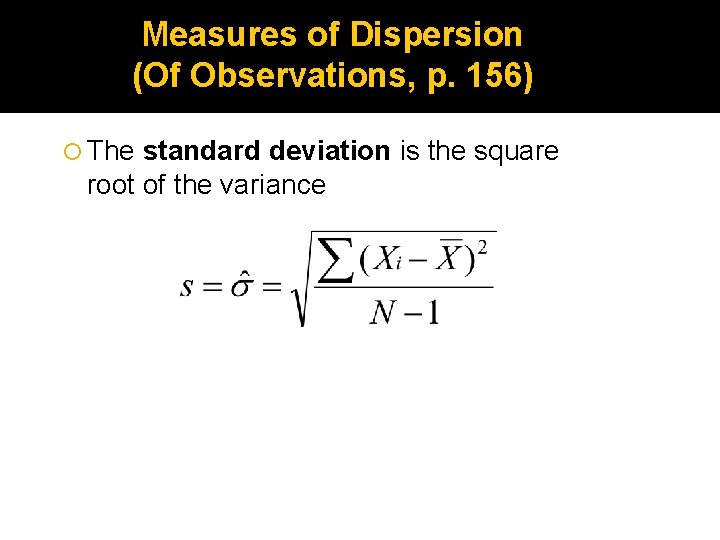
Measures of Dispersion (Of Observations, p. 156) The standard deviation is the square root of the variance
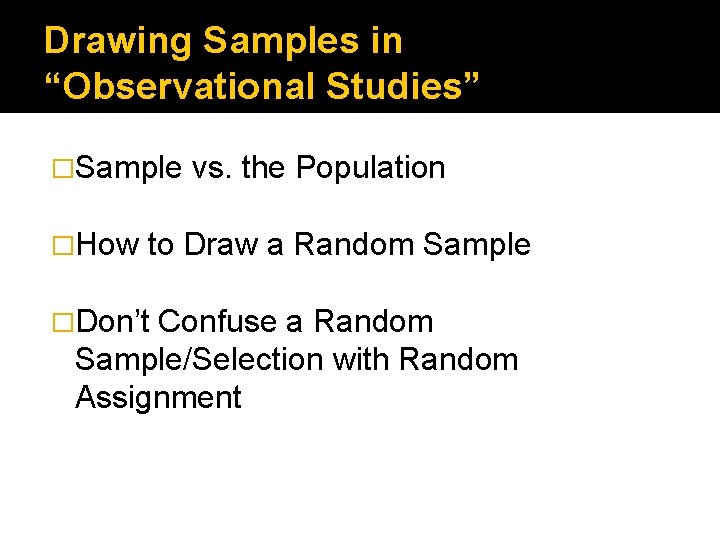
Drawing Samples in “Observational Studies” �Sample �How vs. the Population to Draw a Random Sample �Don’t Confuse a Random Sample/Selection with Random Assignment
Sample vs. the Population �An observational study simply observes cases, without attempting to impose a treatment and without requiring any quasior natural experimental design. Researchers can ask their cases questions in order to measure some variable. Most of the time, researchers look closely at a small sample of the overall population.
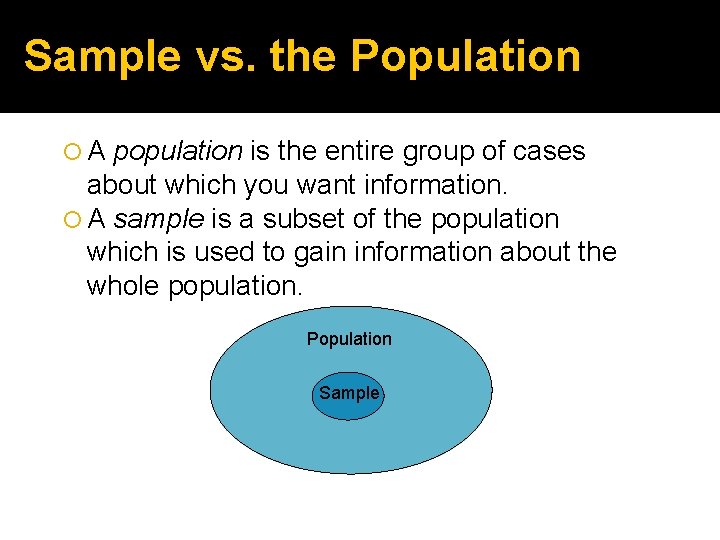
Sample vs. the Population A population is the entire group of cases about which you want information. A sample is a subset of the population which is used to gain information about the whole population. Population Sample
Sample vs. the Population �A parameter is a number describing a population. It is a usually a mystery. �A statistic is a number describing a sample. Statistics vary from sample to sample. If our sample is representative of the population, sample statistics will closely approximate population parameters.
How to Draw a Random Sample �A simple random sample gives all members of the population an equal chance to be drawn into the sample. Draw names out of a hat, a really big hat Label every case in the population with a number, then draw some random numbers In a telephone poll, random digit dialing uses a random number generator to get even those with unlisted numbers.