
Political Recruitment Membership of the Chinese Communist Party

Political Recruitment Membership of the Chinese Communist Party
Political recruitment • The process by which citizens are selected for involvement in politics • Party system is the most important mechanism of political recruitment
2 levels of recruitments • Recruitment of power elite – Party and government cadres • Recruitment at the grassroots – CCP membership
Recruitment of cadres • Rehabilitation of millions of cadres after Cultural Revolution • The Party’s new agenda of economic construction • Retirement of these cadres • Recruitment of younger and better educated cadres
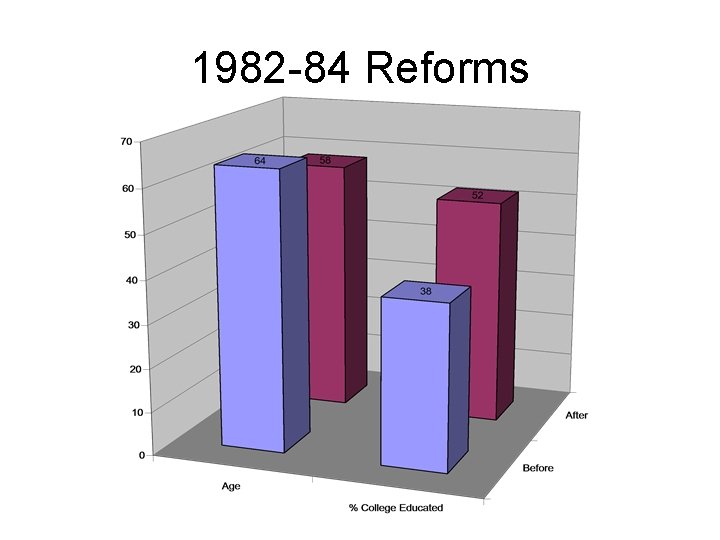
1982 -84 Reforms
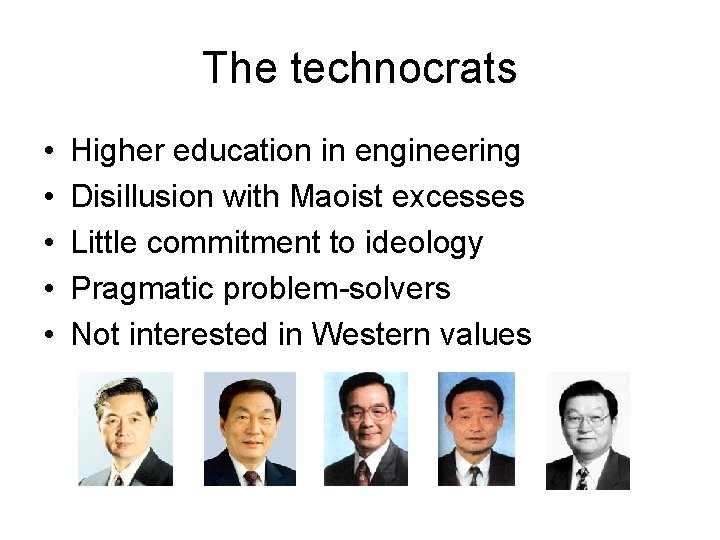
The technocrats • • • Higher education in engineering Disillusion with Maoist excesses Little commitment to ideology Pragmatic problem-solvers Not interested in Western values
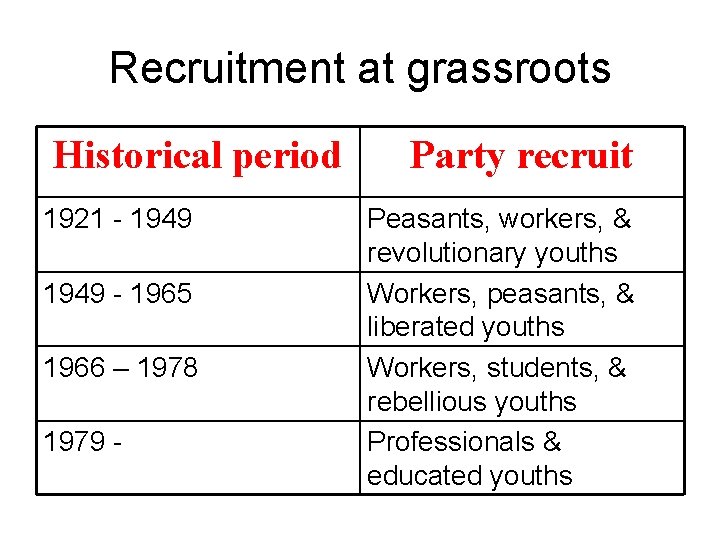
Recruitment at grassroots Historical period 1921 - 1949 - 1965 1966 – 1978 1979 - Party recruit Peasants, workers, & revolutionary youths Workers, peasants, & liberated youths Workers, students, & rebellious youths Professionals & educated youths
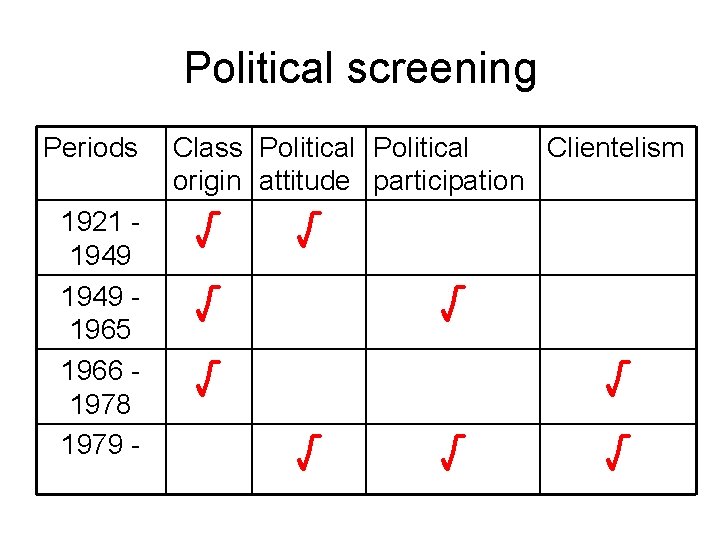
Political screening Periods 1921 1949 1965 1966 1978 1979 - Class Political Clientelism origin attitude participation √ √ √ √ √
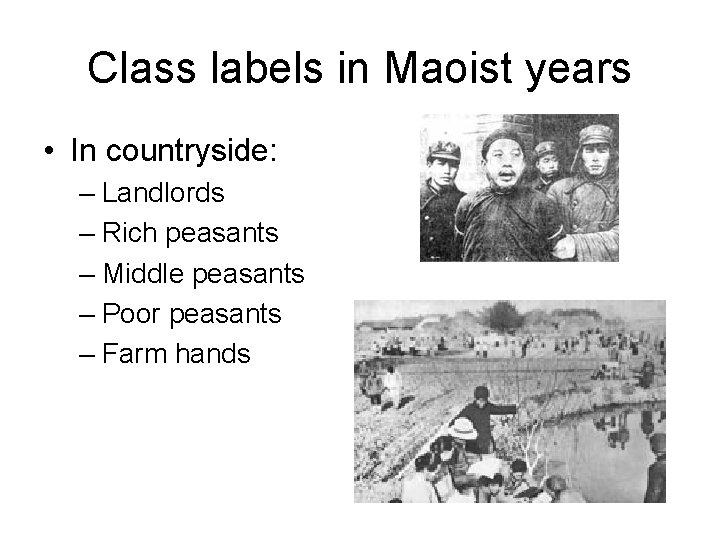
Class labels in Maoist years • In countryside: – Landlords – Rich peasants – Middle peasants – Poor peasants – Farm hands
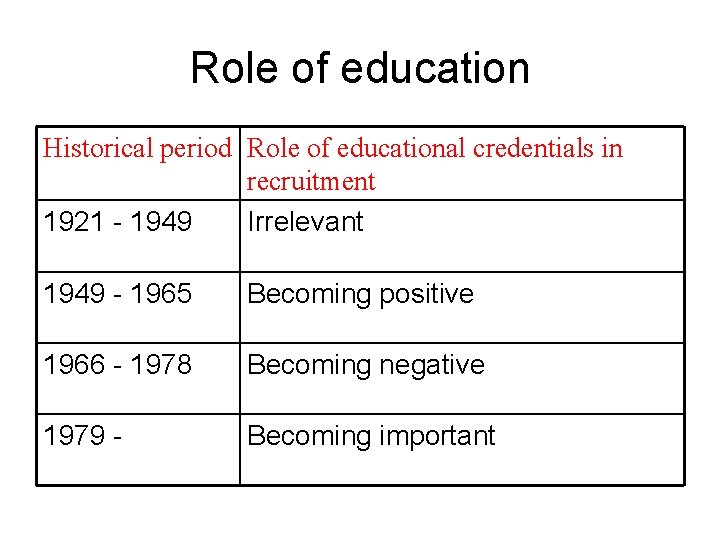
Role of education Historical period Role of educational credentials in recruitment 1921 - 1949 Irrelevant 1949 - 1965 Becoming positive 1966 - 1978 Becoming negative 1979 - Becoming important
Party membership 1921 -2018
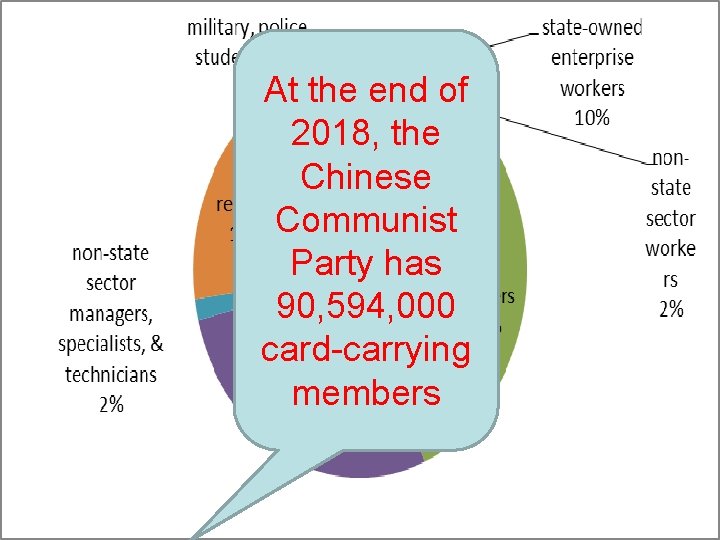
At the end of 2018, the Chinese Communist Party has 90, 594, 000 card-carrying members
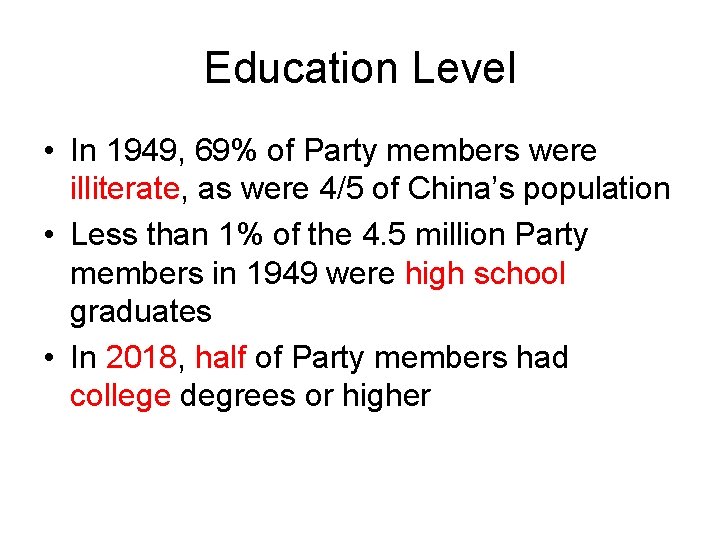
Education Level • In 1949, 69% of Party members were illiterate, as were 4/5 of China’s population • Less than 1% of the 4. 5 million Party members in 1949 were high school graduates • In 2018, half of Party members had college degrees or higher
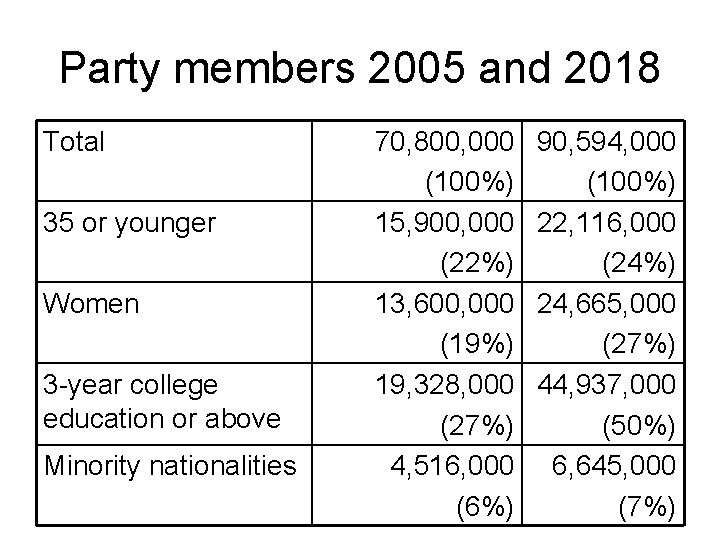
Party members 2005 and 2018 Total 35 or younger Women 3 -year college education or above Minority nationalities 70, 800, 000 (100%) 15, 900, 000 (22%) 13, 600, 000 (19%) 19, 328, 000 (27%) 4, 516, 000 (6%) 90, 594, 000 (100%) 22, 116, 000 (24%) 24, 665, 000 (27%) 44, 937, 000 (50%) 6, 645, 000 (7%)
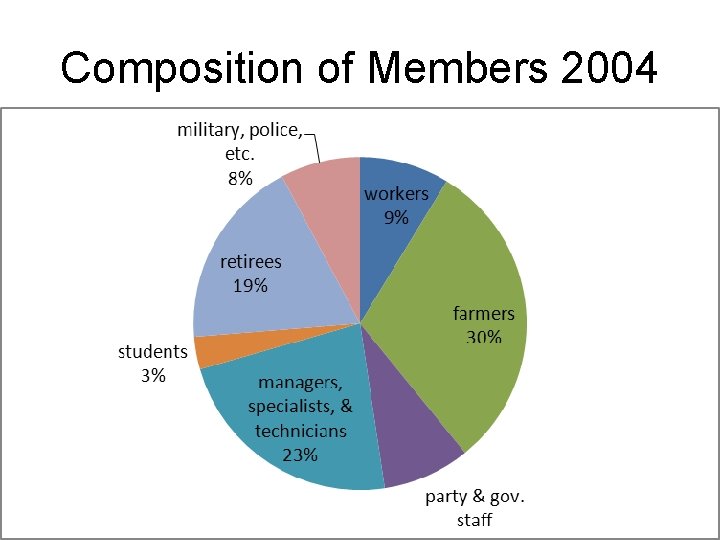
Composition of Members 2004
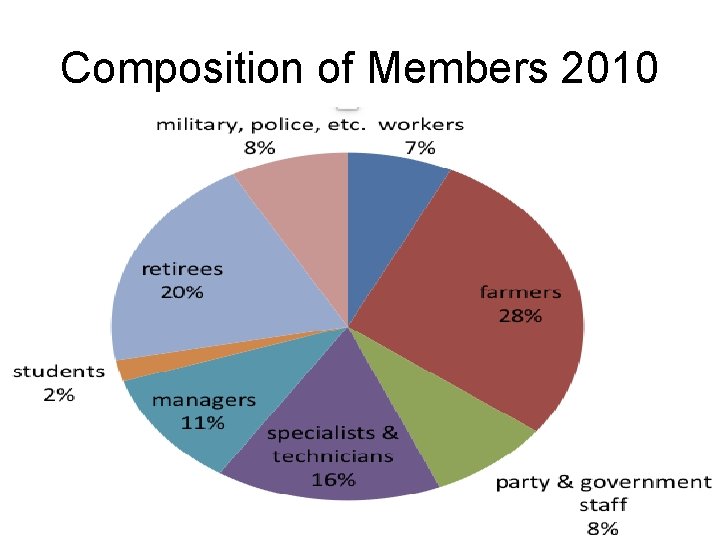
Composition of Members 2010
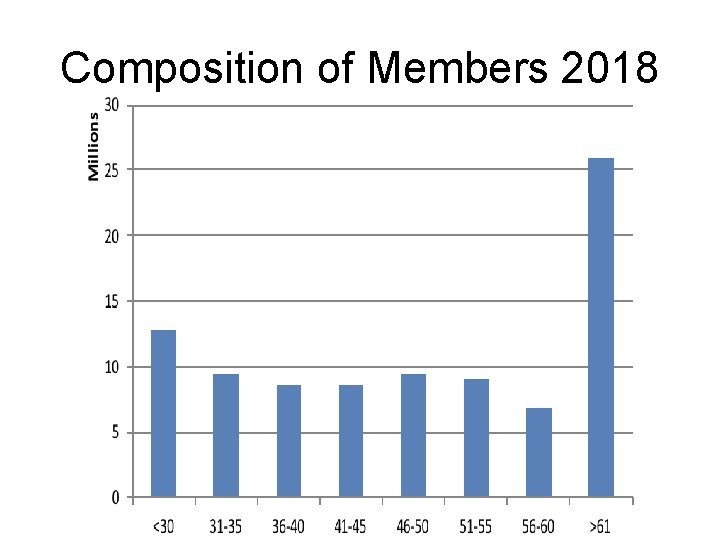
Composition of Members 2018
Age Distribution of Party Members (2018)

New Recruits 1989 -2018
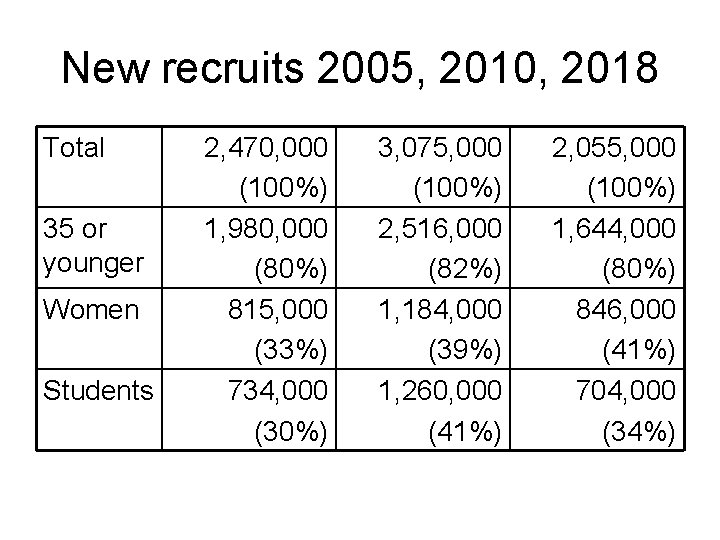
New recruits 2005, 2010, 2018 Total 35 or younger Women Students 2, 470, 000 (100%) 1, 980, 000 (80%) 815, 000 (33%) 734, 000 (30%) 3, 075, 000 (100%) 2, 516, 000 (82%) 1, 184, 000 (39%) 1, 260, 000 (41%) 2, 055, 000 (100%) 1, 644, 000 (80%) 846, 000 (41%) 704, 000 (34%)
- Slides: 20