
Political Parties What is a political party Political

- Slides: 17
Political Parties
What is a political party? • Political parties are the groups that seek to elect candidates to public office • They are the means (how, who, what, why, when) to the end (elections/public officials)
What is a political party? • So, what’s the difference between a political party and an interest group? – Parties are dedicated to electing candidates – Interest groups are dedicated to advancing an issue/cause
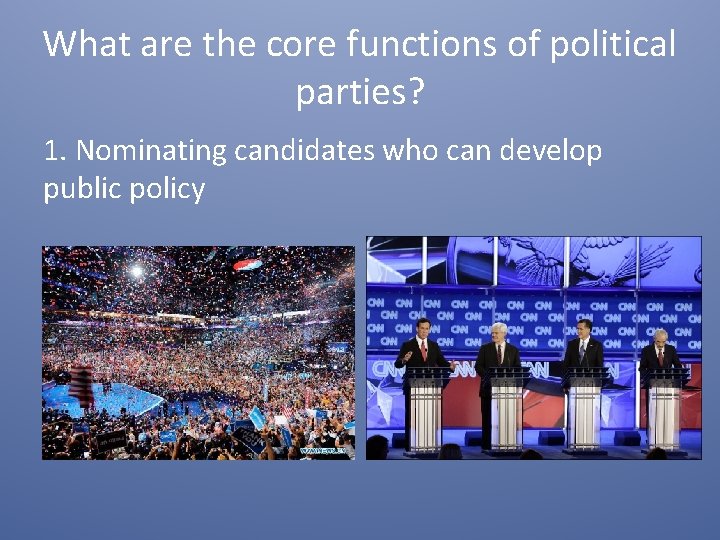
What are the core functions of political parties? 1. Nominating candidates who can develop public policy
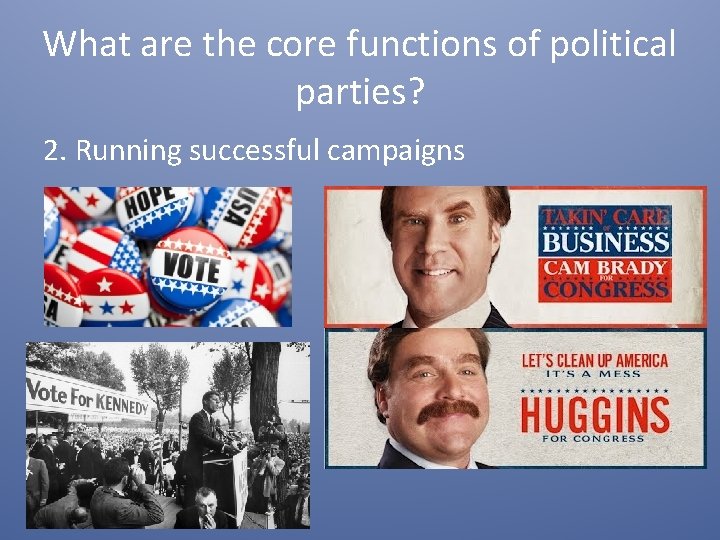
What are the core functions of political parties? 2. Running successful campaigns
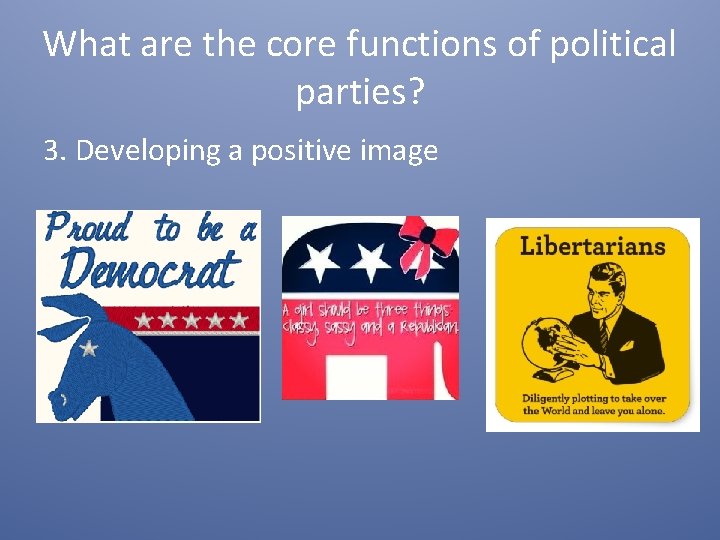
What are the core functions of political parties? 3. Developing a positive image
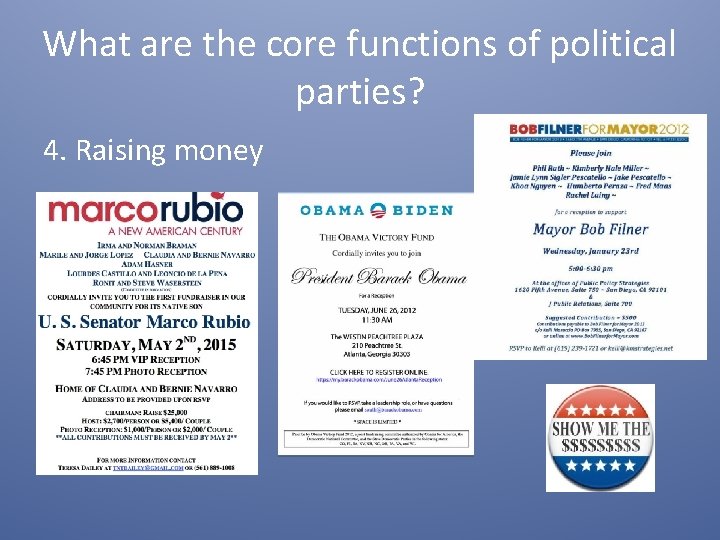
What are the core functions of political parties? 4. Raising money
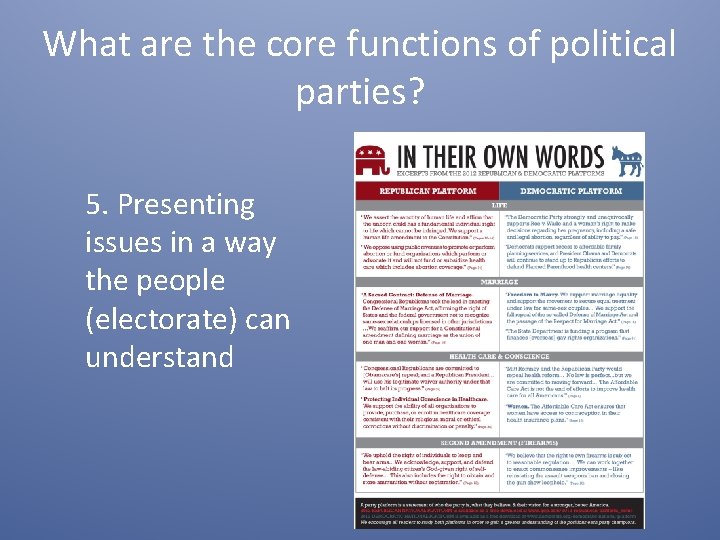
What are the core functions of political parties? 5. Presenting issues in a way the people (electorate) can understand
What are the core functions of political parties? 6. Coordinating the implementation of policies they support in the government
What are the core functions of political parties? 7. “watchdog” function if they do not succeed in getting their candidate elected
The U. S. has a Two-Party System • A government system with two dominant parties that compete in national elections • The Democratic and Republican parties are the dominant parties in the U. S.
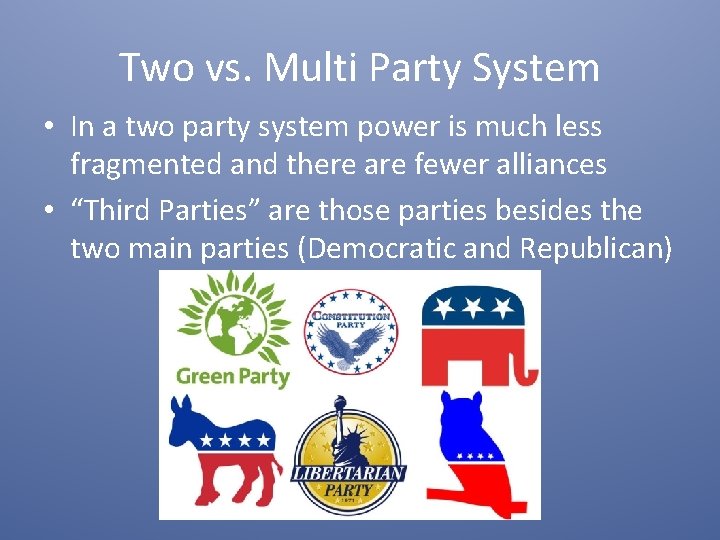
Two vs. Multi Party System • In a two party system power is much less fragmented and there are fewer alliances • “Third Parties” are those parties besides the two main parties (Democratic and Republican)
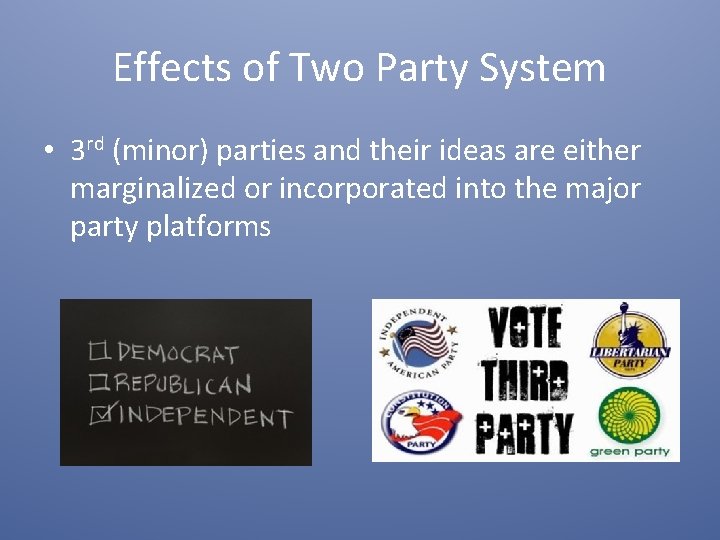
Effects of Two Party System • 3 rd (minor) parties and their ideas are either marginalized or incorporated into the major party platforms
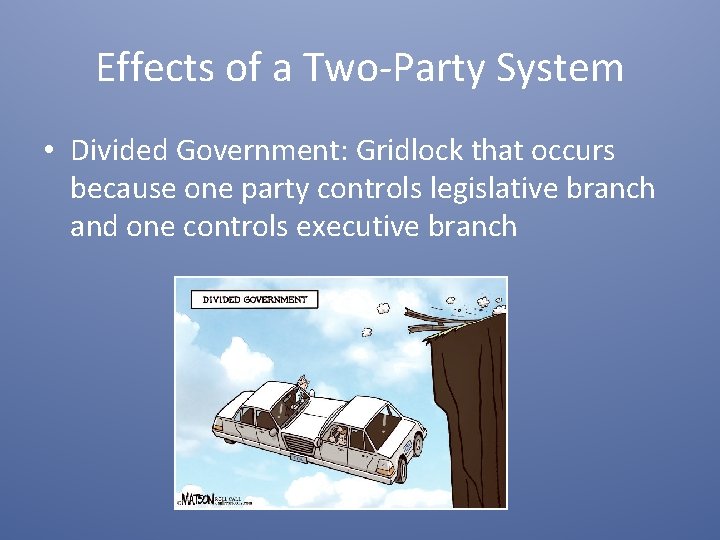
Effects of a Two-Party System • Divided Government: Gridlock that occurs because one party controls legislative branch and one controls executive branch
Democratic Party (Liberal) • Constituencies (Who votes for them? ): Young, college-educated, urban, minority, non-religious, North and West • Economic issues: government reduce economic inequality, regulate business, tax the rich heavily • Social issues: help poor and environment, allow abortion and same-sex marriage, protect rights of the accused, freedom of expression, cure (presumably) economic causes of crime
Republican Party (Conservative) • Constituencies (Who votes for them? ) Older, white, college-educated, higher income, Midwest or South, suburban • Economic issues: free market, oppose bureaucracy, lower taxes, oppose excessive government control of business • Social issues: traditional values, government action to defend morality, traditional family structure, strong law enforcement and military, oppose welfare
Organization of Political Parties • Political parties are organized into national, state and local committees and made of up party members • National convention: meets every four years to nominate a presidential candidate • National committee: manages affairs between conventions; made up of delegates from each state