
Political Parties Intro to Political Parties Definition group
- Slides: 7
Political Parties
Intro to Political Parties • Definition: group of people w/ common interests who organize to win elections, control gov’t and influence gov’t policies • Party Systems o Single = One Party (i. e. Nazi Germany). o Multiparty = Many parties compete (most common i. e. Italy, Israel, etc). o Two Party = Two parties compete w/ minor parties (i. e. U. S. )
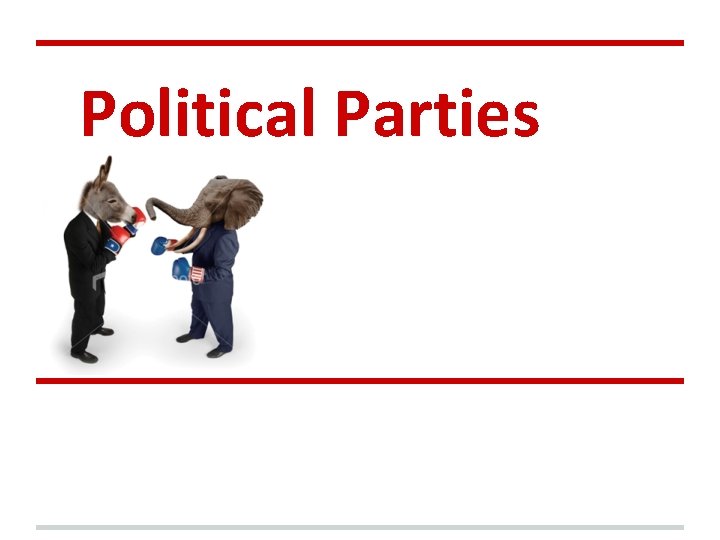
History of Parties in US • No mention of in our Constitution • Founding fathers warned about dangers of political parties • Has always been a part of American politics o 1 st parties = Federalists & Democratic-Republicans § disagreed over size of fed. govt. o Democrats -1828 - Jackson first president o Republican party - born in 1850 s as an anti-slavery party Lincoln first president • Symbols: Donkey = Democrat, Elephant = Republican; both became popular due to Thomas Nast
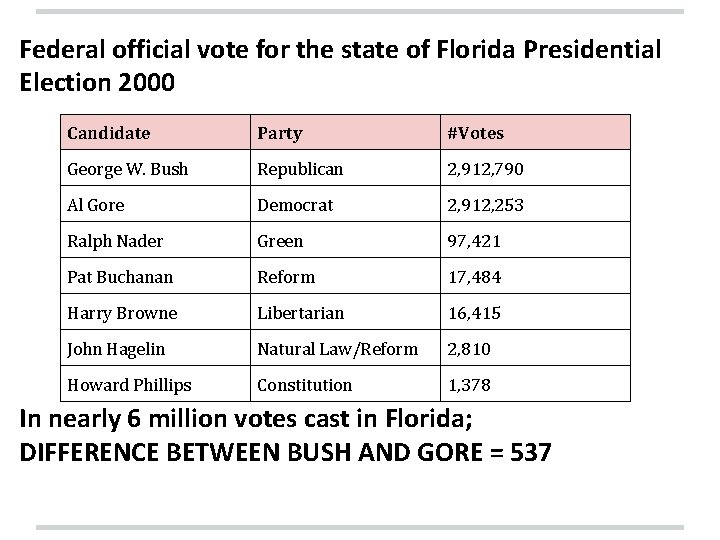
Third or Minor Parties • Third party is any party other than the two major parties • Types o Single issue Party (ex: free soil party) o Ideological Party (ex: communist party) o Splinter Party (ex: Tea Party splinter group of Rep Party today) • Impact o draw votes away from major candidates ( 2000 Nader and Gore) o promote new ideas • Obstacles o getting on ballot o financing ($)
Federal official vote for the state of Florida Presidential Election 2000 Candidate Party #Votes George W. Bush Republican 2, 912, 790 Al Gore Democrat 2, 912, 253 Ralph Nader Green 97, 421 Pat Buchanan Reform 17, 484 Harry Browne Libertarian 16, 415 John Hagelin Natural Law/Reform 2, 810 Howard Phillips Constitution 1, 378 In nearly 6 million votes cast in Florida; DIFFERENCE BETWEEN BUSH AND GORE = 537
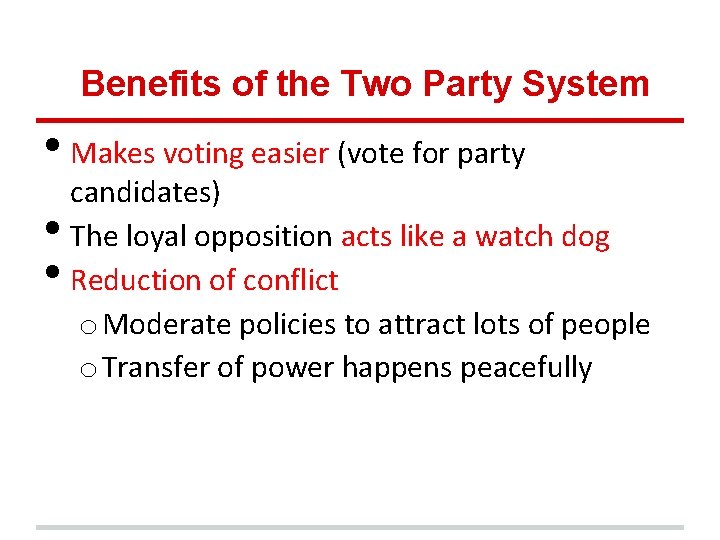
Benefits of the Two Party System • Makes voting easier (vote for party • • candidates) The loyal opposition acts like a watch dog Reduction of conflict o Moderate policies to attract lots of people o Transfer of power happens peacefully
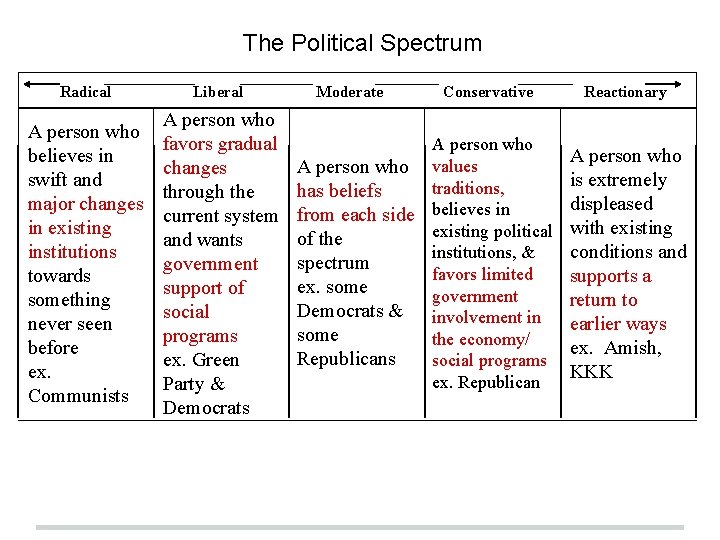
The Political Spectrum Radical Liberal A person who believes in swift and major changes in existing institutions towards something never seen before ex. Communists A person who favors gradual changes through the current system and wants government support of social programs ex. Green Party & Democrats Moderate Conservative A person who values traditions, has beliefs from each side believes in existing political of the institutions, & spectrum favors limited ex. some government Democrats & involvement in some the economy/ Republicans social programs ex. Republican Reactionary A person who is extremely displeased with existing conditions and supports a return to earlier ways ex. Amish, KKK