
Political Parties History Overview Part I Vocabulary 1
Political Parties History & Overview
Part I. Vocabulary Ø 1. Political Party—organization made up of citizens who have similar ideas on public issues and work to put their ideas into effect through government action.
Vocabulary Ø 2. Coalition—an agreement between two or more political parties to work together to run a government.
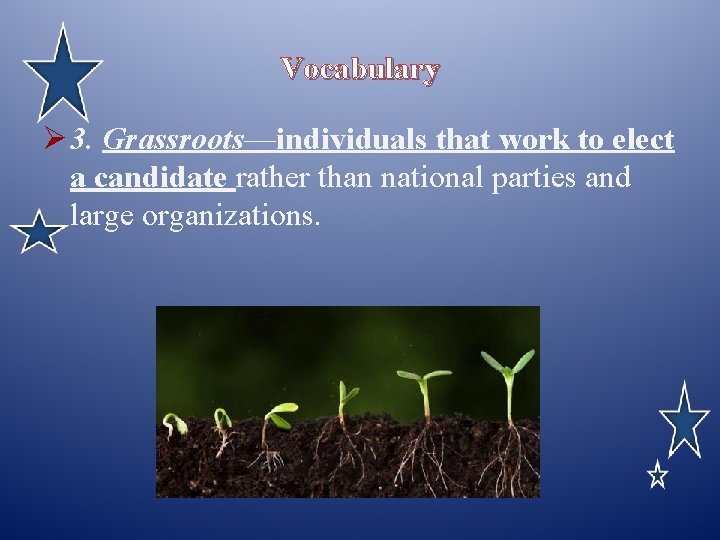
Vocabulary Ø 3. Grassroots—individuals that work to elect a candidate rather than national parties and large organizations.
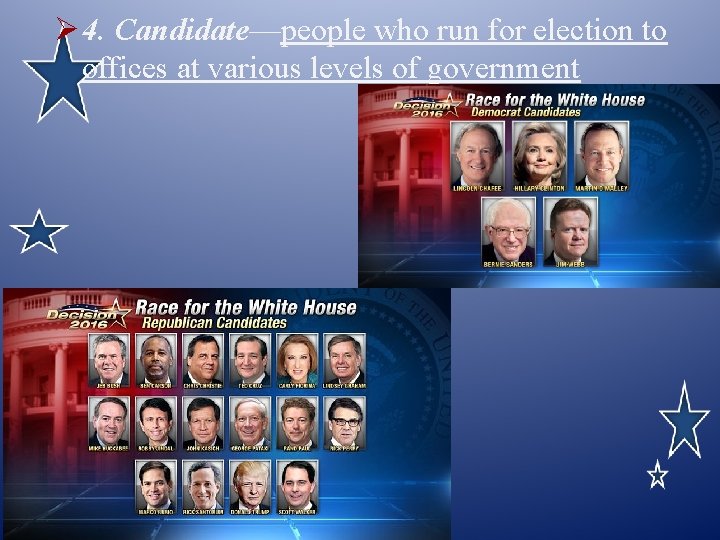
Ø 4. Candidate—people who run for election to offices at various levels of government
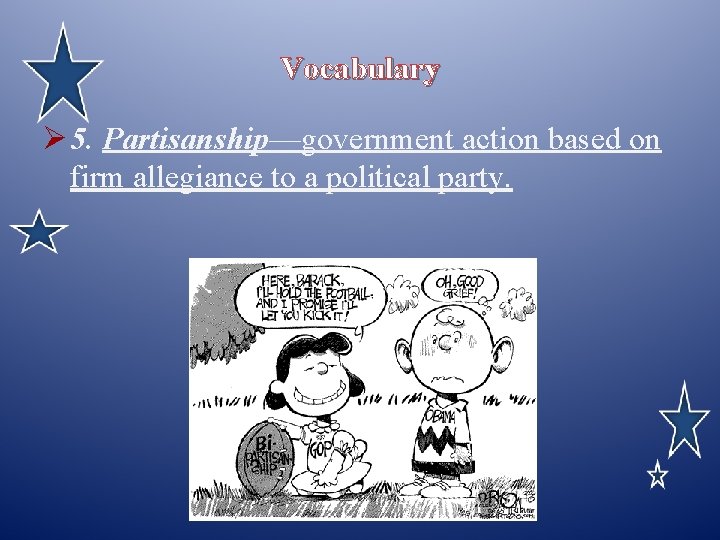
Vocabulary Ø 5. Partisanship—government action based on firm allegiance to a political party.
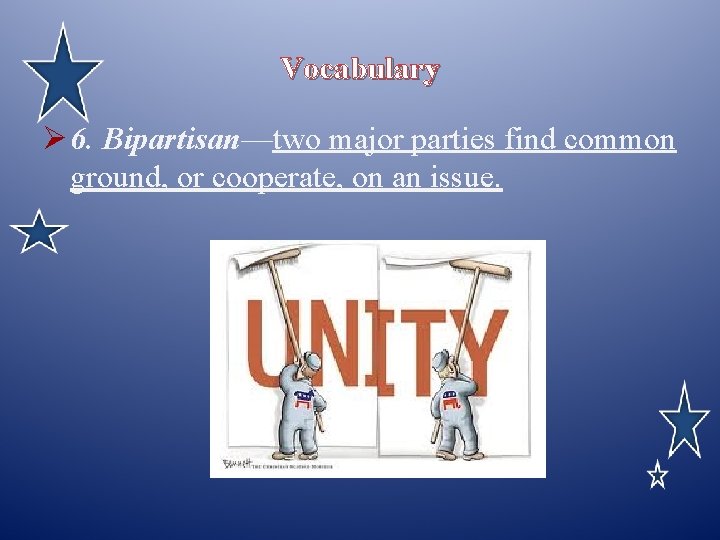
Vocabulary Ø 6. Bipartisan—two major parties find common ground, or cooperate, on an issue.
Part II. Political Party Origins: Two-Party System Democratic Ø Founded in 1792 by Thomas Jefferson, who called it the Democratic-Republican party Ø Election of John Quincy Adams in 1824 caused a 4 -way split of the party Ø In 1828, Andrew Jackson reunited the party, shortening the name. He believed that the federal government should represent all people, not just the wealthy.
Political Party Origins Two-party System Republican Ø In 1854, Northern leaders such as Horace Greeley said that a new party was needed. Ø At this time, Republicans opposed slavery and its spread into U. S. territories. Ø In 1860 Abraham Lincoln became the first candidate nominated by the Republican party to be elected president of the United States.
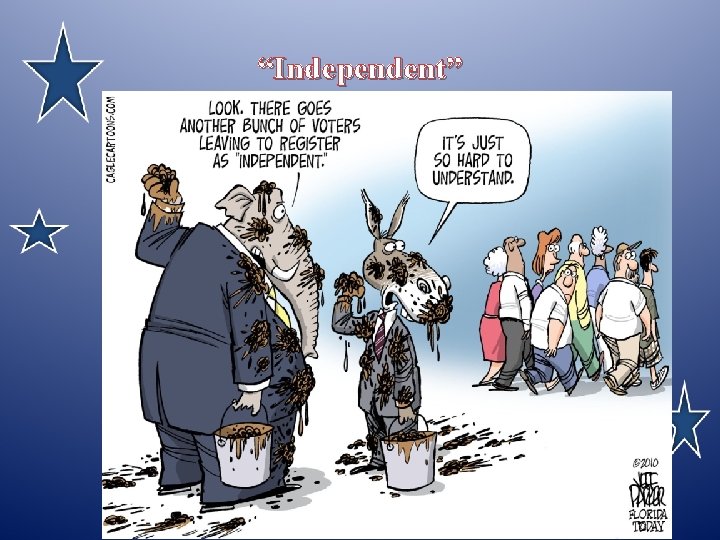
Political Party Origins Non-affiliation Ø Registered voters may also decide not to be identified with either of the National parties. Ø Independent voters cannot participate in primary elections based on this status.
“Independent”
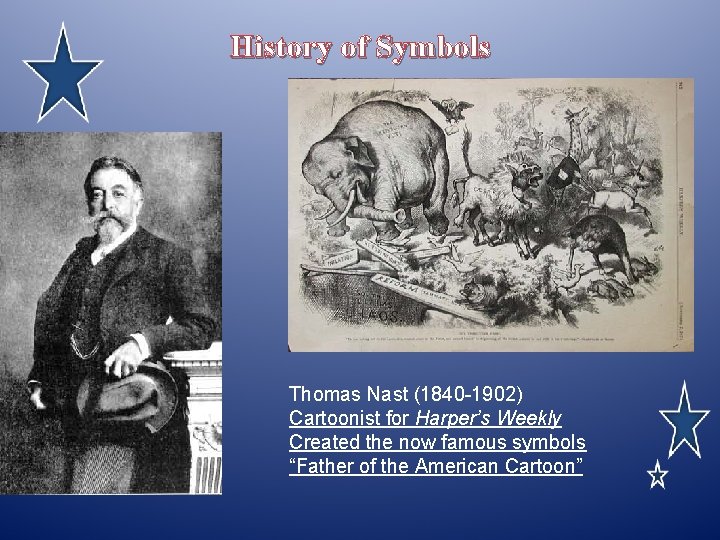
History of Symbols Thomas Nast (1840 -1902) Cartoonist for Harper’s Weekly Created the now famous symbols “Father of the American Cartoon”
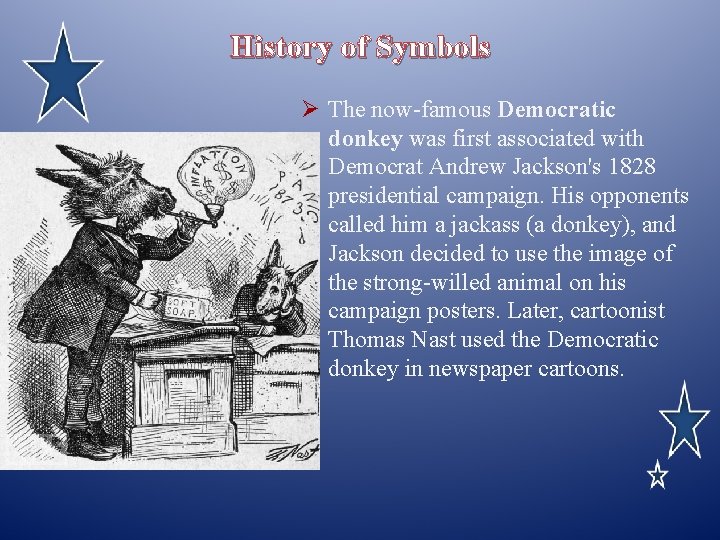
History of Symbols Ø The now-famous Democratic donkey was first associated with Democrat Andrew Jackson's 1828 presidential campaign. His opponents called him a jackass (a donkey), and Jackson decided to use the image of the strong-willed animal on his campaign posters. Later, cartoonist Thomas Nast used the Democratic donkey in newspaper cartoons.
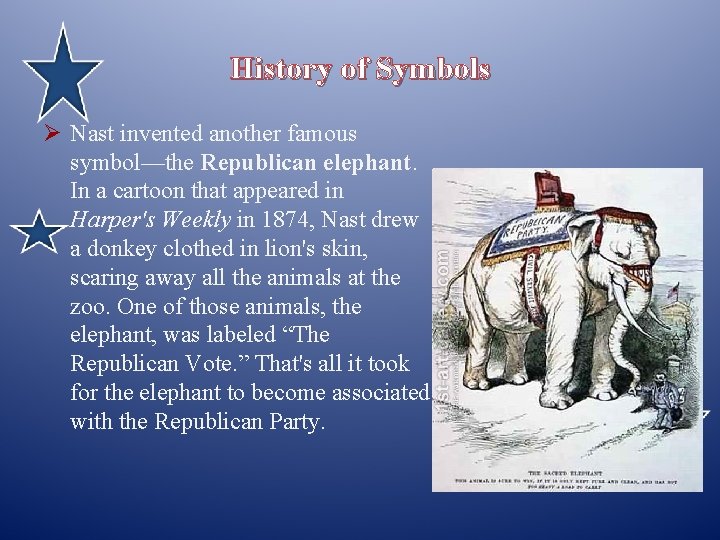
History of Symbols Ø Nast invented another famous symbol—the Republican elephant. In a cartoon that appeared in Harper's Weekly in 1874, Nast drew a donkey clothed in lion's skin, scaring away all the animals at the zoo. One of those animals, the elephant, was labeled “The Republican Vote. ” That's all it took for the elephant to become associated with the Republican Party.
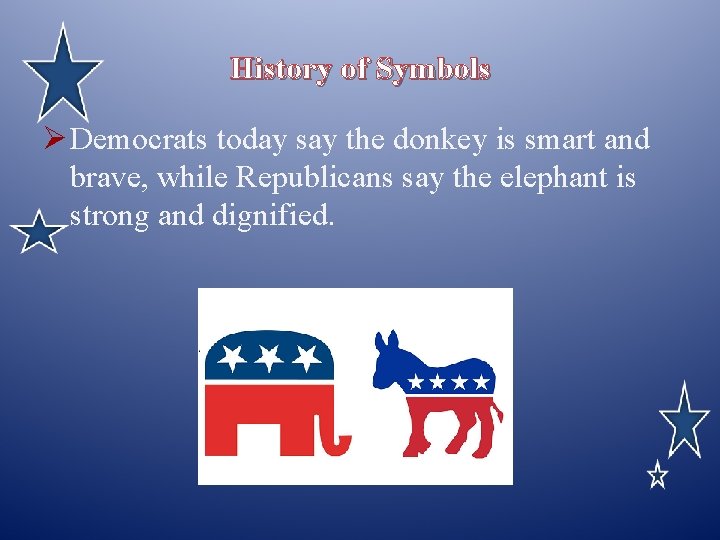
History of Symbols Ø Democrats today say the donkey is smart and brave, while Republicans say the elephant is strong and dignified.
Democratic Party The Democratic Party is concerned with equality, cooperation, and social progress. Supporters of this party are more likely to be concerned with civil rights issues, stronger government regulation in business, and social support networks for those in need of assistance. Democrats are more likely to believe that the federal government has a responsibility to be involved solving problems. Examples: The government should help make health care available to people who can’t afford it. During hard times, the government should help create jobs.
Republican Party The Republican Party and its supporters want the government to spend less money and have less of a say in business and society. Most Republicans believe people and businesses should have the liberty to do what they want without much government interference. This party also tends to believe the government should protect traditional social values. Examples: The government should not pay for peoples’ health care. Businesses will create jobs and opportunities for people to prosper.
The Political Spectrum • The government should take strong action to solve society’s problems. (Far Left) • Pay for government-run programs to help people (Center Left) • The government should encourage people and businesses to solve society’s problems themselves. (Center Right) • The government should not get involved in solving society’s problems (Far Right) • • • YOUR TURN Offer tax breaks to people and businesses who do good things or stop doing harmful or unfair things. The government should regulate people and businesses to promote the common good on all issues. The government should leave people and businesses alone to do what they want to do. Pass laws to keep people and business from doing harmful or unfair things.
The Political Spectrum FAR LEFT: The government should regulate people and businesses to promote the common good on all issues. CENTER LEFT: Pass laws to keep people and business from doing harmful or unfair things. CENTER RIGHT: Offer tax breaks to people and businesses who do good things or stop doing harmful or unfair things. FAR RIGHT: The government should leave people and businesses alone to do what they want to do.
Political Parties Remix http: //smartsongs. org/political-parties-epic-remix
- Slides: 20