
Political Parties and Party Systems Nov 17 Overview
- Slides: 19
Political Parties and Party Systems Nov. 17
Overview l Defining political parties l Origins and political cleavages l Functions of parties l Models of party organization l State regulation of parties l Party systems l Electoral systems and party systems
Defining political parties Key elements: l Their objectives: obtaining political office, obtaining political power, advancing issues, representing interests l Their methods: organizing, mobilizing (and hopefully) creating supporters, contesting elections and forming governments
Origins l Earliest parties emerged within parliaments and legislatures (cadre parties) l Extra-parliamentary parties emerged to organize and represent excluded interests (mass parties)
Origins and Political Cleavages In the western European context, most contemporary parties and party families originated from the radical socio-economic and political changes between the midnineteenth century and the first two decades of the twentieth.
Origins and Political Cleavages l national revolutions (the rise of the nation state, process of state formation and nation-building) centre-periphery cleavage ¡ state-church cleavage ¡ l industrial revolution rural-urban cleavage ¡ workers-employers cleavage (further divided into communism-socialism cleavage) ¡
Origins and Political Cleavages l “post-industrial revolution” ¡ materialism-post-materialism cleavage ¡ globalization cleavage?
Functions of parties l Interest aggregation, this is the process by which the interests of separate individuals and groups are aggregated together into a program of governance. l Interest articulation, this is the process by which individuals and groups express (articulate) their needs and policy preferences within the political process. Source: http: //www. socsci. uci. edu/~rdalton/germany/other/glossary. htm
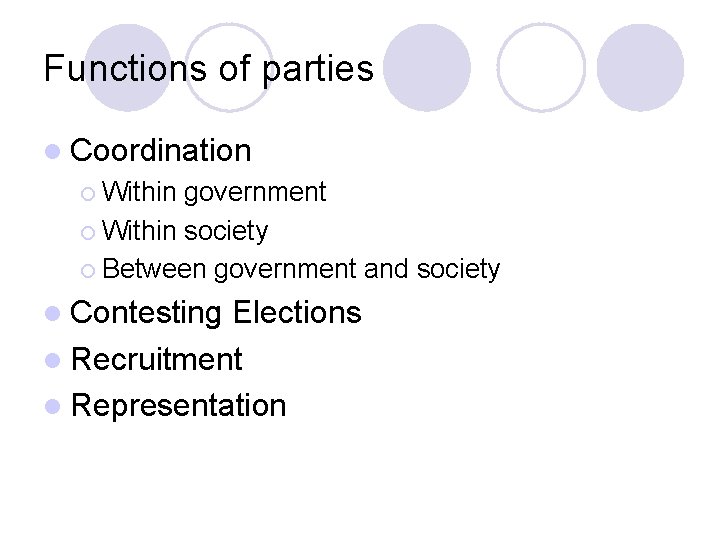
Functions of parties l Coordination ¡ Within government ¡ Within society ¡ Between government and society l Contesting Elections l Recruitment l Representation
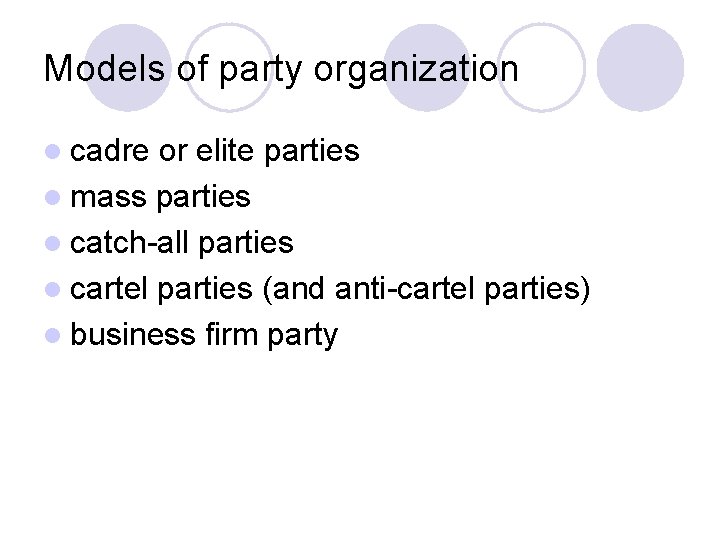
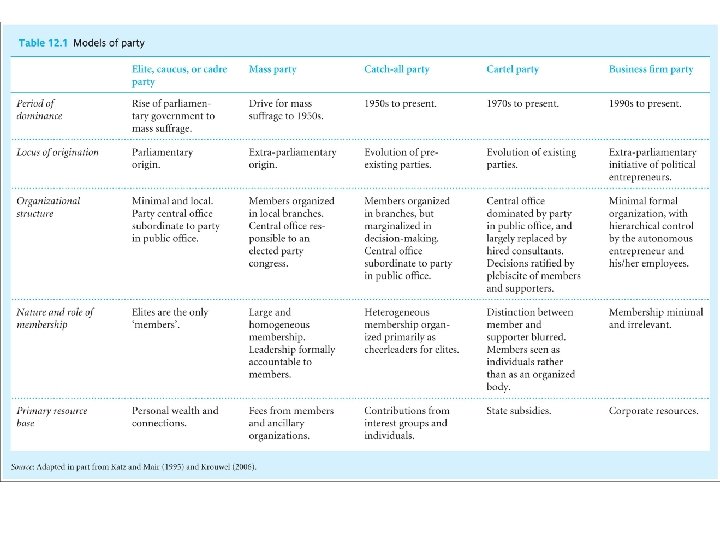
Models of party organization l cadre or elite parties l mass parties l catch-all parties l cartel parties (and anti-cartel parties) l business firm party
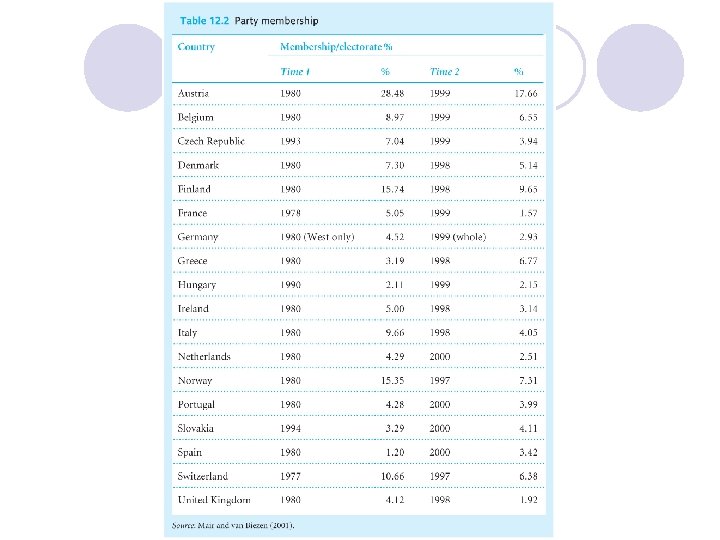
Party Membership Political parties face a crisis of declining membership.
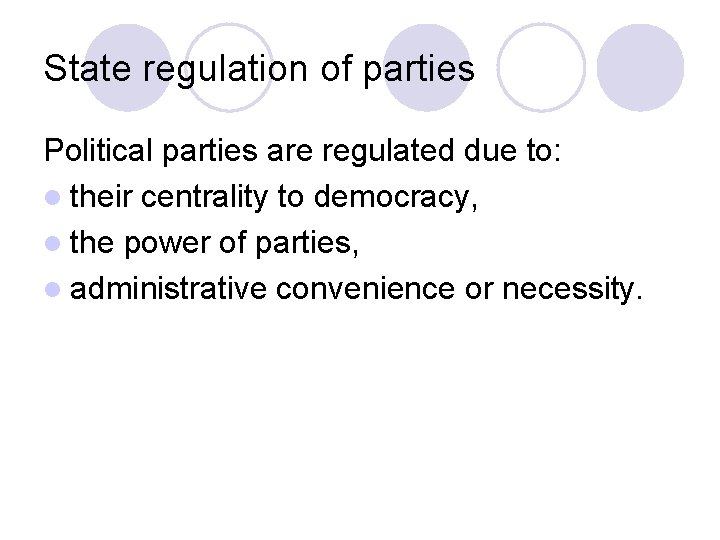
State regulation of parties Political parties are regulated due to: l their centrality to democracy, l the power of parties, l administrative convenience or necessity.
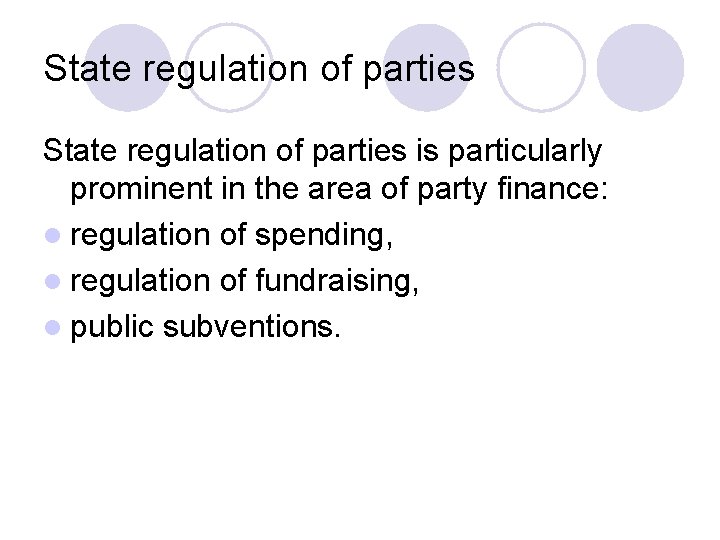
State regulation of parties is particularly prominent in the area of party finance: l regulation of spending, l regulation of fundraising, l public subventions.
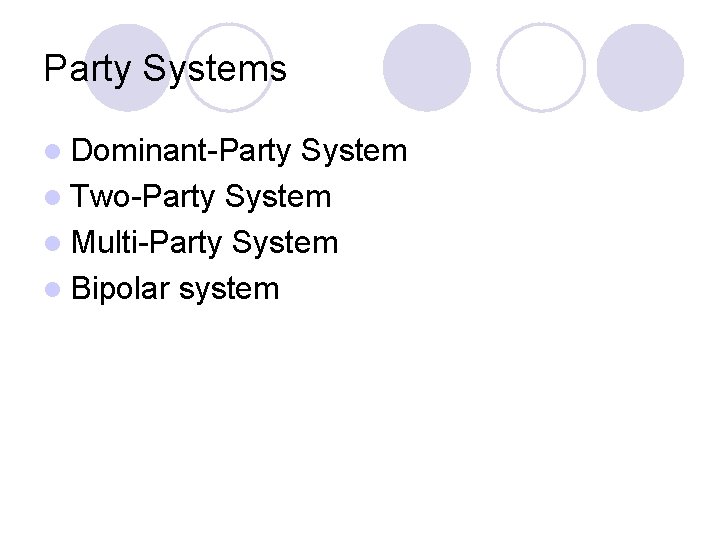
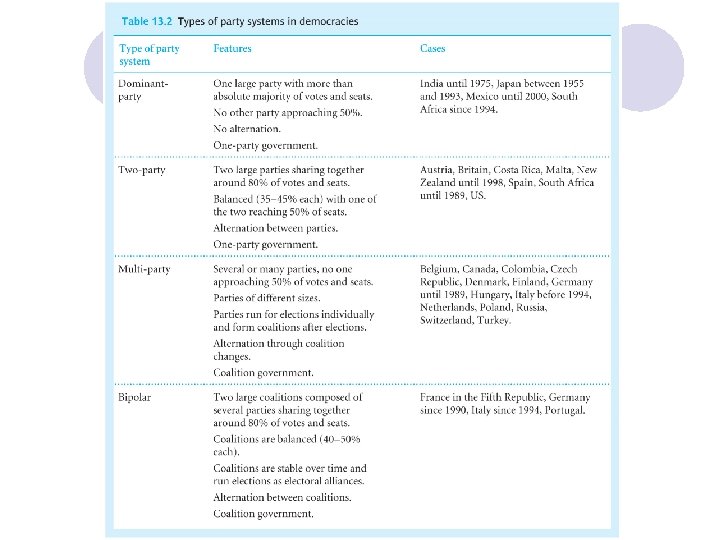
Party Systems l Dominant-Party System l Two-Party System l Multi-Party System l Bipolar system
Electoral Systems and Party Systems l mechanical effects l psychological effects
Conclusion: l Political parties are among the central actors in politics. l Very rare to have democratic governance without parties. l Political parties are experienced a crisis, to a certain extent. l But there appears to be little chance of them disappearing or being replaced.