
Political Parties and Interest Groups Click pic Video
- Slides: 45
Political Parties and Interest Groups
Click pic
Video: The Basics 11 http: //media. pearsoncmg. com/ph/hss/SSA_SHARED_MEDIA_1/pol isci/presidency/Seg 2_Political. Parties_v 2. html
The Development of Political Parties, 1800 -1824 ¤ Ratification of the U. S. Constitution n Federalists supported strong central government ¤ Election of 1800 n Thomas Jefferson versus John Adams n Political parties intended to be temporary, not longterm structures 11. 1
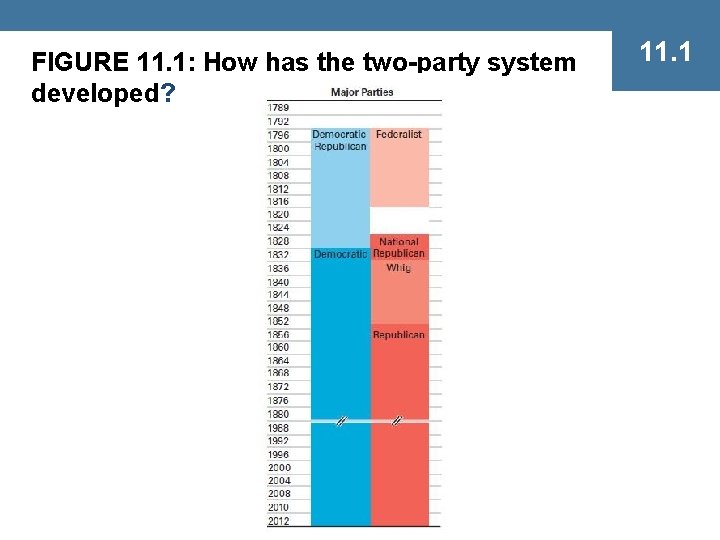
FIGURE 11. 1: How has the two-party system developed? 11. 1
Jacksonian Democracy, 18241860 11. 1 ¤ Political party influence n Decreased at the national level n Increased at the state level due to expansion of the electorate ¤ Whigs and Democrats n Gave the United States the first broadly-supported two -party system in the Western World
The Golden Age, 1860 -1932 11. 1 ¤ Party Stability n Characterized by the dominance of party organizations n Era from end of Reconstruction until reforms of the Progressive Era ¤ Political Machines n Organizations that use tangible incentives such as jobs and favors to win loyalty among voters n Provided upward social mobility
The Modern Era 11. 1 ¤ Elections and social services changes n Ballot printing, other elections duties handled by government instead of parties n Roosevelt’s New Deal put social services in hands of government, not parties ¤ Candidate-centered politics n Shift to focus on candidates, their issues and character rather than on party affiliation
Citizen Support and Party Realignment 11. 1 ¤ Party realignments n Dramatic shifts in partisan preference that drastically alter the political landscape n Existing party affiliations subject to upheaval ¤ Critical elections n May polarize voters around new issues or personalities ¤ Secular realignments n More gradual shifts in party coalitions
Party Polarization 11. 1 ¤ Increasing partisan divisions n Northern liberal Republicans and southern conservative Democrats have become rare n Parties have retreated in opposite directions ¤ Effect on Americans? n Unclear if Americans are equally polarized n Partisan stereotypes pervasive ¤ Stereotypes of political identifiers n Republicans = NASCAR, NRA n Democrats = Starbucks, Volvos ¤ Wedge issues n “Guns, God, and gays” n Abortion, gay marriage
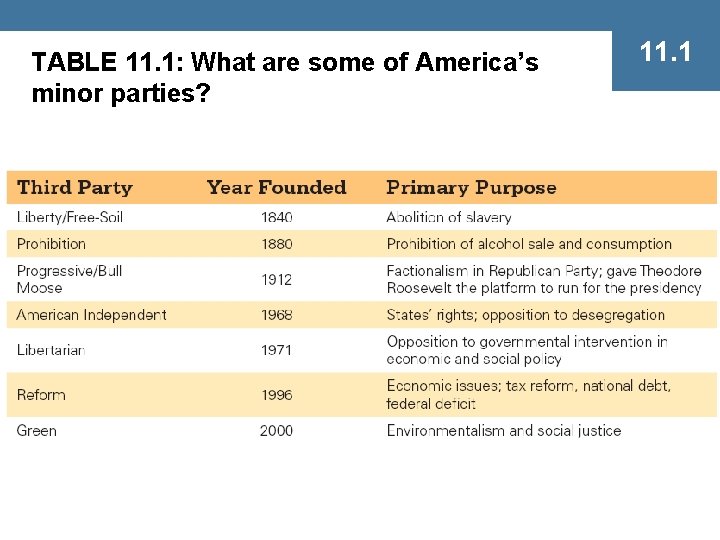
Minor Parties in the Two-Party System 11. 1 ¤ Roots in sectionalism n Transitioning from social movement to party is difficult ¤ Minor parties have had influence n Dixiecrats n Green Party
TABLE 11. 1: What are some of America’s minor parties? 11. 1
11. 1 A major shift in power and popularity from one party to another is a: a. Party realignment b. Party machine c. Secular realignment d. Critical election 11. 1
11. 1 A major shift in power and popularity from one party to another is a: a. Party realignment b. Party machine c. Secular realignment d. Critical election 11. 1
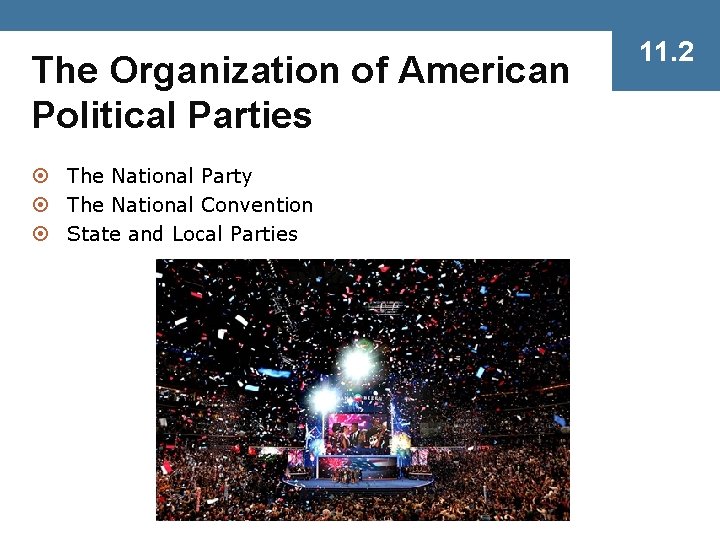
The Organization of American Political Parties ¤ The National Party ¤ The National Convention ¤ State and Local Parties 11. 2
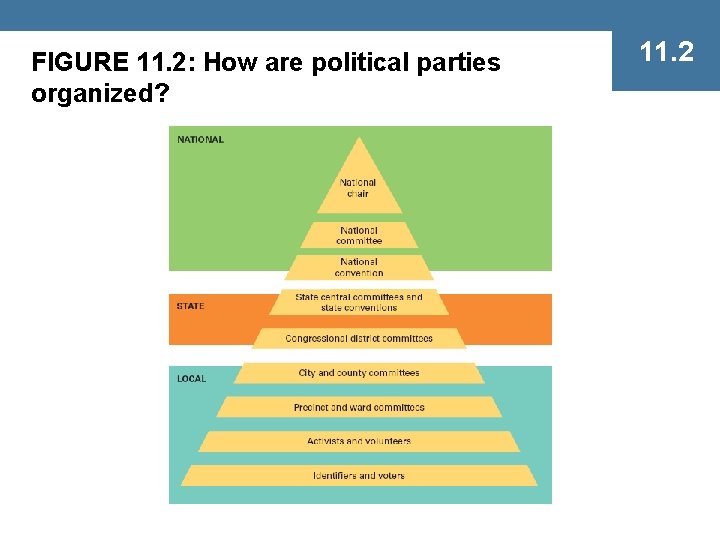
FIGURE 11. 2: How are political parties organized? 11. 2
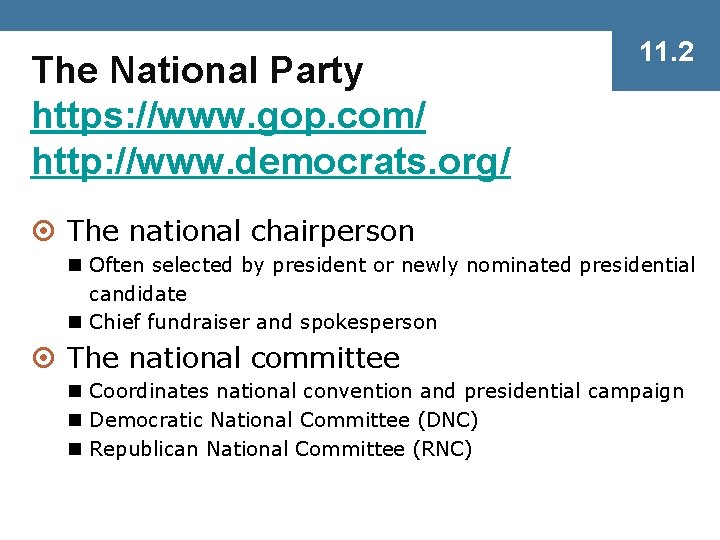
The National Party https: //www. gop. com/ http: //www. democrats. org/ 11. 2 ¤ The national chairperson n Often selected by president or newly nominated presidential candidate n Chief fundraiser and spokesperson ¤ The national committee n Coordinates national convention and presidential campaign n Democratic National Committee (DNC) n Republican National Committee (RNC)
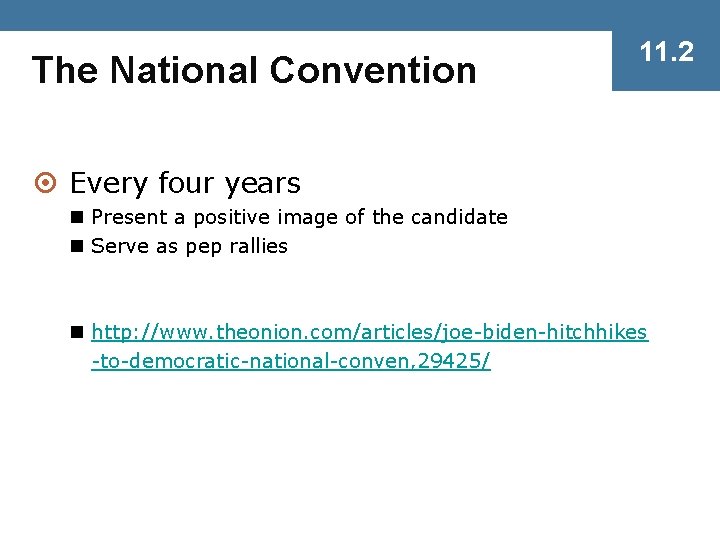
The National Convention 11. 2 ¤ Every four years n Present a positive image of the candidate n Serve as pep rallies n http: //www. theonion. com/articles/joe-biden-hitchhikes -to-democratic-national-conven, 29425/
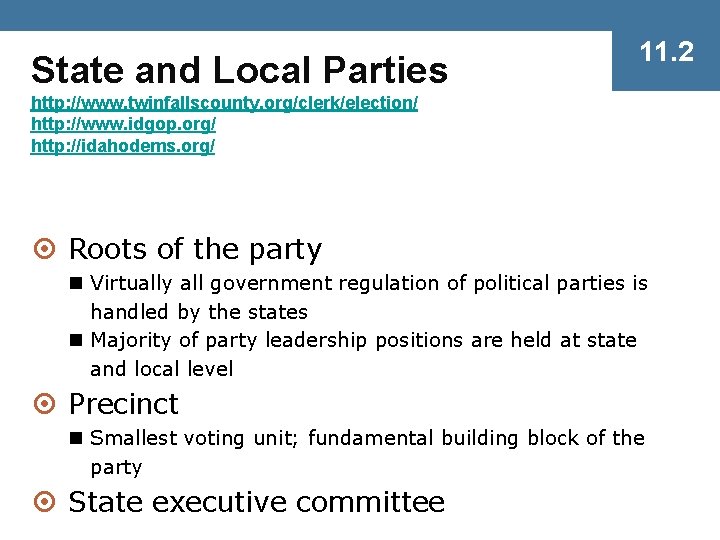
State and Local Parties 11. 2 http: //www. twinfallscounty. org/clerk/election/ http: //www. idgop. org/ http: //idahodems. org/ ¤ Roots of the party n Virtually all government regulation of political parties is handled by the states n Majority of party leadership positions are held at state and local level ¤ Precinct n Smallest voting unit; fundamental building block of the party ¤ State executive committee
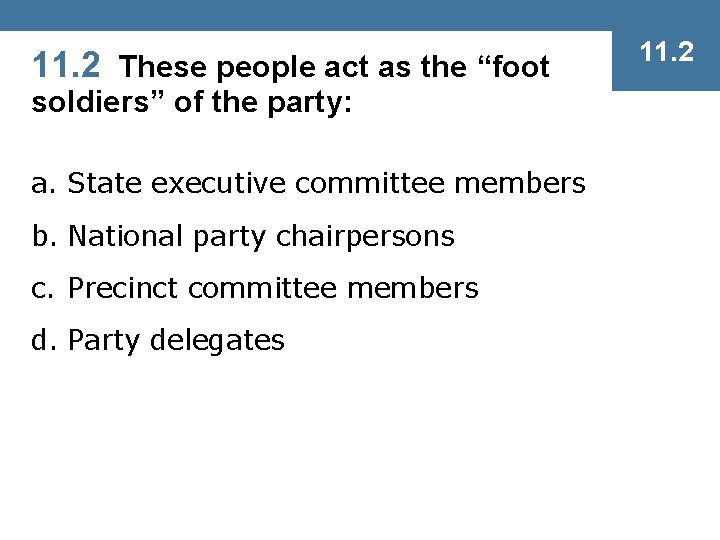
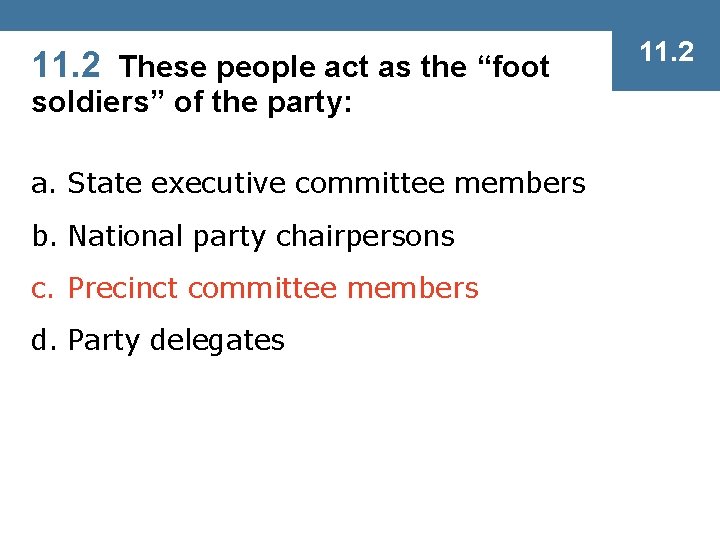
11. 2 These people act as the “foot soldiers” of the party: a. State executive committee members b. National party chairpersons c. Precinct committee members d. Party delegates 11. 2
11. 2 These people act as the “foot soldiers” of the party: a. State executive committee members b. National party chairpersons c. Precinct committee members d. Party delegates 11. 2
Activities of American Political Parties ¤ ¤ Running Candidates for Office Formulating and Promoting Policy Parties in Congress Furthering Unity, Linkage, and Accountability 11. 3
Running Candidates for Office ¤ Raising money n Well-developed networks of donors n Raise money and disseminate it to candidates Click pic 11. 3
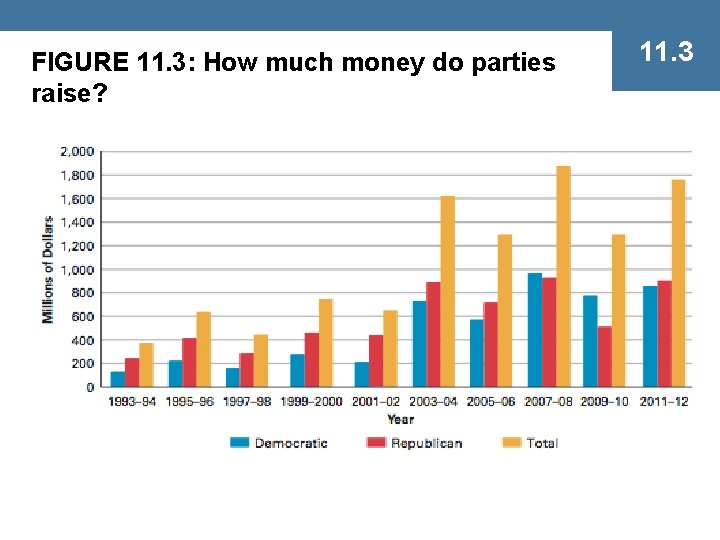
FIGURE 11. 3: How much money do parties raise? 11. 3
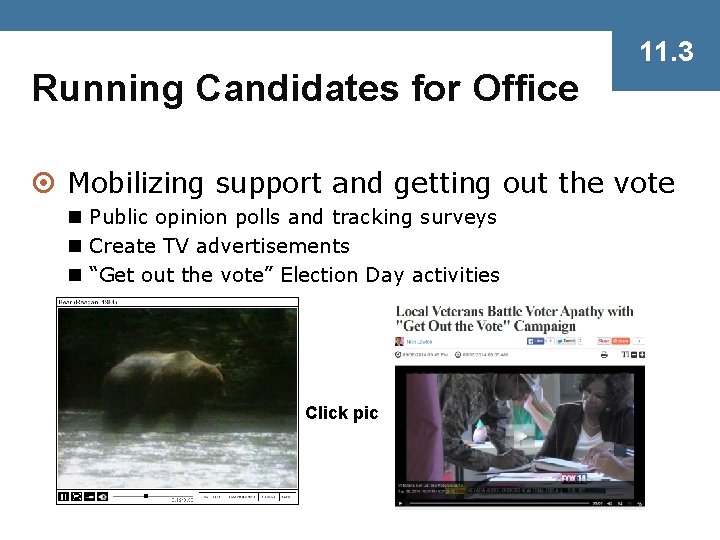
11. 3 Running Candidates for Office ¤ Mobilizing support and getting out the vote n Public opinion polls and tracking surveys n Create TV advertisements n “Get out the vote” Election Day activities Click pic
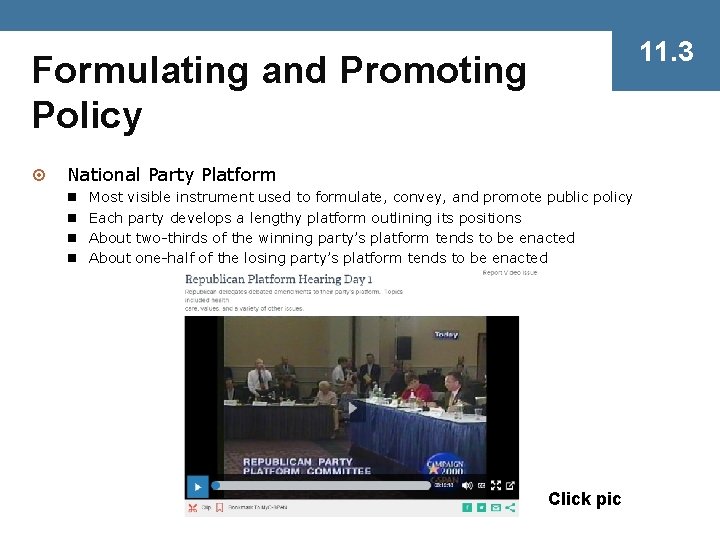
11. 3 Formulating and Promoting Policy ¤ National Party Platform n n Most visible instrument used to formulate, convey, and promote public policy Each party develops a lengthy platform outlining its positions About two-thirds of the winning party’s platform tends to be enacted About one-half of the losing party’s platform tends to be enacted Click pic
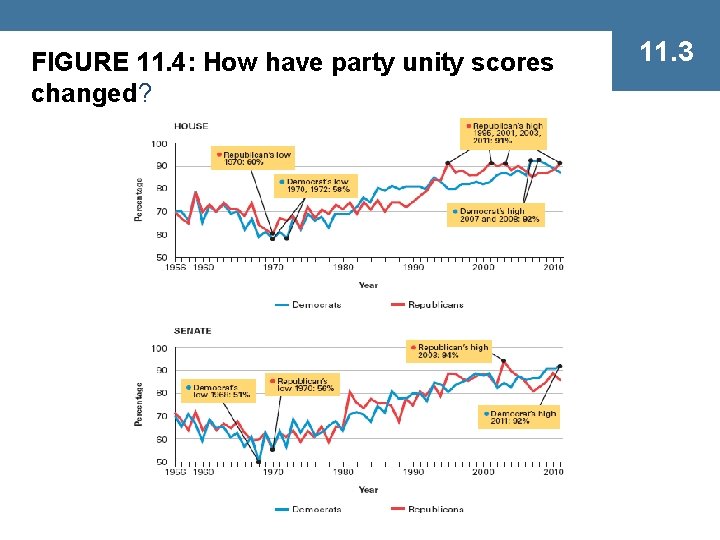
Parties In Congress 11. 3 ¤ Organizing government n Party members in Congress select congressional leaders n Those congressional leaders hold enormous power n Party affiliation predicts votes
FIGURE 11. 4: How have party unity scores changed? 11. 3
Furthering Unity, Linkage, and Accountability 11. 3 ¤ Party role n Parties are the glue that holds elements of government and political structure together n Link together branches of government n One more means of accountability
11. 3 The political parties have great 11. 3 influence in Congress because: a. Congressional representatives owe them loyalty in return for campaign help b. Parties arrange for the selection of congressional leaders c. Parties are instrumental in deciding who runs for office d. None of the above
11. 3 The political parties have great 11. 3 influence in Congress because: a. Congressional representatives owe them loyalty in return for campaign help b. Parties arrange for the selection of congressional leaders c. Parties are instrumental in deciding who runs for office d. None of the above
Roots of the American Interest Group System ¤ Theories of Interest Group Formation ¤ Interest Group Maintenance ¤ Development of American Interest Groups ¤ Rise of the Interest Group State 15
Click pic 15
Click pic 15
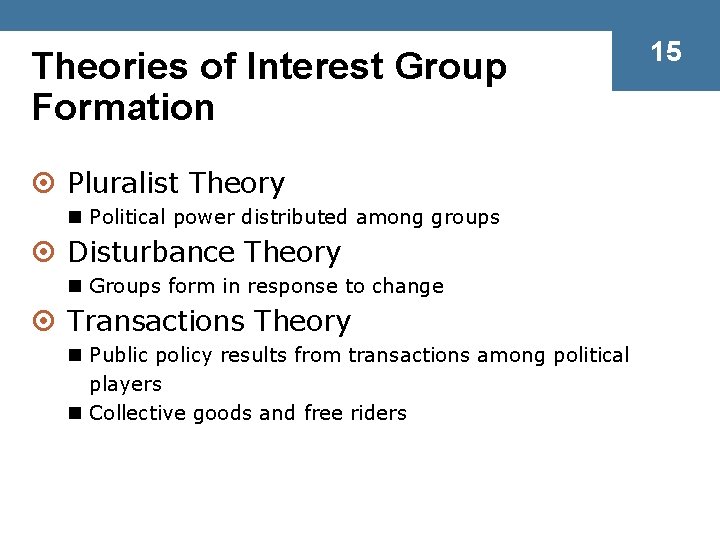
Theories of Interest Group Formation ¤ Pluralist Theory n Political power distributed among groups ¤ Disturbance Theory n Groups form in response to change ¤ Transactions Theory n Public policy results from transactions among political players n Collective goods and free riders 15
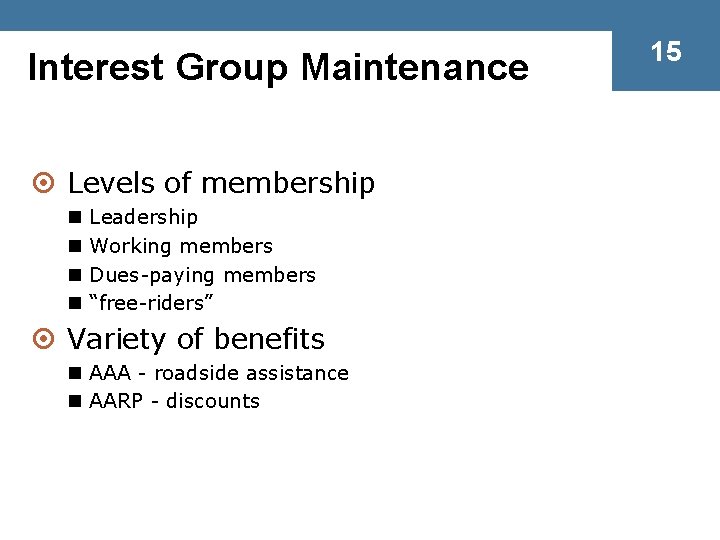
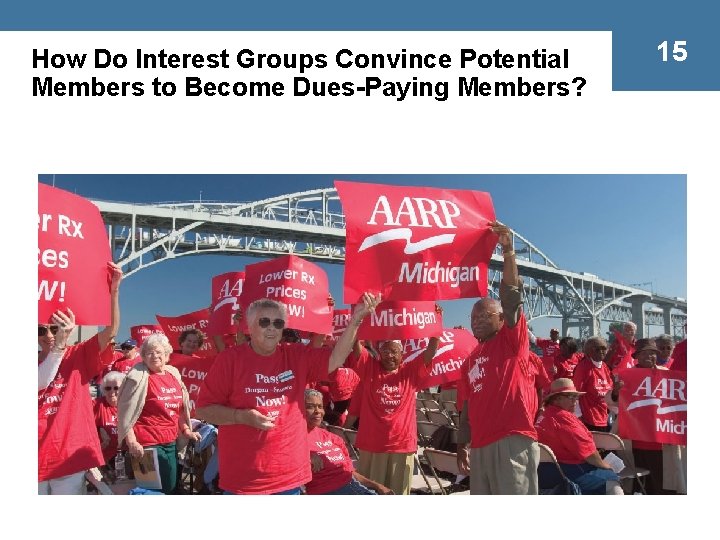
Interest Group Maintenance ¤ Levels of membership n n Leadership Working members Dues-paying members “free-riders” ¤ Variety of benefits n AAA - roadside assistance n AARP - discounts 15
How Do Interest Groups Convince Potential Members to Become Dues-Paying Members? 15
What Do Interest Groups Do? ¤ Lobbying ¤ Election Activities 15
Lobbying ¤ ¤ ¤ • • • Lobbying Congress Lobbying the Executive Branch Lobbying the Courts Grassroots Lobbying Protests and Radical Activism http: //youtu. be/Q 34 mr. WTUYTg http: //youtu. be/a. CJkxbw. MOak http: //youtu. be/c_CNs. IOMLW 0 15
Election Activities ¤ ¤ 15 Candidate recruitment and endorsements Getting out the vote Rating the candidates or office holders Campaign contributions
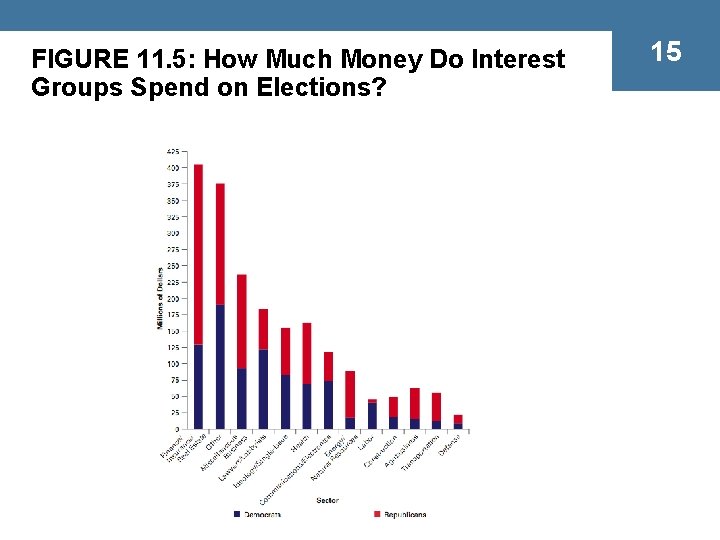
FIGURE 11. 5: How Much Money Do Interest Groups Spend on Elections? 15
11. 6 This type of lobbying activity has become a favorite of anti-war and animal activists: a. Congressional lobbying b. Executive branch lobbying c. Lobbying the courts d. Grassroots lobbying e. Protests and radical activism 15
11. 6 This type of lobbying activity has become a favorite of anti-war and animal activists: a. Congressional lobbying b. Executive branch lobbying c. Lobbying the courts d. Grassroots lobbying e. Protests and radical activism 15
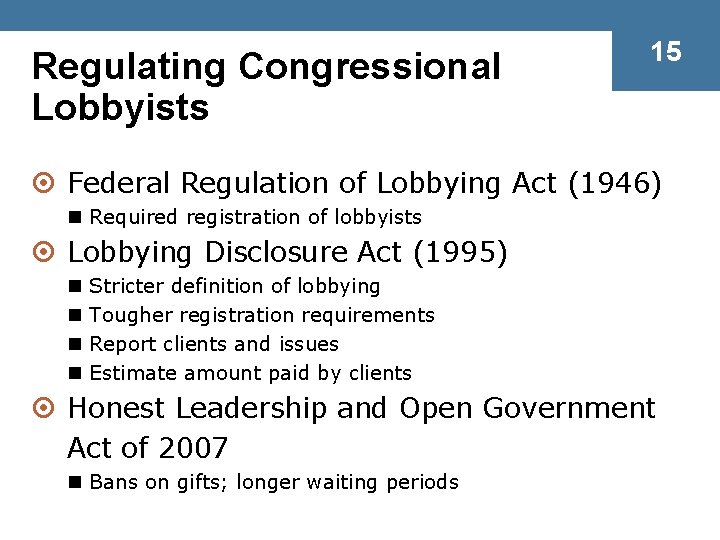
Regulating Congressional Lobbyists 15 ¤ Federal Regulation of Lobbying Act (1946) n Required registration of lobbyists ¤ Lobbying Disclosure Act (1995) n n Stricter definition of lobbying Tougher registration requirements Report clients and issues Estimate amount paid by clients ¤ Honest Leadership and Open Government Act of 2007 n Bans on gifts; longer waiting periods
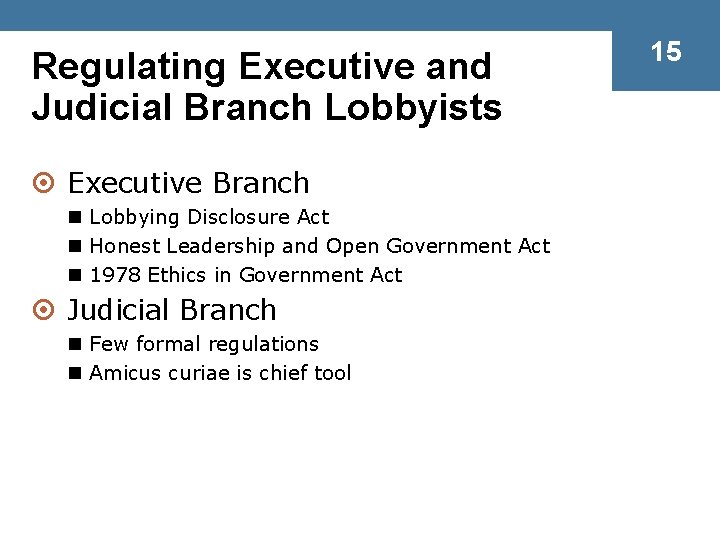
Regulating Executive and Judicial Branch Lobbyists ¤ Executive Branch n Lobbying Disclosure Act n Honest Leadership and Open Government Act n 1978 Ethics in Government Act ¤ Judicial Branch n Few formal regulations n Amicus curiae is chief tool 15