
Political Ideologies Where are you on the Spectrum









- Slides: 17
Political Ideologies Where are you on the Spectrum?
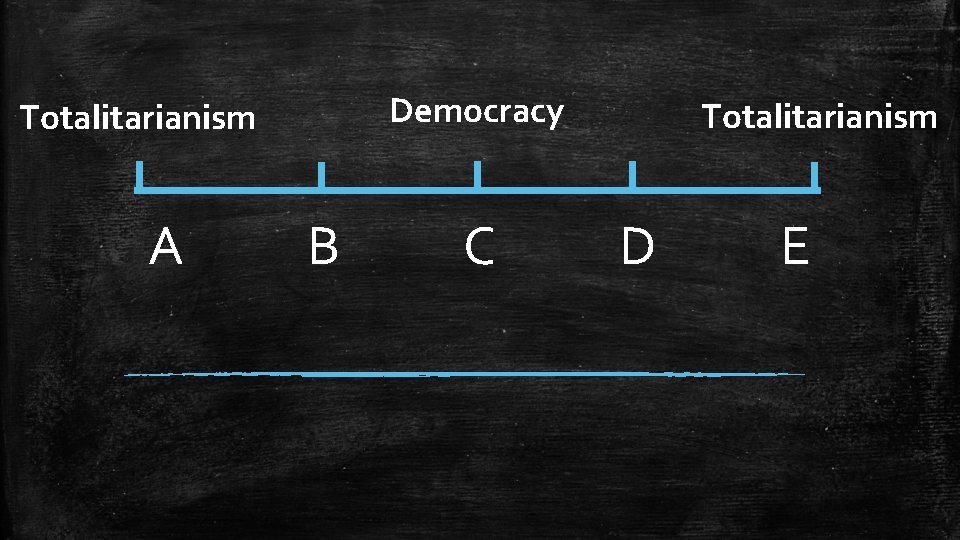
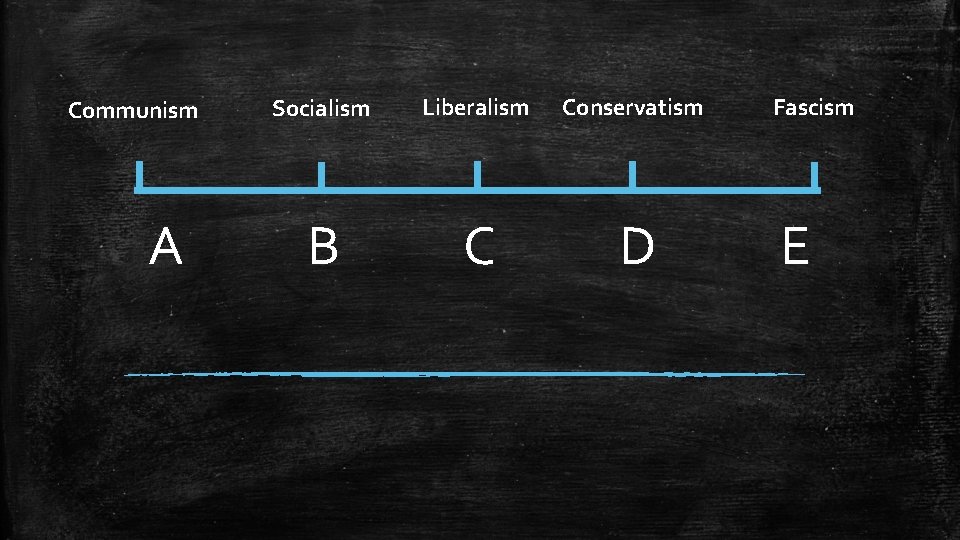
A B C D E
Left Wing v. Right Wing ▪ are usually progressive in nature, aim to support those who cannot support themselves, and believe in equality. ▪ believe in taxation to redistribute opportunity and wealth - things like a national health service, and employment insurance. ▪ They believe in equality over the freedom to fail. ▪ value tradition, they are about equity, survival of the fittest, and they believe in economic freedom. ▪ believe that business shouldn’t be regulated, and that we should all look after ourselves. ▪ believe they shouldn’t have to pay for someone else’s education or health service. ▪ They believe in freedom to succeed over equality.
Democracy (the rational, middle ground) ▪ government by the people, exercised either directly or through elected representatives (eg. Canada, Japan) ▪ government by the people or by their elected representatives ▪ the supreme power lies in a body of citizens who can elect people to represent them
Totalitarianism (the extremes) ▪ a form of government in which the political authority exercises absolute and centralized control over all aspects of life (eg. Nazi Germany, Communist China) ▪ a centralized government that does not tolerate parties of differing opinion and that exercises dictatorial control over many aspects of life
Democracy Totalitarianism A B C Totalitarianism D E
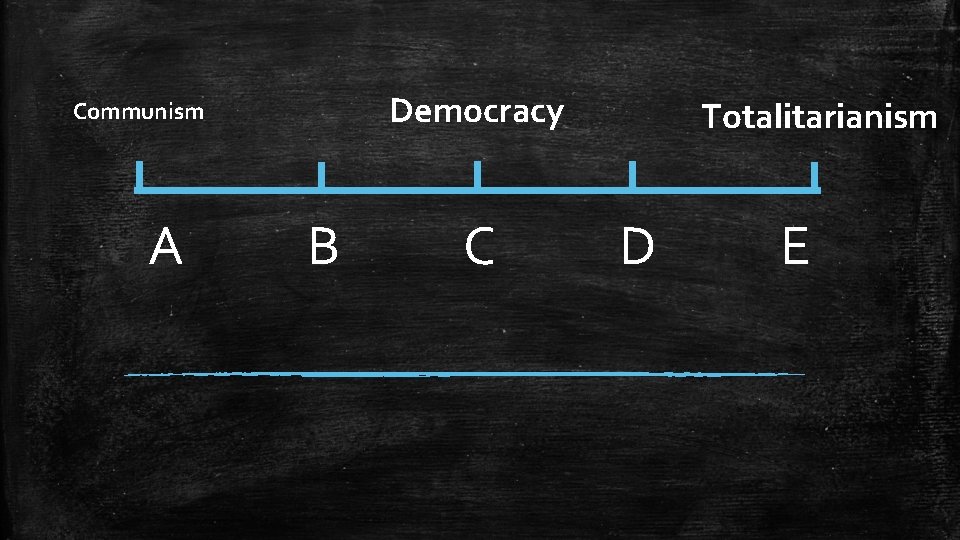
Communism ▪ A political theory invented by Karl Marx and Fredrich Engels which favors a classless society where there are no rich or poor ▪ This ideology does not believe in private ownership or property – everything should be shared/communal ▪ Ideally, there would be no leader and people would work together ▪ Society would be made up of a community of workers called the proletariat who have overthrown the elite rich class through revolution
Democracy Communism A B C Totalitarianism D E
Fascism ▪ A political theory that supports an “authoritarian” leader that has absolute powers (dictator) ▪ Governments are often extremely nationalistic, imperialistic and propaganda is common ▪ Often very supportive of traditional gender roles ▪ Believes in a very strong military, and total control over media, education, etc.
Democracy Communism A B C Fascism D E
Socialism ▪ A political ideology that supports universal social services such as healthcare, education, etc. ▪ Government control over the means of productions will allow for a more equitable distribution of wealth ▪ Strong support for labour unions and workers rights
Communism A Fascism Socialism B C D E
Conservativism ▪ A political orientation that supports minimal government in business affairs – “hands-off or laissez-faire” politics ▪ This theory opposes radical change, sometimes supports initiatives that are seen as “traditional” or “family values” ▪ Historically not supportive of labour unions; often very supportive of a strong military
Communism A Conservatism Socialism B C D Fascism E
Liberalism ▪ “The middle ground” ▪ An ideology that favors social progress by reform and by changing laws and not by revolution ▪ Advocates free enterprise (business) and an open market, but will support social services if they are in the best interests of the people
Communism A Socialism Liberalism Conservatism B C D Fascism E
Where am I? ▪ Homework! ▪ Go to www. politicalcompass. org ▪ Take 20 minutes to complete the quiz. ▪ Email me your “horizontal axis” results ▪ bmcelroy@summer. com