
Political Geography Internal Politics Unitary Internal Structure of

- Slides: 15
Political Geography
Internal Politics
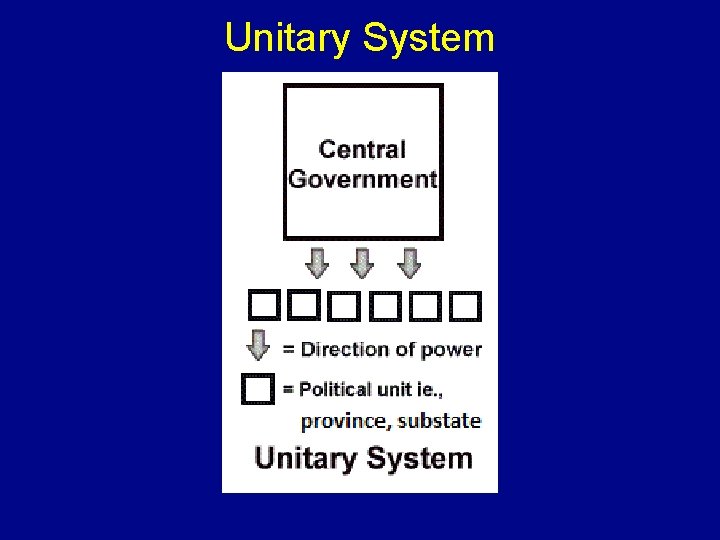
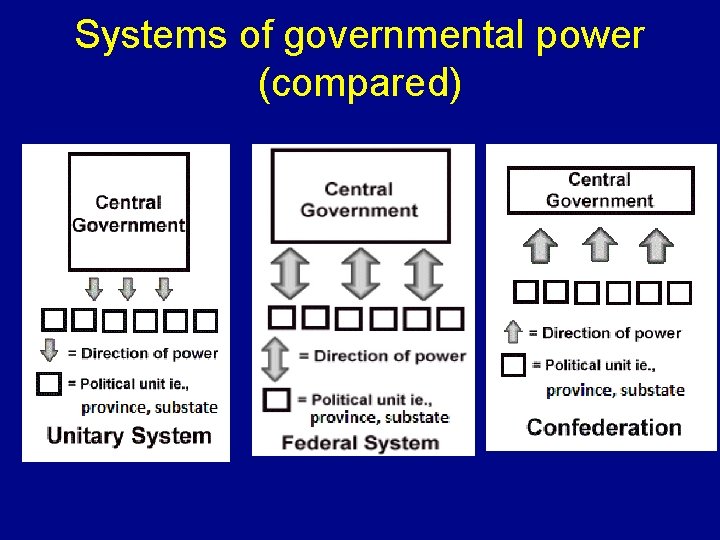
– Unitary Internal Structure of States • central govt. dictates all policy from capital – example: France » France has “departments” but they only implement policy decided by central government » Recently France has devolved some power to regions. – dictatorships, communist governments are examples. – centripetal – keeps regions in line – centrifugal – causes resentment and desire for local autonomy in regions
Unitary System
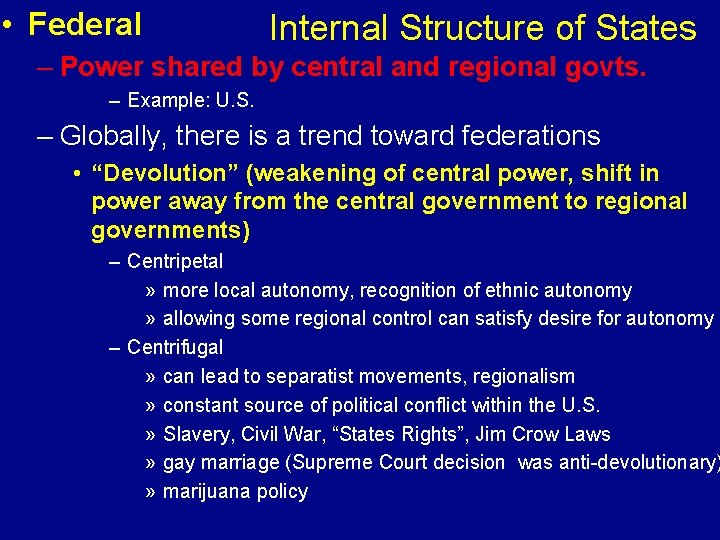
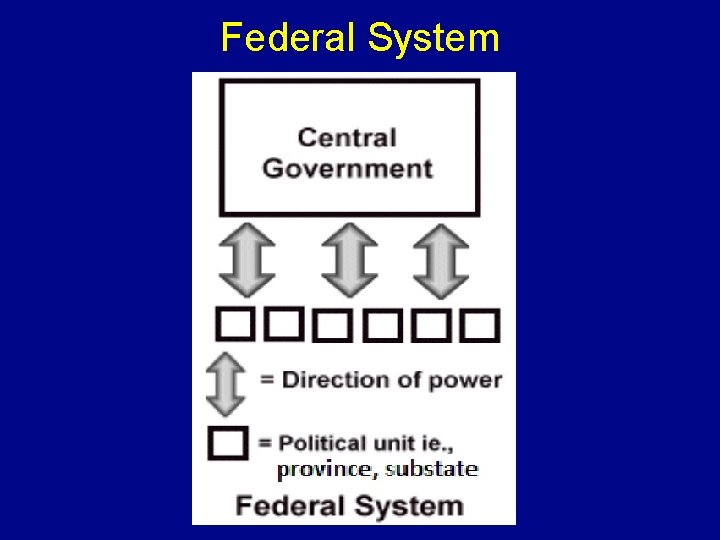
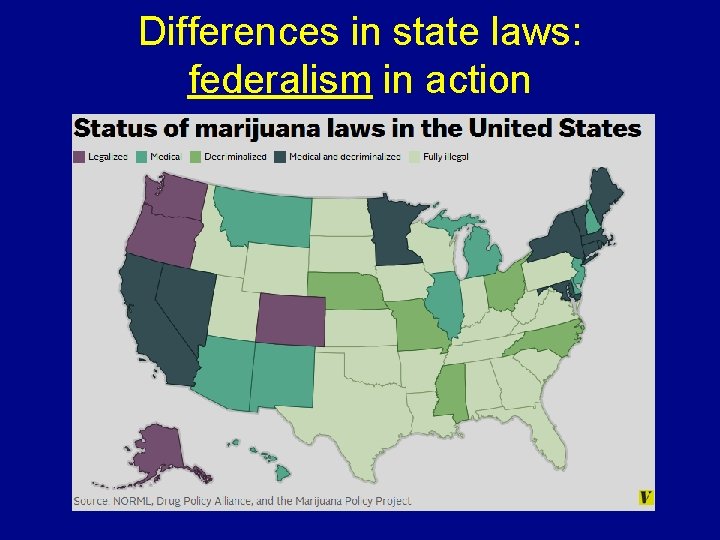
• Federal Internal Structure of States – Power shared by central and regional govts. – Example: U. S. – Globally, there is a trend toward federations • “Devolution” (weakening of central power, shift in power away from the central government to regional governments) – Centripetal » more local autonomy, recognition of ethnic autonomy » allowing some regional control can satisfy desire for autonomy – Centrifugal » can lead to separatist movements, regionalism » constant source of political conflict within the U. S. » Slavery, Civil War, “States Rights”, Jim Crow Laws » gay marriage (Supreme Court decision was anti-devolutionary) » marijuana policy
Federal System
Differences in state laws: federalism in action
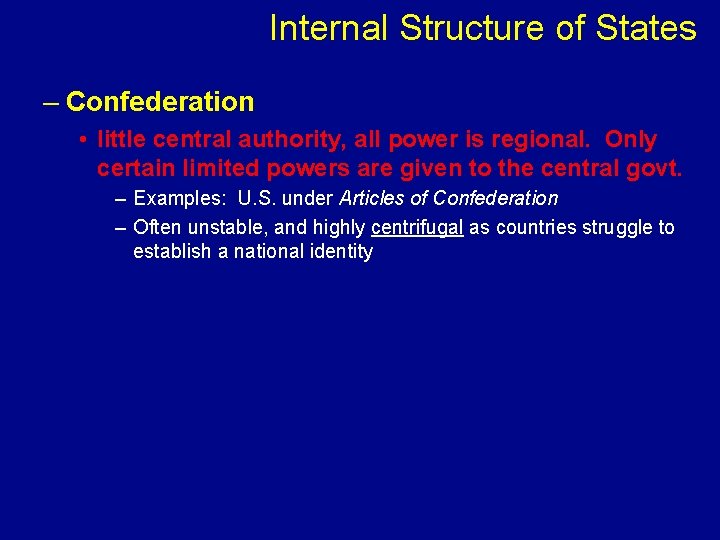
Internal Structure of States – Confederation • little central authority, all power is regional. Only certain limited powers are given to the central govt. – Examples: U. S. under Articles of Confederation – Often unstable, and highly centrifugal as countries struggle to establish a national identity
Confederal System
Systems of governmental power (compared)
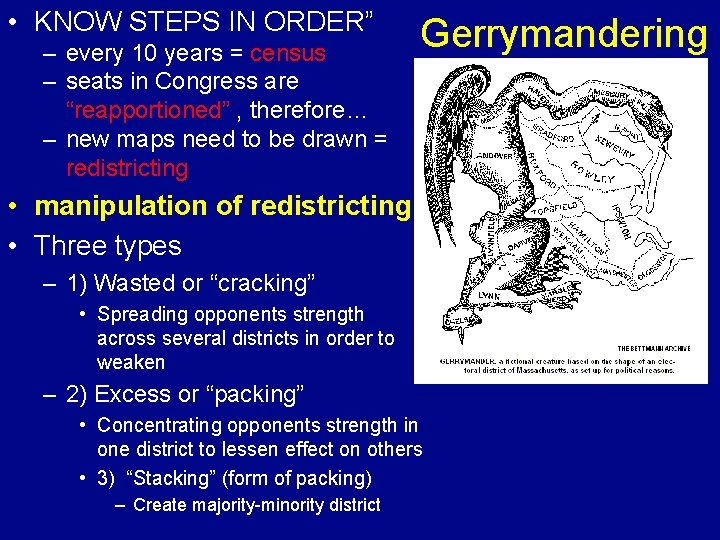
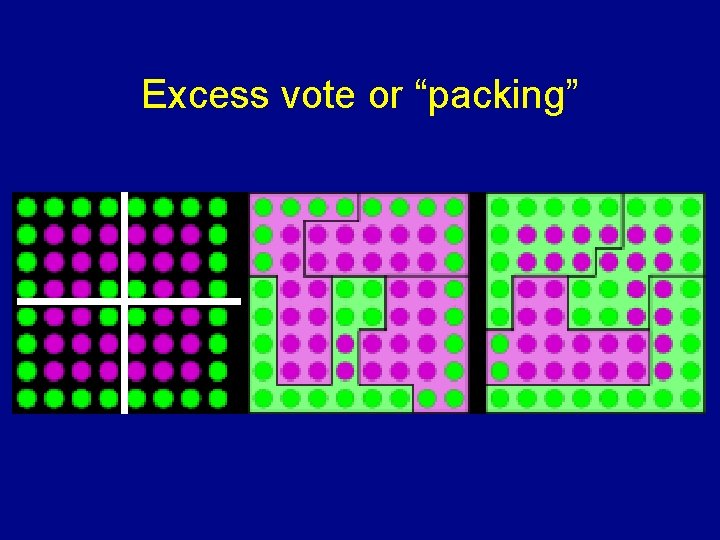
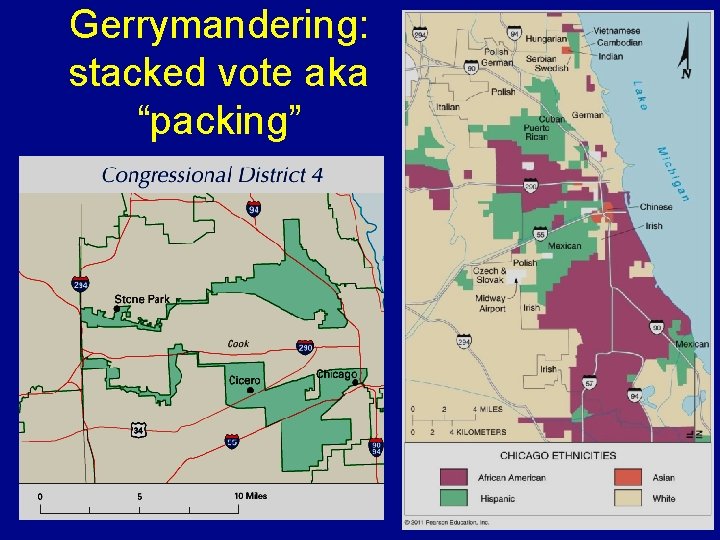
• KNOW STEPS IN ORDER” – every 10 years = census – seats in Congress are “reapportioned” , therefore… – new maps need to be drawn = redistricting Gerrymandering • manipulation of redistricting • Three types – 1) Wasted or “cracking” • Spreading opponents strength across several districts in order to weaken – 2) Excess or “packing” • Concentrating opponents strength in one district to lessen effect on others • 3) “Stacking” (form of packing) – Create majority-minority district
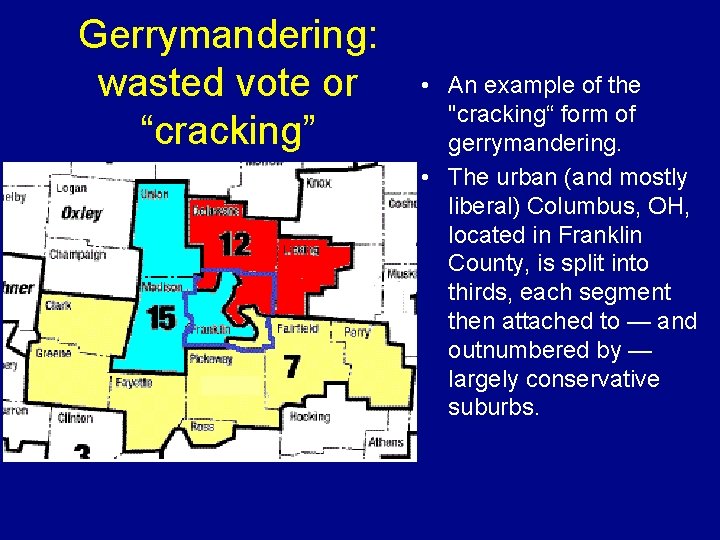
Gerrymandering: wasted vote or “cracking” • An example of the "cracking“ form of gerrymandering. • The urban (and mostly liberal) Columbus, OH, located in Franklin County, is split into thirds, each segment then attached to — and outnumbered by — largely conservative suburbs.
Excess vote or “packing”
Gerrymandering: stacked vote aka “packing”