
Political Economy Comparative Politics Political Economy intro How
- Slides: 54
Political Economy Comparative Politics
Political Economy intro How do people use politics to create and distribute wealth?
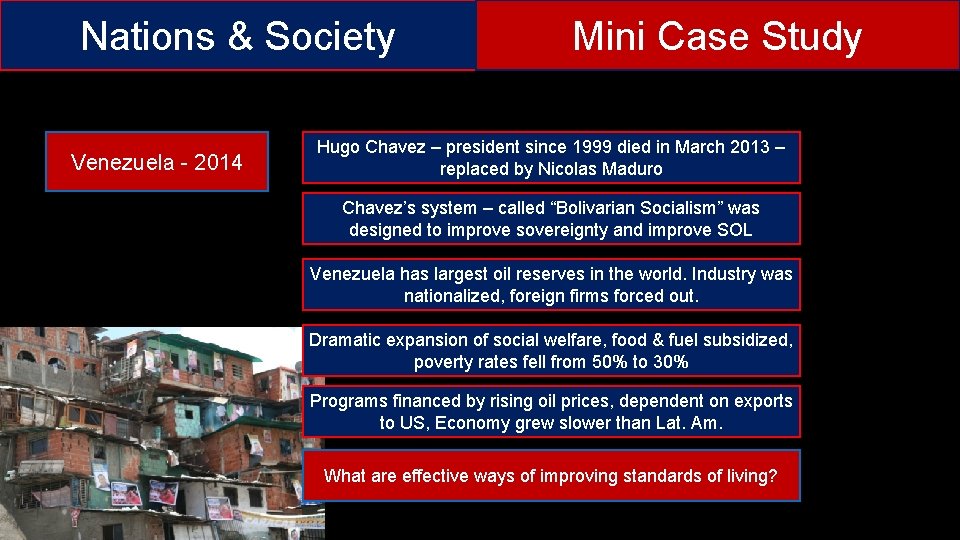
Nations & Society Venezuela - 2014 Mini Case Study Hugo Chavez – president since 1999 died in March 2013 – replaced by Nicolas Maduro Chavez’s system – called “Bolivarian Socialism” was designed to improve sovereignty and improve SOL Venezuela has largest oil reserves in the world. Industry was nationalized, foreign firms forced out. Dramatic expansion of social welfare, food & fuel subsidized, poverty rates fell from 50% to 30% Programs financed by rising oil prices, dependent on exports to US, Economy grew slower than Lat. Am. What are effective ways of improving standards of living?
Components of Political Economy Introduction
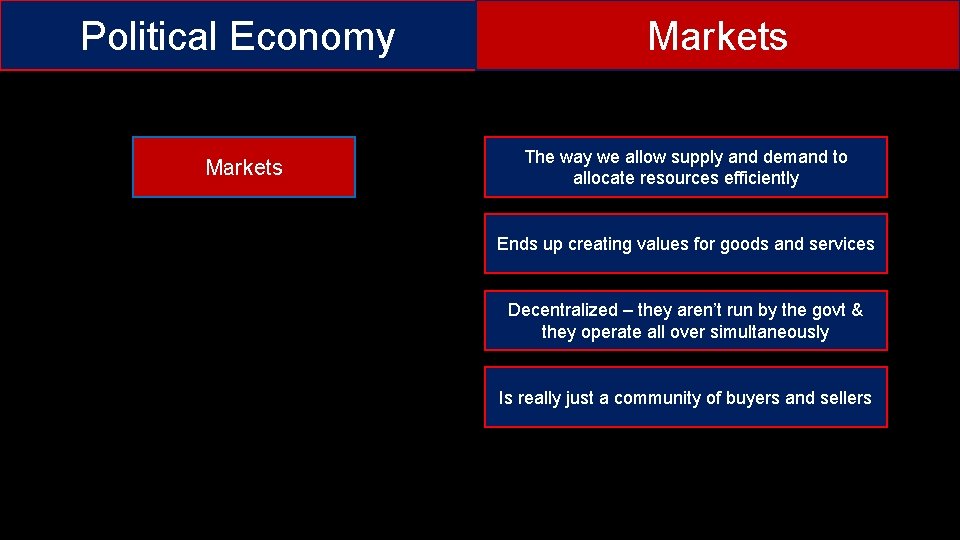
Political Economy Markets The way we allow supply and demand to allocate resources efficiently Ends up creating values for goods and services Decentralized – they aren’t run by the govt & they operate all over simultaneously Is really just a community of buyers and sellers
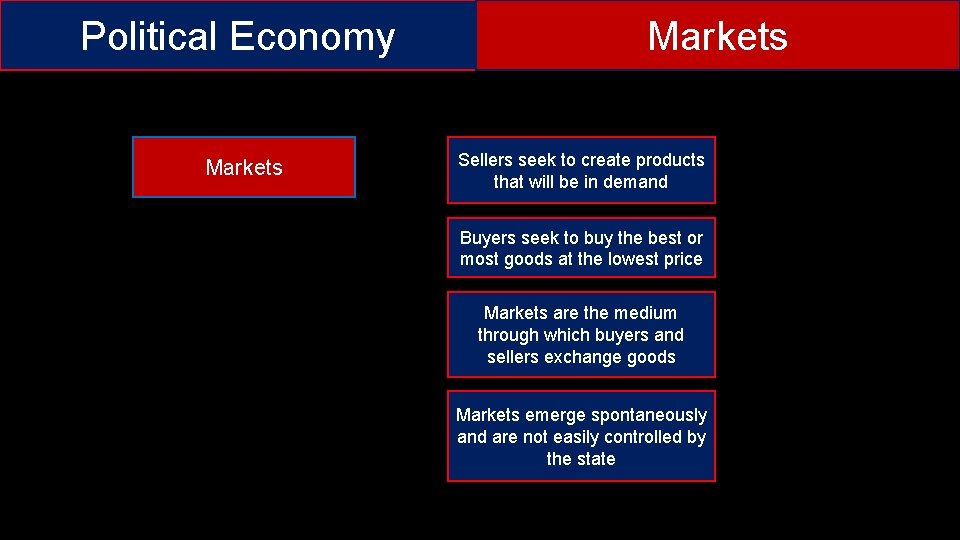
Political Economy Markets Sellers seek to create products that will be in demand Buyers seek to buy the best or most goods at the lowest price Markets are the medium through which buyers and sellers exchange goods Markets emerge spontaneously and are not easily controlled by the state
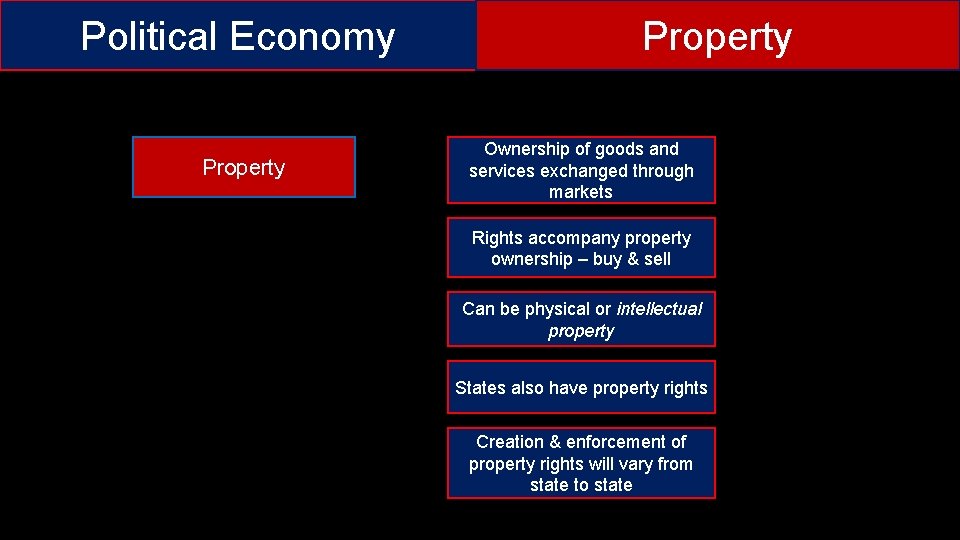
Political Economy Property Ownership of goods and services exchanged through markets Rights accompany property ownership – buy & sell Can be physical or intellectual property States also have property rights Creation & enforcement of property rights will vary from state to state
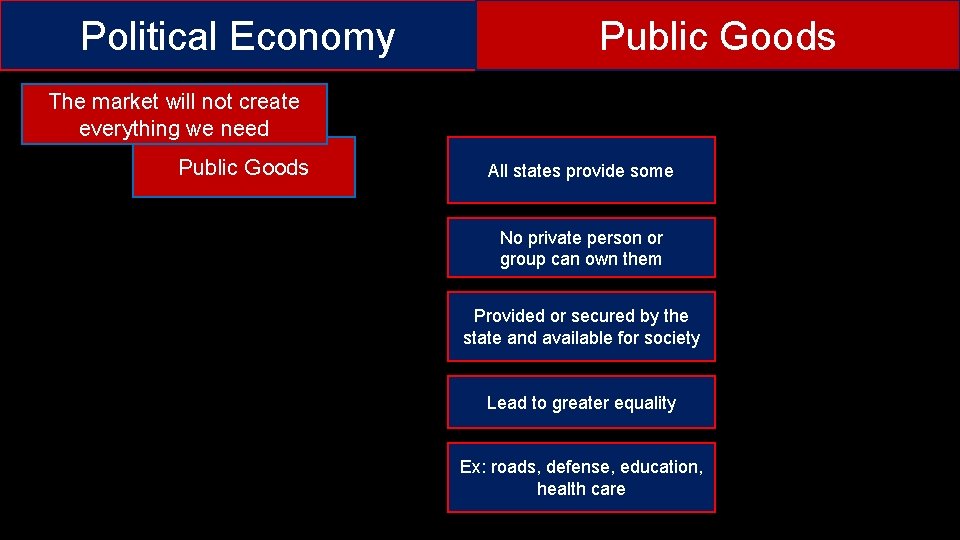
Political Economy Public Goods The market will not create everything we need Public Goods All states provide some No private person or group can own them Provided or secured by the state and available for society Lead to greater equality Ex: roads, defense, education, health care
Political Economy Social Expenditures Benefits provided by the state for the people Commonly referred to as “the welfare state” Often controversial – because wealth is being redistributed
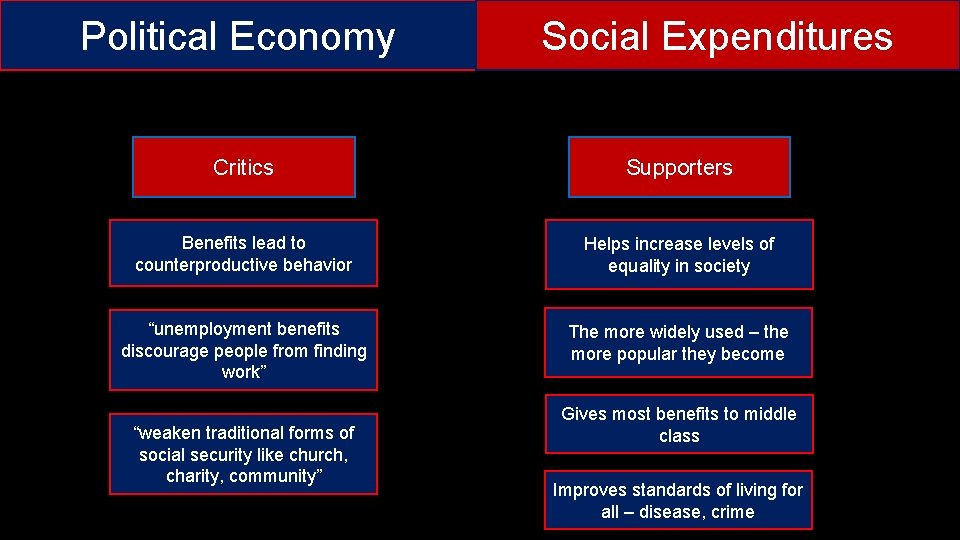
Political Economy Social Expenditures Critics Supporters Benefits lead to counterproductive behavior Helps increase levels of equality in society “unemployment benefits discourage people from finding work” The more widely used – the more popular they become “weaken traditional forms of social security like church, charity, community” Gives most benefits to middle class Improves standards of living for all – disease, crime
Political Economy Taxes Taxation Key source of revenue for most modern states Increase as social expenditures increase and make more taxation necessary Fund state services without forcing state to borrow from other states Can be forced onto citizens or on corporations
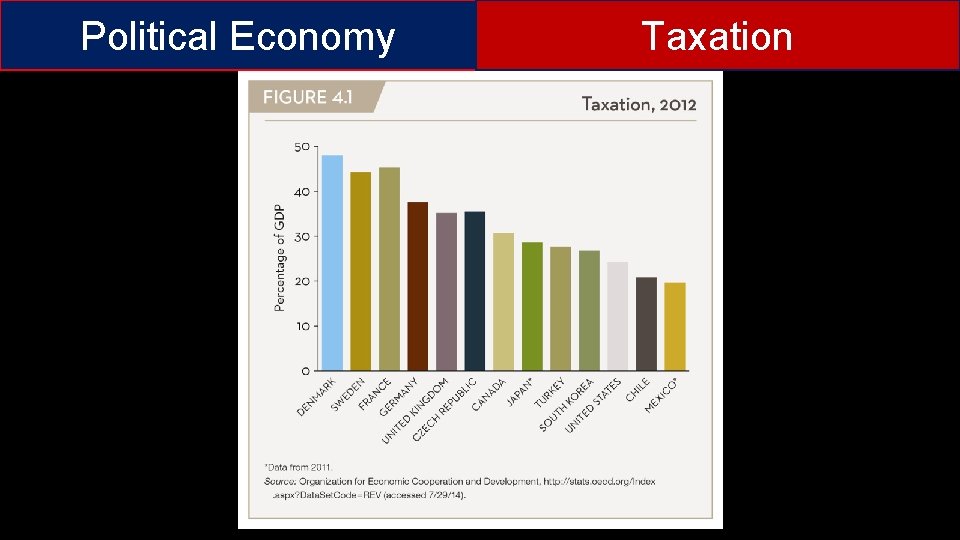
Political Economy Taxation Essentials of Comparative Politics, 5 th Edition Copyright © 2015, W. W. Norton & Company
Political Economy Central Banking States must form a relationship with markets and with property Not only must it manage those, and provide public goods, but must encourage economic growth Must create and manage money Currency is the official money of a state
Political Economy Central Banking Institution that controls how money is flowing through a state Usually set a national interest rate – deciding how much it costs to borrow money in a state Most money has no value on its own – people trust the state & know others will trade money with them
Political Economy Inflation & Growth Increase in the average price of goods – means money loses its value Means that demand for goods is growing faster than supply of goods Banks attempt to control this by raising interest rates – makes us “demand” less Hyperinflation Higher than 50% a month for 2 months in a row – money becomes worthless
Political Economy Deflation Inflation & Growth Decrease in the average prices of goods – leads to unemployment Means that demand for goods is growing much slower than supply of goods Banks attempt to control this by lowering interest rates – makes us “demand” more
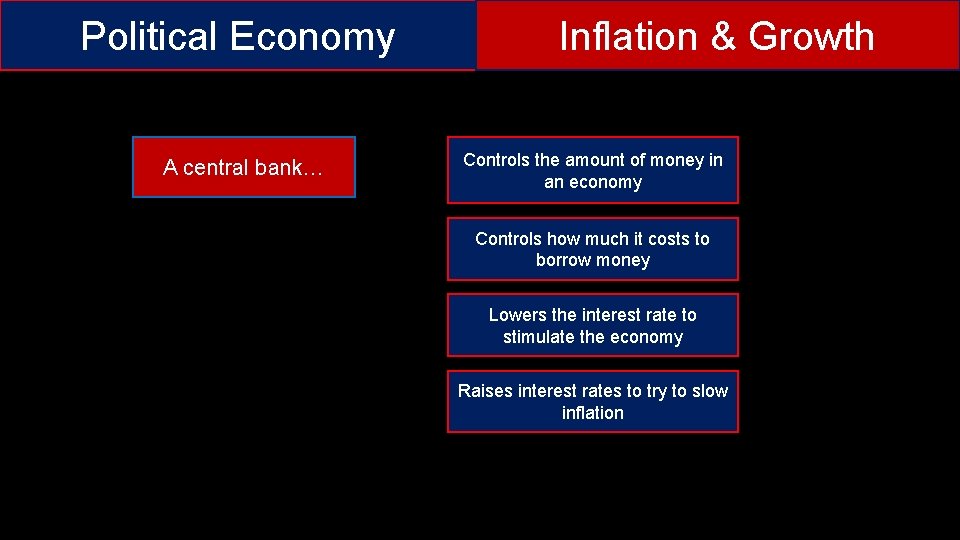
Political Economy A central bank… Inflation & Growth Controls the amount of money in an economy Controls how much it costs to borrow money Lowers the interest rate to stimulate the economy Raises interest rates to try to slow inflation
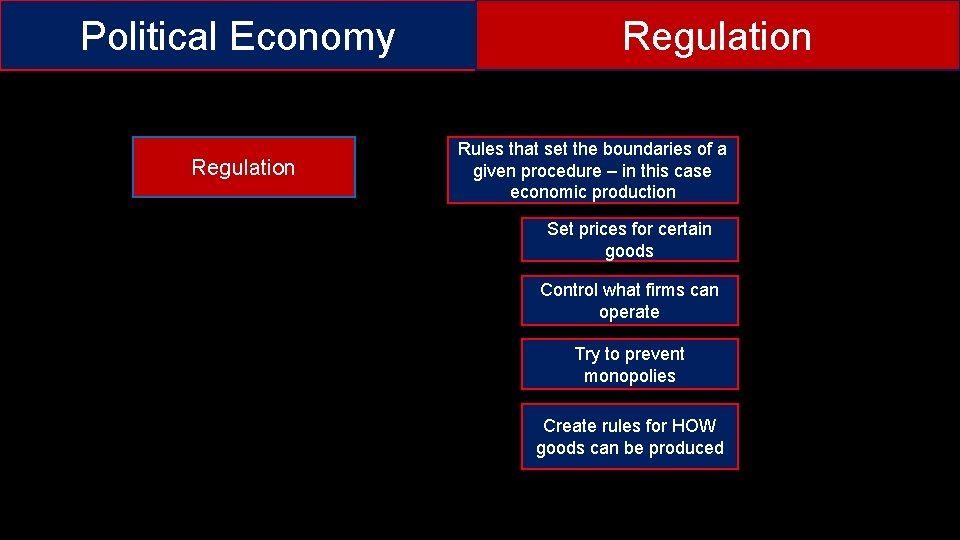
Political Economy Regulation Rules that set the boundaries of a given procedure – in this case economic production Set prices for certain goods Control what firms can operate Try to prevent monopolies Create rules for HOW goods can be produced
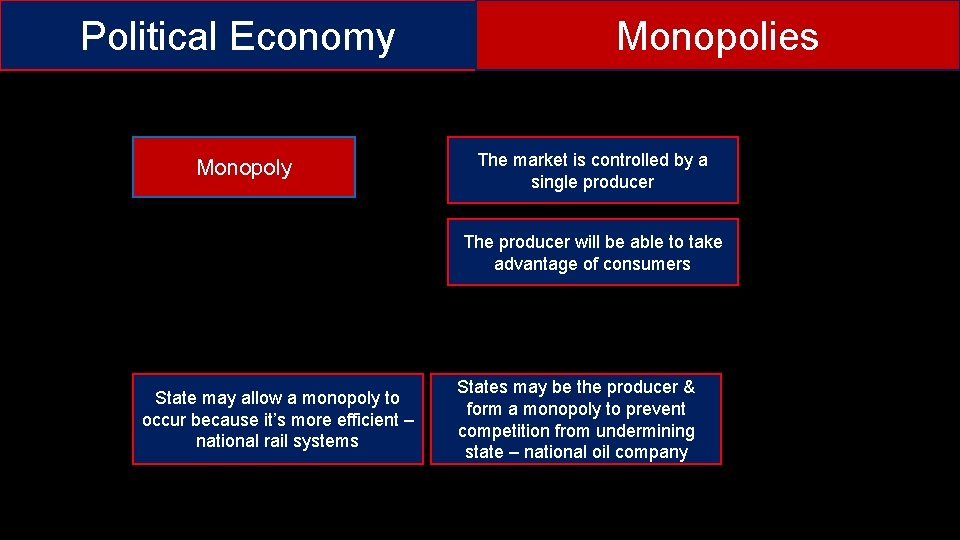
Political Economy Monopolies The market is controlled by a single producer The producer will be able to take advantage of consumers State may allow a monopoly to occur because it’s more efficient – national rail systems States may be the producer & form a monopoly to prevent competition from undermining state – national oil company
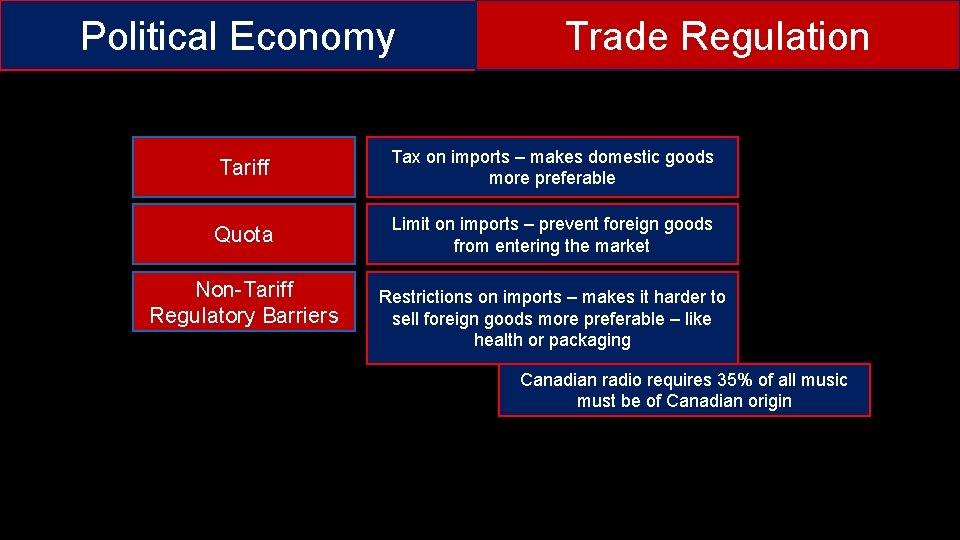
Political Economy Trade Regulation Tariff Tax on imports – makes domestic goods more preferable Quota Limit on imports – prevent foreign goods from entering the market Non-Tariff Regulatory Barriers Restrictions on imports – makes it harder to sell foreign goods more preferable – like health or packaging Canadian radio requires 35% of all music must be of Canadian origin
Political Economy Why? Trade Regulation States have to generate revenue Domestic economic growth generates more revenue State must foster local industries to compete with rivals State must protect local jobs – to ensure there will be taxpayers Attempts to keep as much wealth within the country as possible
Political Economy Why not? Trade Regulation Less trade regulation means more competition Keeps the costs of goods low Stimulates innovation in areas of comparative advantage
Political Economy Absolute Advantages Country can produce something that rivals cannot Country has oil or other resources Comparative Advantage Country can produce something better or more efficiently than rivals Builds best airplanes, can manufacture goods cheaply
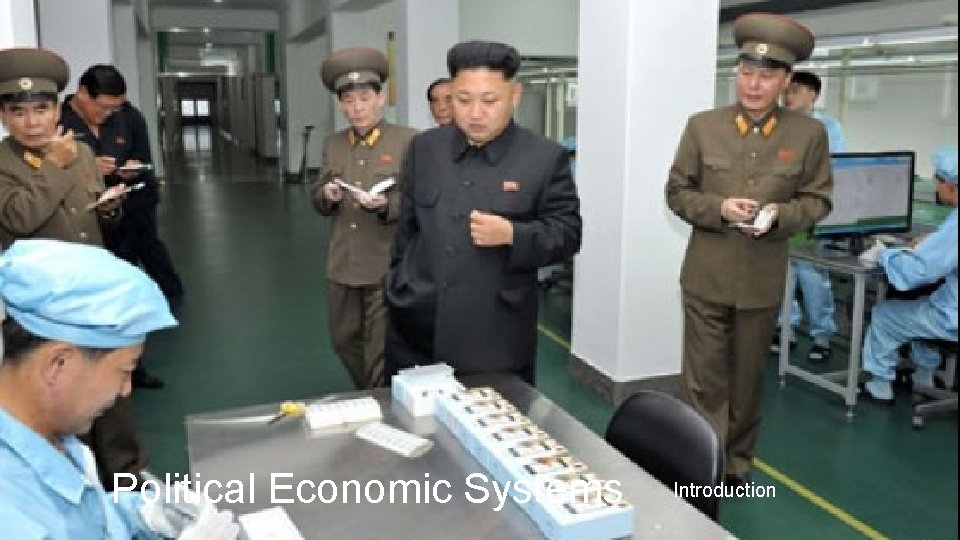
Political Economic Systems Introduction
Political Economy Political Economic Systems Relationship between political and economic institutions in a particular country An attempt by the state to realize ideology goals in the form of real economic institutions and policies
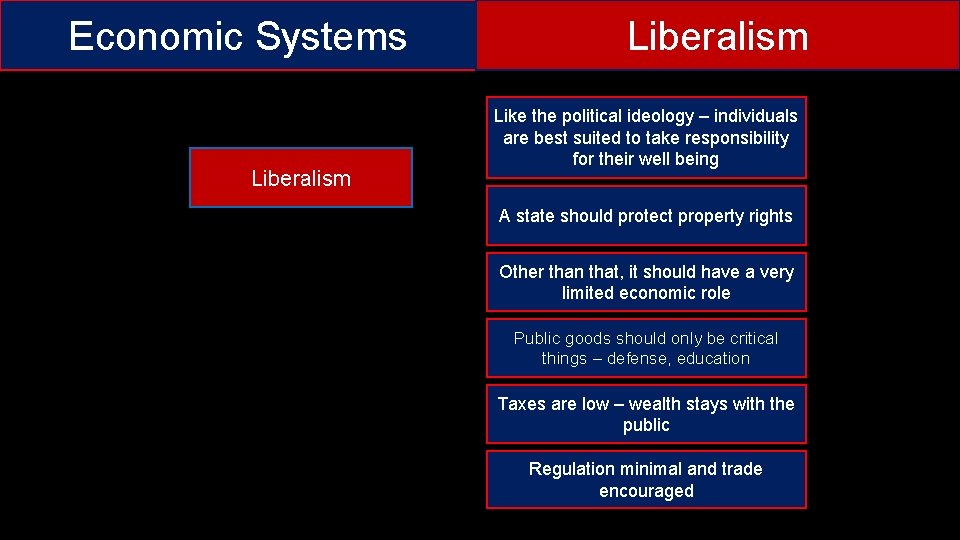
Economic Systems Liberalism Like the political ideology – individuals are best suited to take responsibility for their well being A state should protect property rights Other than that, it should have a very limited economic role Public goods should only be critical things – defense, education Taxes are low – wealth stays with the public Regulation minimal and trade encouraged
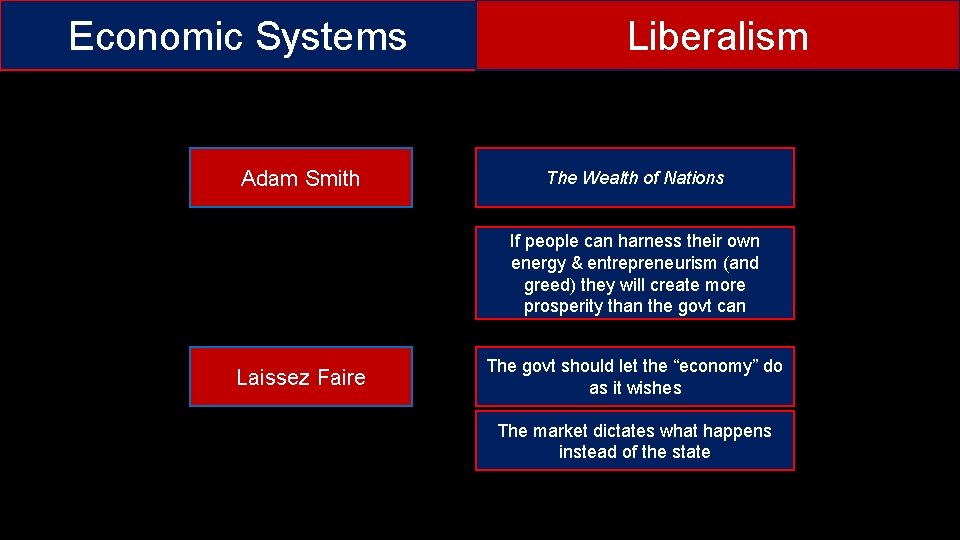
Economic Systems Adam Smith Liberalism The Wealth of Nations If people can harness their own energy & entrepreneurism (and greed) they will create more prosperity than the govt can Laissez Faire The govt should let the “economy” do as it wishes The market dictates what happens instead of the state
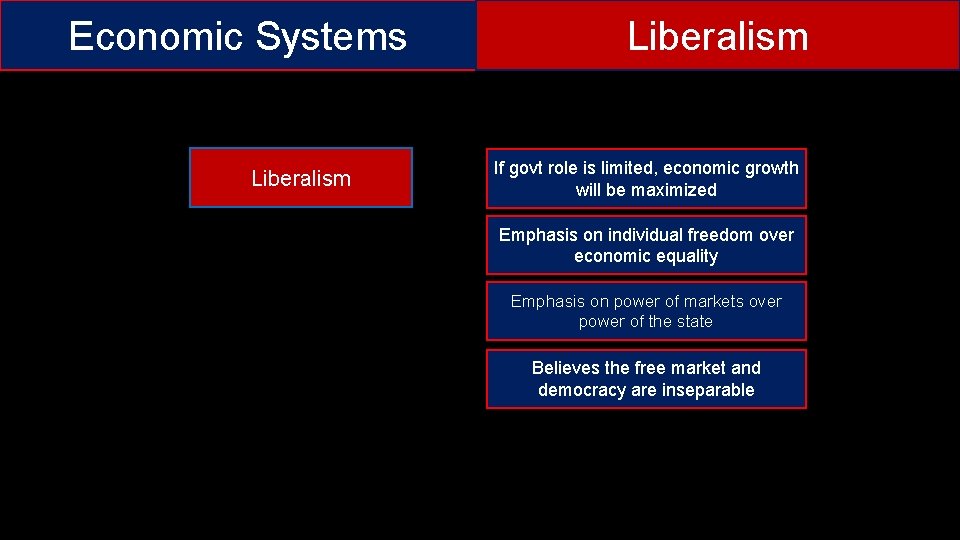
Economic Systems Liberalism If govt role is limited, economic growth will be maximized Emphasis on individual freedom over economic equality Emphasis on power of markets over power of the state Believes the free market and democracy are inseparable
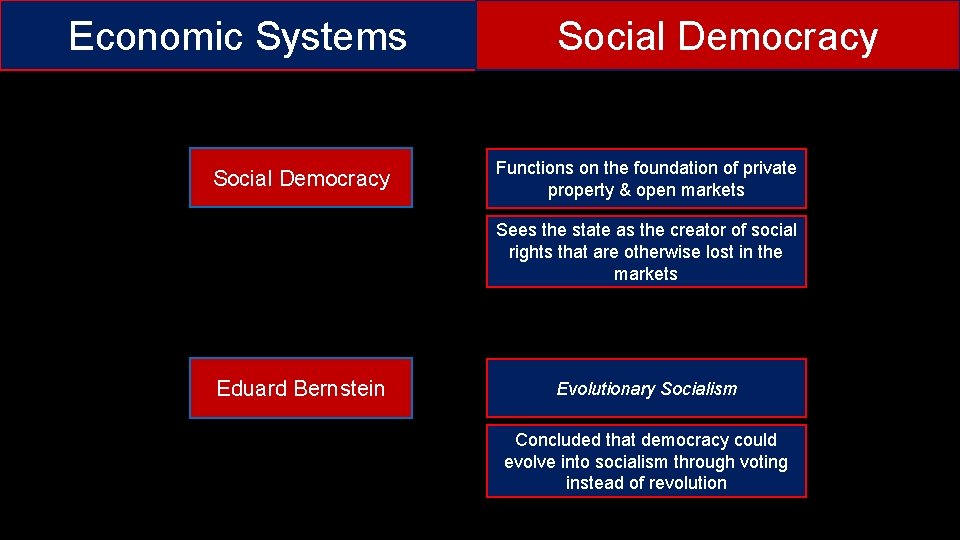
Economic Systems Social Democracy Functions on the foundation of private property & open markets Sees the state as the creator of social rights that are otherwise lost in the markets Eduard Bernstein Evolutionary Socialism Concluded that democracy could evolve into socialism through voting instead of revolution
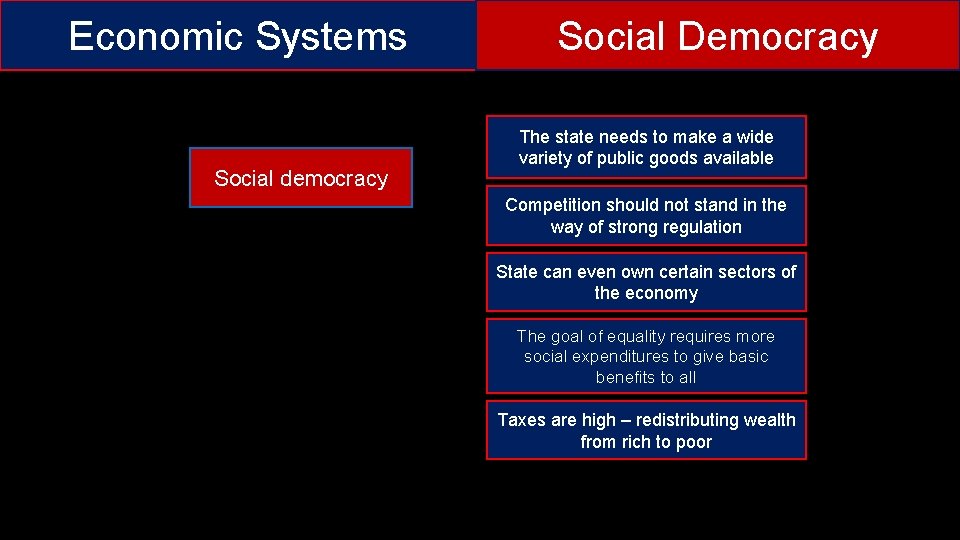
Economic Systems Social democracy Social Democracy The state needs to make a wide variety of public goods available Competition should not stand in the way of strong regulation State can even own certain sectors of the economy The goal of equality requires more social expenditures to give basic benefits to all Taxes are high – redistributing wealth from rich to poor
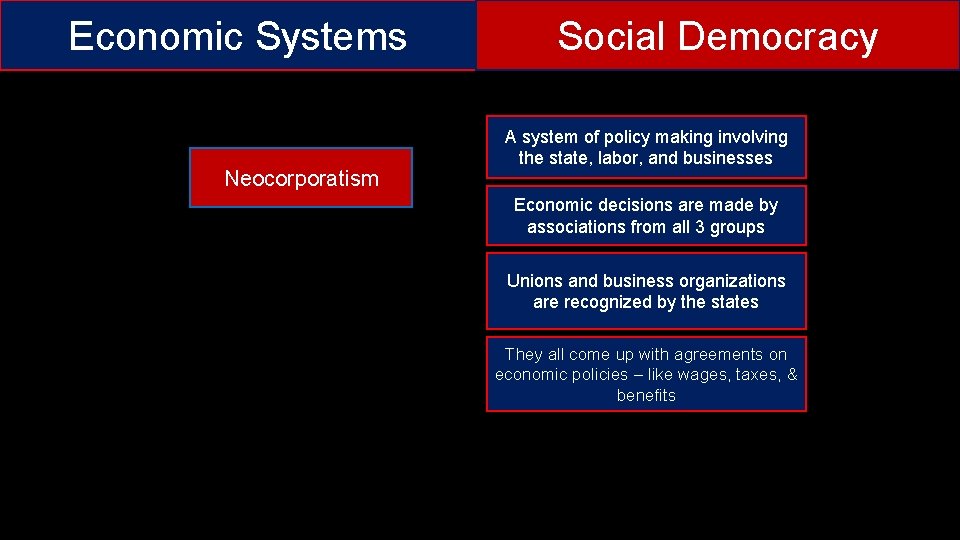
Economic Systems Neocorporatism Social Democracy A system of policy making involving the state, labor, and businesses Economic decisions are made by associations from all 3 groups Unions and business organizations are recognized by the states They all come up with agreements on economic policies – like wages, taxes, & benefits
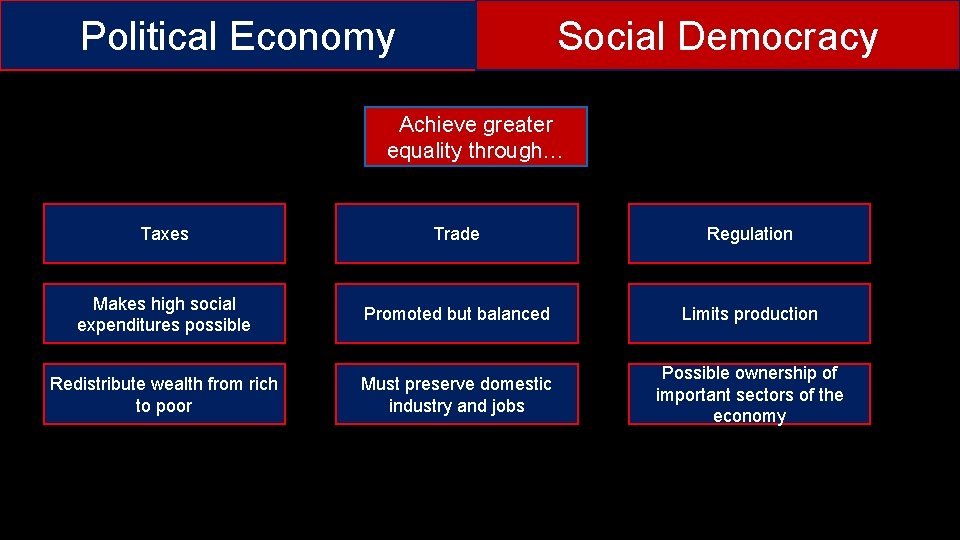
Political Economy Social Democracy Achieve greater equality through… Taxes Trade Regulation Makes high social expenditures possible Promoted but balanced Limits production Redistribute wealth from rich to poor Must preserve domestic industry and jobs Possible ownership of important sectors of the economy
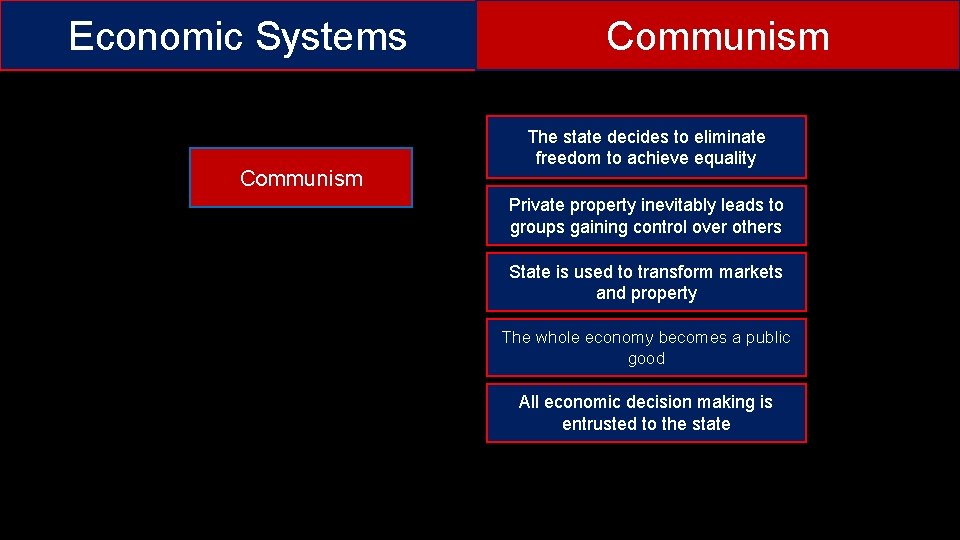
Economic Systems Communism The state decides to eliminate freedom to achieve equality Private property inevitably leads to groups gaining control over others State is used to transform markets and property The whole economy becomes a public good All economic decision making is entrusted to the state
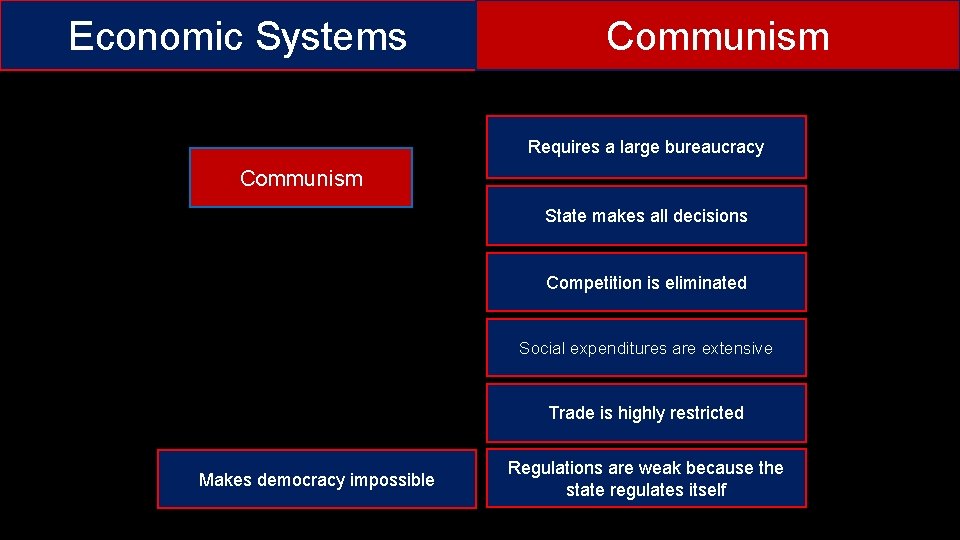
Economic Systems Communism Requires a large bureaucracy Communism State makes all decisions Competition is eliminated Social expenditures are extensive Trade is highly restricted Makes democracy impossible Regulations are weak because the state regulates itself
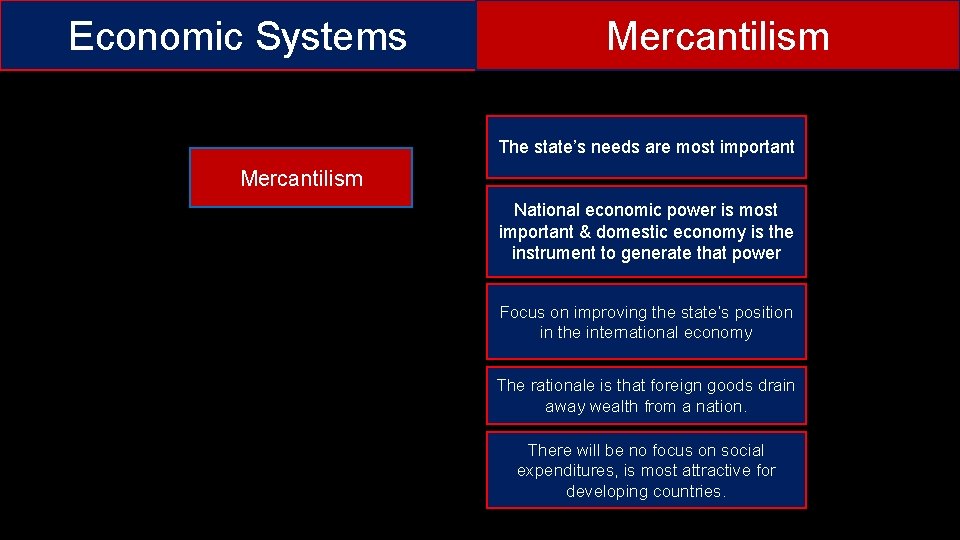
Economic Systems Mercantilism The state’s needs are most important Mercantilism National economic power is most important & domestic economy is the instrument to generate that power Focus on improving the state’s position in the international economy The rationale is that foreign goods drain away wealth from a nation. There will be no focus on social expenditures, is most attractive for developing countries.
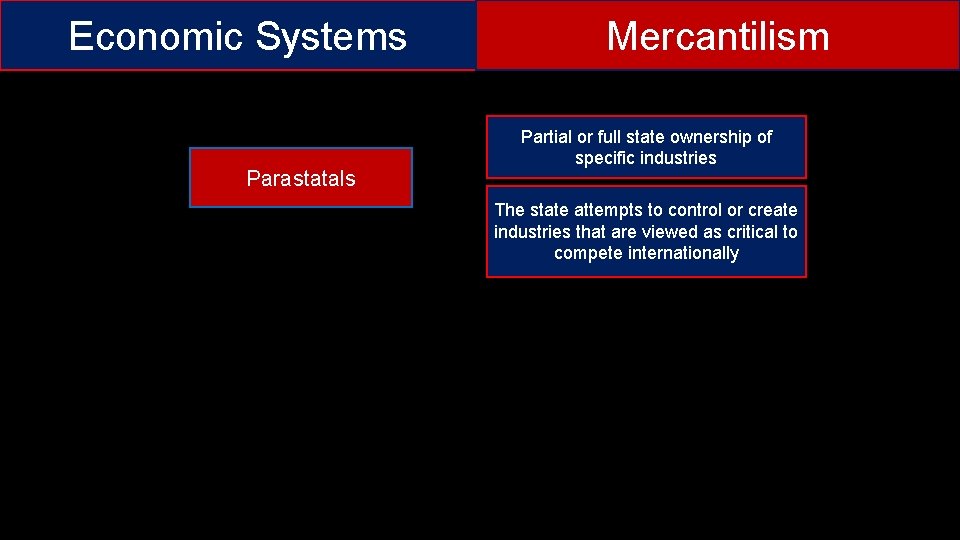
Economic Systems Parastatals Mercantilism Partial or full state ownership of specific industries The state attempts to control or create industries that are viewed as critical to compete internationally
Political Economic Systems & The State: Comparing Outcomes Introduction
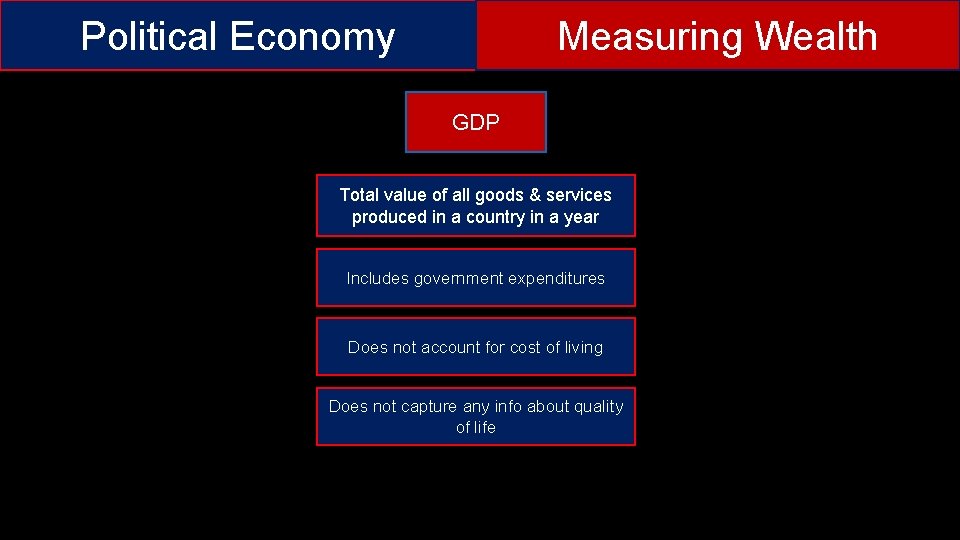
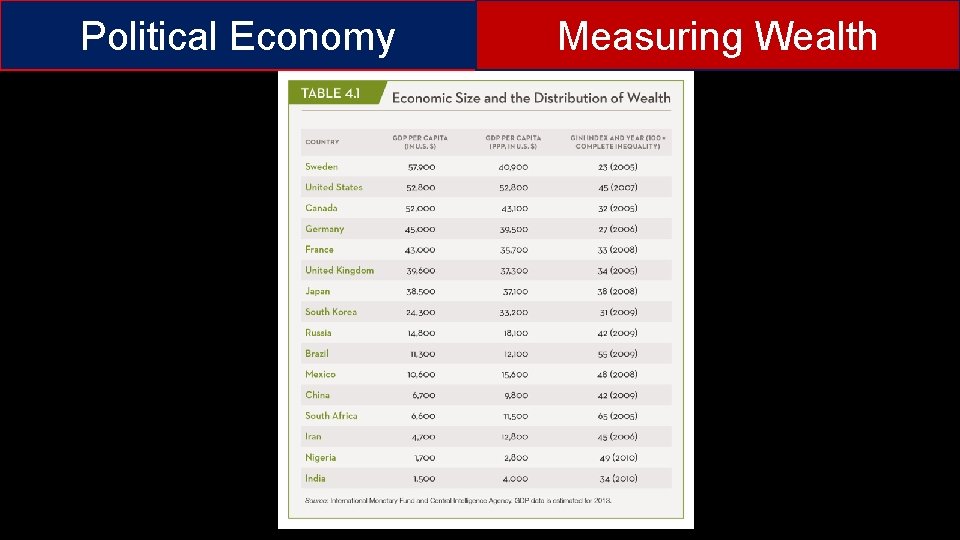
Political Economy Measuring Wealth GDP Total value of all goods & services produced in a country in a year Includes government expenditures Does not account for cost of living Does not capture any info about quality of life
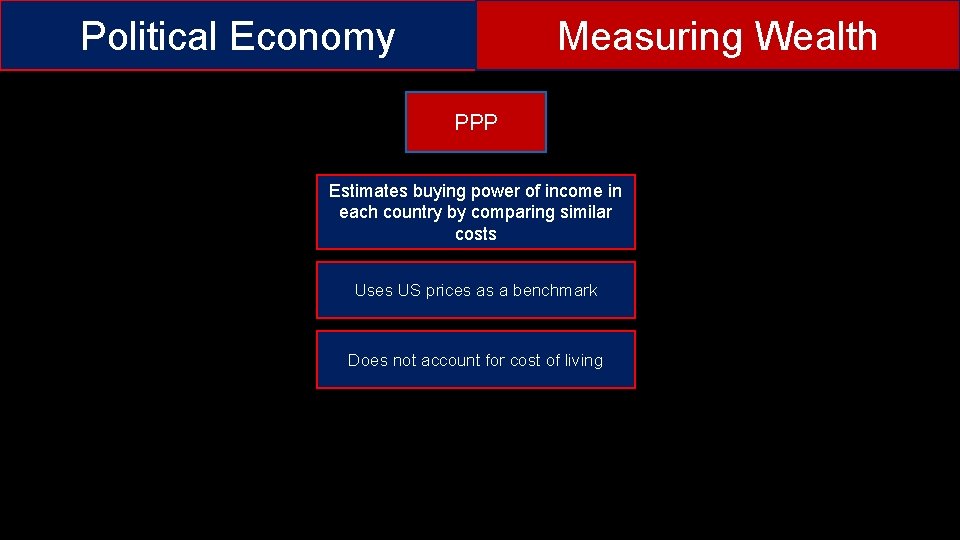
Political Economy Measuring Wealth PPP Estimates buying power of income in each country by comparing similar costs Uses US prices as a benchmark Does not account for cost of living
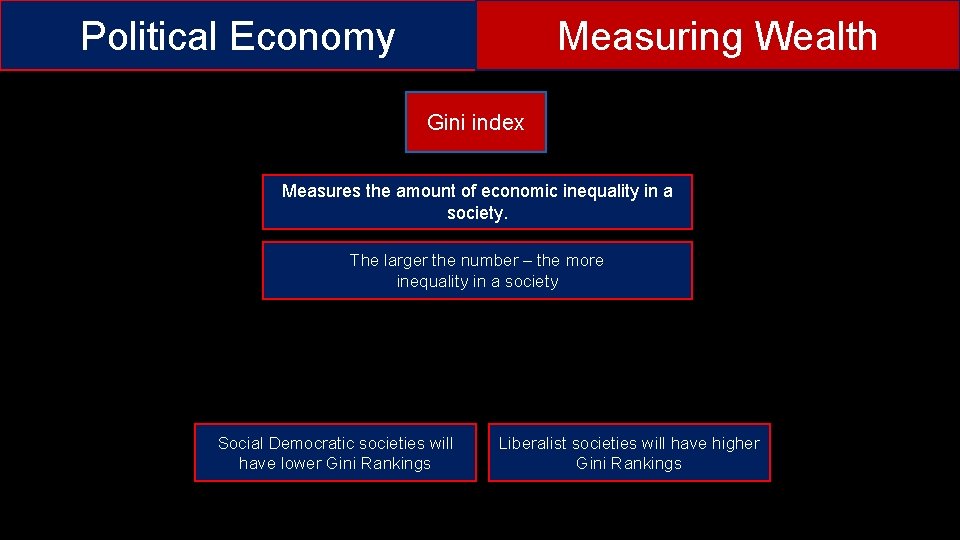
Political Economy Measuring Wealth Gini index Measures the amount of economic inequality in a society. The larger the number – the more inequality in a society Social Democratic societies will have lower Gini Rankings Liberalist societies will have higher Gini Rankings
Political Economy Measuring Wealth Essentials of Comparative Politics, 5 th Edition Copyright © 2015, W. W. Norton & Company
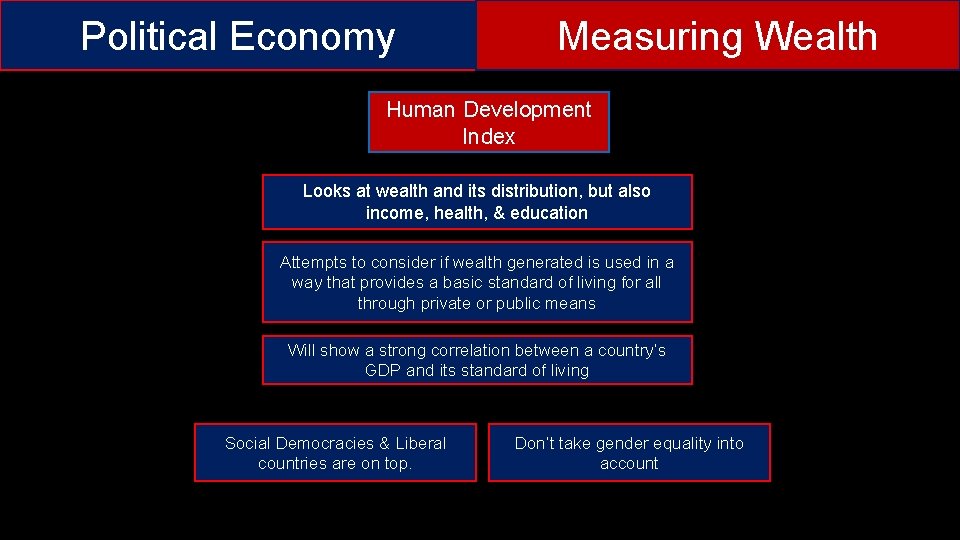
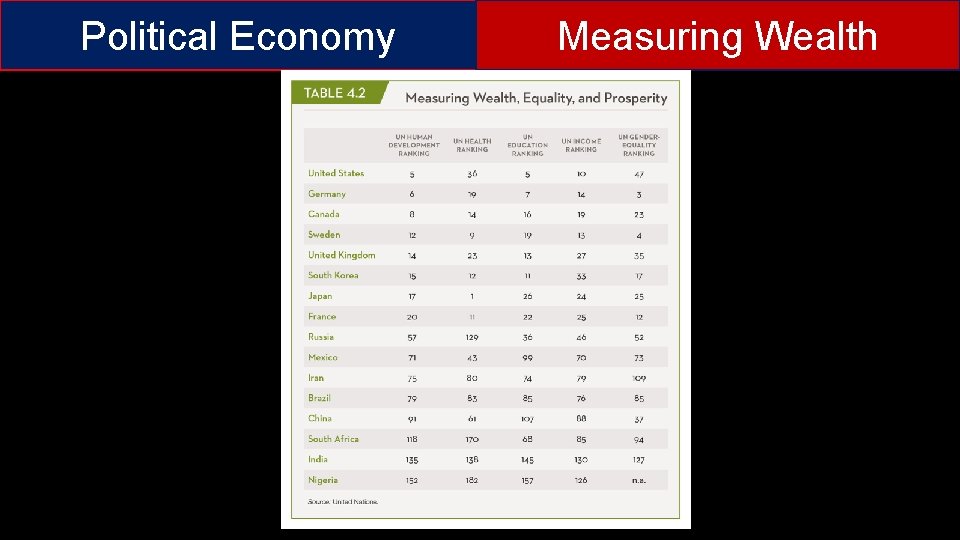
Political Economy Measuring Wealth Human Development Index Looks at wealth and its distribution, but also income, health, & education Attempts to consider if wealth generated is used in a way that provides a basic standard of living for all through private or public means Will show a strong correlation between a country’s GDP and its standard of living Social Democracies & Liberal countries are on top. Don’t take gender equality into account
Political Economy Measuring Wealth Essentials of Comparative Politics, 5 th Edition Copyright © 2015, W. W. Norton & Company
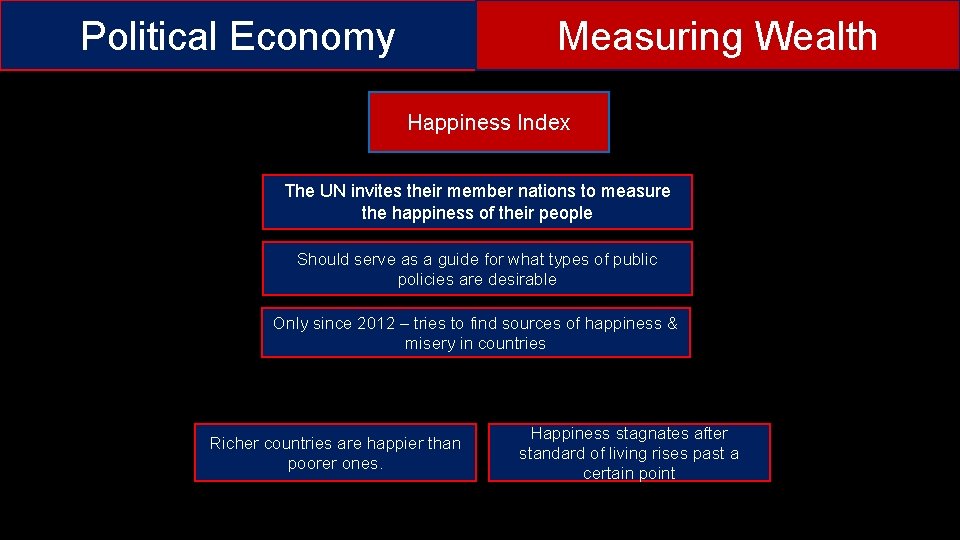
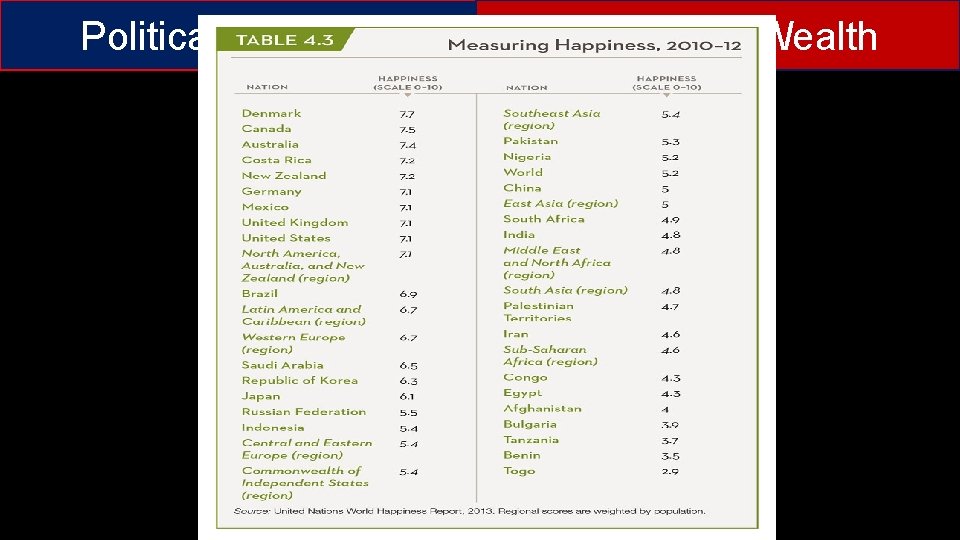
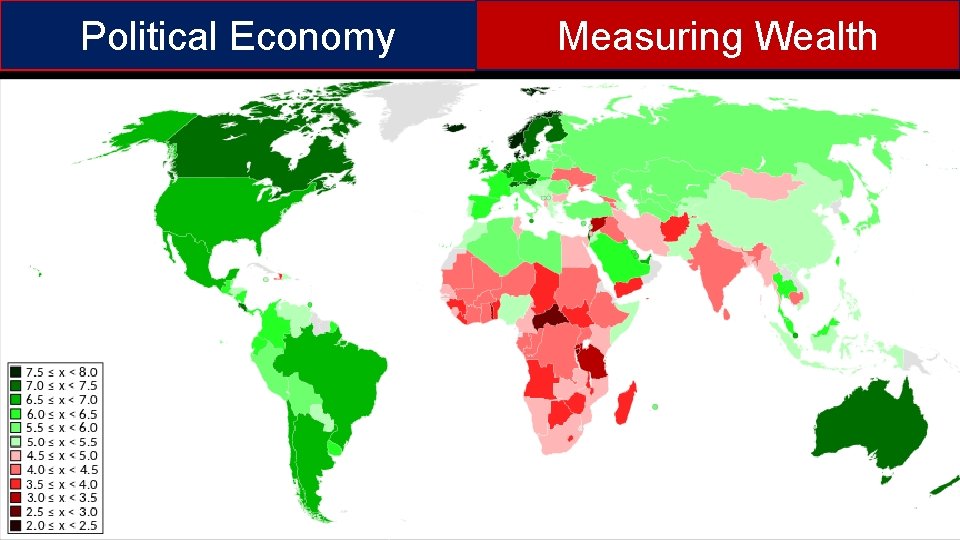
Political Economy Measuring Wealth Happiness Index The UN invites their member nations to measure the happiness of their people Should serve as a guide for what types of public policies are desirable Only since 2012 – tries to find sources of happiness & misery in countries Richer countries are happier than poorer ones. Happiness stagnates after standard of living rises past a certain point
Political Economy Measuring Wealth Essentials of Comparative Politics, 5 th Edition Copyright © 2015, W. W. Norton & Company
Political Economy Measuring Wealth Essentials of Comparative Politics, 5 th Edition Copyright © 2015, W. W. Norton & Company
Rise and Fall of Liberalism Introduction
Political Economy Our 4 political economies have struggled with each other for the last century Economic Liberalism Rise & Fall - Liberalism Now communism & mercantilism are essentially gone System featuring…… Cutting Taxes Reducing regulations Privatization of state owned business & public goods Expanding property rights
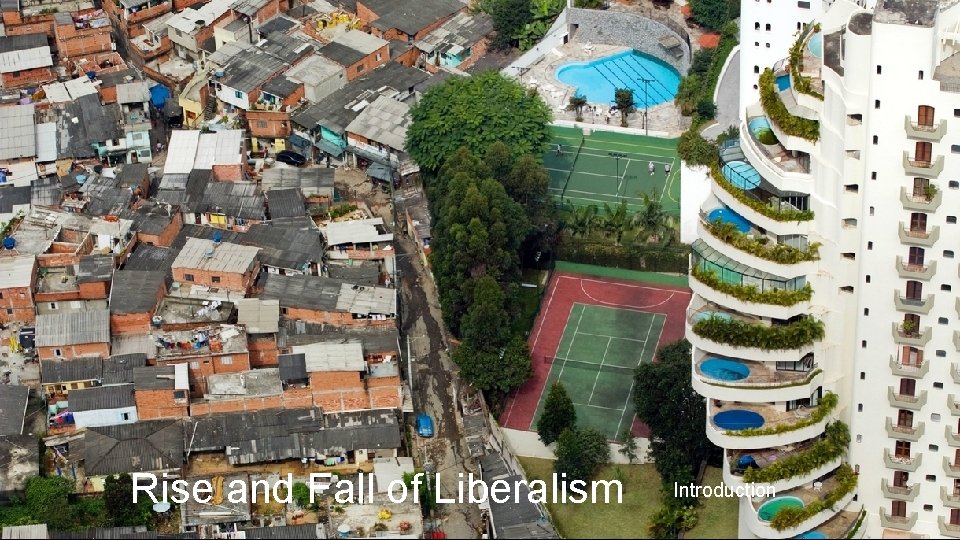
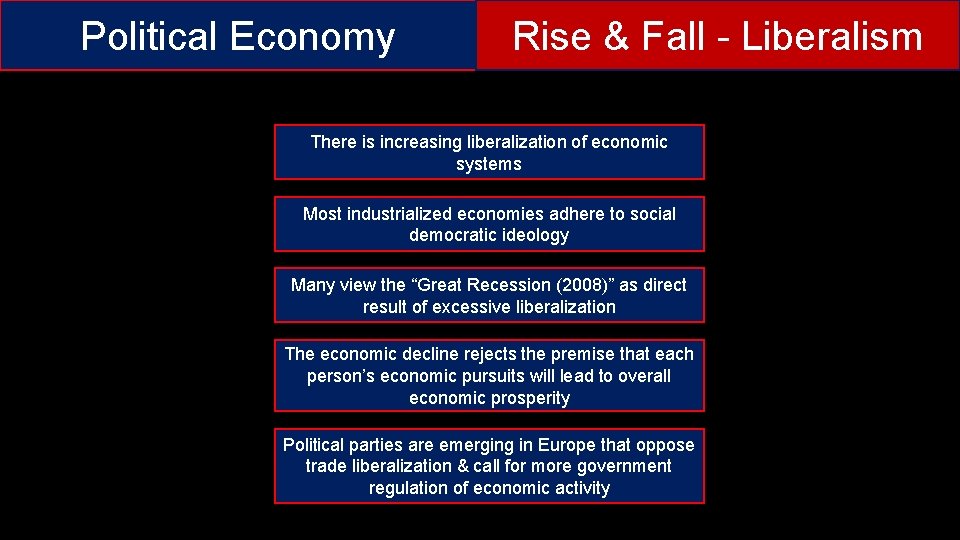
Political Economy Rise & Fall - Liberalism There is increasing liberalization of economic systems Most industrialized economies adhere to social democratic ideology Many view the “Great Recession (2008)” as direct result of excessive liberalization The economic decline rejects the premise that each person’s economic pursuits will lead to overall economic prosperity Political parties are emerging in Europe that oppose trade liberalization & call for more government regulation of economic activity
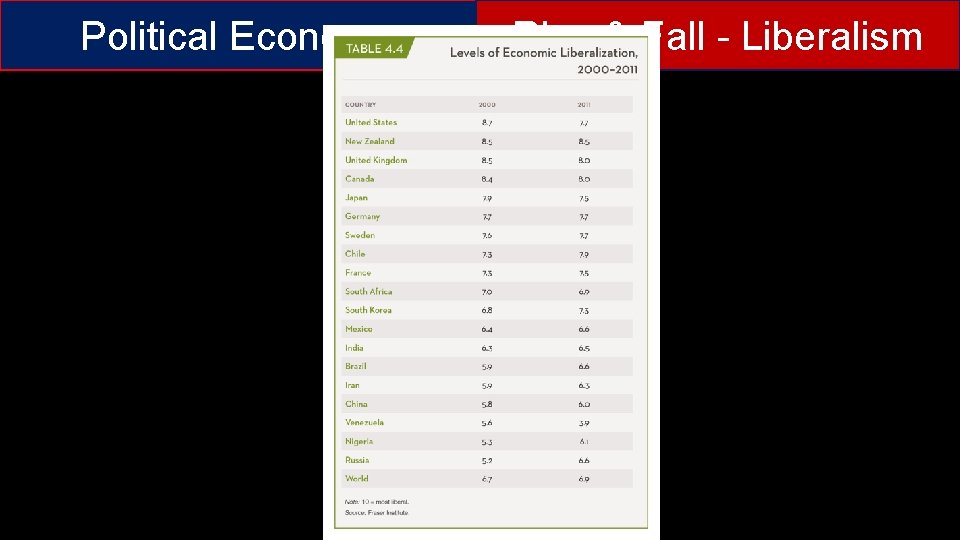
Political Economy Rise & Fall - Liberalism Essentials of Comparative Politics, 5 th Edition Copyright © 2015, W. W. Norton & Company
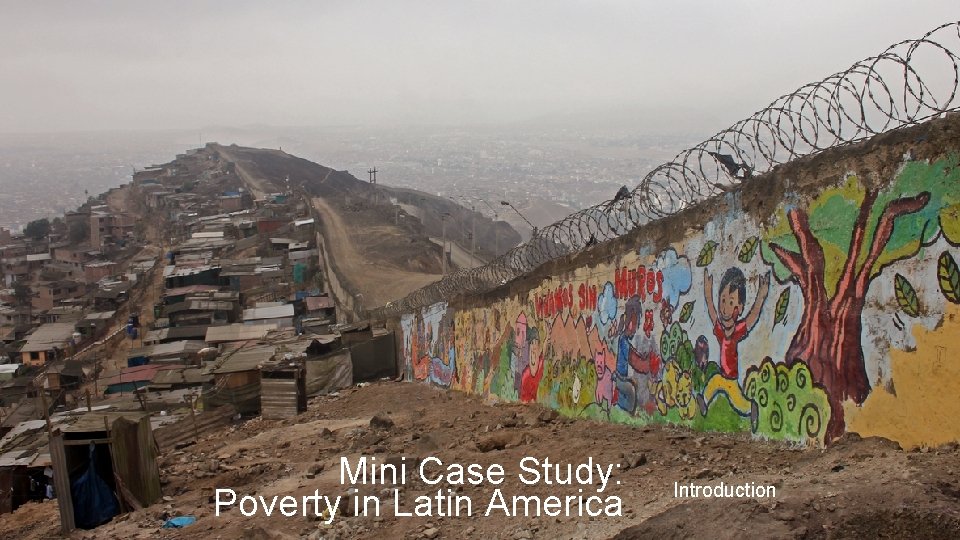
Mini Case Study: Poverty in Latin America Introduction
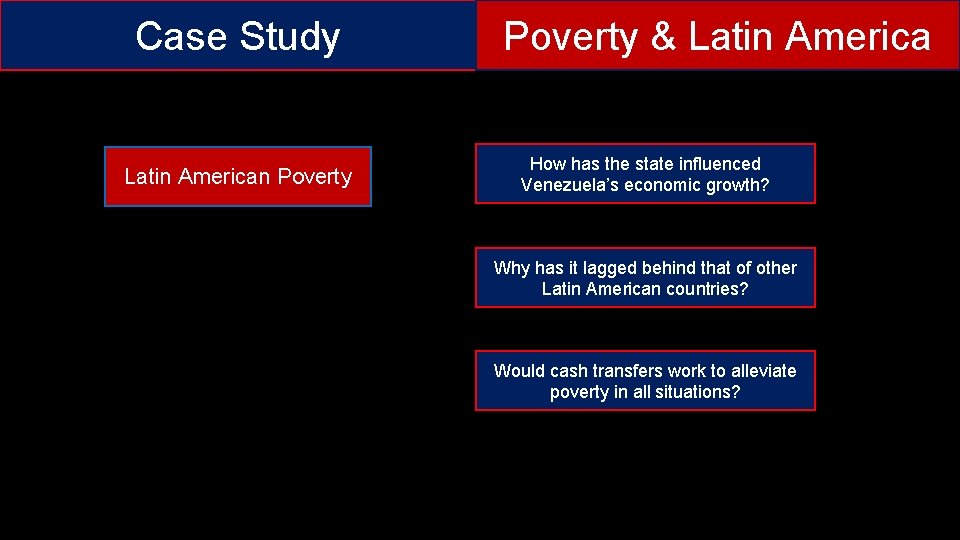
Case Study Latin American Poverty & Latin America How has the state influenced Venezuela’s economic growth? Why has it lagged behind that of other Latin American countries? Would cash transfers work to alleviate poverty in all situations?
Wrap Up States
Main Ideas Political Economy Markets & Property Role of the state – public goods & social expenditures Economic systems Measurements of Economic Performance Remember this… OR ELSE