
Political Behavior Chapter 6 The Right to Vote
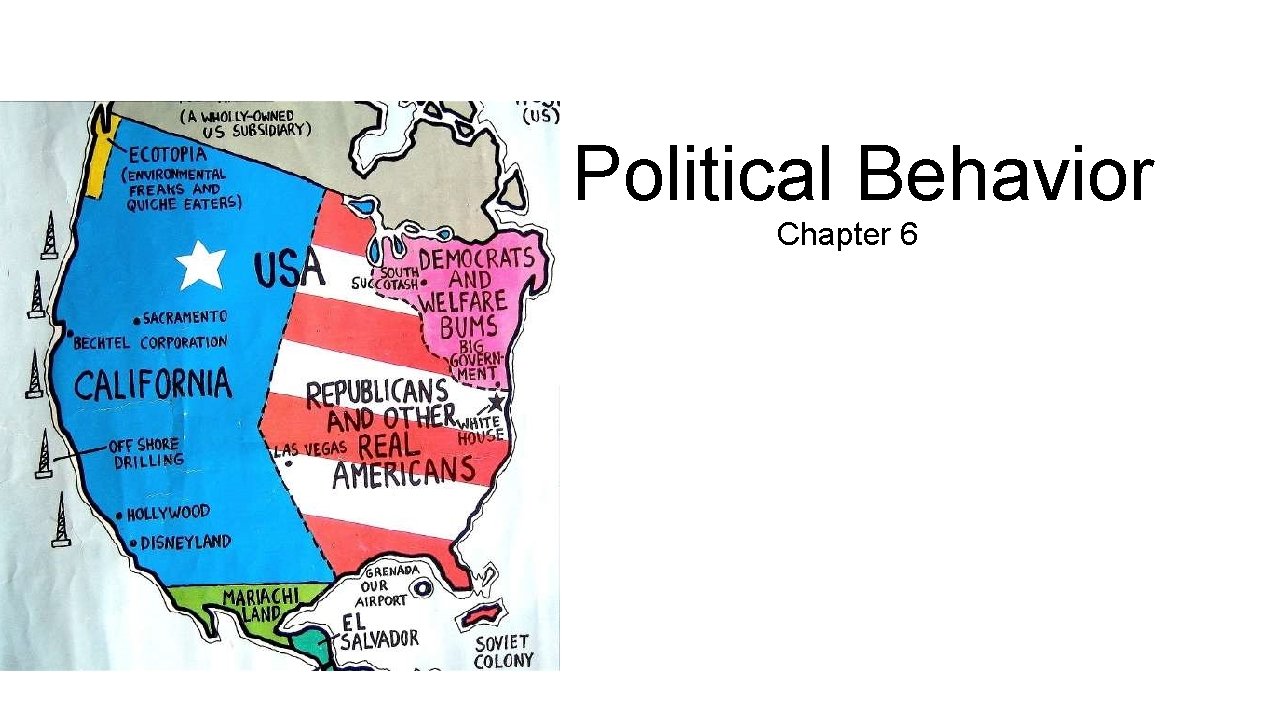
Political Behavior Chapter 6
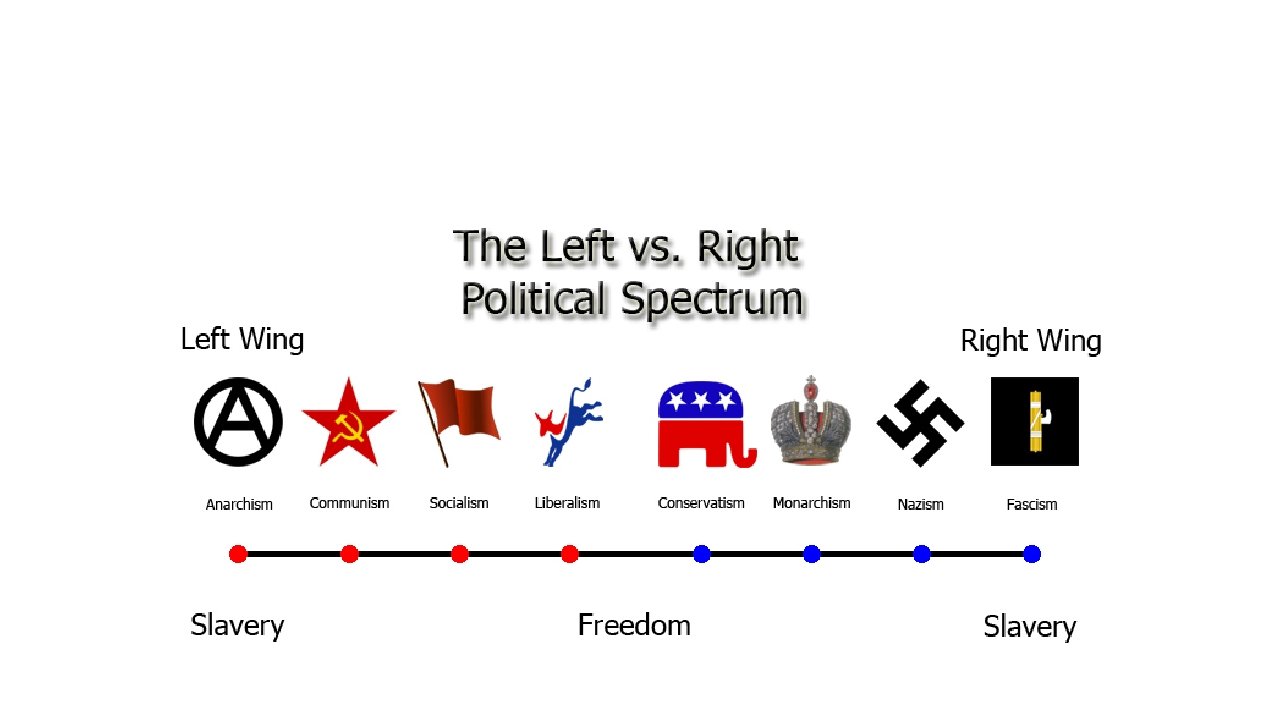
The Right to Vote
Voter Qualifications The Constitution set 5 limits on the power that States have to set voter qualifications: *must be also allowed to vote for members of Congress * servitude (slavery) cannot be a condition for voting rights * no gender discrimination *no age discrimination *no tax in order to vote
Quick Quiz Name the Amendment, Act or legislation that provided voting rights and abolished restrictions on the following: 1. Black males 2. Women 3. Poll Taxes, Grandfather Clauses, Literacy Tests 4. District of Columbia residents can vote for President 5. 18 year olds
Quick Quiz Name the Amendment, Act or legislation that provided voting rights and abolished restrictions on the following: 1. Black males: 15 th Amend. (1870) 2. Women: 19 th Amend. (1920) 3. Poll Taxes, Grandfather Clauses, Literacy Tests Civil Rights Act of 1965 4. District of Columbia residents can vote for President: 23 rd. Amend. (1961) 5. 18 year olds: 26 th Amend (1971)
Voter Qualifications
Citizenship. Residence - 30 days, Dunn v Blumstein, 1972, prohibiting transients Age- 18 thanks to 26 th Amendment
Registration Motor Voter Law 1995 - DMV, by mail, and at major civic sites Purging and poll books

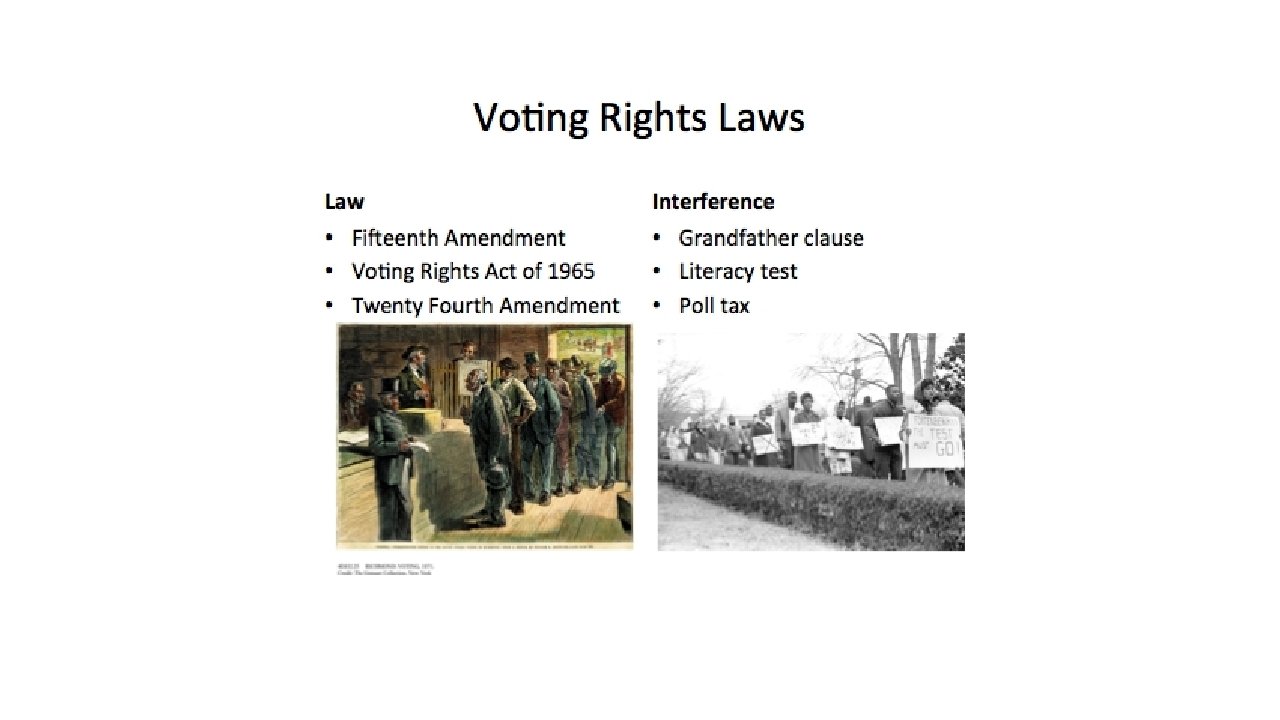
Literacy Tests finally led to 1970 Voting Rights Act Amendments. . . Supreme Court agreed in Oregon v Mitchell, 1970

Tax Payment- no poll tax 24 th Amendment In Harper v Va Board of Elections the Supreme Court agreed the Va tax was in conflict with the 14 th Amendment Equal Protection Clause.
Felons Dishonorably discharged Mentally incompetant
Suffrage and Civil Rights
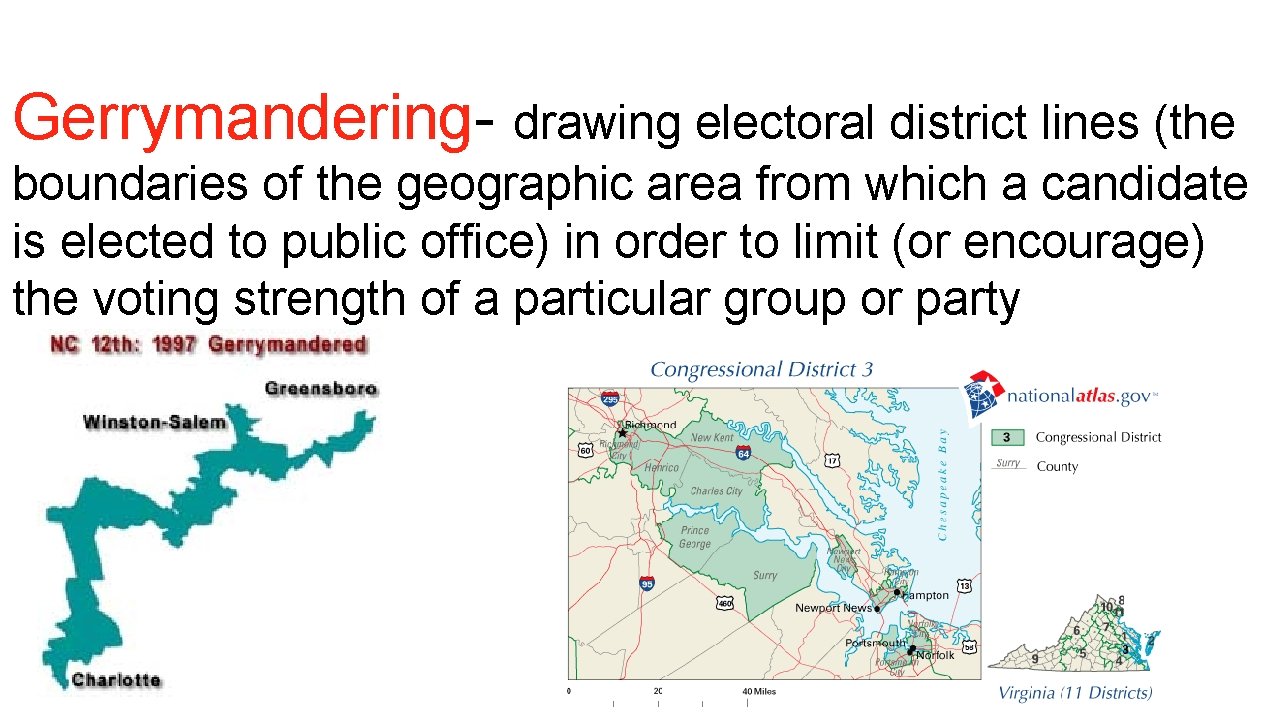
Gerrymandering- drawing electoral district lines (the boundaries of the geographic area from which a candidate is elected to public office) in order to limit (or encourage) the voting strength of a particular group or party
15 th Amendment- right to vote cannot be denied to any citizen of the US because of race, color, or previous conditions of servitude (1870)
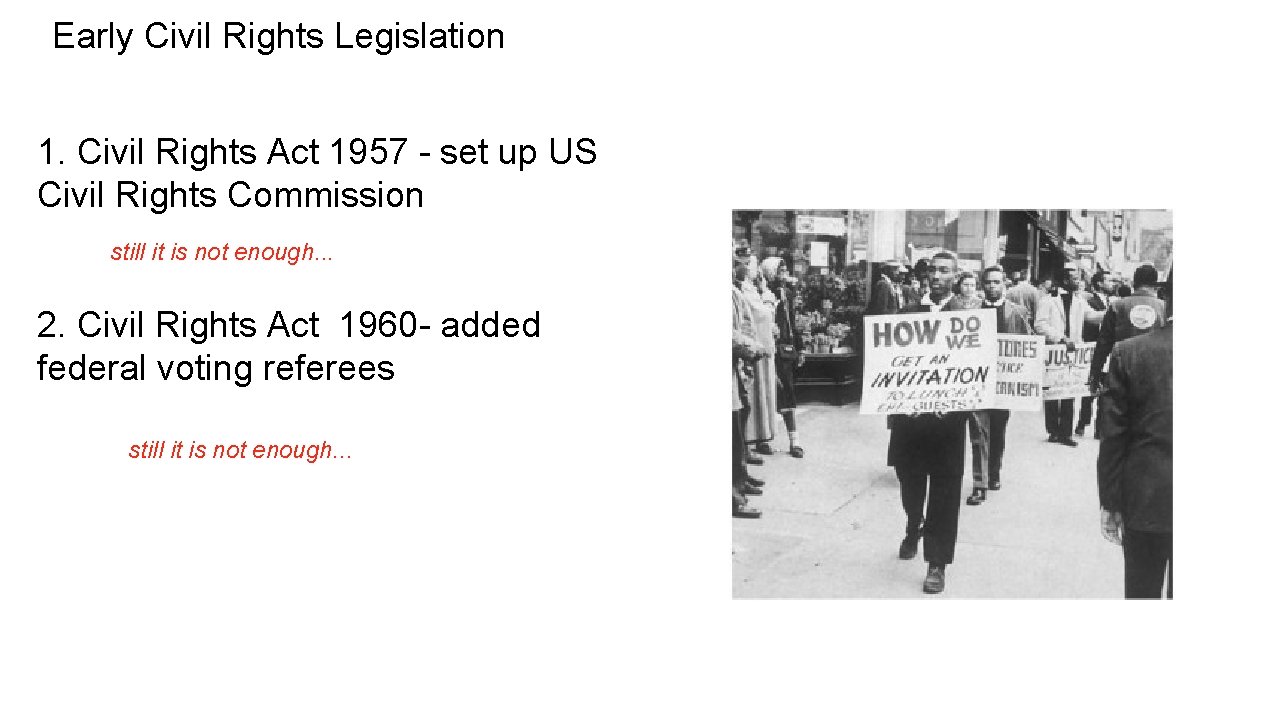
Early Civil Rights Legislation 1. Civil Rights Act 1957 - set up US Civil Rights Commission still it is not enough. . . 2. Civil Rights Act 1960 - added federal voting referees still it is not enough. . .
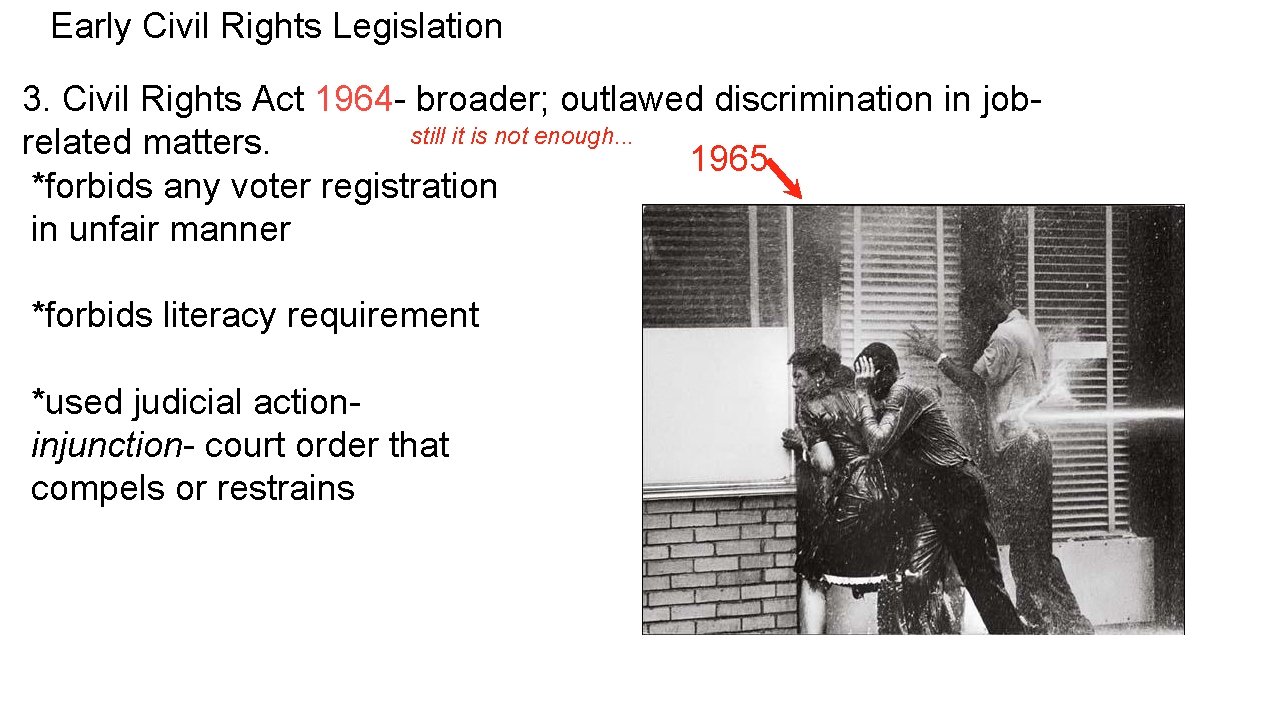
Early Civil Rights Legislation 3. Civil Rights Act 1964 - broader; outlawed discrimination in jobstill it is not enough. . . related matters. 1965 *forbids any voter registration in unfair manner *forbids literacy requirement *used judicial actioninjunction- court order that compels or restrains
Early Civil Rights Legislation still it is not enough. . . 3. Voting Rights Act 1965 - this finalized the 15 th Amendment *applied to all elections held anywhere whether it be state, local, or federal * this law meant Attny. General could challenge Constitutionality of Poll Tax. Harper v. Va. Board of Elections 1966 * originally for 5 years but expanded in 1970, 1975, 1982 (this one for 25 years. . ended in 2007 - was it extended? ) *fed govt could register voters *fed govt oversee elections * attny gen can appt examiners
Early Civil Rights Legislation still it is not enough. . . 3. Voting Rights Act 1965 - this finalized the 15 th Amendment there is more. . . *preclearance - any state where majority of population could not vote in 1964 could not change voting laws without federal preclearance this brought review of issues such as - location of polling places -boundaries of election districts (gerrymandering, redistricting) - deadlines in election process -from ward or district election to at-large elections - qualifications of candidates to run for office
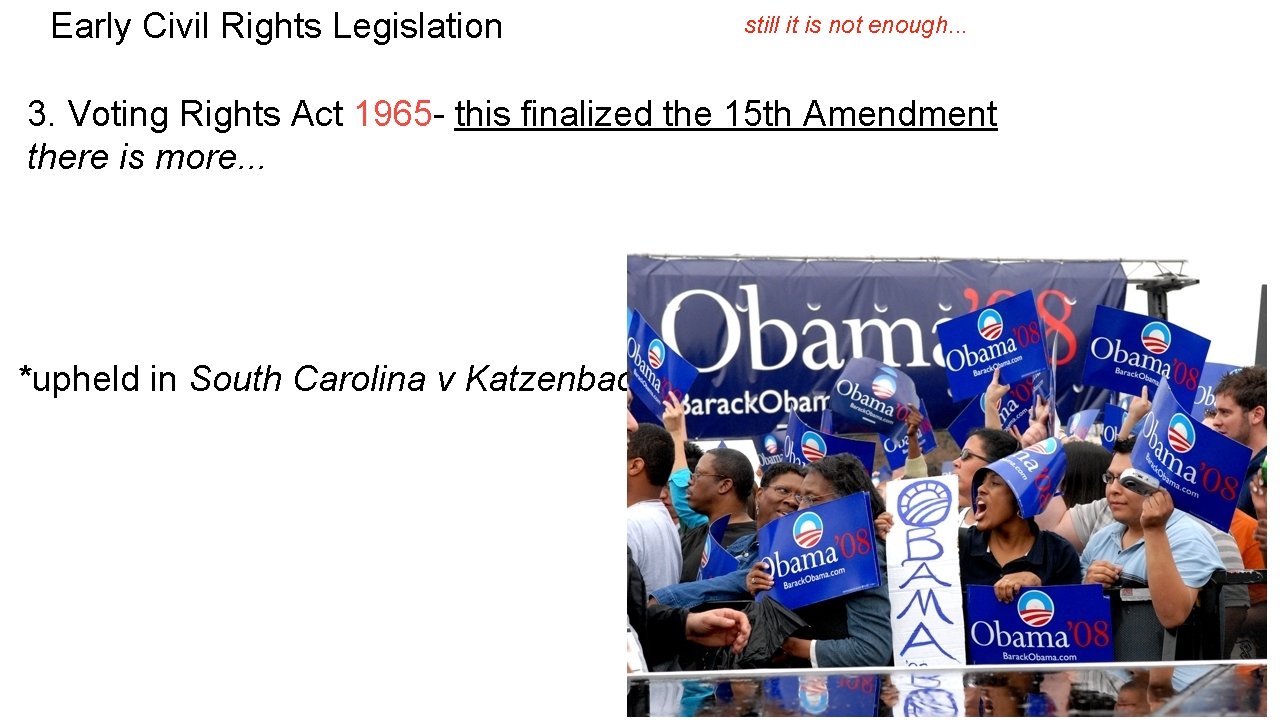
Early Civil Rights Legislation still it is not enough. . . 3. Voting Rights Act 1965 - this finalized the 15 th Amendment there is more. . . *upheld in South Carolina v Katzenbach
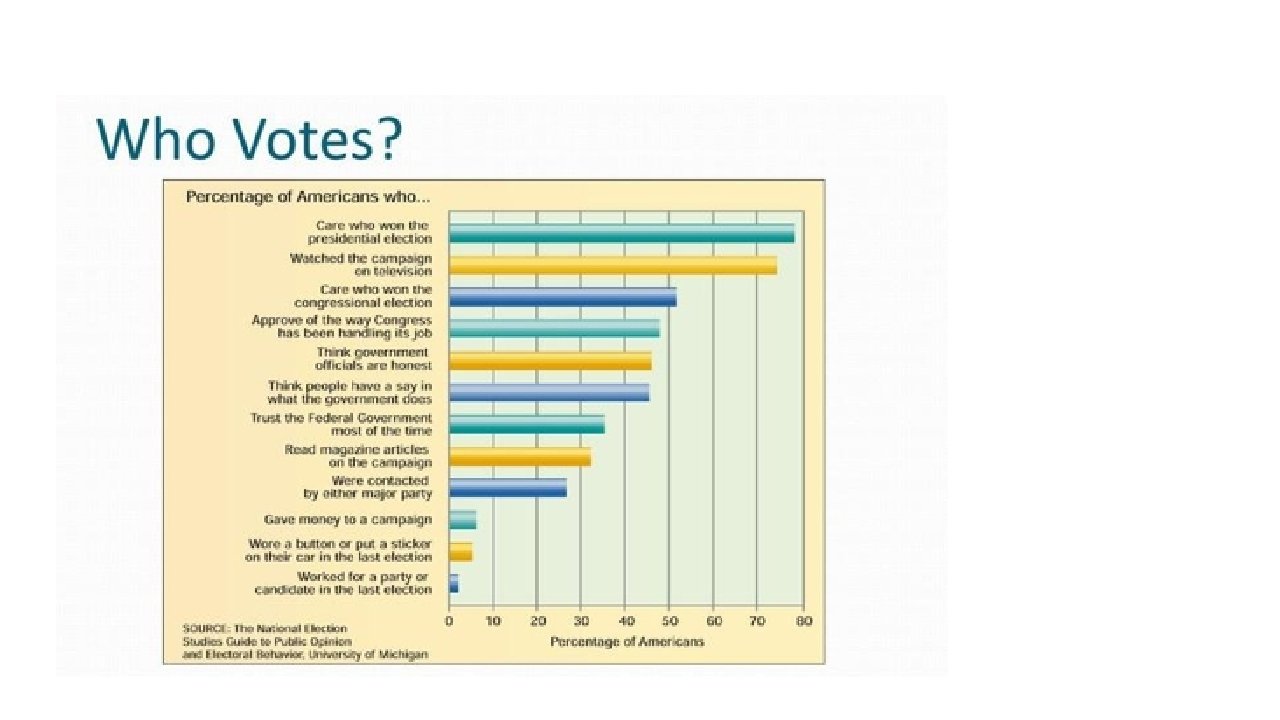
Voter Behavior http: //electionstudies. org/nesguide/gd-index. htm#1
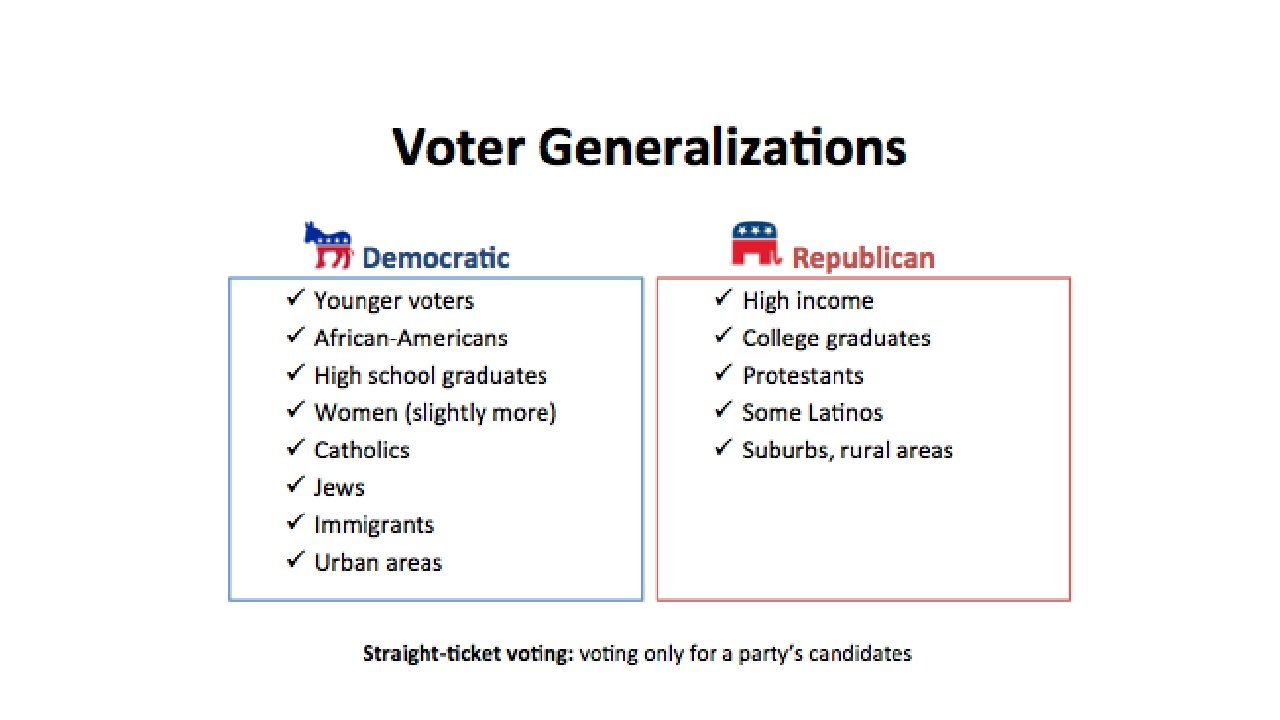
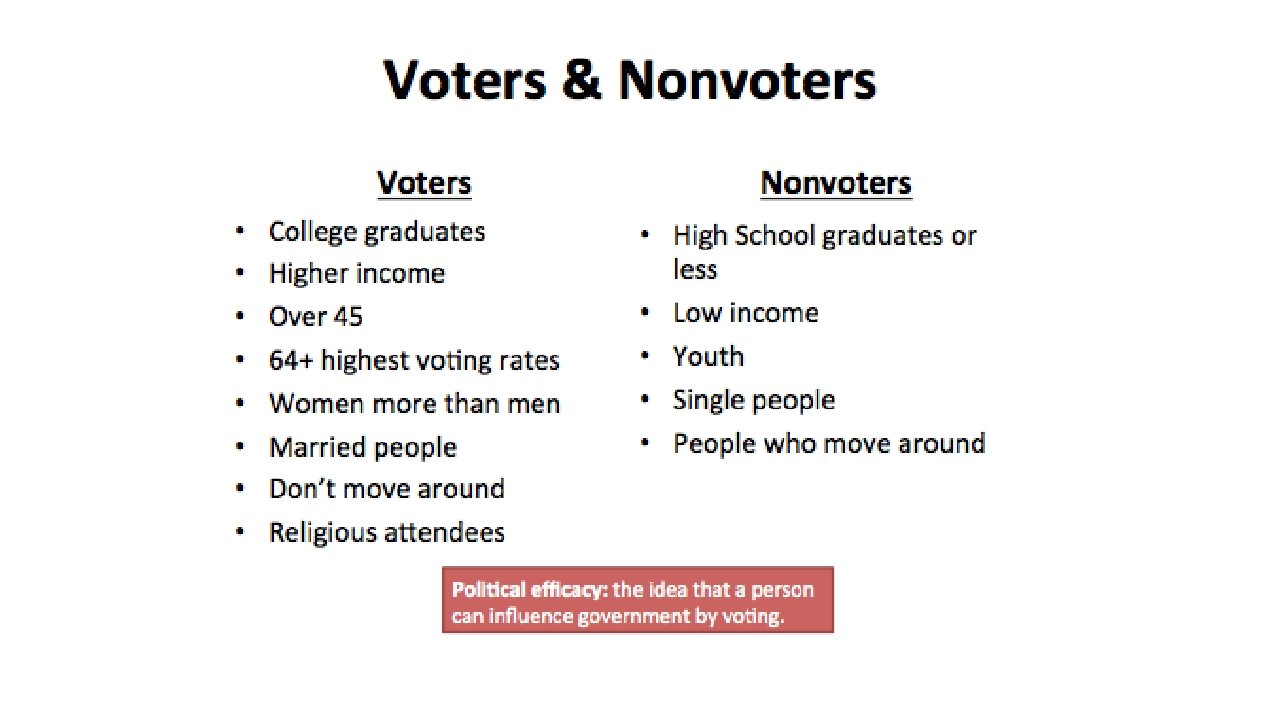
Who Votes? * Higher income, education, and professional status *lower $ - tend to be Democrat *higher $ - tend to be Republican *Life long residents *strong sense of party identification *more women vote than men
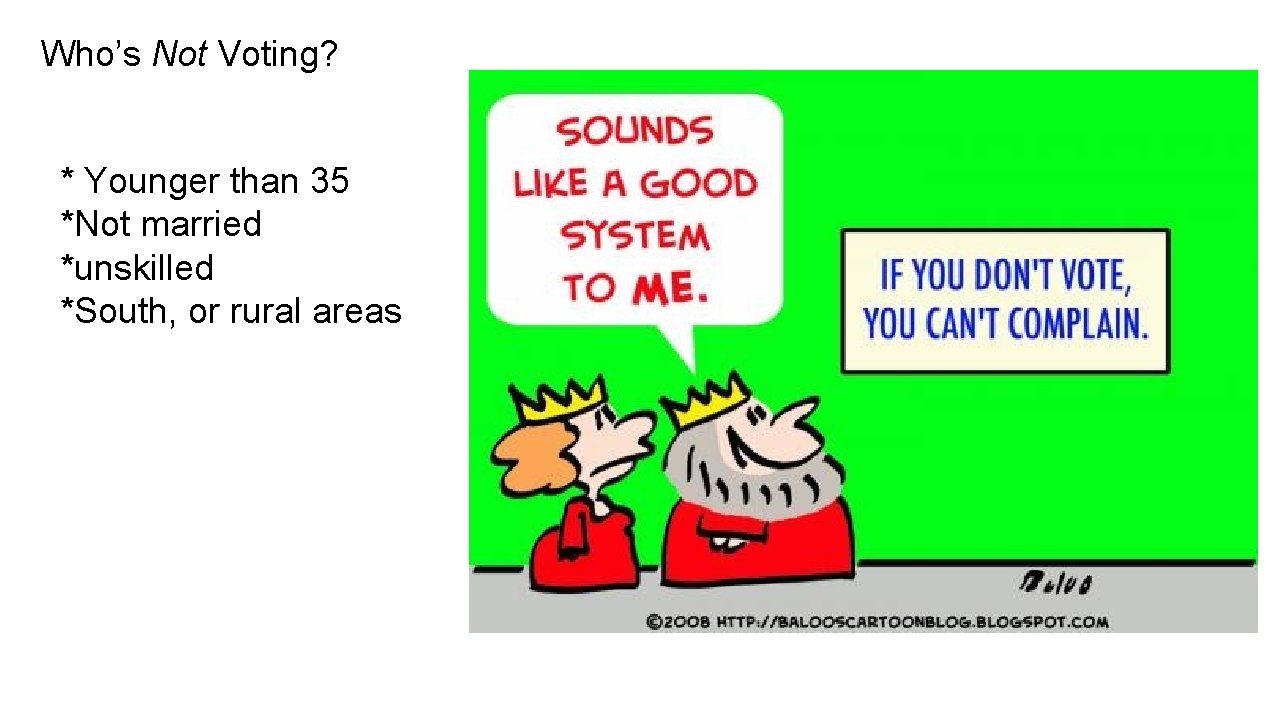
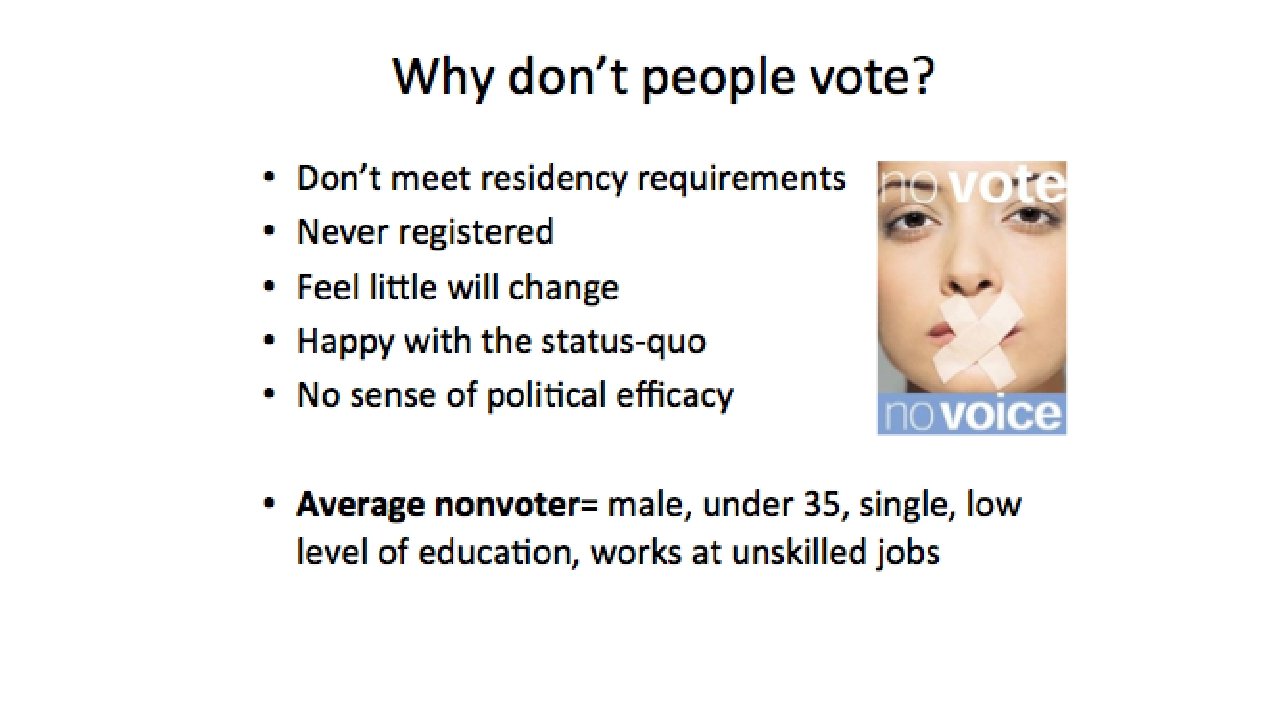
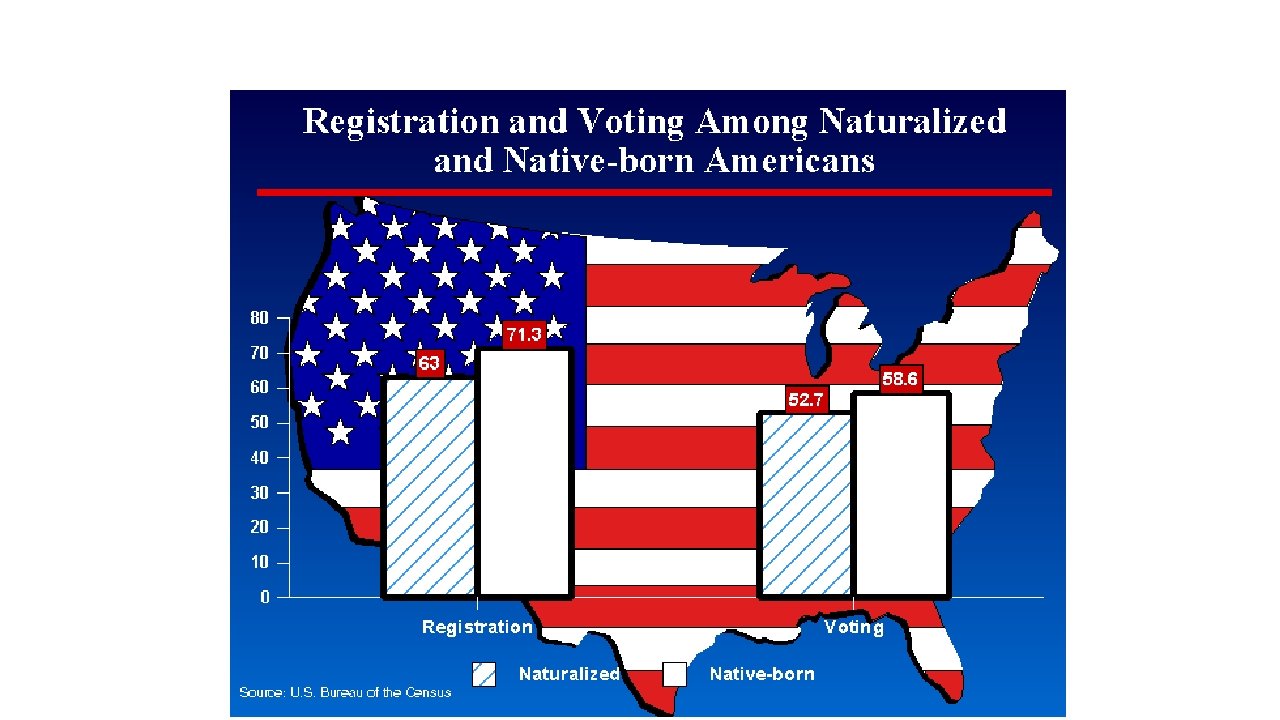
Who’s Not Voting? * Younger than 35 *Not married *unskilled *South, or rural areas
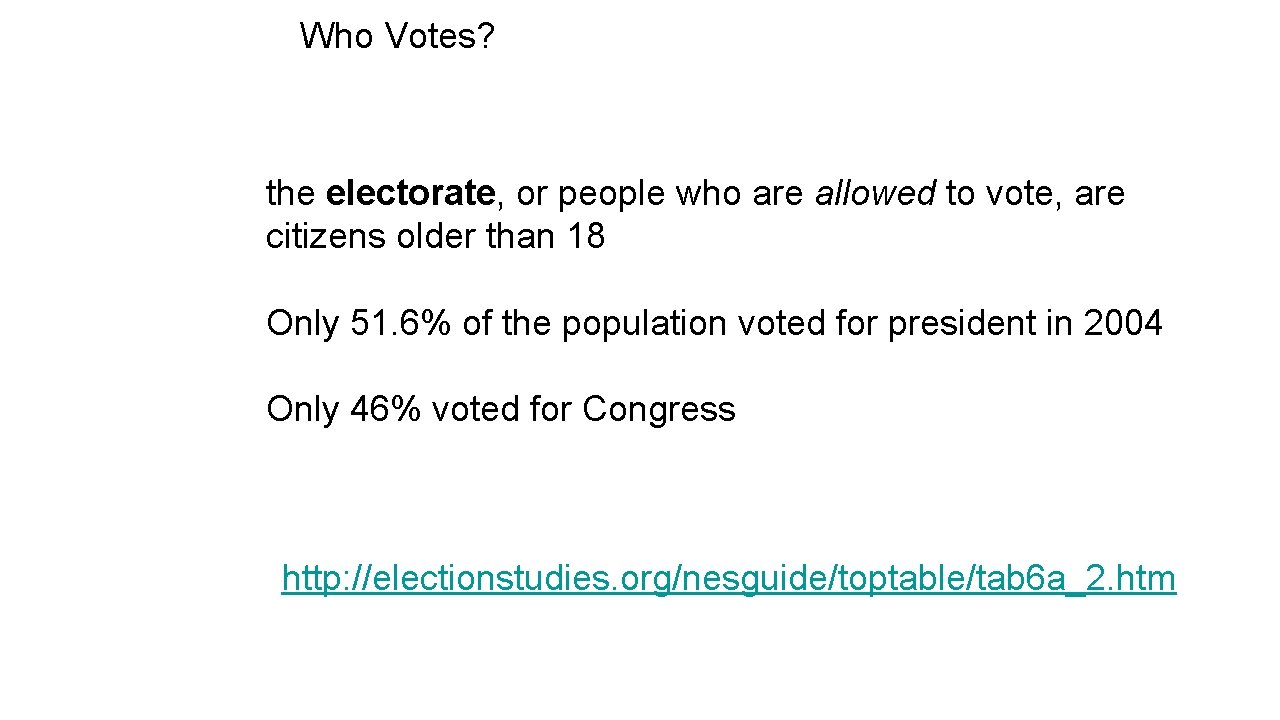
Who Votes? the electorate, or people who are allowed to vote, are citizens older than 18 Only 51. 6% of the population voted for president in 2004 Only 46% voted for Congress http: //electionstudies. org/nesguide/toptable/tab 6 a_2. htm
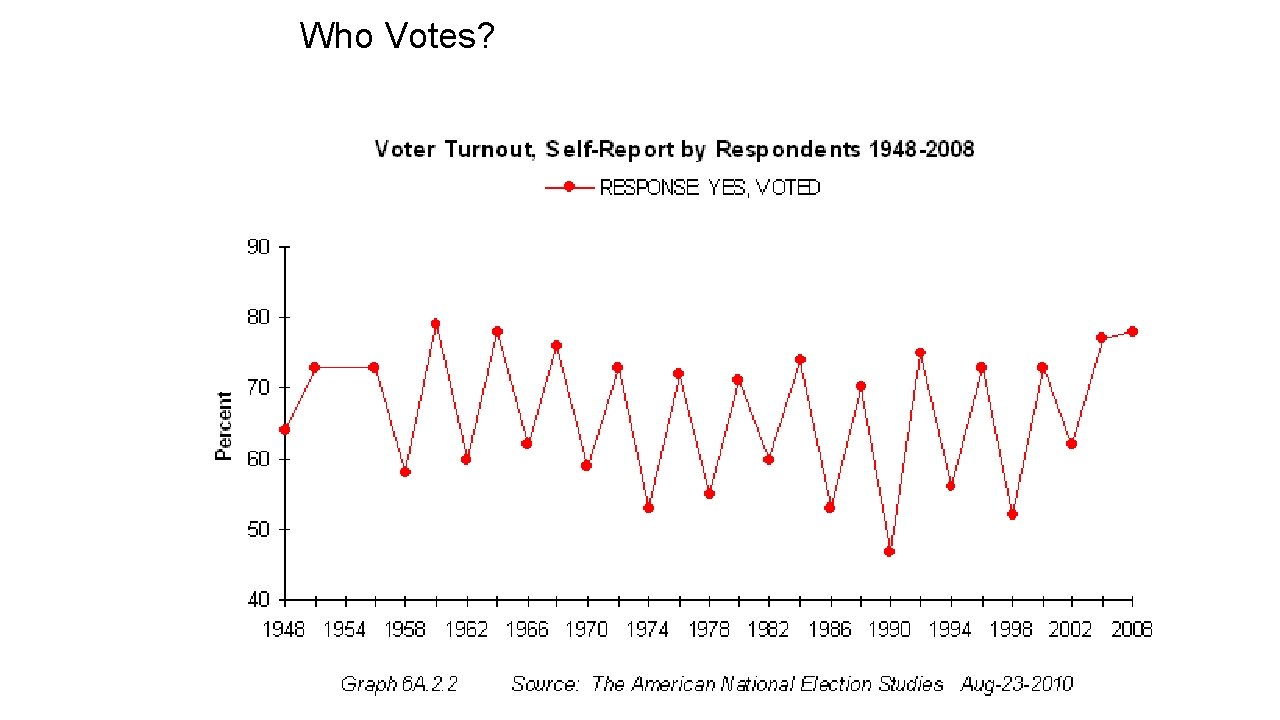
Who Votes?
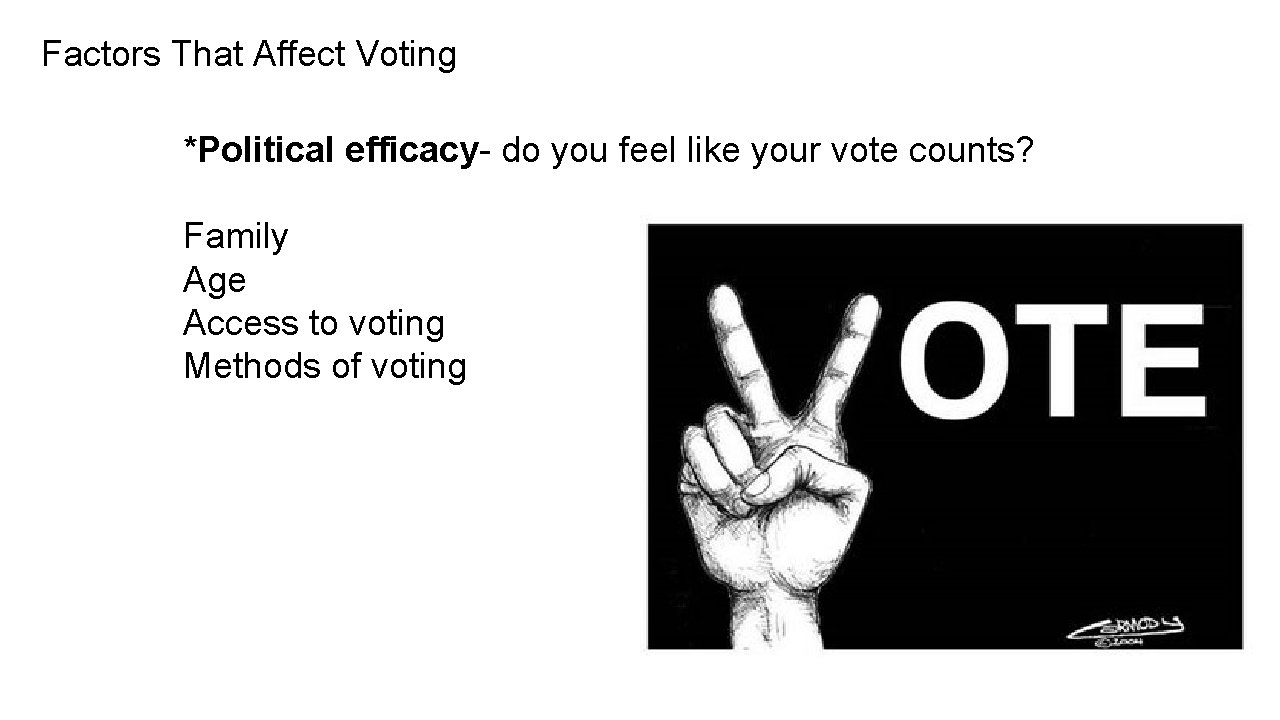
Factors That Affect Voting *Political efficacy- do you feel like your vote counts? Family Age Access to voting Methods of voting
- Slides: 34