
PolicyMaking Process Wilson 17 A Who Governs To
- Slides: 7
Policy-Making Process Wilson 17 A
Who Governs? To What Ends? • Does some political elite dominate American politics? • Do powerful interest groups decide what policies our government should adopt? • Why are Social Security payments popular but welfare payments to unwed mothers unpopular? • Why were government regulations on certain industries repealed over the objection of those industries? Objective Questions
• Policies not made the same way • Many issues • Political agenda – issues that people believe require government action • Four types • • Majoritarian: distributed benefits, distributed costs Interest Groups: concentrated benefits, concentrated costs Client Politics: concentrated benefits, distributed costs Entrepreneurial: distributed benefits, concentrated costs Theory of policy-making
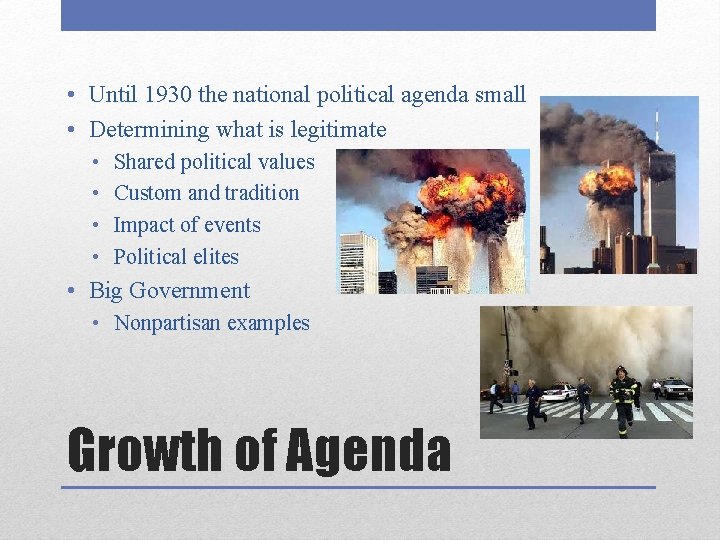
• Until 1930 the national political agenda small • Determining what is legitimate • • Shared political values Custom and tradition Impact of events Political elites • Big Government • Nonpartisan examples Growth of Agenda
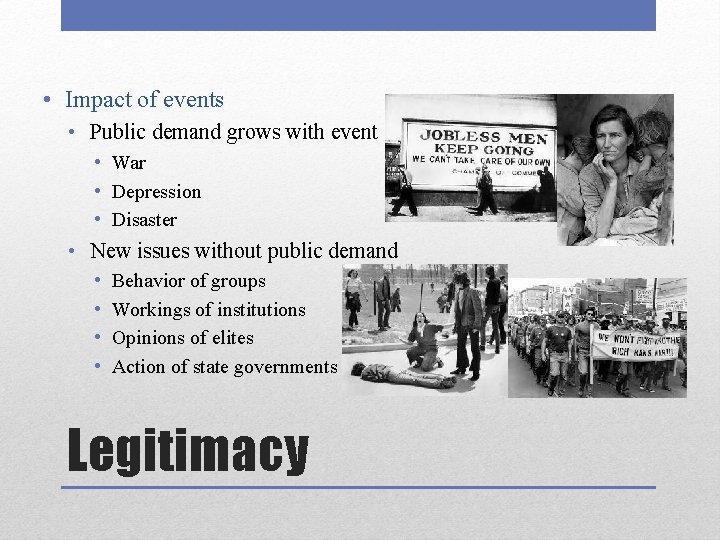
• Impact of events • Public demand grows with event • War • Depression • Disaster • New issues without public demand • • Behavior of groups Workings of institutions Opinions of elites Action of state governments Legitimacy
• Relative deprivation – when people start to become better off and realize that they are worse off than they ought to be • Institutions – use courts, bureaucracy, and the Senate to influence political agenda • Professionalism of reform – government went from reacting to becoming the source • Media – must decide what proposals get reported, not easy to decide cause and effect Setting Agenda
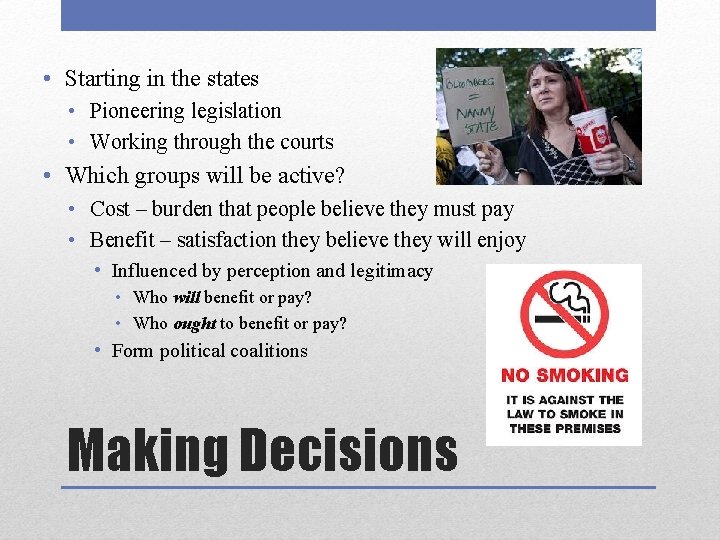
• Starting in the states • Pioneering legislation • Working through the courts • Which groups will be active? • Cost – burden that people believe they must pay • Benefit – satisfaction they believe they will enjoy • Influenced by perception and legitimacy • Who will benefit or pay? • Who ought to benefit or pay? • Form political coalitions Making Decisions