
POLICY NEGOTIATIONS MODULE 8 Negotiating for Health 8
- Slides: 21
POLICY NEGOTIATIONS MODULE 8 Negotiating for Health 8
8 LEARNING OBJECTIVES 1 List the major stages of the negotiation process 2 Describe the several approaches to policy negotiation 3 Explain the characteristics of cooperative or value-added negotiating
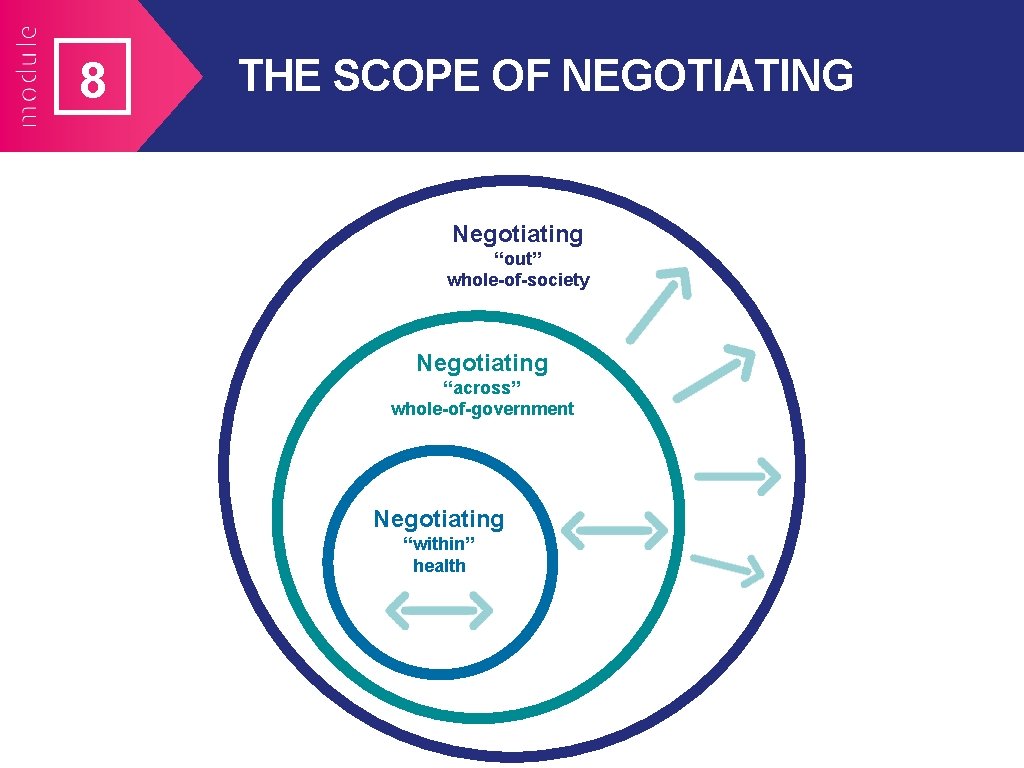
8 THE SCOPE OF NEGOTIATING Negotiating “out” whole-of-society Negotiating “across” whole-of-government Negotiating “within” health
8 POLICY NEGOTIATION DEFINITION Negotiation is a process by which two or more parties seek an agreement to establish what each shall give or take, or perform and receive in transaction between them. - Saner 2011 It is a process of making a joint decision when parties involved have different preferences, interests and drivers. Many approaches to negotiation.
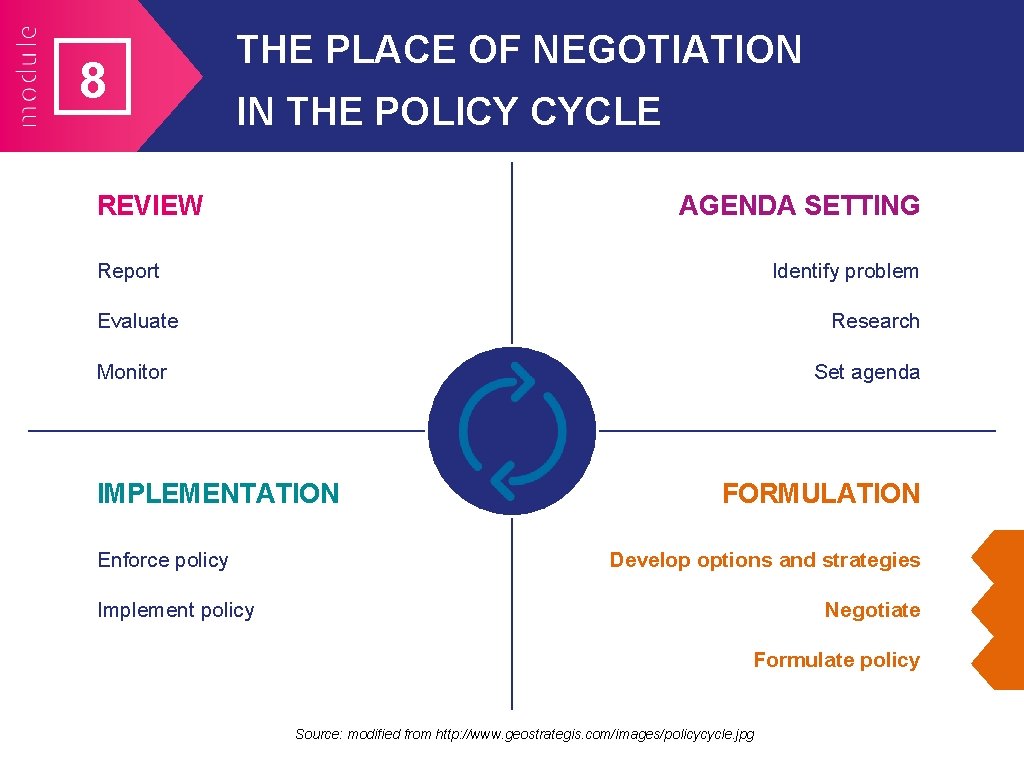
8 THE PLACE OF NEGOTIATION IN THE POLICY CYCLE AGENDA SETTING REVIEW Identify problem Report Research Evaluate Set agenda Monitor IMPLEMENTATION Enforce policy FORMULATION Develop options and strategies Implement policy Negotiate Formulate policy Source: modified from http: //www. geostrategis. com/images/policycycle. jpg
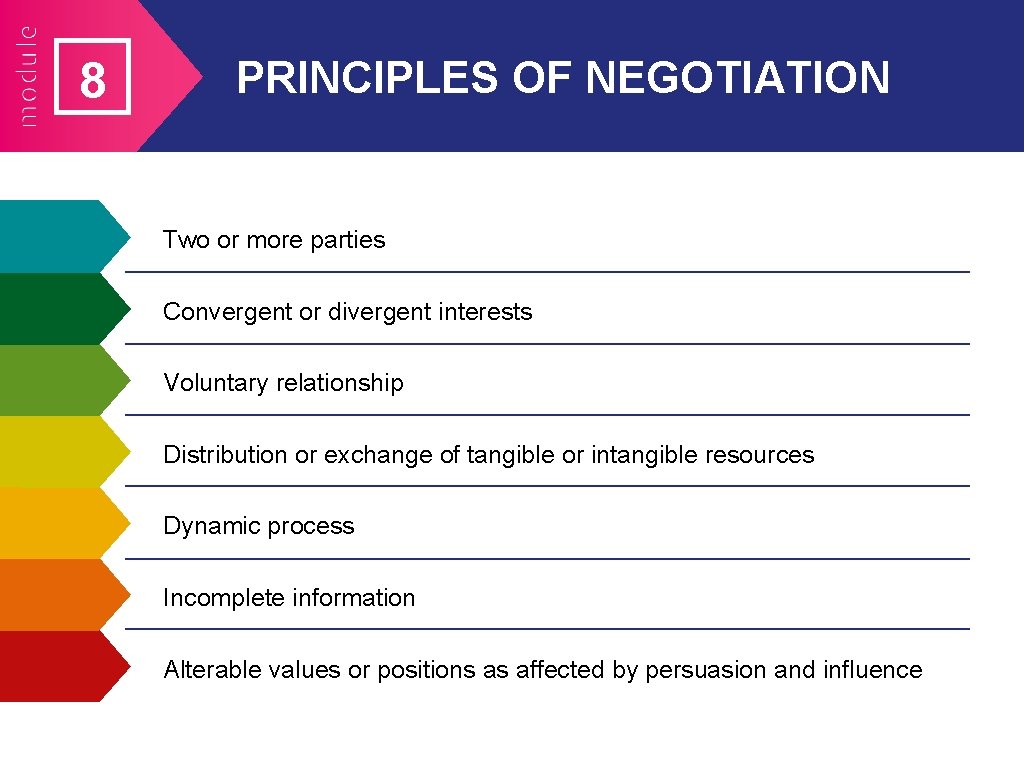
8 PRINCIPLES OF NEGOTIATION Two or more parties Convergent or divergent interests Voluntary relationship Distribution or exchange of tangible or intangible resources Dynamic process Incomplete information Alterable values or positions as affected by persuasion and influence
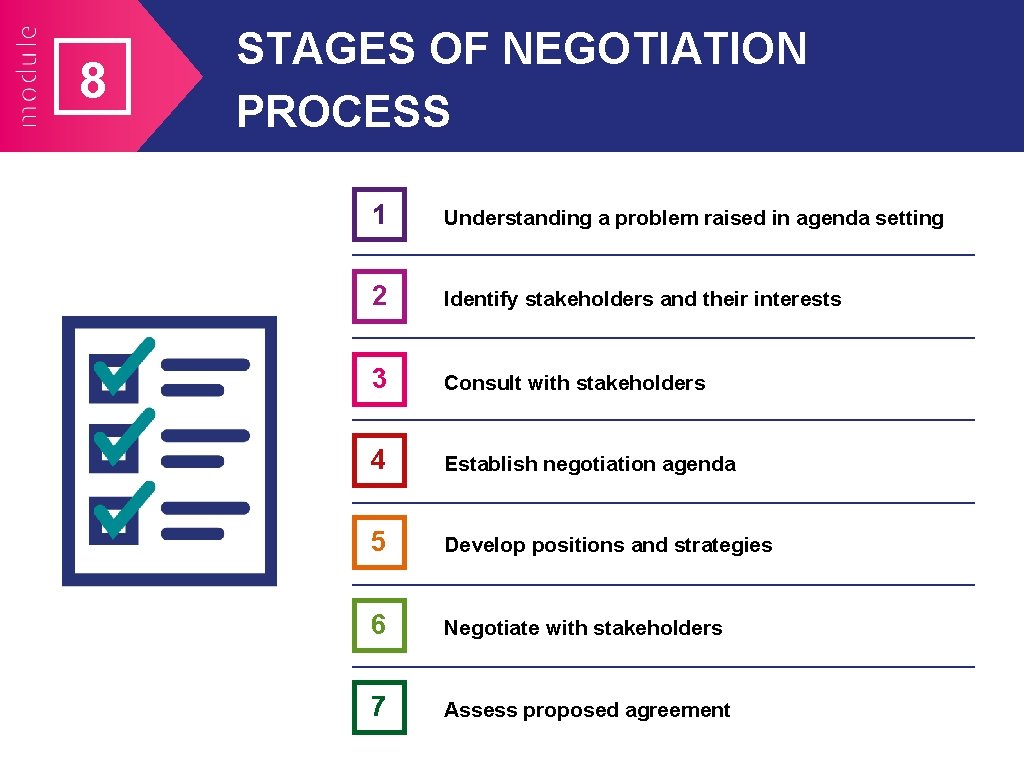
8 STAGES OF NEGOTIATION PROCESS 1 Understanding a problem raised in agenda setting 2 Identify stakeholders and their interests 3 Consult with stakeholders 4 Establish negotiation agenda 5 Develop positions and strategies 6 Negotiate with stakeholders 7 Assess proposed agreement
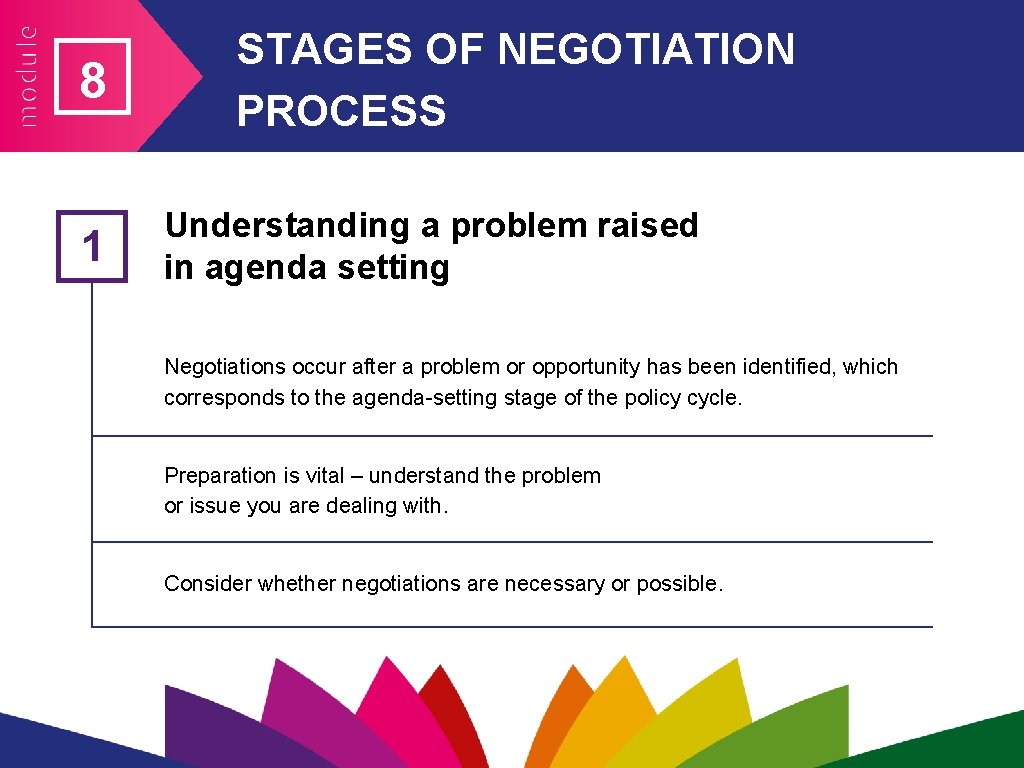
8 1 STAGES OF NEGOTIATION PROCESS Understanding a problem raised in agenda setting Negotiations occur after a problem or opportunity has been identified, which corresponds to the agenda-setting stage of the policy cycle. Preparation is vital – understand the problem or issue you are dealing with. Consider whether negotiations are necessary or possible.
8 2 STAGES OF NEGOTIATION PROCESS Identify stakeholders and their interests Once the problem is well understood, one has to identify who may benefit and who may lose in the negotiation. Determine if there any powerful interest groups that may either support or oppose the negotiations. Undertake a stakeholder analysis.
8 3 STAGES OF NEGOTIATION PROCESS Consult with stakeholders Plan and organize an effective consultation process to further understand the needs of stakeholders. Gather information to develop a negotiating agenda. Determine a position on each issue to be negotiated.
8 4 STAGES OF NEGOTIATION PROCESS Establish negotiation agenda Before negotiations can begin an agenda defining the issues open for discussion is usually agreed upon by the parties. Decide upon a format for the process, including location, timing and resources for facilitation.
8 5 STAGES OF NEGOTIATION PROCESS Develop positions and strategies Steps involved in developing a negotiating strategy may include: – Establishing outcomes and priorities for oneself; – Estimating outcomes and priorities for other parties; – Identifying and assessing major trade-offs; and – Constructing and evaluating as many possible combinations of outcomes and consequences.
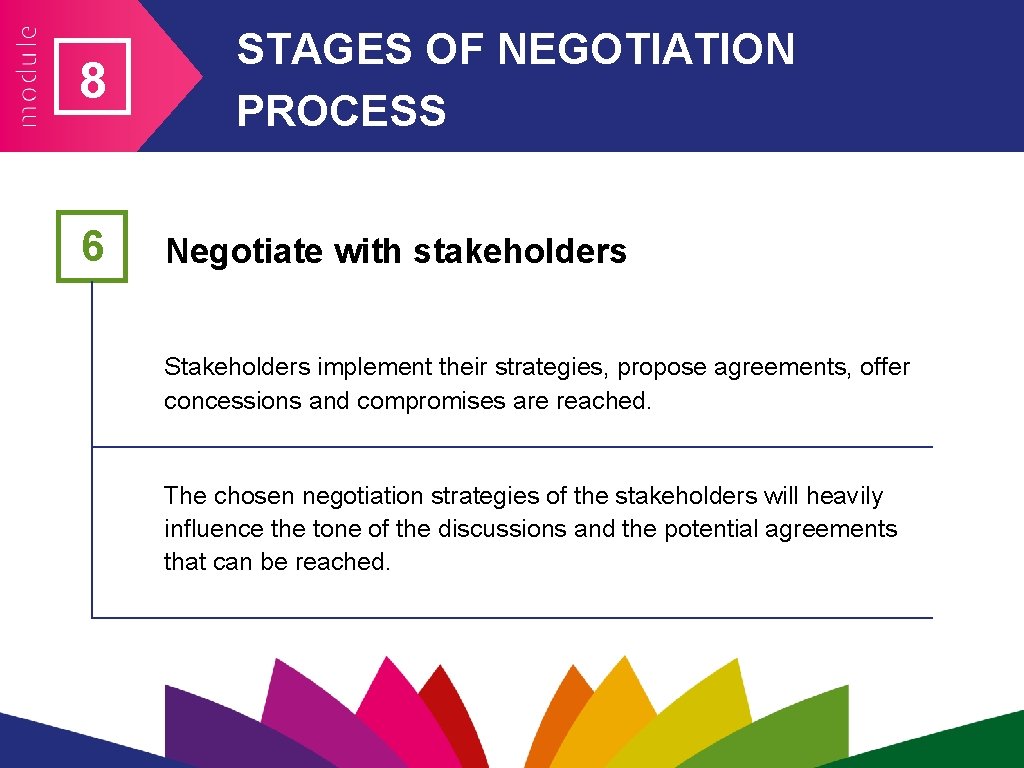
8 6 STAGES OF NEGOTIATION PROCESS Negotiate with stakeholders Stakeholders implement their strategies, propose agreements, offer concessions and compromises are reached. The chosen negotiation strategies of the stakeholders will heavily influence the tone of the discussions and the potential agreements that can be reached.
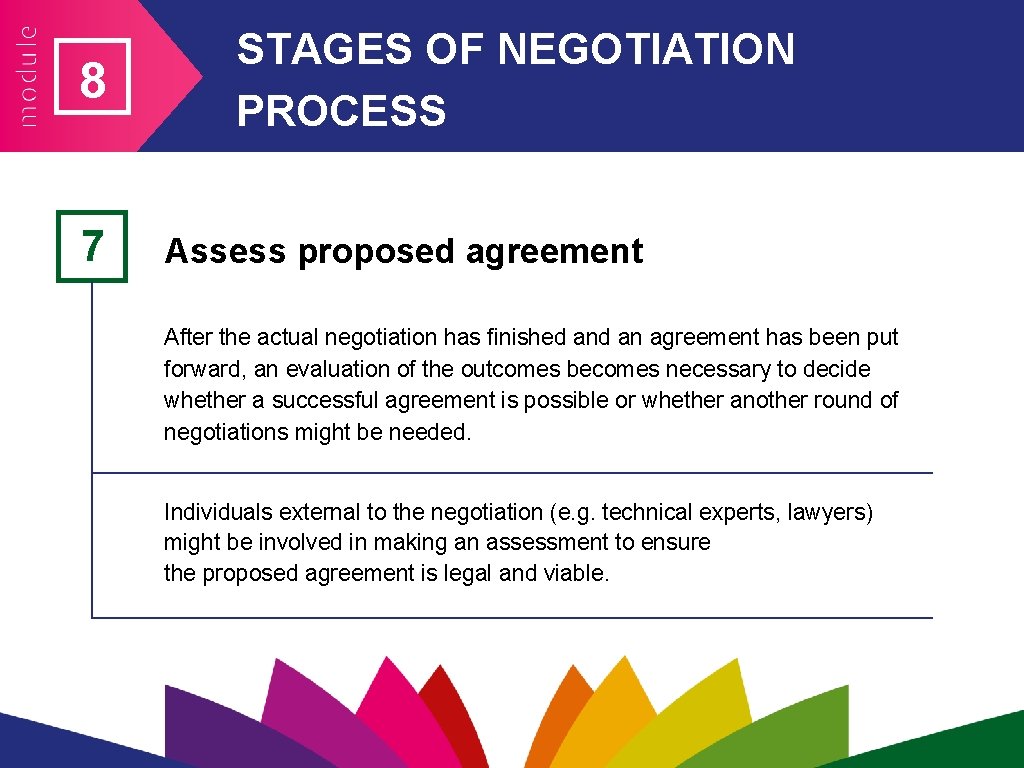
8 7 STAGES OF NEGOTIATION PROCESS Assess proposed agreement After the actual negotiation has finished an agreement has been put forward, an evaluation of the outcomes becomes necessary to decide whether a successful agreement is possible or whether another round of negotiations might be needed. Individuals external to the negotiation (e. g. technical experts, lawyers) might be involved in making an assessment to ensure the proposed agreement is legal and viable.
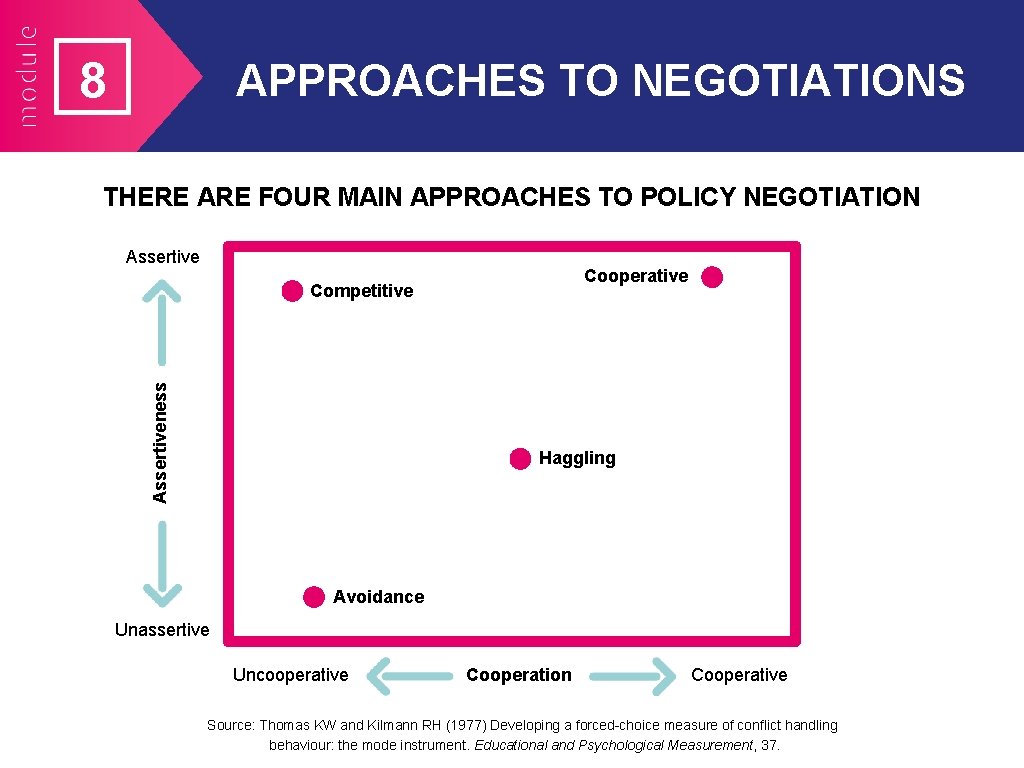
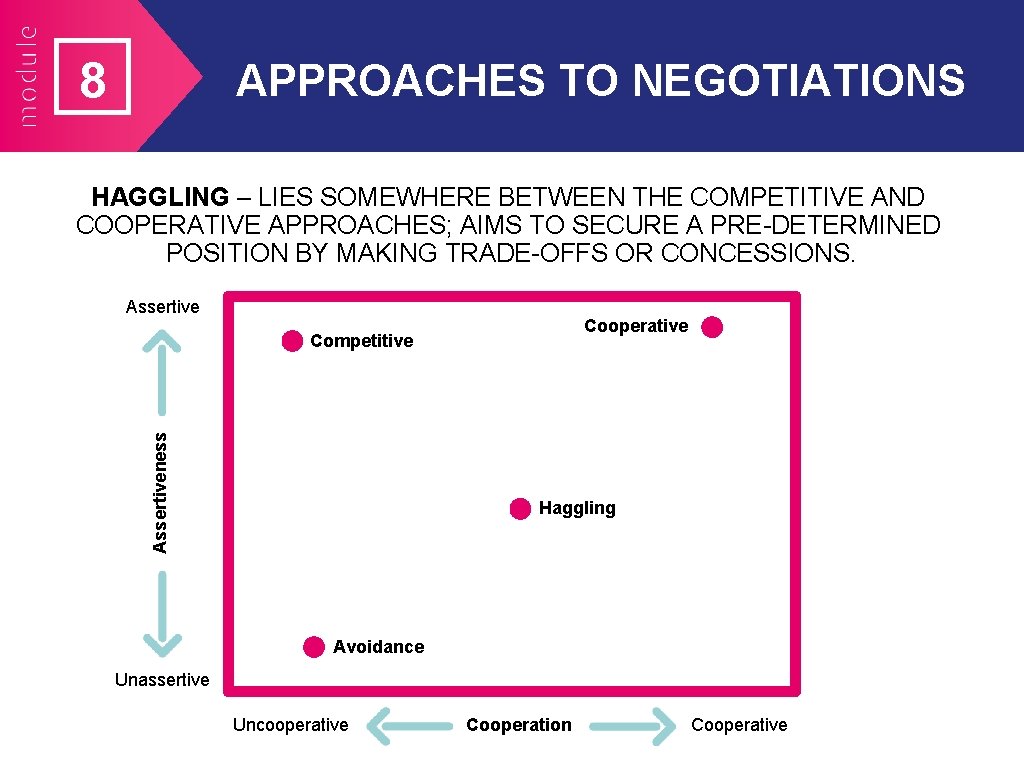
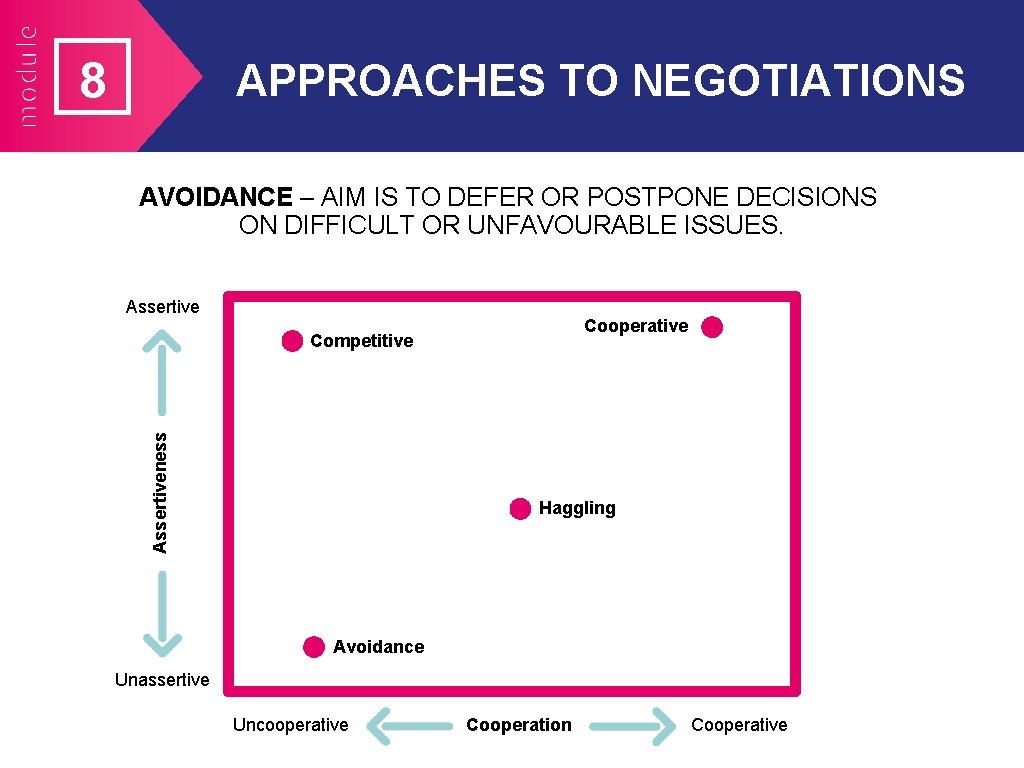
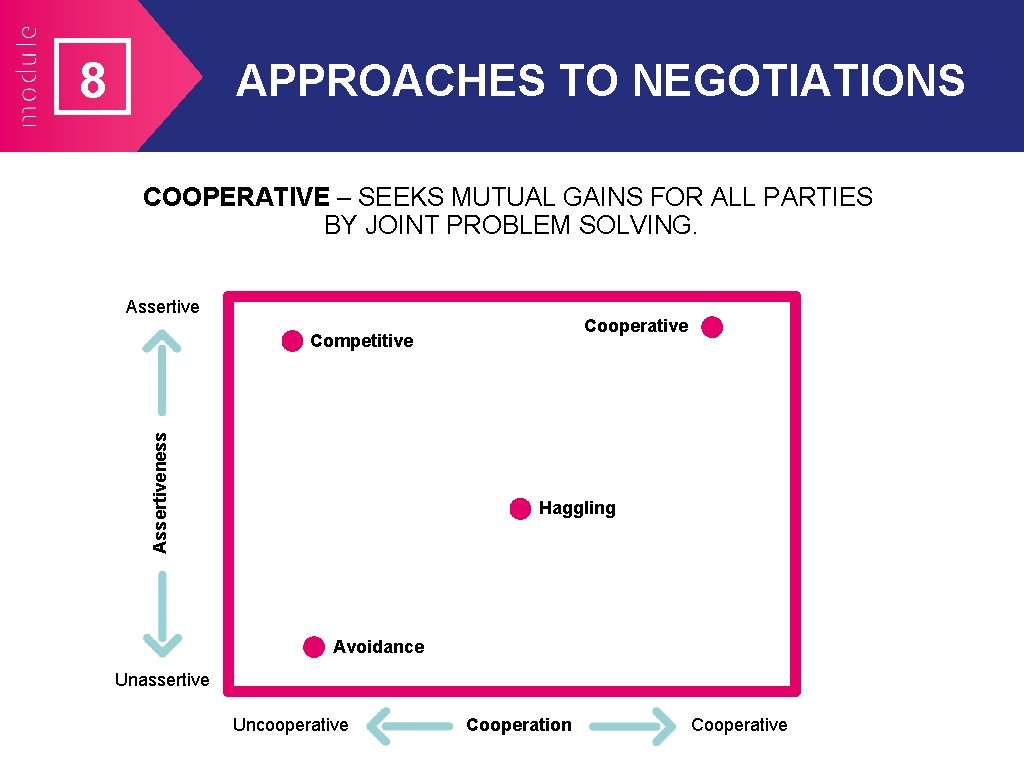
8 APPROACHES TO NEGOTIATIONS THERE ARE FOUR MAIN APPROACHES TO POLICY NEGOTIATION Assertive Cooperative Assertiveness Competitive Haggling Avoidance Unassertive Uncooperative Cooperation Cooperative Source: Thomas KW and Kilmann RH (1977) Developing a forced-choice measure of conflict handling behaviour: the mode instrument. Educational and Psychological Measurement, 37.
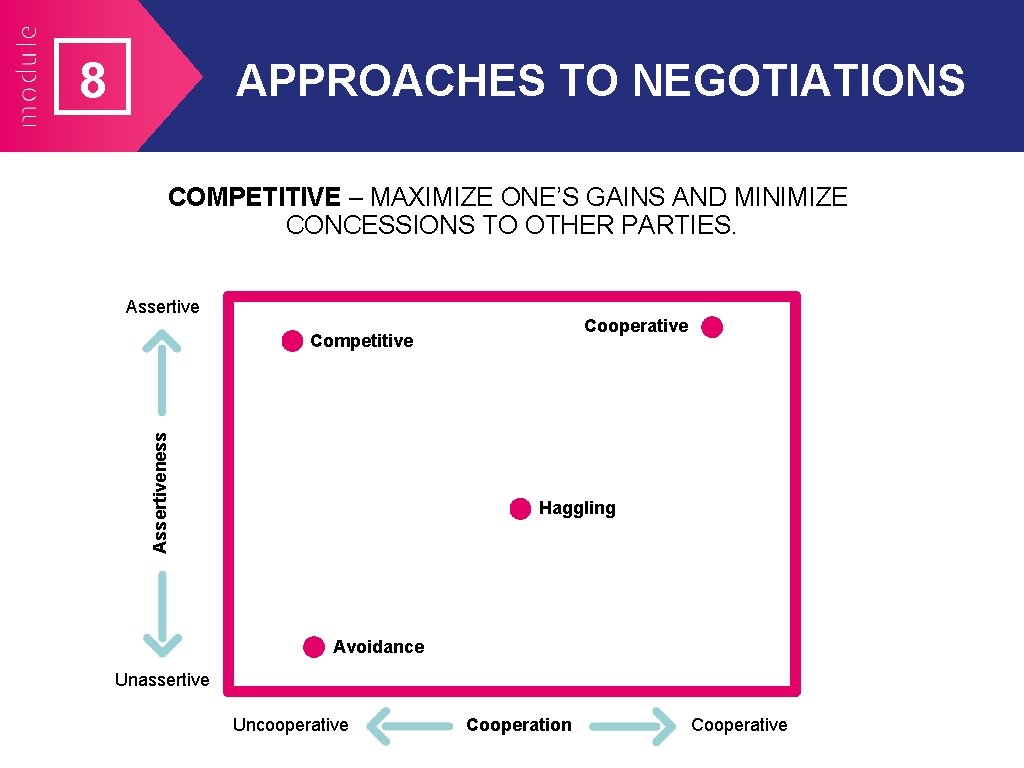
8 APPROACHES TO NEGOTIATIONS COMPETITIVE – MAXIMIZE ONE’S GAINS AND MINIMIZE CONCESSIONS TO OTHER PARTIES. Assertive Cooperative Assertiveness Competitive Haggling Avoidance Unassertive Uncooperative Cooperation Cooperative
8 APPROACHES TO NEGOTIATIONS HAGGLING – LIES SOMEWHERE BETWEEN THE COMPETITIVE AND COOPERATIVE APPROACHES; AIMS TO SECURE A PRE-DETERMINED POSITION BY MAKING TRADE-OFFS OR CONCESSIONS. Assertive Cooperative Assertiveness Competitive Haggling Avoidance Unassertive Uncooperative Cooperation Cooperative
8 APPROACHES TO NEGOTIATIONS AVOIDANCE – AIM IS TO DEFER OR POSTPONE DECISIONS ON DIFFICULT OR UNFAVOURABLE ISSUES. Assertive Cooperative Assertiveness Competitive Haggling Avoidance Unassertive Uncooperative Cooperation Cooperative
8 APPROACHES TO NEGOTIATIONS COOPERATIVE – SEEKS MUTUAL GAINS FOR ALL PARTIES BY JOINT PROBLEM SOLVING. Assertive Cooperative Assertiveness Competitive Haggling Avoidance Unassertive Uncooperative Cooperation Cooperative
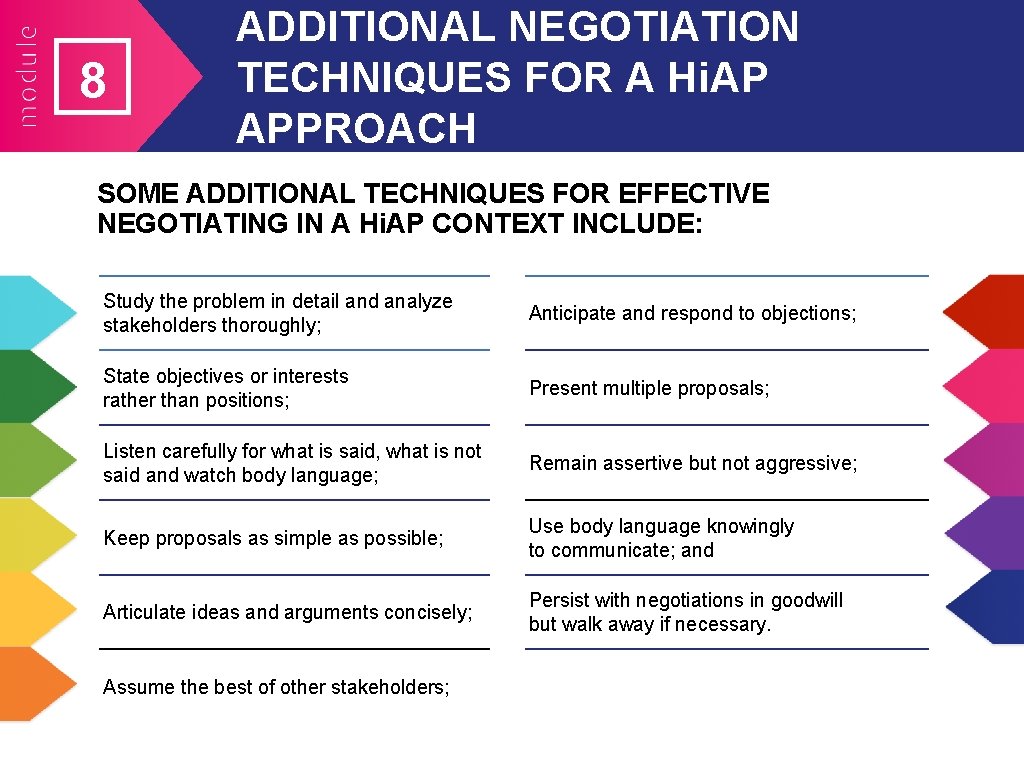
8 ADDITIONAL NEGOTIATION TECHNIQUES FOR A Hi. AP APPROACH SOME ADDITIONAL TECHNIQUES FOR EFFECTIVE NEGOTIATING IN A Hi. AP CONTEXT INCLUDE: Study the problem in detail and analyze stakeholders thoroughly; Anticipate and respond to objections; State objectives or interests rather than positions; Present multiple proposals; Listen carefully for what is said, what is not said and watch body language; Remain assertive but not aggressive; Keep proposals as simple as possible; Use body language knowingly to communicate; and Articulate ideas and arguments concisely; Persist with negotiations in goodwill but walk away if necessary. Assume the best of other stakeholders;
End of Module 8 Please continue to Module 9