
Policy in Action Implementing Evaluating Your Local School



- Slides: 28
Policy in Action: Implementing & Evaluating Your Local School Wellness Policy Addressing Childhood Obesity
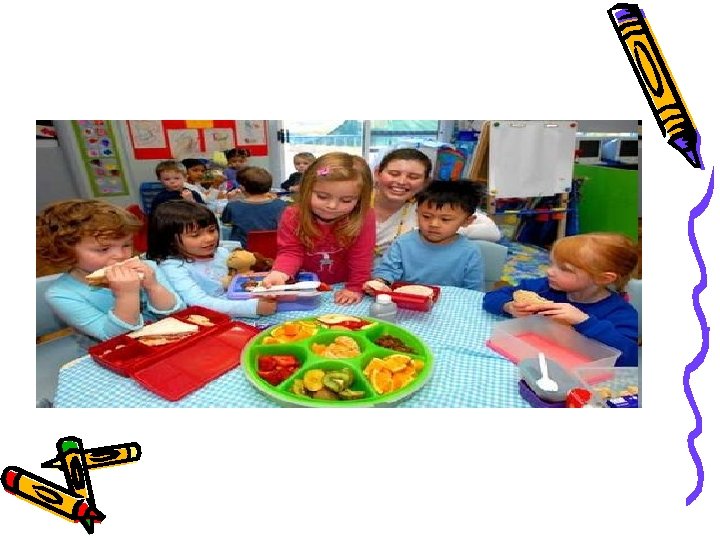
Learning outcomes • Identify policy/environmental changes that support healthy eating choices during lunch time. • Identify policy/environmental changes that support healthy physical activity. • Educate children on healthy food choices. • Coordinate local efforts promoting healthy behaviors for children K-6
What is. SB 12 & SB 965? SB 12 (Chapter 235, Statutes of 2005) • Signed into State law at the 2005 Governor's Obesity Summit. • Strengthens the food standards in SB 19 (Chapter 913, Statutes of 2001) and expands mandated compliance to all California public schools K- 12 • Provides a detailed list of snack or à la carte item standards • (Example: nuts are excluded from the fat requirements). • All food standards must be implemented in K-12 schools by July 1, • 2007. • http: //www. publichealthadvocacy. org/legislation/SB 12 Bill. Summary. pd f
Local Wellness Policy Requirements Minimum requirements for schools: • • Nutrition guidelines for all foods available on campus Goals for physical activity Goals for nutrition education Goals for other school-based activities designed to promote student wellness • Community involvement • A plan for measuring implementation
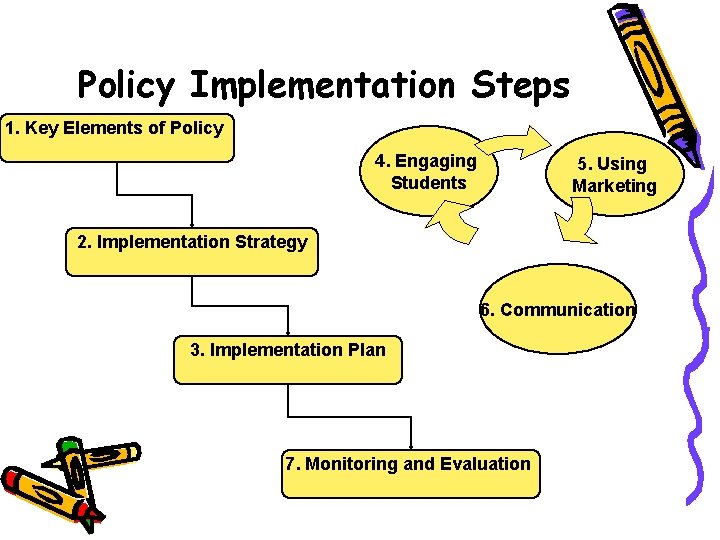
Policy Implementation Steps 1. Key Elements of Policy 4. Engaging Students 5. Using Marketing 2. Implementation Strategy 6. Communication 3. Implementation Plan 7. Monitoring and Evaluation
Step 1: Identify and Prioritize Policy Elements • What are the key elements of your policy? • How can these be prioritized? – based on education code, school/district priorities, ease or difficulty of implementation, etc.
Step 2: Develop an Implementation Strategy Once key policy elements have been identified and prioritized, the next step is developing an Implementation Strategy. This requires: – Understanding your district’s/school’s current organizational and business practices – The ability to anticipate the potential impact of changes
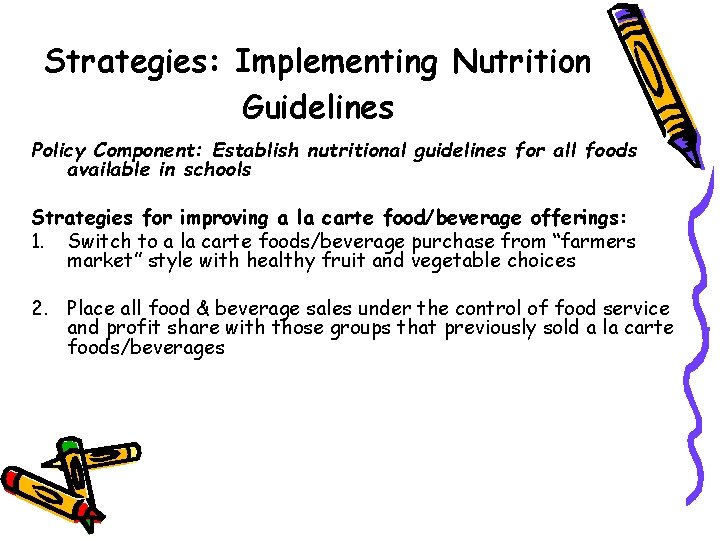
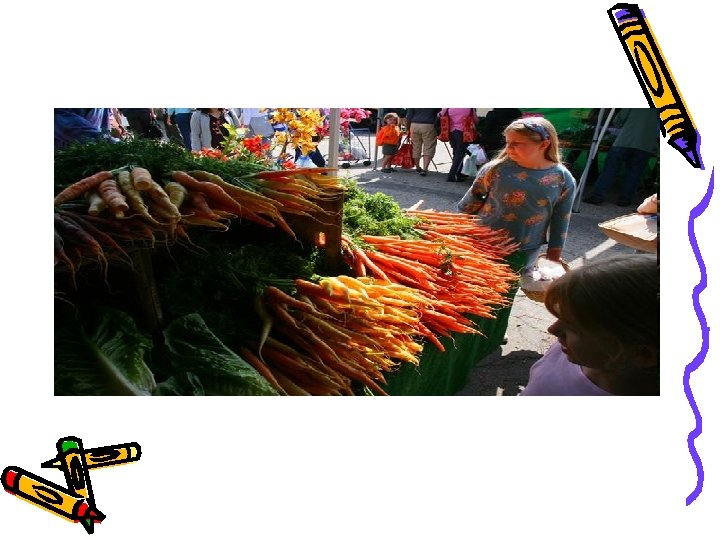
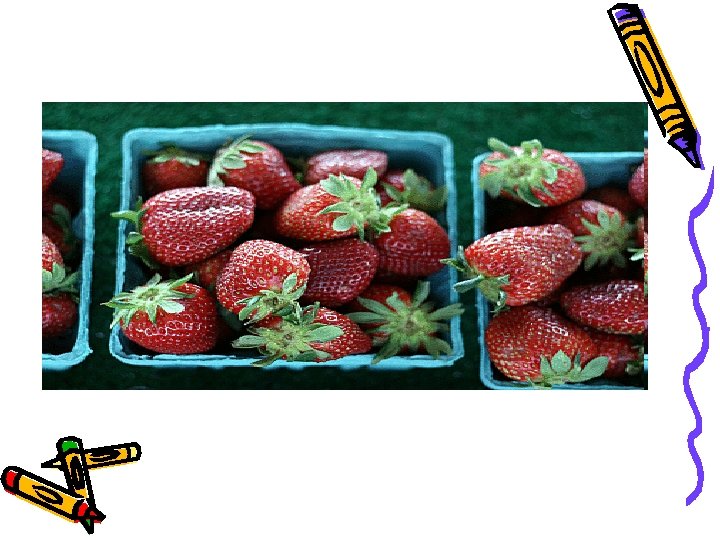
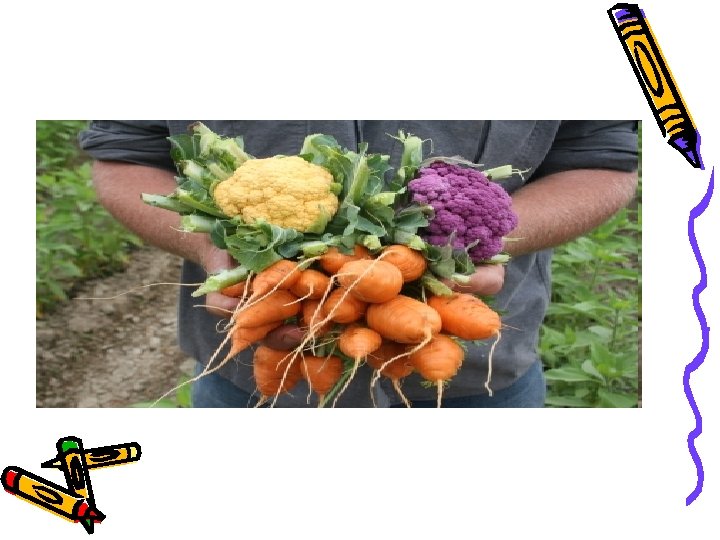
Strategies: Implementing Nutrition Guidelines Policy Component: Establish nutritional guidelines for all foods available in schools Strategies for improving a la carte food/beverage offerings: 1. Switch to a la carte foods/beverage purchase from “farmers market” style with healthy fruit and vegetable choices 2. Place all food & beverage sales under the control of food service and profit share with those groups that previously sold a la carte foods/beverages
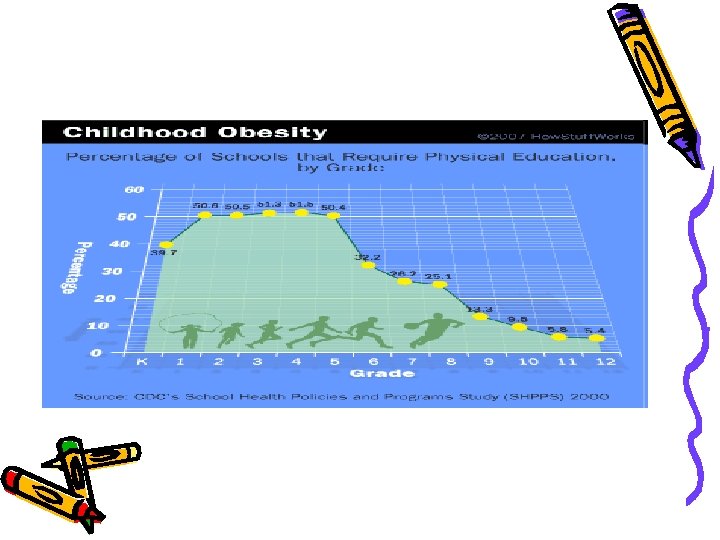
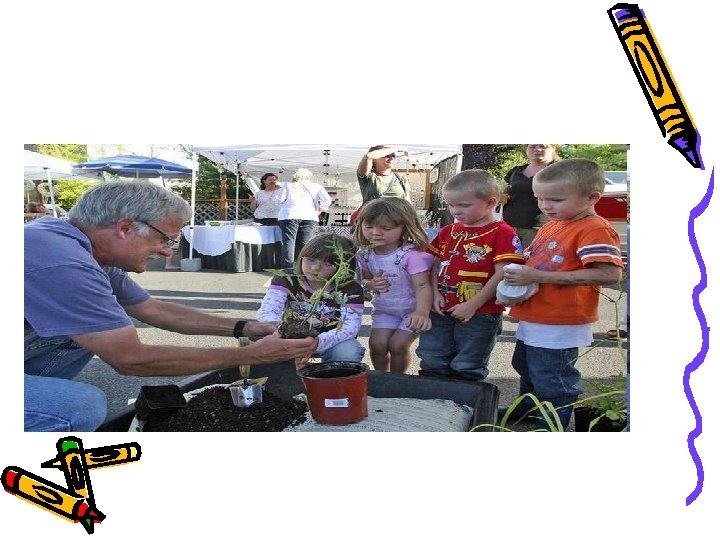
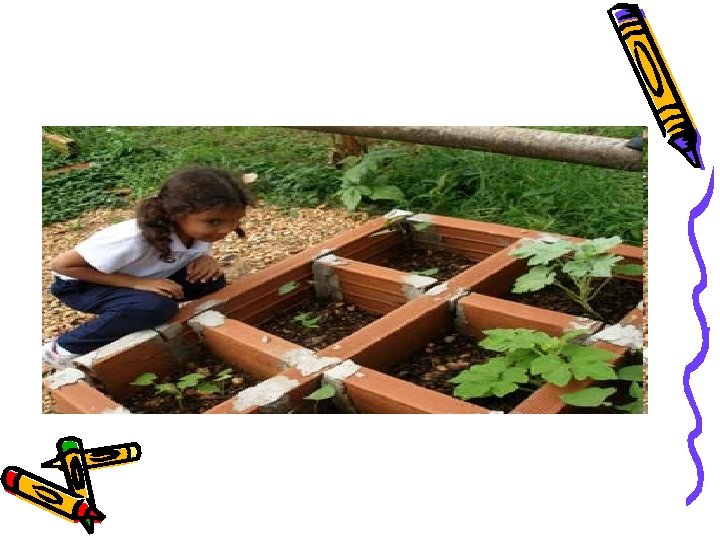
Implementation Strategies: Physical Activity Policy Component: Set Goals for Physical Activity Changing Physical Activity Practices • Implement Square foot garden for student physical activity (PA) opportunities
Implementation Strategies: Community Involvement Policy Component: Community Involvement 1. 2. 3. Develop and maintain a wellness policy committee Include representatives from home, school, community Provide committee members with clear tasks and responsibilities
Implementation Strategies: Nutrition Education Policy Component: Set Goals for Nutrition Education Strategies for implementing nutrition education: 1. Securing nutrition curriculum 2. Professional development for teachers 3. Integrating nutrition education into other subjects 4. Determining how to provide opportunities for students to practice skills and have fun
Step 3: Develop Implementation Plans for Each Policy Element The Policy Implementation Plan covers the nuts and bolts of getting the policy into place. The plan should outline: • Who will do what • Where the policy applies • What changes need to be made • Dates for implementing various policy elements • Who will complete tasks • How changes will be documented and communicated
Step 4: Engage Students Who is most impacted by the Local Wellness Policy? Students!
Engage Students can be involved in all steps of the implementation steps. • Develop parent fliers that market the changes • Communicate progress with school board meetings • Assist with students surveys that will identify nutrition and physical activity priorities • Organize student taste-tests • Promote new products • Monitor student responses to changes • Gather data to assist with evaluation
Group Exercise: Strategies and Planning! For each Policy Element we work on today: 1. Brainstorm about possible implementation strategies. 2. Develop sample implementation plans. Consider: – How to engage students – How and who you need to communicate with – How you will monitor each element of the policy
Additional Resources • • • Jump Start Teens: Interactive, Cross-Curricular Lessons for High School Teachers and School Nutrition Staff Captive Kids: $elling Obesity at Schools, An Action Guide to Stop the Marketing of Unhealthy Foods and Beverages in School Playing the Policy Game: Preparing Teen Leaders to Take Action on Healthy Eating and Physical Activity Student Wellness: A Healthy Food and Physical Activity Policy Resource Guide Reaching School Boards Members guide Food on the Run: Lessons Learned from a Youth Nutrition and Physical Activity Campaign Visit www. California. Project. LEAN. org to download resources
Thank You! Resources from training can be found at www. California. Project. LEAN. org