
Policy implications of SDGs SWA SMM Day 3
- Slides: 25
Policy implications of SDGs SWA SMM, Day 3 Technical Meeting 17 th March, 2016 Tom Slaymaker tslaymaker@unicef. org
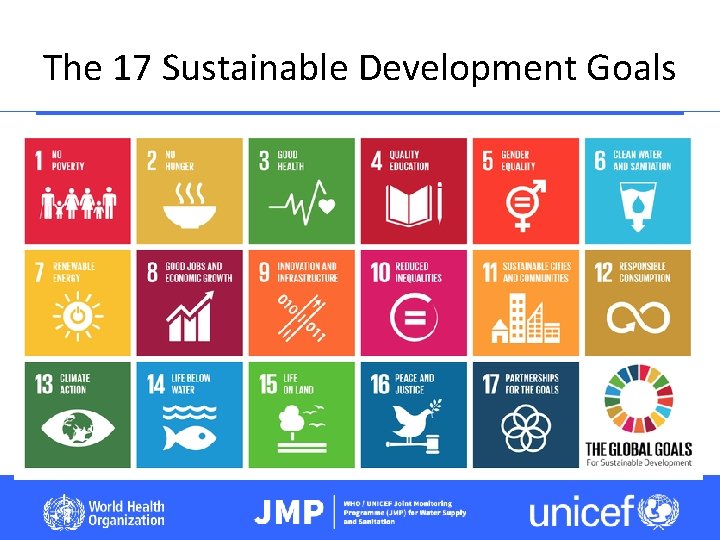
The 17 Sustainable Development Goals
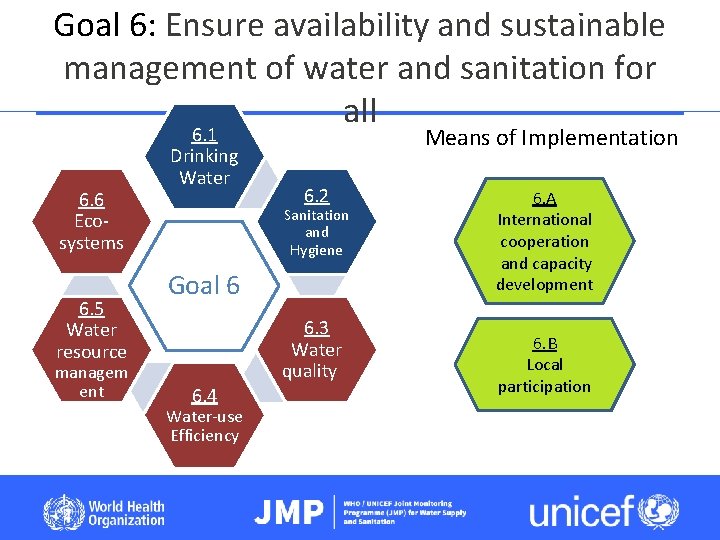
Goal 6: Ensure availability and sustainable management of water and sanitation for all 6. 6 Ecosystems 6. 5 Water resource managem ent 6. 1 Drinking Water Means of Implementation 6. 2 Sanitation and Hygiene Goal 6 6. 4 Water-use Efficiency 6. 3 Water quality 6. A International cooperation and capacity development 6. B Local participation
Aspirational global targets 55. The Sustainable Development Goals and targets are integrated and indivisible, global in nature and universally applicable, taking into account different national realities, capacities and levels of development and respecting national policies and priorities. Targets are defined as aspirational and global, with each Government setting its own national targets guided by the global level of ambition but taking into account national circumstances. Each Government will also decide how these aspirational and global targets should be incorporated into national planning processes, policies and strategies. It is important to recognize the link between sustainable development and other relevant ongoing processes in the economic, social and environmental fields. 4
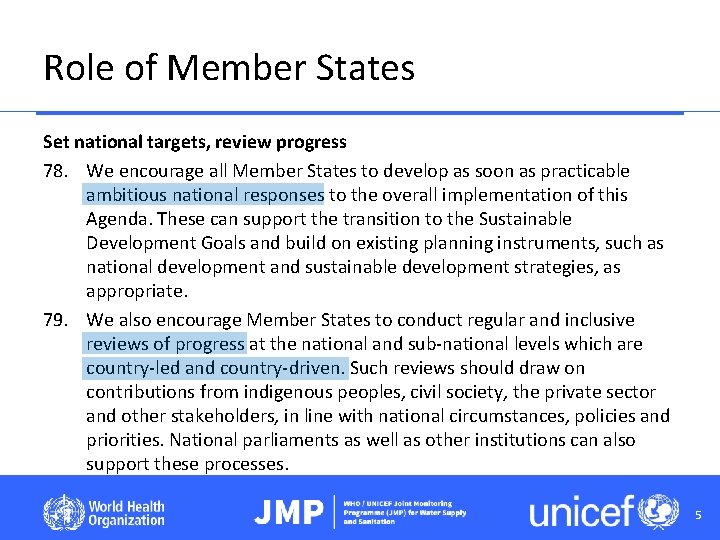
Role of Member States Set national targets, review progress 78. We encourage all Member States to develop as soon as practicable ambitious national responses to the overall implementation of this Agenda. These can support the transition to the Sustainable Development Goals and build on existing planning instruments, such as national development and sustainable development strategies, as appropriate. 79. We also encourage Member States to conduct regular and inclusive reviews of progress at the national and sub-national levels which are country-led and country-driven. Such reviews should draw on contributions from indigenous peoples, civil society, the private sector and other stakeholders, in line with national circumstances, policies and priorities. National parliaments as well as other institutions can also support these processes. 5
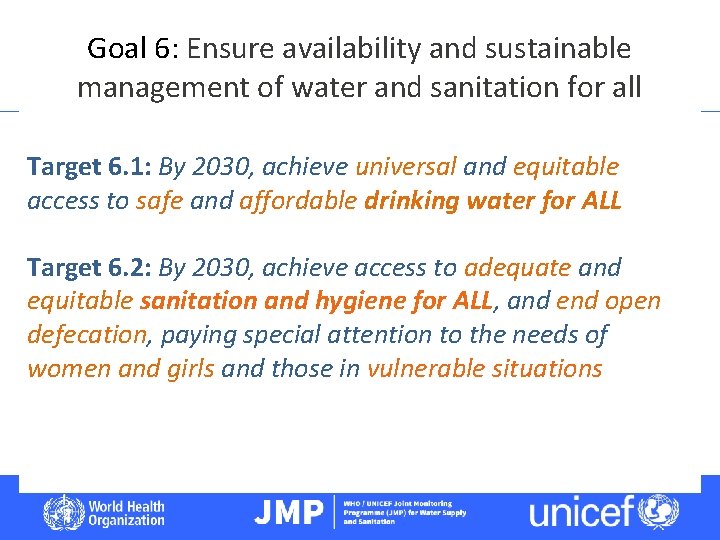
Goal 6: Ensure availability and sustainable management of water and sanitation for all Means of Implementation 6. 1 By 2030, Drinking Water Target 6. 1: achieve universal and equitable 6. A access to safe and affordable drinking water for ALL 6. 2 6. 6 Sanitation and Hygiene Ecosystems International cooperation and capacity adequate and development Target 6. 2: By 2030, achieve access to Goal 6 and hygiene for ALL, and end open equitable sanitation 6. 5 6. 3 attention to the needs Water defecation, paying special of 6. B Water resource Local women and girls and those quality in vulnerable situations managem ent 6. 4 Wateruse Efficiency participation
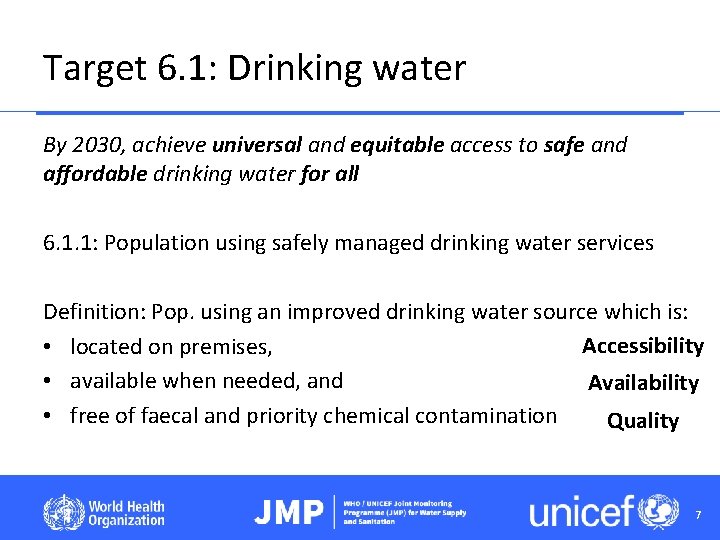
Target 6. 1: Drinking water By 2030, achieve universal and equitable access to safe and affordable drinking water for all 6. 1. 1: Population using safely managed drinking water services Definition: Pop. using an improved drinking water source which is: Accessibility • located on premises, • available when needed, and Availability • free of faecal and priority chemical contamination Quality Lead: WHO/UNICEF Joint Monitoring Programme 7
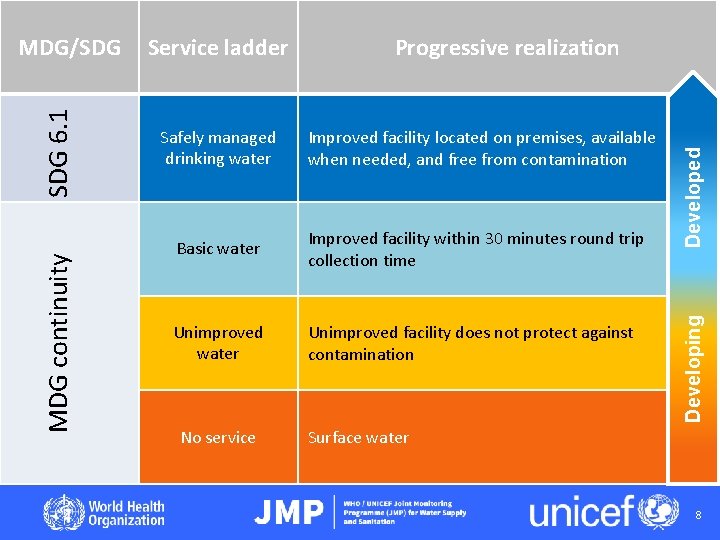
Safely managed drinking water Progressive realization Improved facility located on premises, available when needed, and free from contamination Basic water Improved facility within 30 minutes round trip collection time Unimproved water Unimproved facility does not protect against contamination No service Developed Service ladder Developing MDG continuity SDG 6. 1 MDG/SDG Surface water 8
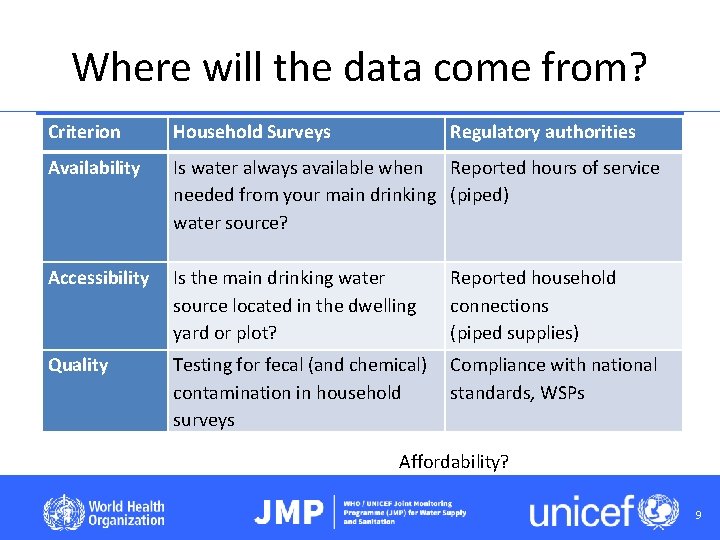
Where will the data come from? Criterion Household Surveys Regulatory authorities Availability Is water always available when Reported hours of service needed from your main drinking (piped) water source? Accessibility Is the main drinking water source located in the dwelling yard or plot? Reported household connections (piped supplies) Quality Testing for fecal (and chemical) contamination in household surveys Compliance with national standards, WSPs Affordability? 9
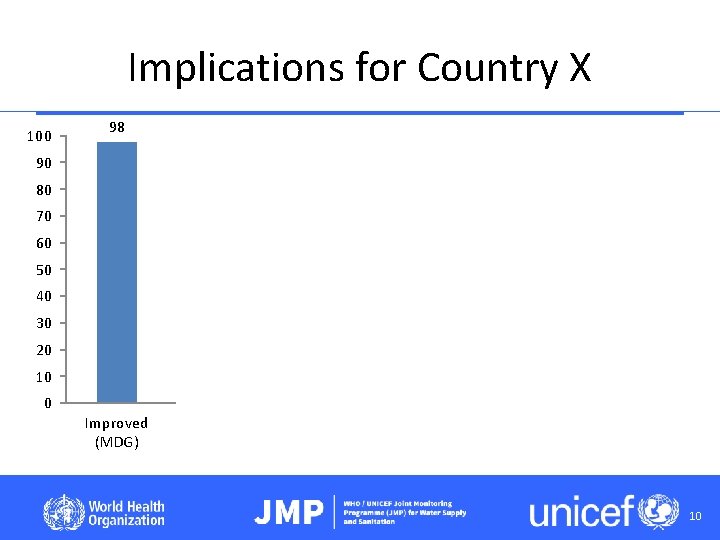
Implications for Country X 100 98 95 90 80 89 74 70 60 58 58 E. coli <1 (quality) Safely managed (SDG) 50 40 30 20 10 0 Improved (MDG) Basic (<30 mins) Available when On premises needed (accessible) 10
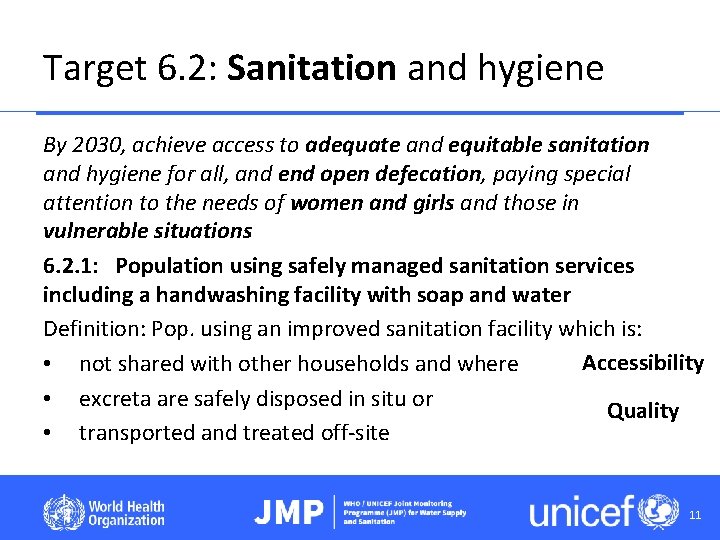
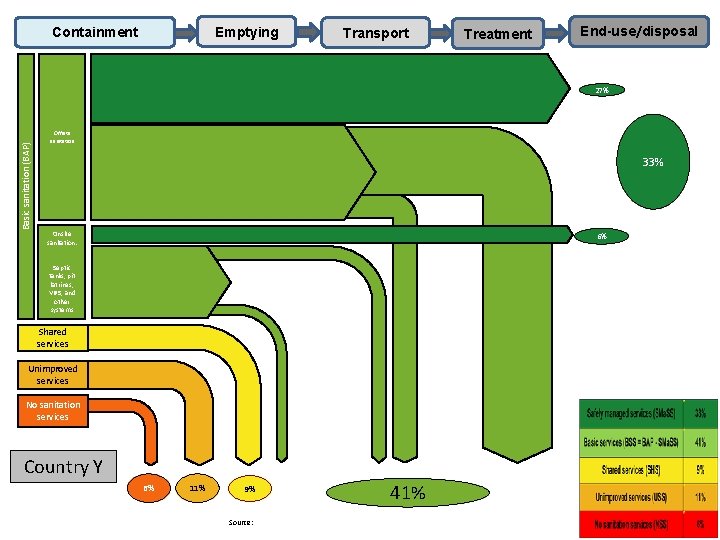
Target 6. 2: Sanitation and hygiene By 2030, achieve access to adequate and equitable sanitation and hygiene for all, and end open defecation, paying special attention to the needs of women and girls and those in vulnerable situations 6. 2. 1: Population using safely managed sanitation services including a handwashing facility with soap and water Definition: Pop. using an improved sanitation facility which is: Accessibility • not shared with other households and where • excreta are safely disposed in situ or Quality • transported and treated off-site 11
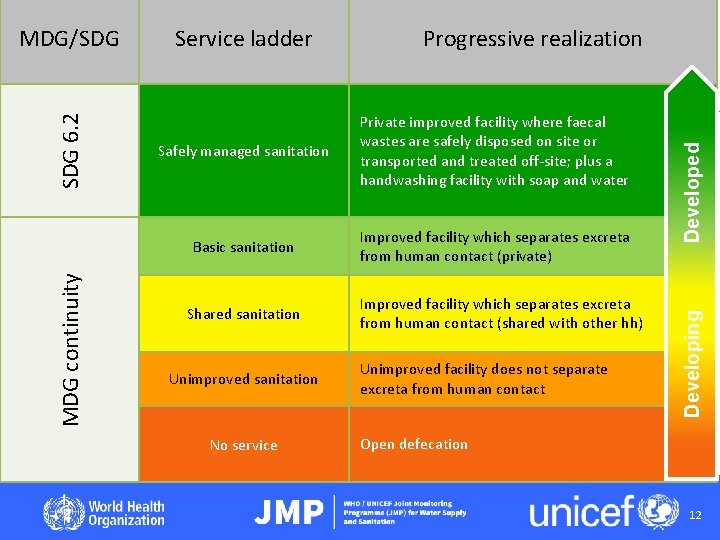
Progressive realization Safely managed sanitation Private improved facility where faecal wastes are safely disposed on site or transported and treated off-site; plus a handwashing facility with soap and water Basic sanitation Improved facility which separates excreta from human contact (private) Shared sanitation Unimproved sanitation No service Improved facility which separates excreta from human contact (shared with other hh) Unimproved facility does not separate excreta from human contact Developed Service ladder Developing MDG continuity SDG 6. 2 MDG/SDG Open defecation 12
Emptying Containment Transport Treatment End-use/disposal Basic sanitation (BAP) 27% Offsite sanitation 33% Onsite sanitation: 6% Septic tanks, pit latrines, VIPS, and other systems Shared services Unimproved services No sanitation services Country Y 6% 11% 9% Source: 41%
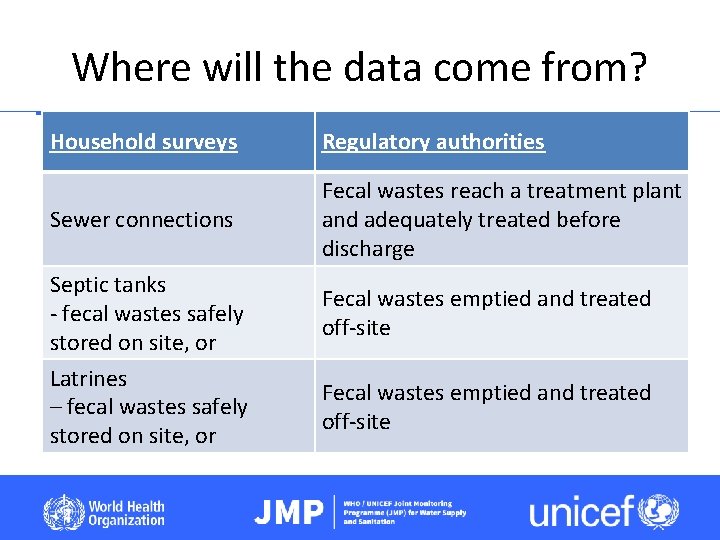
Where will the data come from? Household surveys Regulatory authorities Sewer connections Fecal wastes reach a treatment plant and adequately treated before discharge Septic tanks - fecal wastes safely stored on site, or Latrines – fecal wastes safely stored on site, or Fecal wastes emptied and treated off-site
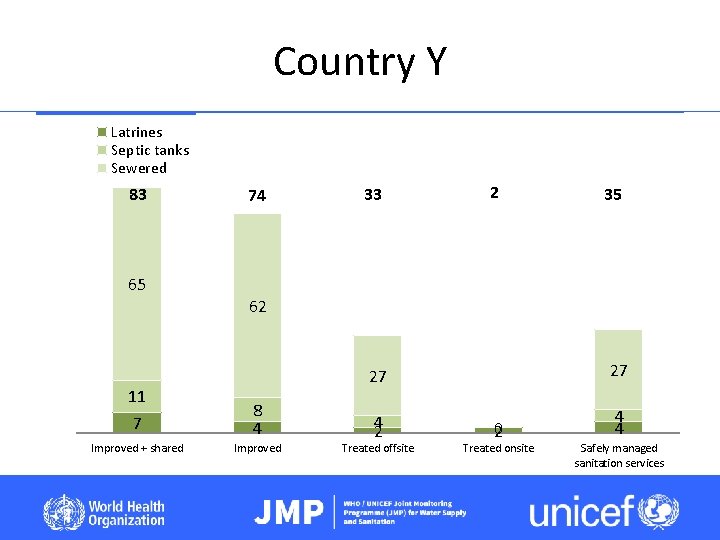
Country Y Latrines Septic tanks Sewered 83 74 74 33 33 2 35 35 65 62 27 27 11 7 8 4 Improved + shared Improved 4 2 Treated offsite 0 2 Treated onsite 4 4 Safely managed sanitation services
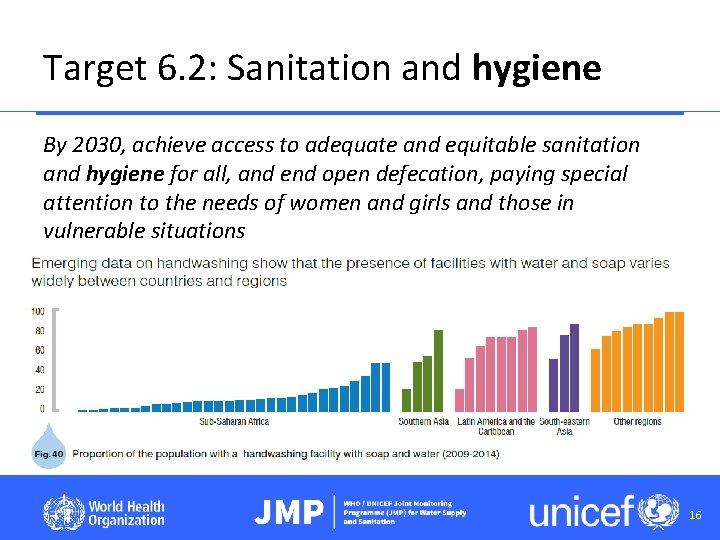
Target 6. 2: Sanitation and hygiene By 2030, achieve access to adequate and equitable sanitation and hygiene for all, and end open defecation, paying special attention to the needs of women and girls and those in vulnerable situations Population using safely managed sanitation services including a handwashing facility with soap and water Standard question in MICS and DHS since 2009 Accessibility • Observation by survey teams Availability • Data available from 50+ countries 16
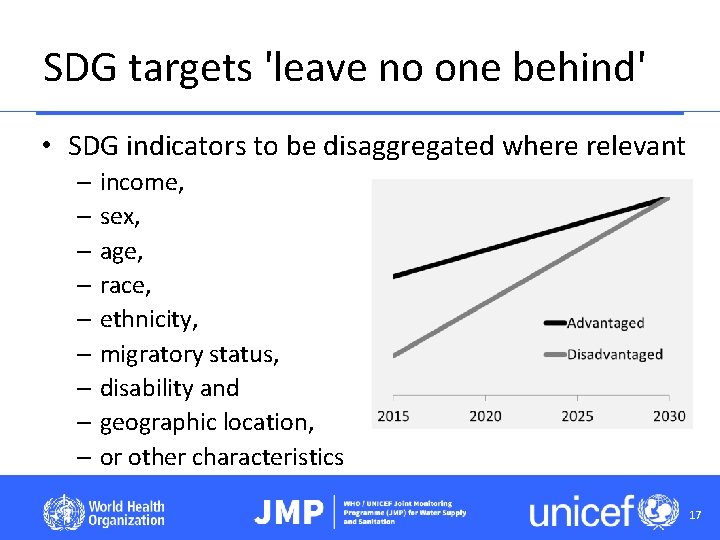
SDG targets 'leave no one behind' • SDG indicators to be disaggregated where relevant – income, – sex, – age, – race, – ethnicity, – migratory status, – disability and – geographic location, – or other characteristics 17
Reserve slides 18
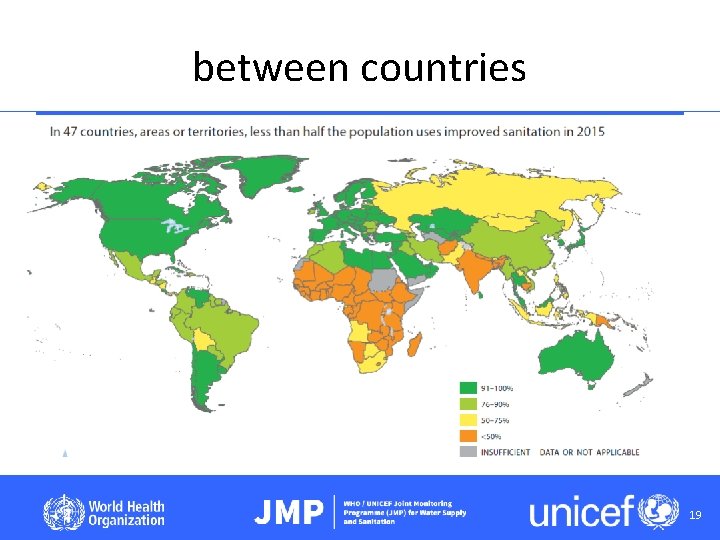
between countries 19
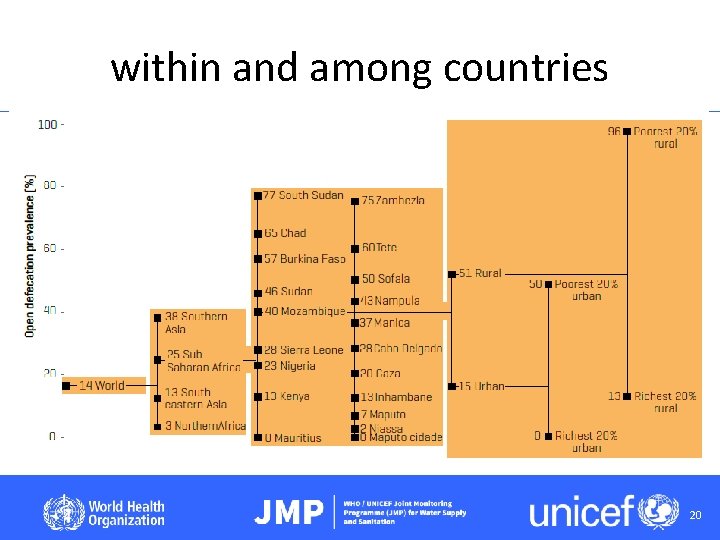
within and among countries 20
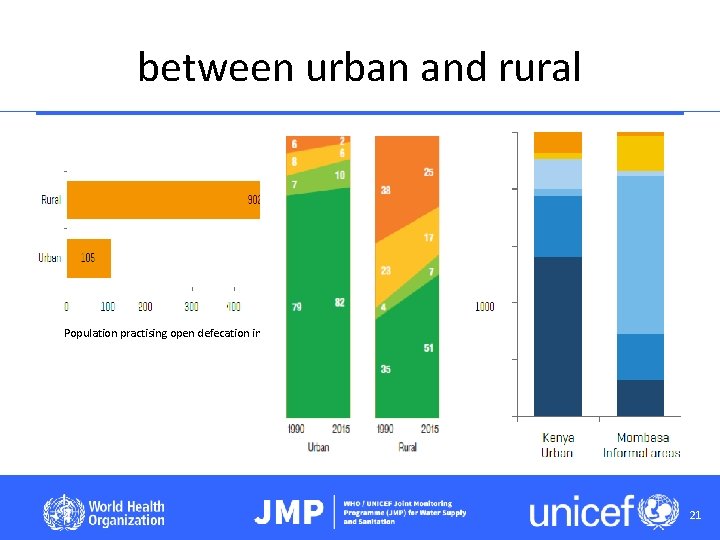
between urban and rural Population practising open defecation in urban and rural areas, 2012 21
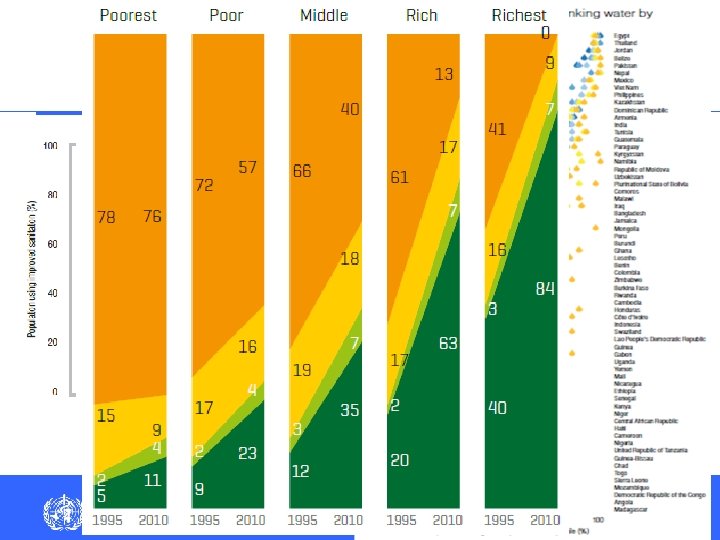
between wealth quintiles
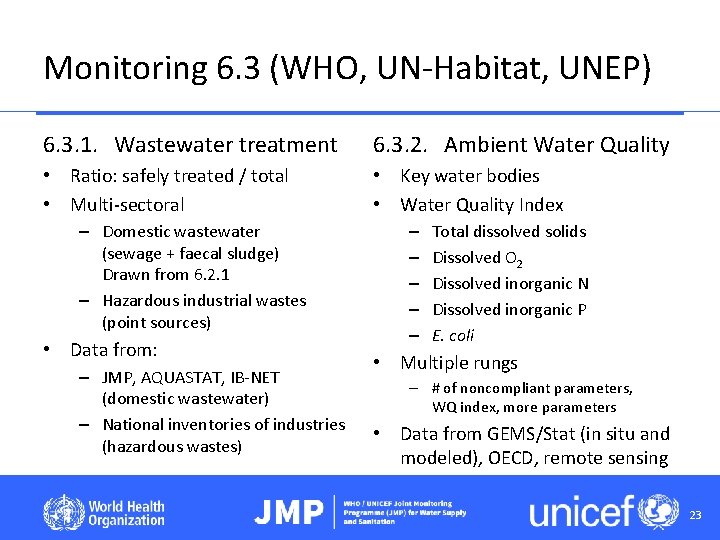
Monitoring 6. 3 (WHO, UN-Habitat, UNEP) 6. 3. 1. Wastewater treatment 6. 3. 2. Ambient Water Quality • Ratio: safely treated / total • Multi-sectoral • Key water bodies • Water Quality Index – Domestic wastewater (sewage + faecal sludge) Drawn from 6. 2. 1 – Hazardous industrial wastes (point sources) • Data from: – JMP, AQUASTAT, IB-NET (domestic wastewater) – National inventories of industries (hazardous wastes) – – – Total dissolved solids Dissolved O 2 Dissolved inorganic N Dissolved inorganic P E. coli • Multiple rungs – # of noncompliant parameters, WQ index, more parameters • Data from GEMS/Stat (in situ and modeled), OECD, remote sensing 23
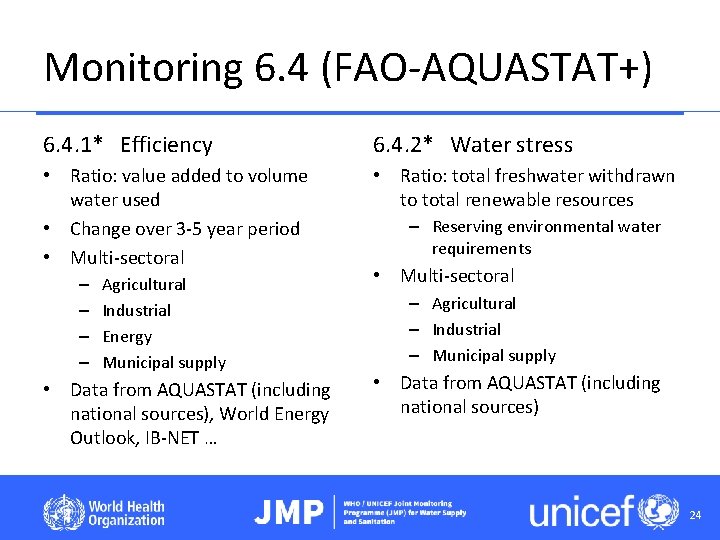
Monitoring 6. 4 (FAO-AQUASTAT+) 6. 4. 1* Efficiency 6. 4. 2* Water stress • Ratio: value added to volume water used • Change over 3 -5 year period • Multi-sectoral • Ratio: total freshwater withdrawn to total renewable resources – – Agricultural Industrial Energy Municipal supply • Data from AQUASTAT (including national sources), World Energy Outlook, IB-NET … – Reserving environmental water requirements • Multi-sectoral – Agricultural – Industrial – Municipal supply • Data from AQUASTAT (including national sources) 24
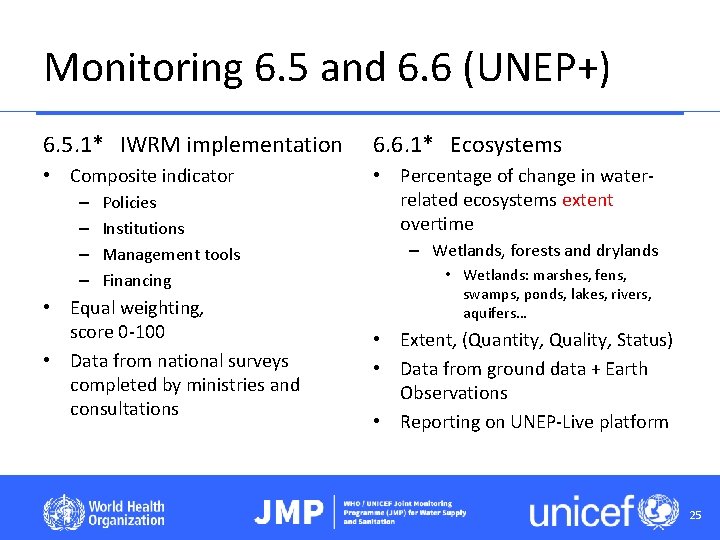
Monitoring 6. 5 and 6. 6 (UNEP+) 6. 5. 1* IWRM implementation 6. 6. 1* Ecosystems • Composite indicator • Percentage of change in waterrelated ecosystems extent overtime – – Policies Institutions Management tools Financing • Equal weighting, score 0 -100 • Data from national surveys completed by ministries and consultations – Wetlands, forests and drylands • Wetlands: marshes, fens, swamps, ponds, lakes, rivers, aquifers… • Extent, (Quantity, Quality, Status) • Data from ground data + Earth Observations • Reporting on UNEP-Live platform 25