
Polarization of Electromagnetic Waves Asst Prof Dr zgr
- Slides: 12
Polarization of Electromagnetic Waves Asst. Prof. Dr. Özgür Tamer
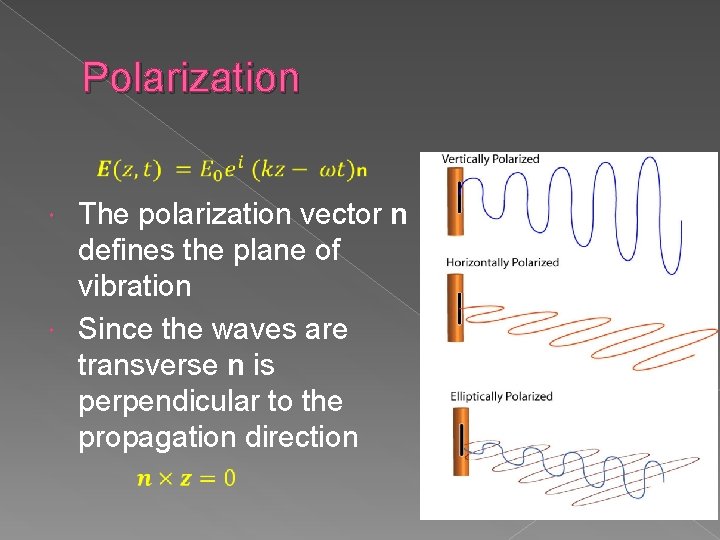
Polarization Electromagnetic waves are transverse, because the displacement is perpendicular to the direction of propagation. Transverse waves occur in two independent states of polarization: › you can shake the string up-and-down › you can shake the string left and right
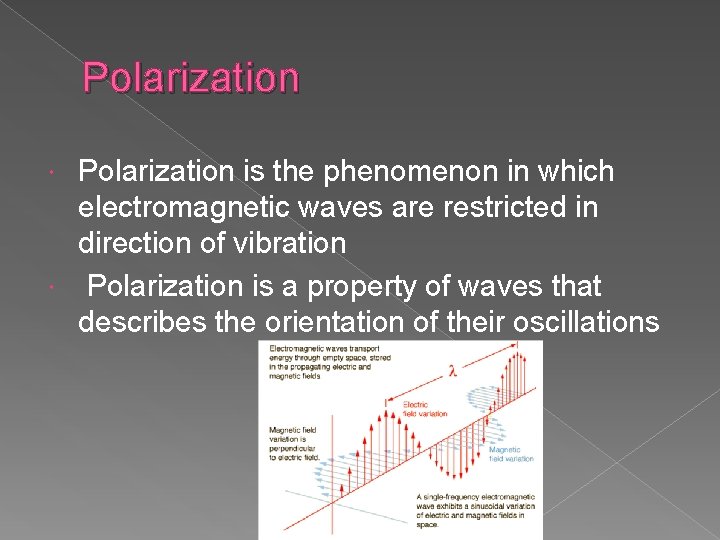
Polarization is the phenomenon in which electromagnetic waves are restricted in direction of vibration Polarization is a property of waves that describes the orientation of their oscillations
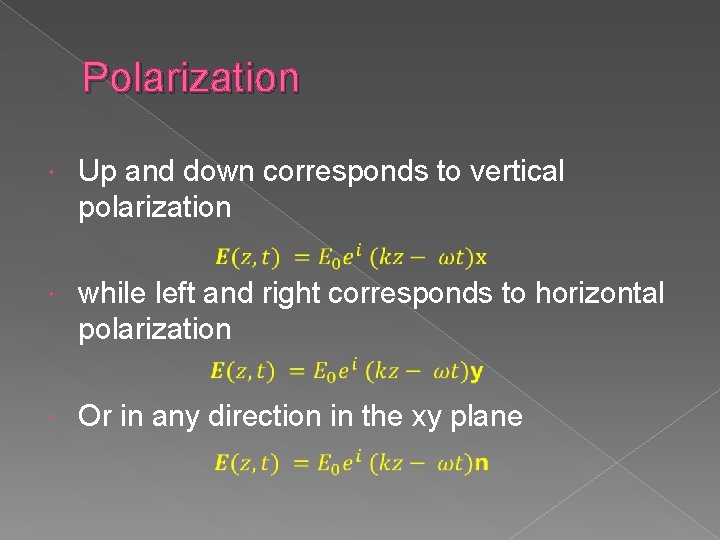
Polarization Up and down corresponds to vertical polarization while left and right corresponds to horizontal polarization Or in any direction in the xy plane
Polarization The polarization vector n defines the plane of vibration Since the waves are transverse n is perpendicular to the propagation direction
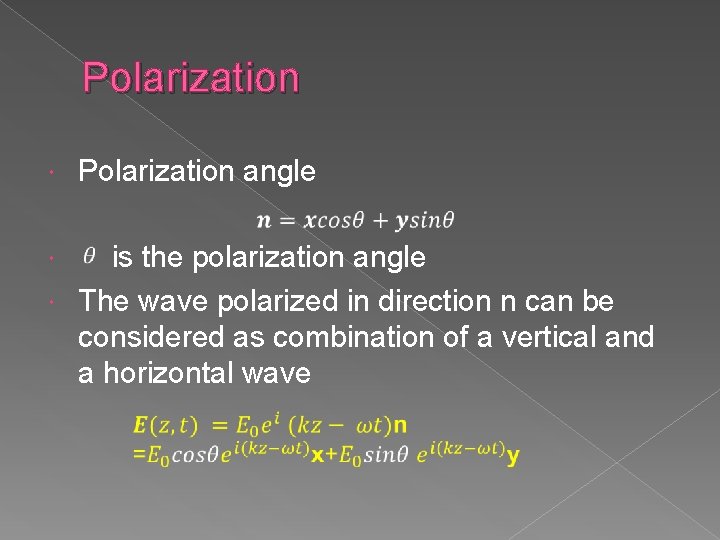
Polarization angle is the polarization angle The wave polarized in direction n can be considered as combination of a vertical and a horizontal wave
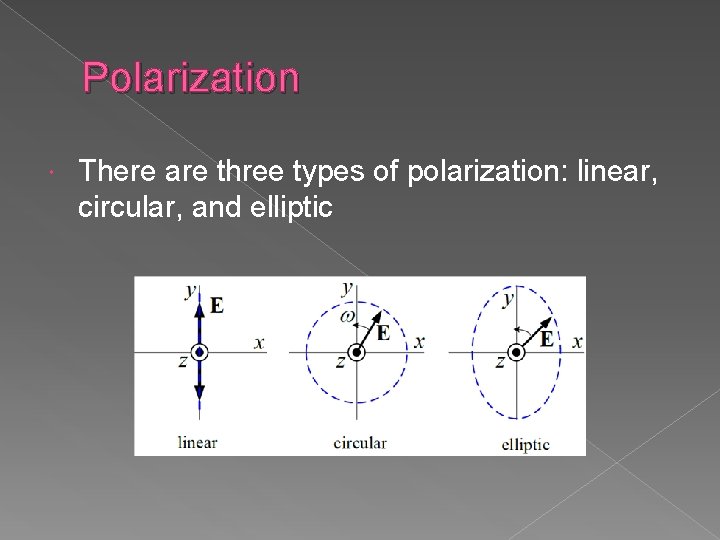
Polarization There are three types of polarization: linear, circular, and elliptic
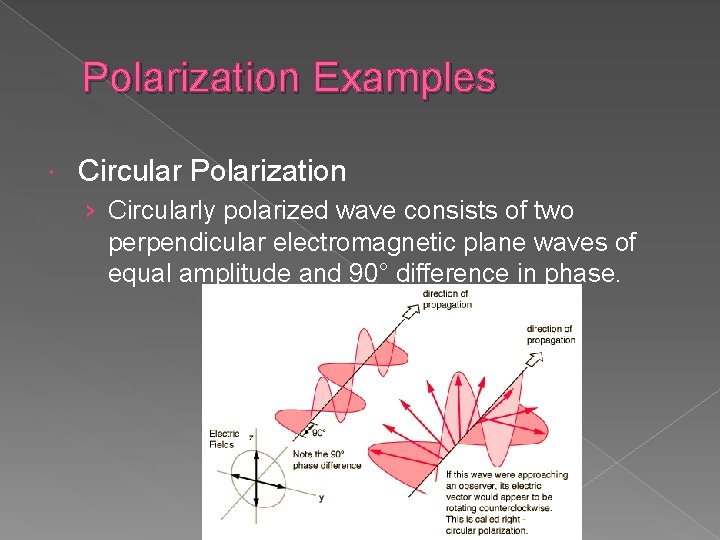
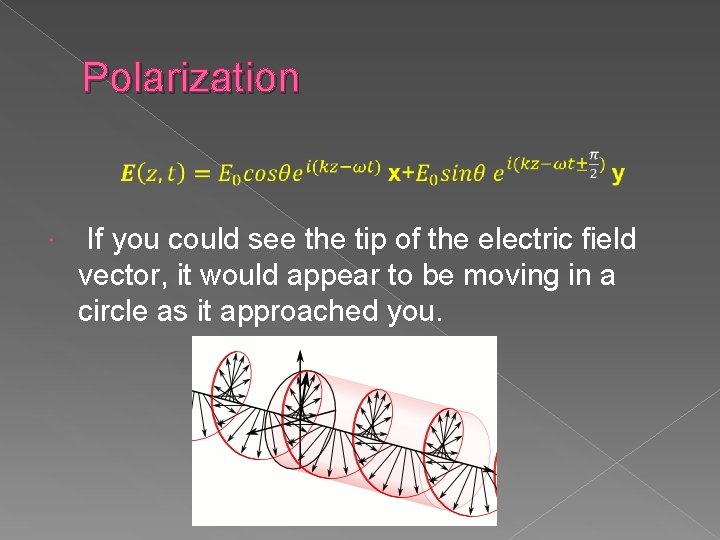
Polarization Examples Circular Polarization › Circularly polarized wave consists of two perpendicular electromagnetic plane waves of equal amplitude and 90° difference in phase.
Polarization If you could see the tip of the electric field vector, it would appear to be moving in a circle as it approached you.
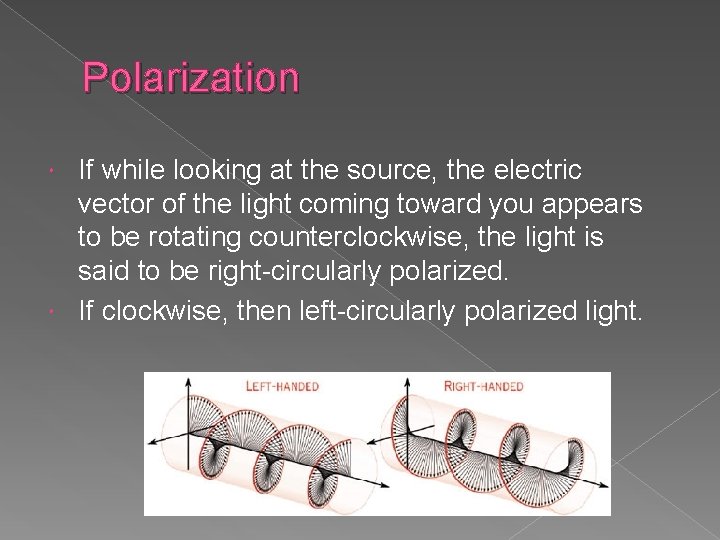
Polarization If while looking at the source, the electric vector of the light coming toward you appears to be rotating counterclockwise, the light is said to be right-circularly polarized. If clockwise, then left-circularly polarized light.
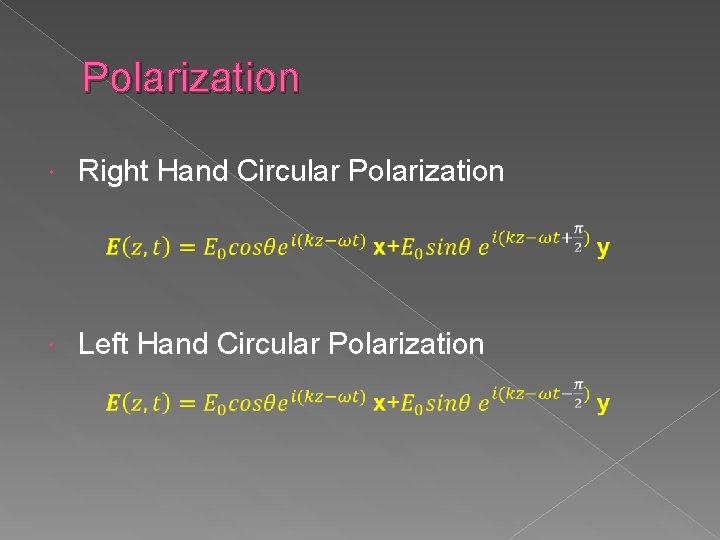
Polarization Right Hand Circular Polarization Left Hand Circular Polarization
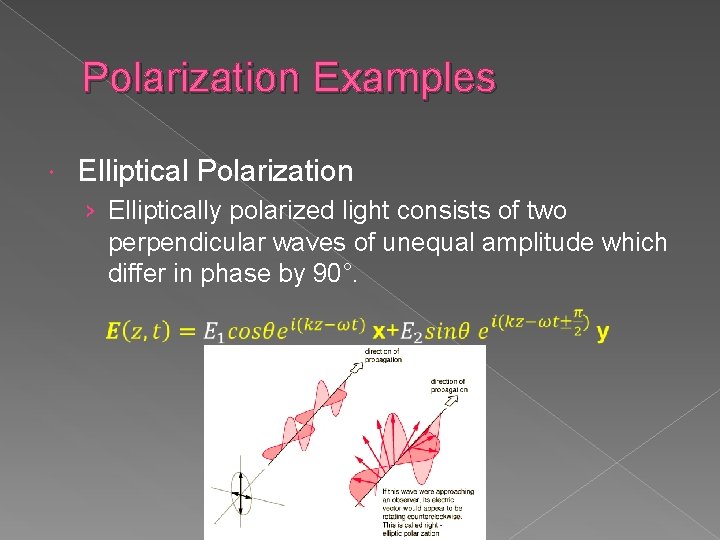
Polarization Examples Elliptical Polarization › Elliptically polarized light consists of two perpendicular waves of unequal amplitude which differ in phase by 90°.