
Polarity When atoms form covalent bonds sometimes they
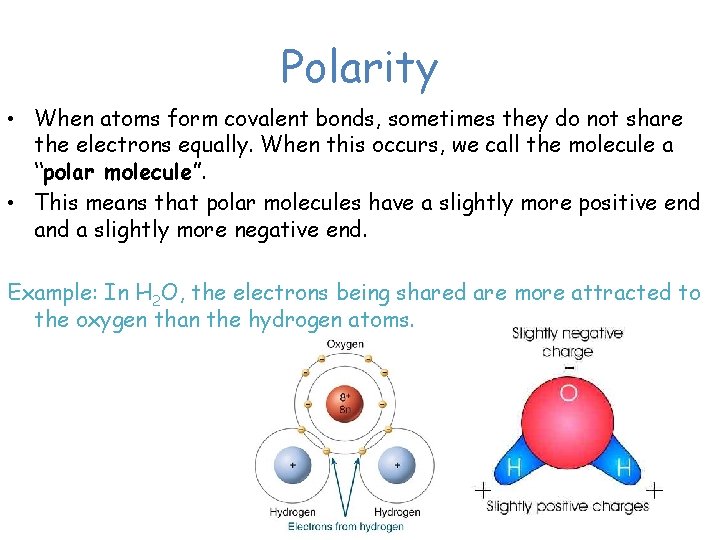
Polarity • When atoms form covalent bonds, sometimes they do not share the electrons equally. When this occurs, we call the molecule a “polar molecule”. • This means that polar molecules have a slightly more positive end a slightly more negative end. Example: In H 2 O, the electrons being shared are more attracted to the oxygen than the hydrogen atoms.
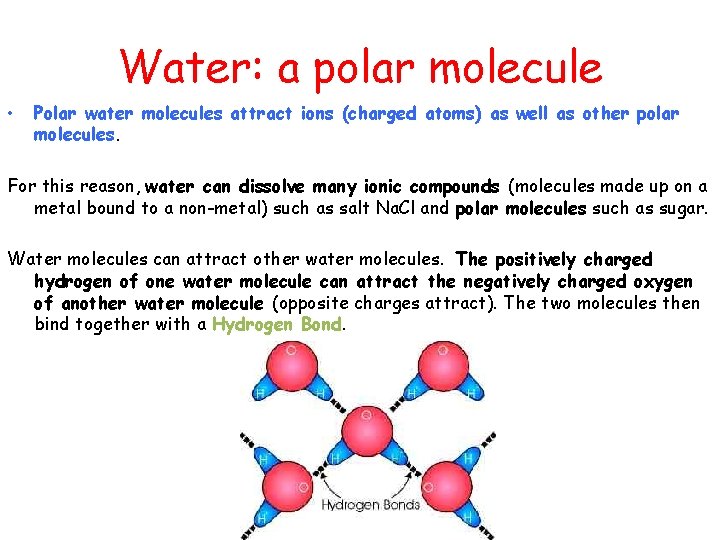
Water: a polar molecule • Polar water molecules attract ions (charged atoms) as well as other polar molecules. For this reason, water can dissolve many ionic compounds (molecules made up on a metal bound to a non-metal) such as salt Na. Cl and polar molecules such as sugar. Water molecules can attract other water molecules. The positively charged hydrogen of one water molecule can attract the negatively charged oxygen of another water molecule (opposite charges attract). The two molecules then bind together with a Hydrogen Bond.
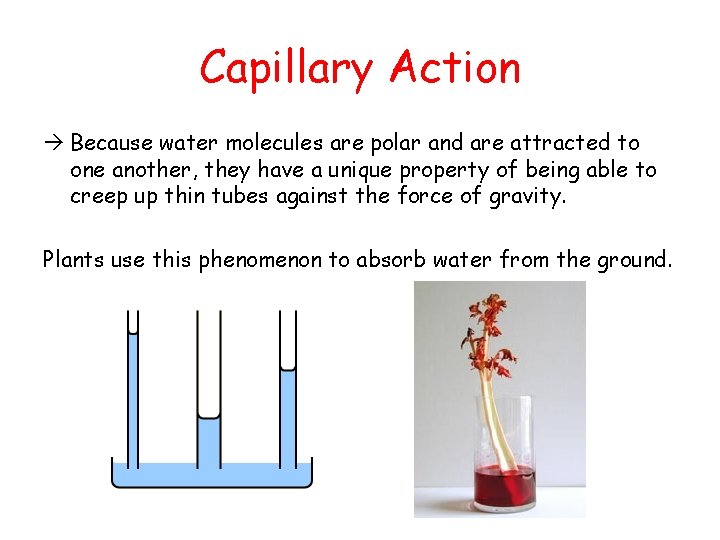
Capillary Action à Because water molecules are polar and are attracted to one another, they have a unique property of being able to creep up thin tubes against the force of gravity. Plants use this phenomenon to absorb water from the ground.
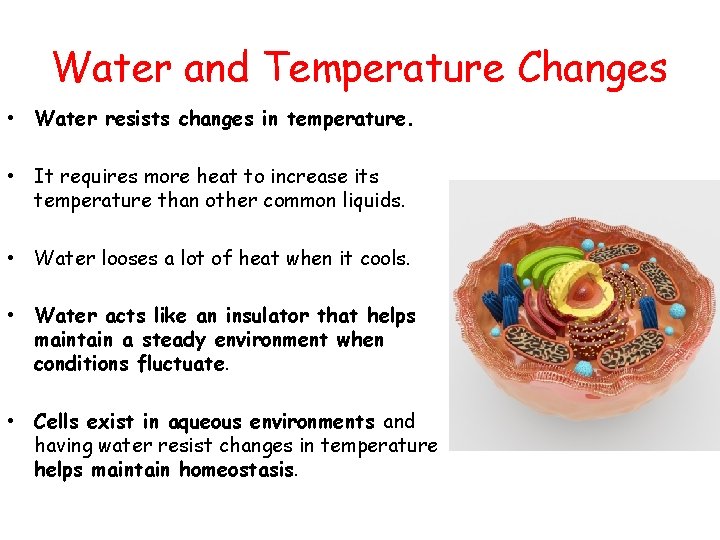
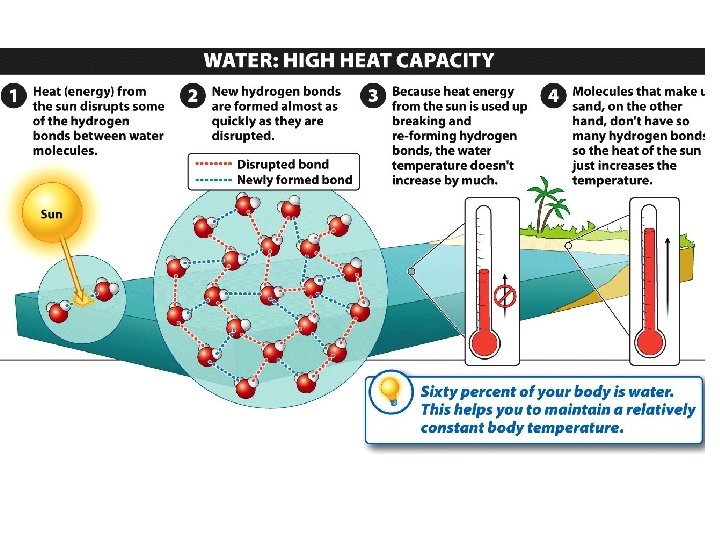
Water and Temperature Changes • Water resists changes in temperature. • It requires more heat to increase its temperature than other common liquids. • Water looses a lot of heat when it cools. • Water acts like an insulator that helps maintain a steady environment when conditions fluctuate. • Cells exist in aqueous environments and having water resist changes in temperature helps maintain homeostasis.
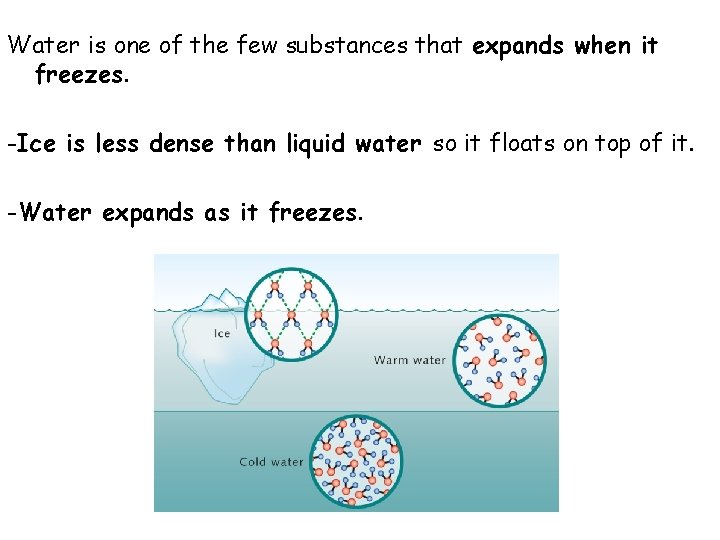
Water is one of the few substances that expands when it freezes. -Ice is less dense than liquid water so it floats on top of it. -Water expands as it freezes.
- Slides: 6