
Polarity Lewis Structures and Resonance Sections 8 4
- Slides: 29
Polarity, Lewis Structures, and Resonance Sections 8. 4 -8. 6
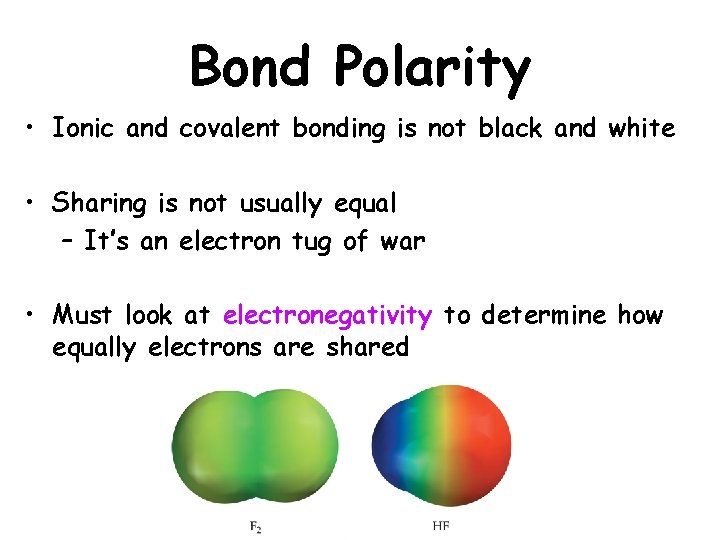
Bond Polarity • Ionic and covalent bonding is not black and white • Sharing is not usually equal – It’s an electron tug of war • Must look at electronegativity to determine how equally electrons are shared
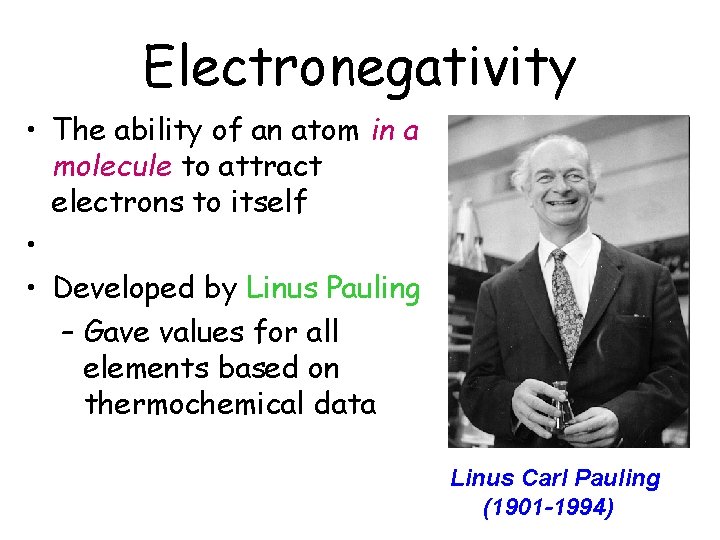
Electronegativity • The ability of an atom in a molecule to attract electrons to itself • • Developed by Linus Pauling – Gave values for all elements based on thermochemical data Linus Carl Pauling (1901 -1994)
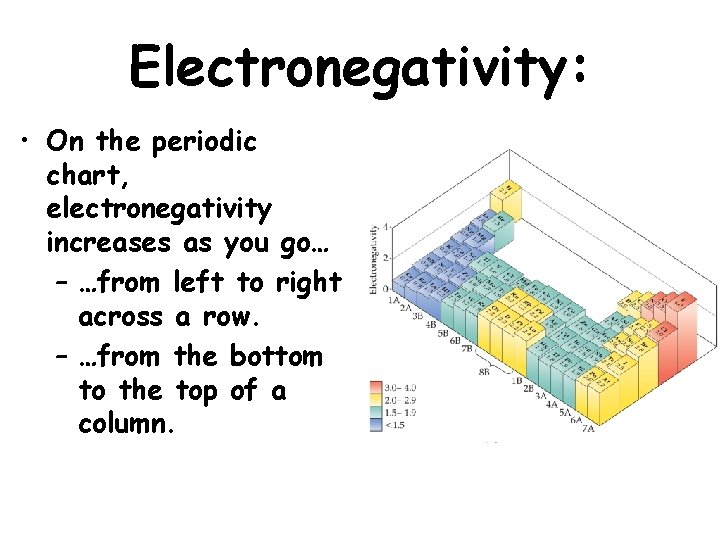
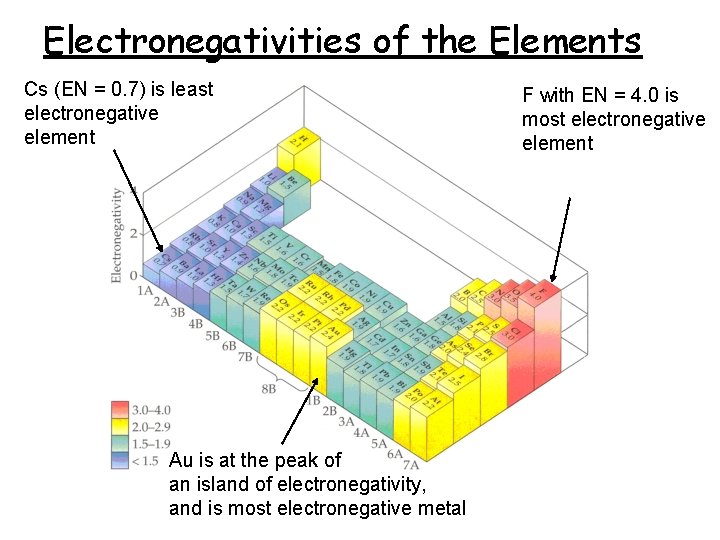
Electronegativity: • On the periodic chart, electronegativity increases as you go… – …from left to right across a row. – …from the bottom to the top of a column.
Electronegativities of the Elements Cs (EN = 0. 7) is least electronegative element Au is at the peak of an island of electronegativity, and is most electronegative metal F with EN = 4. 0 is most electronegative element
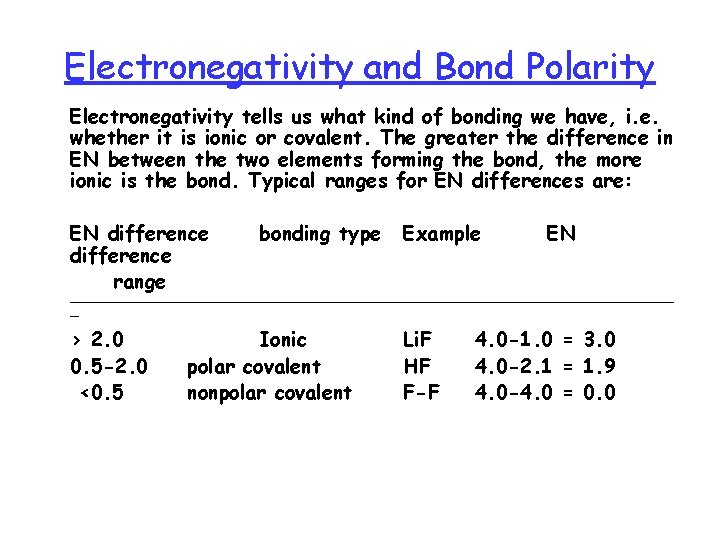
Electronegativity and Bond Polarity Electronegativity tells us what kind of bonding we have, i. e. whether it is ionic or covalent. The greater the difference in EN between the two elements forming the bond, the more ionic is the bond. Typical ranges for EN differences are: EN difference range bonding type Example EN _____________________________________ _ > 2. 0 0. 5 -2. 0 <0. 5 Ionic polar covalent nonpolar covalent Li. F HF F-F 4. 0 -1. 0 = 3. 0 4. 0 -2. 1 = 1. 9 4. 0 -4. 0 = 0. 0
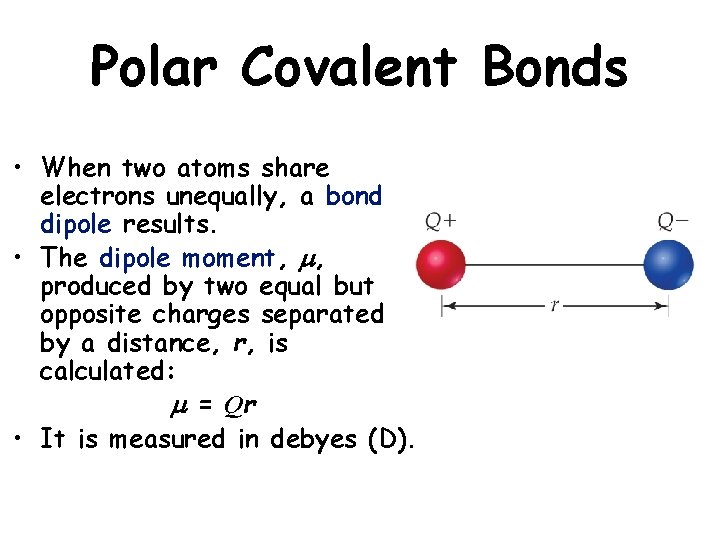
Polar Covalent Bonds • When two atoms share electrons unequally, a bond dipole results. • The dipole moment, , produced by two equal but opposite charges separated by a distance, r, is calculated: = Qr • It is measured in debyes (D).
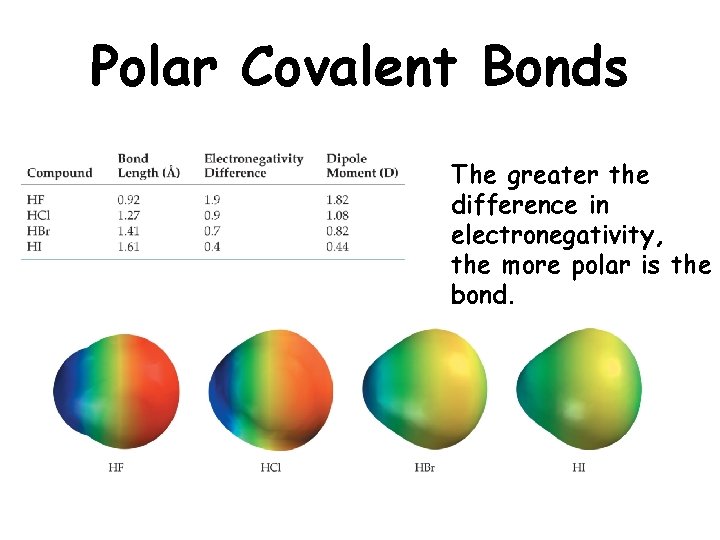
Polar Covalent Bonds The greater the difference in electronegativity, the more polar is the bond.
Bond Types and Nomenclature Naming ionic and covalent compounds
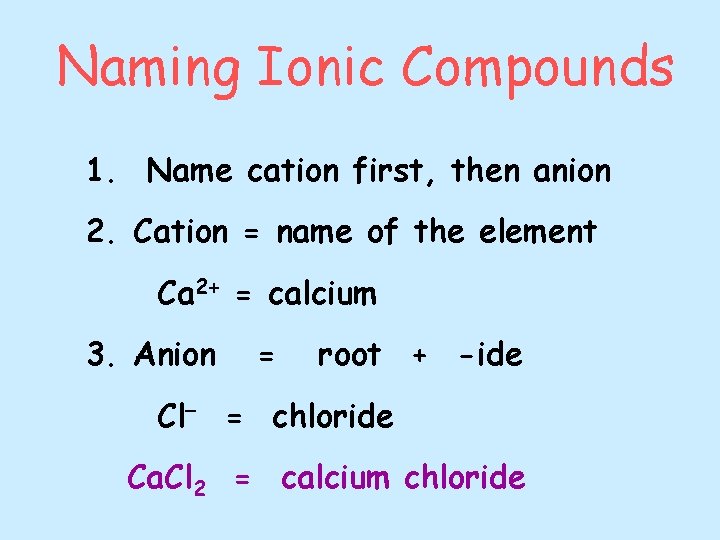
Naming Ionic Compounds 1. Name cation first, then anion 2. Cation = name of the element Ca 2+ = calcium 3. Anion = root + -ide Cl = chloride Ca. Cl 2 = calcium chloride
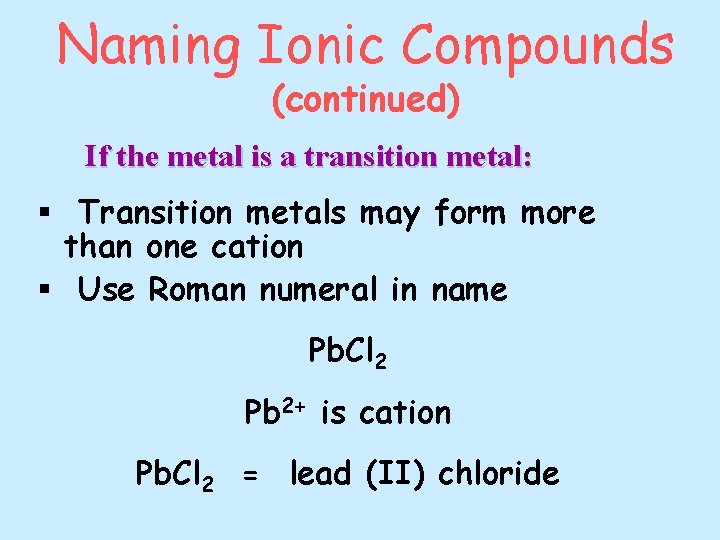
Naming Ionic Compounds (continued) If the metal is a transition metal: § Transition metals may form more than one cation § Use Roman numeral in name Pb. Cl 2 Pb 2+ is cation Pb. Cl 2 = lead (II) chloride
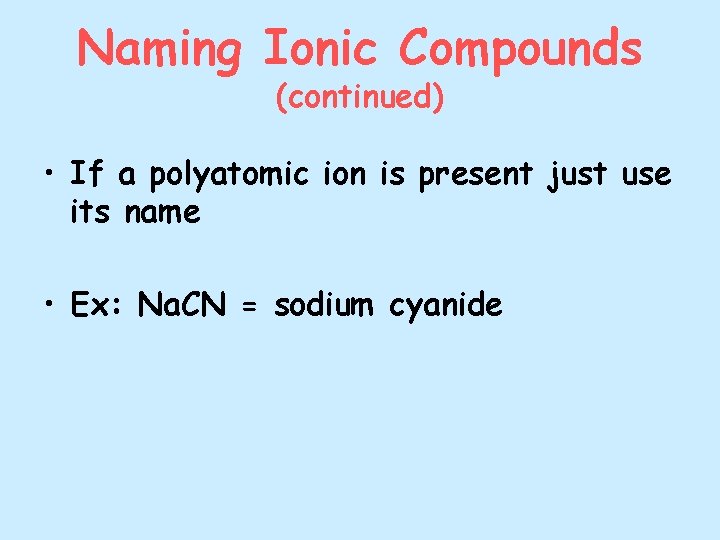
Naming Ionic Compounds (continued) • If a polyatomic ion is present just use its name • Ex: Na. CN = sodium cyanide
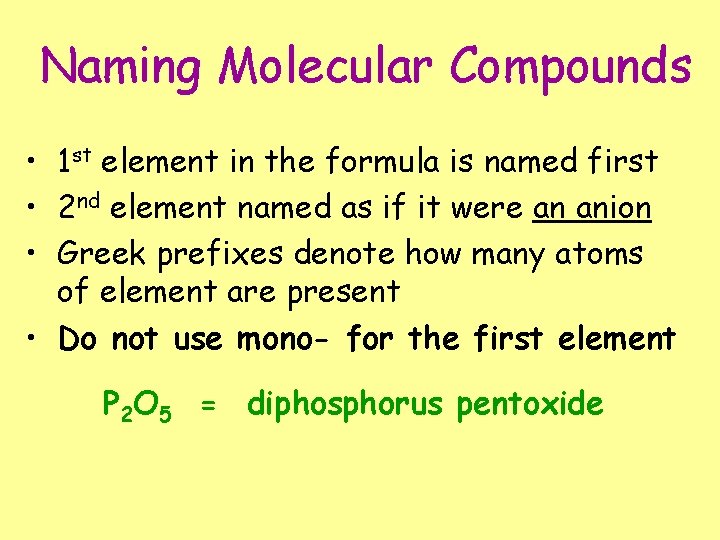
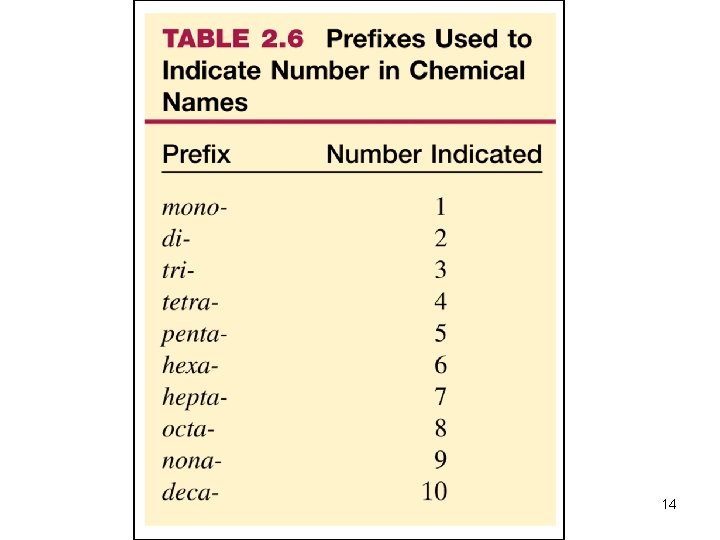
Naming Molecular Compounds • 1 st element in the formula is named first • 2 nd element named as if it were an anion • Greek prefixes denote how many atoms of element are present • Do not use mono- for the first element P 2 O 5 = diphosphorus pentoxide
14
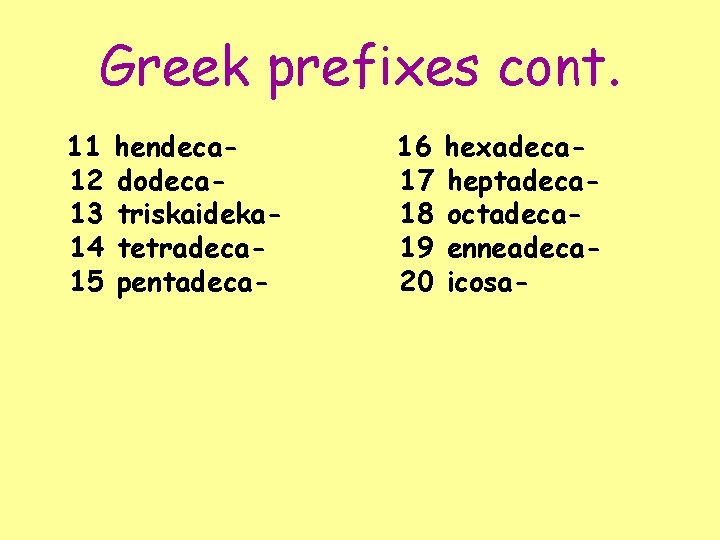
Greek prefixes cont. 11 12 13 14 15 hendecadodecatriskaidekatetradecapentadeca- 16 17 18 19 20 hexadecaheptadecaoctadecaenneadecaicosa-
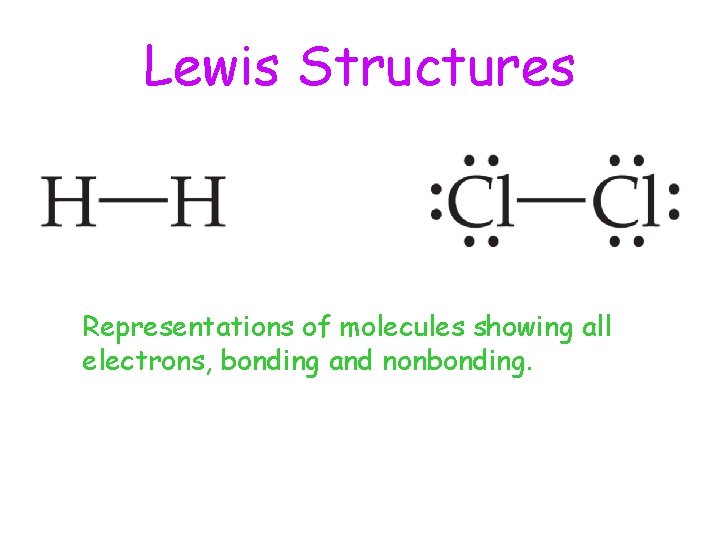
Lewis Structures Representations of molecules showing all electrons, bonding and nonbonding.
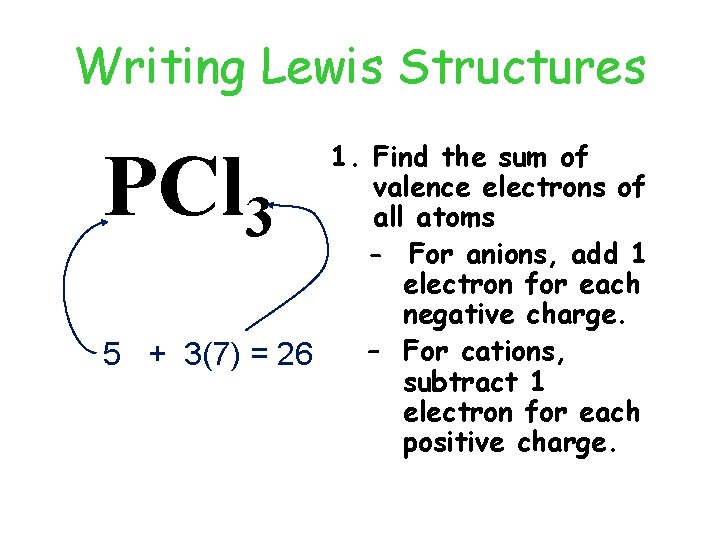
Writing Lewis Structures 1. Find the sum of valence electrons of all atoms - For anions, add 1 electron for each negative charge. – For cations, 5 + 3(7) = 26 subtract 1 electron for each positive charge. PCl 3
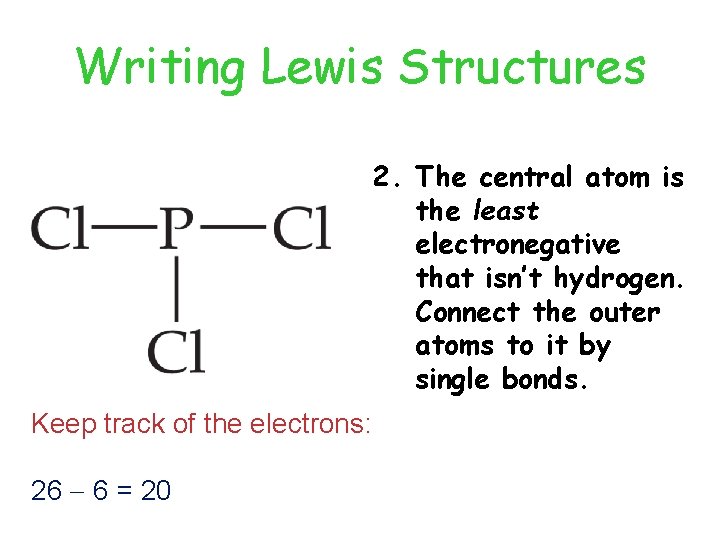
Writing Lewis Structures 2. The central atom is the least electronegative that isn’t hydrogen. Connect the outer atoms to it by single bonds. Keep track of the electrons: 26 6 = 20
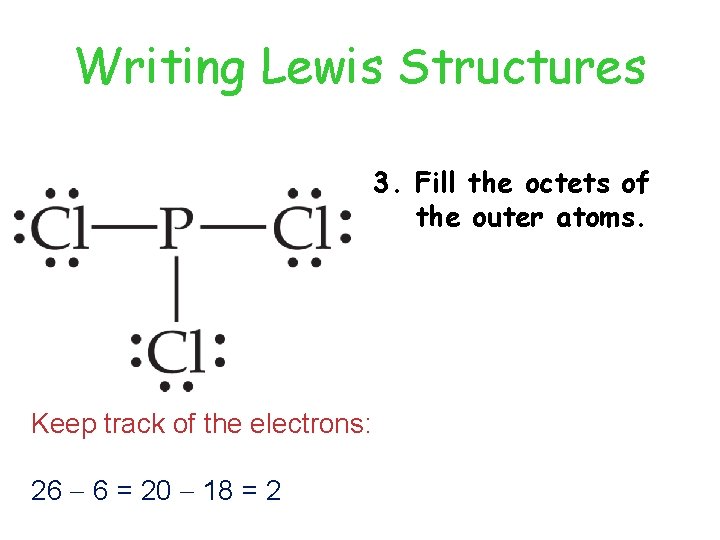
Writing Lewis Structures 3. Fill the octets of the outer atoms. Keep track of the electrons: 26 6 = 20 18 = 2
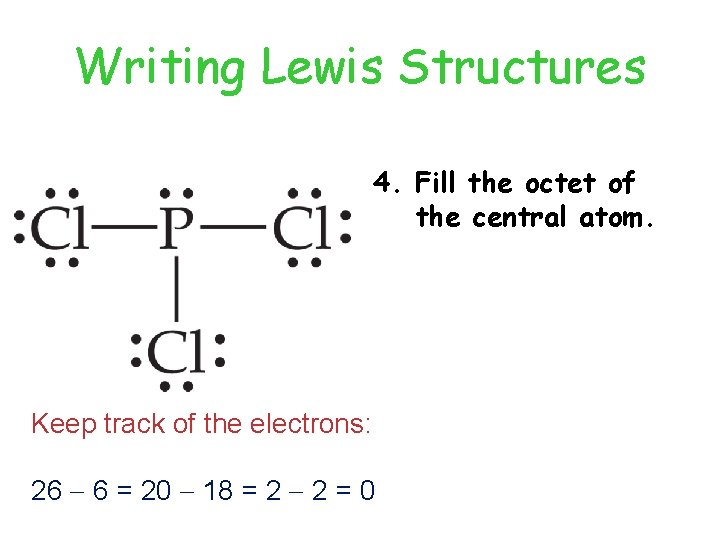
Writing Lewis Structures 4. Fill the octet of the central atom. Keep track of the electrons: 26 6 = 20 18 = 2 2 = 0
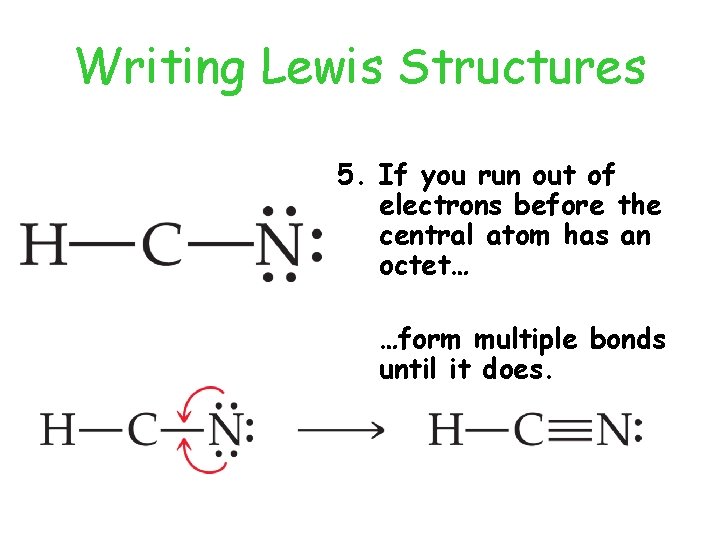
Writing Lewis Structures 5. If you run out of electrons before the central atom has an octet… …form multiple bonds until it does.
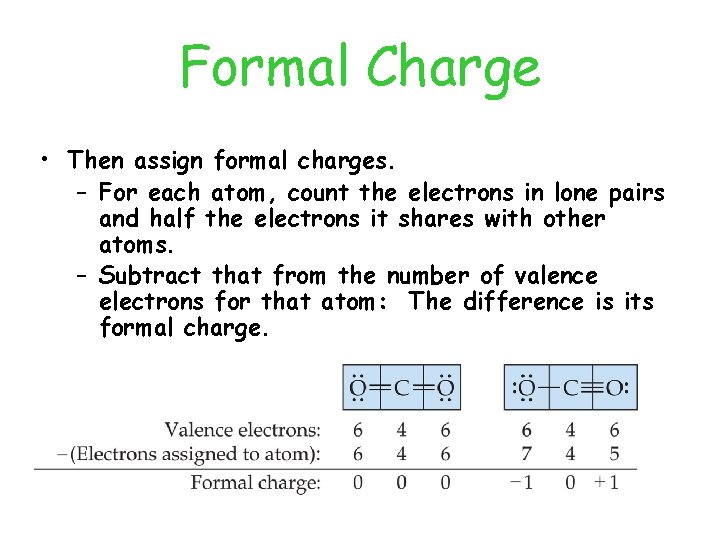
Formal Charge • Then assign formal charges. – For each atom, count the electrons in lone pairs and half the electrons it shares with other atoms. – Subtract that from the number of valence electrons for that atom: The difference is its formal charge.
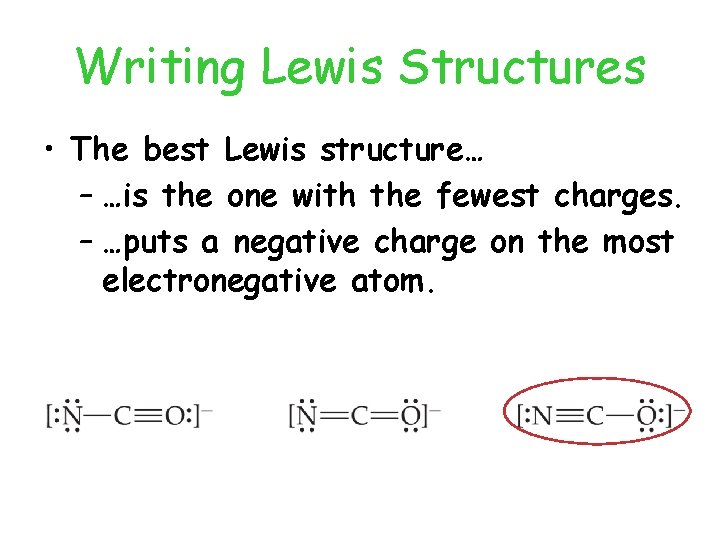
Writing Lewis Structures • The best Lewis structure… – …is the one with the fewest charges. – …puts a negative charge on the most electronegative atom.
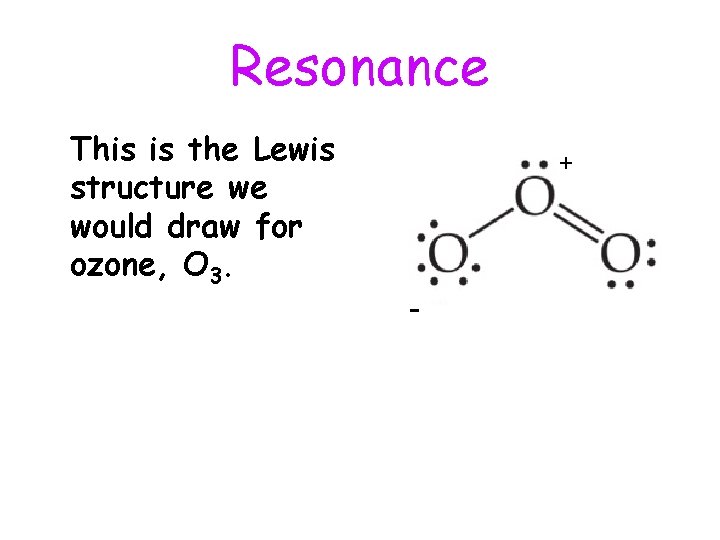
Resonance This is the Lewis structure we would draw for ozone, O 3. + -
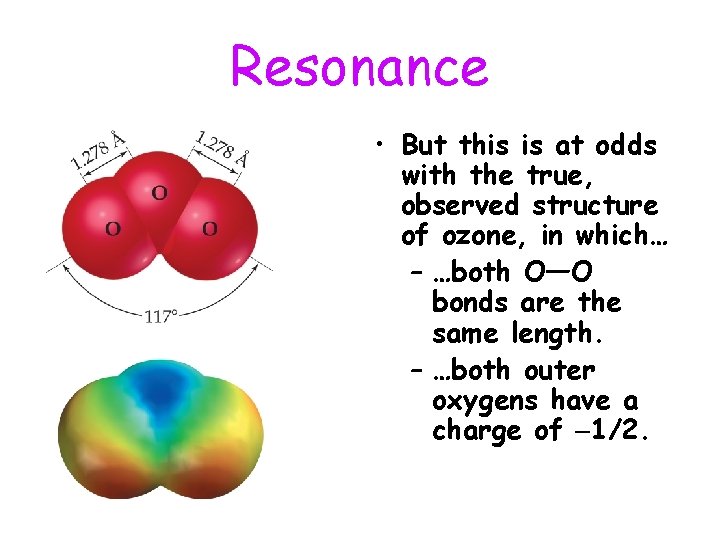
Resonance • But this is at odds with the true, observed structure of ozone, in which… – …both O—O bonds are the same length. – …both outer oxygens have a charge of 1/2.
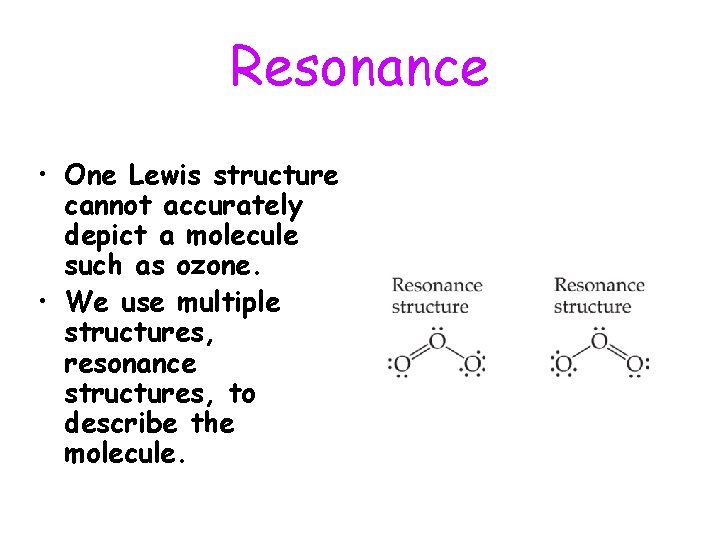
Resonance • One Lewis structure cannot accurately depict a molecule such as ozone. • We use multiple structures, resonance structures, to describe the molecule.
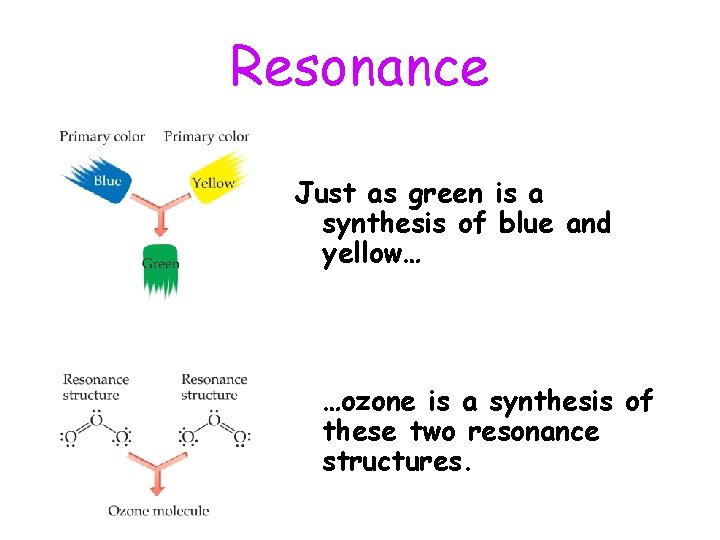
Resonance Just as green is a synthesis of blue and yellow… …ozone is a synthesis of these two resonance structures.
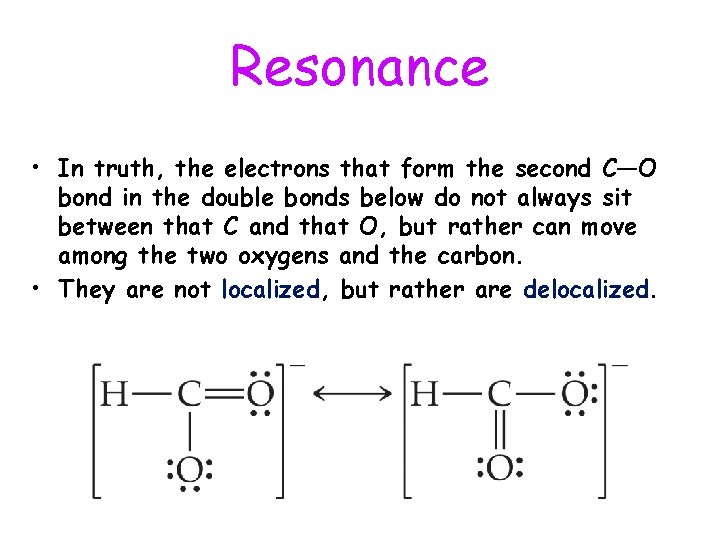
Resonance • In truth, the electrons that form the second C—O bond in the double bonds below do not always sit between that C and that O, but rather can move among the two oxygens and the carbon. • They are not localized, but rather are delocalized.
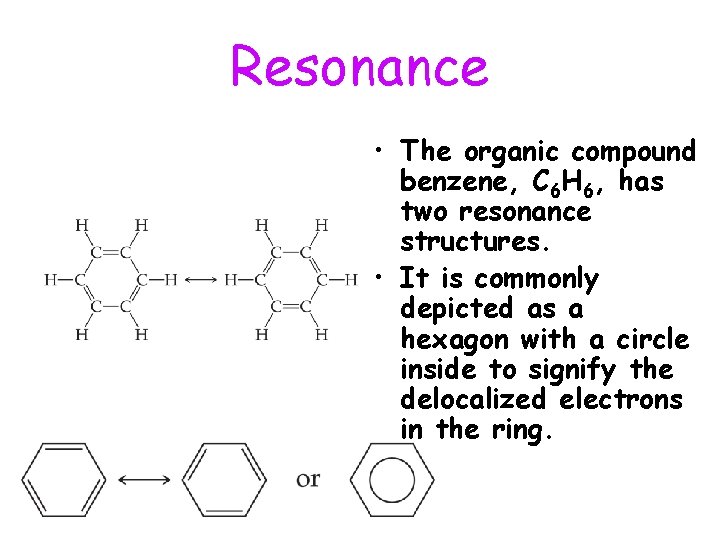
Resonance • The organic compound benzene, C 6 H 6, has two resonance structures. • It is commonly depicted as a hexagon with a circle inside to signify the delocalized electrons in the ring.