
Polarity Lewis Structures and Resonance Sections 4 6

- Slides: 18
Polarity, Lewis Structures, and Resonance Sections 4 -6
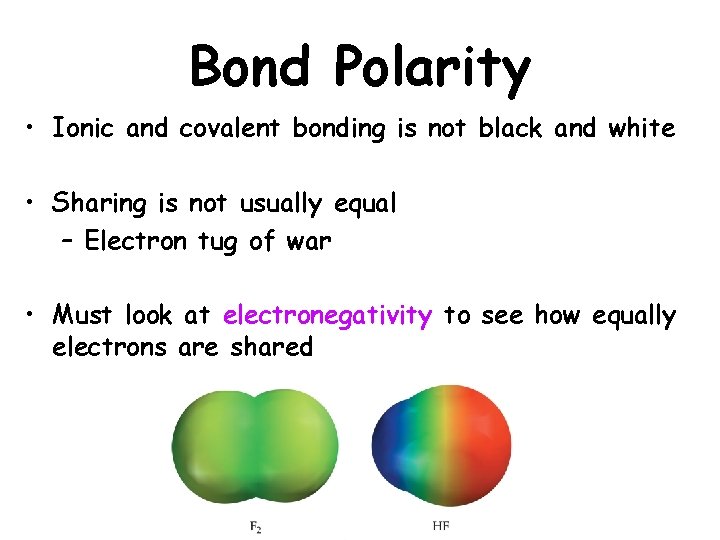
Bond Polarity • Ionic and covalent bonding is not black and white • Sharing is not usually equal – Electron tug of war • Must look at electronegativity to see how equally electrons are shared
Electronegativity • The ability of an atom in a molecule to attract electrons to itself • Linus Pauling
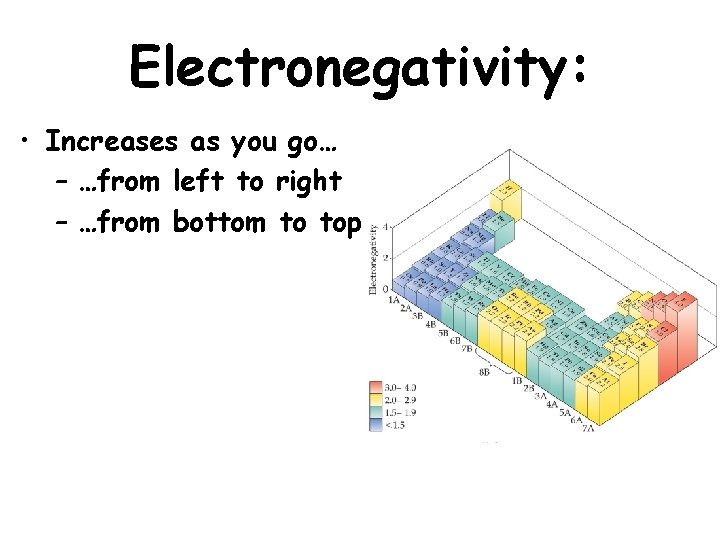
Electronegativity: • Increases as you go… – …from left to right – …from bottom to top
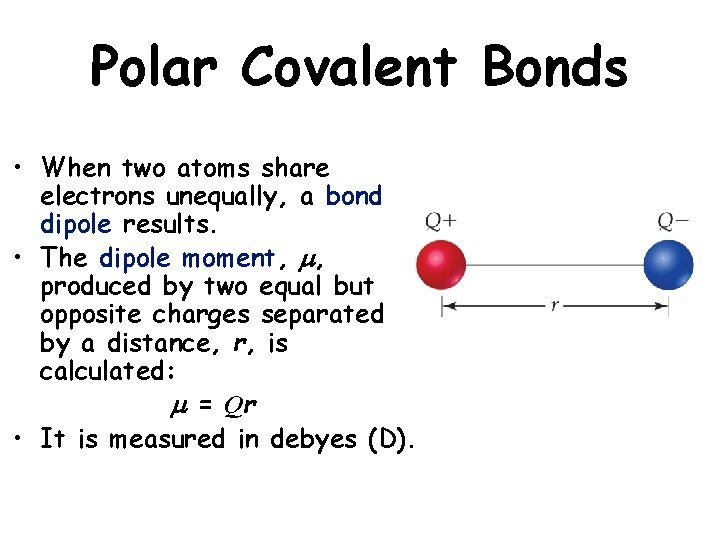
Polar Covalent Bonds • When two atoms share electrons unequally, a bond dipole results. • The dipole moment, , produced by two equal but opposite charges separated by a distance, r, is calculated: = Qr • It is measured in debyes (D).
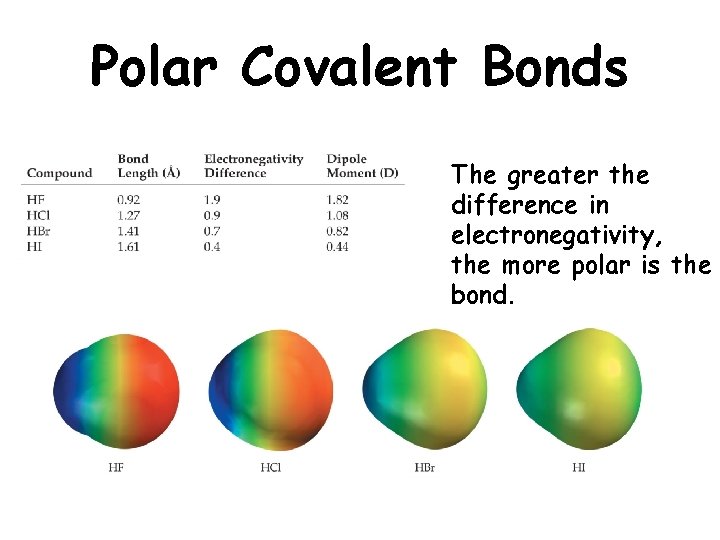
Polar Covalent Bonds The greater the difference in electronegativity, the more polar is the bond.
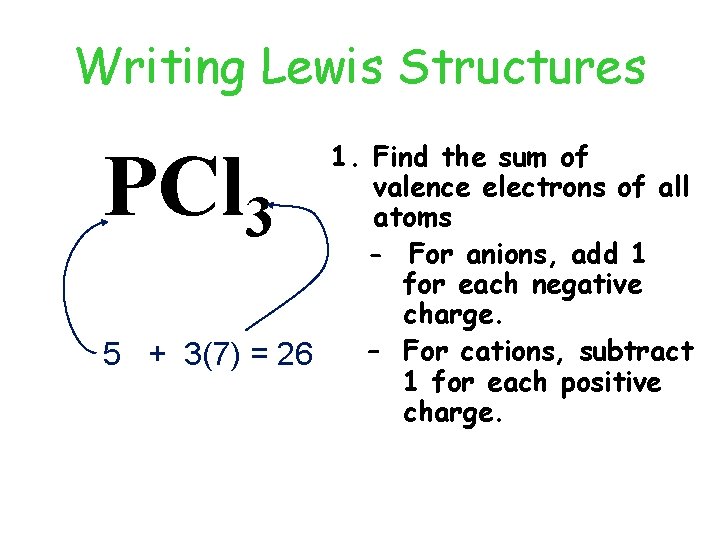
Writing Lewis Structures 1. Find the sum of valence electrons of all atoms - For anions, add 1 for each negative charge. – For cations, subtract 5 + 3(7) = 26 1 for each positive charge. PCl 3
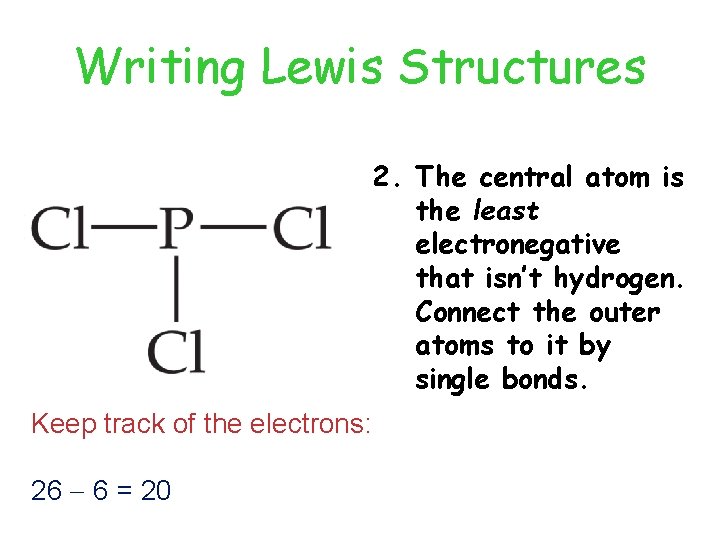
Writing Lewis Structures 2. The central atom is the least electronegative that isn’t hydrogen. Connect the outer atoms to it by single bonds. Keep track of the electrons: 26 6 = 20
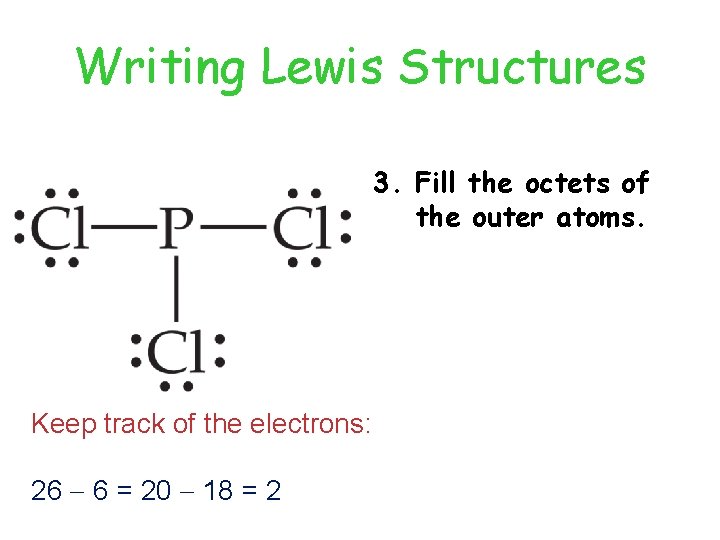
Writing Lewis Structures 3. Fill the octets of the outer atoms. Keep track of the electrons: 26 6 = 20 18 = 2
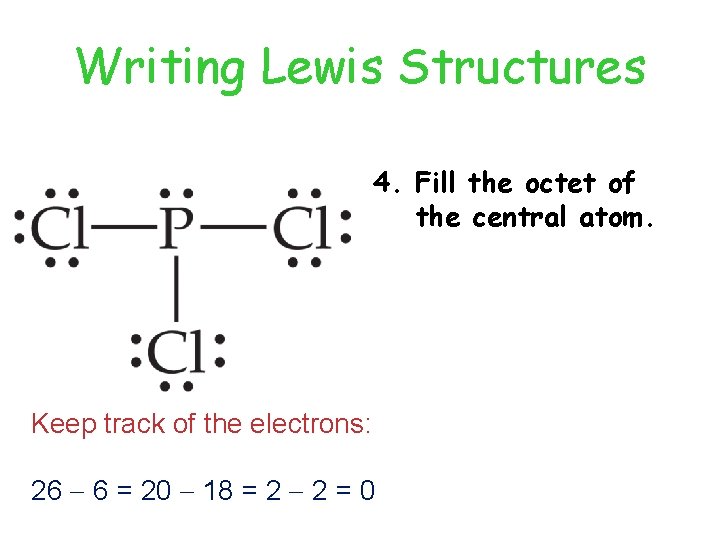
Writing Lewis Structures 4. Fill the octet of the central atom. Keep track of the electrons: 26 6 = 20 18 = 2 2 = 0
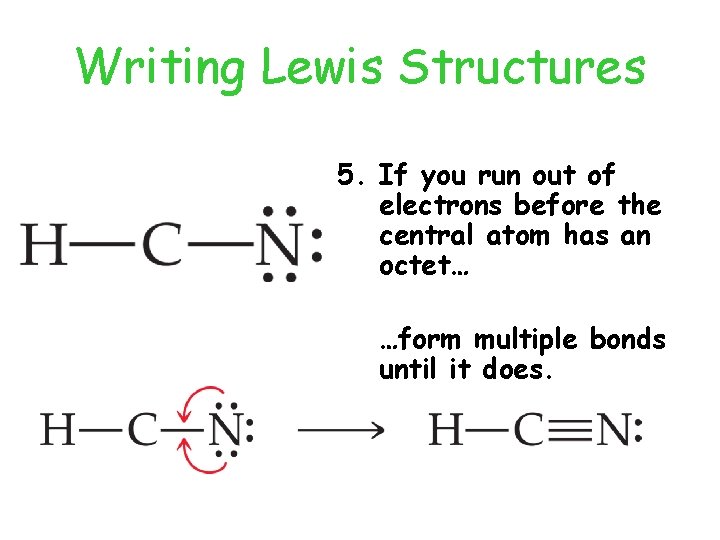
Writing Lewis Structures 5. If you run out of electrons before the central atom has an octet… …form multiple bonds until it does.
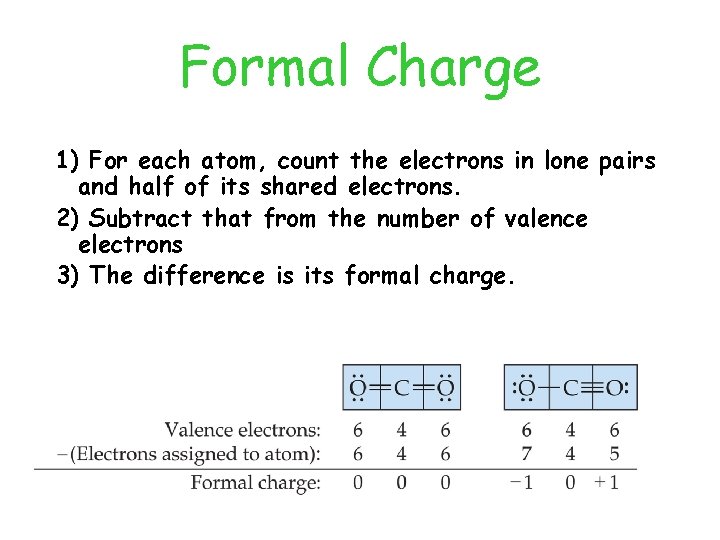
Formal Charge 1) For each atom, count the electrons in lone pairs and half of its shared electrons. 2) Subtract that from the number of valence electrons 3) The difference is its formal charge.
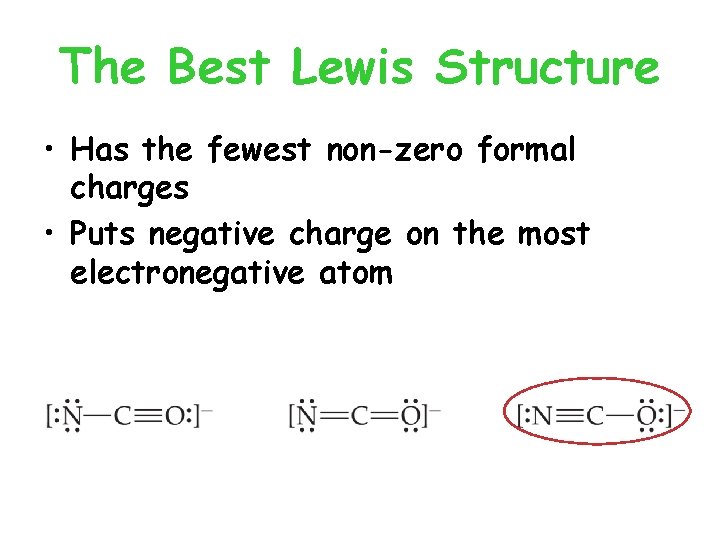
The Best Lewis Structure • Has the fewest non-zero formal charges • Puts negative charge on the most electronegative atom
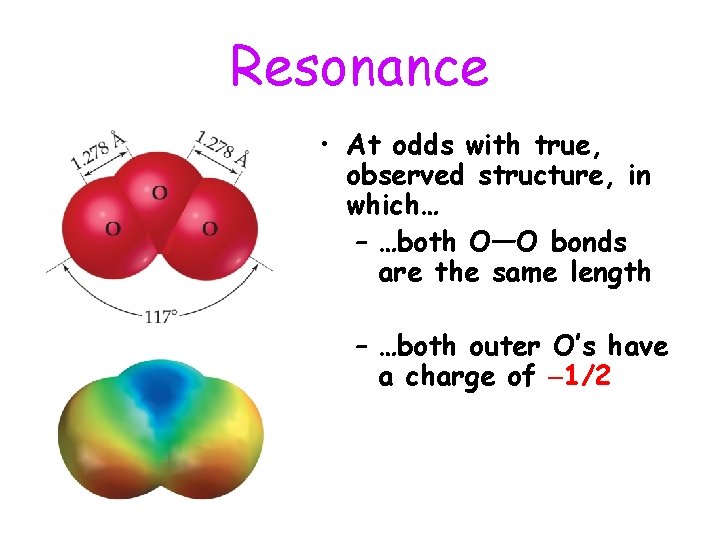
Resonance Lewis structure for ozone, O 3. +1 -1
Resonance • At odds with true, observed structure, in which… – …both O—O bonds are the same length – …both outer O’s have a charge of 1/2
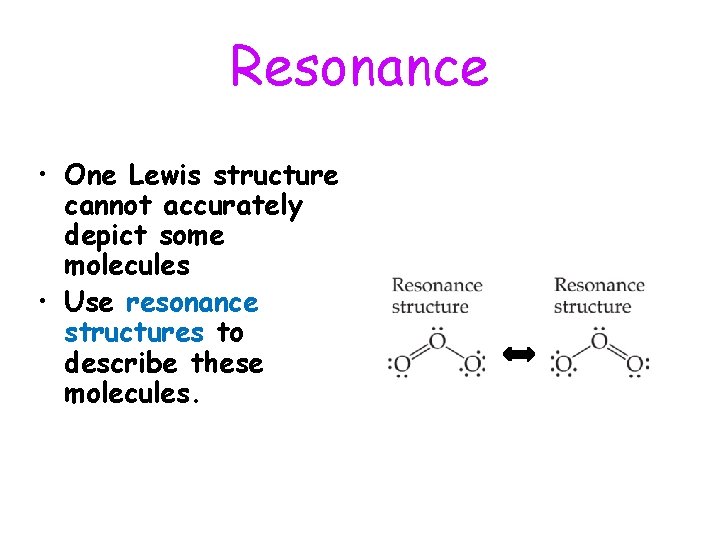
Resonance • One Lewis structure cannot accurately depict some molecules • Use resonance structures to describe these molecules.
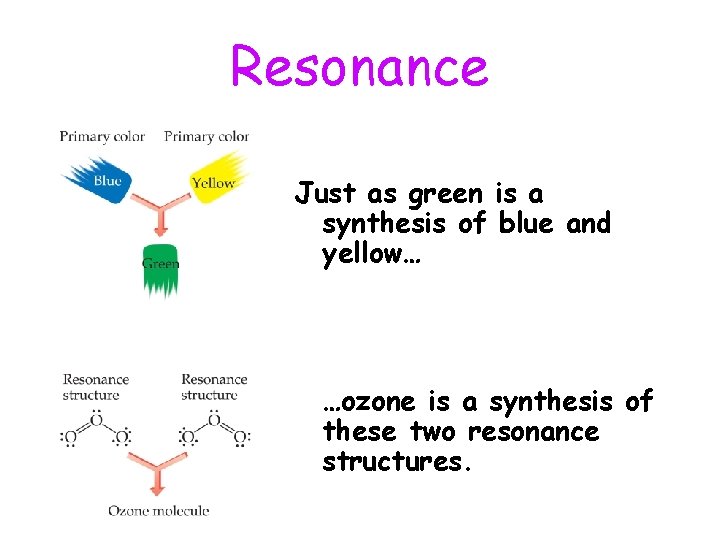
Resonance Just as green is a synthesis of blue and yellow… …ozone is a synthesis of these two resonance structures.
Homework • 30, 34, 36, 38, 40 (a only), 42, 46, 50, and 52 starting on page 337