
Polarity Effect of Microcurrent Electrical Stimulation on Tendon




- Slides: 20
Polarity Effect of Microcurrent Electrical Stimulation on Tendon Healing: Biomechanical and Histopathological Studies Ahmed A. , Sherein, S. Elgayed, Ibrahim I. , M, A.
Introduction • Tendon injuries are common clinical problems. The tendon tissues heal at a slower rate than other connective tissue • Microcurrent electrical stimulation (MES) is a low level of electrical current that mirrors the body’s own natural current, so it may be a particularly beneficial where endogenous healing has failed
Introduction • MES has been used for stimulation of soft tissue healing • Despite the presence of many studies on the effect of MES on tendon healing, more comparative studies are needed to compare and standardize the ideal polarity at each stage of tendon healing.
Purpose of the study The purpose of the current study was to Investigate the effect of (MES) applied with different polarity on the biomechanical properties of injured tendons and to correlate results with histopathological studies
Relevance This study focuses the attention of the physical therapists in their clinical practice to the importance of the polarity of MES according to the stage of healing during treatment of tendons injuries.
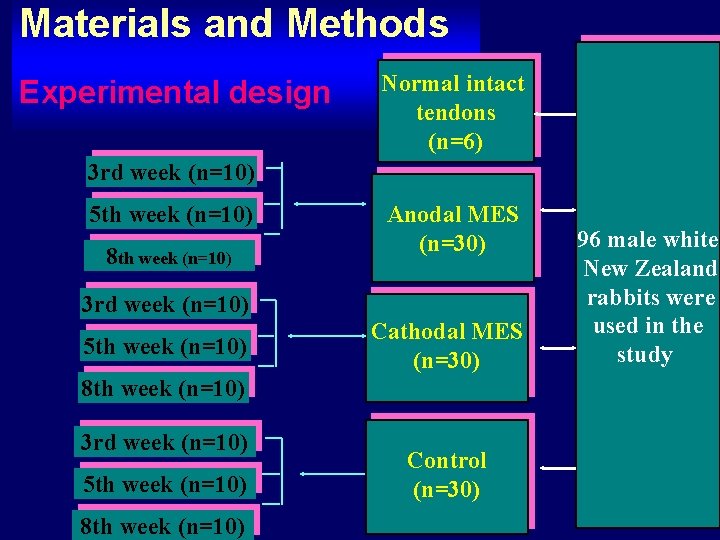
Materials and Methods Experimental design Normal intact tendons (n=6) 3 rd week (n=10) 5 th week (n=10) 8 th week (n=10) Anodal MES (n=30) 3 rd week (n=10) 5 th week (n=10) Cathodal MES (n=30) 8 th week (n=10) 3 rd week (n=10) 5 th week (n=10) 8 th week (n=10) Control (n=30) 96 male white New Zealand rabbits were used in the study
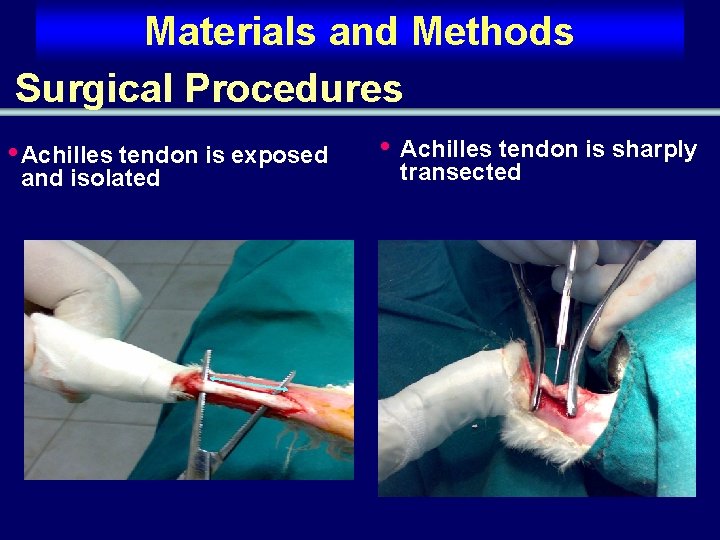
Materials and Methods Surgical Procedures • Achilles tendon is exposed and isolated • Achilles tendon is sharply transected
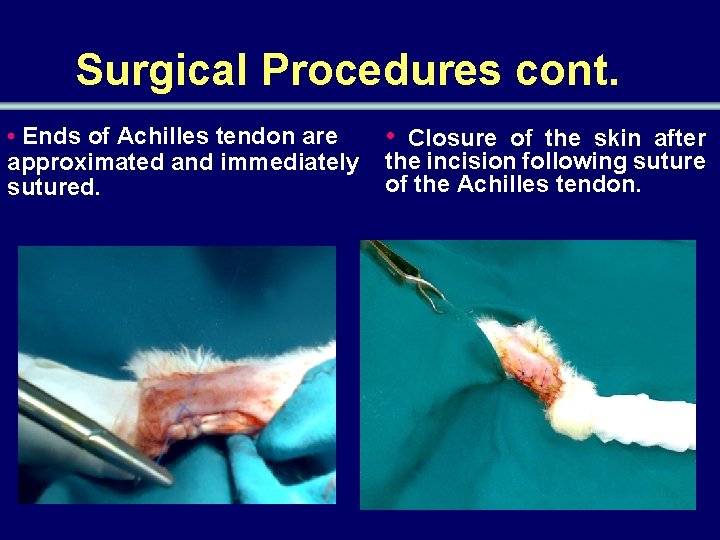
Surgical Procedures cont. • Ends of Achilles tendon are approximated and immediately sutured. • Closure of the skin after the incision following suture of the Achilles tendon.
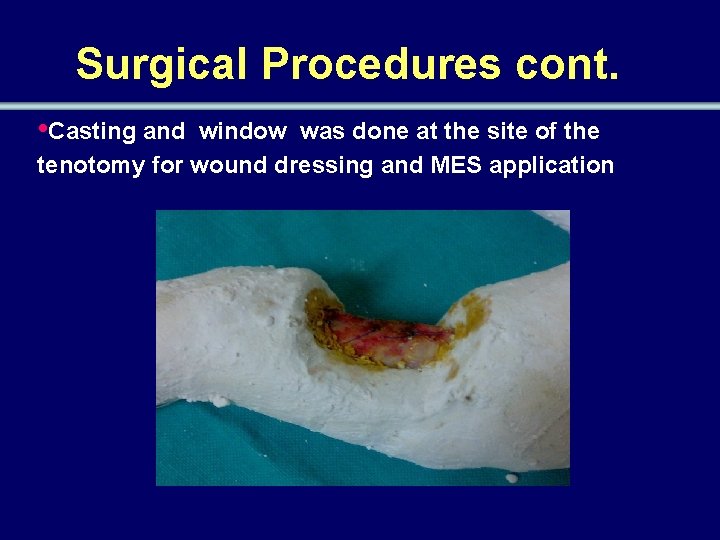
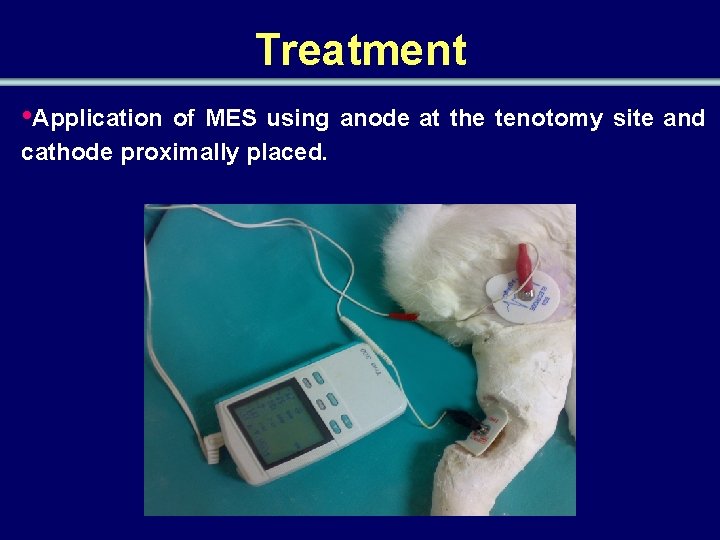
Surgical Procedures cont. • Casting and window was done at the site of the tenotomy for wound dressing and MES application
Treatment • Application of MES using anode at the tenotomy site and cathode proximally placed.
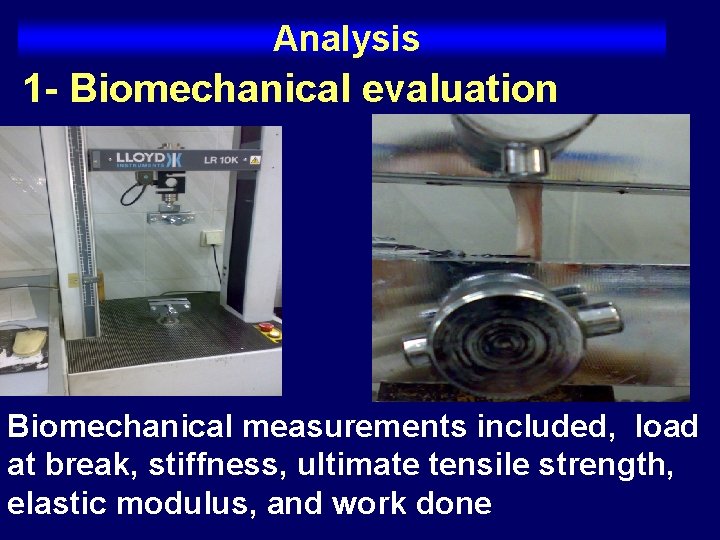
Analysis 1 - Biomechanical evaluation Biomechanical measurements included, load at break, stiffness, ultimate tensile strength, elastic modulus, and work done
Analysis 2 - Histopathological analysis Included the condition of fibroblasts and collagen of the neotendon
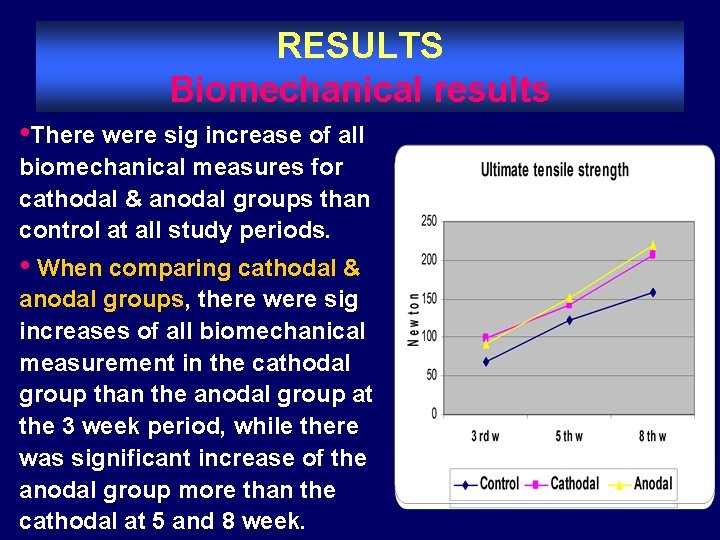
RESULTS Biomechanical results • There were sig increase of all biomechanical measures for cathodal & anodal groups than control at all study periods. • When comparing cathodal & anodal groups, there were sig increases of all biomechanical measurement in the cathodal group than the anodal group at the 3 week period, while there was significant increase of the anodal group more than the cathodal at 5 and 8 week.
RESULTS Histopathological results
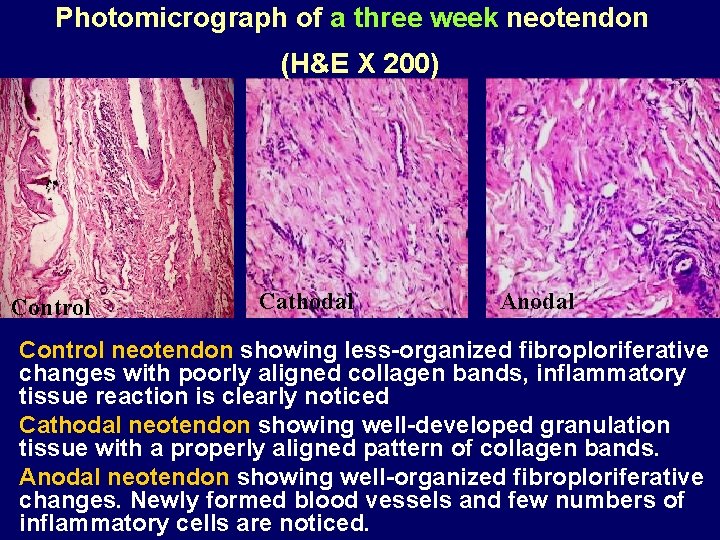
Photomicrograph of a three week neotendon (H&E X 200) Control Cathodal Anodal Control neotendon showing less-organized fibroploriferative changes with poorly aligned collagen bands, inflammatory tissue reaction is clearly noticed Cathodal neotendon showing well-developed granulation tissue with a properly aligned pattern of collagen bands. Anodal neotendon showing well-organized fibroploriferative changes. Newly formed blood vessels and few numbers of inflammatory cells are noticed.
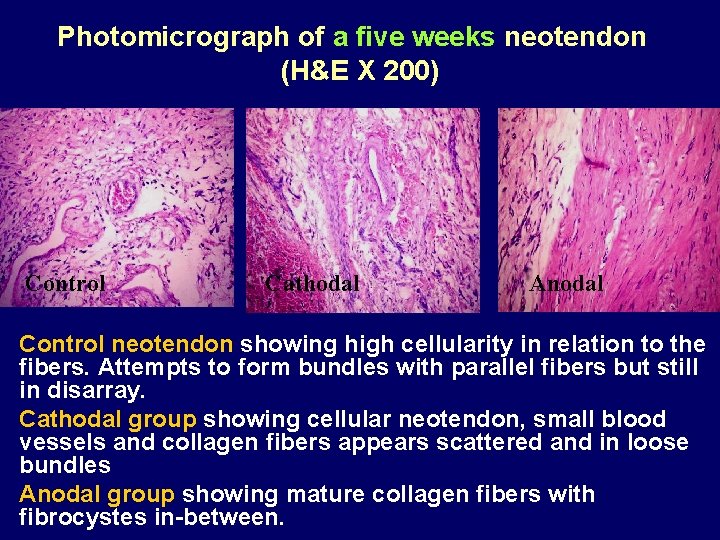
Photomicrograph of a five weeks neotendon (H&E X 200) Control Cathodal Anodal Control neotendon showing high cellularity in relation to the fibers. Attempts to form bundles with parallel fibers but still in disarray. Cathodal group showing cellular neotendon, small blood vessels and collagen fibers appears scattered and in loose bundles Anodal group showing mature collagen fibers with fibrocystes in-between.
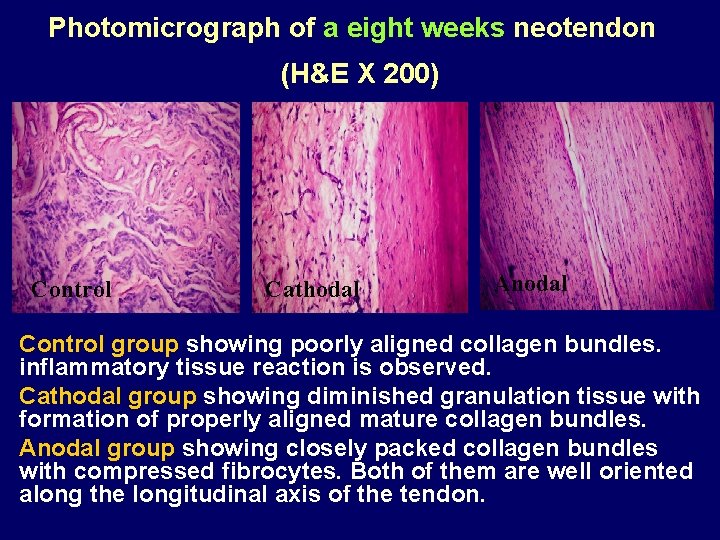
Photomicrograph of a eight weeks neotendon (H&E X 200) Control Cathodal Anodal Control group showing poorly aligned collagen bundles. inflammatory tissue reaction is observed. Cathodal group showing diminished granulation tissue with formation of properly aligned mature collagen bundles. Anodal group showing closely packed collagen bundles with compressed fibrocytes. Both of them are well oriented along the longitudinal axis of the tendon.
Conclusion • MES improved the healing process of tendon • and the polarity of MES could be an important factor to be considered in treating tendon injuries.
Implementations Utilization of combination of polarity may be better than using one polarity throughout the healing process of injured tendons , i. e. : cathodal polarity of MES at the early healing stage, followed by anodal polarity at the late healing stage.