
Polarity and Intermolecular Forces Types of bonds Ionic
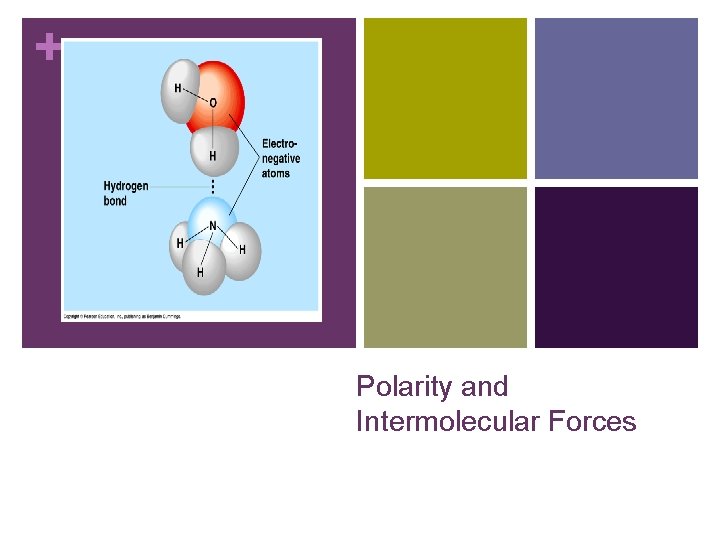
+ Polarity and Intermolecular Forces
+ Types of bonds Ionic – transfer of e- from one atom to another Covalent - sharing of e- between atoms a) nonpolar covalent – equal sharing of eb) polar covalent – unequal sharing of e-
+ Polar bonds and Electronegativity is the ability of an atom to attract electrons in a chemical bond Polar bonds result when a highly electronegative atom bonds to a less electronegative atom
+ Determining Polarity A covalent bond is polar if there is a significant difference between the electronegativities of the two atoms (see below): Electronegativity Difference Type of Bond 0 -0. 3 Nonpolar covalent 0. 4 -1. 9 Polar covalent 2. 0 or greater Ionic
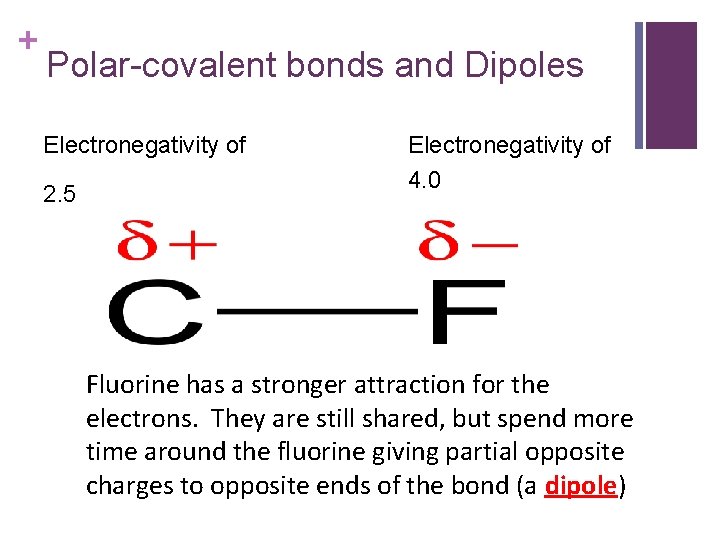
+ Polar-covalent bonds and Dipoles Electronegativity of 2. 5 Electronegativity of 4. 0 Fluorine has a stronger attraction for the electrons. They are still shared, but spend more time around the fluorine giving partial opposite charges to opposite ends of the bond (a dipole)
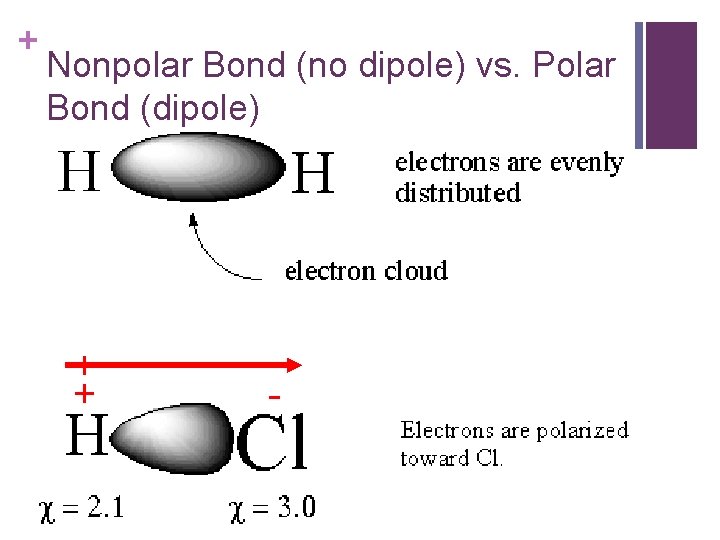
+ Nonpolar Bond (no dipole) vs. Polar Bond (dipole) + + -
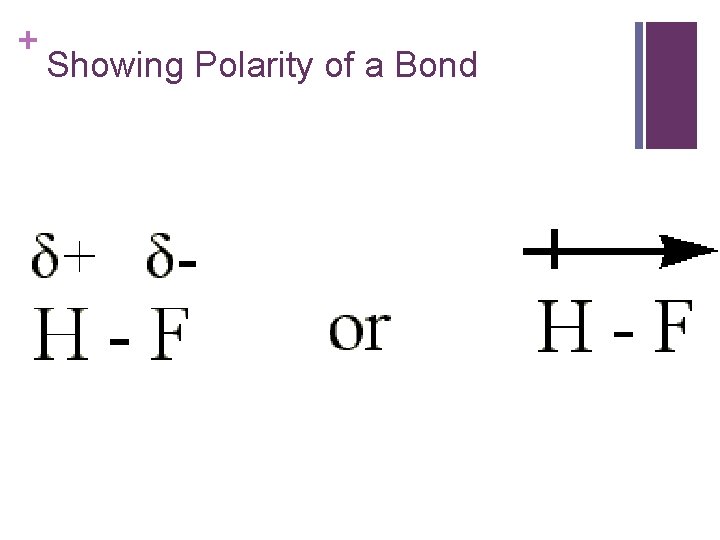
+ Showing Polarity of a Bond
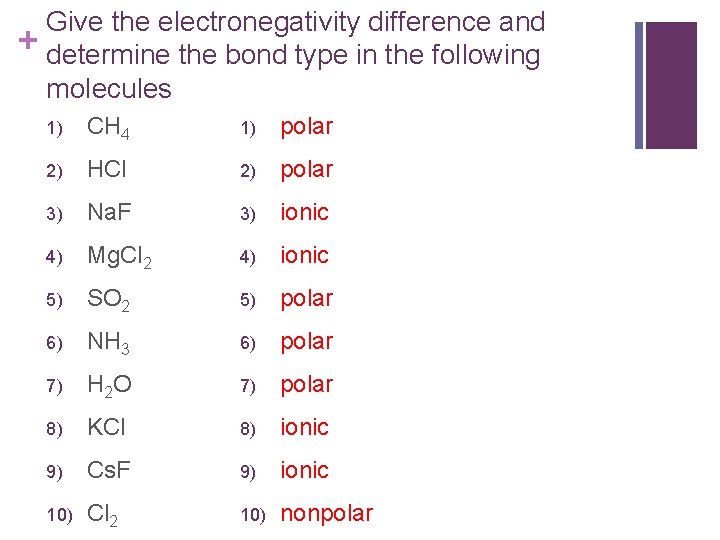
Give the electronegativity difference and + determine the bond type in the following molecules 1) CH 4 1) polar 2) HCl 2) polar 3) Na. F 3) ionic 4) Mg. Cl 2 4) ionic 5) SO 2 5) polar 6) NH 3 6) polar 7) H 2 O 7) polar 8) KCl 8) ionic 9) Cs. F 9) ionic 10) Cl 2 10) nonpolar
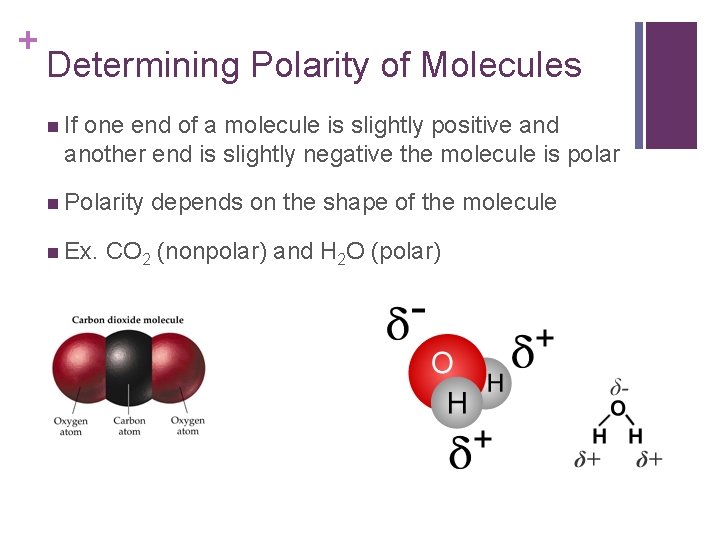
+ Determining Polarity of Molecules If one end of a molecule is slightly positive and another end is slightly negative the molecule is polar Polarity Ex. depends on the shape of the molecule CO 2 (nonpolar) and H 2 O (polar)
+ To determine polarity of a molecule you need the following: Lewis Structure AXE designation and molecular shape (using your chart) If surrounding atoms are identical in the following shapes, the molecule has no dipole (it’s nonpolar): linear, trigonal planar, or tetrahedral
+ Determine the Polarity of the following molecules: 1) Water 2) Carbon tetrachloride 3) Carbon dioxide 4) Methyl chloride (CH 3 Cl) 5) Sulfur dioxide 6) Boron trichloride
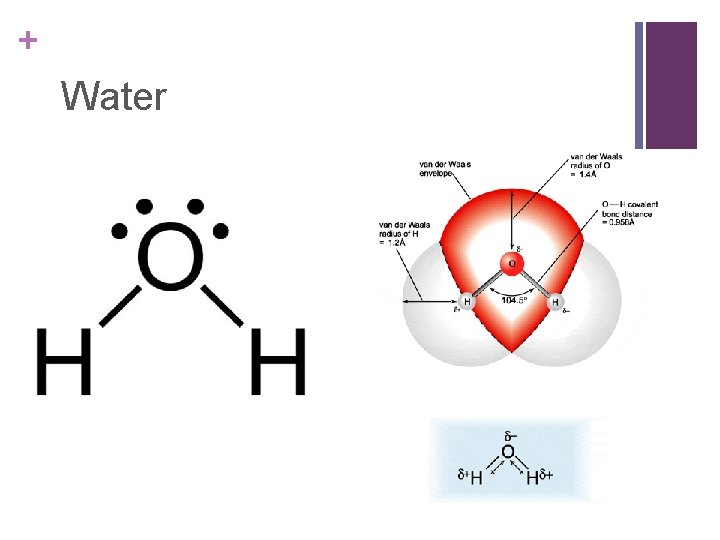
+ Water
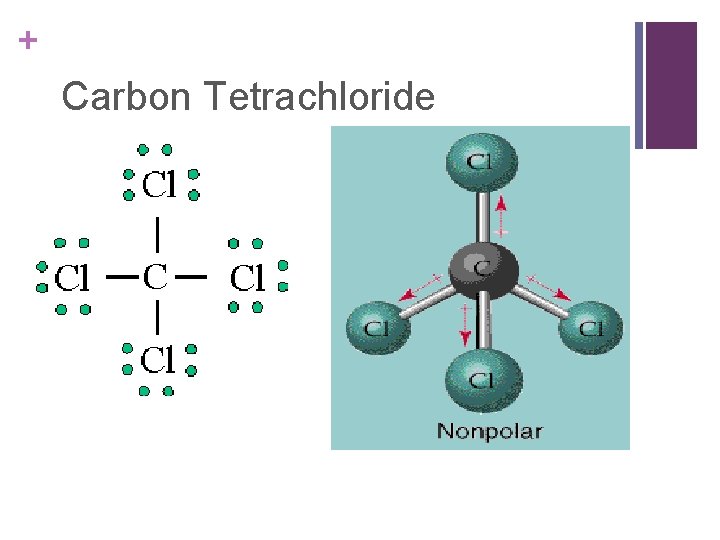
+ Carbon Tetrachloride
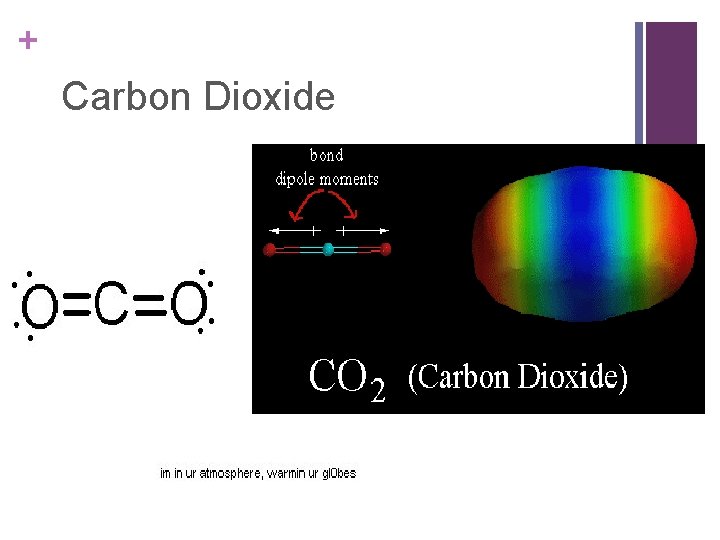
+ Carbon Dioxide
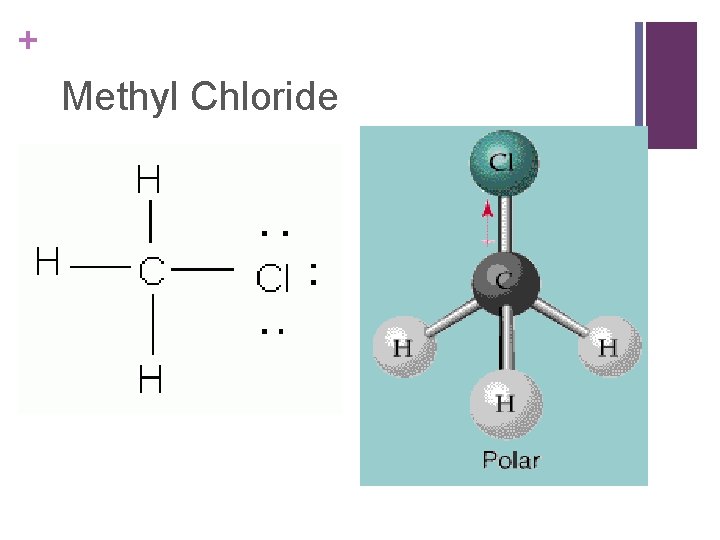
+ Methyl Chloride
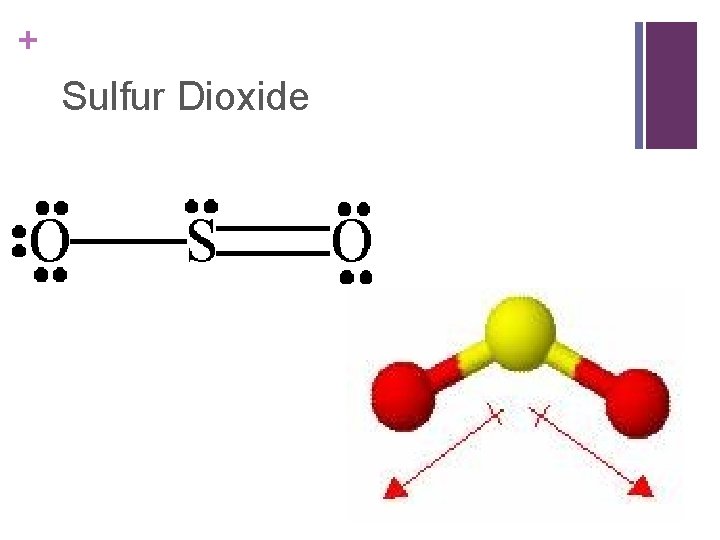
+ Sulfur Dioxide
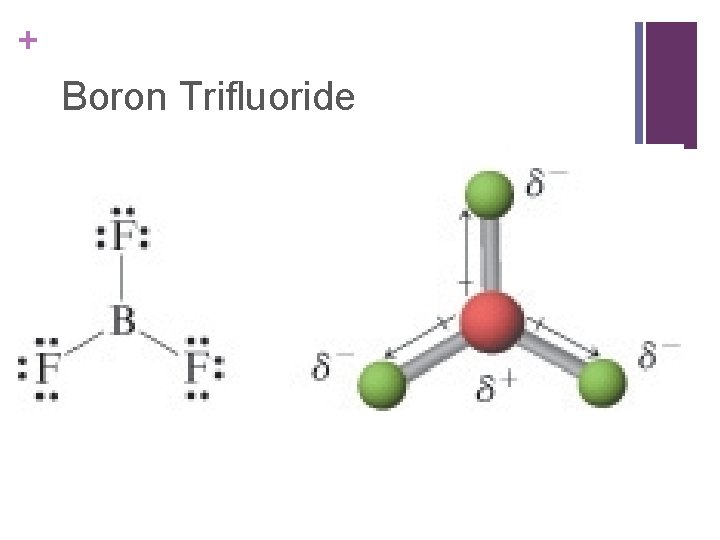
+ Boron Trifluoride
+ Intermolecular forces – the attractions between molecules Determine whether a compound is a solid, liquid or gas at a given temperature (determine melting and boiling points of substances) 3 Main Types: a) Hydrogen bonding b) Dipole-dipole interactions c) Dispersion forces
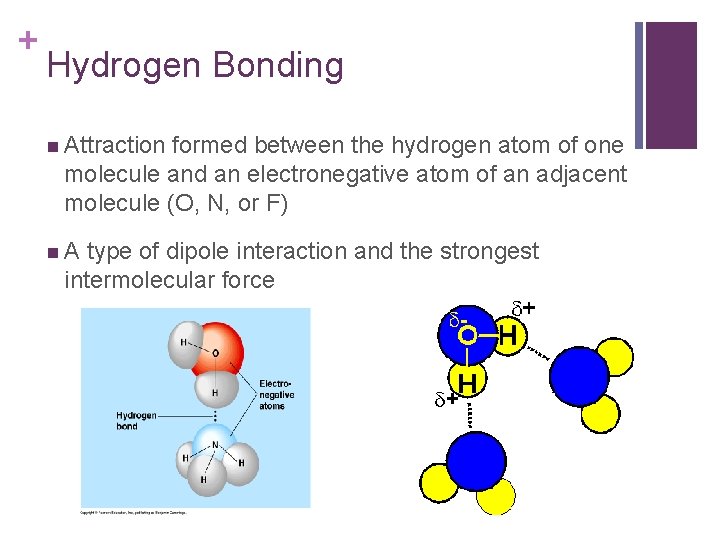
+ Hydrogen Bonding Attraction formed between the hydrogen atom of one molecule and an electronegative atom of an adjacent molecule (O, N, or F) A type of dipole interaction and the strongest intermolecular force
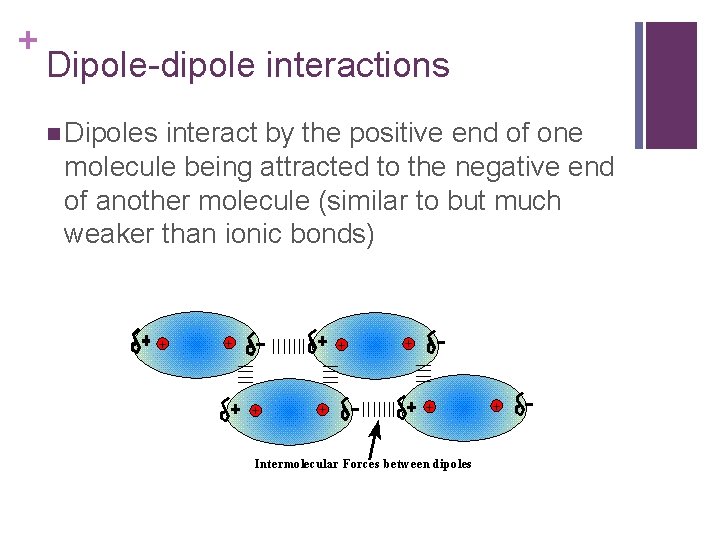
+ Dipole-dipole interactions Dipoles interact by the positive end of one molecule being attracted to the negative end of another molecule (similar to but much weaker than ionic bonds)
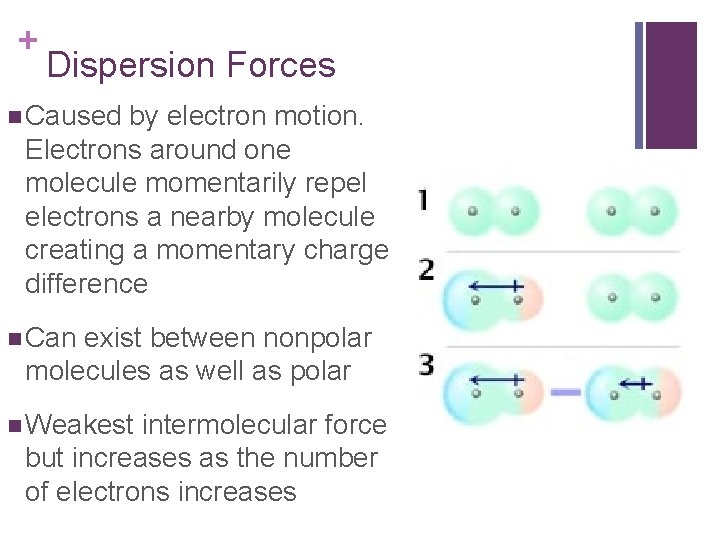
+ Dispersion Forces Caused by electron motion. Electrons around one molecule momentarily repel electrons a nearby molecule creating a momentary charge difference Can exist between nonpolar molecules as well as polar Weakest intermolecular force but increases as the number of electrons increases
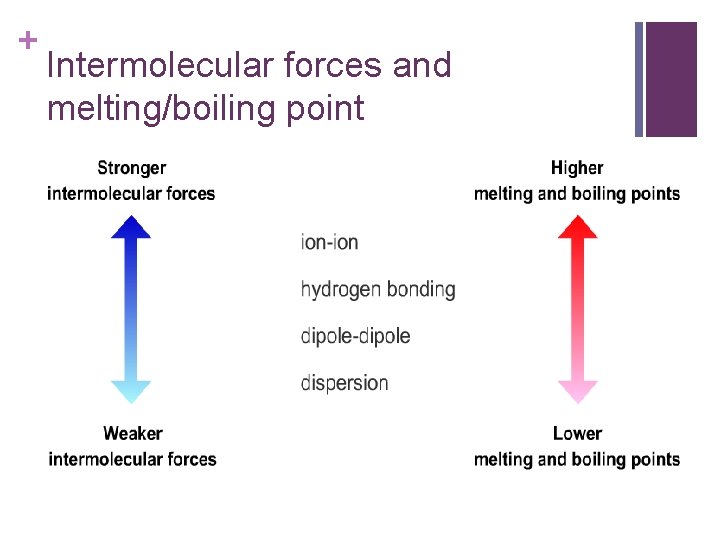
+ Intermolecular forces and melting/boiling point
- Slides: 22