
Polar ecosystems ArcticAntarctic contrasts Tundra the physical template






- Slides: 60
Polar ecosystems è è è è Arctic/Antarctic contrasts Tundra - the physical template (climate, landforms, soils) Tundra plant and animal communities Winter survival Population cycles Management issues Responses to future climate change
Arctic(a) vs. Antarctica ¨ land: 8 X 10⁶ km 2 (30% ice) ¨ land: 14 X 106 km 2 (97% ice) substantial no terrestrial food land mammals herbivorous & no land mammals no herbivorous or terrestrial food insectivorous birds
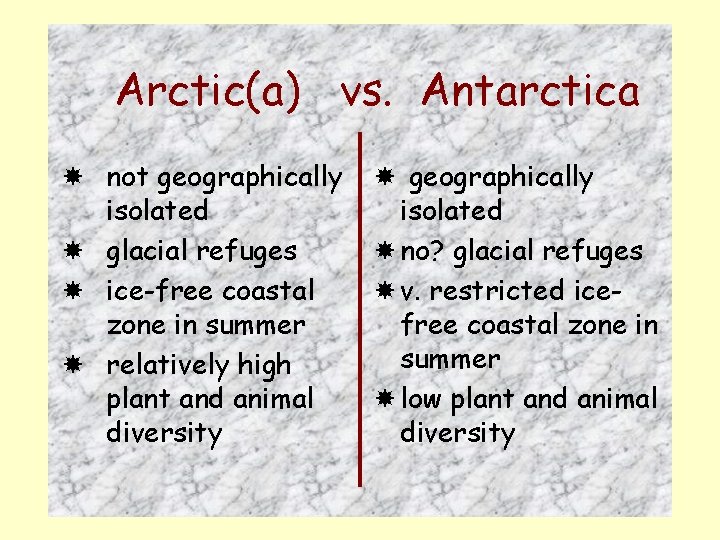
Arctic(a) vs. Antarctica not geographically isolated glacial refuges ice-free coastal zone in summer relatively high plant and animal diversity geographically isolated no? glacial refuges v. restricted icefree coastal zone in summer low plant and animal diversity
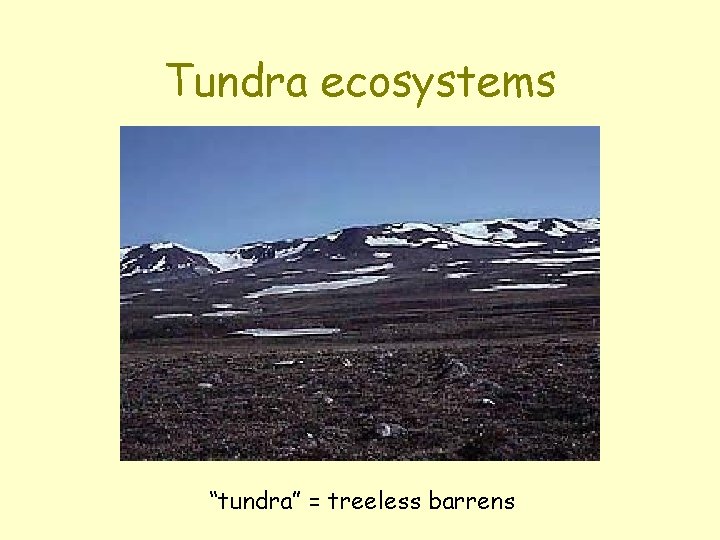
Tundra ecosystems “tundra” = treeless barrens
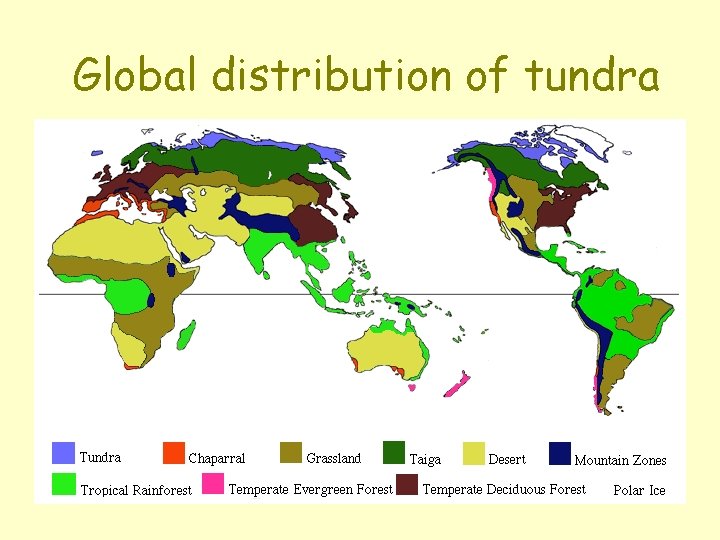
Global distribution of tundra
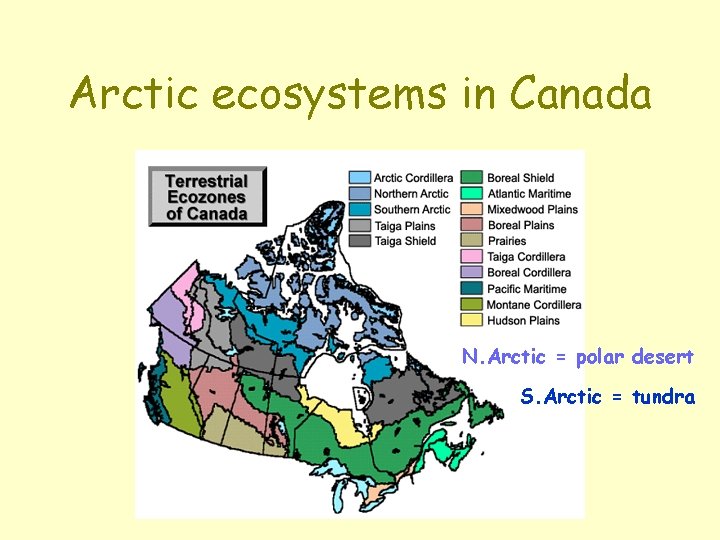
Arctic ecosystems in Canada N. Arctic = polar desert S. Arctic = tundra
Tundra ecosystems P Tundra ecosystems are associated with areas of extreme near-polar climate which operates either directly, or through a series of environmental forcings (primarily thaw-layer dynamics) to limit productivity and biodiversity.
Tundra ecosystems P Low species diversity may promote instability. This is expressed by highly cyclic behaviour. P Arctic communities are geologicallyrecent developments in the planetary biome landscape.
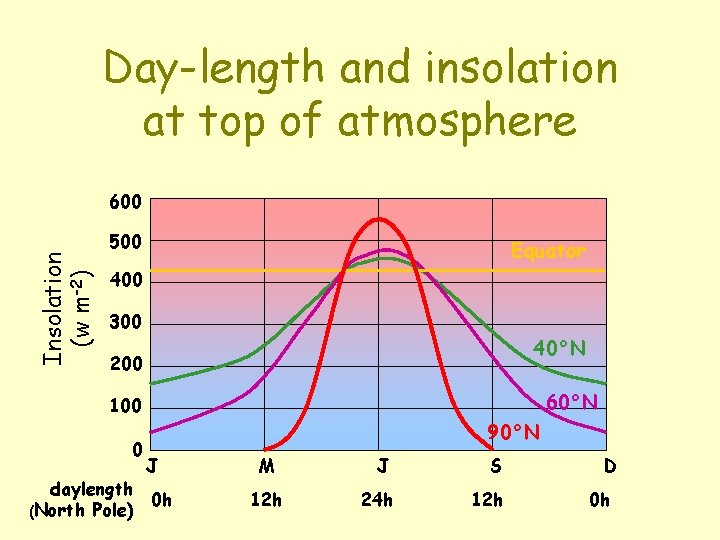
Day-length and insolation at top of atmosphere Insolation (w m-2) 600 500 Equator 400 300 40°N 200 60°N 100 0 90°N J daylength 0 h (North Pole) M 12 h J S 24 h 12 h D 0 h
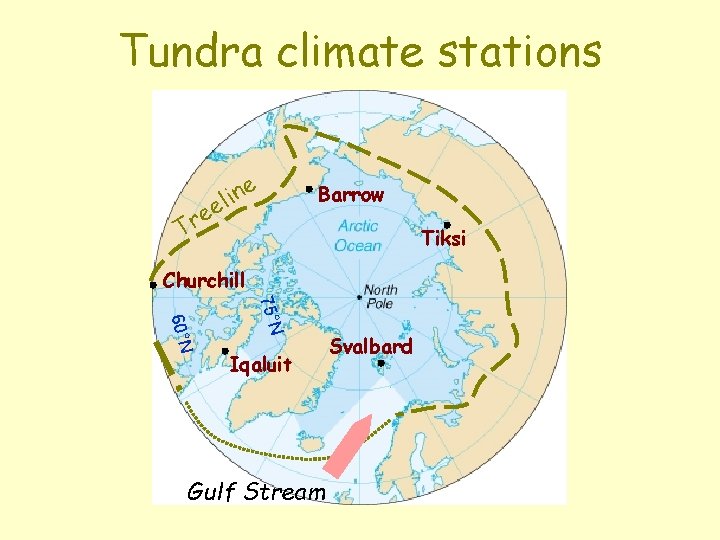
Tundra climate stations e n i el e r Barrow T Tiksi Churchill 75°N 60°N Iqaluit Gulf Stream Svalbard
Mean monthly temperatures, tundra climate stations
Mean monthly precipitation tundra climate stations
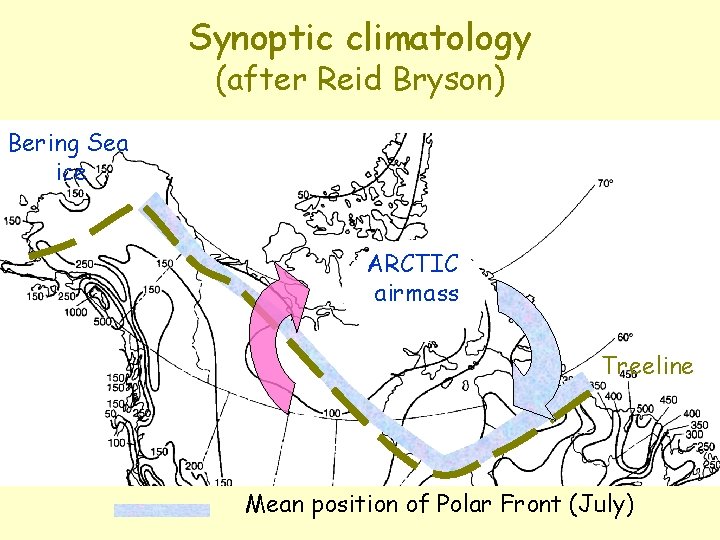
Synoptic climatology (after Reid Bryson) Bering Sea ice ARCTIC airmass Treeline Mean position of Polar Front (July)
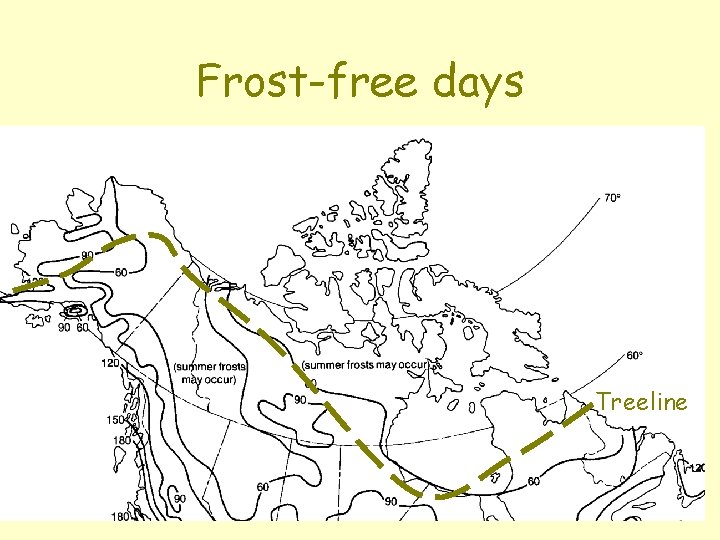
Frost-free days Treeline
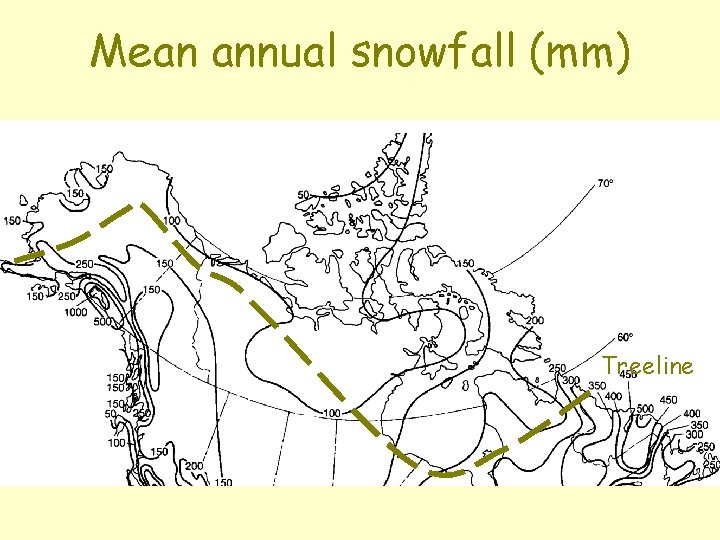
Mean annual snowfall (mm) Treeline
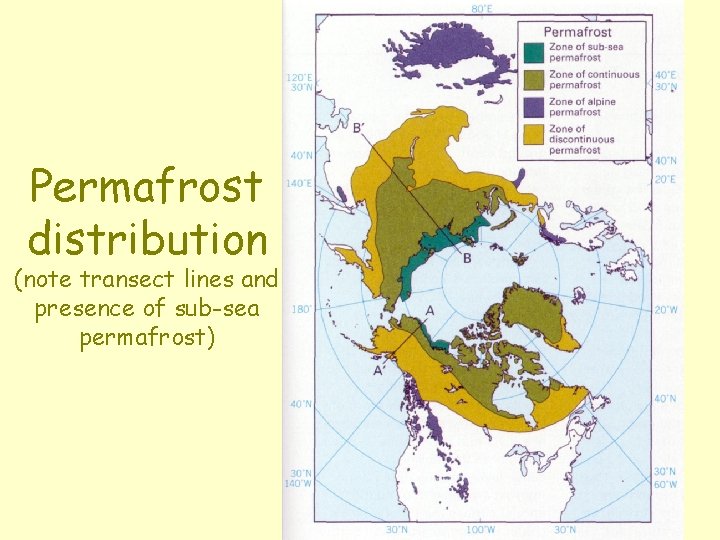
Permafrost distribution (note transect lines and presence of sub-sea permafrost)
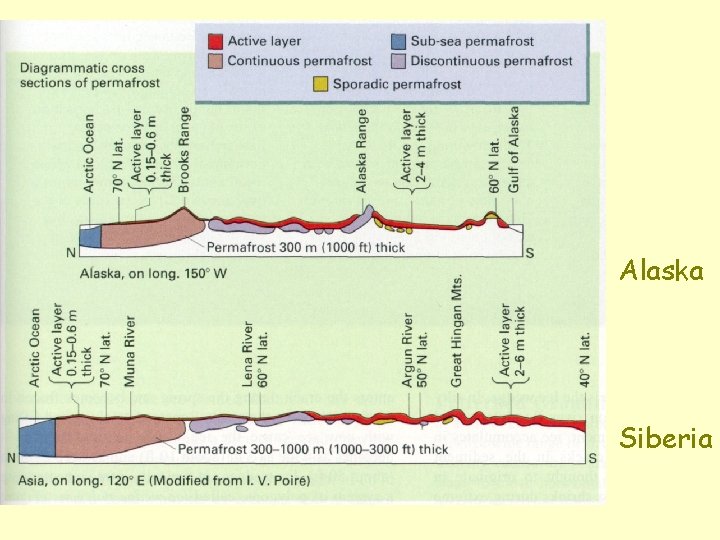
Alaska Siberia
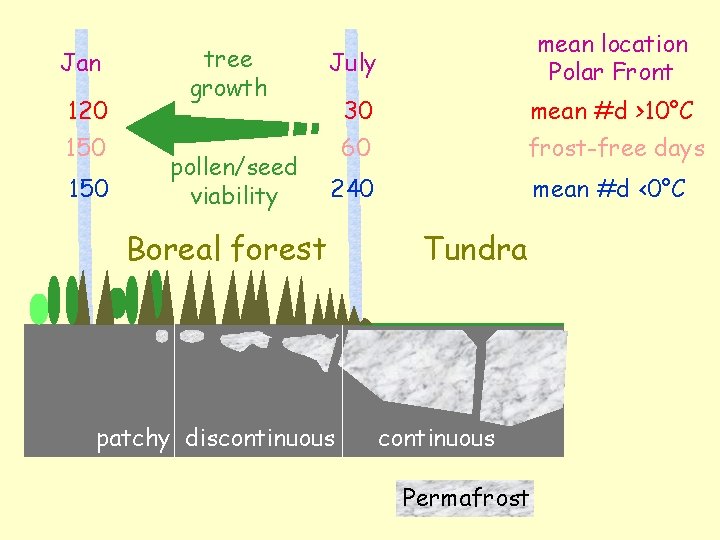
Jan 120 150 tree growth pollen/seed viability July mean location Polar Front 30 mean #d >10°C 60 frost-free days 240 Boreal forest patchy discontinuous mean #d <0°C Tundra continuous Permafrost
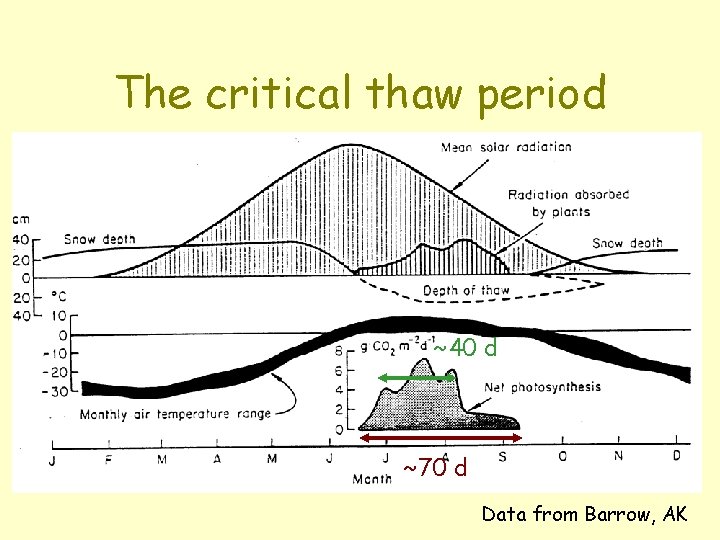
The critical thaw period ~40 d ~70 d Data from Barrow, AK
Microclimatology: slope and aspect forest?
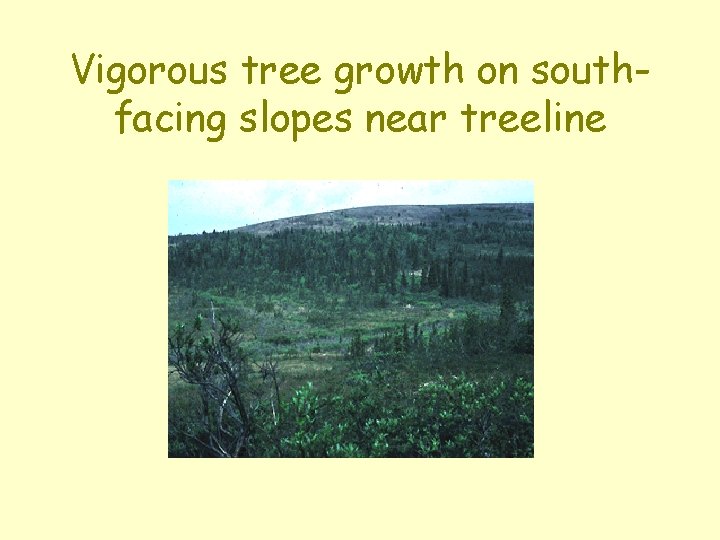
Vigorous tree growth on southfacing slopes near treeline
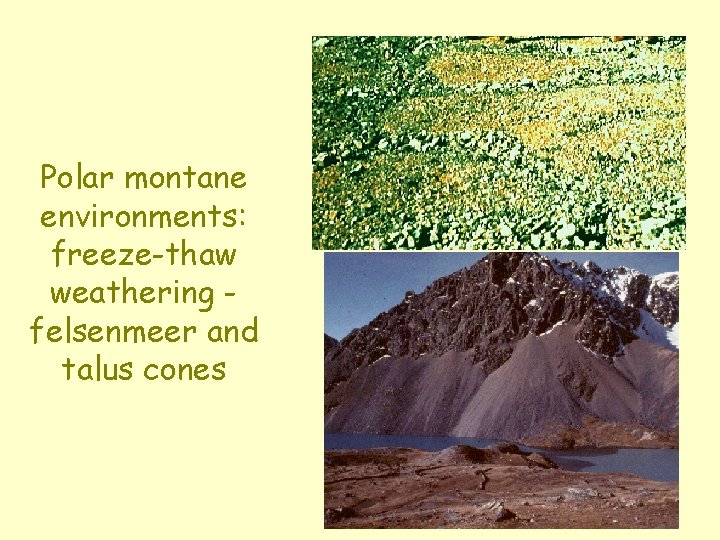
Polar montane environments: freeze-thaw weathering felsenmeer and talus cones
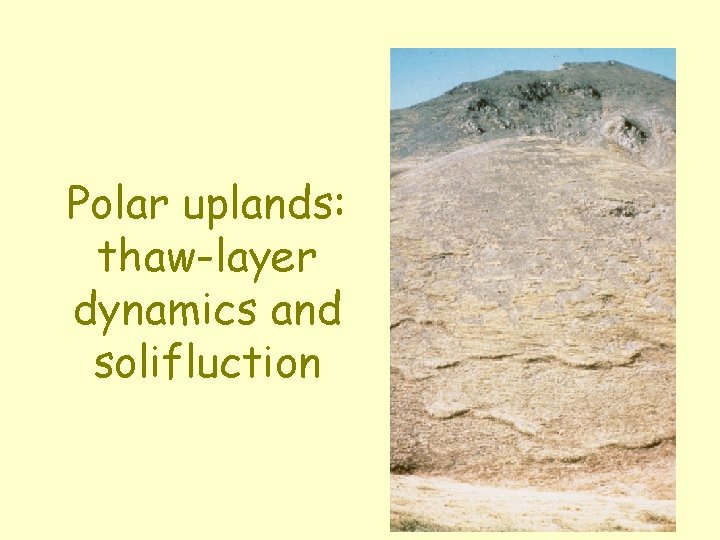
Polar uplands: thaw-layer dynamics and solifluction
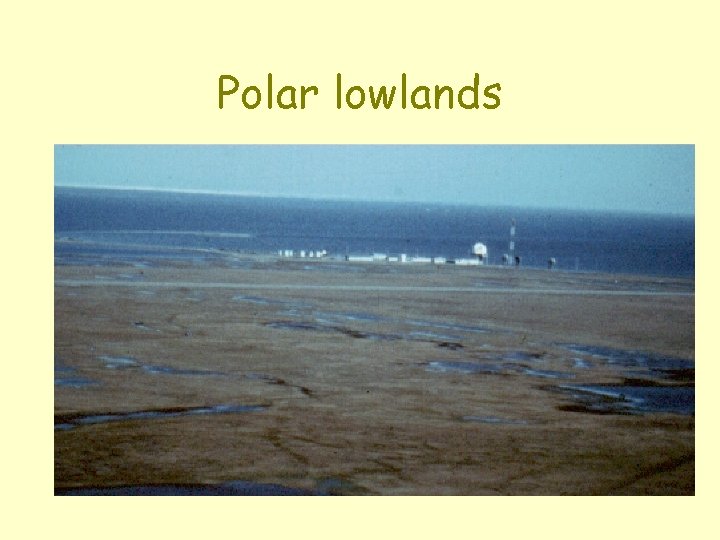
Polar lowlands
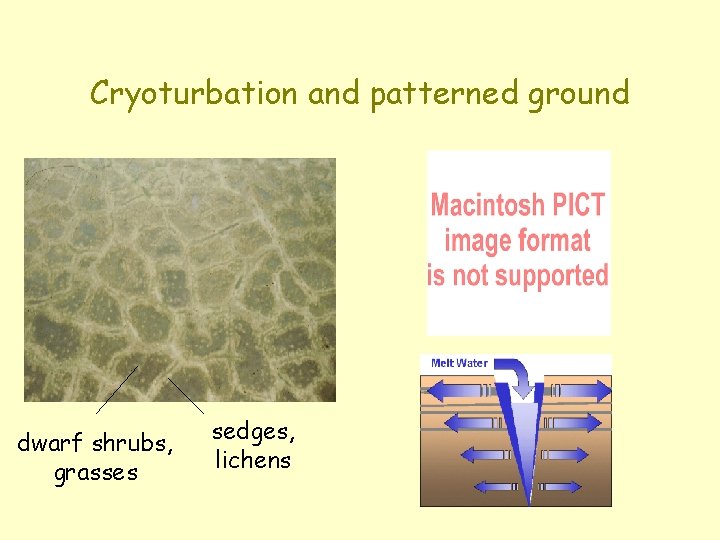
Cryoturbation and patterned ground dwarf shrubs, grasses sedges, lichens
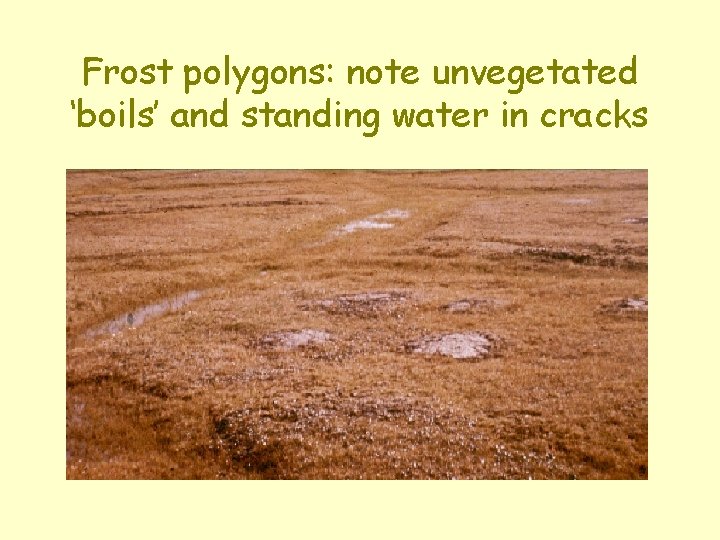
Frost polygons: note unvegetated ‘boils’ and standing water in cracks
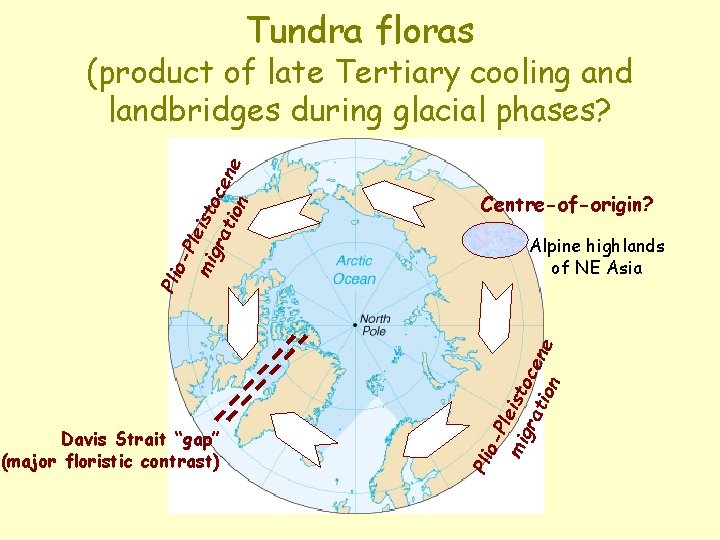
Tundra floras Davis Strait “gap” (major floristic contrast) Centre-of-origin? Alpine highlands of NE Asia Pli o. P mig leisto rat cen ion e (product of late Tertiary cooling and landbridges during glacial phases?
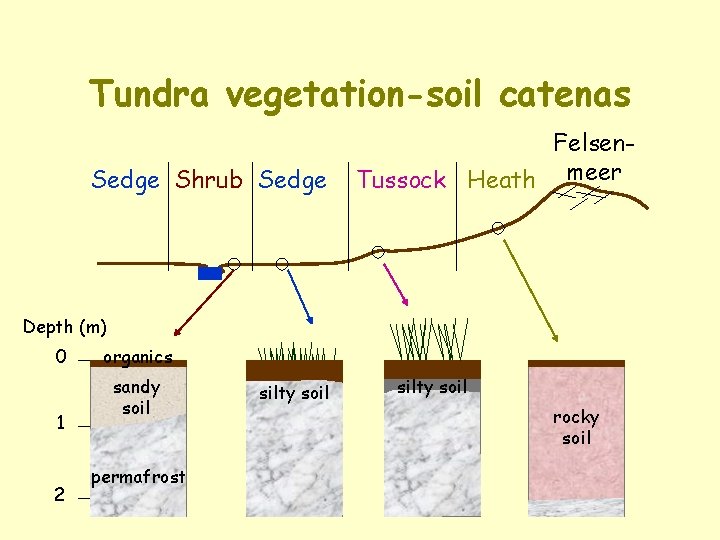
Tundra vegetation-soil catenas Sedge Shrub Sedge Felsen. Tussock Heath meer Depth (m) 0 1 2 organics sandy soil permafrost silty soil rocky soil
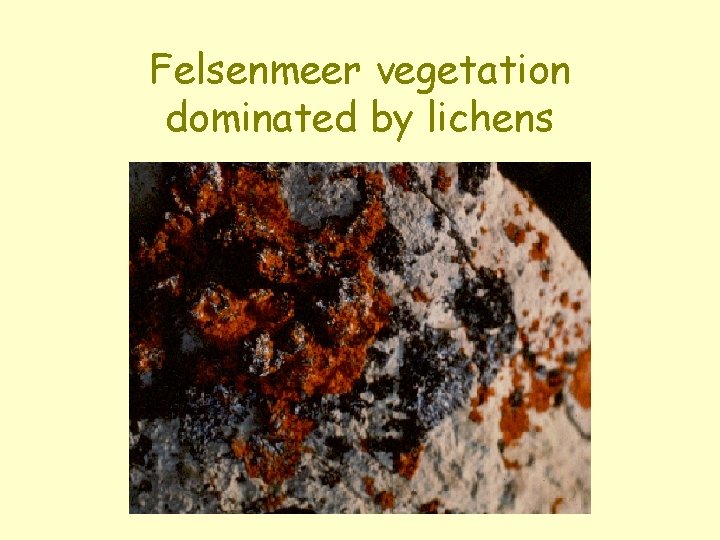
Felsenmeer vegetation dominated by lichens
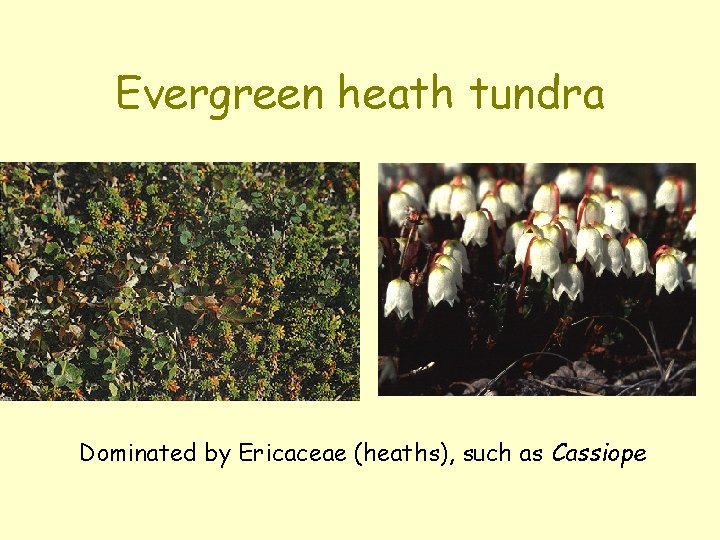
Evergreen heath tundra Dominated by Ericaceae (heaths), such as Cassiope
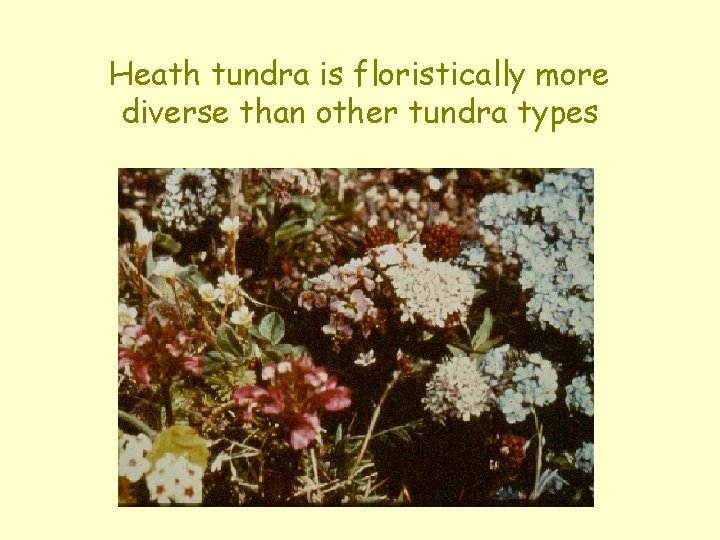
Heath tundra is floristically more diverse than other tundra types
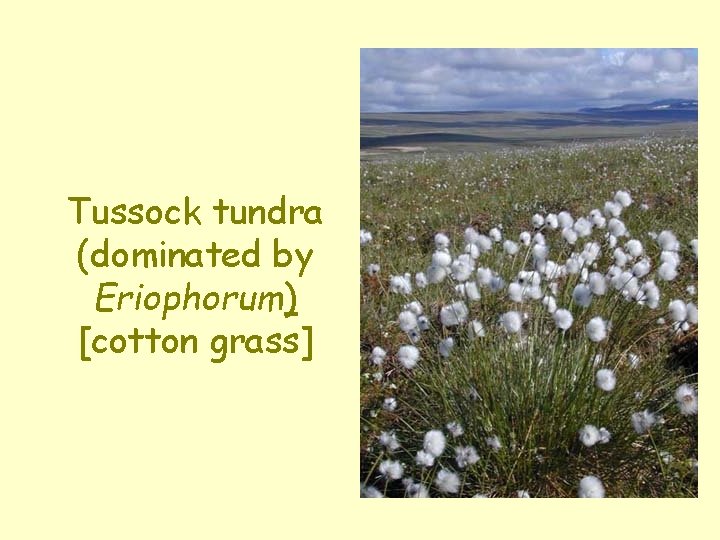
Tussock tundra (dominated by Eriophorum) [cotton grass]
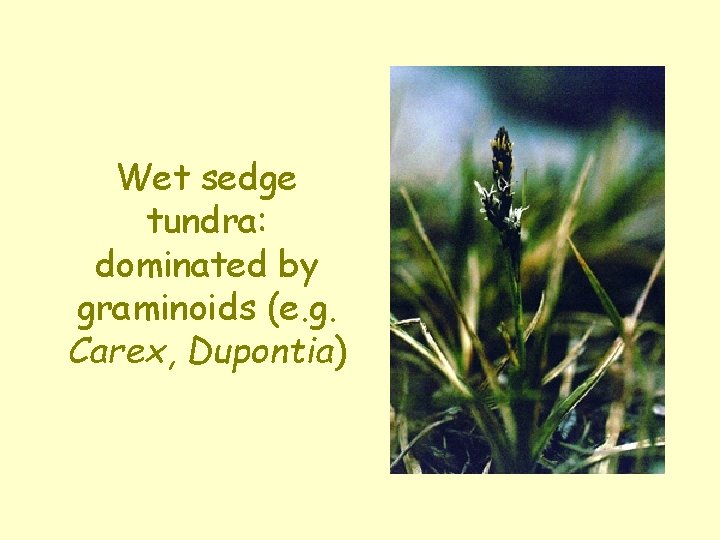
Wet sedge tundra: dominated by graminoids (e. g. Carex, Dupontia)
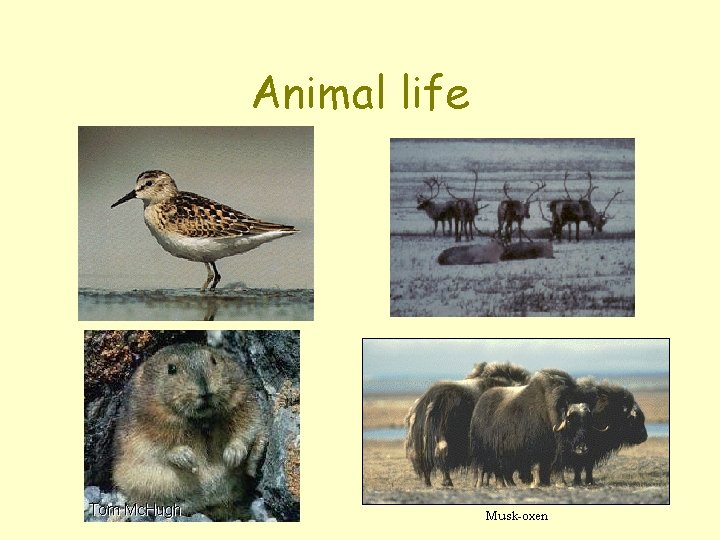
Animal life
Surviving winter Strategy ç Distant migration ß Local migration À Above snow-pack heavy insulation protective colouring â Below snow-pack ê Hibernation À Dormant phase Organisms birds caribou muskox, polar bear arctic fox, ptarmigan lemmings, voles ground squirrels plants, insects
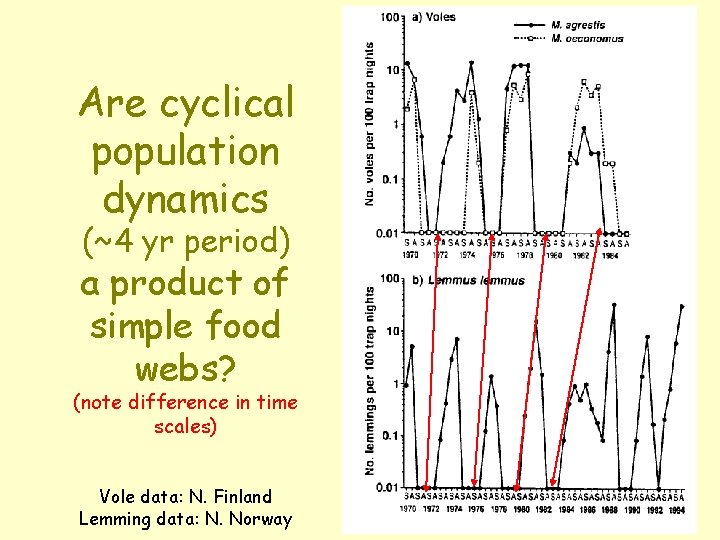
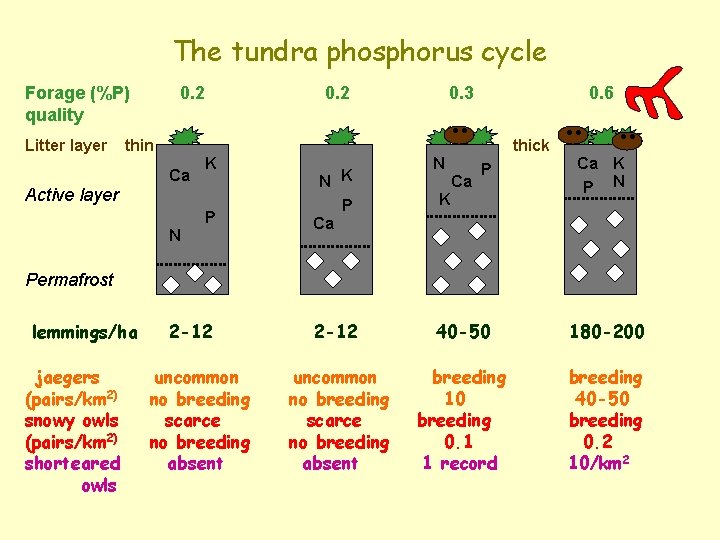
Are cyclical population dynamics (~4 yr period) a product of simple food webs? (note difference in time scales) Vole data: N. Finland Lemming data: N. Norway
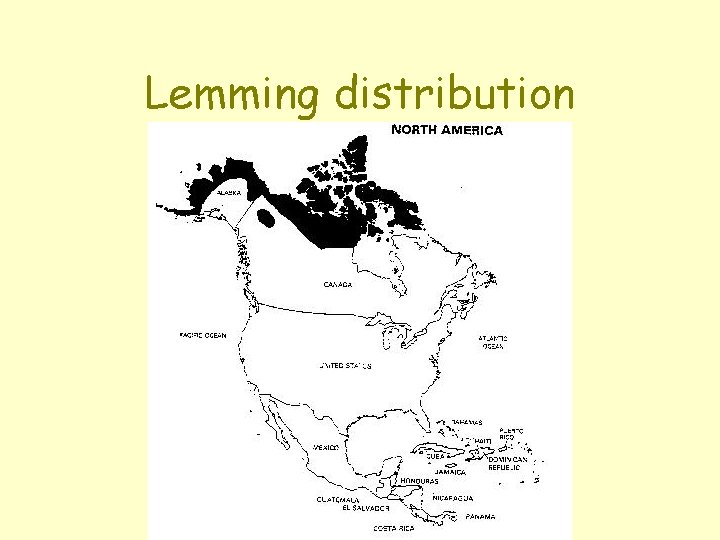
Lemming distribution
The tundra phosphorus cycle Forage (%P) quality Litter layer 0. 2 0. 3 0. 6 • • thin Ca K Active layer P N N K P Ca N Ca thick P K • • Ca K P N Permafrost lemmings/ha jaegers (pairs/km 2) snowy owls (pairs/km 2) shorteared owls 2 -12 uncommon no breeding scarce no breeding absent 2 -12 40 -50 180 -200 uncommon no breeding scarce no breeding absent breeding 10 breeding 0. 1 1 record breeding 40 -50 breeding 0. 2 10/km 2
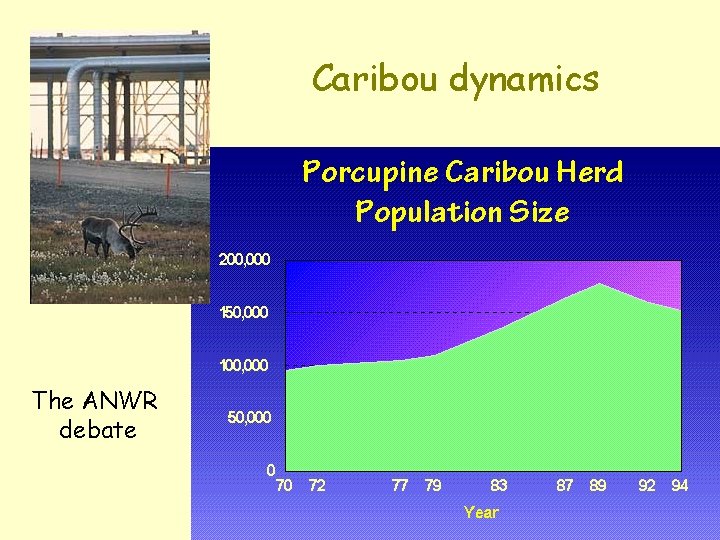
Caribou dynamics The ANWR debate
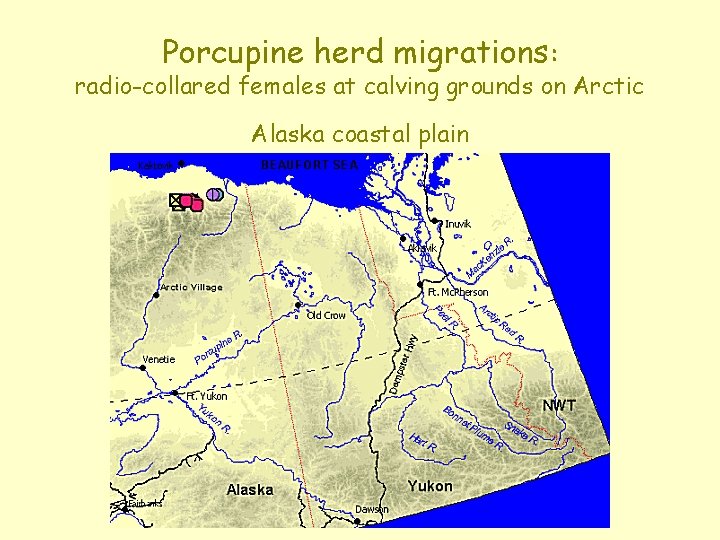
Porcupine herd migrations: radio-collared females at calving grounds on Arctic Alaska coastal plain
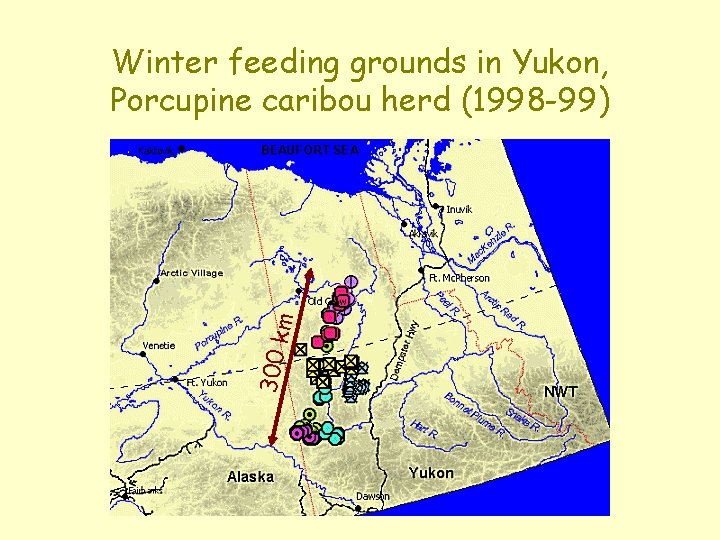
300 k m Winter feeding grounds in Yukon, Porcupine caribou herd (1998 -99)
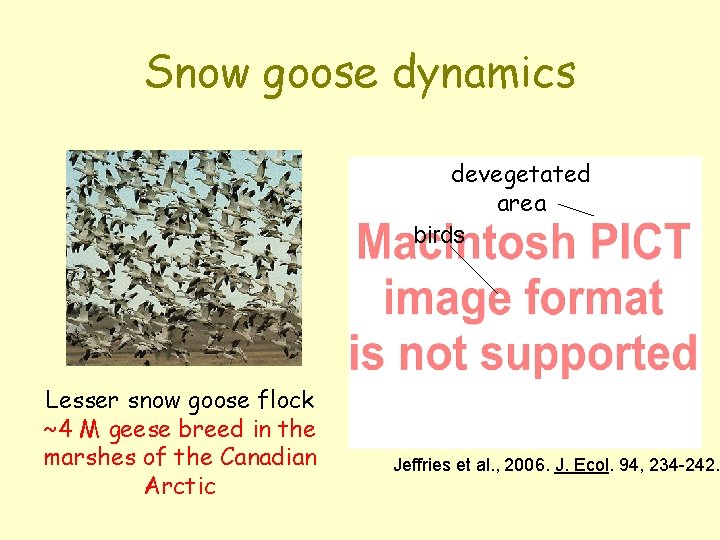
Snow goose dynamics devegetated area birds Lesser snow goose flock ~4 M geese breed in the marshes of the Canadian Arctic Jeffries et al. , 2006. J. Ecol. 94, 234 -242.
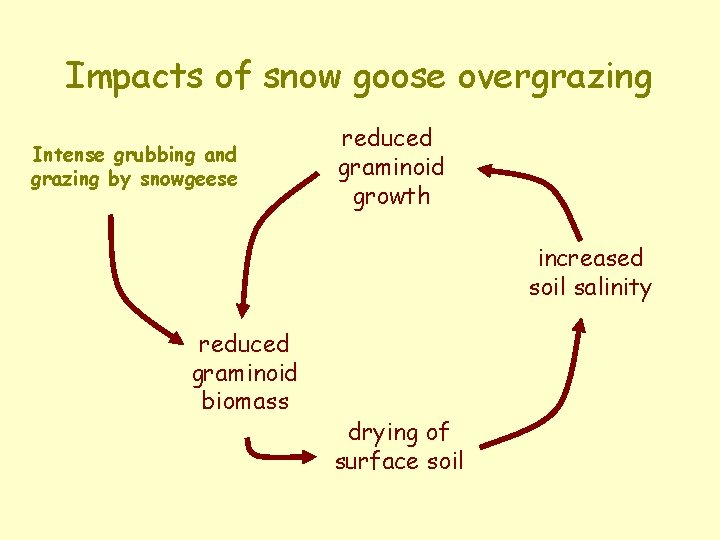
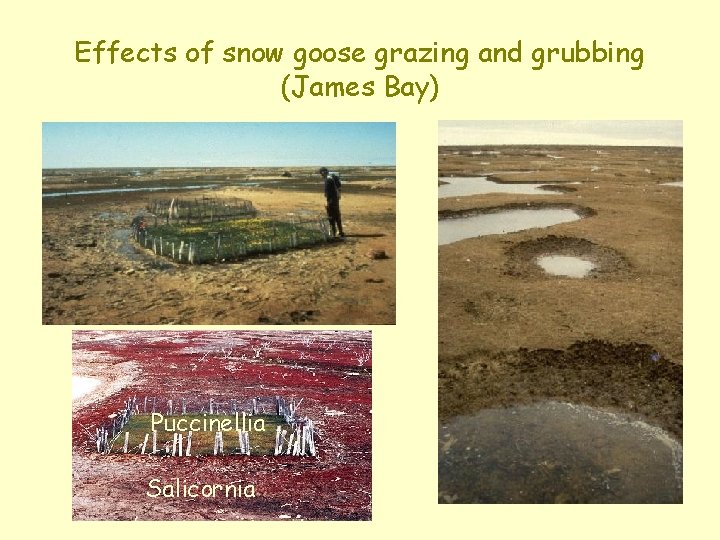
Impacts of snow goose overgrazing Intense grubbing and grazing by snowgeese reduced graminoid growth increased soil salinity reduced graminoid biomass drying of surface soil
Effects of snow goose grazing and grubbing (James Bay) Puccinellia Salicornia
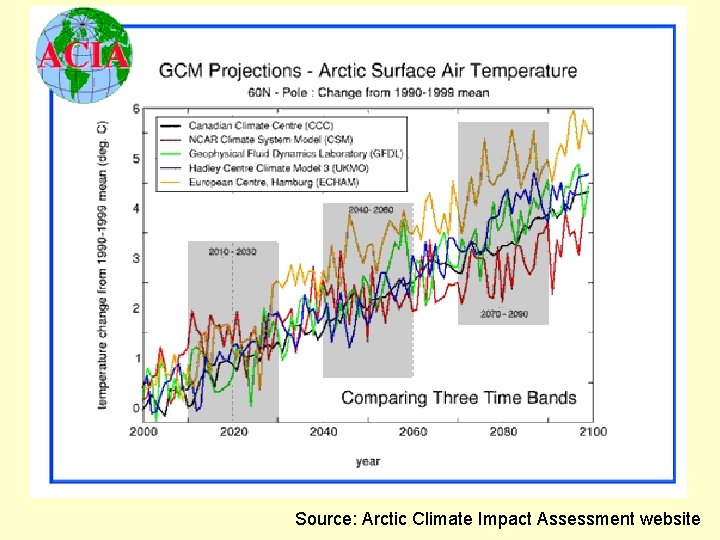
Potential effects of climate change PIs climate change occurring in Arctic environments? - climate records short - biotic data fragmentary LSimulation models LField experiments
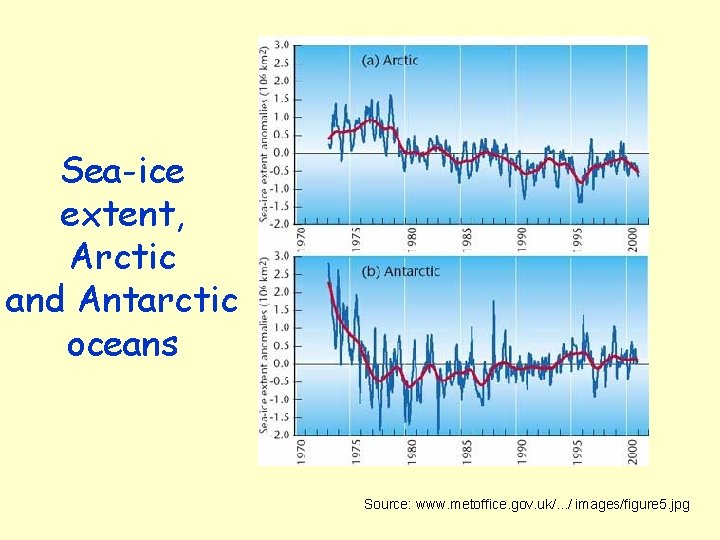
Recent (post-1950) climate change in polar regions Arctic: • • Reduction in sea ice extent and thickness Northward treeline shifts (e. g. E. coast Hudson Bay) Increased lake productivity (e. g. Ellesmere Island) Range expansions (e. g. dragonflies - Inuvik - 2000) Antarctic: • Ice shelf disintegration (e. g. N. Larsen & Wordie Shelf) • Spread of flowering plants (e. g. Antarctic hairgrass has expanded its range 25 -fold since 1964) • New lichen species colonizing recently deglaciated areas
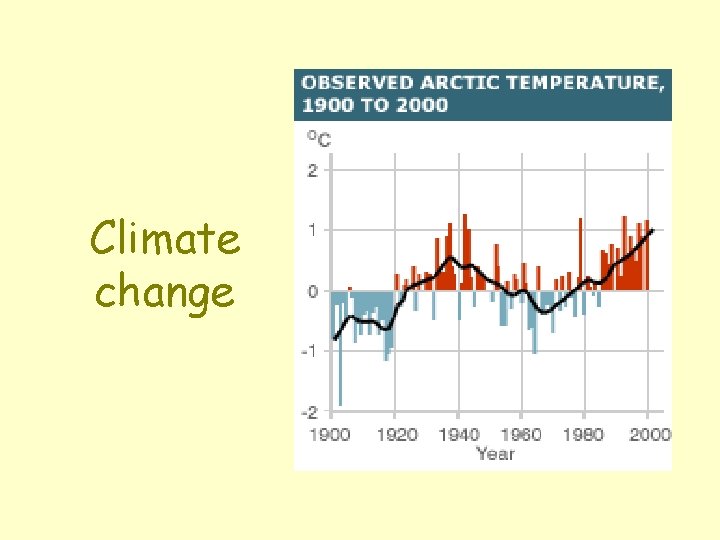
Climate change
Climate change in the western Canadian arctic Data: Environment Canada
Climate change in the western Canadian arctic Data: Environment Canada
Climate change in the eastern Canadian arctic Data: Environment Canada
Climate change in the eastern Canadian arctic Data: Environment Canada
Sea-ice extent, Arctic and Antarctic oceans Source: www. metoffice. gov. uk/. . . / images/figure 5. jpg
Source: Arctic Climate Impact Assessment website
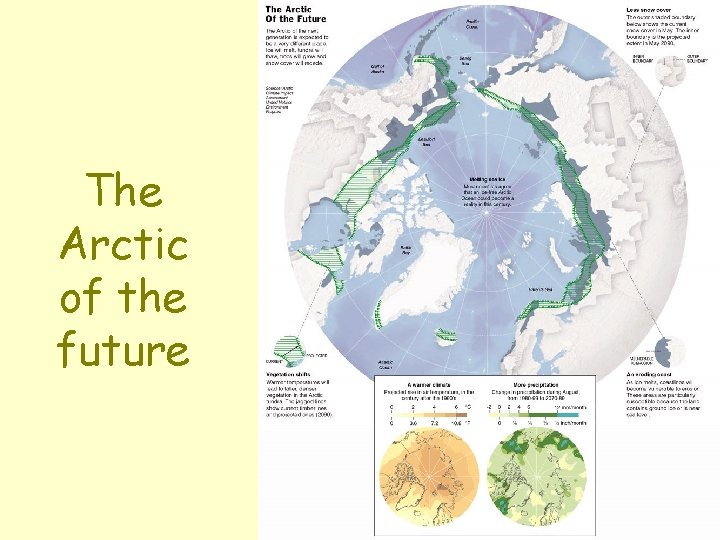
The Arctic of the future
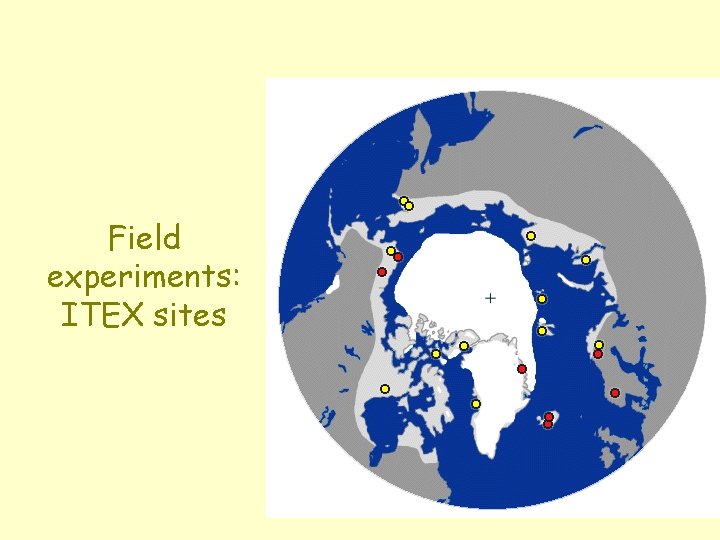
Field experiments: ITEX sites
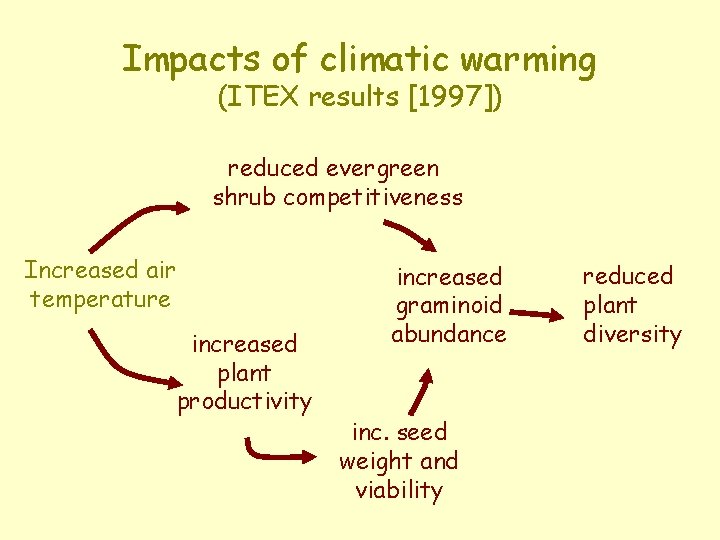
Impacts of climatic warming (ITEX results [1997]) reduced evergreen shrub competitiveness Increased air temperature increased plant productivity increased graminoid abundance inc. seed weight and viability reduced plant diversity